One bold color. Four walls. Zero white trim. That is the power of a color-drenched bedroom.
Instead of playing it safe with neutral walls and contrasting ceilings, this design approach wraps the entire room in a single shade.
Walls, trim, ceiling, and sometimes even furniture are painted the same color, creating a rich and immersive effect. The result is a space that feels cohesive, intentional, and full of personality.
The growing popularity of the color-drenched room shows a clear shift in how people want their bedrooms to feel.
Comfort now comes from depth and mood rather than plain white backdrops. Still, questions remain about practicality and longevity.
Is this look here to stay, or will it fade like past paint trends? This blog breaks down the concept, benefits, common mistakes, and long-term value of choosing a color-drenching bedroom.
What is a Color Drenching Bedroom?
A color-drenching bedroom is a design approach in which a single shade is used throughout the space.
Instead of painting only the walls, the same color is applied to the trim, ceiling, doors, and sometimes even built-in shelves or furniture.
The goal is to create a fully immersive look that envelops the entire room in a single, consistent tone.
In a color-drenched room, contrast is minimal. There are no bright white trims breaking up the space. Everything blends together, which creates depth and a strong visual impact.
Surprisingly, this method can make a bedroom feel calm and cohesive rather than overwhelming. The beauty of a color-drenched bedroom lies in its simplicity.
One well-chosen shade sets the mood, defines the atmosphere, and gives the room a polished, intentional feel without relying on multiple paint colors.
Why is The Color-Drenched Room Trend Everywhere?
The color-drenched room trend has gained serious attention over the past few years.
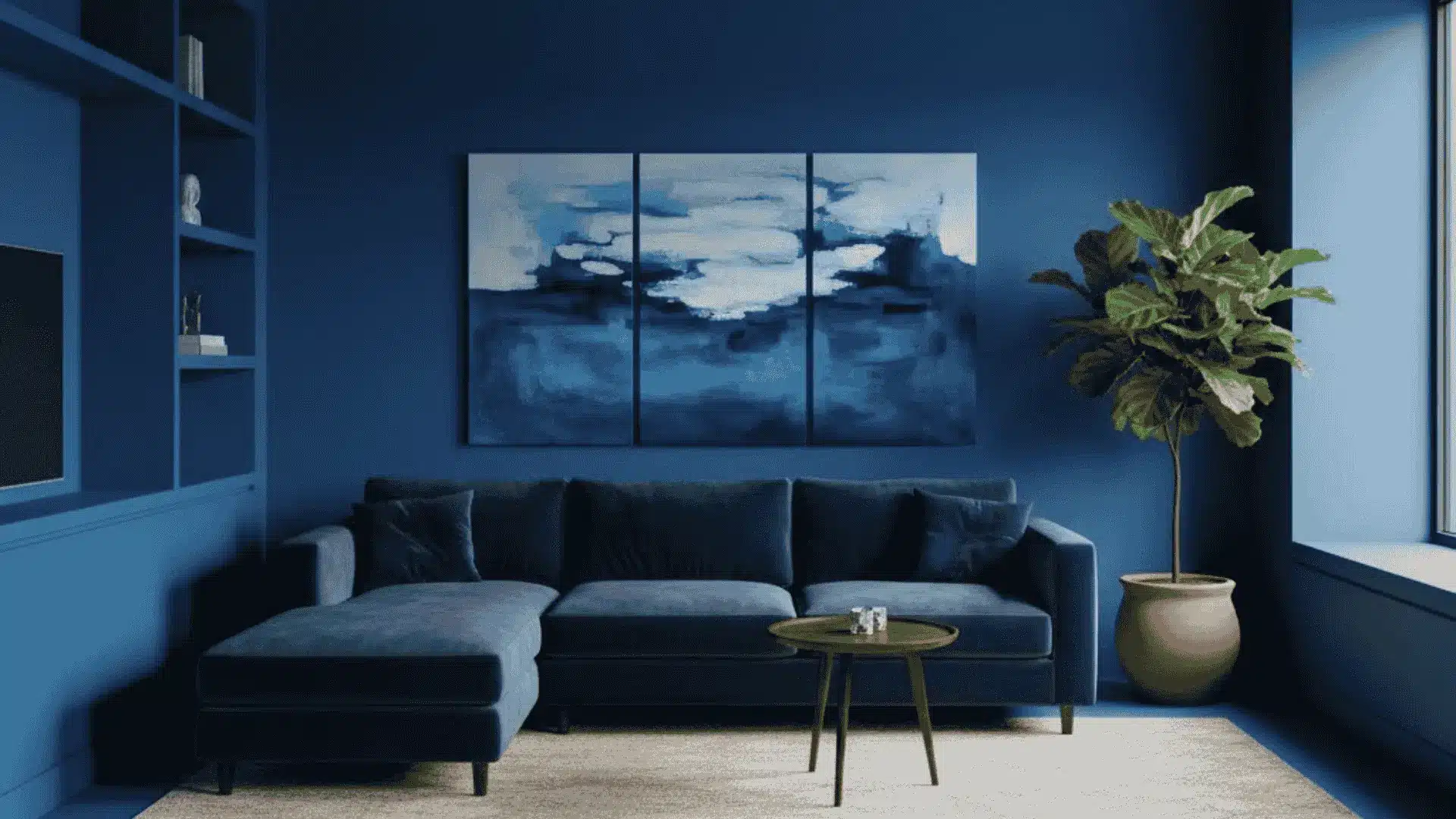
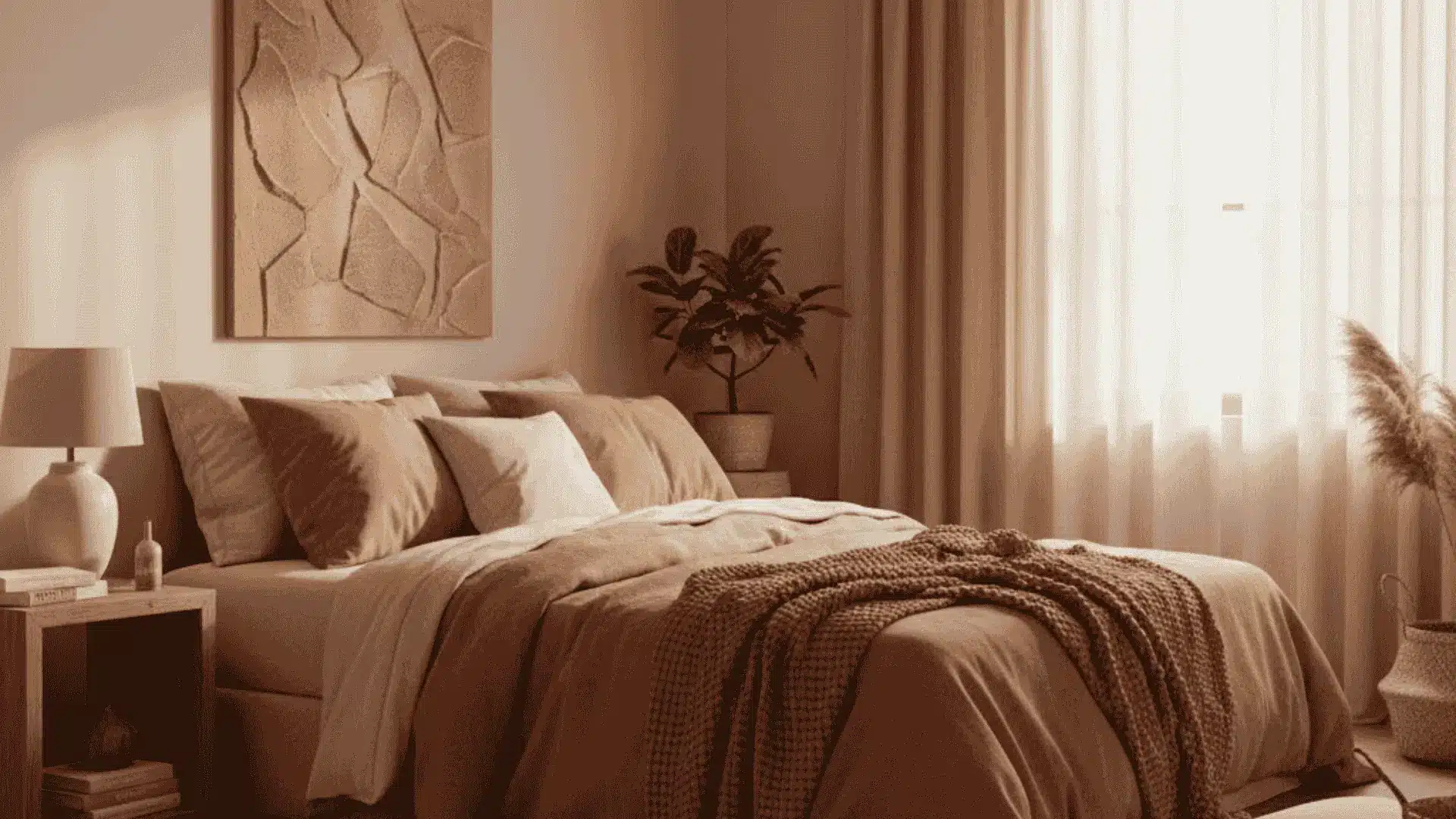
Social media platforms are filled with bedrooms wrapped in deep greens, navy blues, warm browns, and rich earth tones.
These spaces photograph beautifully, which naturally fuels interest and inspires more homeowners to try the look.
Paint brands have also played a major role. Many now promote bold, saturated shades and show entire rooms painted in one color rather than highlighting accent walls.
Marketing visuals often present fully covered spaces, making color-drenching bedroom ideas feel modern and intentional.
Deeper tones create comfort, depth, and personality. A color-drenched room feels expressive and confident, offering a strong alternative to the all-white interiors that dominated for years.
How to Create a Color-Drenching Bedroom The Right Way?
Getting a color drenching bedroom right comes down to five steps, from choosing the shade to layering the light.
- Choose one shade and commit to it. Test a few samples on multiple walls and observe them in both natural and artificial light. Look closely at undertones. A warm green can feel cozy, while a cool blue may feel crisp, so pick the one that matches the mood you want.
- Pick the right finish. Use matte or eggshell on walls for softness and satin on trim and doors for contrast. Compare matte versus satin sheens to choose the right finish.
- Do not skip the ceiling. Painting it the same shade completes the color-drenched effect and avoids a harsh line overhead.
- Layer the lighting. Add bedside lamps and warm bulbs so the space does not feel flat or overly dark once the walls go from white to a bold, saturated color.
- Add texture last. Rugs, linens, and wood accents keep a single-color room from feeling one-note.
- Do not skip the ceiling. Painting it the same shade completes the look. See whether the ceiling should match the walls before choosing.
Best Colors for a Color Drenched Room
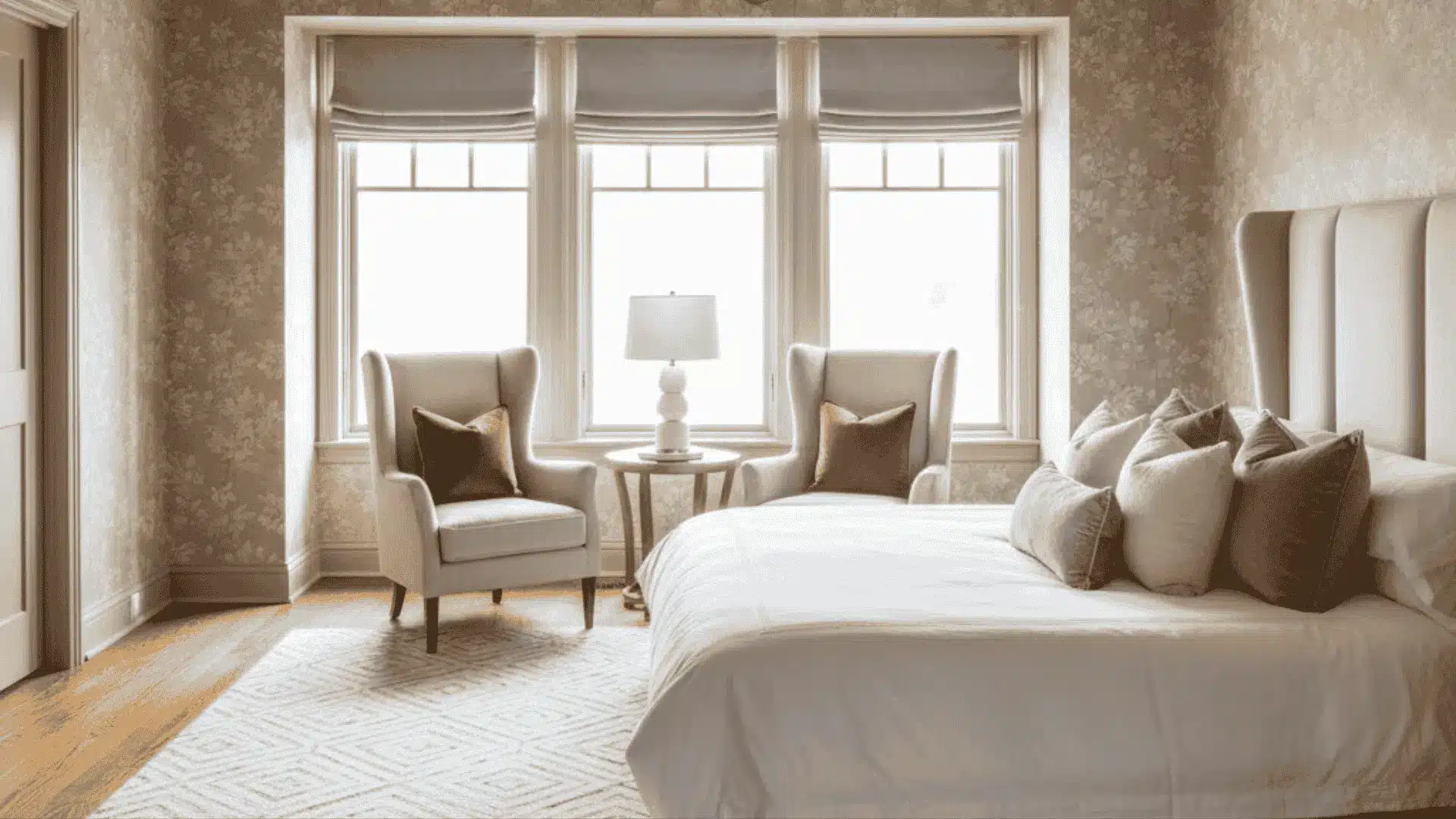
The right shade defines the entire mood of a color drenching bedroom, since one color wraps the walls, trim, and ceiling at once.
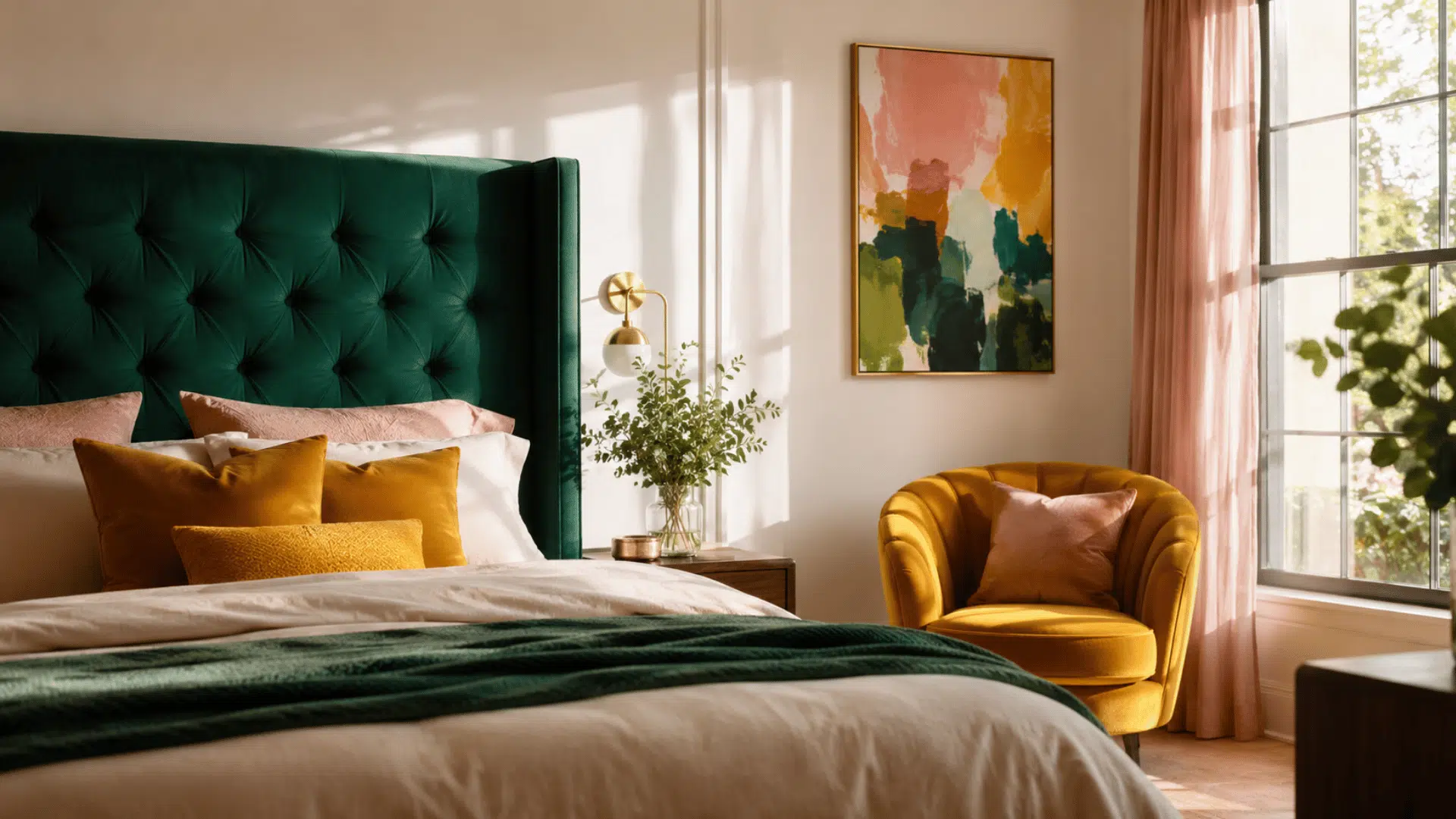
- Deep Green: Creates a grounded, restful bedroom that pairs well with wood tones and soft lighting.
- Navy: Offers a classic, cozy feel and adds depth without feeling overly dramatic, especially in rooms with good natural light.
- Charcoal: Delivers a modern, moody atmosphere that works well in larger bedrooms and creates a cocoon-like effect at night.
- Terracotta: Adds warmth and character, and feels inviting alongside natural textures like linen and rattan. It pairs naturally with the kind of room decor ideas built around warm, earthy palettes.
- Warm Neutrals: Taupe or creamy beige offer a softer take on color drenching, keeping the room cohesive while staying light and relaxed.
Pros And Cons Of A Color Drenching Bedroom
Here is a clear overview of the main advantages and disadvantages of choosing a color-drenched bedroom design.
| Pros | Cons |
|---|---|
| Creates a strong visual impact with a bold, unified look | Dark shades can make small rooms feel tighter |
| Builds a clear mood and atmosphere in the bedroom | Poor lighting can make the space look flat |
| Enhances cohesion by removing harsh color breaks | Resale appeal may vary with bold color choices |
| Makes furniture and decor stand out naturally | Requires careful paint and undertone selection |
| Gives the room a polished, intentional feel | Mistakes are more noticeable since one color dominates |
Small Bedroom Color Drenching Tips
Smart planning helps a color-drenching bedroom feel open and balanced, even in compact spaces.
- Light Tones: Choose soft taupe, muted blue, or warm beige to keep the room feeling airy instead of tight.
- Satin Finish: Use a satin or soft sheen paint to reflect light gently and avoid a heavy look.
- Full Coverage: Paint walls, trim, and ceiling in the same shade to remove sharp visual breaks.
- Layered Lighting: Add bedside lamps and warm bulbs to reduce shadows and improve depth.
- Cohesive Furniture: Keep larger furniture in similar tones to maintain flow in a color-drenched room.
- Added Texture: Introduce rugs and bedding with subtle texture to create dimension without adding new colors.
Is a Color-Drenched Room Timeless or a Passing Trend?
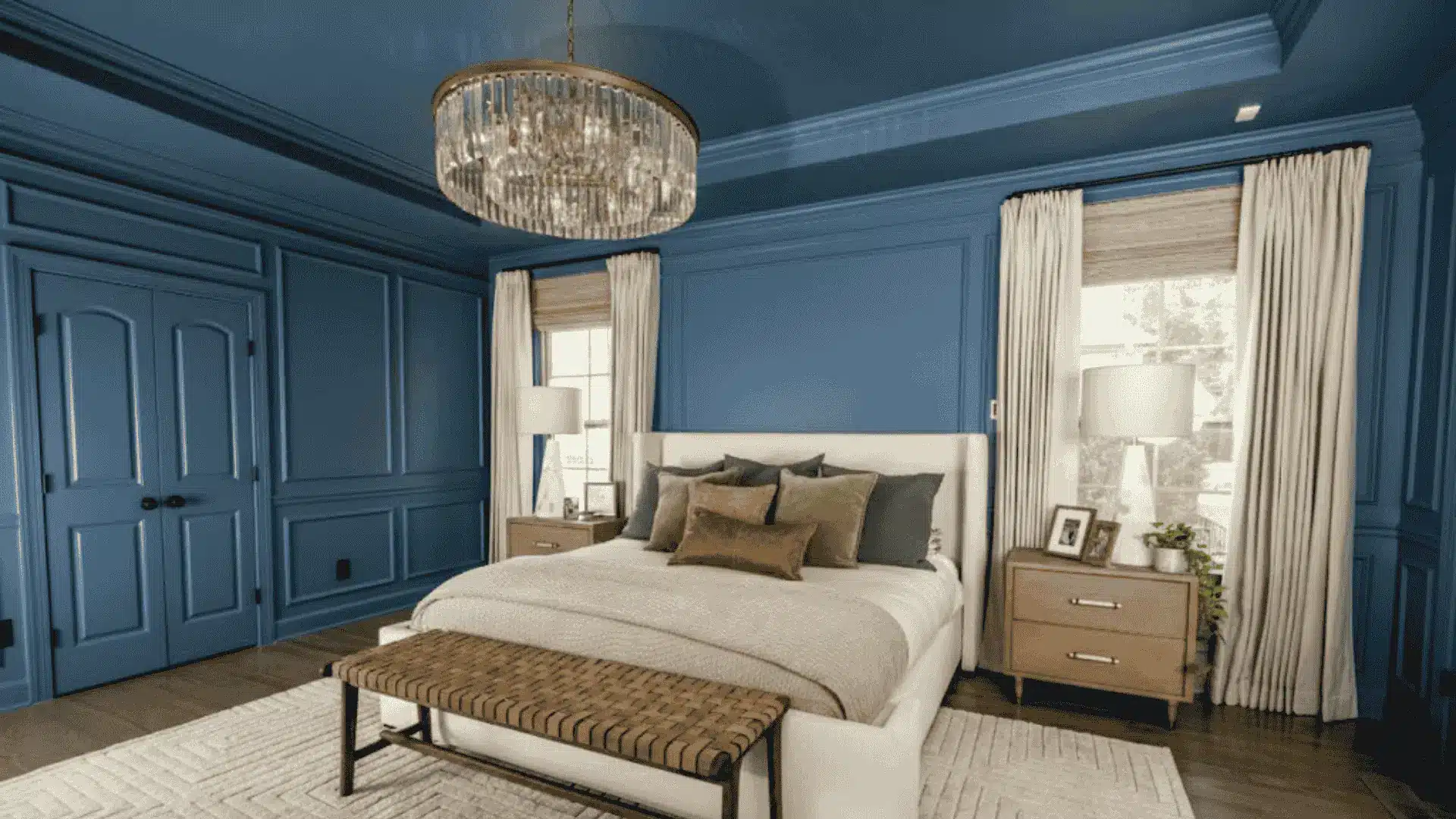
Design trends often cycle through phases of minimalism and bold expression. In the past, accent walls and bright feature colors had their moment, then faded as neutral interiors became dominant.
A color-drenched room feels different because it is not defined by a single dramatic wall. It is about full commitment to a single tone, which creates depth rather than contrast.
Longevity depends on color choice and execution. Highly saturated or unusual shades may feel tied to a specific time period.
In contrast, classic tones such as deep green, navy, warm taupe, and soft gray tend to age better. These shades have long histories in interior design and adapt well to changing furniture styles.
A well-planned color-drenching bedroom can last for years when the shade suits the architecture, lighting, and overall style of the home.
Thoughtful selection makes the difference between a short-lived trend and a lasting design choice.
Common Mistakes to Avoid with Color Drenching
Avoiding these common mistakes ensures a color-drenching bedroom looks cohesive, balanced, and visually intentional.
- Poor Lighting: Using the wrong bulb temperature can make a color-drenching bedroom look flat or overly dark. Checking cool white versus daylight bulbs before you commit to fixtures can save a repaint later.
- Mismatched Undertones: Ignoring undertones can lead to clashes among paint, flooring, and furniture.
- No Texture: Relying solely on flat-painted surfaces can make a color-drenched room feel lifeless.
- Walls Only: Leaving trim or ceiling white breaks the full wraparound effect.
- Skipping Samples: Failing to test paint in different lighting conditions can lead to regret after application.
Conclusion
A color-drenched bedroom is more than just painting the walls a bold shade. It is about committing to one color across walls, trim, and ceiling to create depth, cohesion, and mood.
When done thoughtfully, a color-drenched room feels intentional and comforting rather than overwhelming.
Lasting appeal starts with choosing classic colors with balanced undertones that work with changing décor. Thoughtful lighting and texture also help the room stay visually interesting over time.
With careful planning, this design choice can remain relevant for years rather than feel short-lived.
Would you try a color-drenching bedroom in your home, or stick with neutrals? Share your thoughts in the comments below.
Frequently Asked Questions
Does Color Drenching Make a Small Bedroom Look Smaller?
Not if you plan for it. Light, muted tones and a satin finish reflect light and keep a small color drenched room feeling open rather than closed in.
What Paint Finish Works Best for a Color Drenching Bedroom?
Matte or eggshell on the walls, with a satin finish on trim and doors, gives enough contrast to define the space without breaking the color-drenched effect.
Does Color Drenching Cost More than a Normal Paint Job?
Not usually. Painting every surface in one color often means less time spent cutting in around contrasting trim, which can offset the extra coverage a full room needs.