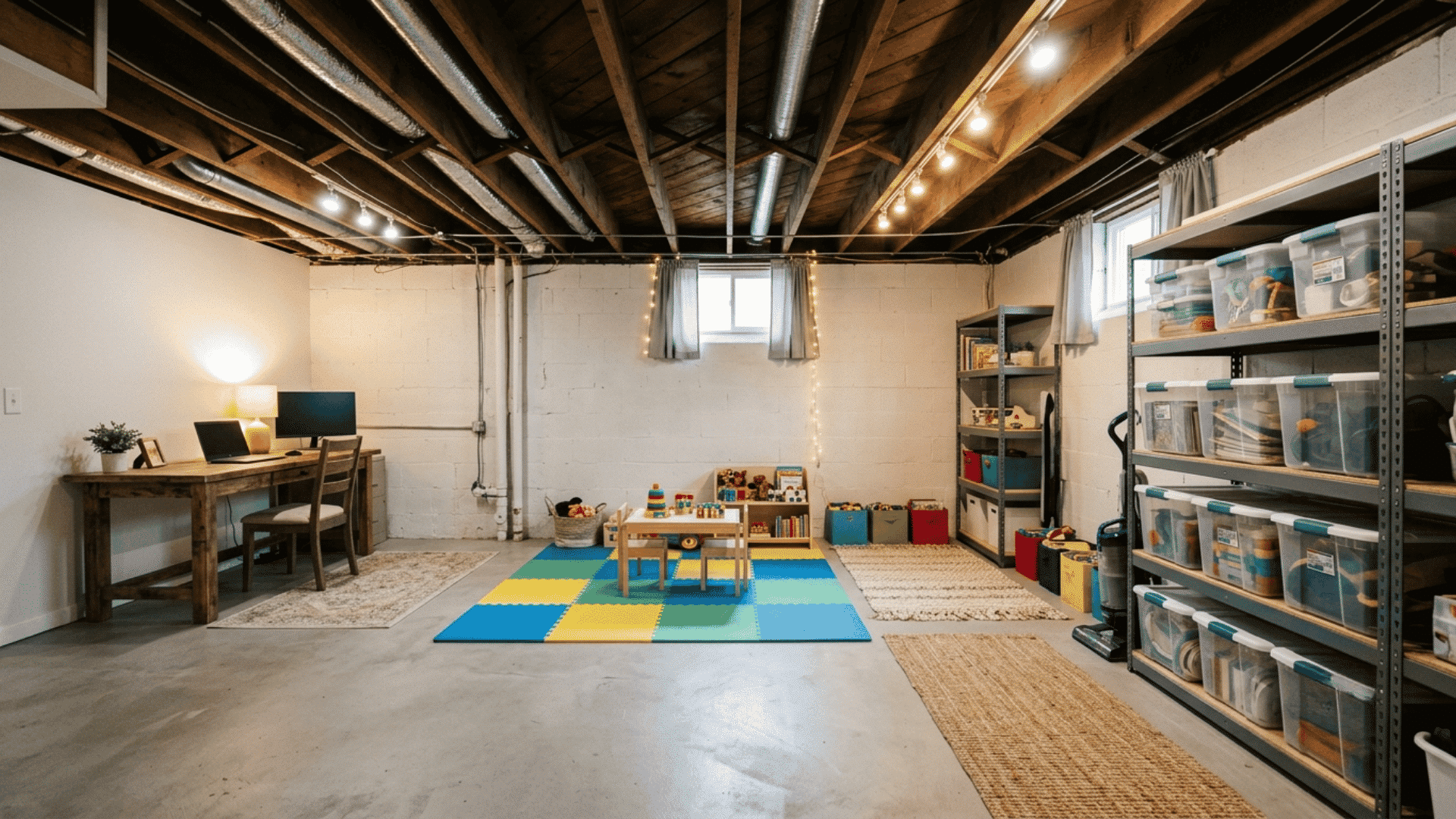
If your unfinished basement is sitting empty or piled with stuff, there is a lot you can do with it.
Many homeowners skip fixing up their basement because they think it takes thousands of dollars and a full renovation.
It does not. Simple upgrades like paint, better lighting, and affordable flooring can make a real difference without a contractor or a permit.
These unfinished basement ideas are all budget-friendly and doable over a weekend. Keep reading to find the project that fits your basement and your budget.
Why Raw Basements Are the Most Underused Room in the House
Every home with an unfinished basement is sitting on extra square footage that already costs you nothing beyond your regular mortgage or rent.
The problem is that most people look at the concrete walls, exposed pipes, and bare floor and assume the only option is a full renovation. That is not true. You do not need drywall, framing, or a contractor to make the space usable.
A coat of paint, some affordable flooring, and a few smart additions can change how the room looks and feels.
Most of the ideas below come under your budget and take a single weekend to finish.
Budget Wall Fixes That Skip the Drywall
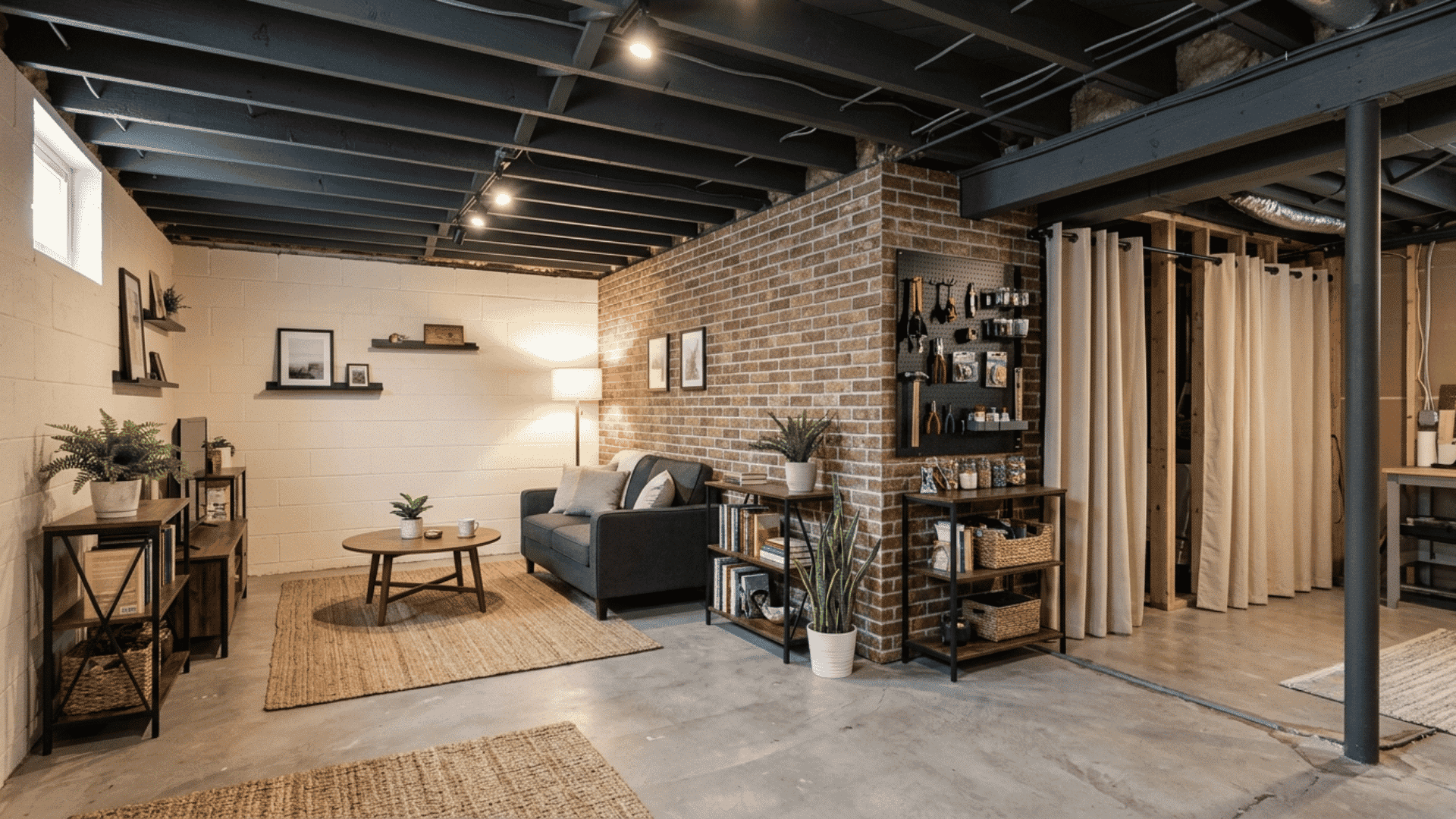
Drywall means framing, taping, mudding, and often a building permit. These alternatives get the job done without any of that.
- Peel-and-stick panels: Faux brick or shiplap panels stick directly to concrete block. They run about $2 to $5 per square foot and pop off cleanly if you rent.
- Painted concrete block: A coat of waterproof masonry paint (like Drylok) brightens the space and adds a moisture barrier for about $35 per gallon.
- Fabric or curtain walls: Tension rods and drop cloths or canvas curtains hide rough walls instantly. Swap them seasonally for a quick refresh.
- Pegboard accent walls: Mount a single pegboard section for tool storage or a hobby station. It is functional decor that costs under $50.
Flooring Over Concrete Without a Contractor
Concrete floors feel cold and look industrial. These options sit right on top of the slab with no subfloor or adhesive needed.
| Flooring Type | Best For | Cost |
|---|---|---|
| Interlocking foam tiles | Play areas and home gyms | $1 to $3 per sq ft |
| Vinyl plank (click-lock) | Wood look, moisture-friendly | $2 to $4 per sq ft |
| Layered area rugs | Quick warmth, mildew-resistant | Varies |
| Epoxy floor paint | Polished, easy-to-clean finish | $100 per 250 sq ft |
Before laying anything down, test for moisture. Tape a plastic sheet to the floor for 24 hours. If condensation forms underneath, address drainage or ventilation first.
Lighting a Space With No Windows
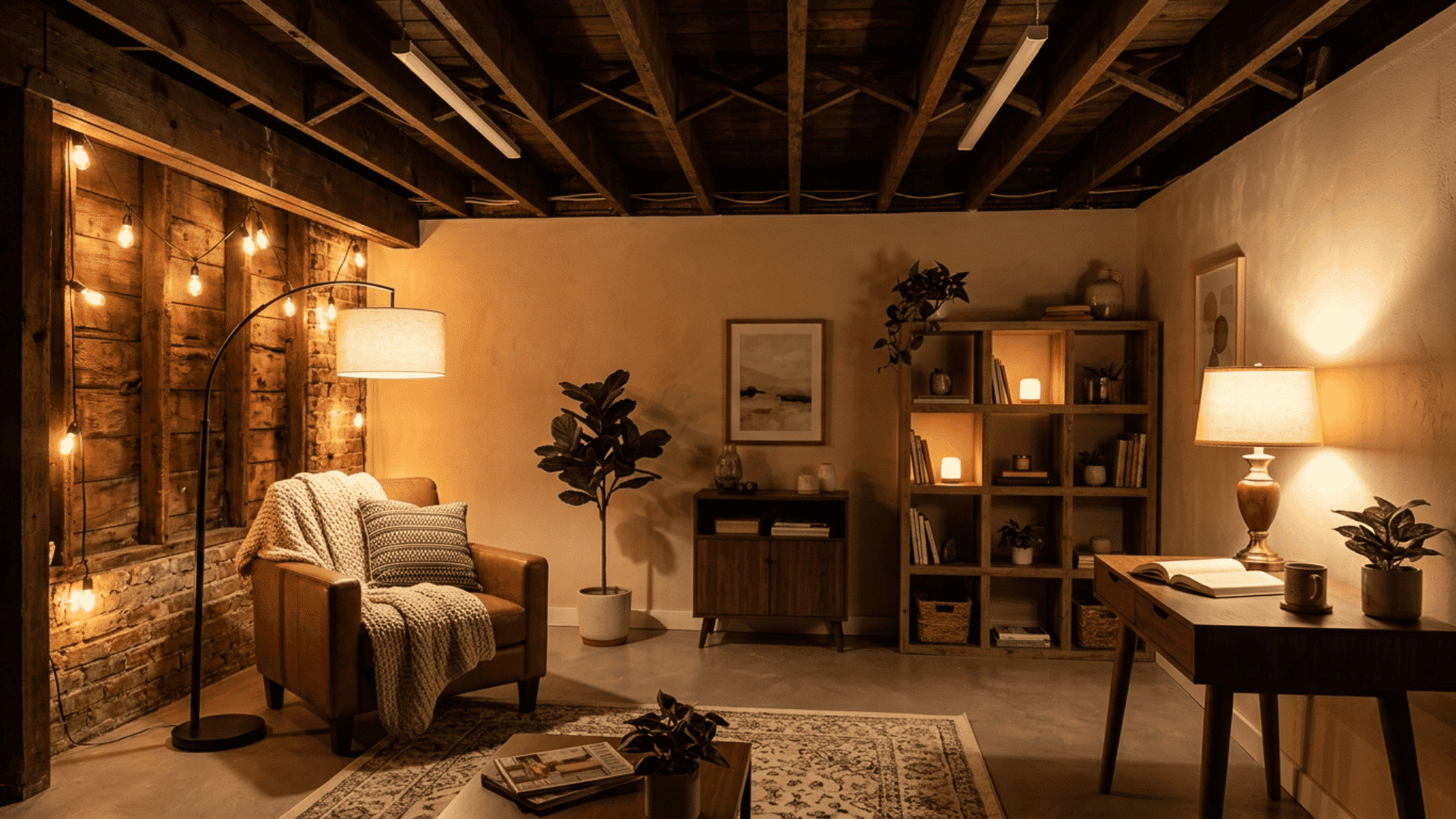
Dark rooms feel smaller and less inviting. Since most basement ideas lack natural light, good artificial lighting matters more than any other single upgrade.
- LED shop lights: Hang them from exposed joists for bright, even coverage. A two-pack runs about $25.
- String lights: Edison-bulb strings add warmth along walls or ceiling beams without any wiring work.
- Floor and table lamps: Spread a few around the room to break up the single-overhead-light look.
- Battery puck lights: Stick them inside shelves, closets, or dark corners. No outlets needed.
What to Do With an Exposed Ceiling
Drop ceilings and drywall both eat into headroom, and basements rarely have inches to spare. A simpler option is to leave the ceiling open and paint everything above the joists one flat color.
Black works well because it hides pipes, wires, and ductwork by pulling the eye down to the joist line. White does the opposite and bounces light back into the room, making it feel taller.
A gallon or two of paint and a spray gun can cover most basement ceilings in a few hours for under $100. For sound control, acoustic panels fit between joists without dropping the ceiling height.
Kid-Friendly Basement Setups
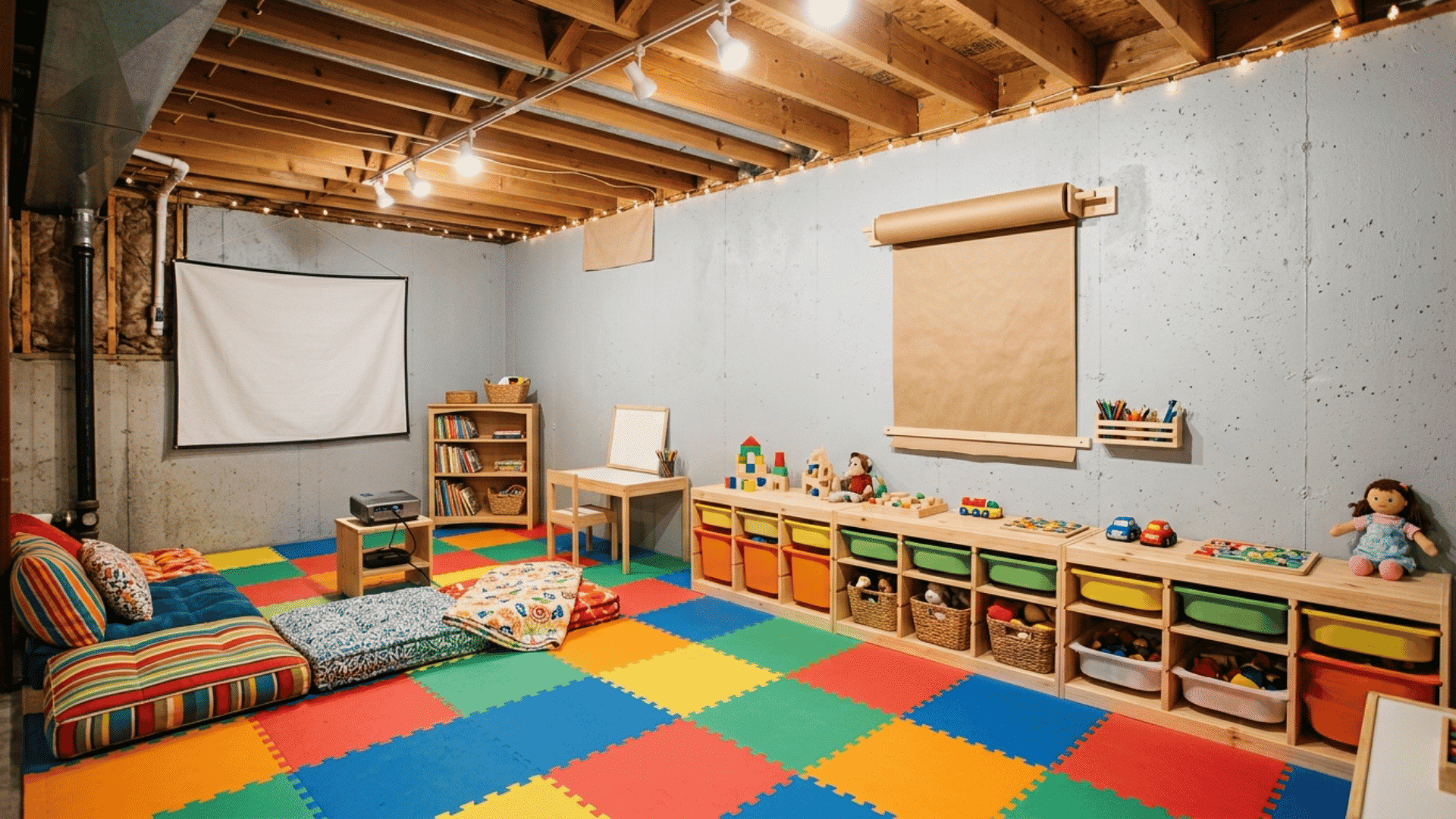
An unfinished basement is one of the best spots for a play zone because spills, paint, and rough play will not ruin finished surfaces.
- Foam tile play area: Padded zones for toddlers wipe clean, and cushion falls.
- Art wall: A roll of butcher paper on the wall gives kids a giant drawing surface. Cleanup takes seconds.
- Open toy storage: Low shelving and labeled bins keep toys accessible without built-in cabinetry.
- Movie corner: A portable projector, a white sheet, and floor cushions make a low-cost cinema.
For families who homeschool, the same layout works with a desk area and a bookshelf. Hang posters using adhesive hooks on concrete or clips on tension wire.
A Home Office That Works Below Grade
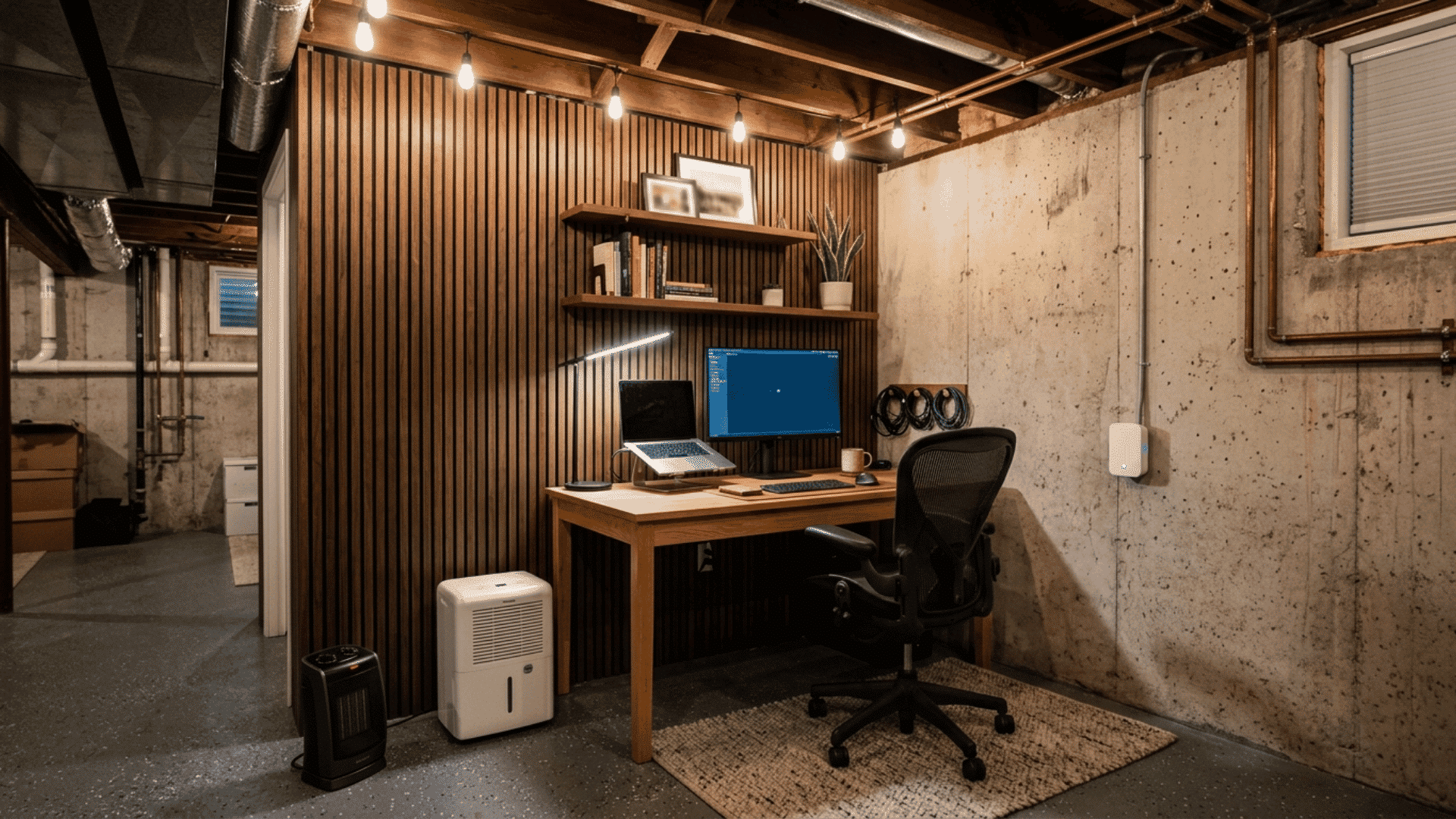
A small basement office costs a fraction of converting a spare bedroom, and you do not need to frame out the entire room.
Start with one finished accent wall behind your desk. That single wall gives video calls a clean background while the rest of the space stays raw.
For internet, a Wi-Fi mesh extender or a powerline adapter keeps the signal stable underground. A small dehumidifier protects your laptop and other electronics from excess moisture.
And during colder months, a portable space heater with an auto-shutoff keeps the area warm without running up the utility bill or creating a safety risk.
Storage That Actually Stays Organized
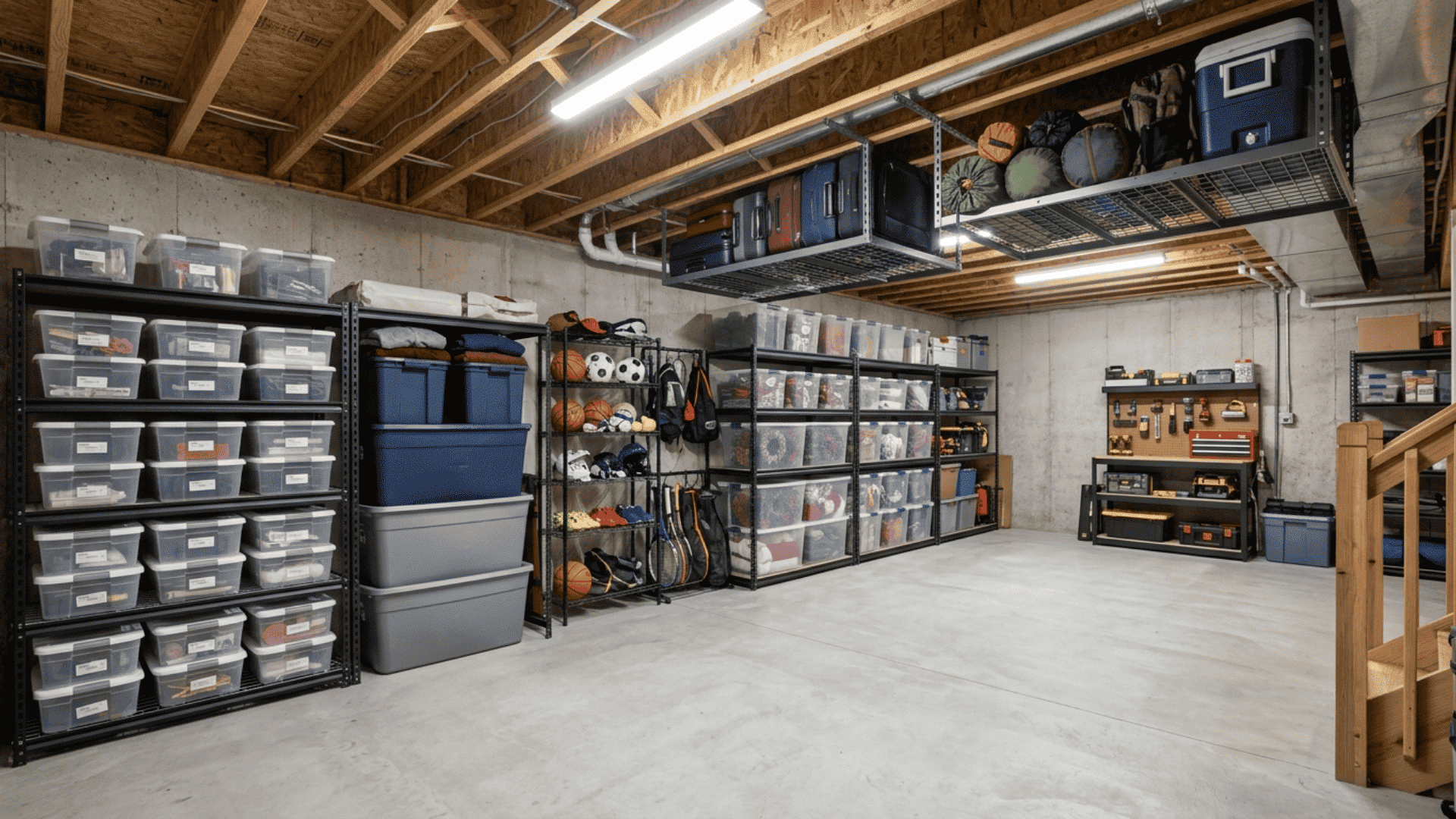
If the basement will stay partly or fully for storage, give it structure so it does not slide back into chaos.
Metal shelving units: Wire shelving keeps boxes off the concrete, which helps protect against moisture. Adjustable shelves fit bins of different sizes. Most units run between $50 and $100 each.
Zone system: Pick a section of the basement for each category like holiday items, tools, seasonal clothes, and sports gear. Label every bin so anyone in the house can find things fast.
Ceiling-mounted racks: Bolt overhead racks to the joists for stuff you only grab a few times a year, like luggage, camping gear, or holiday decorations. It frees up a lot of floor space.
Renter-Friendly Unfinished Basement Ideas
Renting means nothing permanent goes on the walls or floors. Every idea below is removable and can move with you.
- Freestanding furniture: Shelves, desks, and storage that stand on their own with no anchoring.
- Tension rod curtains: Section off areas or cover rough walls without drilling.
- Peel-up flooring: Click-lock vinyl plank and foam tiles lift right off concrete.
- Adhesive hooks and strips: Hang lights, art, and shelves damage-free.
Moisture and Safety: Do Not Skip This
No decorating fix matters if water keeps getting in.
Check for foundation cracks, make sure gutters direct water away from the house, and run a dehumidifier during humid months.
The Environmental Protection Agency recommends keeping indoor humidity below 60% to prevent mold.
Also keep utility access clear. Water heaters, electrical panels, and sump pumps need room for service.
If you plan to use the basement as a sleeping space long-term, check local codes for egress window requirements.
Wrapping Up
Your basement does not need a full renovation to become a room worth using. A single weekend project can change how the whole space feels.
Pick the fix that matters most right now, whether that is the flooring, the walls, or getting the clutter off the ground.
Once that first project is done, the next one gets easier. Every upgrade builds on the last, and you do not need to spend thousands to see real results.
Most of these unfinished basement ideas work on a tight budget. Leave a comment below and share what you are planning to tackle first.
Frequently Asked Questions
Does the Area Count Toward a Home’s Square Footage?
Appraisers usually report below-grade space separately from above-grade living area. Local standards, finishing level, access, and heating can affect how it is listed.
Can Exposed Insulation Remain Uncovered?
Some insulation facings are combustible and may require a thermal barrier per local code. Check product labels and building regulations.
Do Cosmetic Updates Usually Require Permits?
Painting, movable furniture, and removable flooring usually don’t require a permit. Structural, electrical, plumbing, heating, or bedroom changes may require local approval.