Water stains on wooden furniture can quickly detract from its clean, polished appearance.
A glass left on a table or a small spill can leave behind noticeable marks, but the right approach can help improve the surface.
Understanding how to remove water stains from wood starts with identifying the type of stain and choosing a suitable solution.
This blog covers simple methods for treating white and dark water stains, helpful products to use, mistakes to avoid, and ways to prevent future marks.
Follow these practical tips to care for wooden surfaces and keep them looking their best.
How To Remove Water Stains From Wood
Water stains on wood furniture can look frustrating, but the right removal method depends on the type of stain and how deeply the moisture has affected the surface.
Before applying any treatment, homeowners should identify whether the mark is a light ring on the finish or a darker stain inside the wood.
Understanding the difference helps to choose a safer solution and avoid damage to the furniture.
White stains are often easier to treat with simple home remedies, while dark stains may need more careful handling.
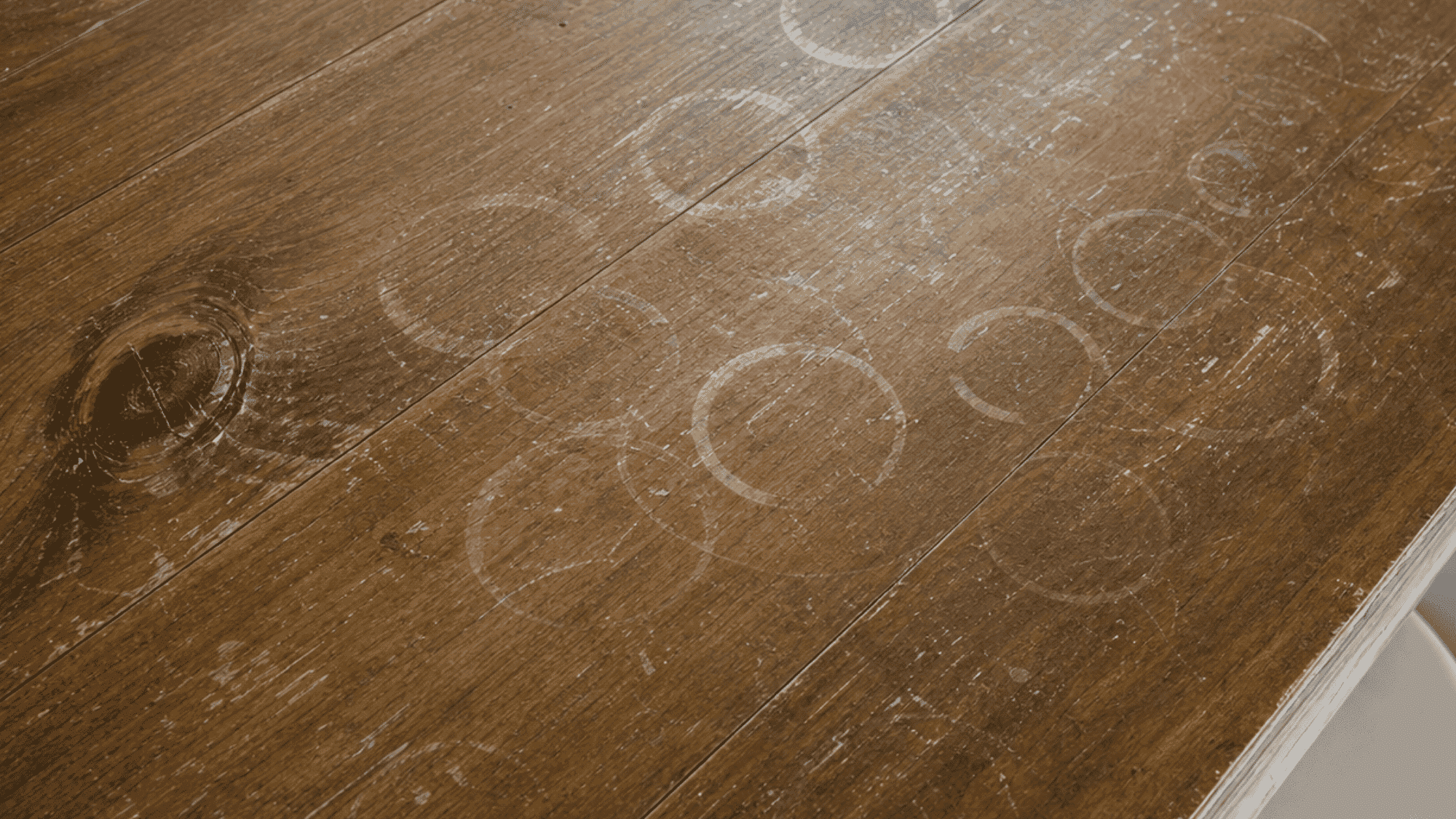
- White Water Rings On Wood: Light, cloudy marks caused by moisture trapped under the finish. These are usually easier to treat.
- Dark Water Stains On Wood: Deeper stains form when water penetrates the wood. They may need stronger solutions.
Remove White And Dark Water Stains From Wood
Water stains on wood vary by how deep the moisture goes. White marks stay near the finish. Dark stains mean deeper absorption into the wood.
Remove White Water Rings With Heat
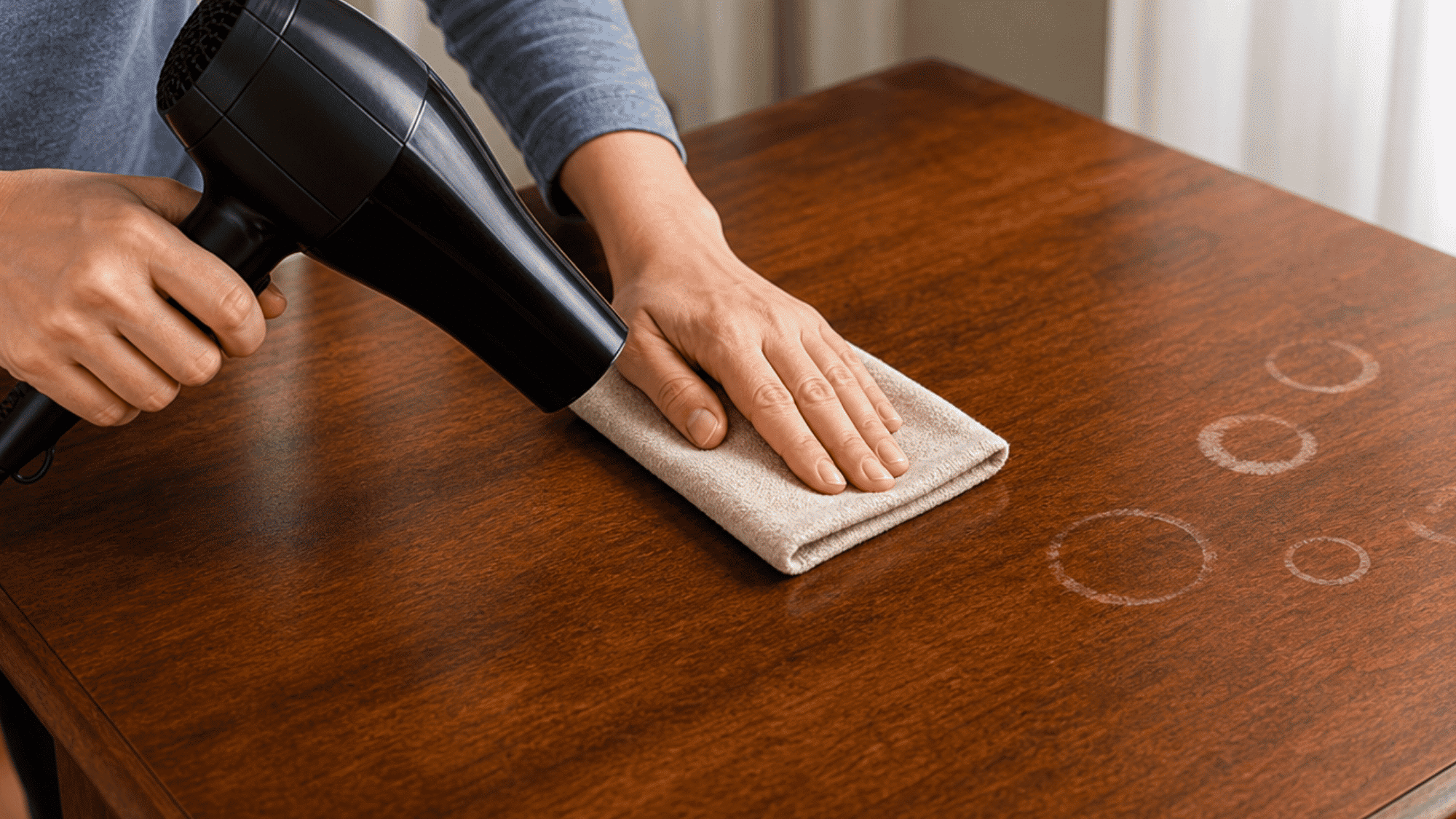
White water rings often form when moisture gets trapped beneath the protective finish.
Applying gentle heat with a hair dryer or warm iron over a cloth can help release the trapped moisture.
The process should be done slowly while regularly checking the surface. Avoid direct high heat, as it may damage the finish or cause discoloration.
Treat Light Stains With Baking Soda
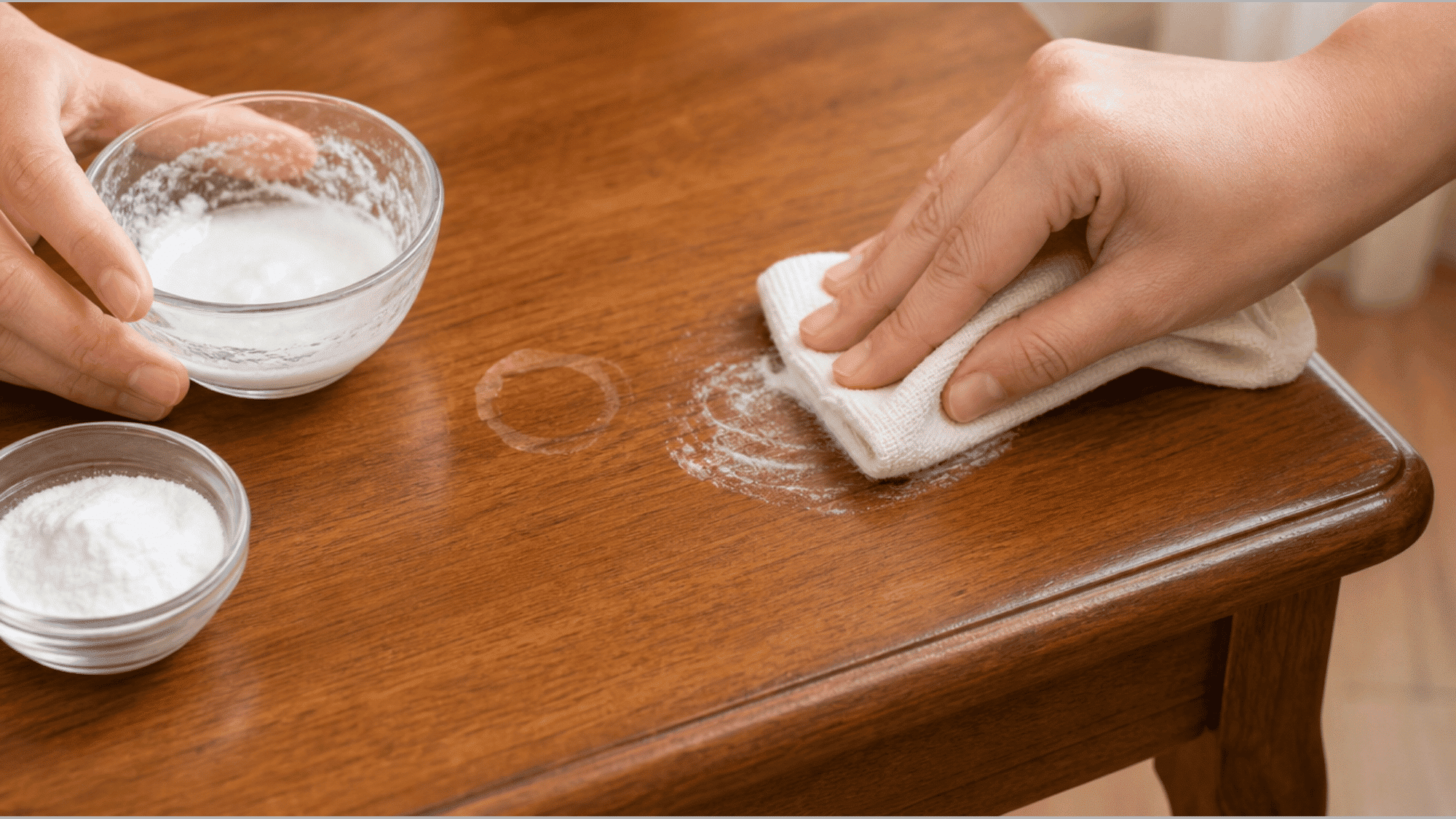
Baking soda can help reduce mild water marks on wooden furniture when used carefully.
Mixing it with a small amount of water creates a soft paste that can lift surface stains.
Apply the mixture gently with a cloth, following the wood grain. Remove the paste after a few minutes and dry the area completely.
Use Mayonnaise For White Water Rings
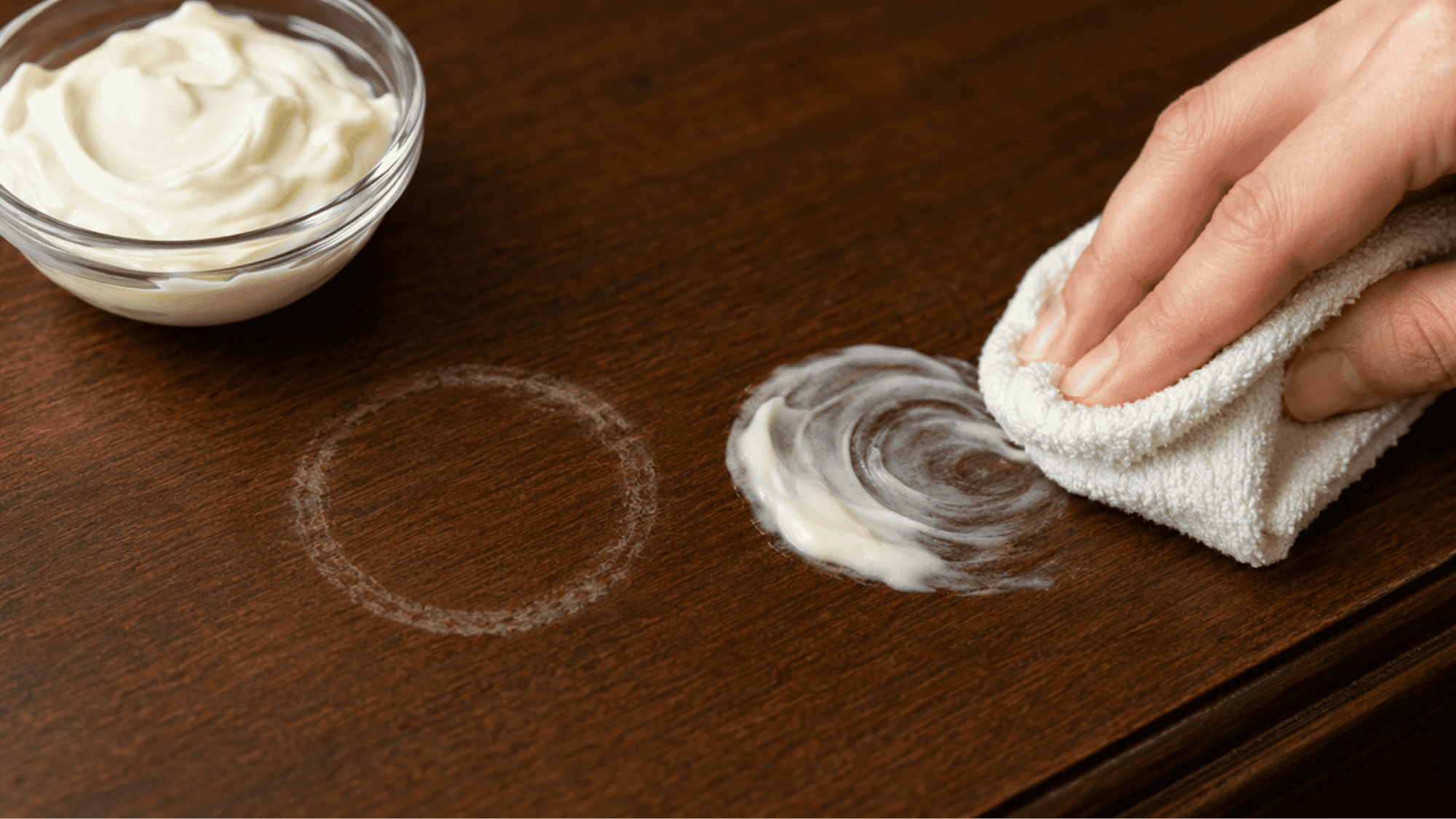
Mayonnaise is a simple home remedy often used for white water rings because its oils may help improve the appearance of moisture marks.
Apply a small amount over the affected area and leave it for a few hours.
Wipe the surface clean with a soft cloth and check if the cloudy mark has faded.
Remove Dark Water Stains With Vinegar
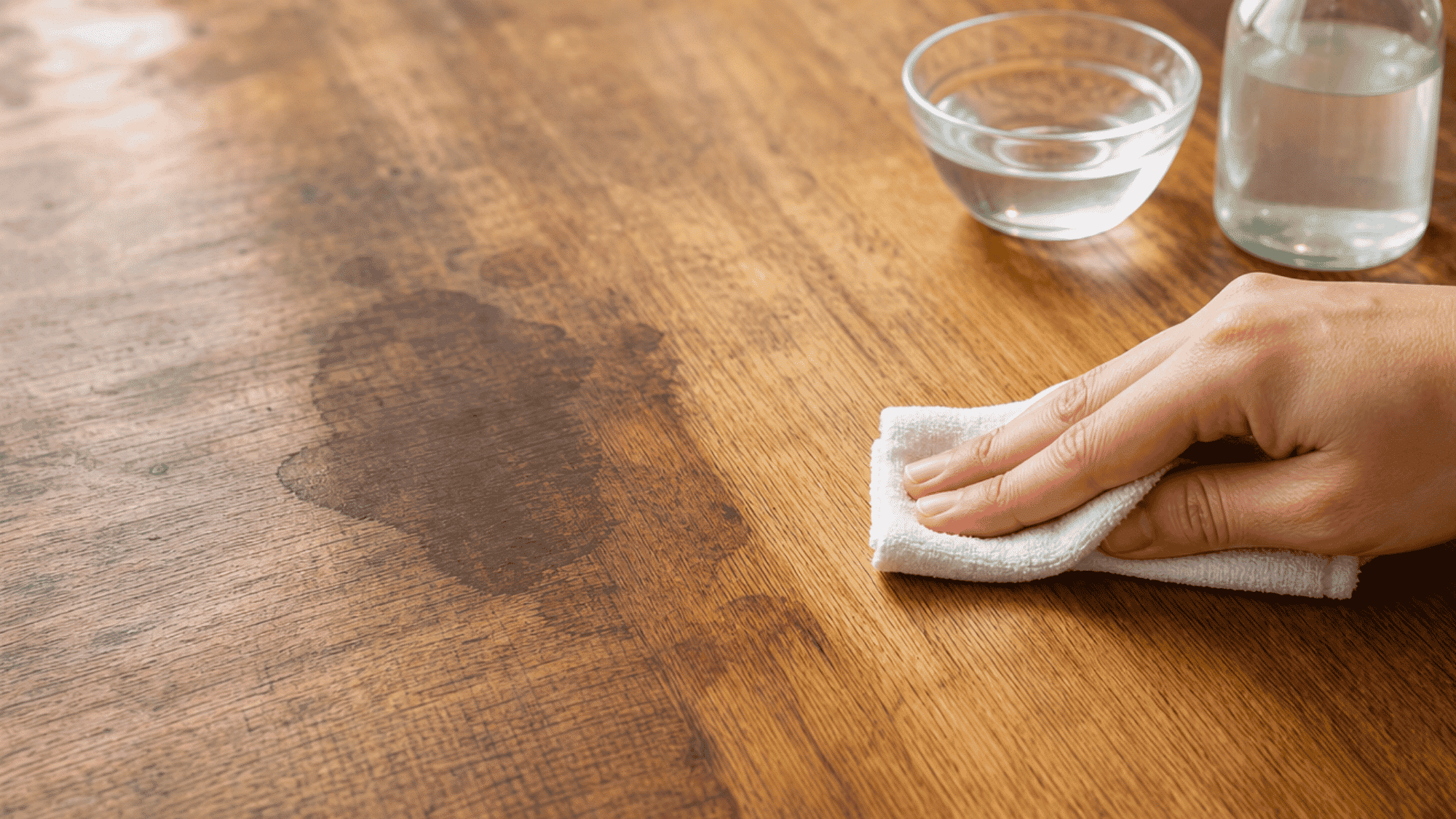
Dark water stains may require stronger cleaning methods because moisture has usually reached deeper into the wood.
A diluted vinegar solution can help clean the affected area when used carefully.
Apply it with a lightly damp cloth, avoid soaking the wood, and dry the surface immediately to prevent additional moisture damage.
Sand And Refinish Deep Stains
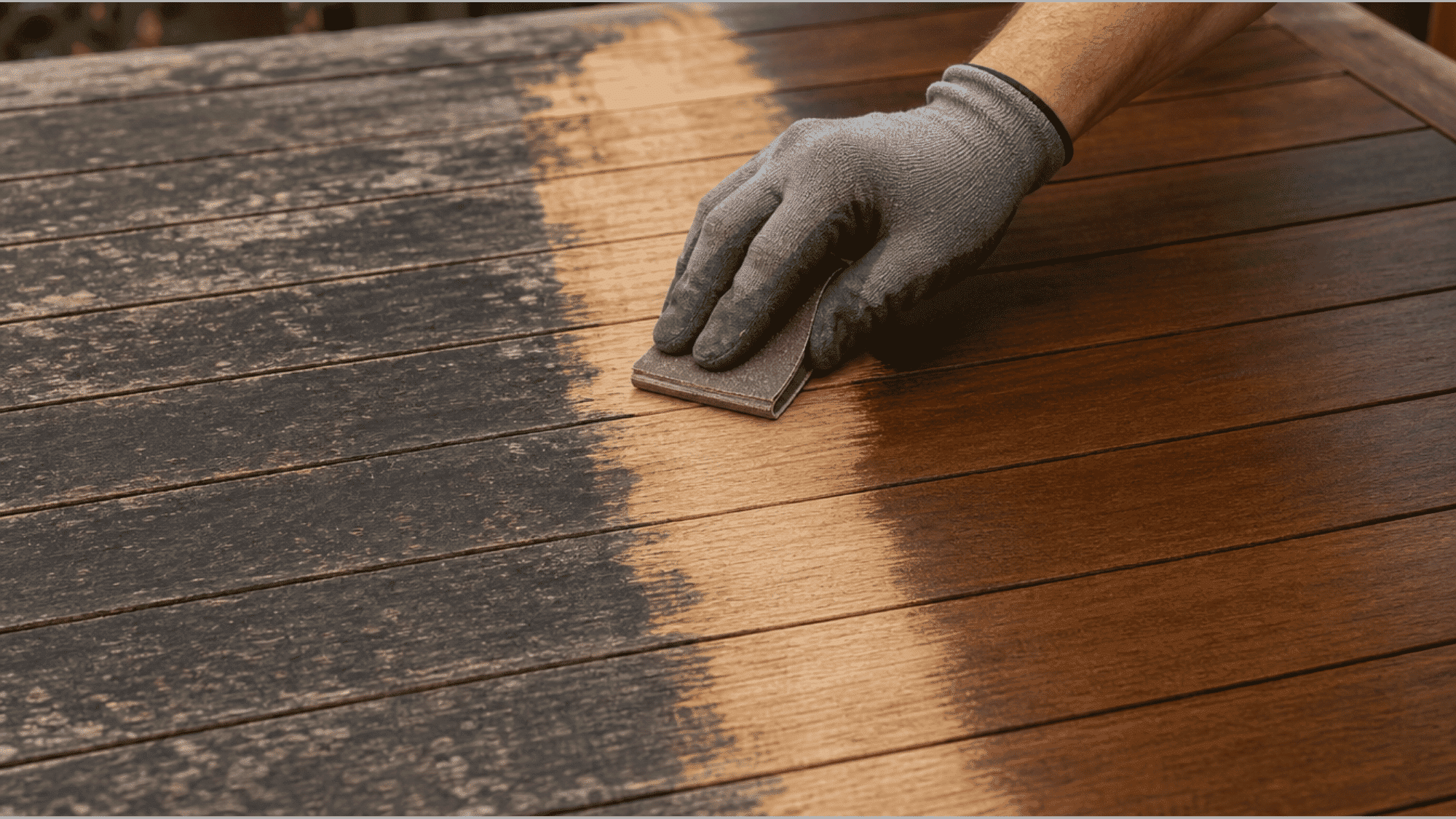
Deep dark stains may not respond to simple cleaning methods and may require sanding or refinishing.
Fine-grit sandpaper can help remove the damaged surface layer before applying a matching stain or protective coating. This method requires care to maintain an even appearance and avoid creating visible patches.
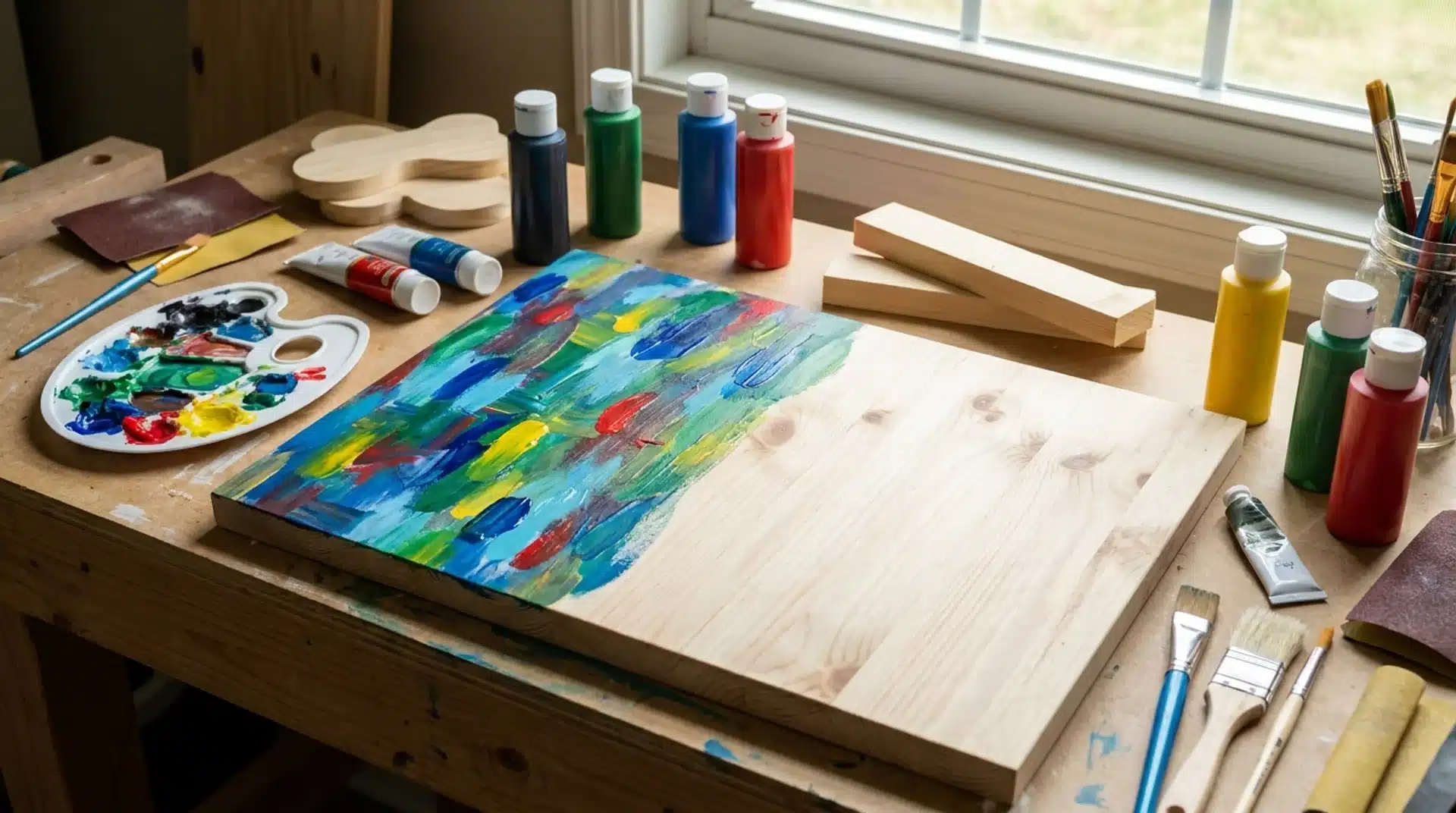
For those planning a complete furniture refresh, the process of refinishing a wood table as a beginner can help improve the surface and restore its original look.
Best Products For Water Stain Removal
Choosing the right wood care product can help improve the appearance of water stains while protecting the surface.
Different products work for different levels of damage.
- Wood Cleaners For Surface Marks: These cleaners help remove light stains, dirt, and residue from finished wood surfaces. They are suitable for regular maintenance and minor water marks.
- Furniture Polish For Added Protection: Polish can refresh dull wood surfaces and add a protective layer after stain removal. It helps maintain the finish and improve the overall appearance.
- Commercial Stain Removers For Tough Marks: Specialized stain removers are designed for stubborn water marks. They can help treat deeper stains when home remedies do not provide the desired results.
Mistakes To Avoid When Removing Stains
Removing water stains from wood requires careful handling because incorrect methods can make the damage worse. Avoid these common mistakes to protect the furniture finish.
Using Too Much Water During Cleaning
Excess moisture can seep into the wood, causing additional stains or damage. Use a lightly damp cloth and dry the surface quickly.
Scrubbing Wood Surfaces Too Hard
Aggressive scrubbing can scratch the finish and affect the wood’s appearance. Gentle cleaning methods are safer.
Applying Wrong Cleaning Products
Harsh chemicals may damage protective coatings. Always choose products suitable for wooden surfaces and test them first.
Prevent Water Stains On Wood
Preventing water stains helps wooden furniture maintain its appearance and reduces the need for frequent repairs.
Simple care steps can protect surfaces from moisture damage.
Using coasters and protective mats helps create a barrier between wet items and wood, reducing the chance of water rings.
Cleaning spills immediately prevents moisture from settling into the finish or wood grain. A soft cloth can quickly remove liquids before they cause marks.
Regularly maintaining wood finishes keeps the protective layer strong.
Proper cleaning, polishing, and refinishing when needed can help furniture stay protected from future water damage.
Conclusion
Removing water stains from wood becomes easier when the right method is chosen based on the stain type and surface condition.
Simple solutions can help with minor marks, while deeper stains may need more careful treatment.
Using suitable products, avoiding harsh cleaning habits, and following proper maintenance steps can help protect wooden furniture over time.
Try these methods on your furniture and share your experience or favorite wood-care tips in the comments to help others protect their wooden surfaces.
Frequently Asked Questions
Can Old Water Stains Be Removed From Wood?
Yes, old stains can often improve, but deeper marks may require stronger treatments or refinishing.
Are Water Stains On Wood Permanent?
No, many water stains can be removed, but severe damage may need professional restoration.
Does A Hair Dryer Remove Water Stains From Wood?
Yes, gentle heat from a hair dryer can help remove moisture trapped under the wood finish without causing damage.