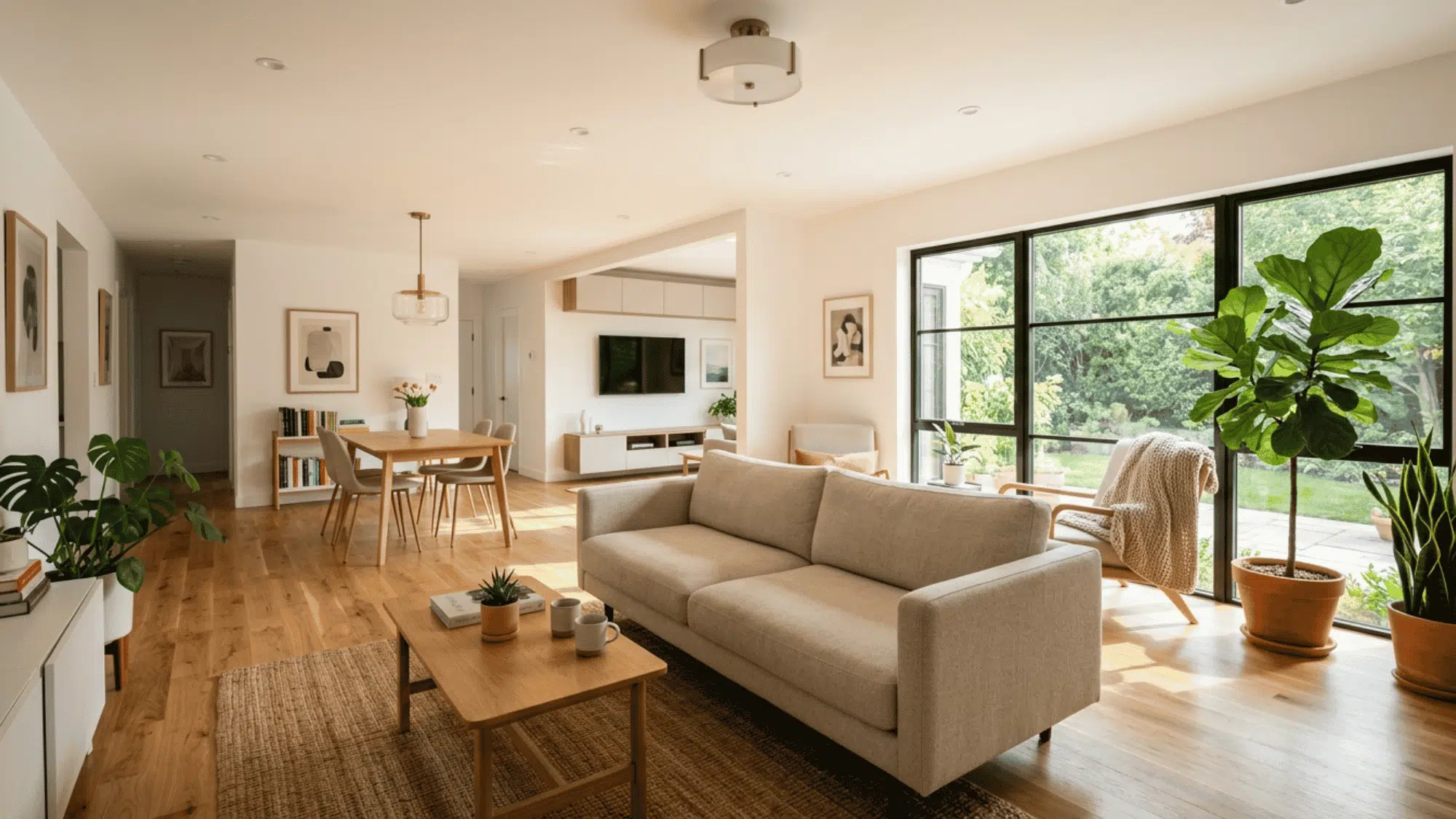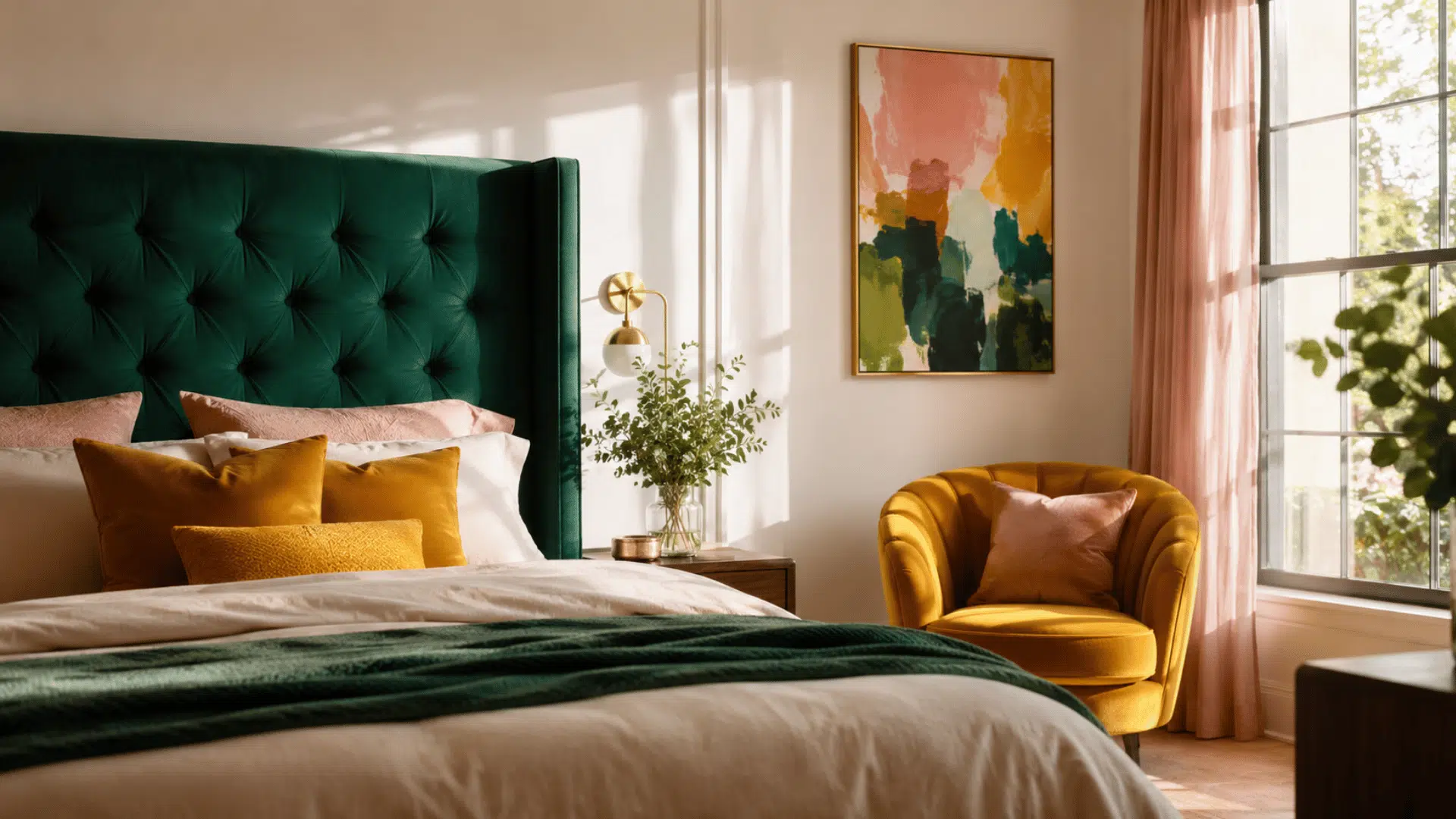
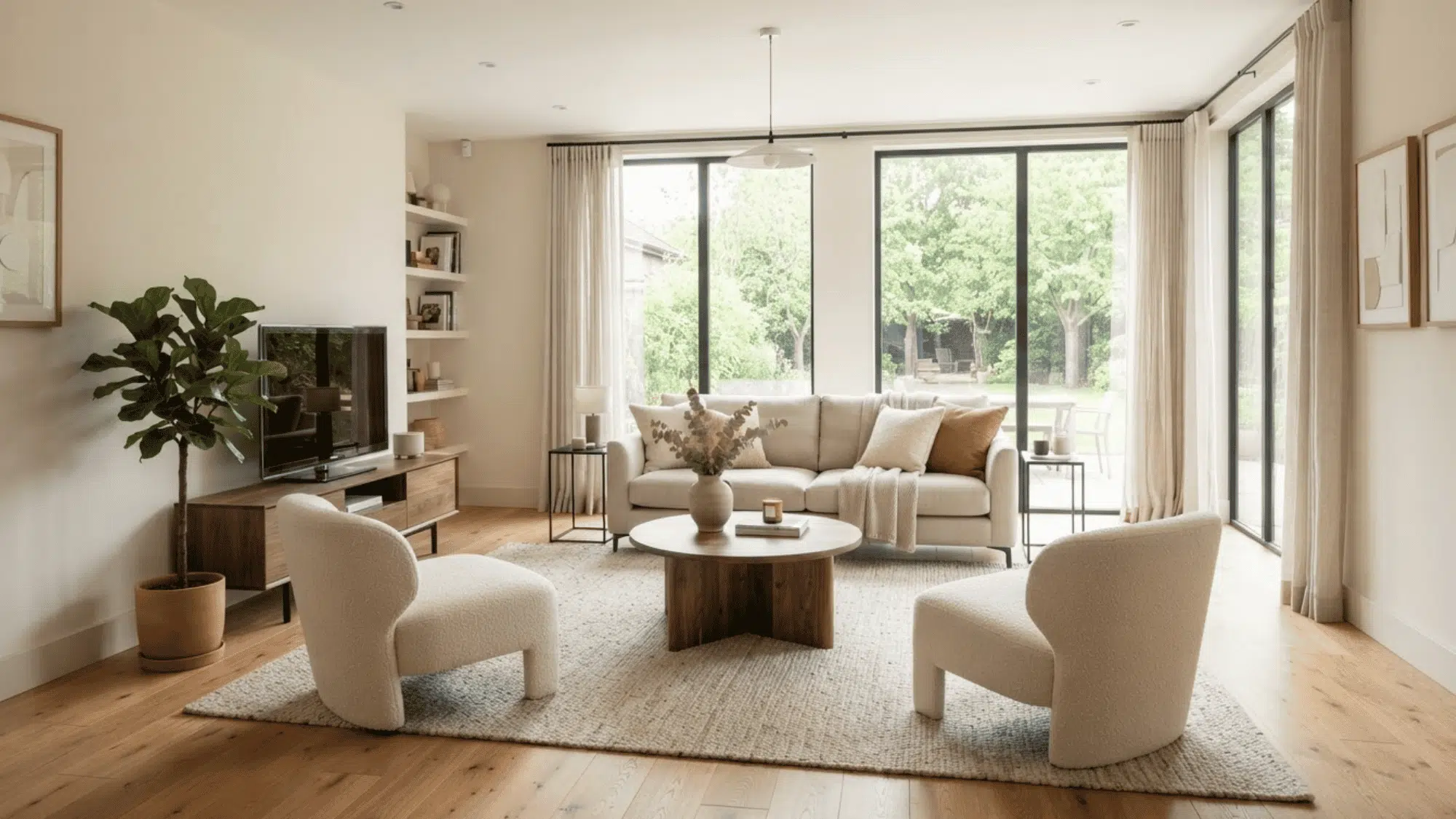
Why can a living room still feel awkward after you buy attractive furniture? The issue often starts with poor planning.
A sofa may be too large, chairs may block a walkway, or tables may sit too far from the seats. The room can also feel crowded when the furniture does not match its size, purpose, or daily use.
This blog will show you how to choose the right pieces, decide what to buy first, compare furniture types, follow spacing guidelines, and create a practical layout.
Keep reading to plan a living room that feels balanced, comfortable, and easy to use.
How to Choose Living Room Furniture: Quick Checklist
Choosing living room furniture is easier with a simple plan. Check the room, budget, seating, spacing, materials and supporting pieces before placing an order online.
- Decide how the room will be used.
- Measure the room and delivery route.
- Set a total furniture budget.
- Choose the main seating first.
- Match furniture size and plan clear walkways.
- Add tables, storage, and extra seating last.
What to Consider When Buying Living Room Furniture
Before buying living room furniture, check the room size, shape, doors, windows, ceiling height, fireplace and open walkways.
Think about living room arrangements, how the room will be used for TV, reading, work, guests, play, or storage. The number of people in your home will affect sofa size and chair count.
Test seat height, depth, cushion firmness, back support and arm height when possible. Choose materials that suit pets, children, sunlight, and cleaning needs.
Spend more on pieces used every day. Measure doors, halls, stairs, lifts, turns and packaging so each item can reach the room safely.
Different Types of Living Room Furniture
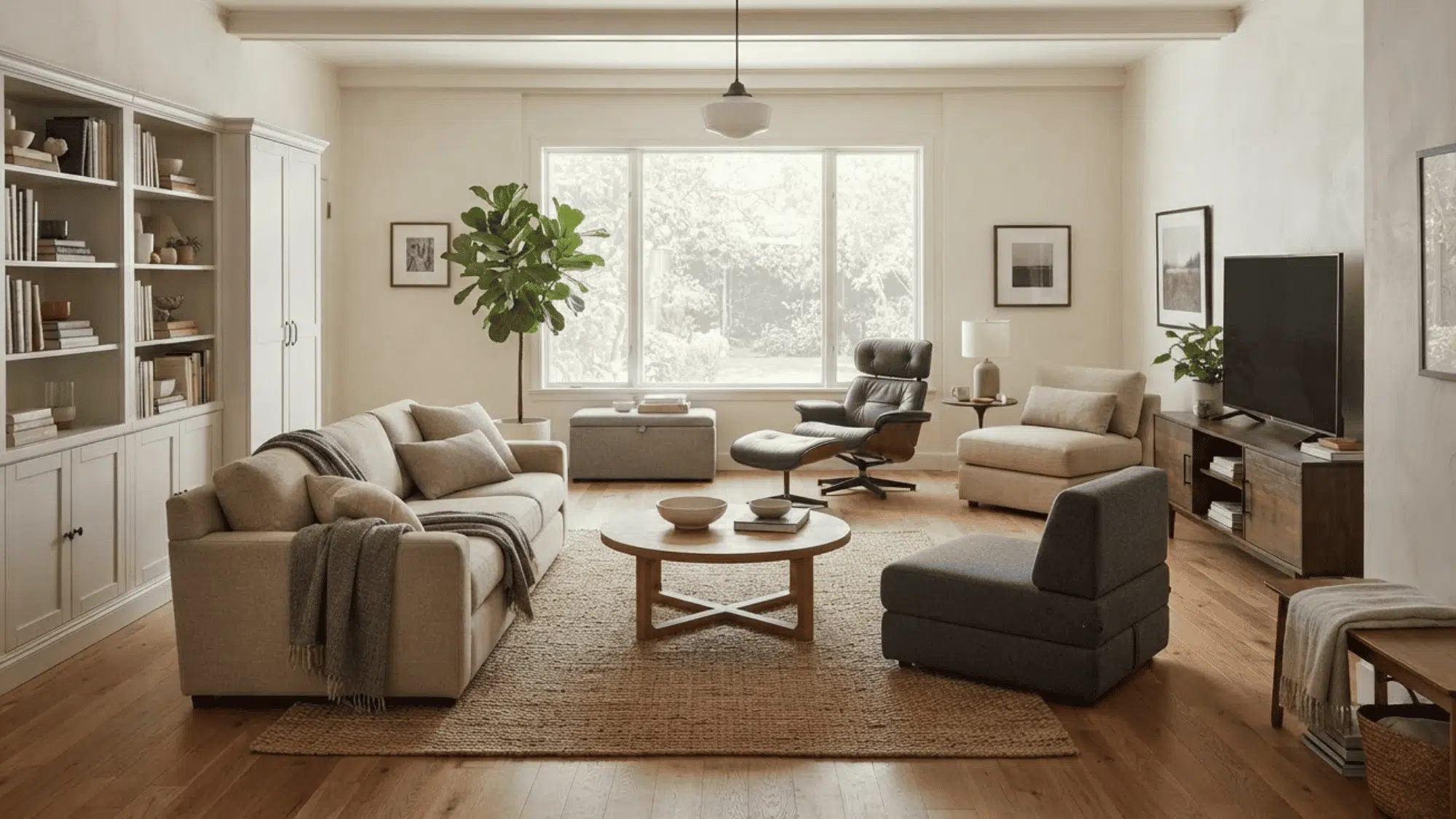
Living room furniture comes in many forms, and each piece serves a different purpose. Compare these common options before planning your seating and storage needs.
Sofas and Loveseats
Standard sofas suit larger seating areas, while loveseats fit smaller rooms. Sleeper, reclining and apartment-size models support guests, comfort, or limited floor space.
Sectional and Modular Seating
Sectionals offer more connected seating and work well in corners. Modular pieces can be moved, split, or rearranged as room needs and layouts change.
Accent Chairs and Recliners
Armchairs and club chairs add comfort, while slipper chairs save space. Swivel chairs support multiple viewing angles, and recliners provide additional back and leg support.
Coffee Tables and Side Tables
Rectangular tables suit long sofas, while round and oval tables soften tight layouts. Nesting, lift-top, and storage tables add function in smaller rooms.
Ottomans, Benches, and Poufs
Ottomans can replace a coffee table, hold hidden storage, or support tired feet. Benches and poufs offer extra seating that is easy to move.
Media Units and Storage
TV stands and consoles hold media equipment, while bookcases, cabinets, floating shelves and storage units keep everyday items neat and easy to reach.
How to Mix and Match Living Room Furniture
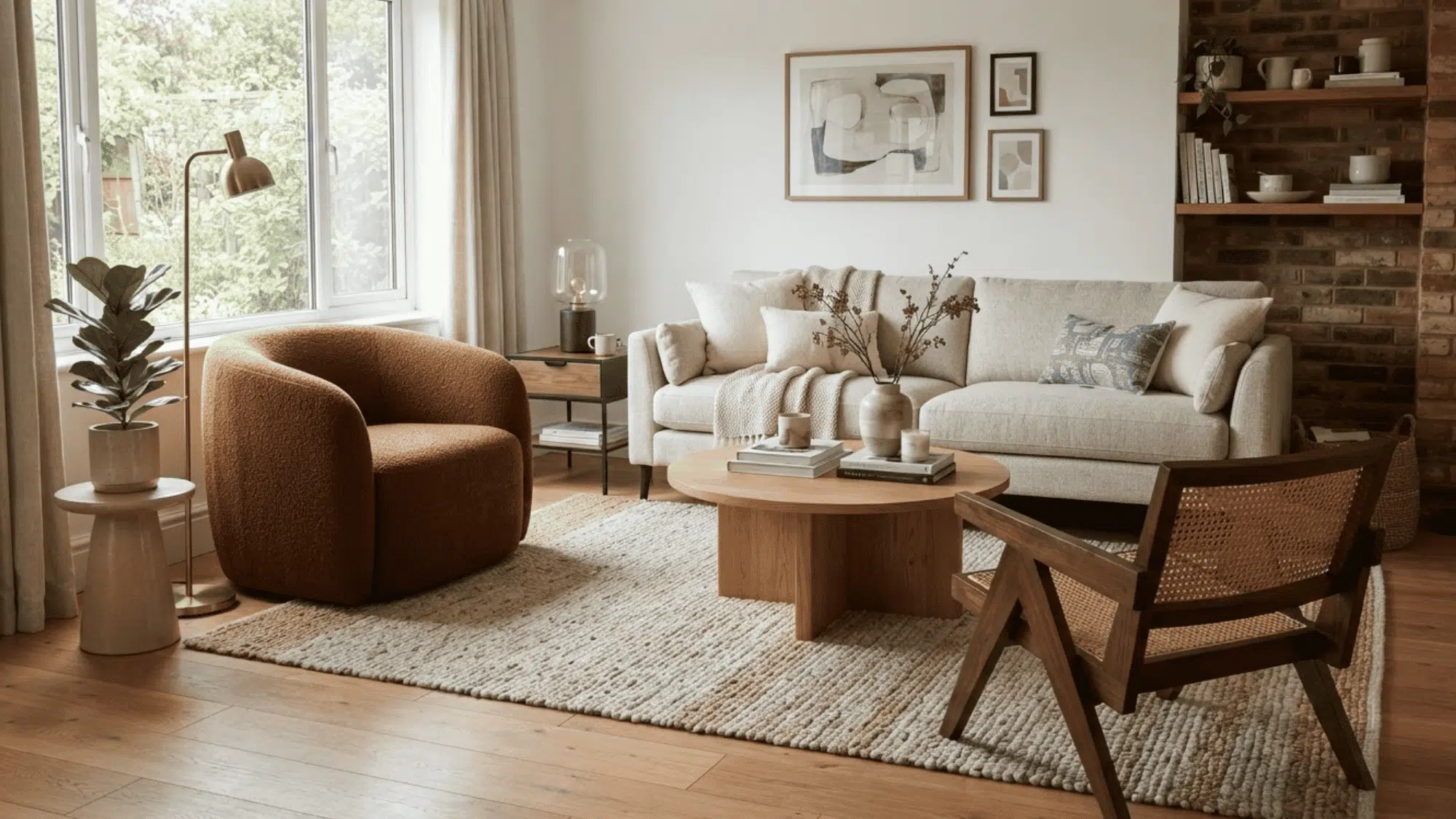
Start with one main furniture style, then add smaller pieces from another style for contrast. Repeat one color across chairs, pillows, rugs, or artwork to tie the room together.
When mixing wood tones, keep the undertones similar or repeat black and metal details across several pieces. Choose furniture with different shapes, but keep the size and visual weight balanced.
A curved chair can sit well beside a straight sofa when both feel similar in scale. Avoid buying a full matching set.
Pieces that share colors, materials, or proportions often look more natural and give the room more character. The type of wood also affects the furniture’s color, durability, and overall look.
What Order Should You Follow When Designing a Living Room?
Follow these eight steps to plan your living room in the right order, choose suitable furniture, protect walkways and reduce expensive buying mistakes later on. Learn more about the types of wood for furniture before selecting wooden pieces for your living room.
- Decide the room’s main purpose: List the main activities, such as watching TV, reading, working, hosting guests, family talks, or children’s play.
- Measure the room and access points: Record the room, doors, windows, outlets, radiators, halls, stairs, lifts and other fixed features.
- Choose the main focal point: Arrange furniture around a fireplace, television, large window, artwork, or central conversation area based on the room’s main use.
- Test the furniture layout: Use graph paper, painter’s tape, cardboard shapes, or a digital planner to check furniture size, spacing, and traffic paths.
- Choose the sofa or main seating: Select the largest seating piece first, as its size and placement will guide the rest of the furniture layout.
- Add secondary seating: Place chairs, a loveseat, ottomans, or movable stools based on the open space, seating needs and main viewing direction.
- Add tables and storage: Place useful surfaces near each main seat and add cabinets or shelves without blocking doors, windows, or walking paths.
- Finish with the rug and lighting: Choose a rug that ties the seating area together, then add general, reading and task lighting for daily activities.
Living Room Design Rules That Improve Furniture Placement
These living room design rules help you place furniture with purpose, protect walking space, support conversation and create a room that feels comfortable and balanced.
| Furniture Layout Tip | How to Apply It |
|---|---|
| Plan Around the Room’s Purpose | Arrange furniture based on activities such as watching TV, reading, hosting guests, or spending time with family. |
| Match Furniture Size to the Room | Choose pieces that fit the available space. Large furniture may crowd small rooms, while tiny pieces can look misplaced. |
| Keep Walking Paths Clear | Leave enough space between doors, seats, tables, and storage so people can move through the room safely and comfortably. |
| Support Conversation and Daily Use | Keep seats close enough for easy conversation and place a table or useful surface within reach of each main seat. |
| Create Balance With Rugs and Spacing | Use a rug to define the seating area, spread furniture evenly, and pull pieces away from walls when space allows. |
Common Living Room Furniture Buying Mistakes
Avoiding common buying mistakes can save money, protect comfort and keep your living room easy to use. Check these points before placing any furniture order.
1. Buying Before Measuring: Measure the room, doors, hallways, stairs and furniture footprint first. A piece may fit the room but fail to reach it.
2. Choosing Appearance Over Comfort: Do not choose a sofa for looks alone. Check seat depth, cushion firmness, back support and arm height for regular users.
3. Adding Too Many Pieces: Too much furniture can block movement and make the room hard to use. Keep only pieces that support daily activities.
4. Ignoring Furniture Depth: Check furniture depth, not only width. A deep sofa or chair may extend too far and reduce space around tables and walkways.
5. Using Furniture at One Height: Placing pieces at a single height can make the room look flat. Mix low tables, mid-height seating and taller storage for better balance.
6. Blocking Permanent Features: Keep windows, doors, vents, and radiators clear. Blocked features can limit light, airflow, access and safe movement through the room.
7. Skipping Purchase Terms: Review return fees, delivery times, assembly needs, care instructions and warranty coverage before ordering. These details can affect the final cost.
Conclusion
Choosing living room furniture works best when you start with the room’s purpose. Measure the space, delivery route, doors, windows and fixed features before you shop.
Plan the layout and test furniture sizes so walkways stay clear. Choose the sofa or main seating first, since it will shape the rest of the room.
Add chairs, tables, storage, rugs, and lighting only after checking scale, spacing, comfort and daily needs.
Share your room size, biggest furniture problem, or preferred layout in the comments below to help other readers plan better too.
Frequently Asked Questions
What is the 2/3 Rule for Sofas?
The 2/3 rule suggests choosing a sofa about two-thirds the width of the wall behind it, leaving open space for visual balance.
What is the 3-5-7 Rule in Interior Design?
The 3-5-7 rule means grouping décor in odd numbers, such as three cushions, five frames, or seven objects, to create visual balance.
What is the 4-Inch Rule?
The 4-inch rule suggests keeping sofa and chair seat heights within four inches of each other so mixed seating feels balanced and comfortable.