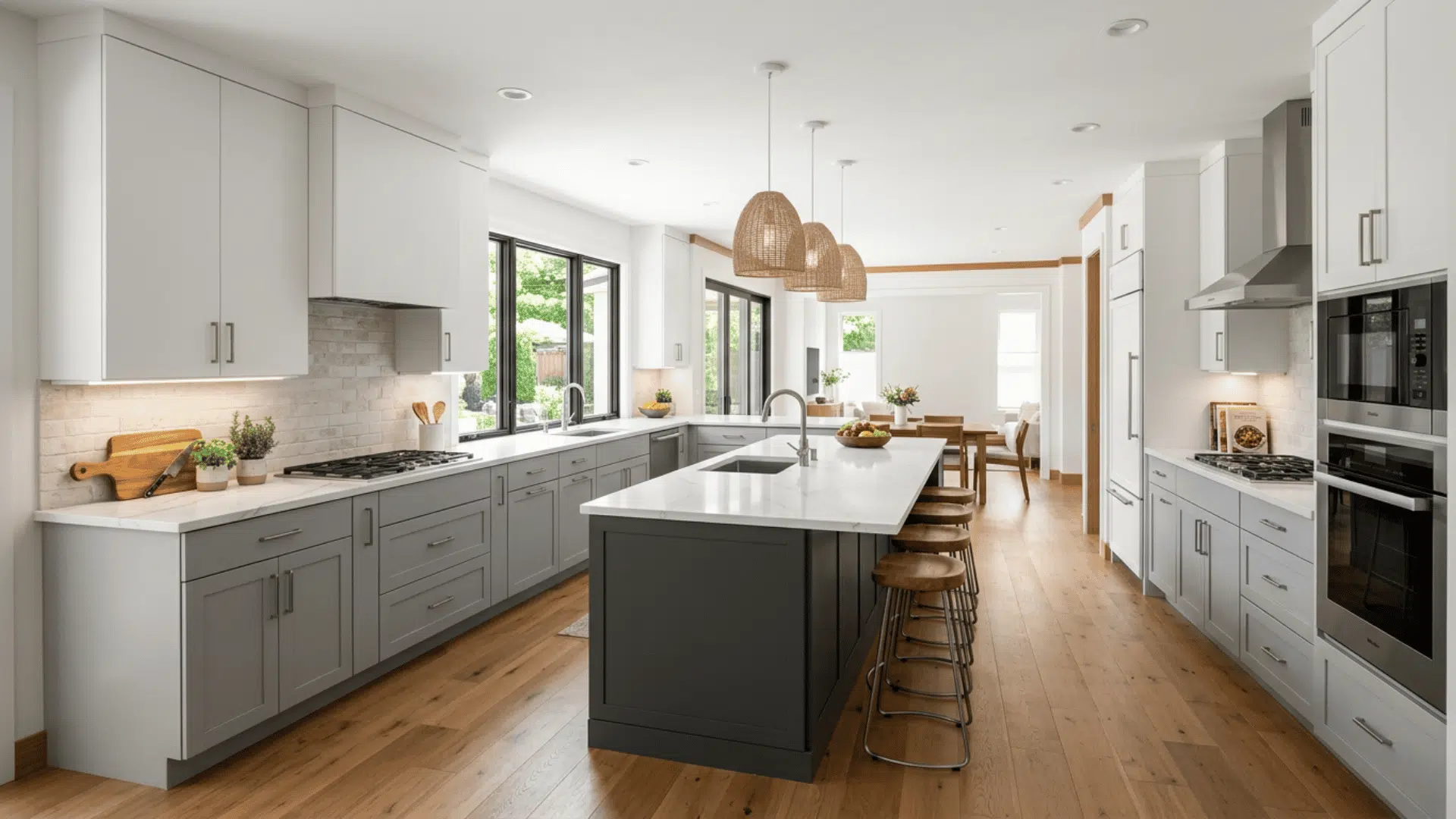
The kitchen should be bright and well-balanced. This is why gray and white kitchen cabinets continue to be one of the preferred options when creating kitchens of different styles, either modern or classic.
The combination provides you with a light and airy feeling without making the interior look cold, and also gives you an opportunity to add other materials and details to the interior.
Let’s have a closer look at the color combinations, finishing, and general design solutions.
Why Choose Gray and White Kitchen Cabinets?
Gray and white two-tone kitchen cabinets create a balanced look that works with many home styles.
White cabinets reflect light and can make the room feel brighter, while gray adds depth and keeps the design from looking plain. This color pairing also works well with wood, stone, metal, and patterned finishes.
You can use soft gray for a calm look or charcoal for stronger contrast. The combination suits modern, farmhouse, traditional and transitional kitchens.
It also gives you more freedom when choosing counters, flooring, wall paint and hardware. Since both colors are neutral, small updates are easier over time.
Changing handles, stools, lights or decor can refresh the room without replacing the cabinets or changing the full color scheme.
Gray and White Kitchen Cabinet Ideas
This two-tone pairing can work in small, large, modern or traditional kitchens. The ideas below show different ways to use both shades without making the space feel repetitive.
1. Use White Cabinets Above and Gray Below
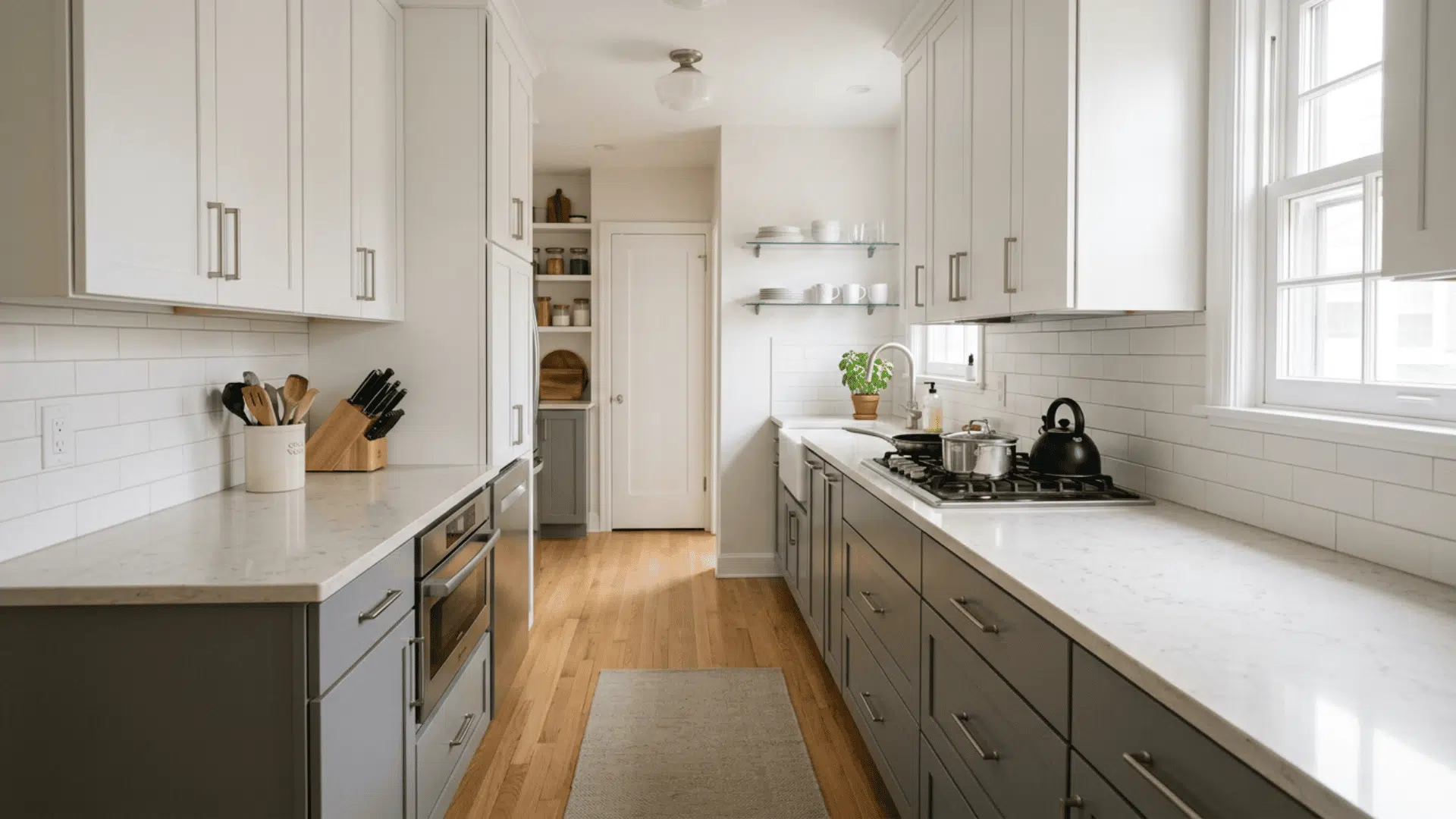
Place the lighter cabinets on the upper walls and the darker shade on the base units. This setup keeps the room bright at eye level while adding depth near the floor.
It works well in narrow or low-light kitchens because the upper section does not feel heavy. Add a pale countertop and matching hardware to tie the two cabinet colors together.
This layout also helps hide marks and scuffs on lower doors that receive more daily contact.
2. Add a Dark Island as The Main Feature
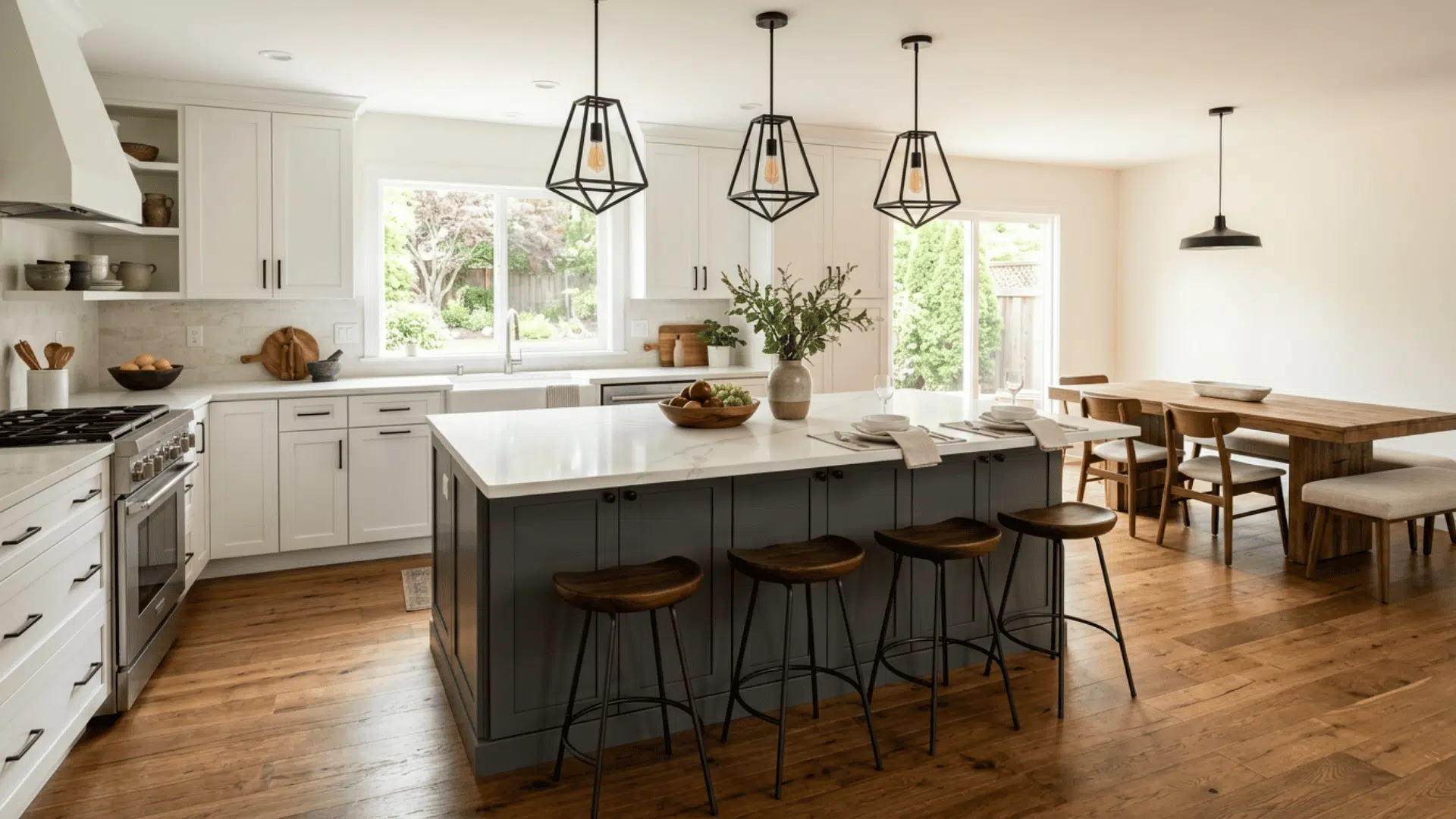
Keep the cabinets around the walls white and paint the island a deeper charcoal or slate shade.
The island becomes the main feature without making the whole kitchen feel dark. This works especially well in open layouts.
Choose pendant lights, stools, or cabinet handles that repeat the darker tone. A white or lightly veined countertop can help the island feel connected to the rest of the room.
3. Choose Soft Gray for a Small Space
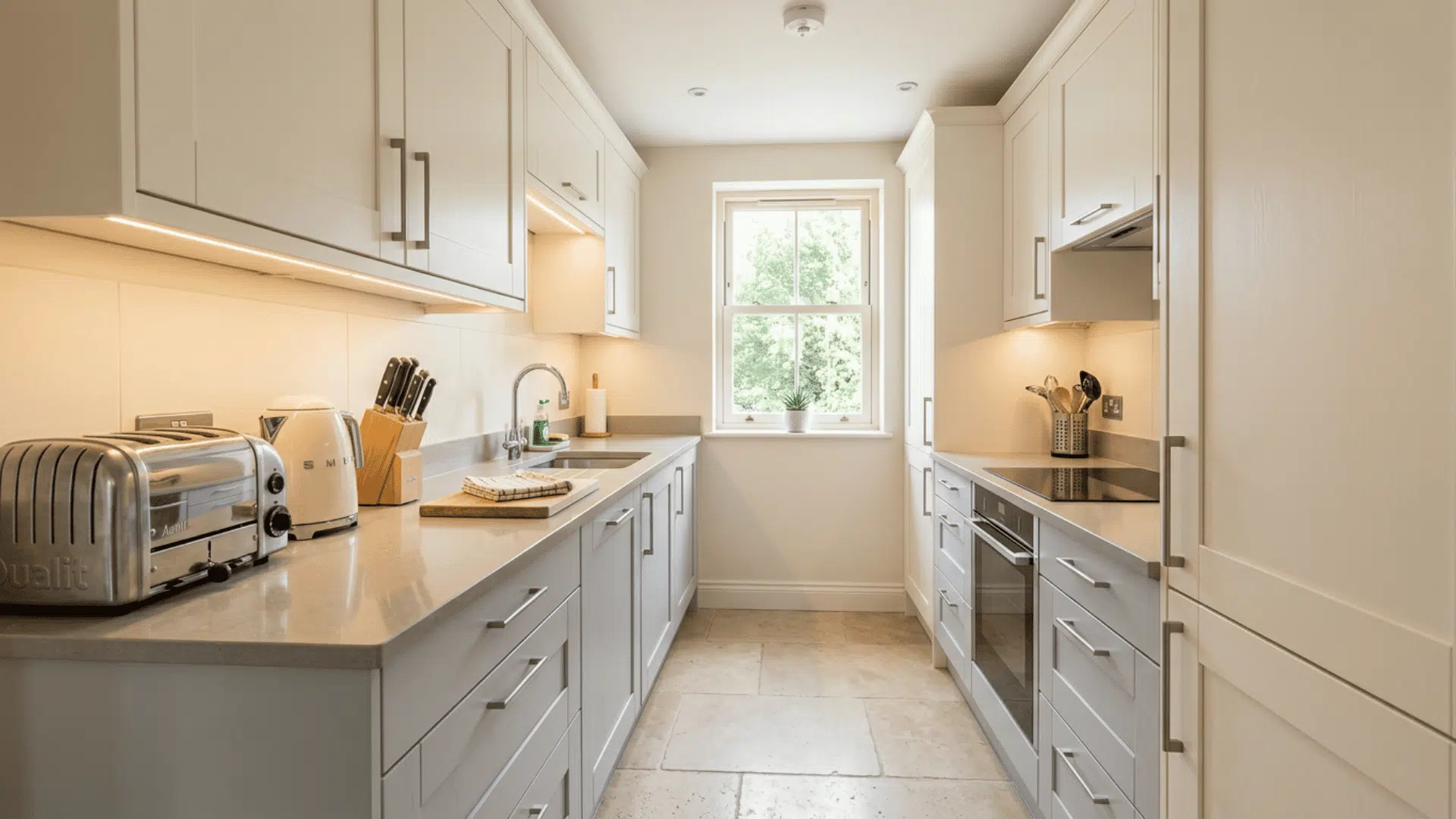
Use a pale gray on the lower units and a warm white on the upper units to keep a compact kitchen open and calm.
Soft shades create enough contrast to add shape without making the room look divided. Pair them with light flooring, slim handles, and a plain backsplash.
This idea suits apartments, galley kitchens, and rooms with limited daylight, where deeper cabinet colors may feel too heavy.
4. Create a Full-Height Storage Wall
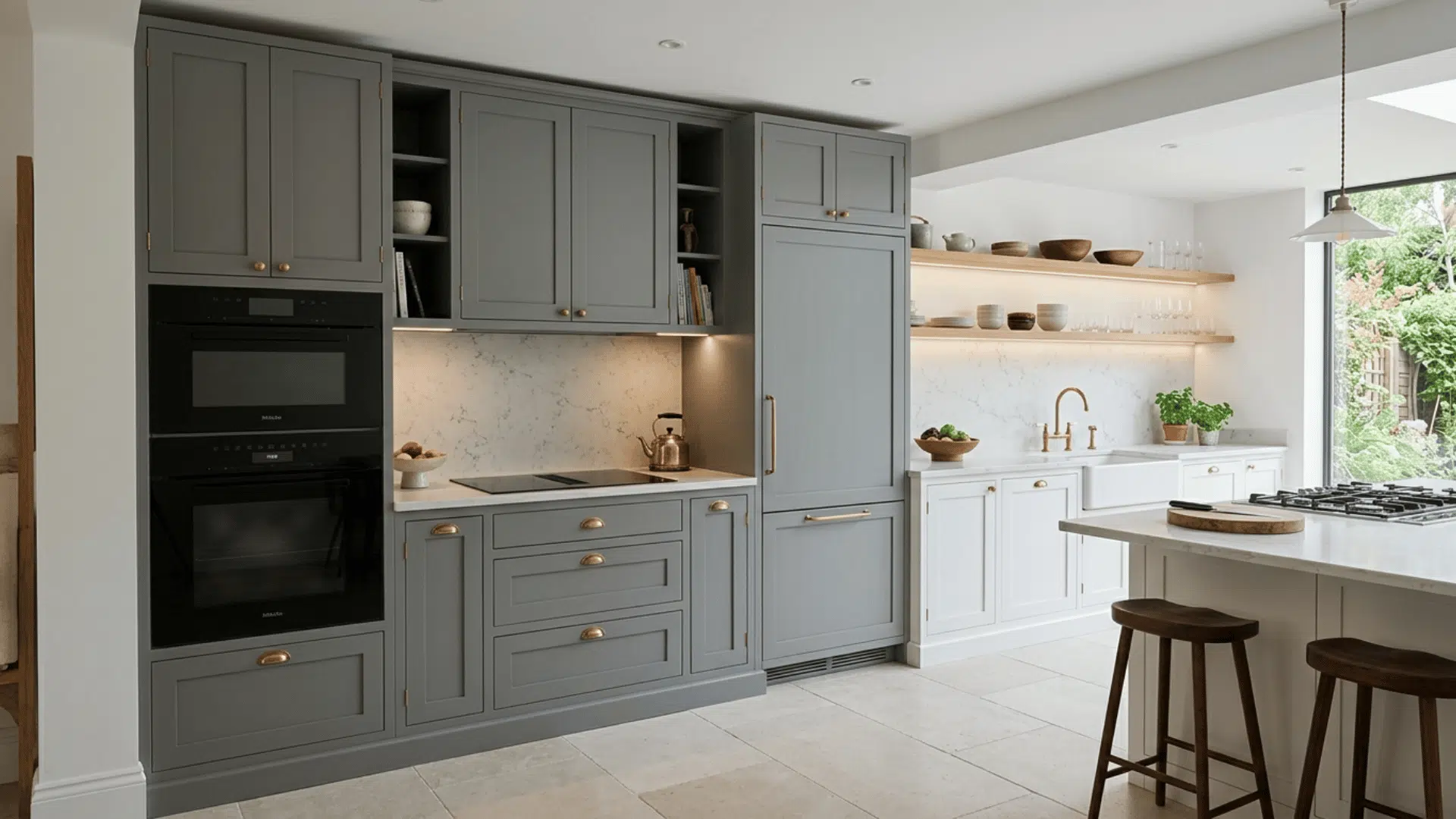
Use a medium gray shade on one wall of tall cabinets, pantry storage, and built-in appliances.
Keep the remaining cabinets white to balance the stronger block of color. This layout makes the storage wall look planned rather than bulky.
Add wood shelves, warm metal handles, or soft lighting near the darker cabinets to prevent the section from feeling flat or overly cool.
5. Bring in Natural Wood Details
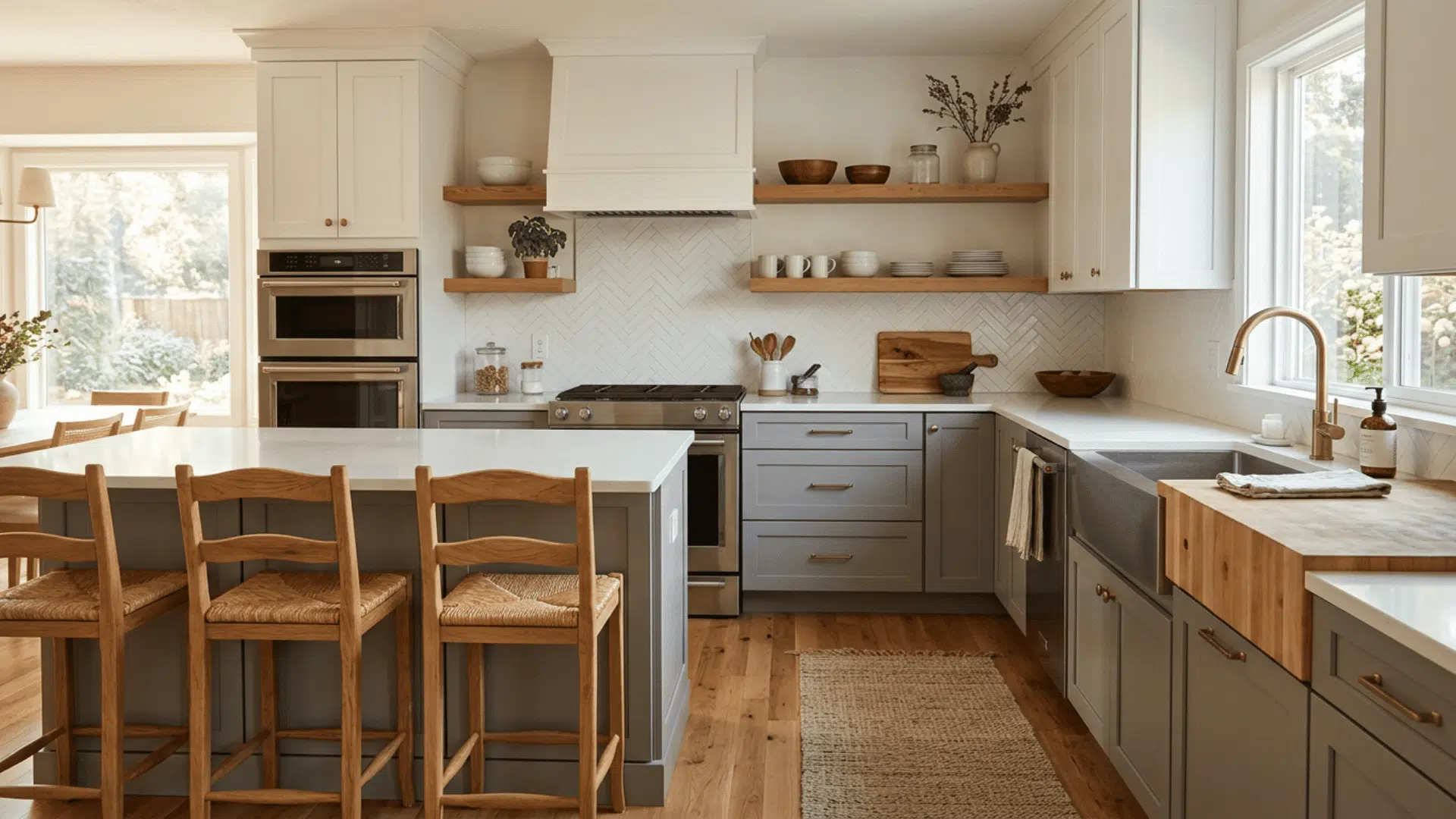
Add wood through open shelves, bar stools, flooring, or a butcher-block counter section.
The natural grain softens the neutral cabinet colors and gives the kitchen a warmer feel. Light oak pairs well with pale tones, while walnut suits charcoal or medium gray units.
Keep the wood finish consistent throughout the room so the design feels cohesive. This approach works in modern, farmhouse, and transitional kitchens without adding too many extra colors.
6. Pair the Cabinets With Patterned Stone
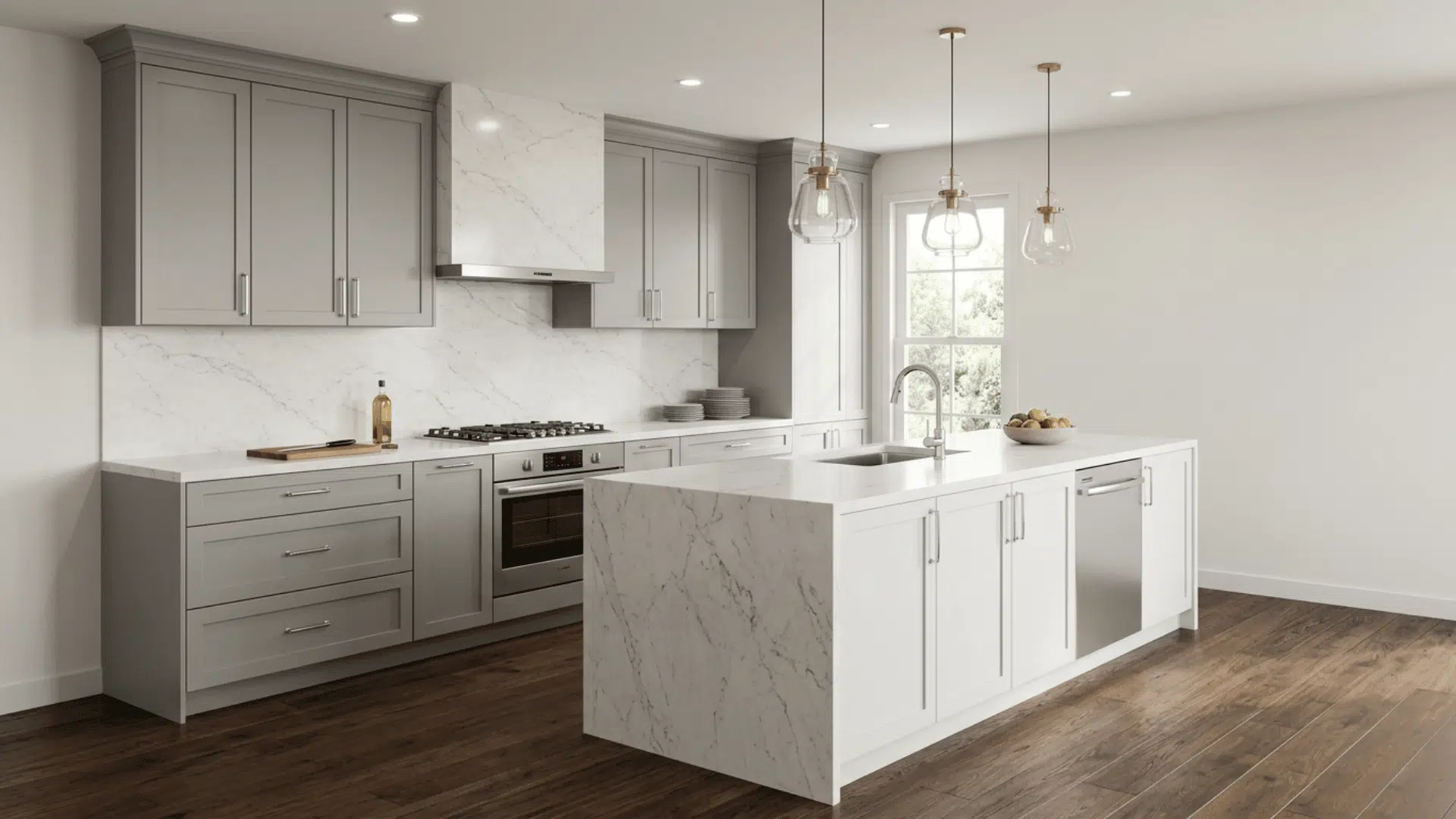
Choose a marble-look or lightly veined quartz countertop that includes both white and gray tones.
The surface helps tie the two cabinet colors together and adds more visual interest to the room.
Avoid stones with very heavy patterns if the kitchen already has detailed flooring or decor. Simple hardware and plain walls can help the countertop stand out without making the design feel busy.
7. Add Glass Doors to Selected Cabinets
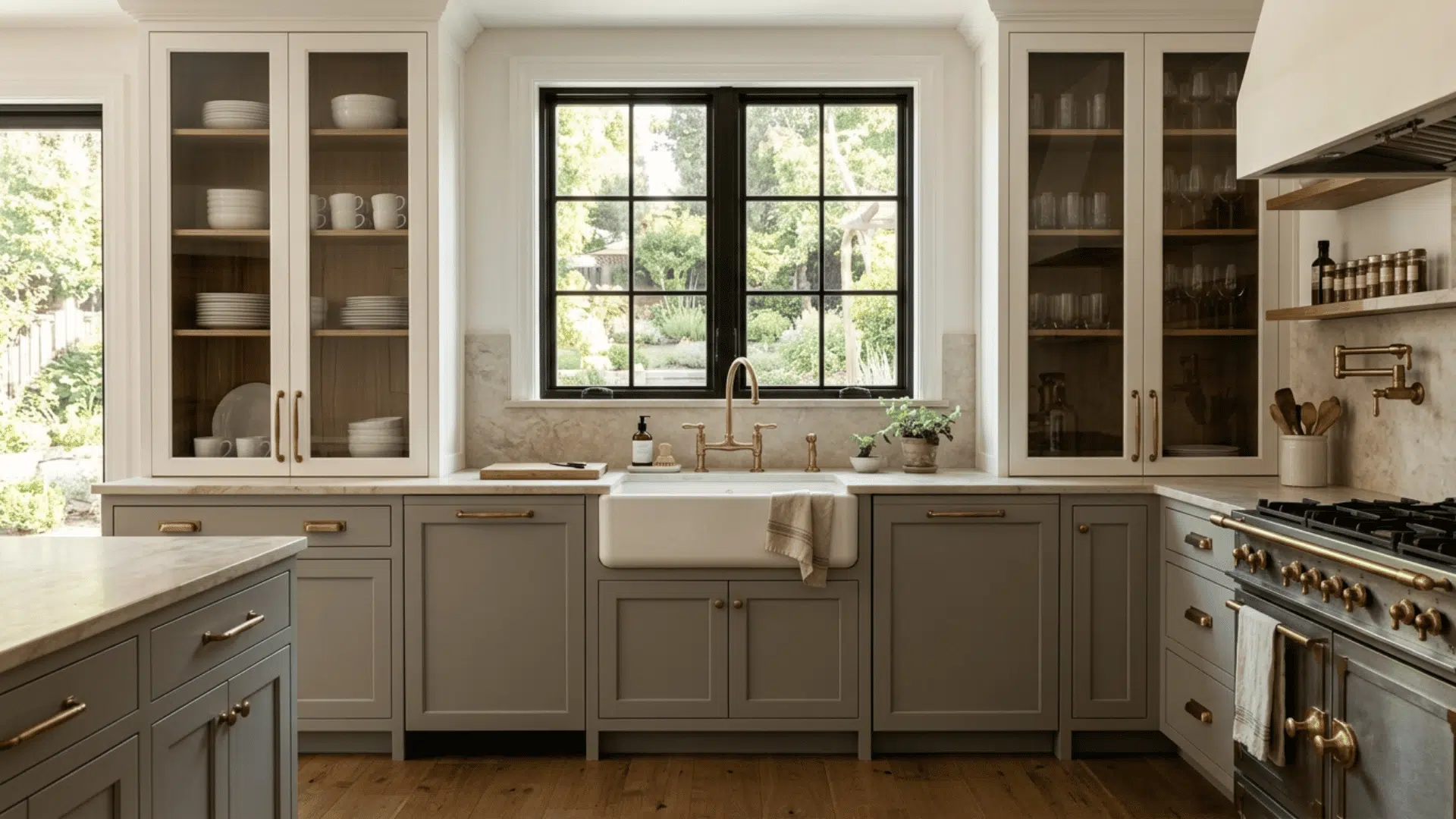
Install glass-front doors on a few upper cabinets to break up large solid-color areas.
They can make the room feel lighter and provide space for neatly arranged dishes, glasses, or serving pieces. Place them near the sink, dining area, or a window where they can add interest.
Keep the interiors simple and use matching shelves. This idea suits traditional and transitional kitchens and prevents the upper cabinets from looking too closed or heavy.
Countertops That Work With Gray and White Cabinets
The right countertop can connect both cabinet colors and shape the kitchen’s overall feel. Consider the room’s lighting, flooring, and cabinet undertones before selecting a surface.
| Countertop Material | How It Looks | Works Best With |
|---|---|---|
| White Quartz | Creates a clean, bright surface with little visual clutter | Small kitchens, modern layouts, and darker base cabinets |
| Marble-Look Quartz | Adds soft veining that links light and dark tones | Transitional, classic, and polished kitchen styles |
| Black Granite | Provides strong contrast and gives the room more depth | Large kitchens with plenty of natural or overhead light |
| Butcher Block | Adds warmth and natural texture to neutral cabinetry | Farmhouse kitchens, islands, and rooms with wood flooring |
| Light Gray Quartz | Produces a smooth, connected look without sharp contrast | Minimal kitchens and spaces with black or silver hardware |
| White Granite | Adds subtle pattern and natural variation to the work surface | Traditional kitchens that need texture without bold color |
Conclusion
Gray and white kitchen cabinets give you a flexible base, but the final result depends on the details you choose around them.
Test samples in your own lighting, compare warm and cool tones, and notice how the colors change throughout the day.
Save the ideas that suit your layout, create a simple mood board, and use it to make confident choices.
Share your favorite cabinet pairing in the comments and inspire other readers planning their kitchen update.
Frequently Asked Questions
Are Gray Cabinets Harder to Keep Clean?
Medium shades usually hide dust and fingerprints better than bright white or very dark finishes.
What Cabinet Finish is Easiest to Maintain?
Satin and semi-gloss finishes wipe clean easily and resist moisture better than flat paint.
Can Old Cabinets Be Refinished in These Colors?
Many wood and painted cabinets can be refinished after proper cleaning, sanding, repairs, priming, and surface preparation.