

The words retro and vintage often appear together, making it easy to assume they mean the same thing. While both styles borrow inspiration from the past, they represent completely different types of items.
Vintage refers to original pieces that come from a specific era, carrying real age, materials and history. Retro describes newer products designed to recreate the look and feel of earlier decades.
Knowing the difference helps shoppers avoid paying vintage prices for modern reproductions. Keep reading to understand how retro and vintage compare across fashion, furniture, decor and pop culture.
Retro vs Vintage: Key Differences at a Glance
The fastest way to tell retro and vintage apart is Authenticity.
Vintage items are original pieces from a past era, typically 20 to 99 years old. They carry real age, real wear, and real history. Retro items are brand new but designed to look like something from the past.
Think of a shiny 1950s-style fridge made in 2025 that’s retro, not vintage. Vintage pieces tend to cost more because they’re scarce and one-of-a-kind. Retro is mass-produced, easier to find and lighter on your wallet.
Vintage uses natural materials like solid wood, brass, and leather. Retro often relies on synthetics like chrome, vinyl, and plastic. Both look backward for style, but only vintage actually comes from the past.
Where Does Antique Fit In?
Antiques are 100+ years old and valued for their history, craftsmanship and rarity, not just their old-fashioned look. Understanding the difference between vintage and antique items can help buyers identify what they are actually purchasing.
Retro vs Vintage in Fashion
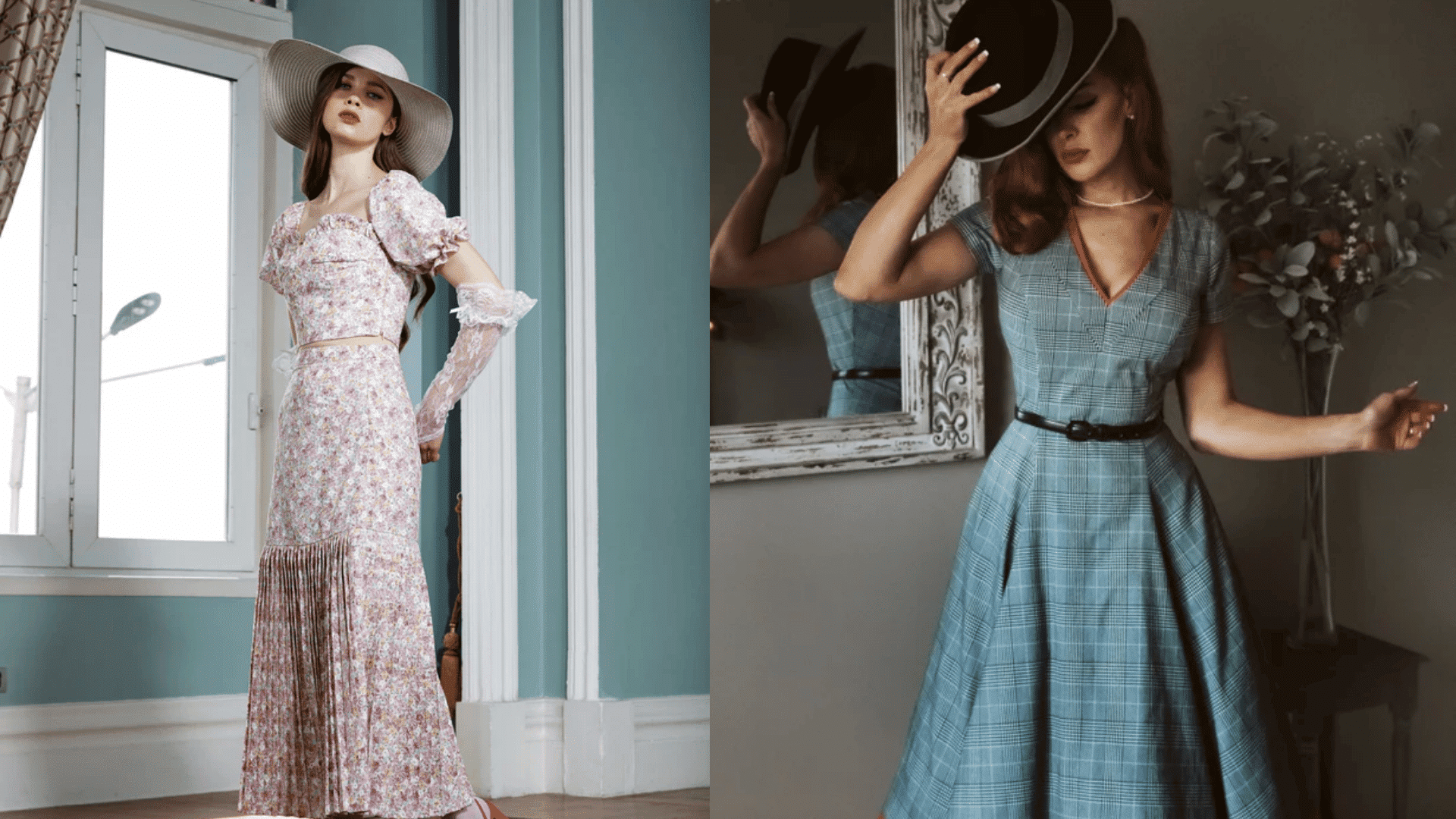
A vintage dress from the 1960s was actually stitched and worn in that decade. You can feel the difference in the fabric weight, the tailoring, and the stitching quality.
These pieces are rare and often one-of-a-kind. Retro fashion is the opposite; it’s brand new but styled after a past era.
Those 1970s-inspired bell-bottoms you see in stores today? Retro. They use modern fabrics and current sizing to copy an older look. You get the vibe without the history
Retro vs Vintage in Home Decor and Furniture
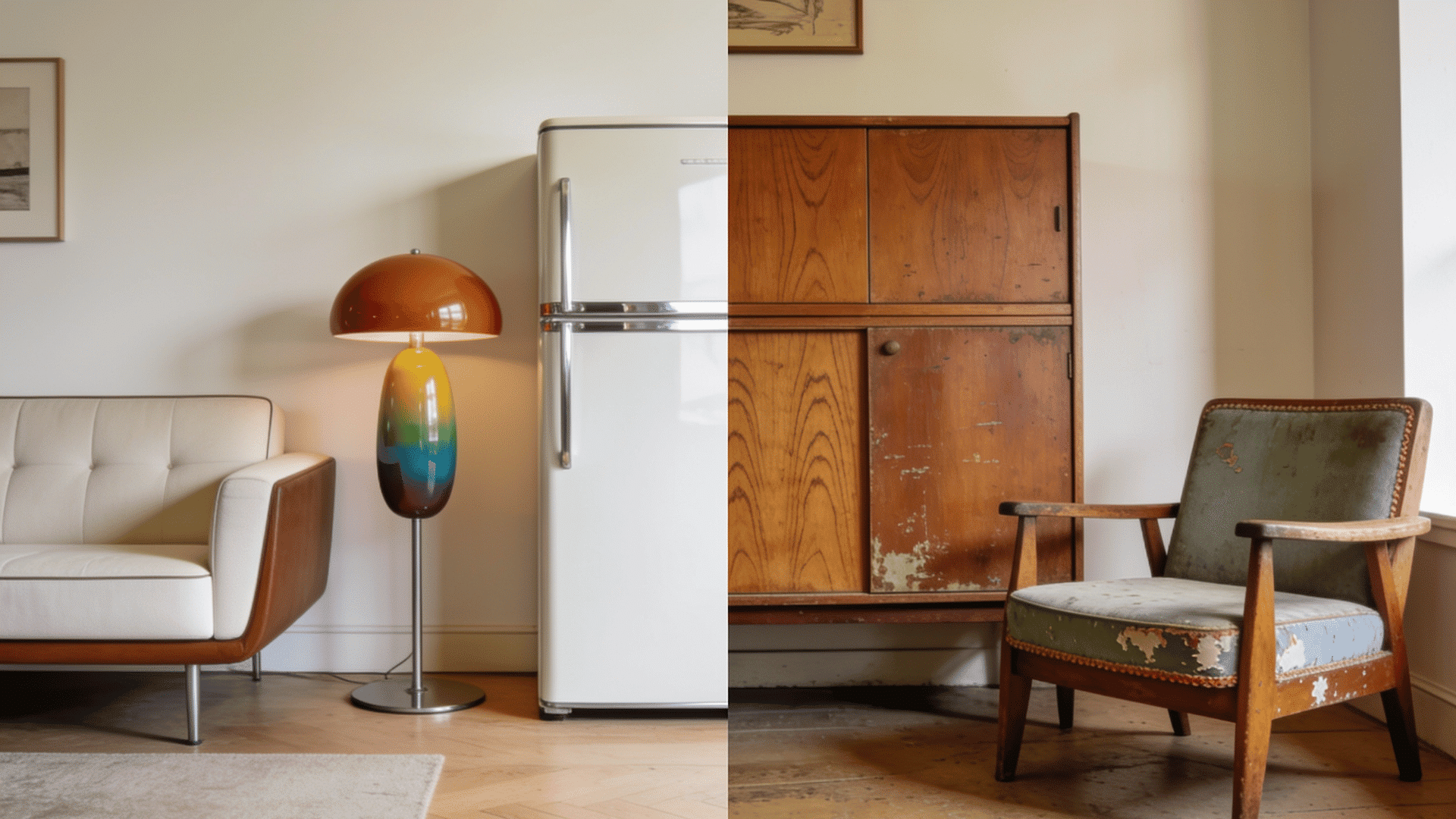
A genuine mid-century credenza from the 1950s counts as vintage furniture. It’s built from solid teak or oak, develops a real patina, and often increases in value over time.
That SMEG fridge styled after the 1950s? Retro: new materials, modern wiring, just an old-school shell. Vintage decor tells a real story through wear and craftsmanship.
Retro decor gives you the same mood at a lower price, using chrome, vinyl, and plastic instead. Understanding different furniture styles can also help identify design periods and choose pieces that fit a home’s overall look.
Can You Mix Retro and Vintage Together?
You absolutely can, and it often looks better than sticking to just one style. The trick is doing it with intention so your space feels curated, not cluttered.
- Unify with Color: Pick a consistent palette across both retro and vintage pieces. Even items from different decades look connected when the tones match.
- Balance Scale and Proportion: Pair heavy, ornate vintage items with sleeker retro pieces so nothing overwhelms the room.
- Find a Common Thread: Repeat the same wood type, metal finish, or shape across eras to tie everything together.
- Follow the 80/20 Rule: Let one style lead 80% of the room and use the other as a 20% accent. That keeps the look focused but still layered and personal.
Which One Costs More?
Your wallet will feel the difference between retro and vintage fast. Vintage pieces are original items from a past era, and once they’re gone, no factory can make more. That scarcity drives prices up.
A genuine 1960s teak sideboard or a 1950s leather jacket commands a premium because of its age, rarity, and craftsmanship. You’re paying for something that can’t be restocked. Retro flips that equation. Since retro items are modern reproductions, manufacturers can produce thousands of them.
That keeps prices low and availability high. You get a similar look for a fraction of the cost. So if you love the old-school style but want to stay on budget, retro gives you the aesthetic without the price tag.
Retro designs often recreate older decades through colors, shapes, and layouts, similar to the ideas used in 1950s-inspired kitchens.
Retro vs Vintage in Music and Pop Culture
The retro vs vintage divide shows up in music and pop culture just as clearly as it does in fashion and furniture
| Category | Vintage | Retro |
|---|---|---|
| Meaning | Original item from the past | New item with an old style |
| Music | Original vinyl or analog equipment | Modern music with past-era sounds |
| Pop Culture | Original clothing, films, or media | New content styled like older eras |
| Format | Vinyl, tape, and film | Digital tools with vintage styling |
| Appeal | History, rarity, and character | Nostalgia with modern convenience |
| Price | Often rare and expensive | Usually affordable and widely available |
Where to Buy Retro and Vintage Items Online?
Finding retro and vintage pieces online is easier than you think; you just need to know where to look. Before you hit buy, check the item’s age, condition, photos, and return policy carefully.
Simple restoration methods like refinishing a wood table can help preserve older pieces while keeping their character intact.
For vintage, look for signs of genuine wear and original materials. For retro, expect newer construction styled after an older look. A few extra minutes of checking can save you from overpaying.
- Etsy works well for retro-inspired and handmade items.
- Retrophoria lets you browse vintage items sorted by decade or category, which saves time.
- Curated antique stores featured by Good Housekeeping and Veranda carry quality vintage furniture and decor.
- Fashion resale platforms highlighted by Vogue and Sustainable Jungle are solid picks for vintage clothing and accessories.
Conclusion
So the next time you spot something labeled “vintage” at a flea market or online store, you’ll know to check whether it’s a genuine period piece or a retro reproduction styled to look old.
Retro vs vintage comes down to one simple question: is it the real thing from a past era, or a modern copy of that era’s style?
Both have a place in your wardrobe and your home, but only when you know what you’re paying for.
Now pick a room or an outfit and decide whether you want the original story or a fresh take on it!
Do you prefer authentic vintage finds or modern retro designs? Share your favorite style, recent purchase, or decorating tips in the comments below.
Frequently Asked Questions
What Is a Car More Than 25 Years Old?
A classic car is typically a vehicle at least 25 years old, though definitions vary between insurers, clubs, and authorities.
What Are the Top Collectibles?
Top collectibles include fine art, classic cars, rare coins, trading cards, vintage toys, comics, watches, and pop-culture memorabilia.
What Knick-Knacks Are Worth Money?
Pricey Knick-knacks include Murano glass, rare Swarovski crystal, Lladró or Herend porcelain, Disney figurines, and signed mid-century decorative pieces today.