Most people use “patio” and “balcony” as if they mean the same thing. They don’t. One sits on the ground, while the other extends from a building.
That is only the beginning. The differences between these outdoor spaces can affect resale value, privacy, maintenance needs, and how you spend your weekends.
If you are comparing patio vs balcony while house hunting or renovating, this post explains what sets them apart.
Each option also comes with different space limits, building rules, and furnishing needs. Read on to choose the right outdoor space for your home and lifestyle.
What is a Patio?
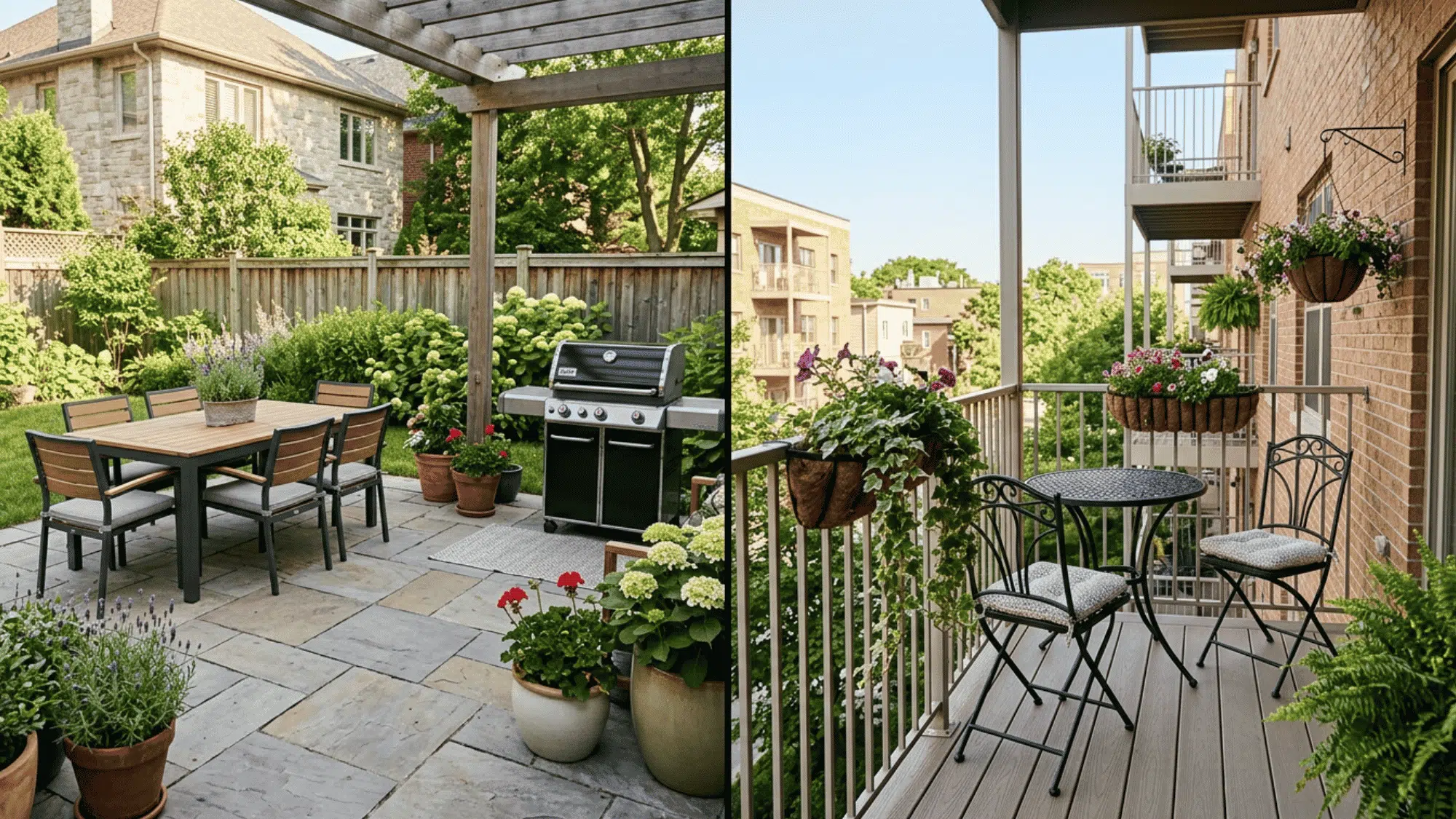
A patio is a flat outdoor space that sits directly on the ground. You’ll usually find it in the backyard or along the side of a house.
Most patios are made from concrete, pavers, brick, or natural stone. They don’t need a foundation or any structural support from the building.
That’s what makes them different from decks or porches. People use patios for all kinds of things: grilling, eating outside, hanging out with friends, or just sitting with a drink after a long day.
They come in all shapes and sizes. You can add furniture, a fire pit, or a pergola to make the space feel more like yours.
What is a Balcony?
A balcony is a small outdoor platform attached to an upper floor of a building.
It sticks out from the wall and is held up by brackets, columns, or a cantilevered design. There’s always a railing or barrier around it for safety.
Balconies are really common in apartments, condos, and multi-story homes. They give you a bit of outdoor space even when you don’t have a yard.
Most people use them for morning coffee, fresh air, or keeping a few plants. Some are big enough for a small table and chairs, but they’re generally compact.
Because they’re elevated, balconies offer a decent view and more privacy from street-level foot traffic.
Patio vs Balcony: What are the Main Differences?
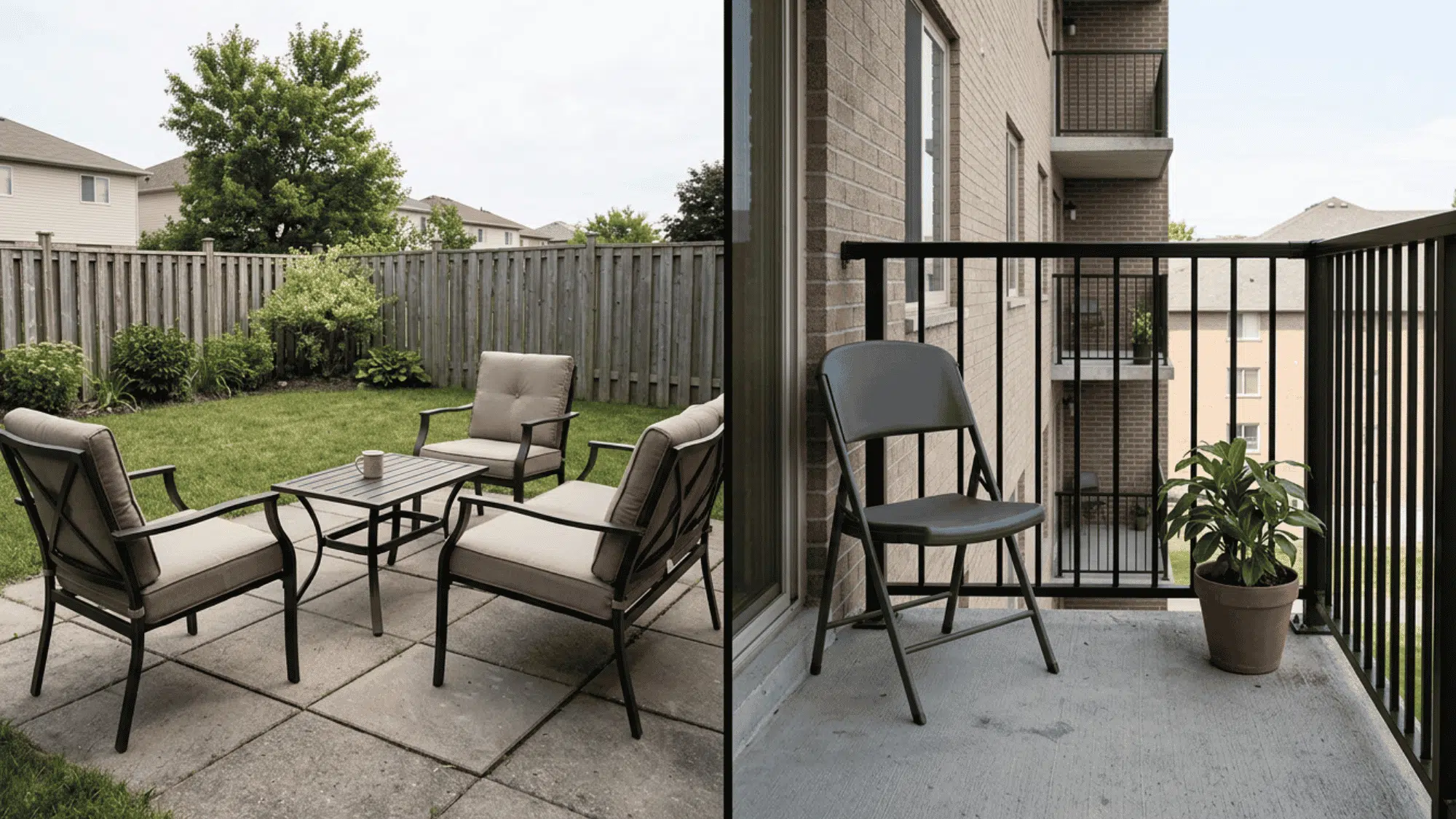
Both spaces let you spend time outdoors, but they work very differently in practice. These are the main differences that matter most.
Location and Placement
This is the biggest difference between the two. A patio sits on the ground, usually in the backyard or beside the house.
A balcony is attached to an upper floor and hangs off the side of a building. If you live in a single-family home with a yard, you probably have a patio.
If you’re in an apartment or condo on a higher floor, you likely have a balcony. The placement alone changes how you access and use the space.
Size and Usable Space
Patios are almost always bigger. Since they’re on the ground, there’s more room to work with. You can fit a full dining set, a grill, lounge chairs, and still have space left over.
Balconies are more limited. Most are just wide enough for a couple of chairs or a small bistro table.
If you like hosting people outside or need room for activities, a patio gives you a lot more to work with.
Structure and Build
A patio doesn’t need any structural support from the building. It’s a flat surface laid on the ground, made of materials such as concrete, brick, or stone.
A balcony is part of the building itself. It’s attached to an exterior wall and supported by brackets, beams, or a cantilever system.
That means building a balcony is a bigger construction job, while adding a patio is something many homeowners can handle on their own with basic tools.
Cost and Maintenance
Patios are cheaper to build and easier to maintain. You’re mostly paying for materials and labor to lay a flat surface.
A balcony involves structural engineering, permits, and more complex installation, so costs add up quickly. On the maintenance side, patios may need occasional power washing or resealing.
Balconies need regular inspections for rust, water damage, and railing safety. This is especially true for older buildings where wear shows up faster.
Privacy and Views
Balconies have the edge when it comes to views. Being elevated gives you a clear line of sight over the surrounding area.
They also keep you above street-level noise and foot traffic. Patios sit at ground level, so neighbors and passersby can see right in.
You’ll usually need fencing, hedges, or privacy screens to block the view. That said, patios feel more grounded and connected to your outdoor space overall.
Porch vs Patio: How are They Different?
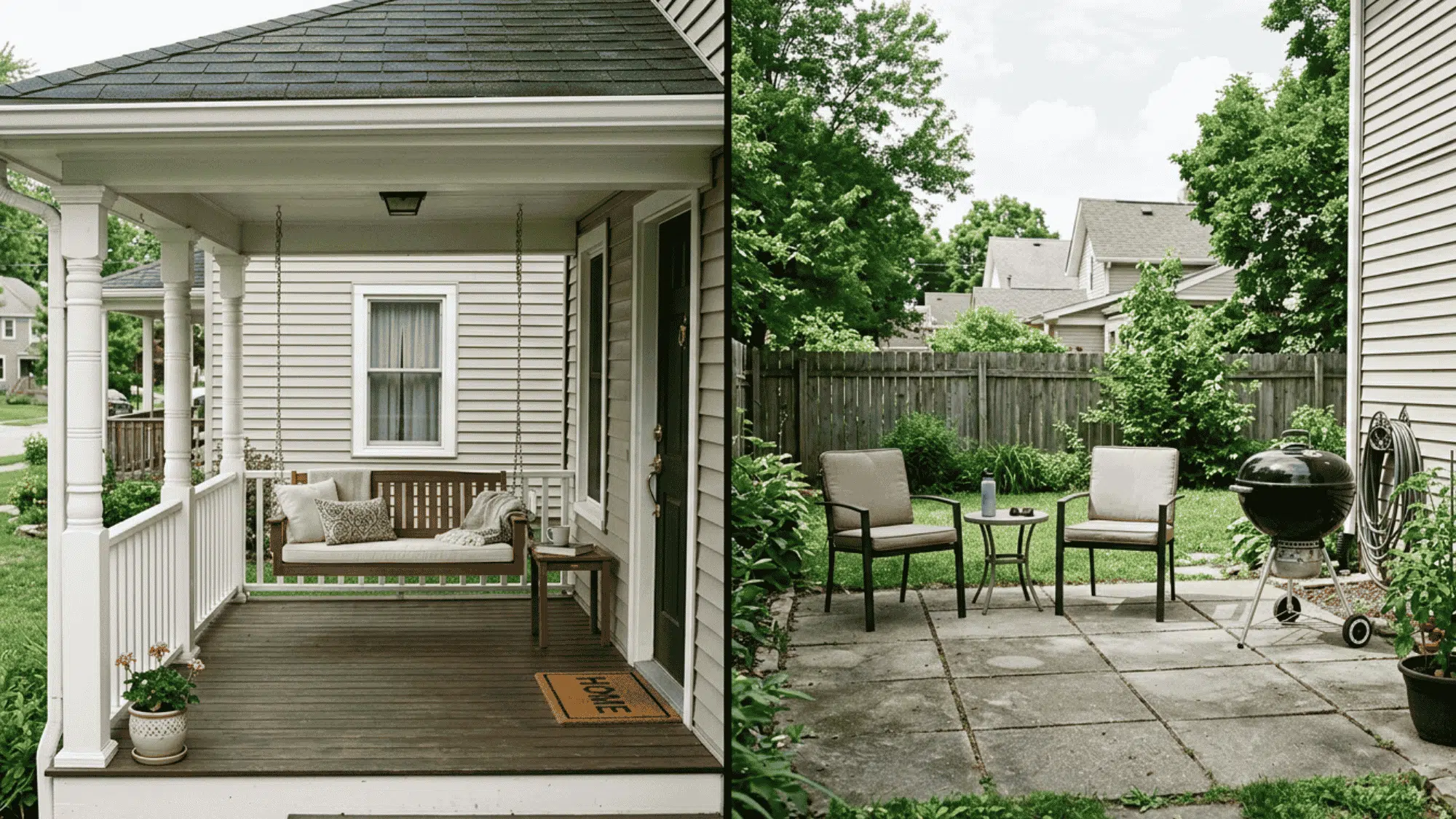
These two get mixed up a lot because they’re both ground-level outdoor spaces attached to a home. Knowing the difference helps when you’re shopping for a home or planning an outdoor upgrade.
Patio
A patio is a ground-level outdoor space typically found in the backyard or along the side of a house. It can be attached or detached from the main structure.
- Usually uncovered, though a shade structure like a pergola can be added
- Sits flat on the ground with no raised foundation or steps
- Made from concrete, pavers, brick, or natural stone
- Used for outdoor dining, grilling, lounging, and entertaining
- Lower cost since it mainly involves materials and labor for a flat surface
- Needs occasional cleaning, power washing, or resealing
- Common in most single-family homes with a yard
Porch
A porch is a covered outdoor space attached directly to the front or back of a house. It serves as a welcoming entry point and adds curb appeal to the home.
- Always has a roof supported by posts or columns
- Built on a raised foundation, often with steps leading up to it
- Made from wood, composite decking, or concrete
- Used for socializing, relaxing, and creating a warm first impression
- Higher cost because it requires roofing, posts, and structural work
- Roof, flooring, railings, and posts may need regular upkeep
- Common in traditional, colonial, farmhouse, and craftsman-style homes
How Other Outdoor Spaces Compare to Patios and Balconies
Patios and balconies aren’t the only outdoor living options out there. A few other spaces work differently depending on your home type, climate, and budget.
| Space | Level | Cover | Size | Cost | Best For | Similar To |
|---|---|---|---|---|---|---|
| Patio | Ground | Usually open | Large | Low | Dining and lounging | Deck, lanai |
| Balcony | Upper floor | Usually open | Small | High | Coffee and plants | Veranda, porch |
| Deck | Raised | Usually open | Medium–large | Medium | Dining and relaxing | Patio |
| Porch | Ground or raised | Usually roofed | Medium | Medium–high | Entry seating | Veranda |
| Veranda | Ground or raised | Roofed | Large | High | Shaded outdoor living | Porch, balcony |
| Lanai | Ground | Roofed or screened | Medium–large | Medium | Bug-free relaxation | Patio |
Conclusion
The right outdoor space can change how you enjoy your home. When comparing a patio vs balcony, consider your available space, budget, privacy needs, and daily plans.
A patio works well for large gatherings, while a balcony offers fresh air in a smaller, elevated setting.
The right choice should also match your maintenance preferences and local building rules. Understanding porch vs patio differences can also help you avoid costly planning mistakes.
Think about how you will use the area each week, choose the option that suits your lifestyle, and share your favorite outdoor space in the comments.
Frequently Asked Questions
Can You Add a Balcony to a Single-Story Home?
Technically, yes, but it’s rare and expensive. Most single-story homes don’t have the height needed, so a patio or deck is usually a better fit.
Do Balconies Affect Apartment Rent?
According to market estimates, apartments with balconies often cost 5–12% more in monthly rent, depending on the city and floor level.
Can You Enclose a Patio or Balcony?
Yes, both can be enclosed with screens, glass panels, or walls. An enclosed patio is often called a sunroom, while an enclosed balcony is common in colder climates.