Deck skirting can change how a raised deck looks from the yard, patio, or street. It covers the open space under the deck and helps hide posts, beams, storage, and rough framing.
It can also improve airflow, limit animal access, and make the deck feel more finished.
The right choice depends on your home style, deck height, budget, and how you use the space below.
These deck skirting ideas include wood, metal, stone-look, lattice, storage doors, and clean panel styles. Use these modern deck skirting ideas to find a look worth trying.
What is Deck Skirting?
Deck skirting is the material installed around the lower part of a raised deck.
It covers the open area between the deck floor and the ground. This area often shows posts, joists, beams, stored tools, hoses, or outdoor bins.
Skirting helps hide that space while giving the deck a neater look. Good deck skirting should not only look nice.
It should also allow airflow, handle outdoor weather, include access when needed, and avoid blocking drainage.
Modern Deck Skirting Ideas
These modern deck skirting ideas use clean lines, outdoor-safe materials, smart access panels, and simple finishes to make raised decks look neat and finished.
1. Horizontal Wood Slat Skirting
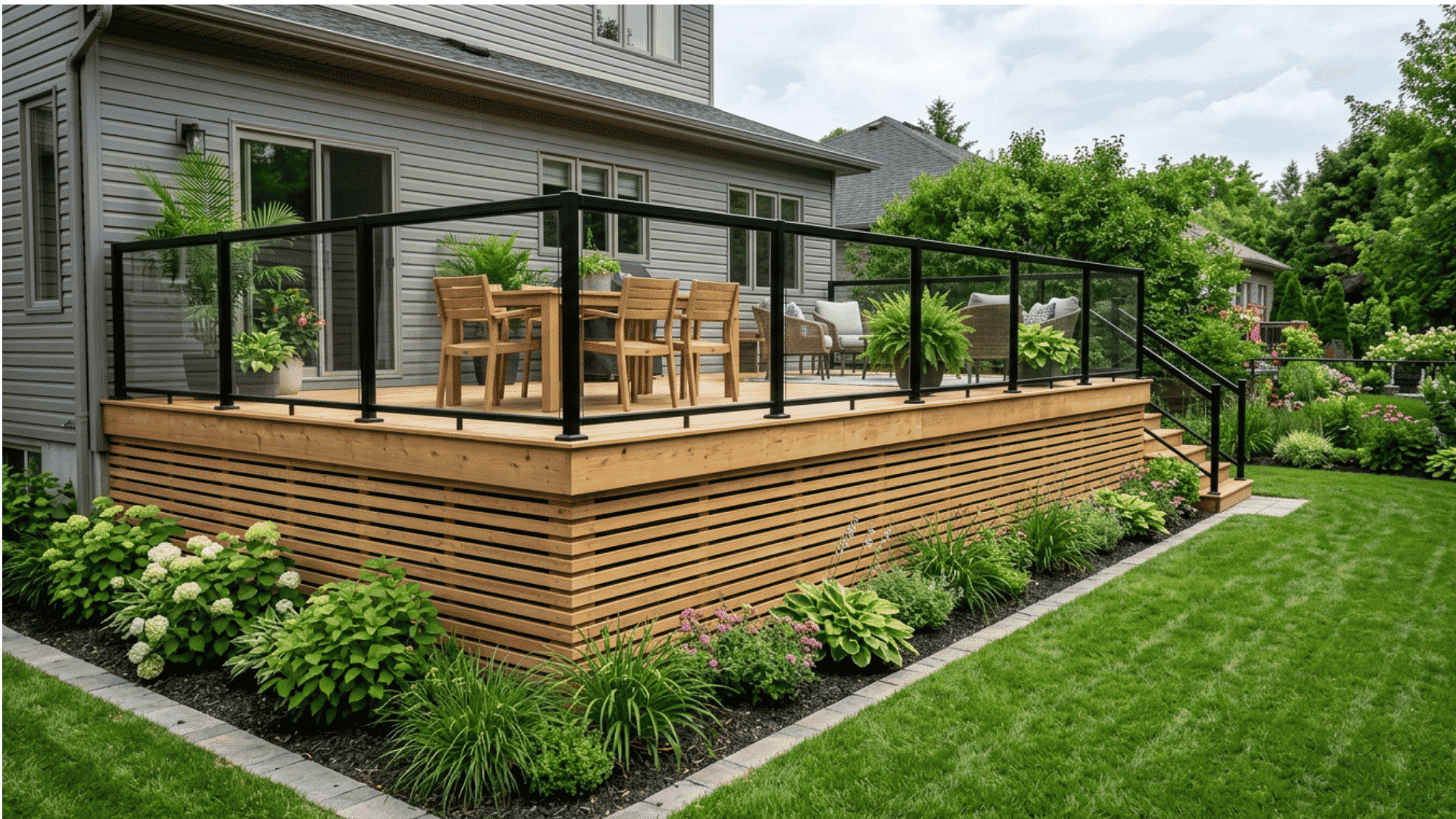
Horizontal wood slat skirting is one of the cleanest ways to cover the space under a deck.
The long lines make the deck look wider and more finished. Use evenly spaced boards so air can still move under the deck.
Cedar, pressure-treated wood, or stained pine can work, depending on your budget. Keep the spacing even for a neat look.
This style works well with modern homes, cabins, and backyard decks with warm wood tones.
2. Vertical Wood Slat Skirting
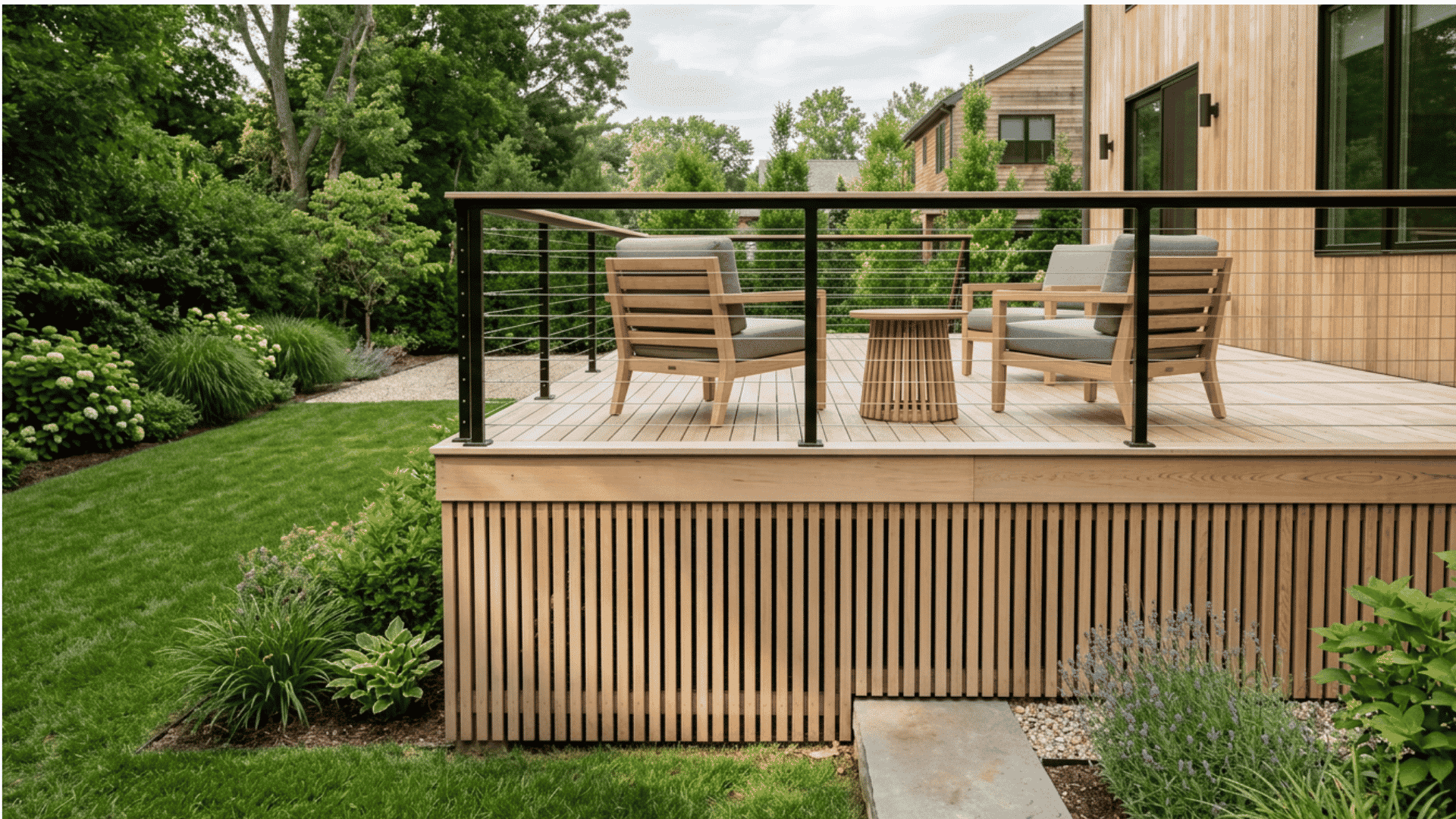
Vertical wood slats give the deck base a taller and more structured look.
This can work well when the deck sits higher off the ground. Use narrow boards for a cleaner style, or wider boards if you want more coverage.
Leave small gaps between the slats for airflow. Vertical skirting pairs well with simple railings, painted trim, and clean landscaping.
It also works nicely for homes with vertical siding or board-and-batten details.
3. Black Metal Panel Skirting
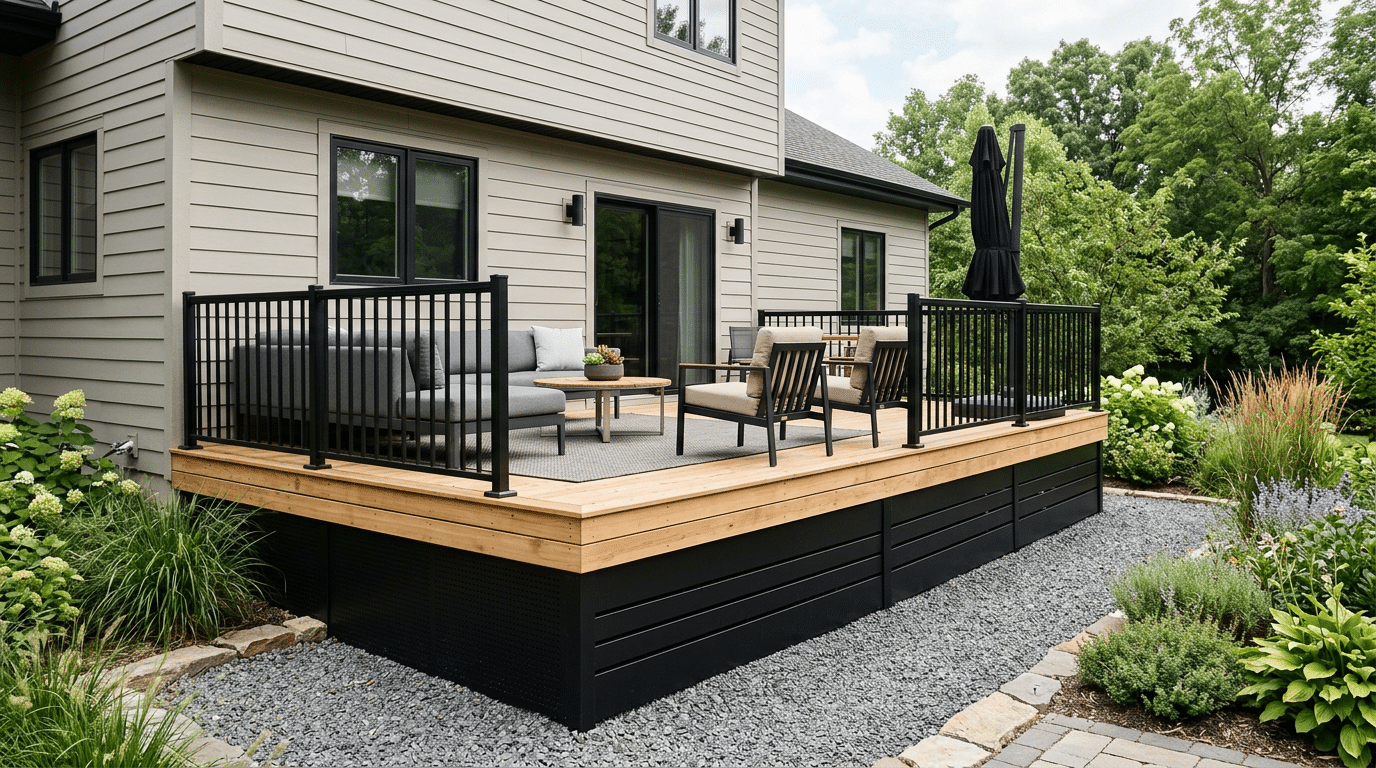
Black metal panel skirting gives a deck a sharp and updated look.
It works well with black railings, dark window trim, and clean outdoor furniture. Metal panels can hide the under-deck area while still feeling simple and strong.
Choose powder-coated or weather-safe metal so it can handle rain and sun. This style looks good with light siding, wood decking, gravel beds, and modern landscaping.
Add an access panel if you store items under the deck.
4. Composite Board Skirting
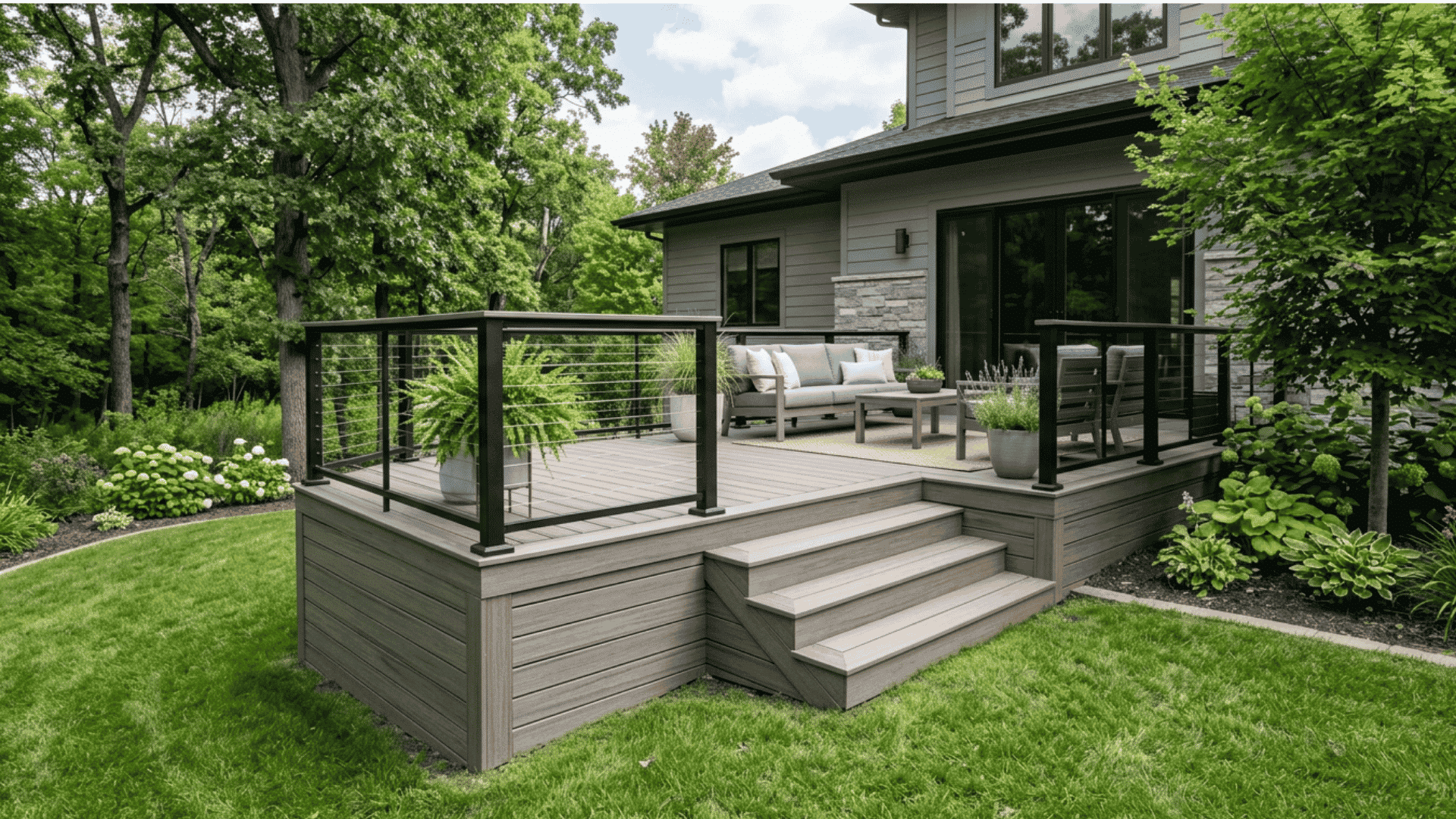
Composite board skirting is a smart choice if you want a neat look with less upkeep than natural wood.
Many composite boards resist fading, rot, and insect damage better than untreated wood. You can install the boards horizontally or vertically to match your deck design.
Use the same color as your decking for a smooth, cohesive look, or choose a contrasting color for more depth.
Composite skirting often costs more at first, but it can save time on sealing and staining.
5. Modern Square Lattice Skirting
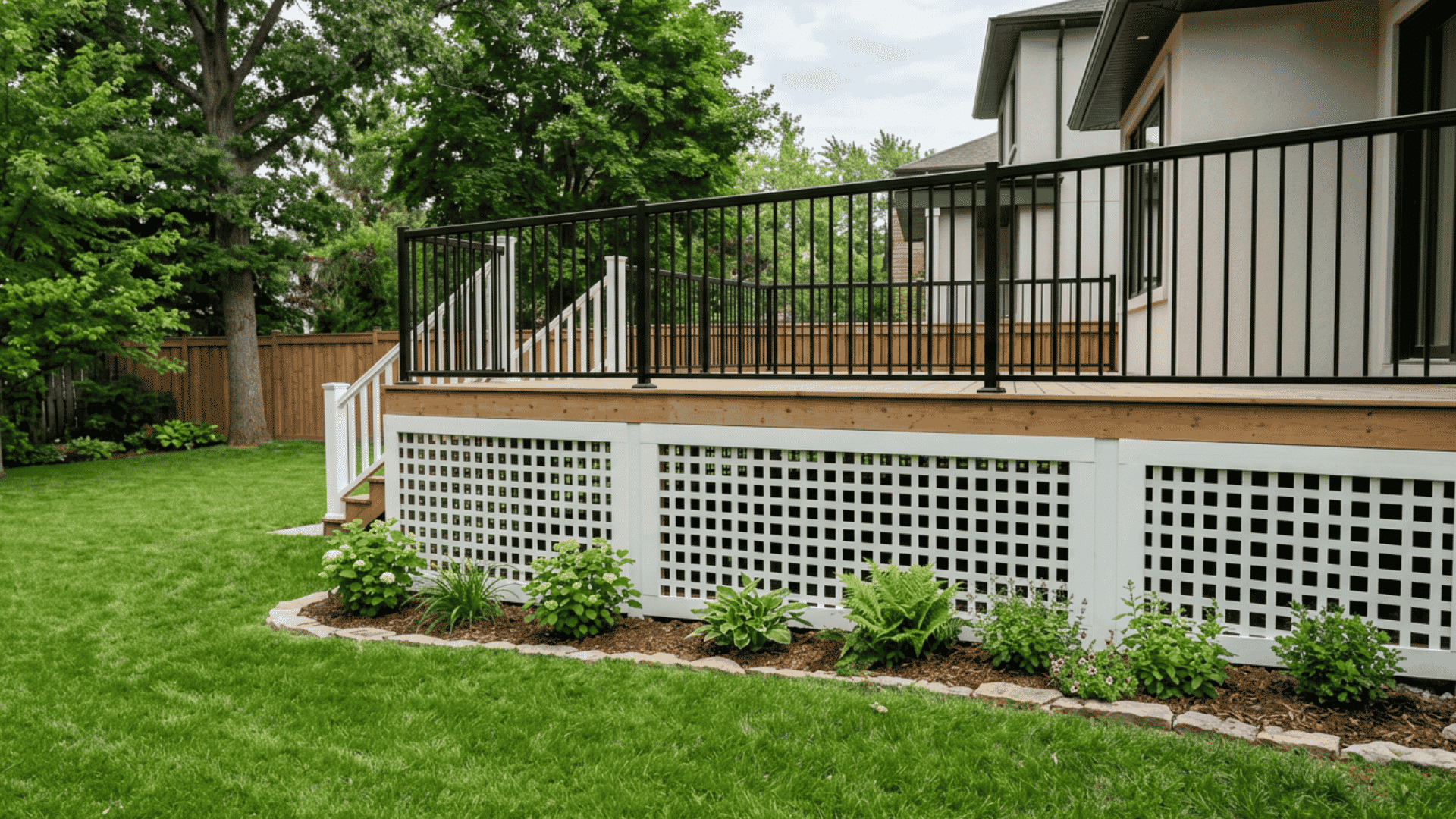
Square lattice feels cleaner than the old diagonal lattice and works well for a modern deck.
The straight grid gives the skirting a simple and organized pattern. Paint it black, white, gray, or match it to the deck trim.
A square lattice also allows airflow, which helps reduce trapped moisture under the deck. Use framed panels to make it look more custom.
This is a good option when you want some coverage without fully closing off the lower deck area.
6. Wide Frame Lattice Skirting
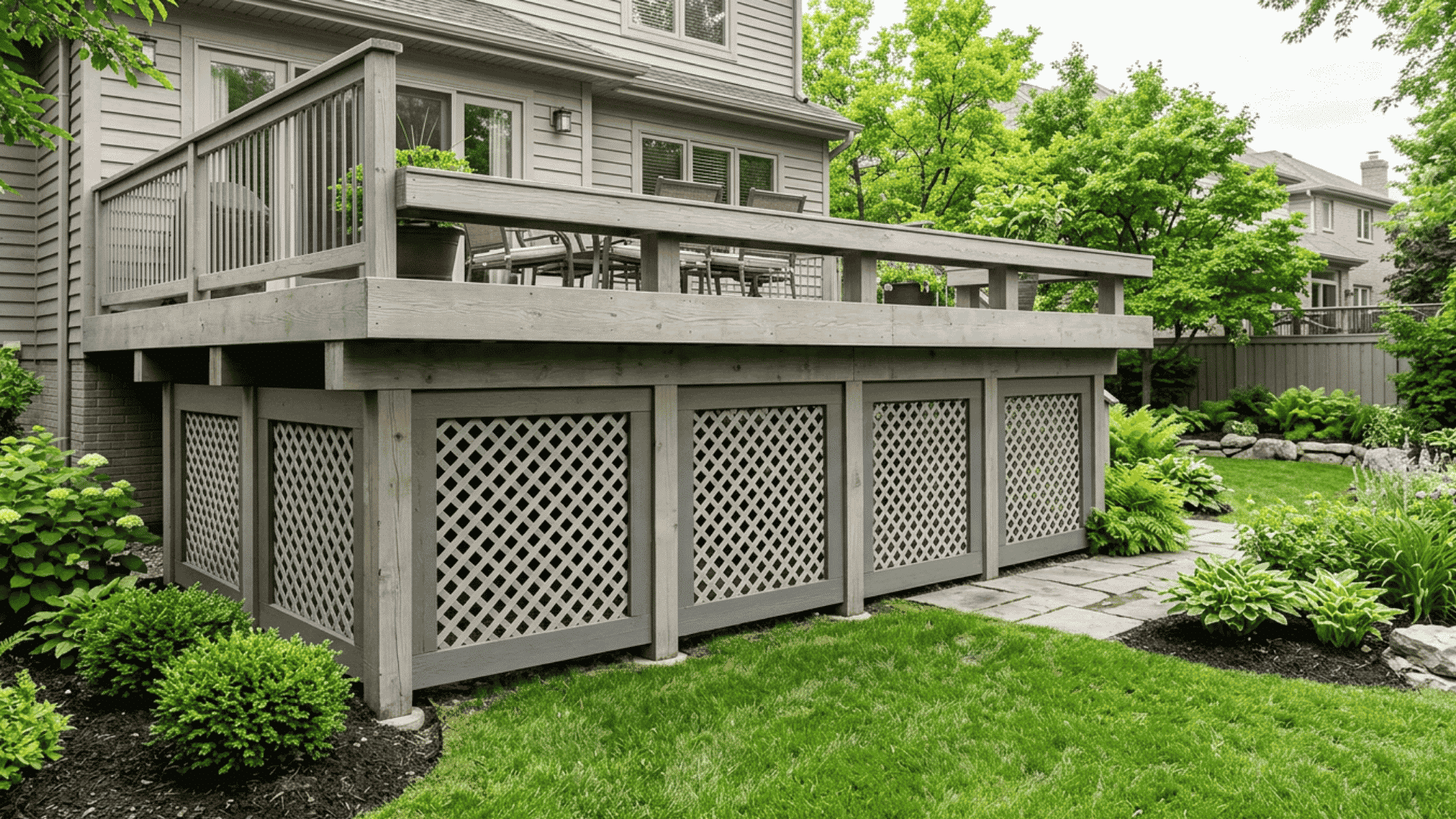
Wide-frame lattice skirting makes regular lattice look more finished.
Instead of installing lattice sheets alone, place them inside thick, clean frames. The frame gives each panel a custom look and helps the skirting feel planned.
This style works well for decks that need airflow but still need a neat base. Use a square lattice for a more updated look.
Paint the frame and lattice the same color, or use a two-tone finish for more contrast.
7. Stone-Look Deck Skirting
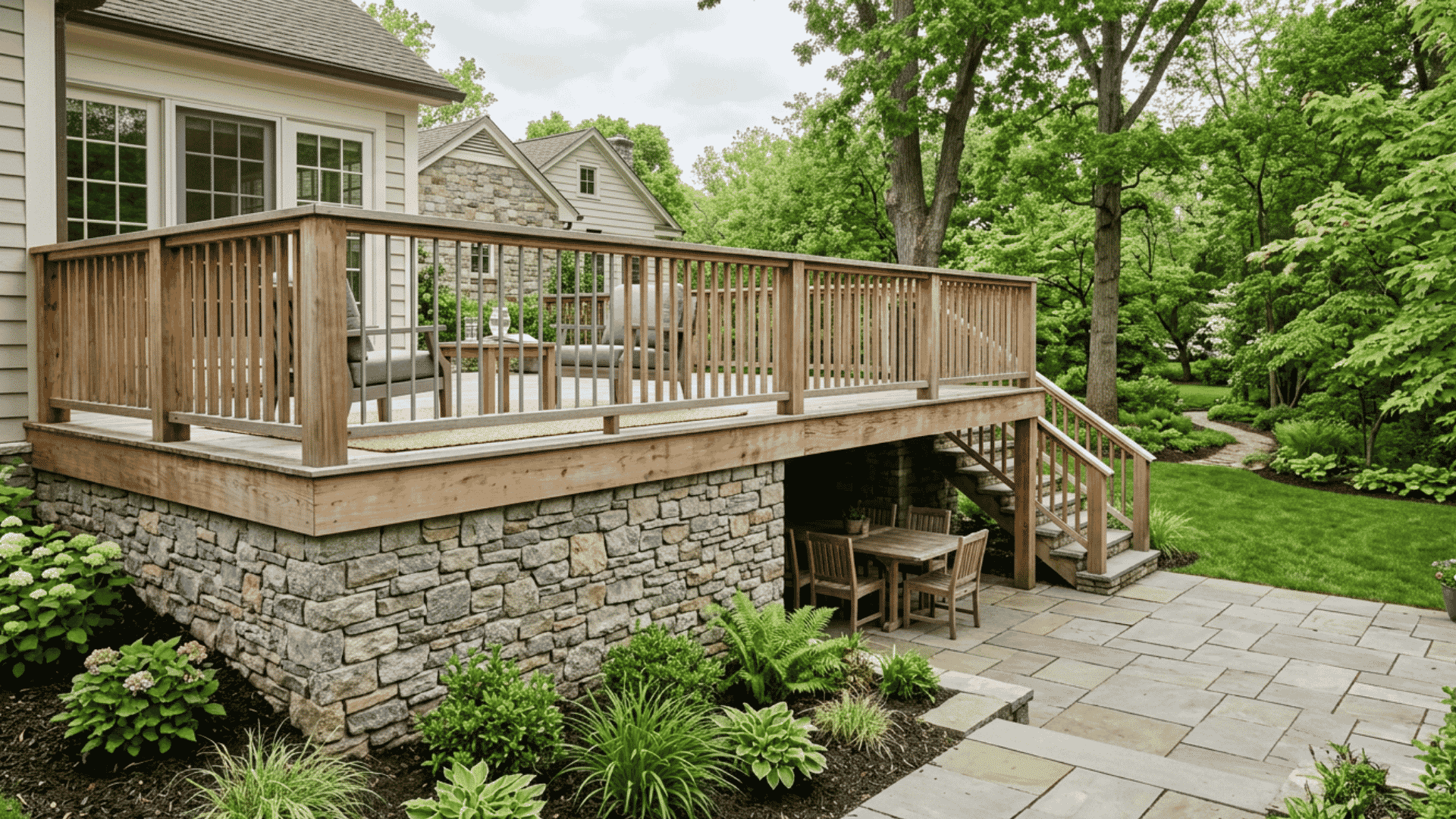
Stone-look skirting can make a raised deck feel more solid and grounded.
It works well if your home already has stone siding, stone steps, or a patio nearby. Faux stone panels are lighter than real stone and may be easier to install, depending on the product.
Choose colors that match your home’s exterior, such as gray, tan, brown, or mixed stone tones.
This style can feel heavier than slats, so it works best on taller decks.
8. Smooth Concrete Panel Skirting
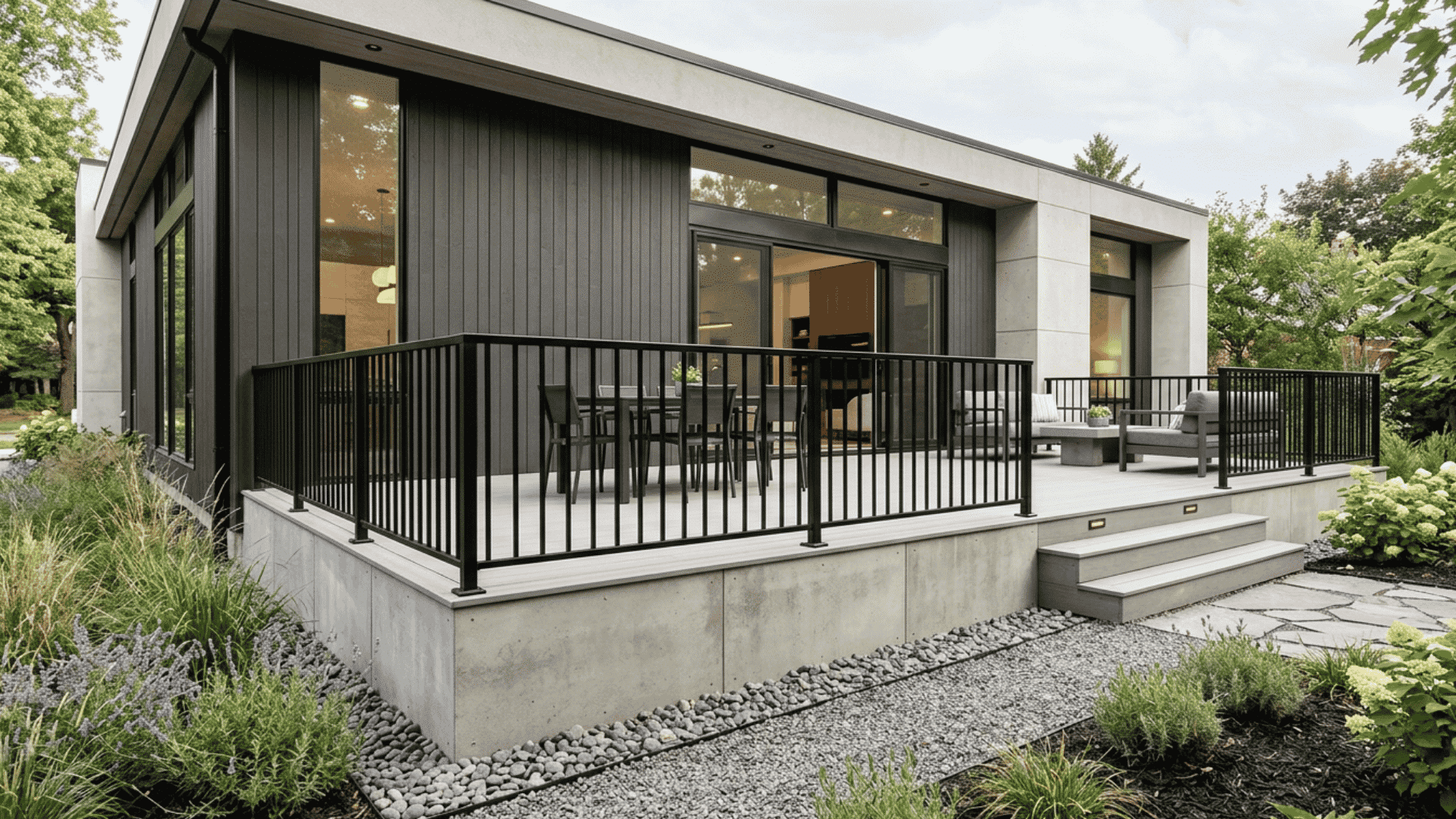
Smooth concrete panel skirting gives a deck a clean and simple base.
It suits homes with modern siding, flat rooflines, or simple outdoor spaces. Concrete panels can make the deck feel sturdy and structured.
Use large smooth panels for a minimal look, or choose lightly textured panels for more depth. Make sure the panels are installed with proper support and drainage in mind.
This style works well with gravel borders, steel railings, and low-maintenance landscaping.
9. Matte Black Slat Skirting
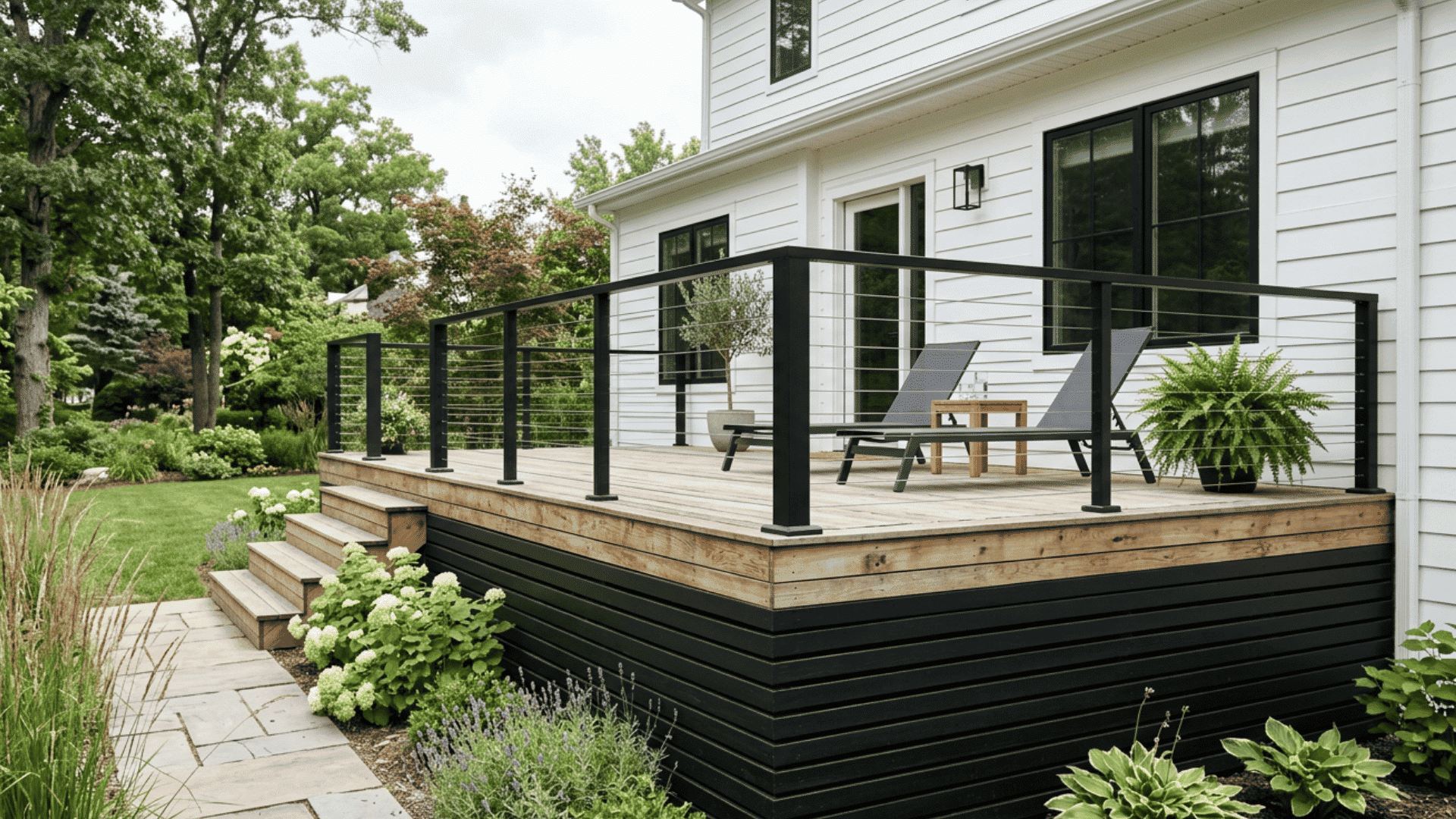
Matte black slat skirting creates a strong contrast under a deck.
It pairs well with natural wood decking, black railings, and white or light gray siding. The matte finish feels softer than glossy black, which helps the space look cleaner and less harsh.
Use horizontal or vertical slats depending on the shape of your deck. Keep small gaps for ventilation.
This is a good choice for homeowners who want a simple look with a stronger design statement.
10. White Deck Skirting
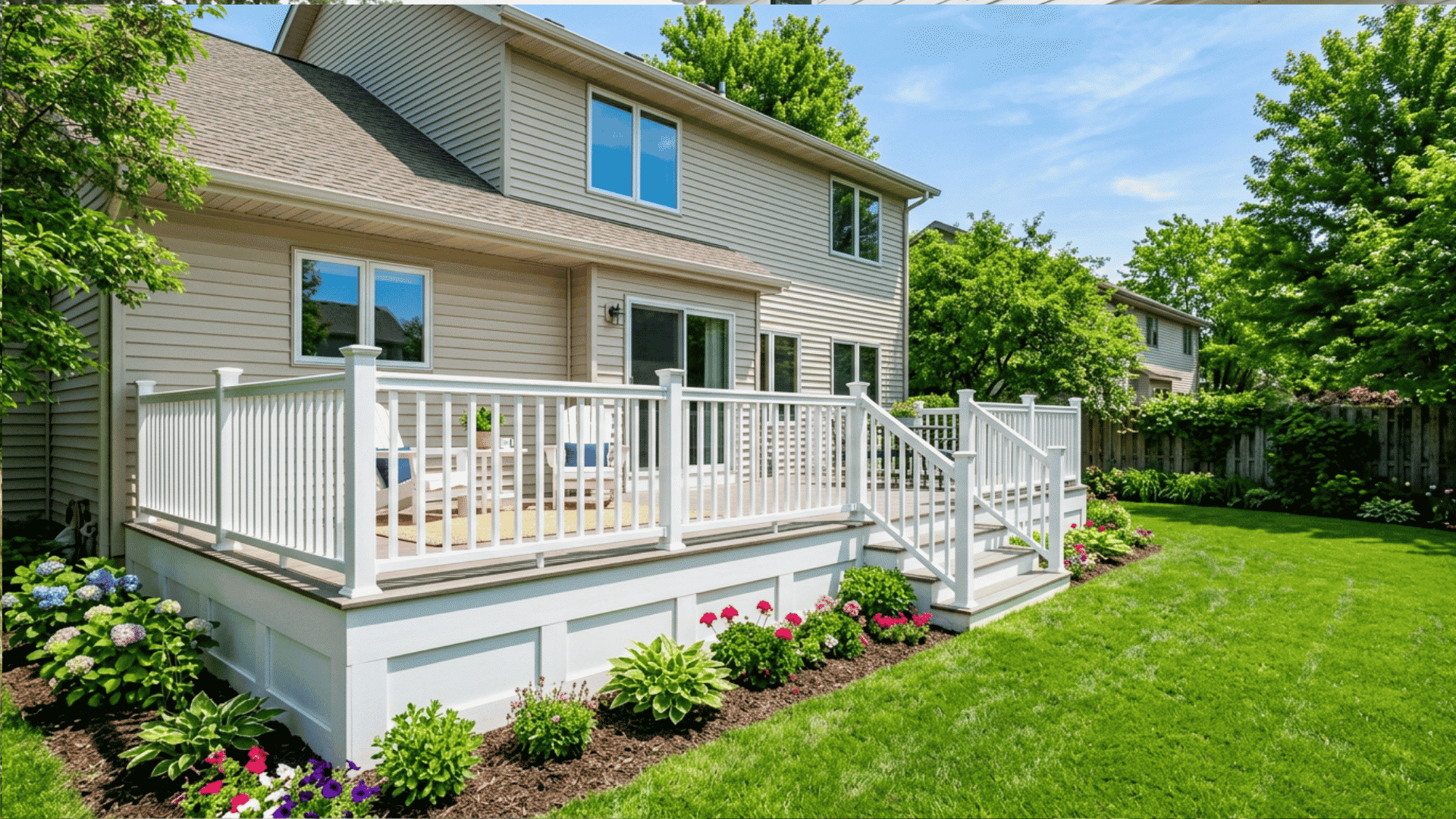
White deck skirting looks clean, bright, and fresh.
It works especially well with coastal homes, cottages, modern farmhouse exteriors, and homes with white trim. White skirting can make the lower deck area feel lighter, which helps if the deck is low or the yard is small.
Use white lattice, painted boards, composite panels, or framed skirting.
Keep in mind that white may show dirt more easily, so choose washable materials and plan for regular cleaning.
11. Mixed Wood and Metal Skirting
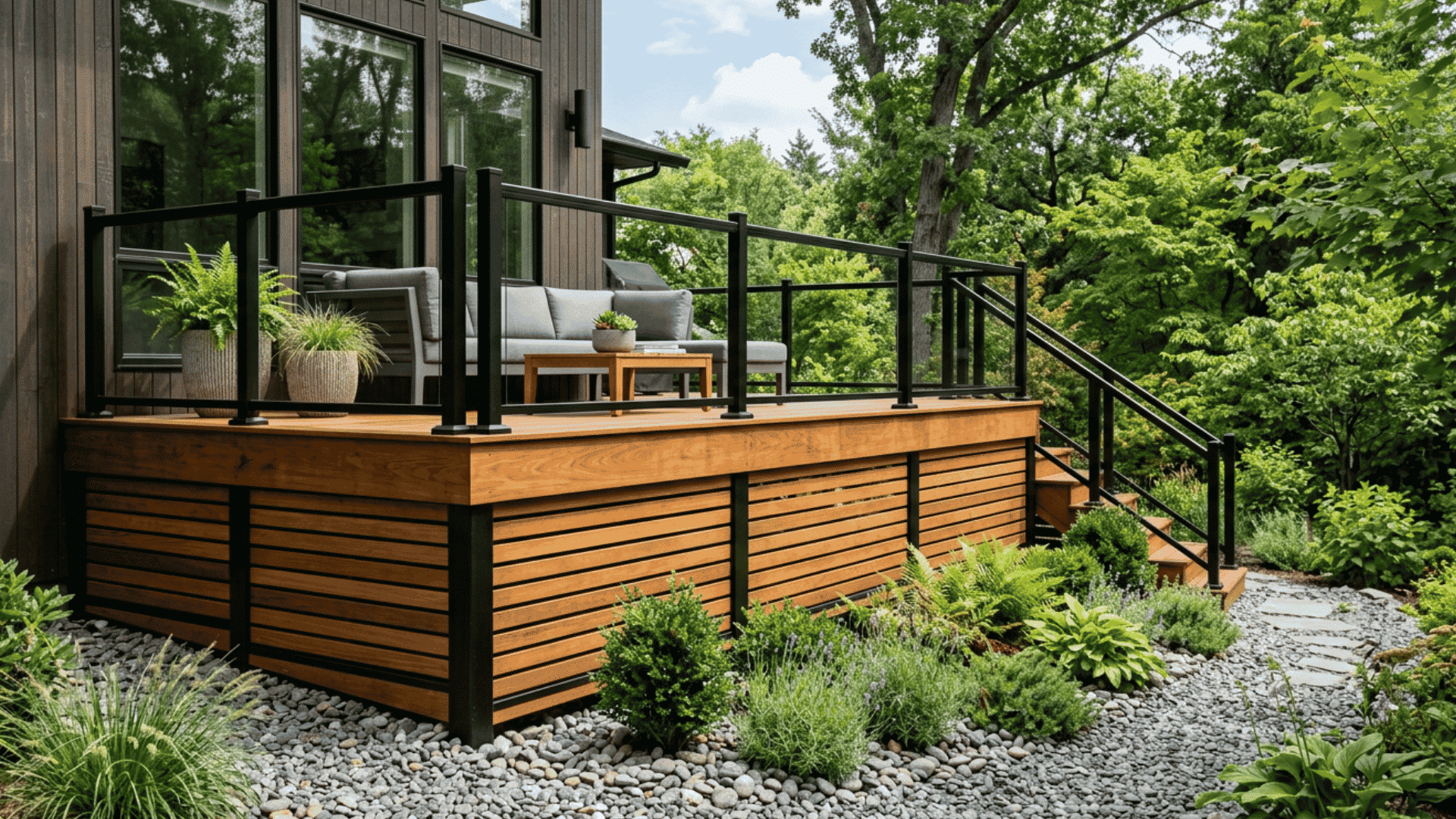
Mixed wood and metal skirting gives the deck a warm but structured look.
Use wood slats inside black metal frames, or pair dark metal posts with natural wood boards. This mix works well when you want the deck to feel modern without looking cold.
The wood brings warmth, while the metal adds clean lines. Match the metal to your railing or outdoor furniture for a more planned design.
This style also works well with gravel, concrete, and simple plants.
12. Decorative Privacy Panel Skirting
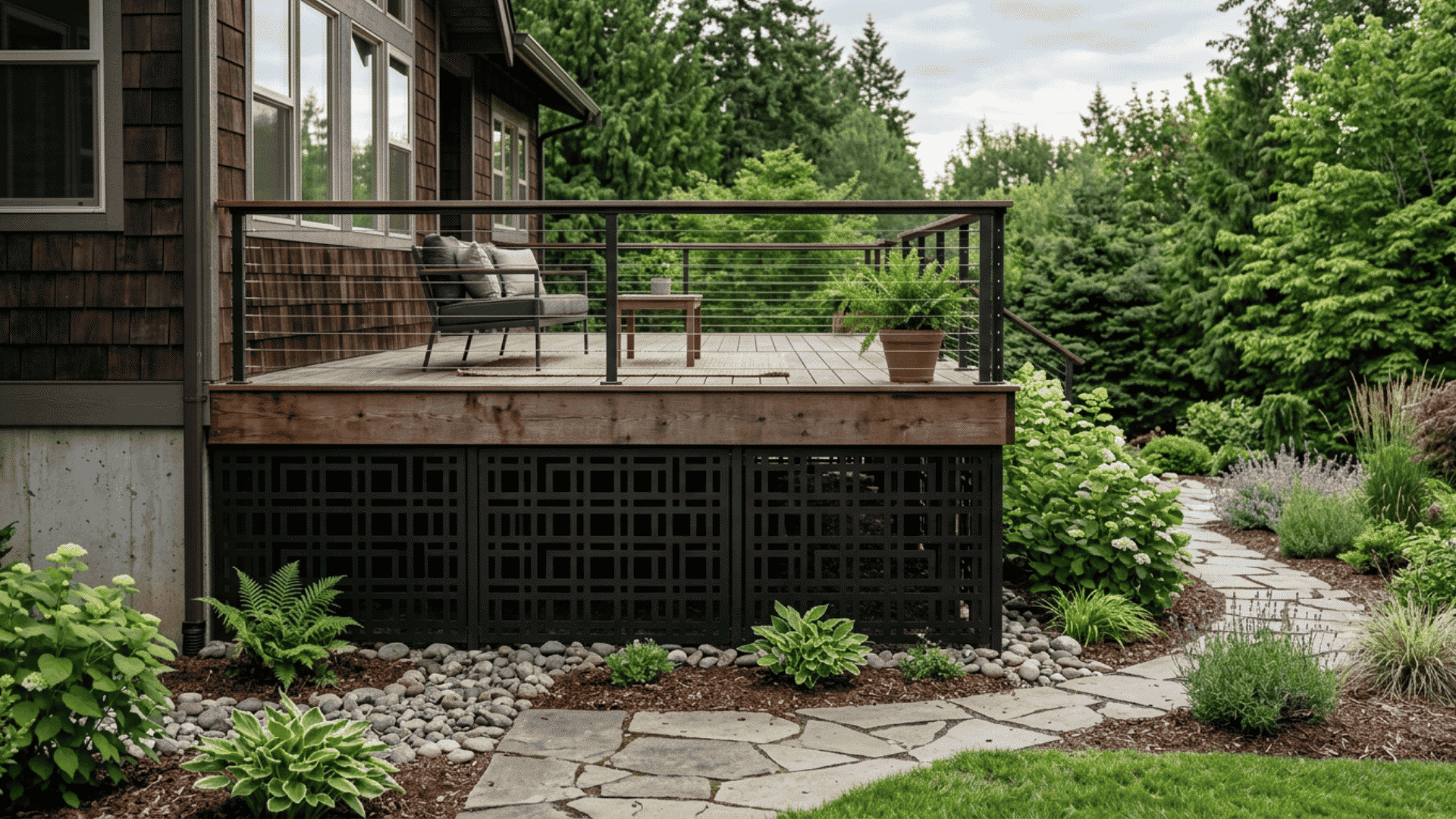
Decorative privacy panels can hide the under-deck area while adding pattern.
Choose simple geometric designs, clean cutouts, or panels with wide spacing. Avoid patterns that feel too busy, especially if the deck is large.
Privacy panels work well for homes where the deck base is visible from the yard or street. They can also help block stored items from view.
Use outdoor-safe panels and frame them well so the skirting looks neat and secure.
13. Wire Mesh Deck Skirting
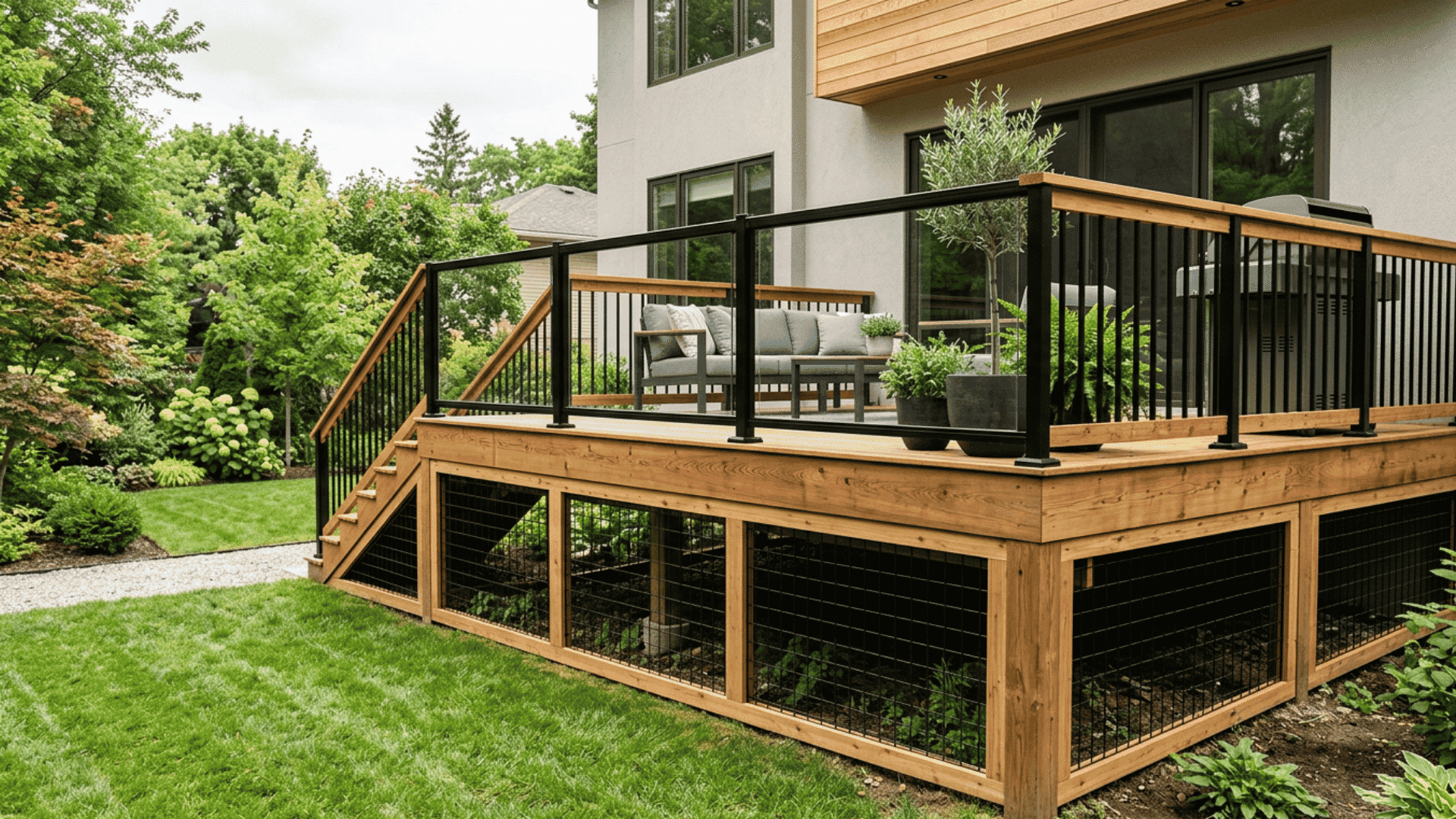
Wire mesh deck skirting is useful when airflow matters.
It keeps the under-deck area open while helping block animals, leaves, and debris. Use black or galvanized wire mesh behind a wood or metal frame.
This keeps the look neat while adding practical function. Wire mesh works well with modern, rustic, and industrial-style decks.
It is also helpful when you want to see some light under the deck but still want a cleaner edge around the base.
14. Cable-Style Deck Skirting
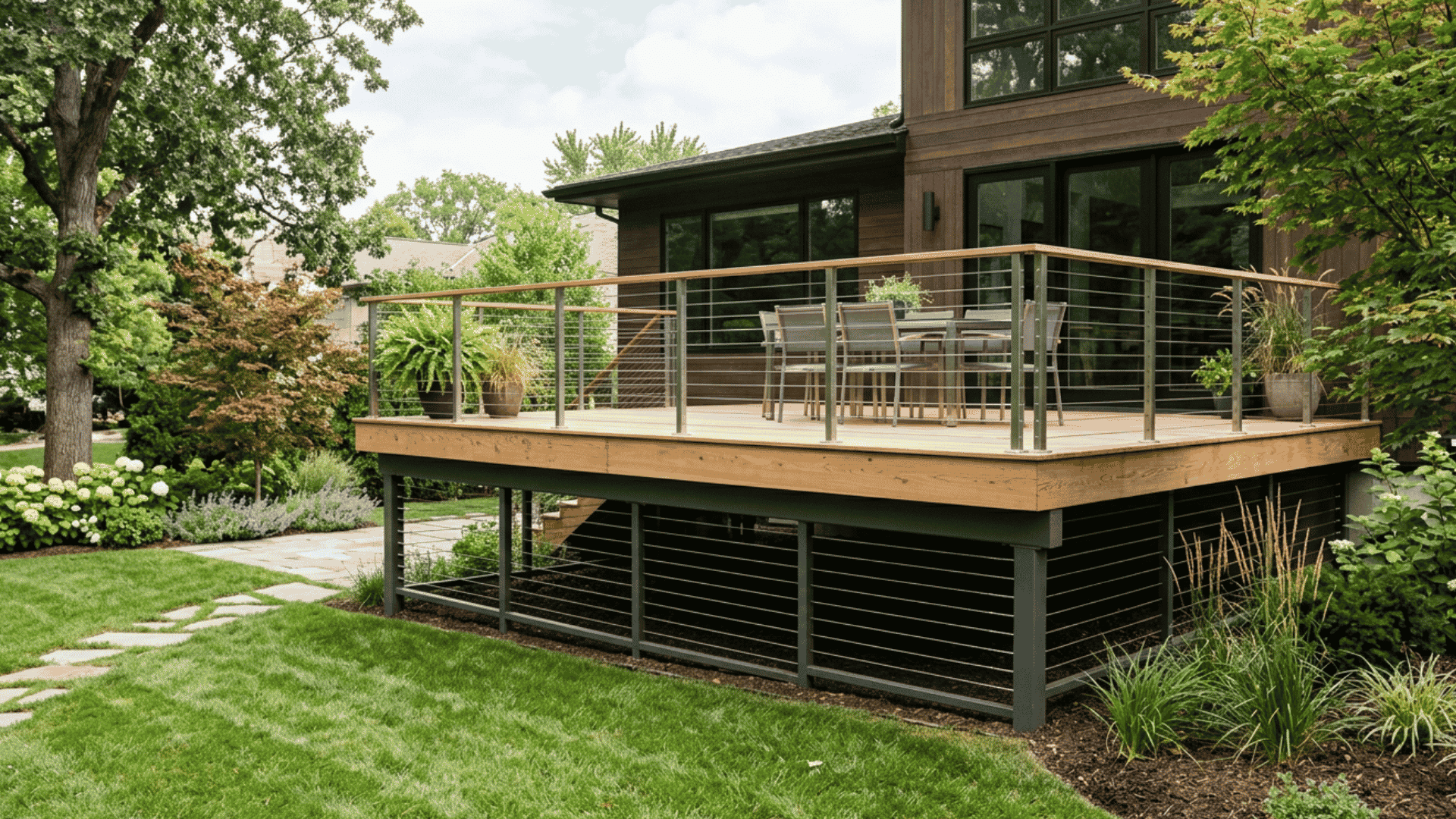
Cable-style skirting gives the lower deck area a light and open look.
It works well when your deck already has cable railings or metal details. Horizontal cables can create a clean line without fully covering the space below.
This style is best when you do not need to hide many stored items under the deck. It allows plenty of airflow and keeps the base from looking bulky. Use strong posts and proper tension so the cables stay neat.
15. Board-and-Batten Skirting
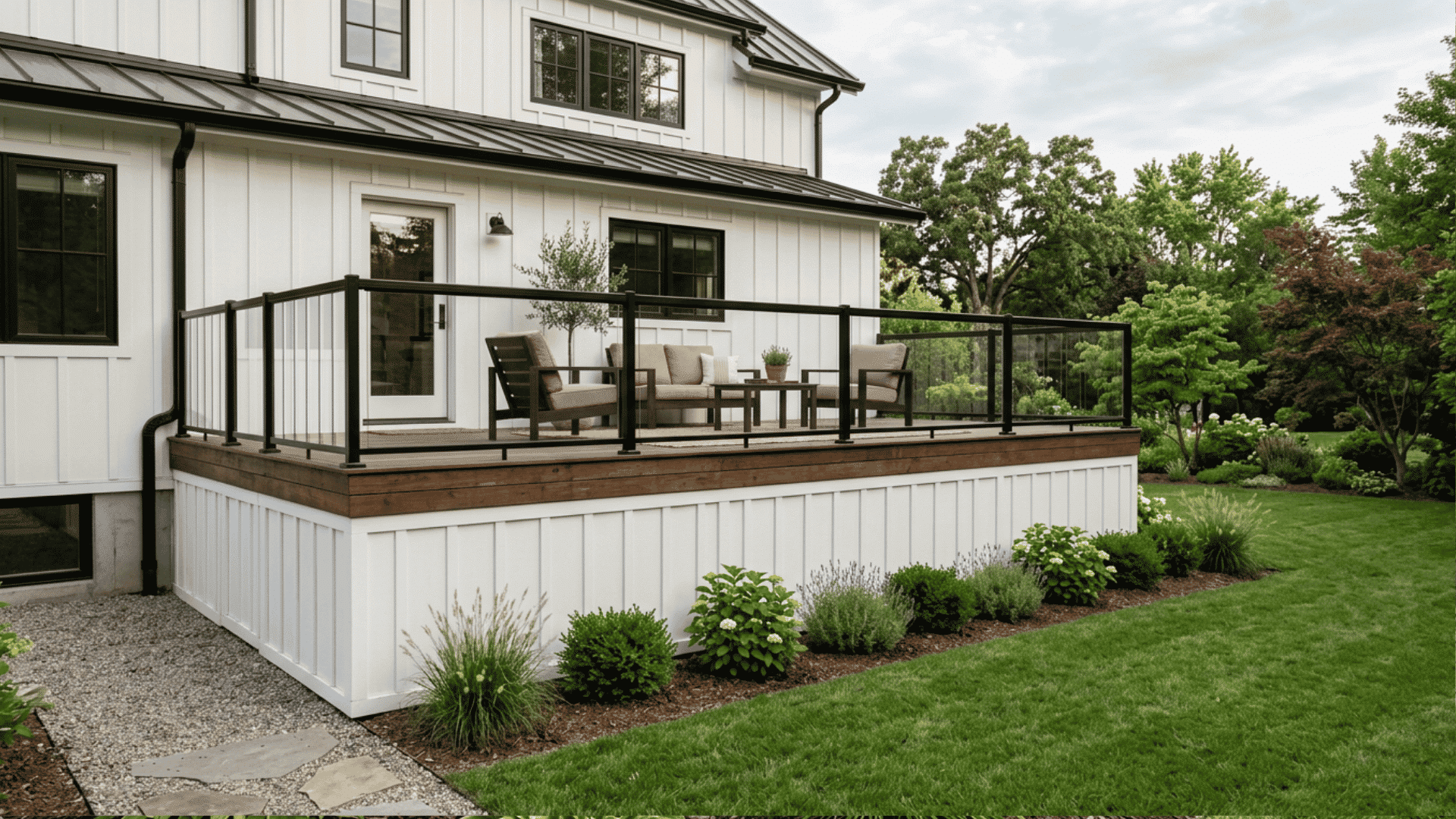
Board-and-batten skirting adds clean vertical lines under a deck.
It works well with modern farmhouse, cottage, and transitional homes. Use smooth boards with simple battens for a fresh version of the style.
Paint it white, charcoal, gray, or a color that matches your siding. This type of skirting covers more than slats, so add vents or gaps where needed. It looks best when trim lines are straight and corners are finished carefully.
16. Dark Stained Wood Skirting
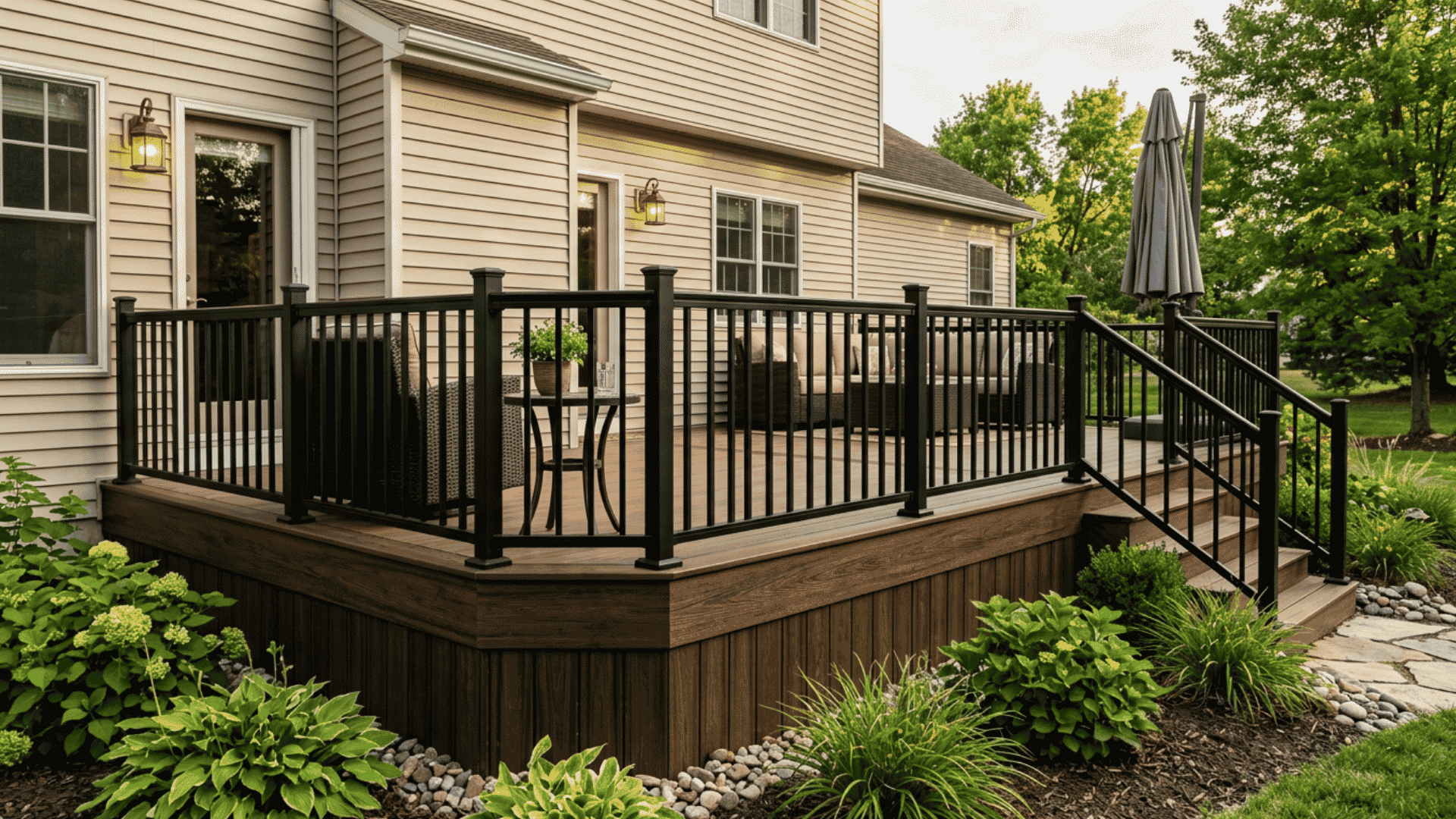
Dark-stained wood skirting can make a deck look rich and neat.
Shades like walnut, espresso, or dark cedar work well with black railings, beige siding, white trim, and warm outdoor lights. Stain allows the wood grain to show, which adds texture without looking too busy.
This style can suit both modern and rustic homes. Since dark finishes can fade in the sun, choose an outdoor stain and plan for maintenance over time.
17. Natural Cedar Skirting
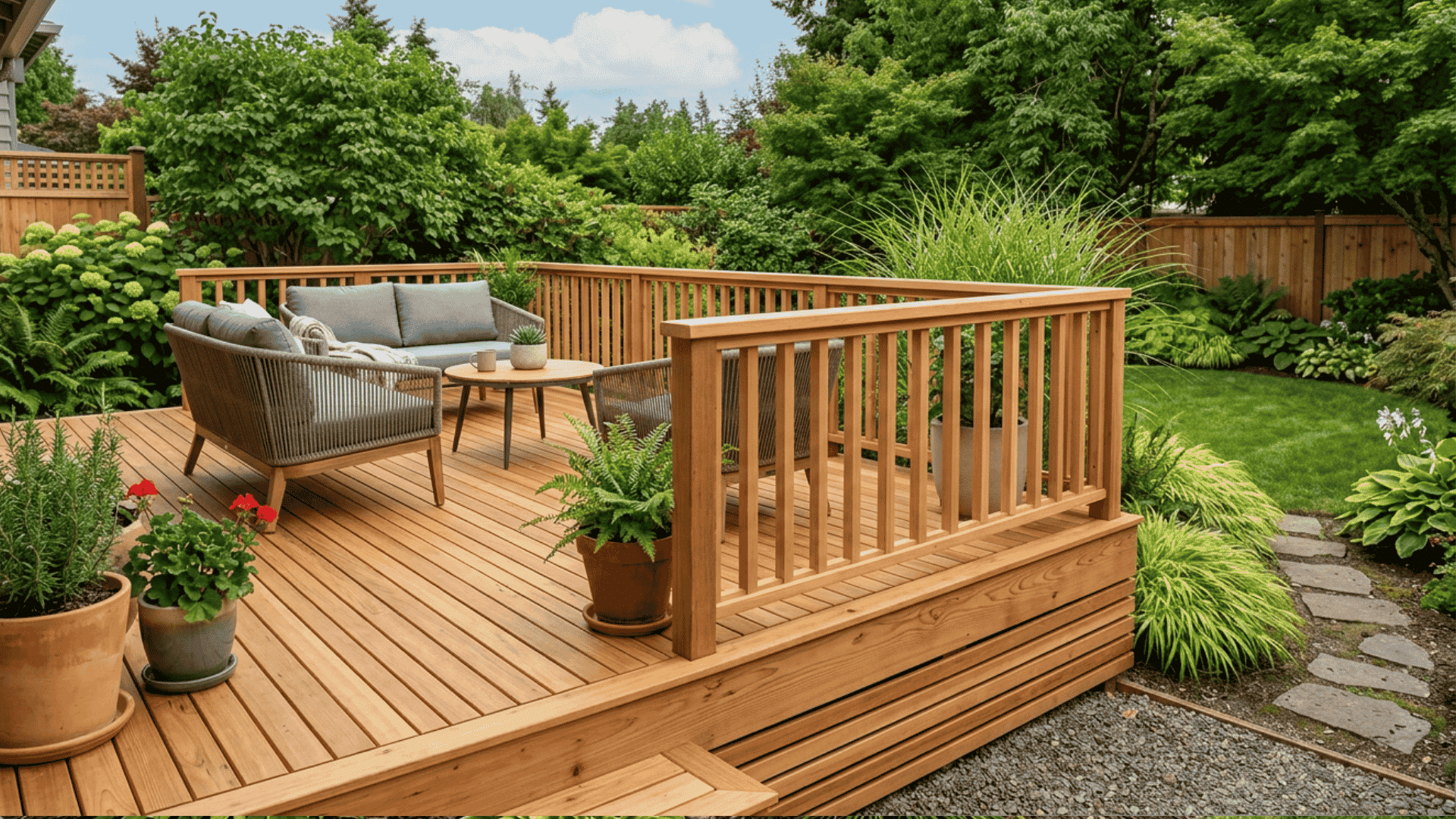
Natural cedar skirting adds warmth and texture to a deck.
Cedar has a clean outdoor look and pairs well with many home styles. Use narrow cedar slats for a modern feel, or wider boards for more coverage.
You can leave the cedar natural, stain it, or seal it to help protect the color. Cedar looks good with black, white, gray, stone, and neutral siding.
It is a strong choice when you want the deck to feel connected to the yard.
18. Painted Gray Deck Skirting
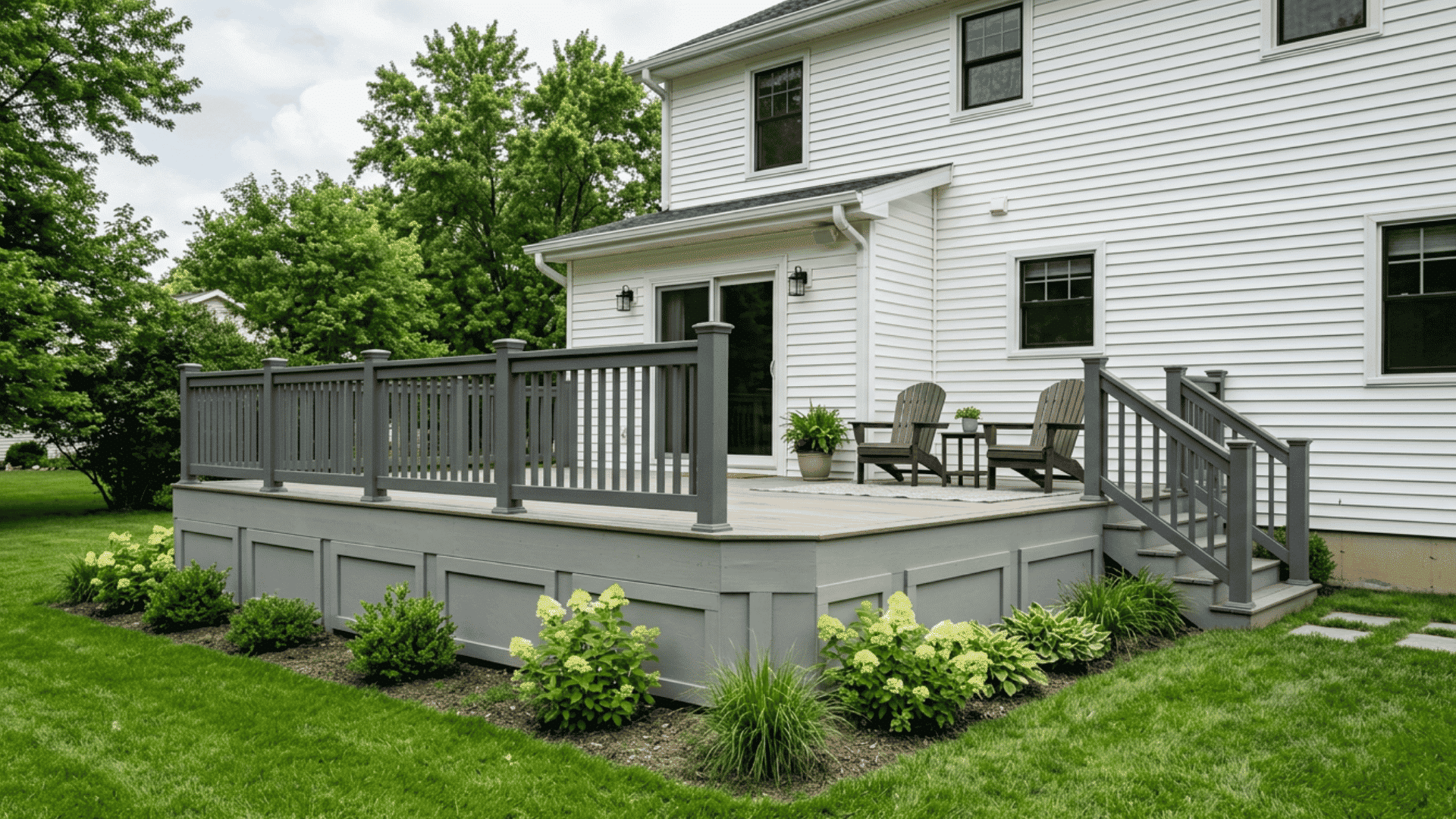
Painted gray skirting is easy to match with many exterior colors.
Light gray can feel soft and clean, while charcoal gray looks more modern and grounded. Gray works with white siding, blue siding, brick, stone, black railings, and wood decking.
Use painted boards, framed panels, or lattice for this look. Choose exterior paint made for outdoor use.
Gray is also useful when you want the skirting to blend in rather than become the main feature.
19. Matching Deck Board Skirting
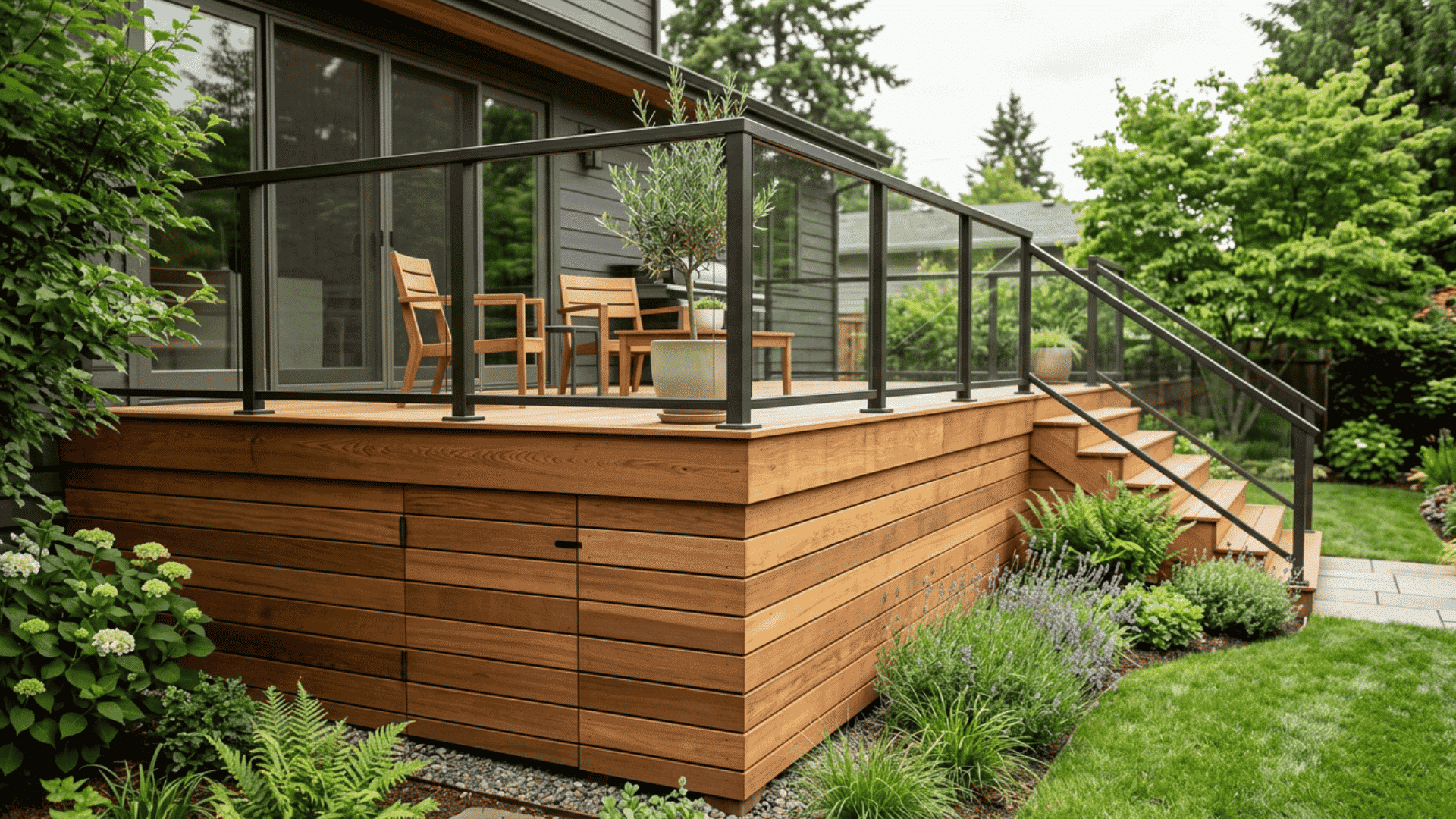
Using the same boards from the deck surface on the skirt gives a seamless look.
This makes the whole deck feel planned instead of added in pieces. Install the boards horizontally or vertically, depending on the deck shape.
Matching deck board skirting works especially well with composite decks because the colors and finish stay consistent.
Leave gaps where airflow is needed, and include an access door if you use the under-deck area for storage or utilities.
20. Hinged Access Panel Skirting
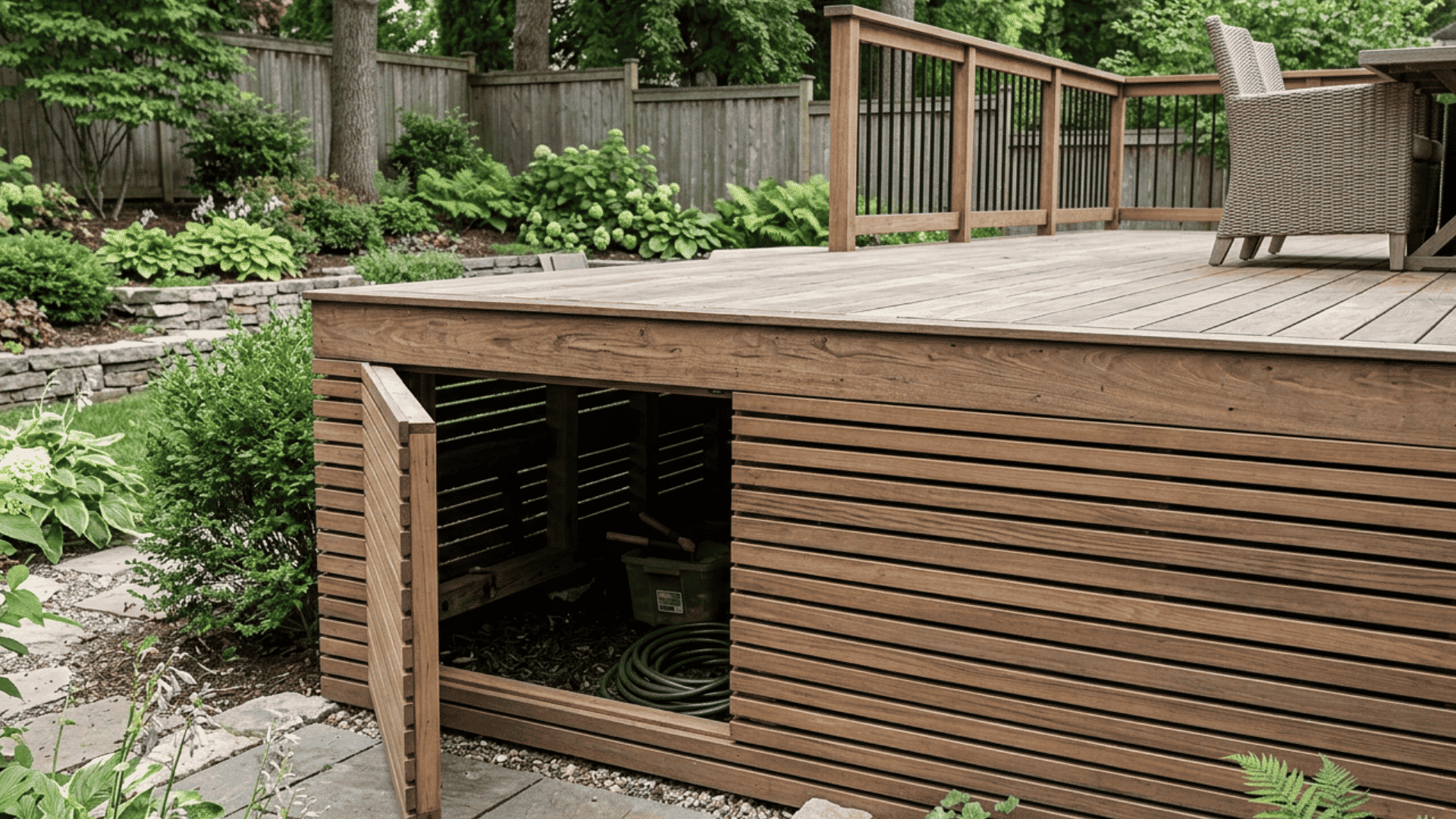
Hinged access panels make deck skirting more useful.
They let you reach stored items, hoses, tools, plumbing, or electrical points without removing the whole panel. The door can blend into the skirting by using the same boards, slats, or panels.
Add hidden hinges and a simple latch for a cleaner look. This idea is important if the space under the deck is used often.
A good access panel keeps the design neat while still making maintenance easier.
21. Sliding Panel Skirting

Sliding panel skirting is helpful when there is not enough room for a hinged door to swing open.
Panels can slide along a track to reveal storage or utility access under the deck. This works well for long deck sections and tight side yards.
Use wood, composite, metal, or framed panels that match the rest of the skirt. Make sure the track can handle outdoor dirt, rain, and seasonal movement.
Keep the panel easy to open and close.
22. Lift-Out Slat Panels
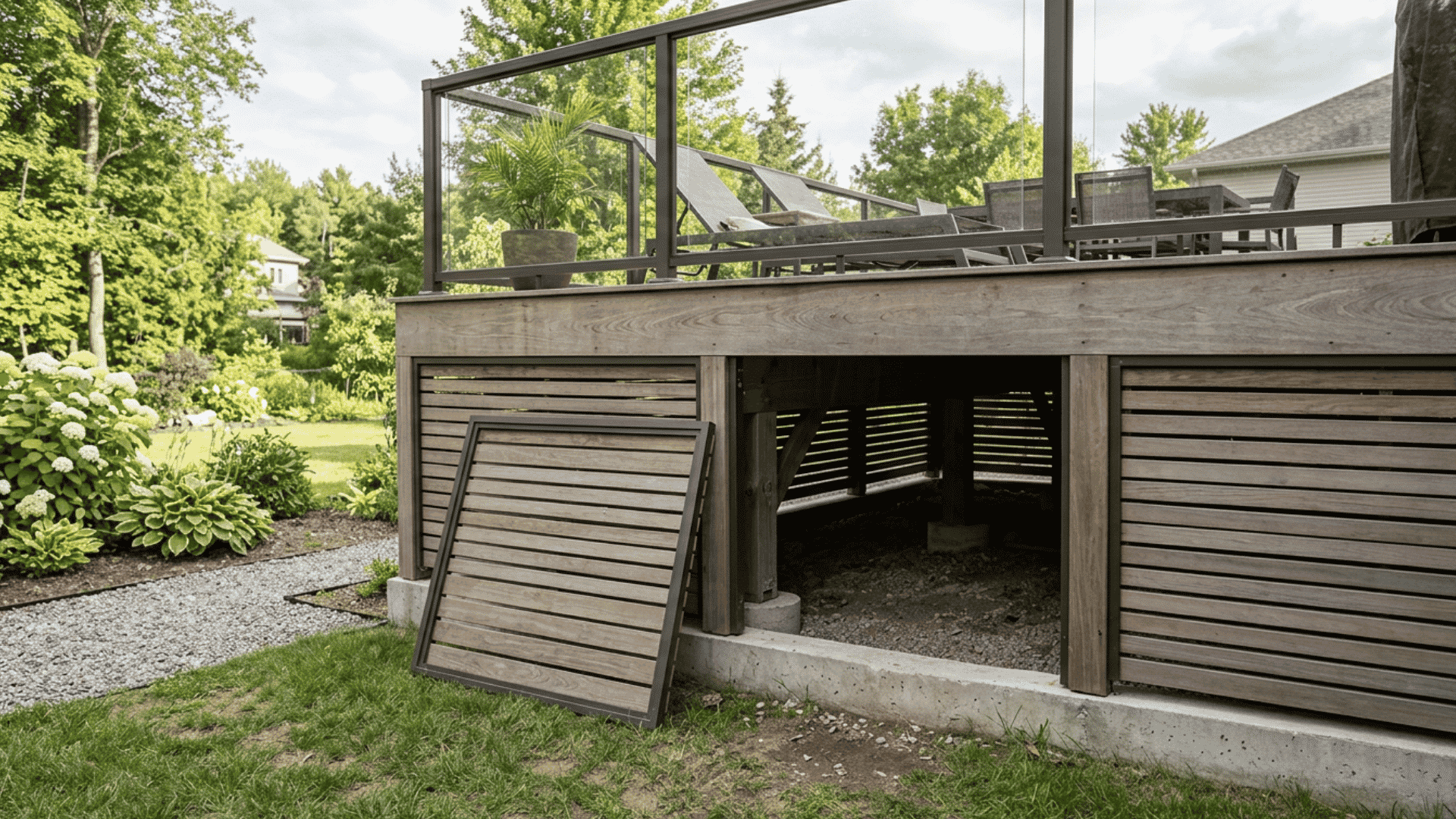
Lift-out slat panels keep the deck skirt clean while giving access when needed.
Instead of a visible door, one framed panel can be lifted out and set aside. This is useful for areas you do not access every day.
Use matching slats so the panel blends into the rest of the skirting. Add small hidden grips or simple hardware to make removal easier.
This option works well for modern wood slat designs, short decks, and storage zones.
23. Planter Box Deck Skirting
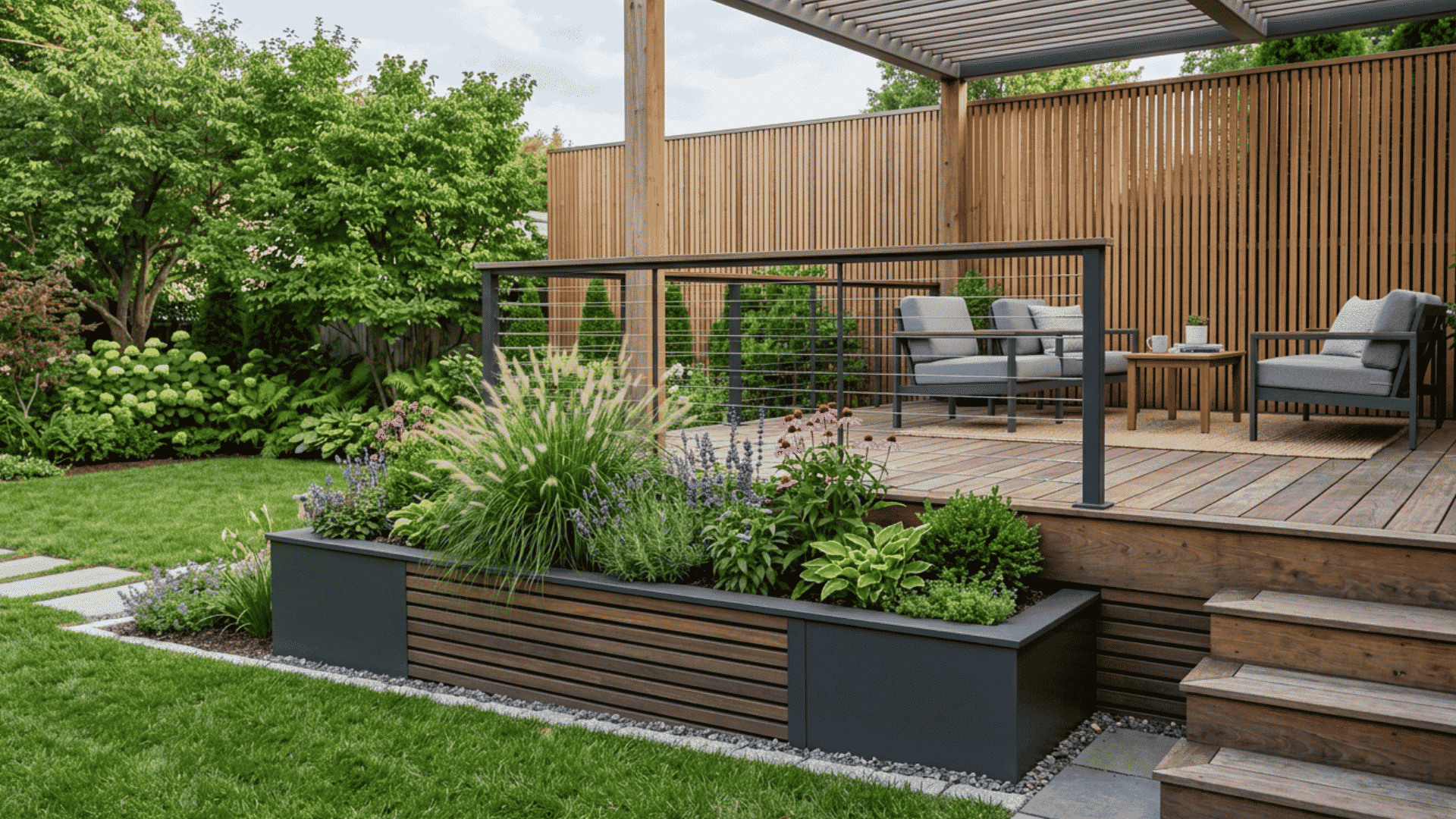
Planter box skirting softens the lower part of a deck and helps it blend with the yard.
You can place long planter boxes in front of plain panels, lattice, or slats. Use grasses, small shrubs, flowers, or trailing plants for a fuller look.
Planters can hide simple skirting while adding color and texture. Make sure water drains away from the deck materials.
This idea works well for patios, backyard decks, and decks that face a garden area.
24. Low Profile Skirting for Short Decks
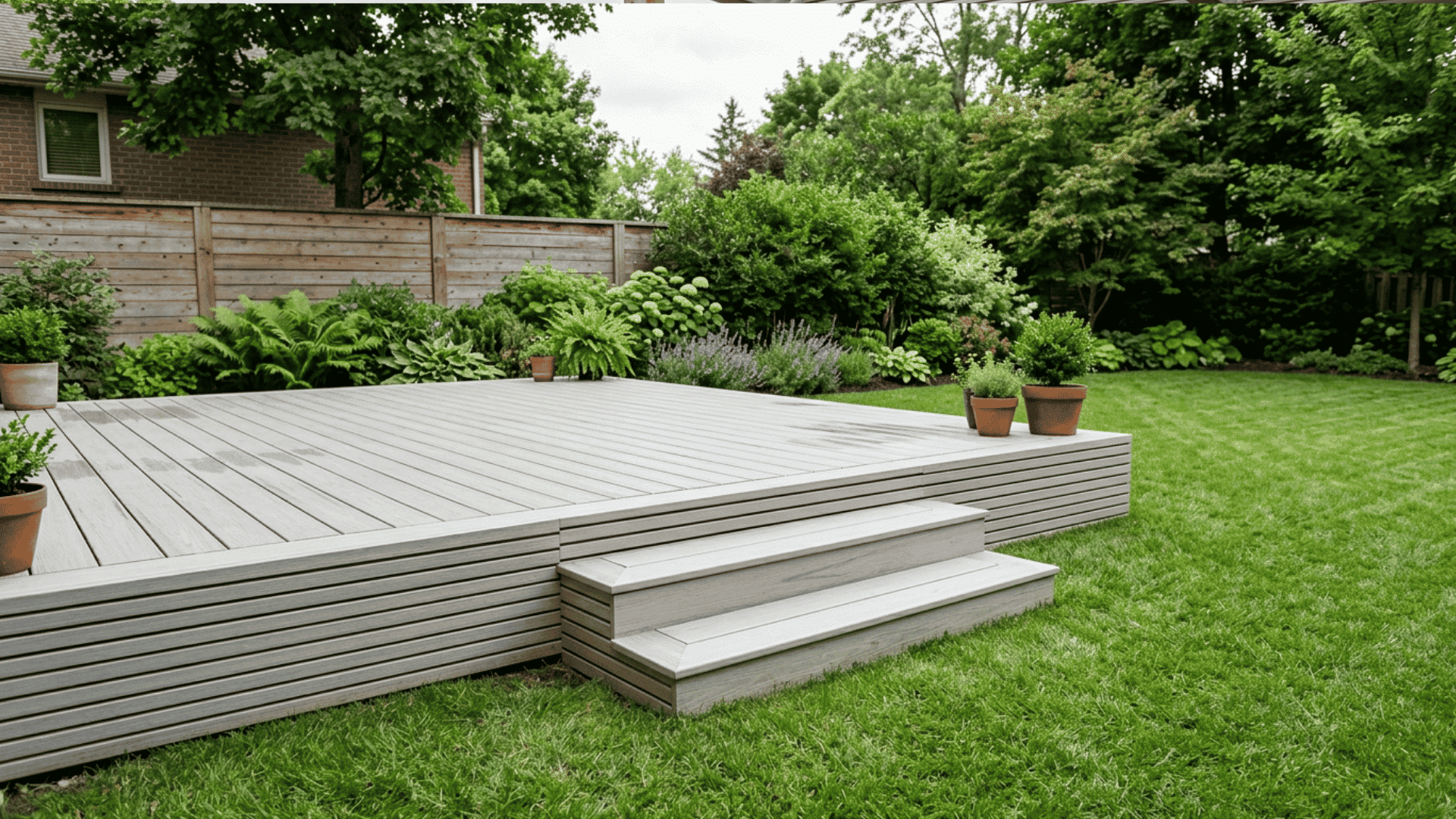
Short decks need skirting that does not feel too heavy.
Low-profile skirting should be simple, slim, and well-spaced. Thin horizontal slats, low square lattice, short framed panels, or light gray boards can work well.
Avoid tall-looking panels that make the deck base feel bulky. Keep the color close to the deck or trim for a softer look.
Low skirting should still allow airflow and should not trap mulch, soil, or standing water against the frame.
25. Skirting With Built-In Lighting
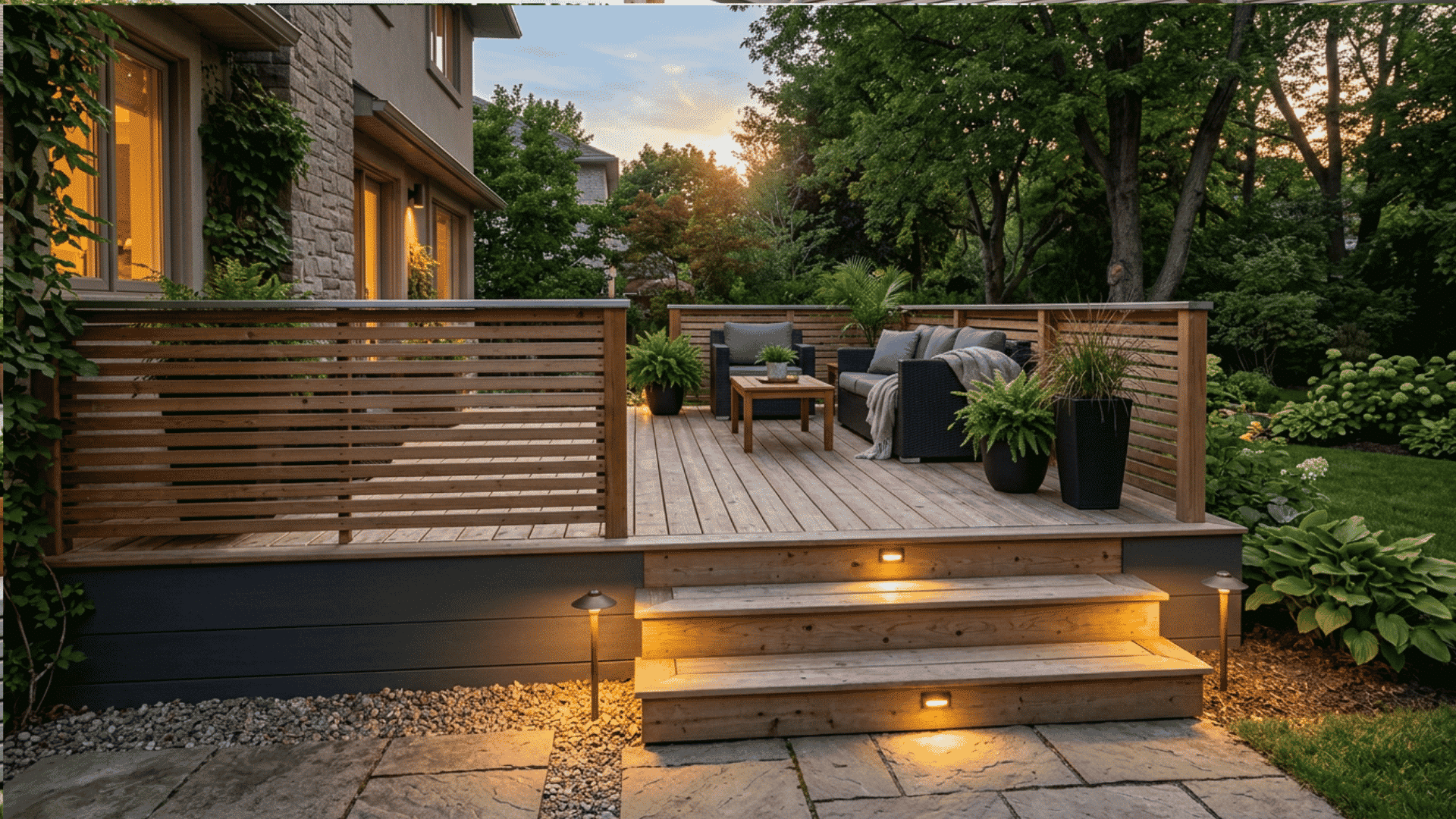
Built-in lighting can make deck skirting more useful and more attractive at night.
Small lights along the lower edge can highlight steps, paths, or landscaping. Warm lights work best because they feel softer outdoors.
Place lights evenly so the deck base does not look patchy. This idea works well with wood slats, stone-look panels, composite boards, or metal skirting.
Use outdoor-rated fixtures and plan the wiring safely before installation.
26. Horizontal Composite Slats
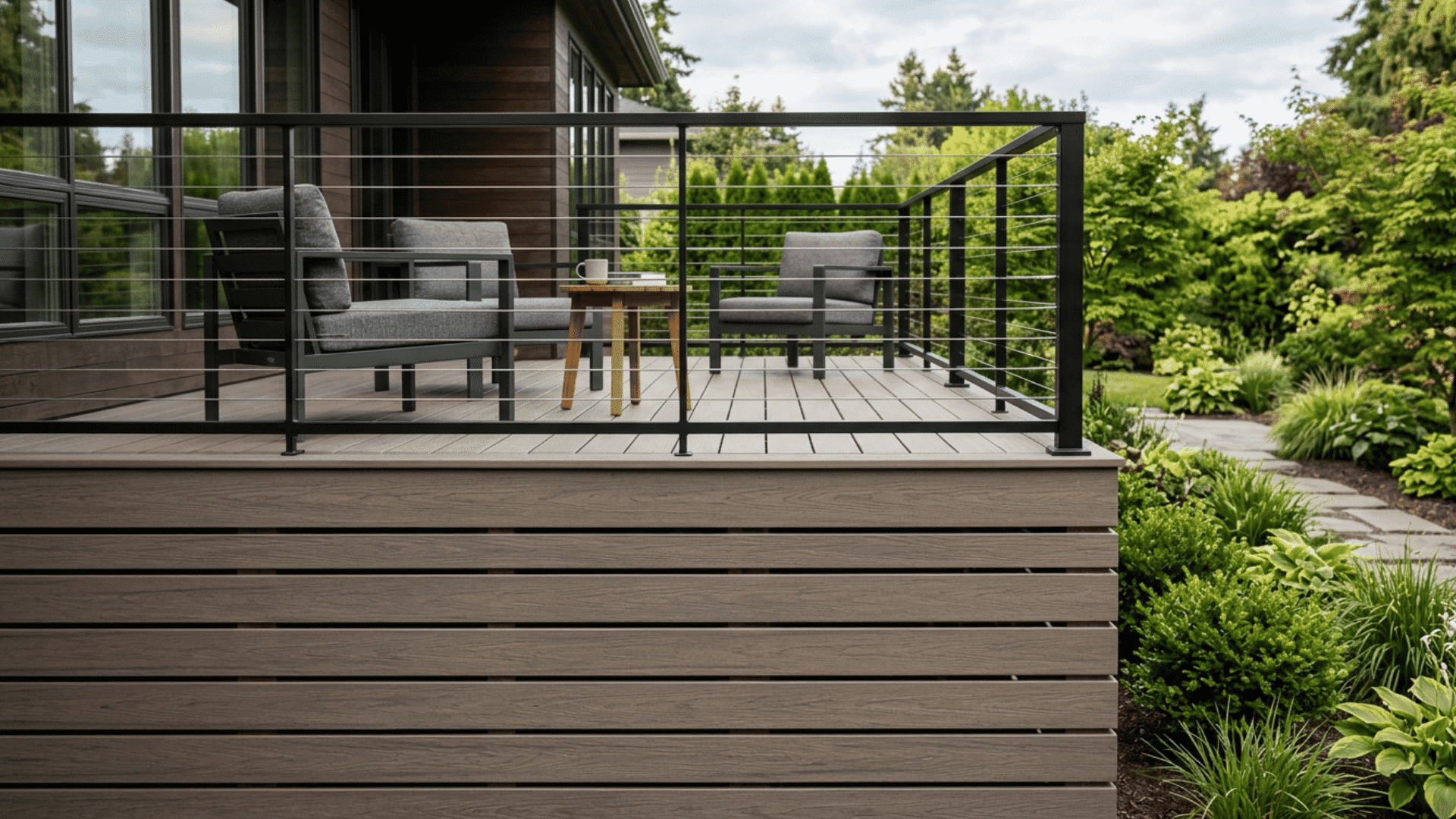
Horizontal composite slats give a modern wood-look finish with less maintenance than natural boards.
They can be a strong choice for homeowners who want clean lines but do not want to stain or seal wood often. Use colors like warm brown, gray, charcoal, or black.
Keep the gaps even so the design looks neat and allows air to move. Composite slats work well with matching deck boards, black railings, and simple outdoor seating.
27. Metal Grid Skirting
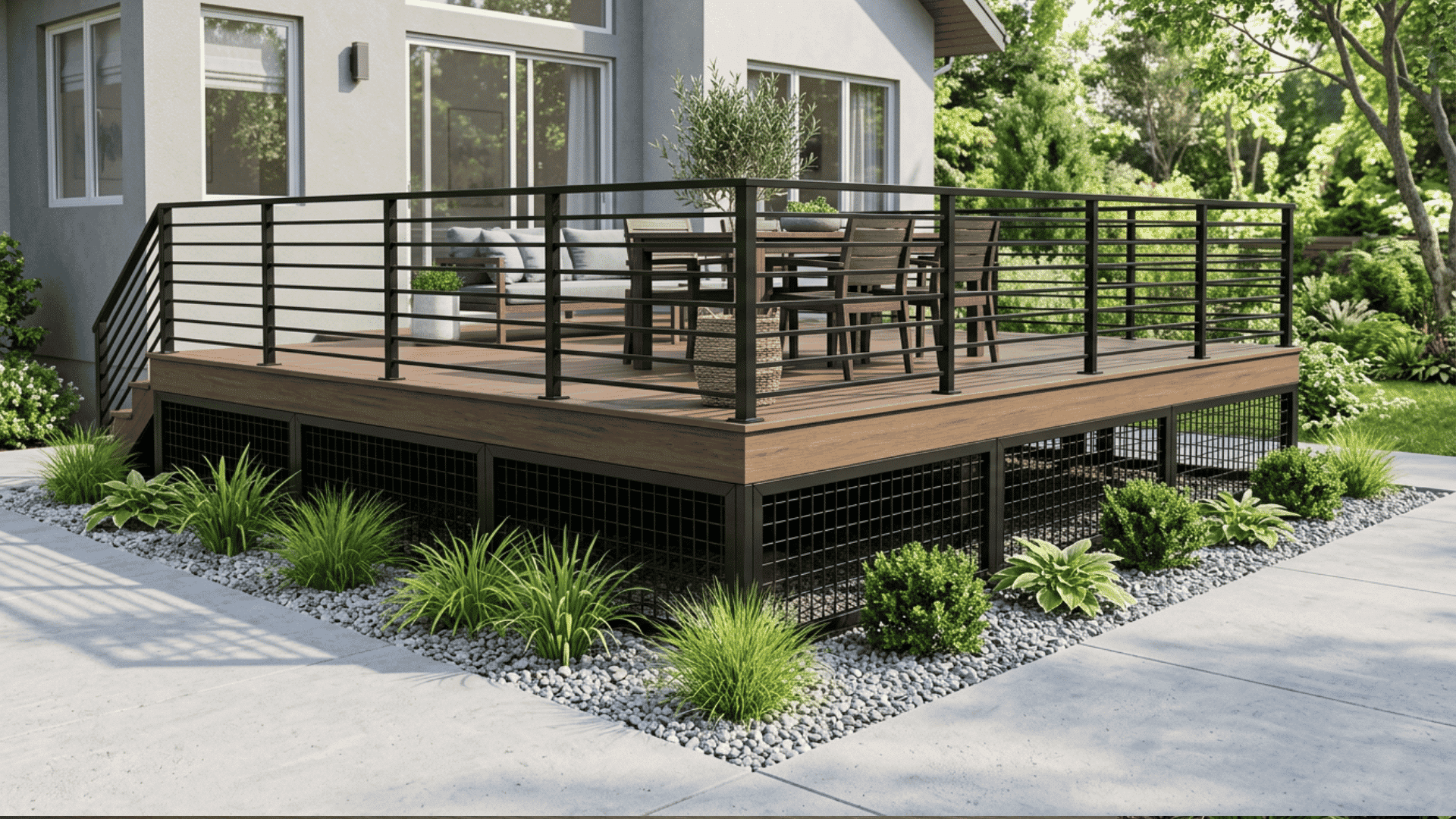
Metal grid skirting gives the deck an open, industrial-modern feel.
The grid pattern allows air and light to pass through while still giving the deck base a defined edge. Use black, galvanized, or powder-coated metal panels for outdoor use.
This style works well with concrete patios, gravel beds, metal railings, and simple landscaping. It may not fully hide storage, so it is better for decks where the under-deck area stays clean and clear.
28. Privacy Fence-Style Skirting
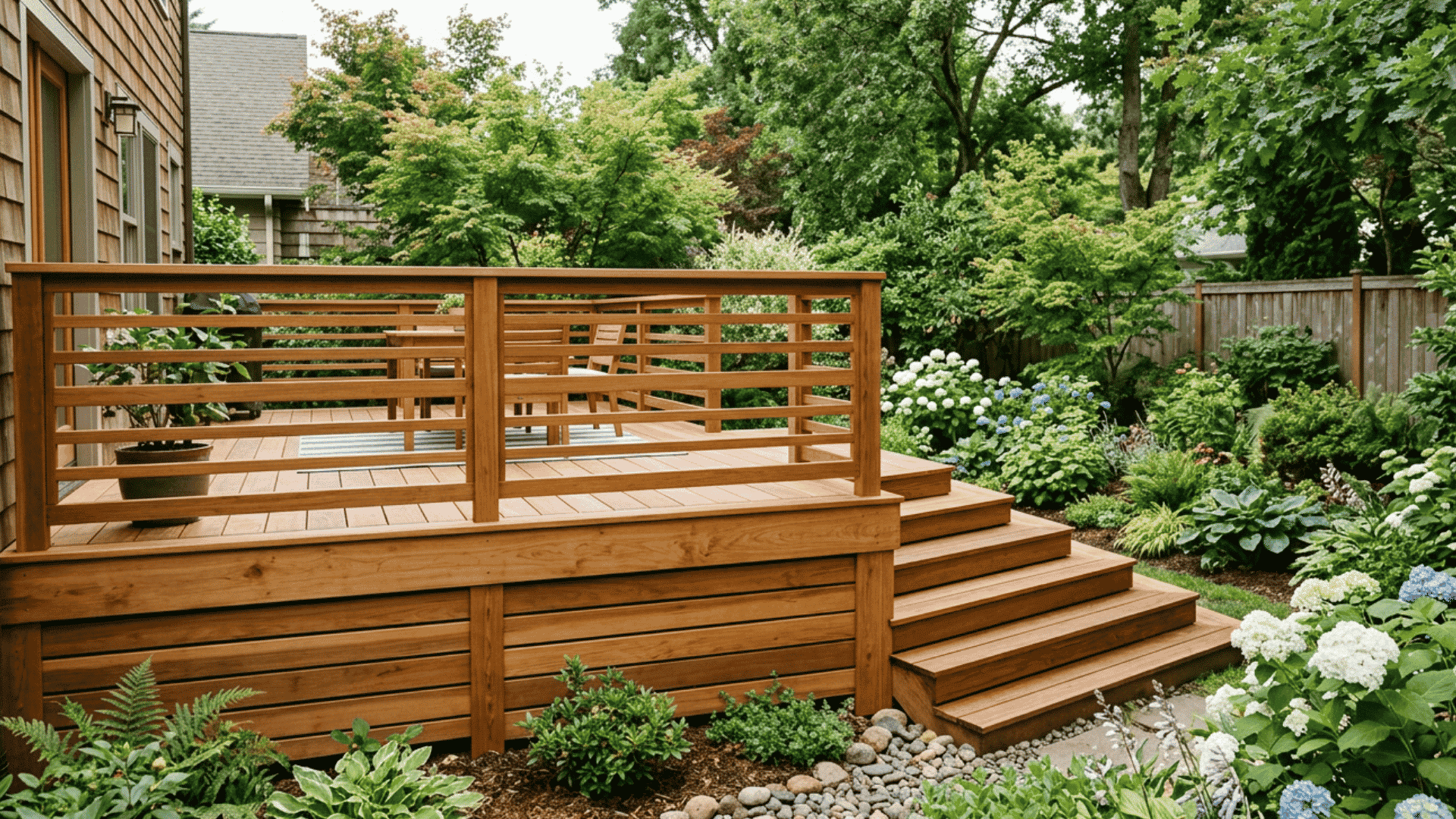
Privacy fence-style skirting uses panels that resemble a short fence beneath the deck.
This can be a smart option for decks that face a neighbor, driveway, or open yard. Use horizontal fence boards for a modern look, or vertical boards for a more classic feel.
Keep the lines straight and the trim simple. Leave space for airflow near the bottom or between boards. This style works well when you want more coverage and privacy.
29. Painted Black Lattice
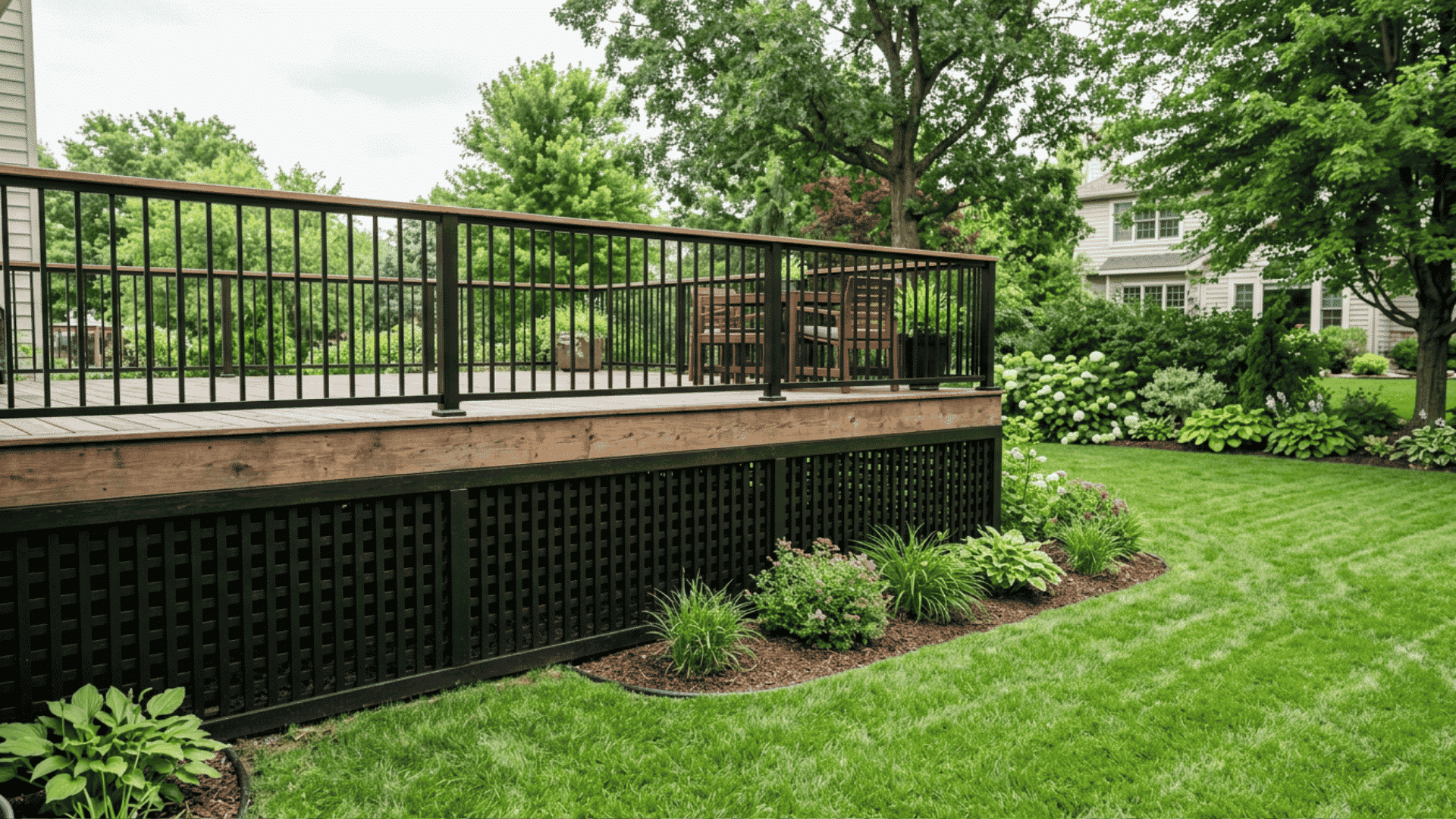
Painting old lattice black can make an older deck base look newer without replacing everything.
Black gives the lattice a cleaner, more contemporary look, especially when paired with wood decking or black railings. Use exterior paint or stain that suits the lattice material.
Repair broken sections before painting so the finished result looks neat. This is a useful budget idea when the existing lattice still works but needs a visual update.
30. Two-Tone Deck Skirting
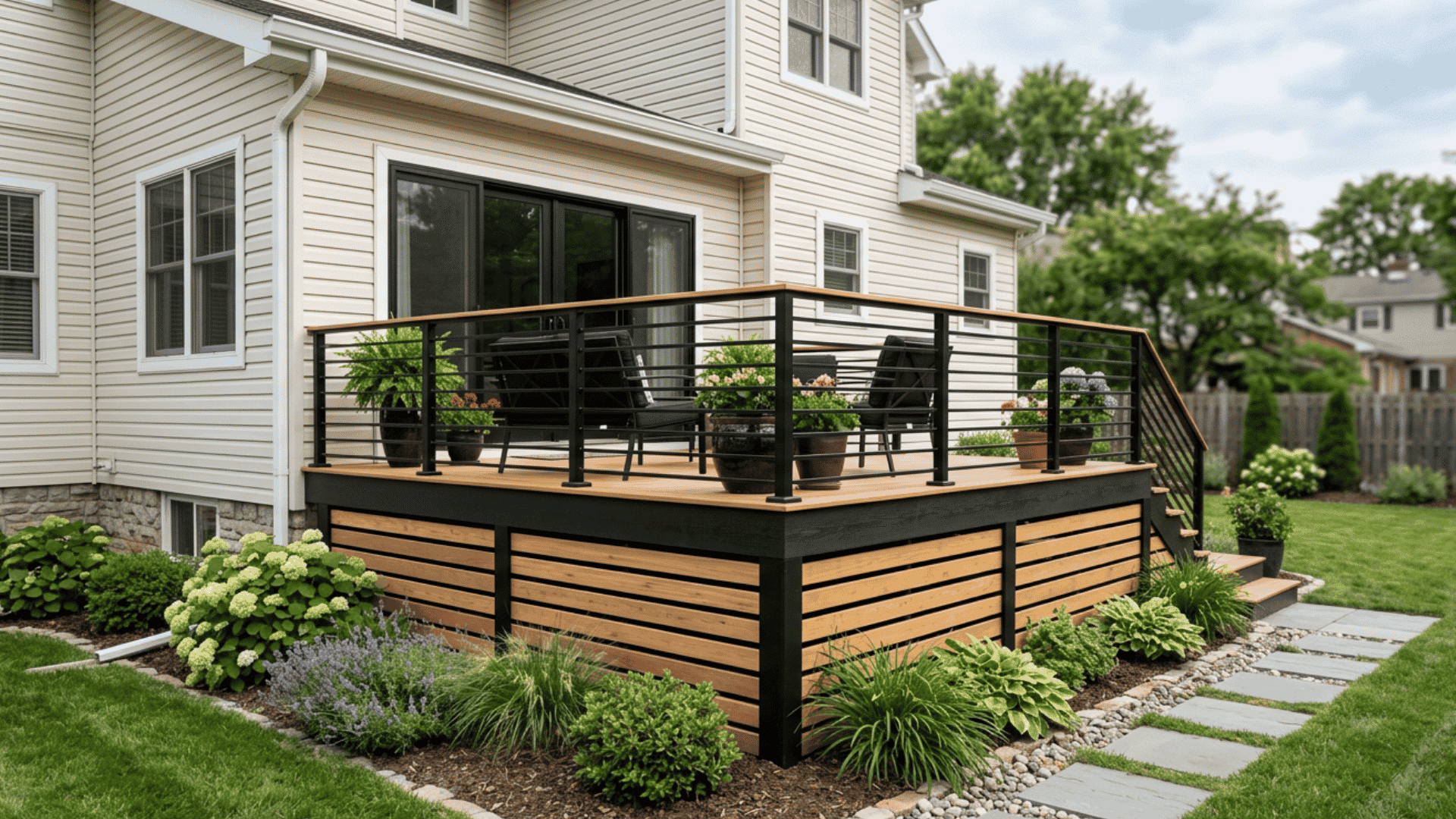
Two-tone deck skirting can make the deck base look more designed.
Try black framing with natural wood slats, white trim with gray panels, or dark skirting below lighter deck boards. Keep the colors connected to your home’s siding, trim, railing, or outdoor furniture.
Do not use too many colors, or the base may look busy. Two-tone skirting works best when the lines are clean and the color contrast feels planned.
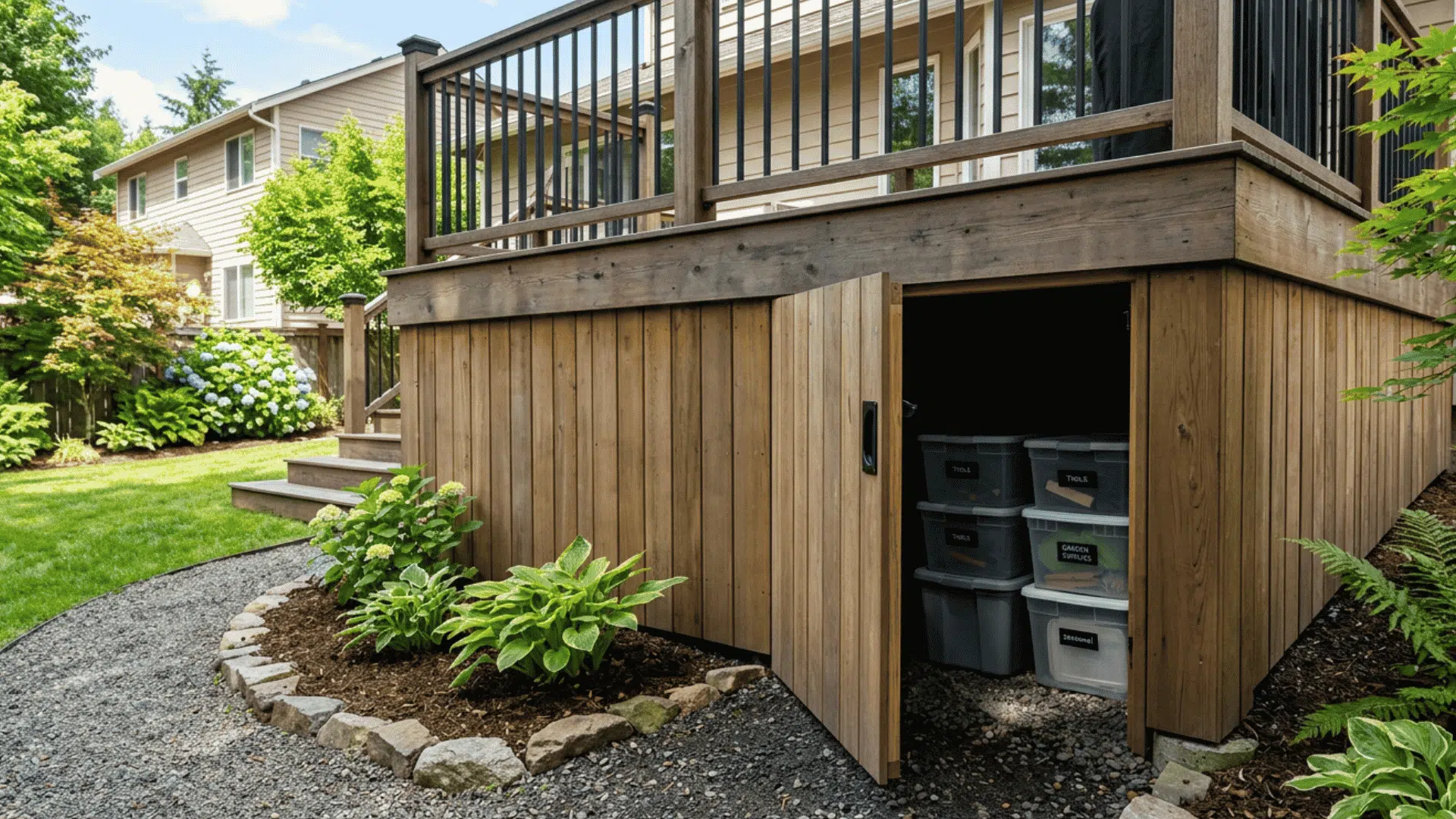
31. Under-Deck Storage Door Skirting
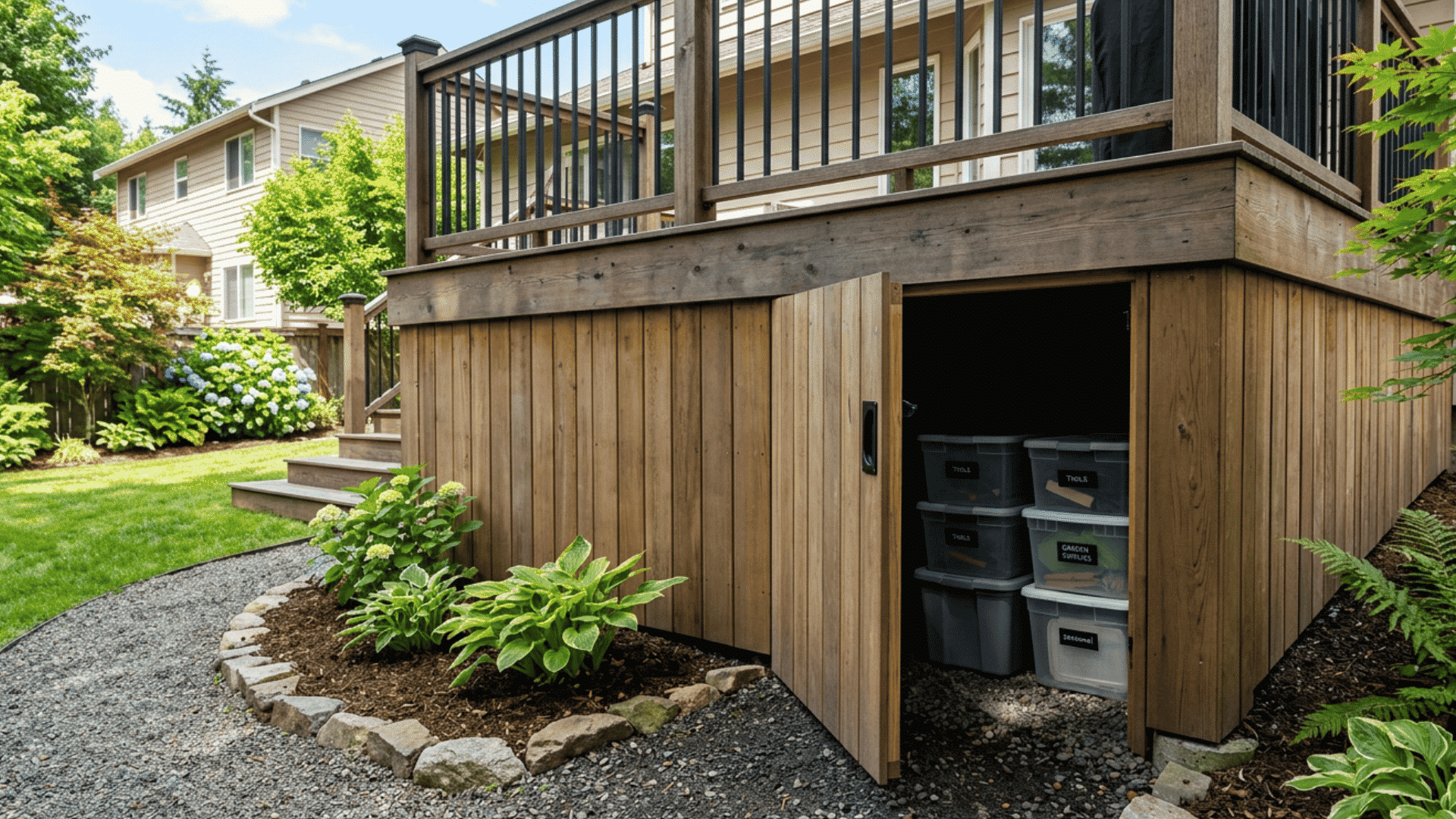
An under-deck storage door is helpful when you use the space for cushions, garden tools, pool items, or outdoor bins.
The door should blend into the skirting so the deck still looks neat. Use the same boards, slats, or panels as the rest of the skirt.
Add a latch that is easy to use but not too visible. Make sure stored items stay dry and that airflow is not blocked.
This design adds function without making the deck look cluttered.
Modern Deck Skirting Materials
Modern deck skirting materials should match the home, handle outdoor weather, and support airflow and access.
| Material | Best For | Look | Notes |
|---|---|---|---|
| Wood slats | Warm outdoor decks | Natural and clean | Needs sealing or staining |
| Composite boards | Lower upkeep decks | Neat and planned | Often costs more than wood |
| Metal panels | Modern homes | Strong and clean | Choose outdoor-safe finishes |
| Vinyl panels | Budget projects | Simple and light | May look less custom |
| Stone veneer | Tall raised decks | Solid and grounded | Can look heavy on short decks |
| Concrete panels | Minimal homes | Smooth and firm | Needs careful fitting |
| Wire mesh | Airflow and pest control | Open and light | Works best inside a frame |
Best Colors for Modern Deck Skirting
Modern deck skirting often looks best in simple colors that connect with the deck, siding, trim, railing, or landscape.
Popular colors include:
- Black
- Charcoal
- White
- Warm gray
- Natural cedar
- Dark walnut
- Greige
- Taupe
- Stone gray
- Matching deck board tones
Choose darker colors if you want the skirting to feel grounded. Choose lighter colors if you want the deck base to feel softer.
Natural wood tones work well when the yard has plants, stone, or warm outdoor furniture.
Deck Skirting Ideas for Storage
Keep storage zones organized and leave enough room to reach utilities, pipes, or wiring when needed. Deck skirting can hide outdoor storage while keeping the yard neat.
Use storage-friendly options such as:
- Hinged doors
- Sliding panels
- Lift-out slats
- Hidden latches
- Weather-safe bins
- Built-in storage zones
- Ventilated panels
Weather-safe bins can hold cushions, garden tools, pool supplies, hoses, or kids’ outdoor toys. Do not seal the space too tightly. Stored items still need airflow so moisture does not build up.
Deck Skirting Checklist
Use this deck skirting checklist to plan a clean, useful, and outdoor-safe design.
Matches the deck and home style
Allows airflow under the deck
Includes an access panel
Uses outdoor-safe materials
Helps limit animal access
Does not block drainage
Works with landscaping
Has neat trim and corners
Is easy to clean or repair
Fits the project budget
Common Deck Skirting Mistakes to Avoid
Common deck skirting mistakes can make the deck look unfinished, trap moisture, or make the under-deck space hard to reach.
- Blocking all airflow under the deck
- Forgetting an access panel or door
- Choosing materials that do not handle outdoor weather
- Letting wood touch soil or wet mulch
- Ignoring drainage around the deck base
- Using too many patterns at once
- Picking a color that clashes with the deck
- Skipping pest control planning
- Making short decks look too heavy
- Forgetting lighting near steps or paths
Conclusion
Modern deck skirting should keep your deck looking clean while still serving a useful purpose.
It can hide framing, support storage, improve the view from the yard, and help limit animal access.
The best design also allows airflow, includes an access point, and uses materials that can handle outdoor weather.
Start by matching the skirting to your deck boards, railing, siding, or trim. Then choose a style that fits your budget and yard.
Try one deck-skirting idea from this list and share which look you would choose for your outdoor space.
Frequently Asked Questions
Can you Install Deck Skirting Myself?
Yes, many simple skirting styles can be DIY projects. Wood slats, framed lattice, and wire mesh are often easier than stone or concrete panels.
How Much Space Should You Leave Under Deck Skirting?
Leave enough space for airflow and ground movement. A small gap near the bottom also helps keep wood away from wet soil.
Can Deck Skirting Be Painted?
Yes, many wood, vinyl, and composite skirting products can be painted if the material allows it. Use outdoor paint made for the surface.
What Deck Skirting Works Best with Pets?
Wire mesh behind slats can help block pets from going under the deck while still allowing airflow. Make sure all openings are secure.