A mid-century modern living room brings together clean furniture lines, warm wood, practical layouts, and touches of bold color.
The style grew out of homes designed in the middle of the 20th century, yet it still feels fresh in many spaces today.
You do not need to turn your room into a 1950s display. A few suitable pieces, a clear color plan, and careful placement can shape the look. Read on for nine ideas you can use in large or small living rooms.
Styling a Small Mid-Century Modern Living Room
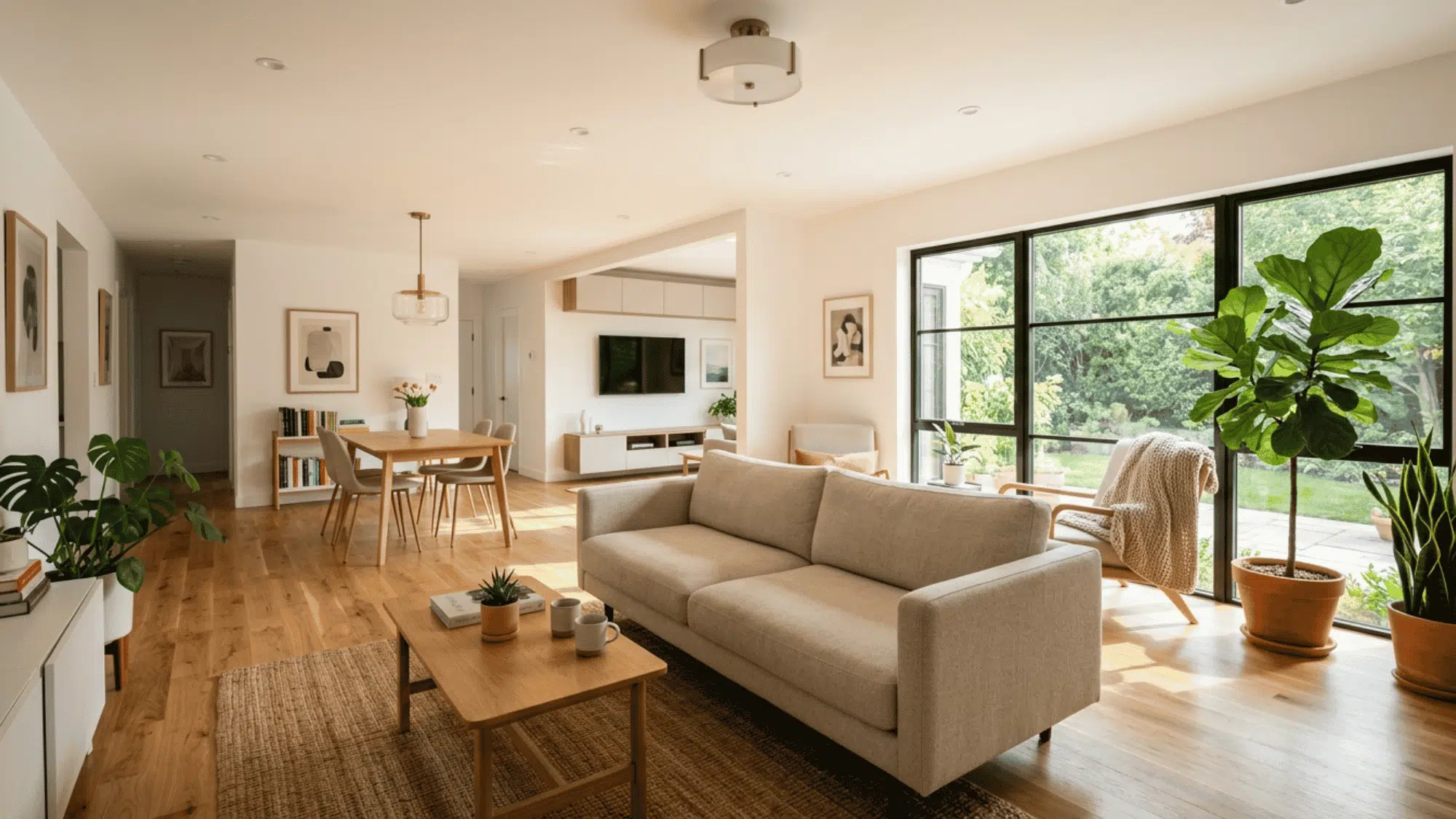
Choose furniture with exposed legs and narrow frames in a small room. More visible flooring can make the area seem larger.
Use a slim media console and replace a wide coffee table with nesting tables. Wall shelves can hold books and decor without using extra floor space.
Keep tall cabinets away from windows so daylight can reach farther into the room. Limit bold color to one chair, rug, artwork, or a small group of cushions.
These ideas also reflect the practical design principles often seen in a mid-century modern house, where open layouts and functional furniture choices help maximize comfort.
Mid-Century Modern Living Room Ideas
The following ideas can work in apartments, family rooms, open-plan spaces, and smaller homes.
1. Choose a Low-Profile Sofa
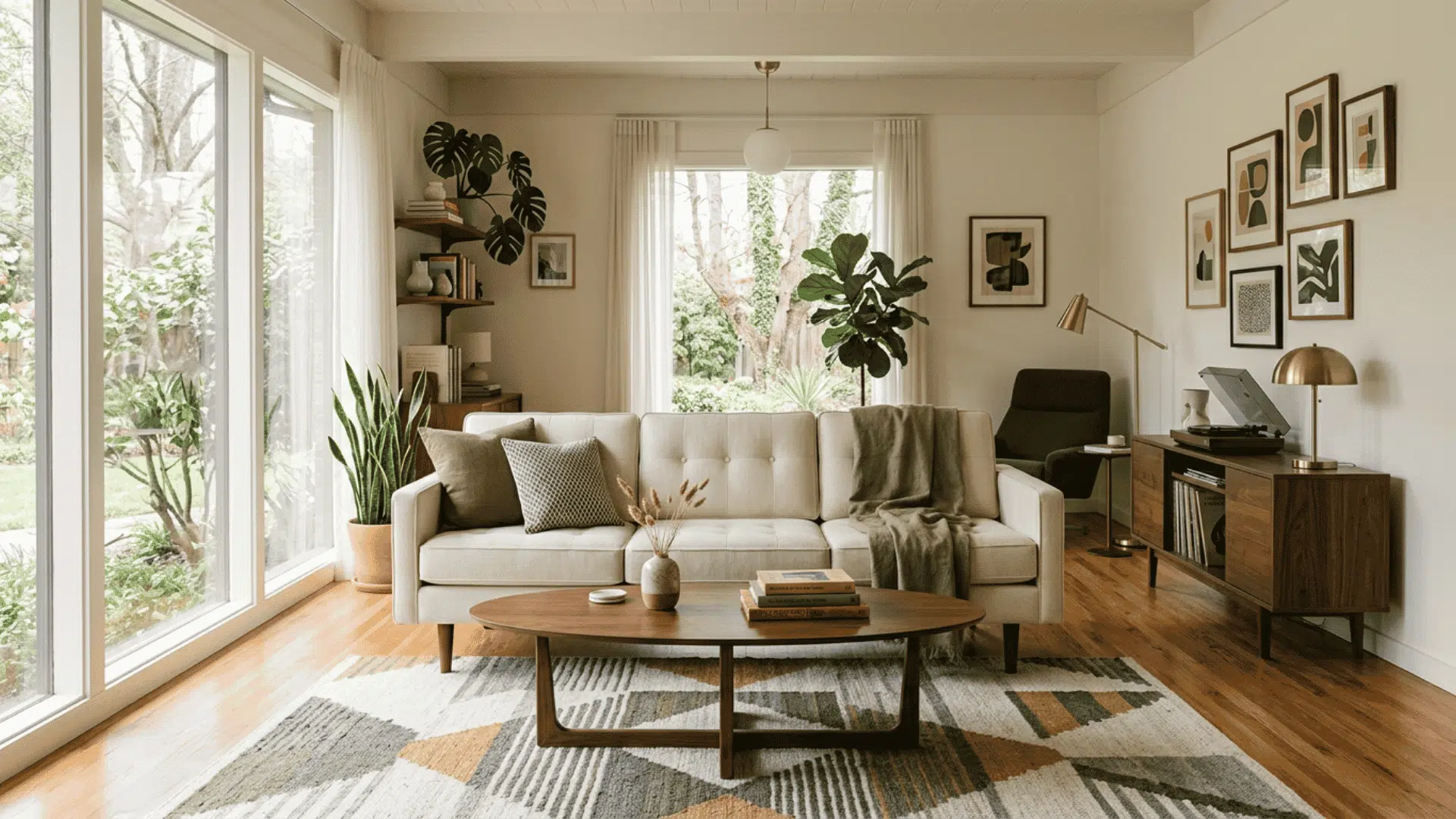
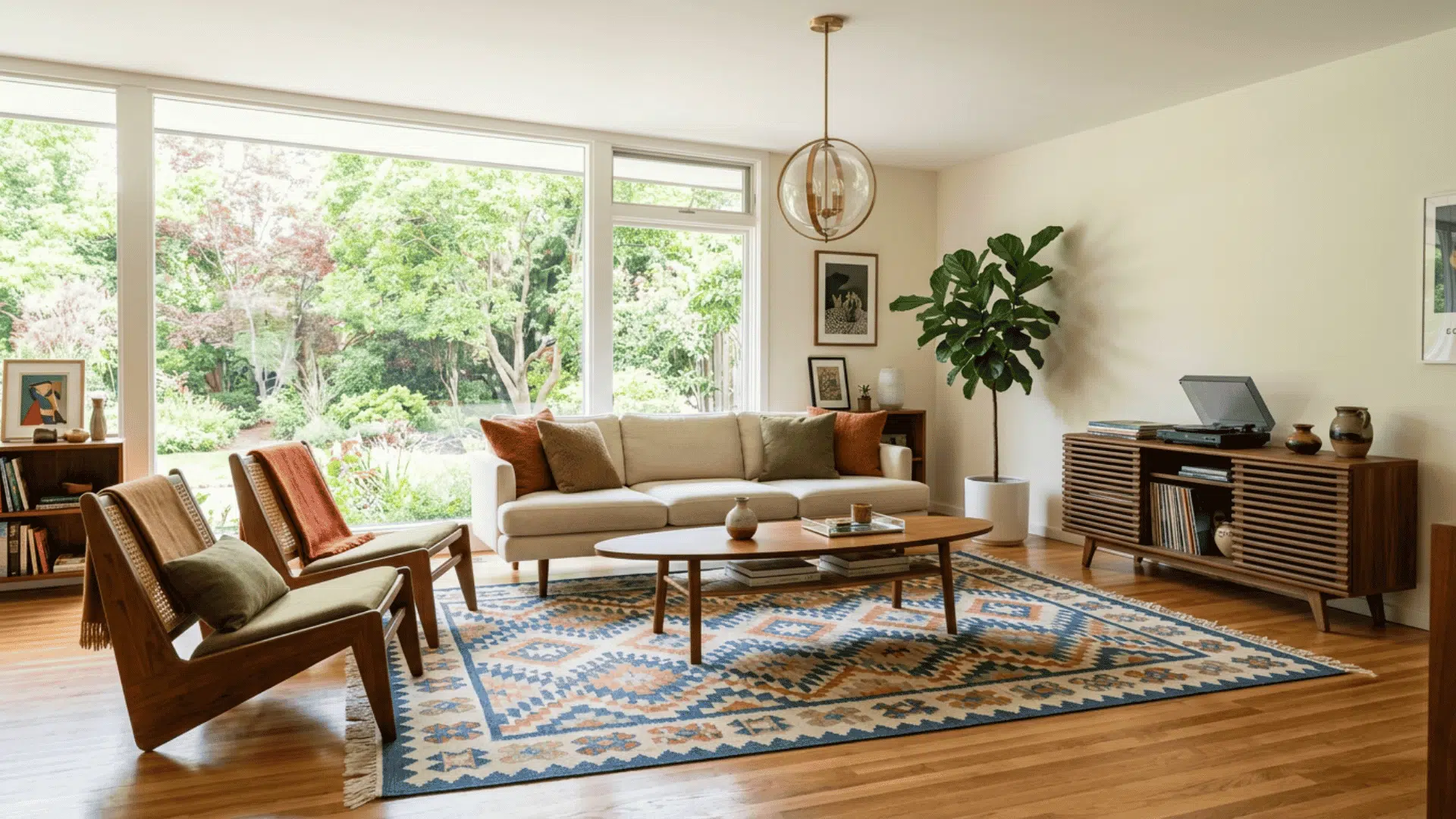
The sofa usually sets the style for the whole room. Pick a low design with slim arms, neat cushions, and exposed wooden legs.
Cream, beige, gray, or tan works well as a calm base, while olive, rust, mustard, or muted blue can create a stronger focal point. Measure the wall and nearby walking space before buying.
The sofa should leave room for side tables, lamps, windows, doors, and easy movement through the living area. Keep enough space for easy movement.
2. Place Seating Around Conversation
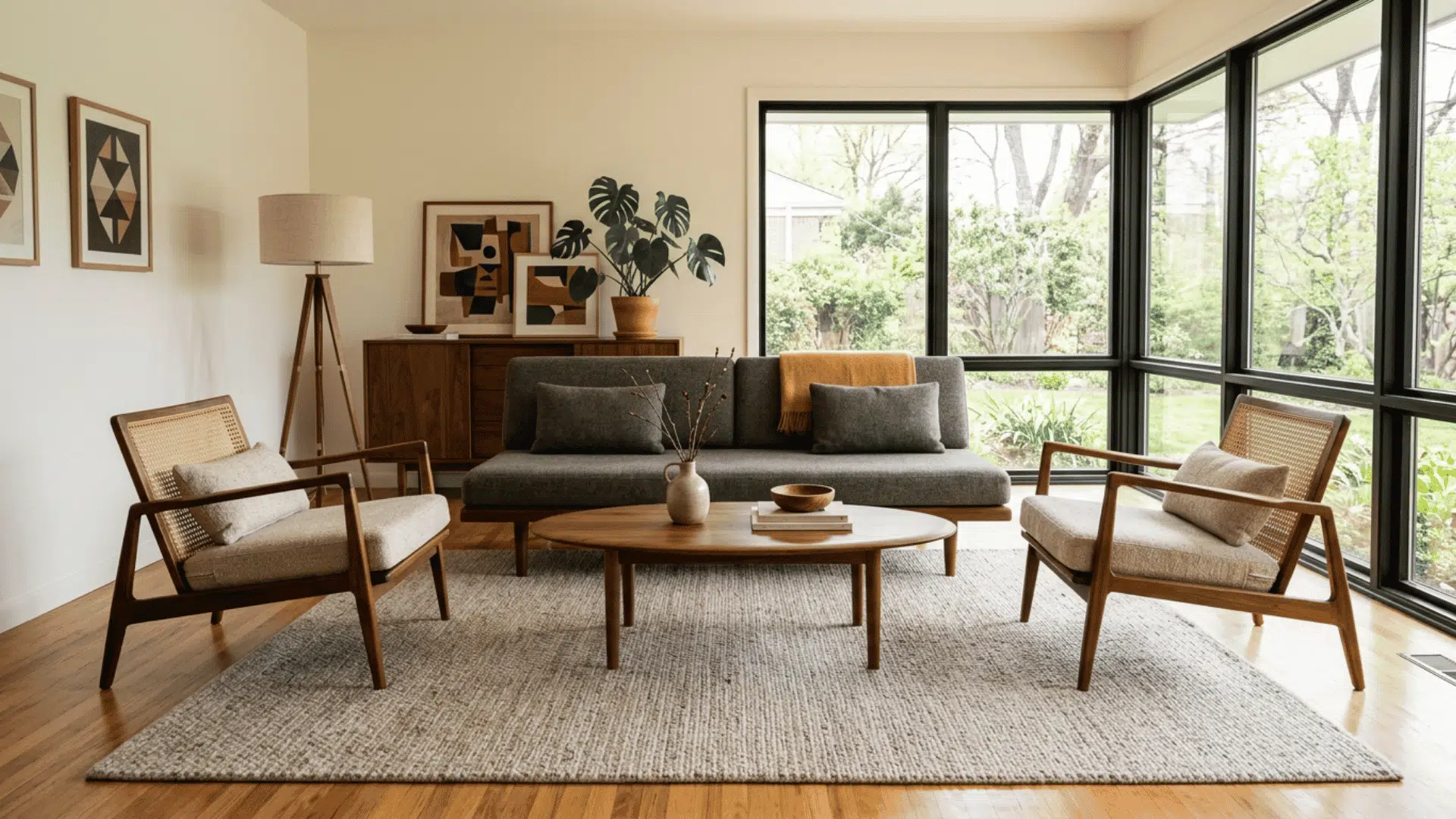
Arrange the sofa and chairs so people can speak without turning away from one another. Place one or two chairs across from the sofa or set them at a slight angle.
Keep the coffee table within reach, with open space around it for walking. In larger rooms, move the seating closer to the center.
Smaller rooms may only need a compact sofa and one chair, with the television or fireplace placed within easy view. This supports daily comfort.
3. Bring In Warm Wood Furniture
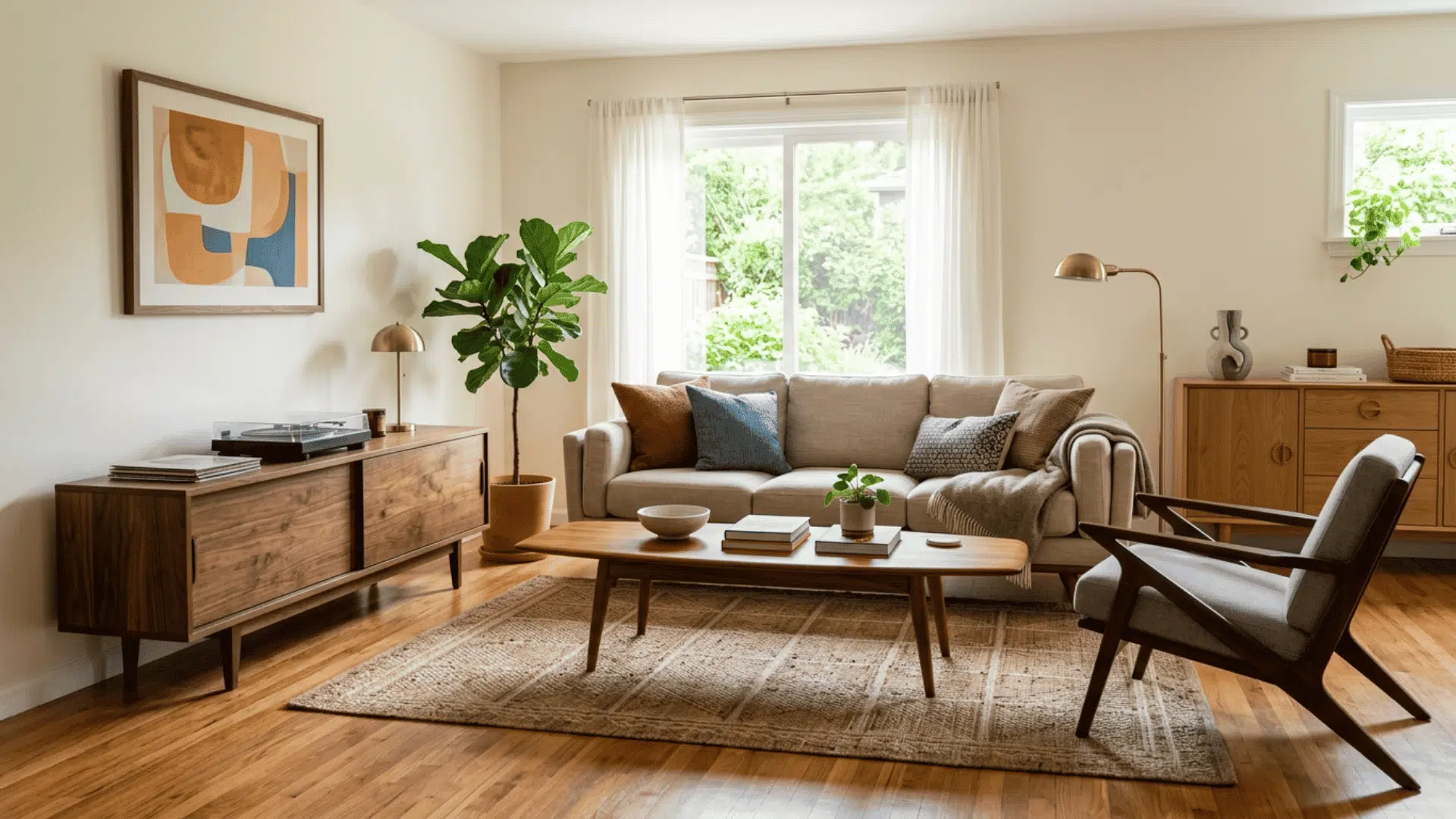
Warm wood gives a mid-century modern living room a softer and more inviting look.
Choose one main piece, such as a walnut media console, a teak coffee table, an oak sideboard, or a wooden-frame chair.
The finishes do not need to match, but similar undertones help them sit well together. Limit the room to two or three wood shades.
Medium and light woods often suit smaller or darker rooms, while deeper wood tones stand out well against pale walls. This avoids visual heaviness.
4. Pick a Clear Color Scheme
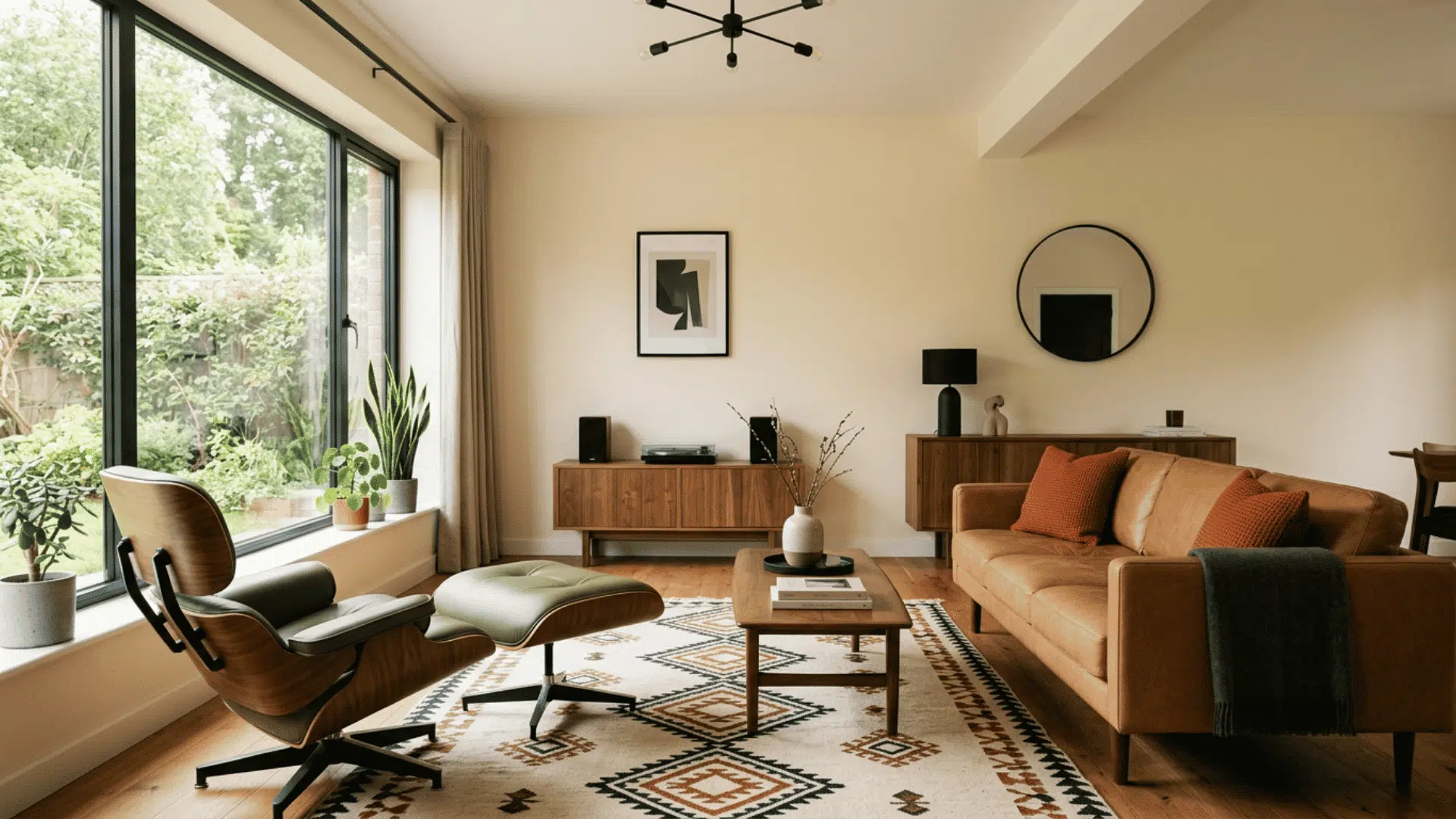
Use a small color palette to keep the room calm and connected. Start with soft white, cream, beige, tan, or light gray on the walls, sofa, or rug.
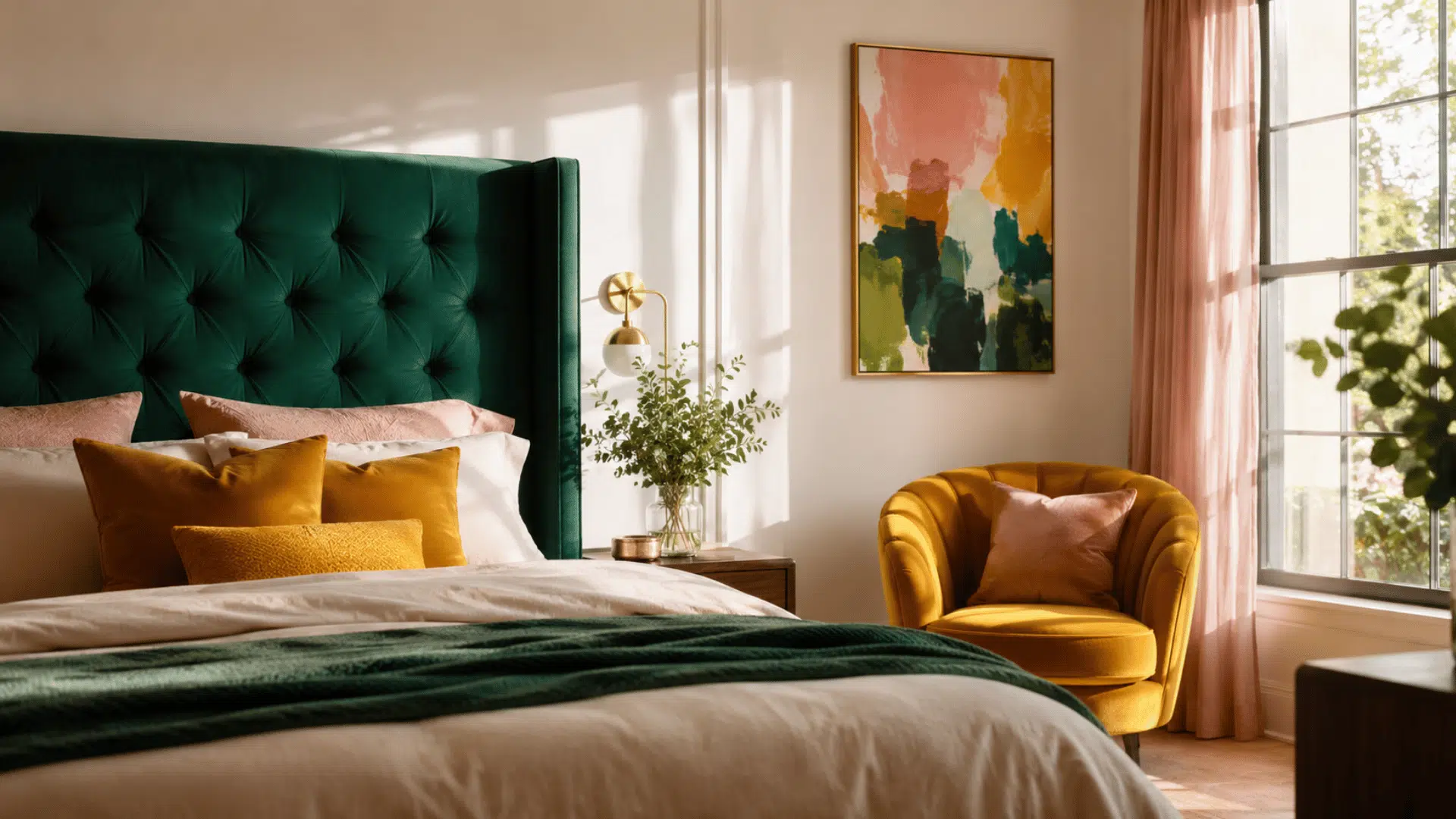
Add one stronger shade, such as olive, burnt orange, mustard, muted blue, rust, or deep green.
Repeat that accent on two or three items, such as a chair, cushion, vase, print, or rug detail.
This keeps the color visible without making the room feel busy. Each chosen shade can still stand out.
5. Mark the Seating Area With a Rug
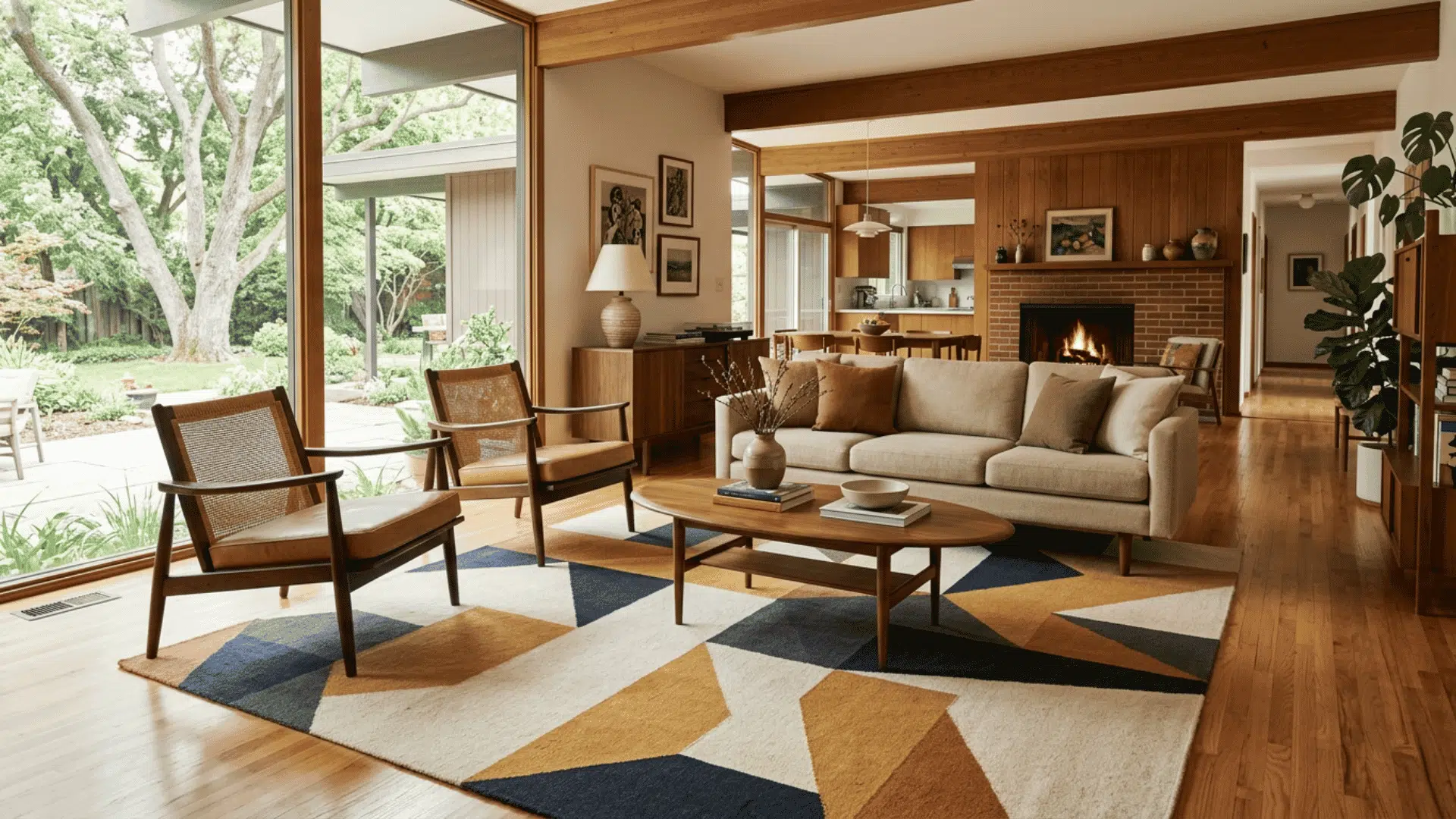
A well-sized rug helps the sofa, chairs, and tables read as one seating area.
Look for geometric patterns, abstract shapes, soft curves, or a plain woven texture. The front legs of the sofa and chairs should sit on the rug when possible.
Placing a rug only under the coffee table can make the furniture feel disconnected.
Choose a quieter design with colorful furniture, or a stronger pattern when the sofa, chairs, and walls are mostly neutral. Keep furniture visually prominent.
6. Add Sculptural Lighting
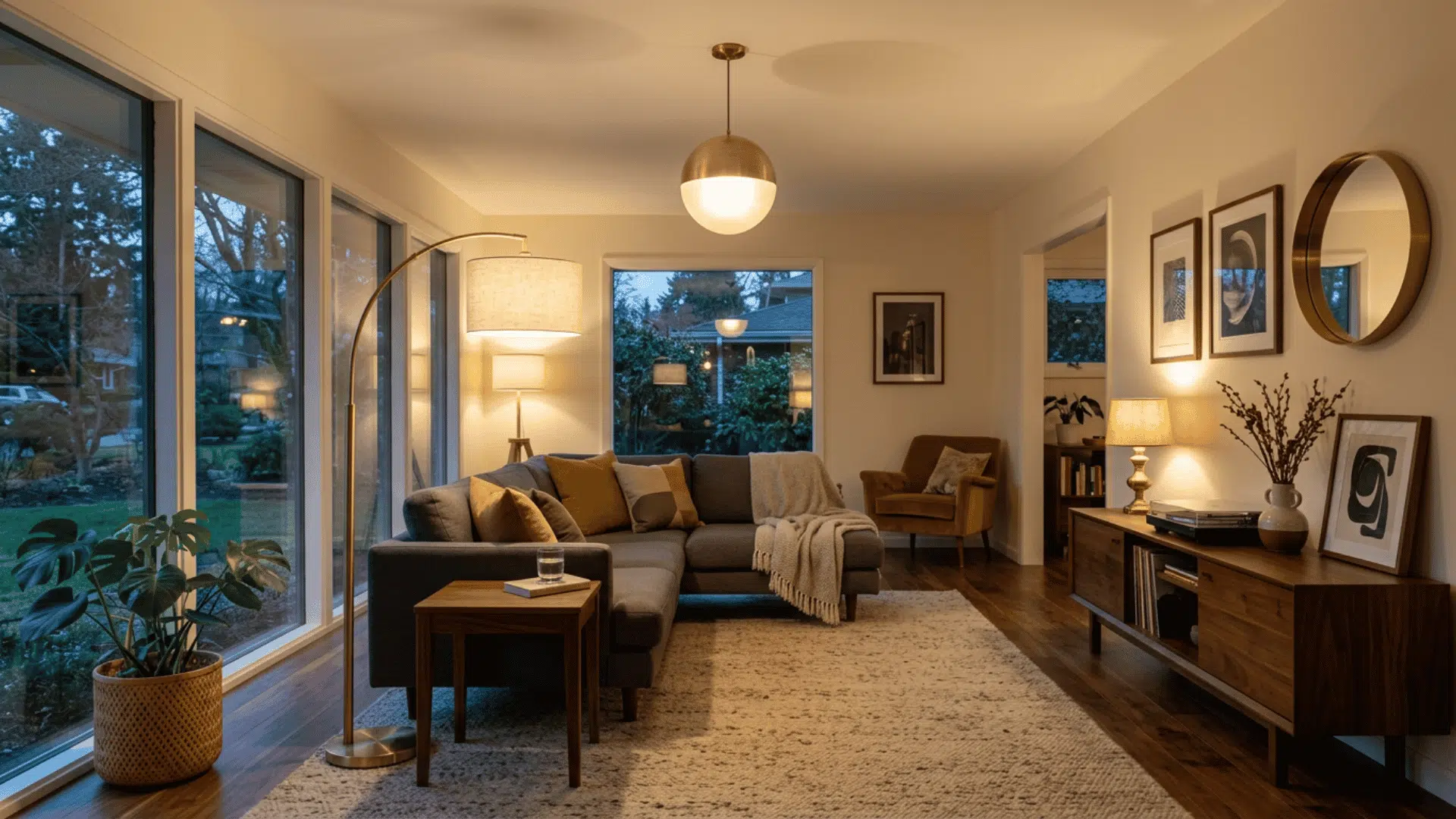
Lighting can add mid-century character while serving a practical purpose.
Globe pendants, tripod lamps, arched floor lamps, and Sputnik-style fixtures all suit the look.
Use a ceiling light for general brightness, then add a floor or table lamp near reading seats. Brass, chrome, glass, black metal, and wood are suitable finishes.
Repeat one finish on frames, cabinet handles, or table legs. Keep lamps outside walking paths and place them where their light is useful. This places light at useful heights.
7. Mix Older and Newer Pieces
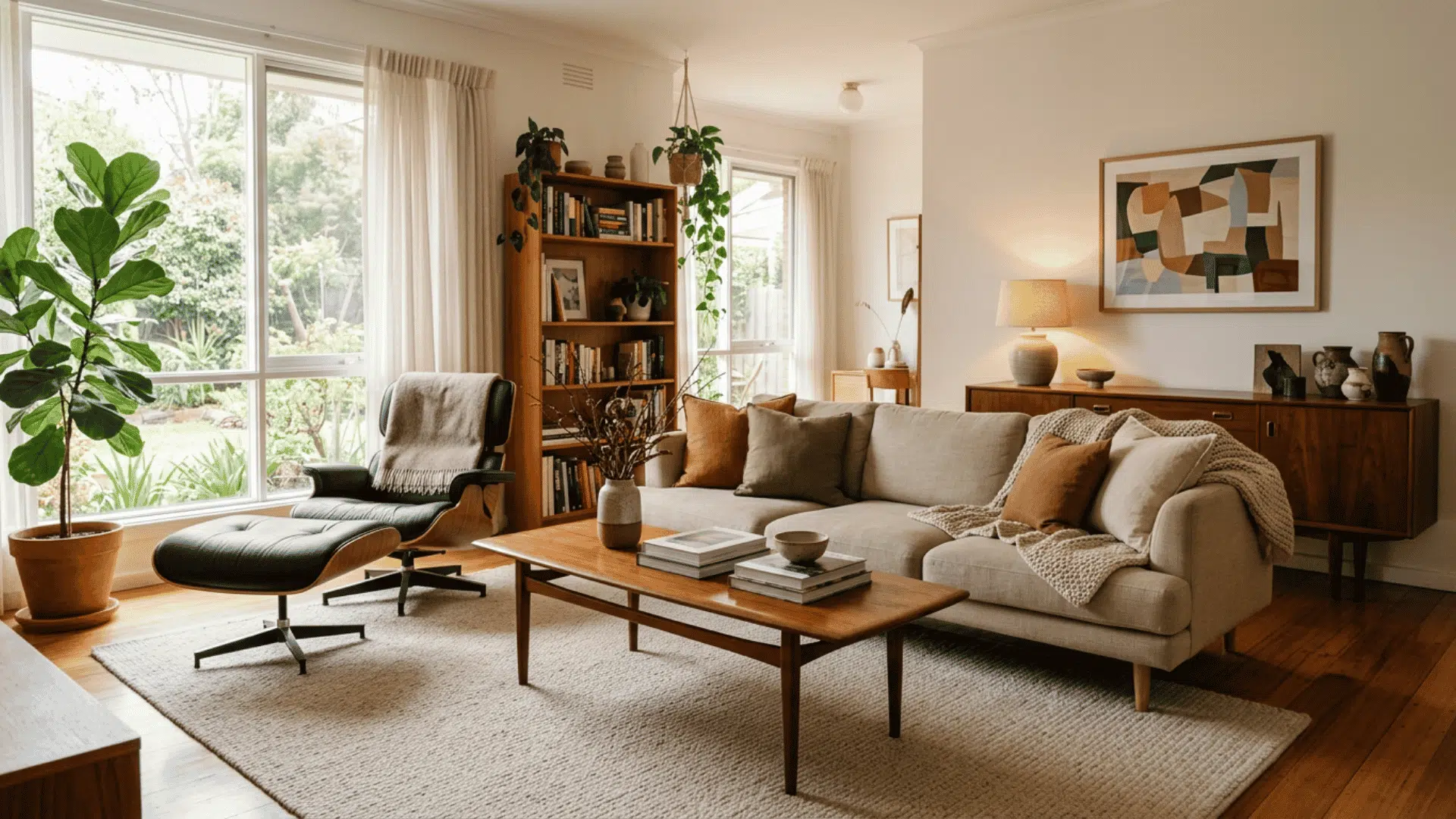
Combining older and newer furniture keeps the room from feeling like a period set. The same warm tones work well in a mid-century modern kitchen, too.
Pair a current sofa with an older wood table, or place a vintage sideboard below new artwork.
A classic lounge chair can sit beside a plain rug or simple shelving. Focus on size, shape, material, and color instead of age alone.
Pieces with slim legs, low frames, warm wood, and clean forms can work together even when they come from different decades. This feels naturally collected.
8. Balance Straight Lines With Curves
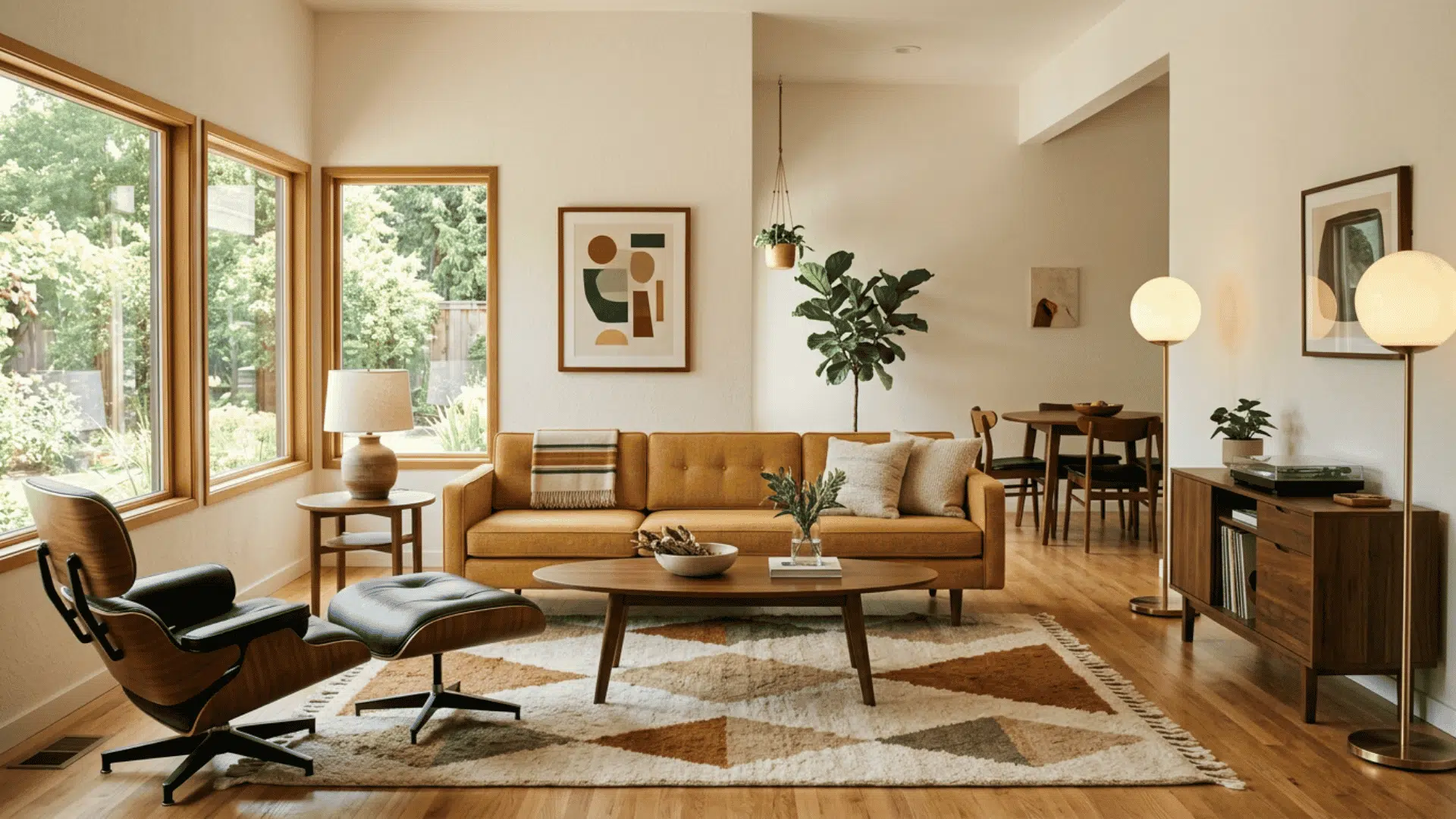
Straight furniture lines often look better when mixed with a few rounded forms.
Place an oval coffee table beside a rectangular sofa, or add a curved chair, a round side table, a globe lamp, or a circular print.
Curved tables also help in tight spaces by removing sharp corners from walking routes.
Keep geometric patterns limited to one or two areas, such as a rug, wall print, or cushions. Too many shapes can make the room feel crowded. Avoid letting curves dominate.
9. Use Simple, Personal Decor
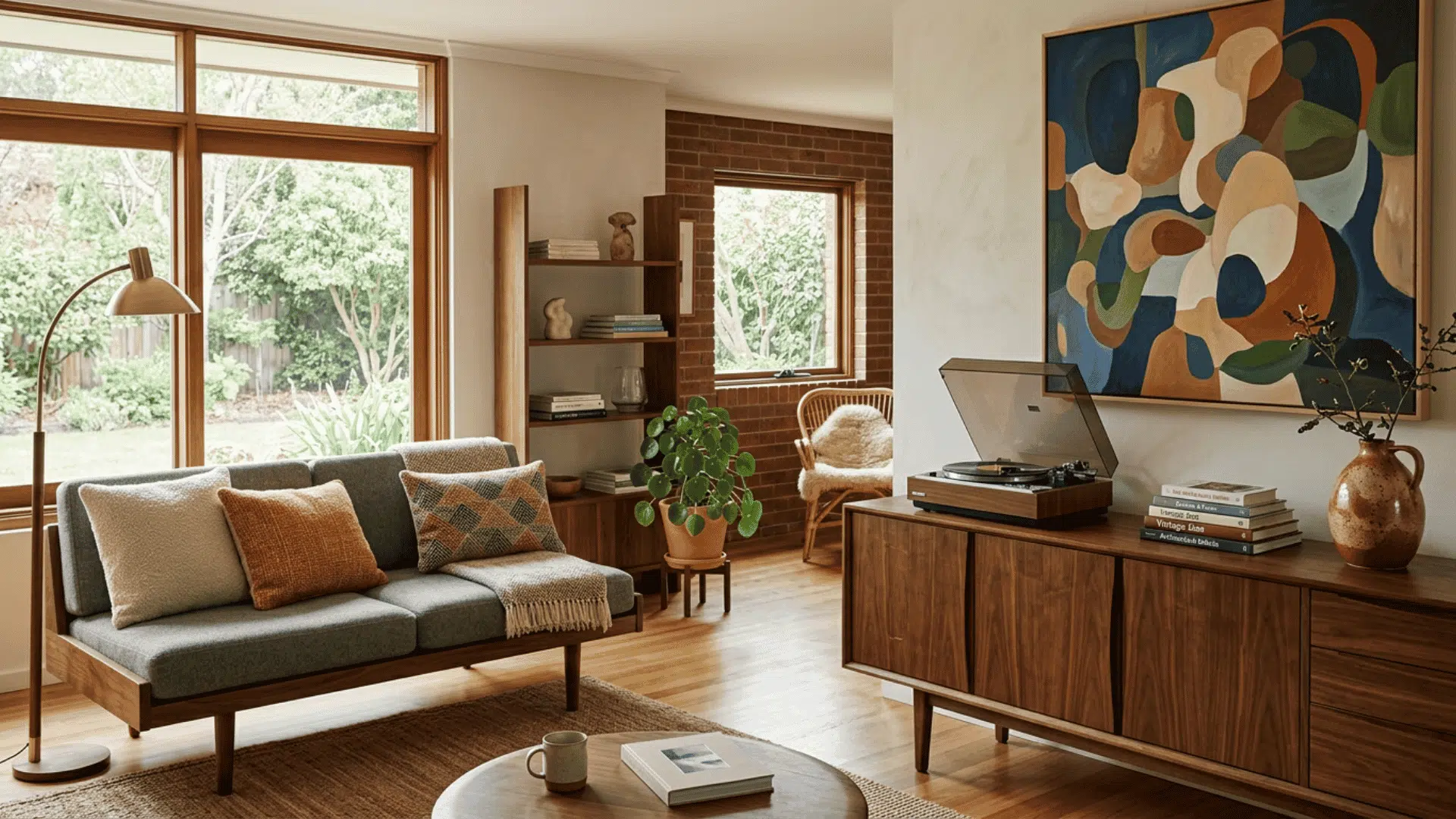
Personal decor can make the room feel lived in without filling every surface.
Choose a few items, such as abstract artwork, ceramic vases, indoor plants, framed prints, books, records, or textured cushions.
One large print can create a clear focal point above a sofa or sideboard. A tall plant can soften an empty corner and add height.
Leave open space on shelves and tables so the furniture shapes, wood grain, and chosen objects remain easy to see. Keep displays restrained.
Mid-Century Modern Living Room Color Schemes
These color combinations pair neutral bases with warm wood tones and controlled accents for a cohesive living room.
| Colour Scheme | Wall or Base Color | Main Furniture | Accent Colours |
|---|---|---|---|
| Cream and Olive | Cream or warm white | Walnut sofa frame and tables | Olive green, black, and tan |
| Beige and Burnt Orange | Soft beige | Teak furniture and neutral seating | Burnt orange, brown, and ivory |
| White and Warm Brown | Soft white | Walnut console and leather chair | Black, rust, and muted gold |
| Mustard and Muted Blue | Light gray or ivory | Oak furniture and beige sofa | Mustard, muted blue, and tan |
| Rust and Deep Green | Warm cream | Dark wood tables and tan seating | Rust, deep green, and brass |
Common Mid-Century Modern Living Room Mistakes to Avoid
Avoid these common errors to keep your living room balanced, comfortable, practical, and visually connected.
- Skip Matching Furniture Sets: Choose pieces with related lines, wood tones, or proportions without making everything identical.
- Control Colors and Patterns: Use a small palette and apply stronger shades sparingly throughout the room.
- Measure Before Buying: Deep chairs, wide tables, and large sectionals can quickly overwhelm a small living room.
- Protect Light and Comfort: Keep tall cabinets away from windows and test sofas and chairs before buying.
- Limit Decorative Items: Leave open space on shelves and tables instead of covering every surface with accessories.
Conclusion
A mid-century modern living room works best when it combines style with everyday comfort.
By choosing low-profile furniture, warm wood finishes, balanced colors, and thoughtful layouts, you can create a space that feels timeless without looking outdated.
Whether you are styling a small apartment or a larger family room, focus on pieces that improve flow and reflect your personal taste.
Start with one idea from this guide, experiment with your space, and create a mid-century modern living room that feels uniquely yours.
Frequently Asked Questions
What Flooring Works with A Mid-Century Modern Living Room?
Hardwood flooring suits the warm wood furniture often in this style. Terrazzo, tile, and plain neutral carpet can also work well.
Can Wallpaper Suit a Mid-Century Modern Living Room?
Yes, wallpaper with simple geometric or abstract patterns can suit one feature wall. Keep the surrounding walls and furniture plain to avoid a busy look.
Are Open Shelves Suitable for This Style?
Open shelves work well when they have clean lines and slim frames. Display a limited mix of books, ceramics, plants, and personal objects.