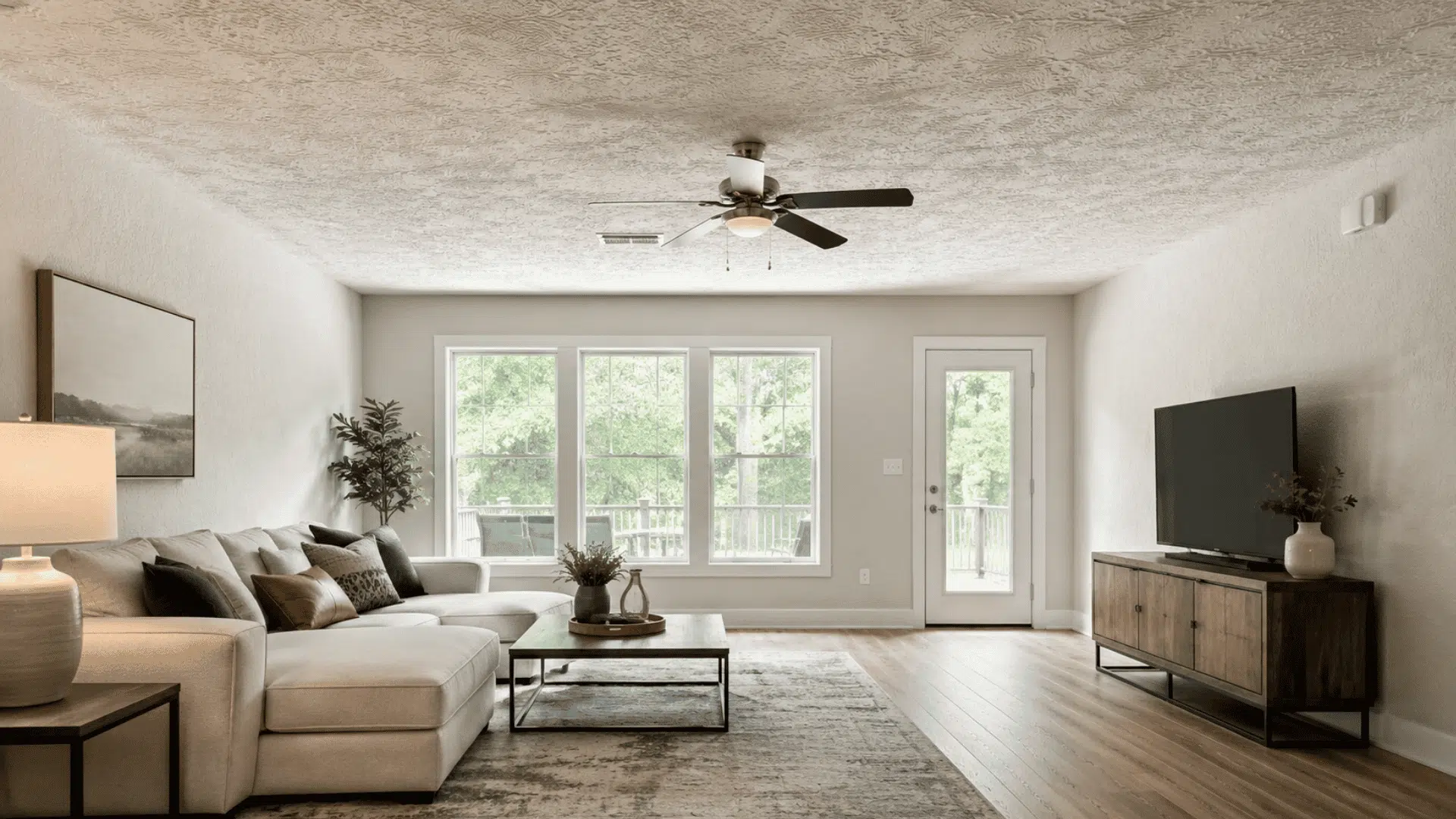
Knockdown texture is a popular wall and ceiling finish known for its soft, uneven surface. It adds visual depth while keeping the room from looking too busy.
Homeowners often choose it to add character to plain drywall and make small surface flaws less noticeable.
The final look can range from subtle to more defined, depending on how the texture is applied and flattened. It can work in bedrooms, living rooms, hallways, and many other spaces.
Keep reading to learn what knockdown texture looks like, where it works well and what to consider before choosing it for your home.
What Does Knockdown-Texture Look Like?
Knockdown has a raised, uneven pattern with flattened peaks and smooth patches between them.
It starts with small droplets sprayed across the drywall, then a wide knife is drawn over the surface once the material has set slightly, flattening the highest spots.
The result is a mottled finish that can resemble stucco or worn plaster, ranging from light and subtle to thick and bold depending on droplet size.
Unlike a rounded, unflattened pattern, knockdown has wider, flatter shapes with irregular edges and light and shadow make the pattern more noticeable throughout the day.
Once fully dry, it’s usually primed and painted to match the room’s color scheme.
How is Knockdown Texture Created?
Creating a knockdown texture is a step-by-step process that combines spraying, timing and light finishing pressure. Here’s how professionals achieve the signature flattened pattern:
- Prepare the surface. The wall or ceiling should be clean, dry, and properly primed so the material bonds evenly.
- Spray the droplets. A hopper gun sprays scattered droplets, with size and coverage depending on material thickness, nozzle setting, and air pressure.
- Let it set briefly. The droplets sit until they lose some moisture.
- Knock it down. A wide knockdown knife or drywall trowel is pulled lightly across the surface to flatten the raised peaks without smoothing the whole pattern.
- Dry, prime, and paint. Many texture products aren’t washable when left bare, so priming and painting after drying is standard.
Careful timing and light pressure make the difference between a consistent finish and a patchy finish.
Material that sits too long before knockdown loses its ability to flatten cleanly, which is why most installers work in small sections instead of spraying an entire wall at once.
Where Is Knockdown Texture Commonly Used?
Knockdown texture type works on many prepared interior walls and ceilings, including drywall, plaster and concrete. Its pattern can be adjusted to suit different rooms and surface sizes.
1. Living Rooms
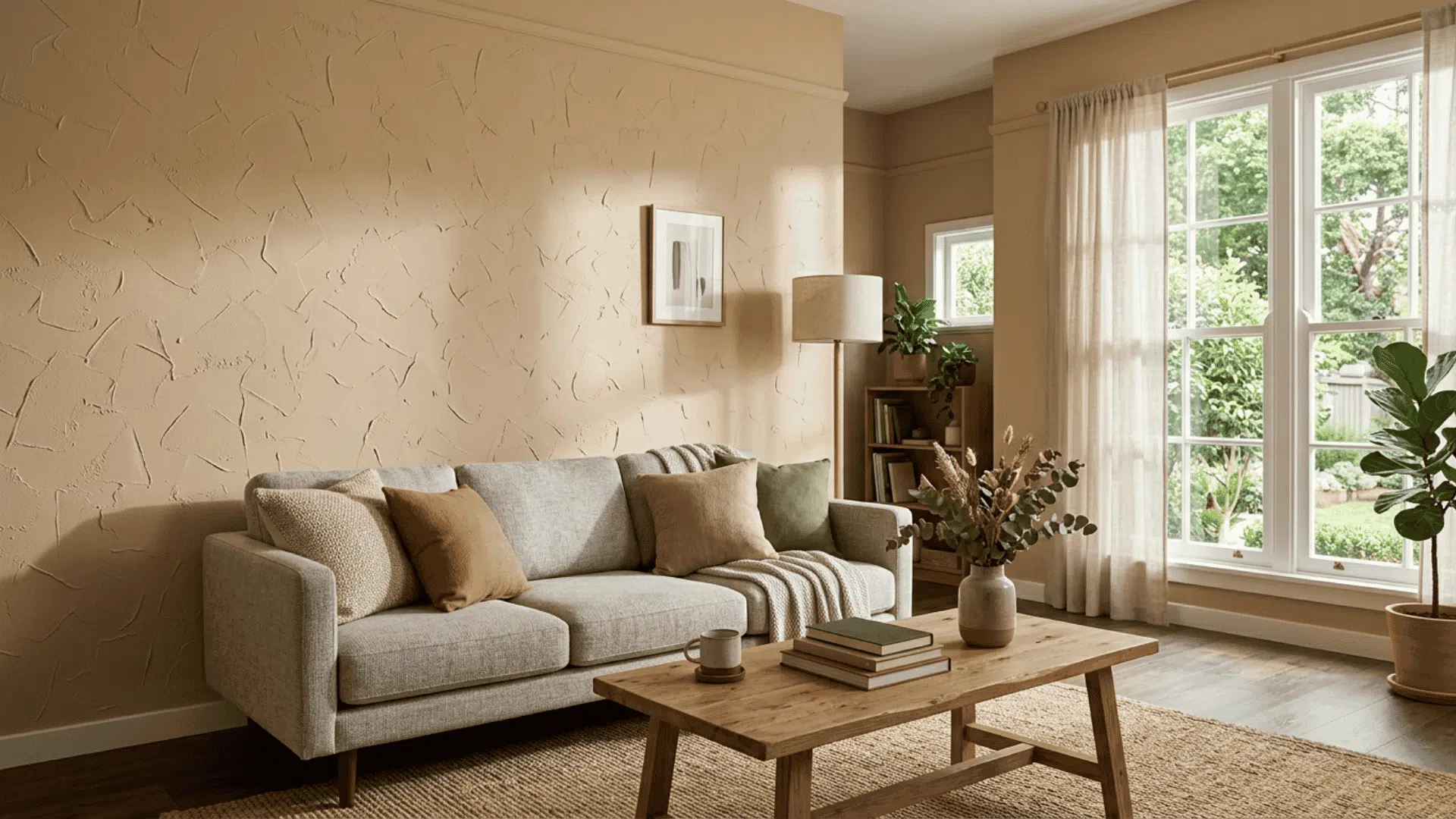
It is often applied to living room walls and ceilings because it adds visual detail to large drywall areas.
A fine or medium pattern can keep the room from feeling flat while still working with many paint colors and furniture styles.
The raised and flattened marks also cast mild shadows under natural or ceiling light. It may make small flaws less noticeable, but it does not replace proper drywall repair or preparation.
2. Bedrooms
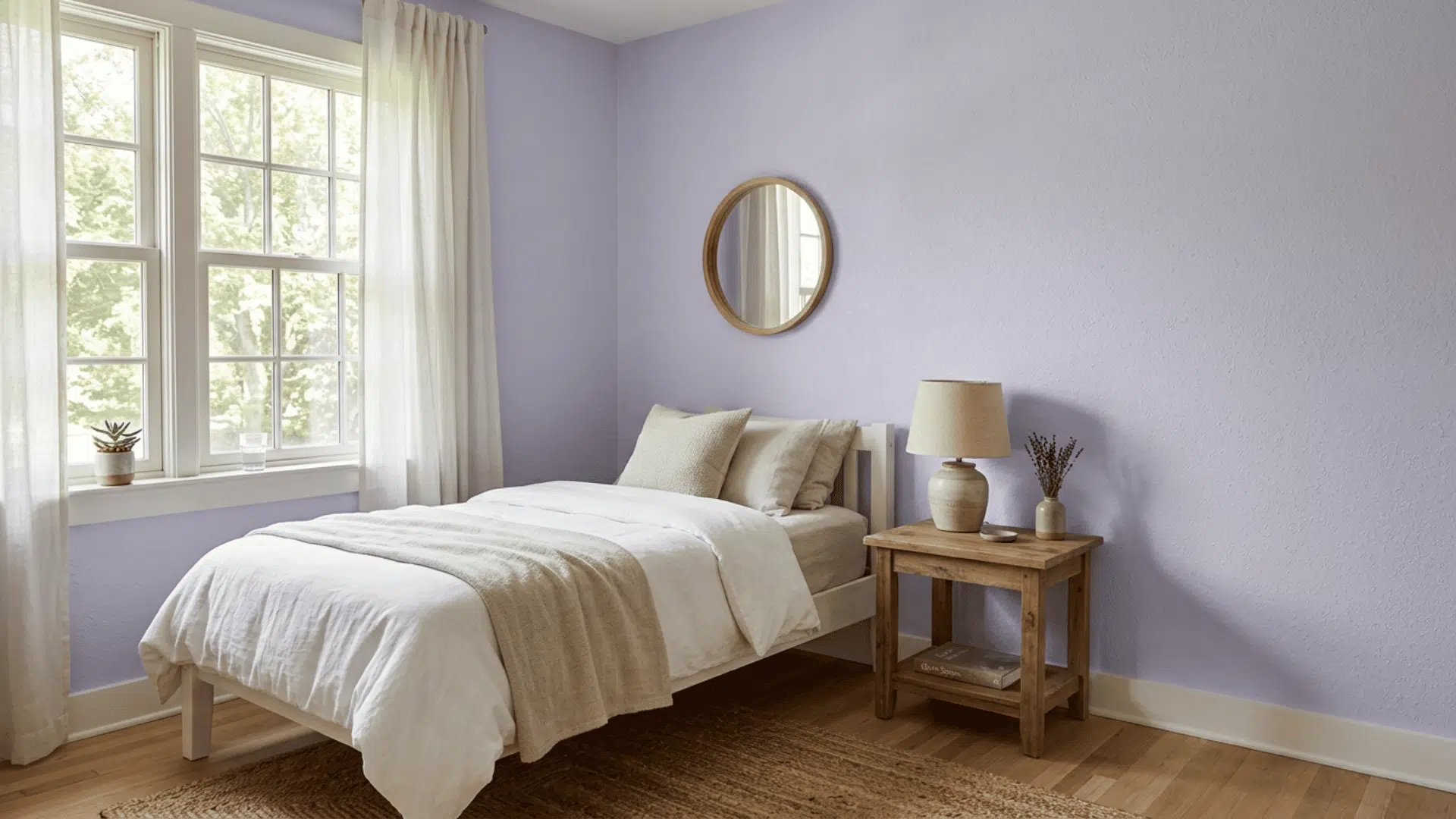
Bedrooms commonly use light or medium knockdown on walls and ceilings. The pattern creates a soft, uneven finish without becoming the main feature in the room.
It can suit both small and large bedrooms, especially when painted in calm, low-sheen colors. Since dust may settle along raised areas, painted surfaces are easier to maintain than bare texture.
Any cracks, stains, or loose material should be repaired before a new finish is applied.
3. Hallways and Stairways
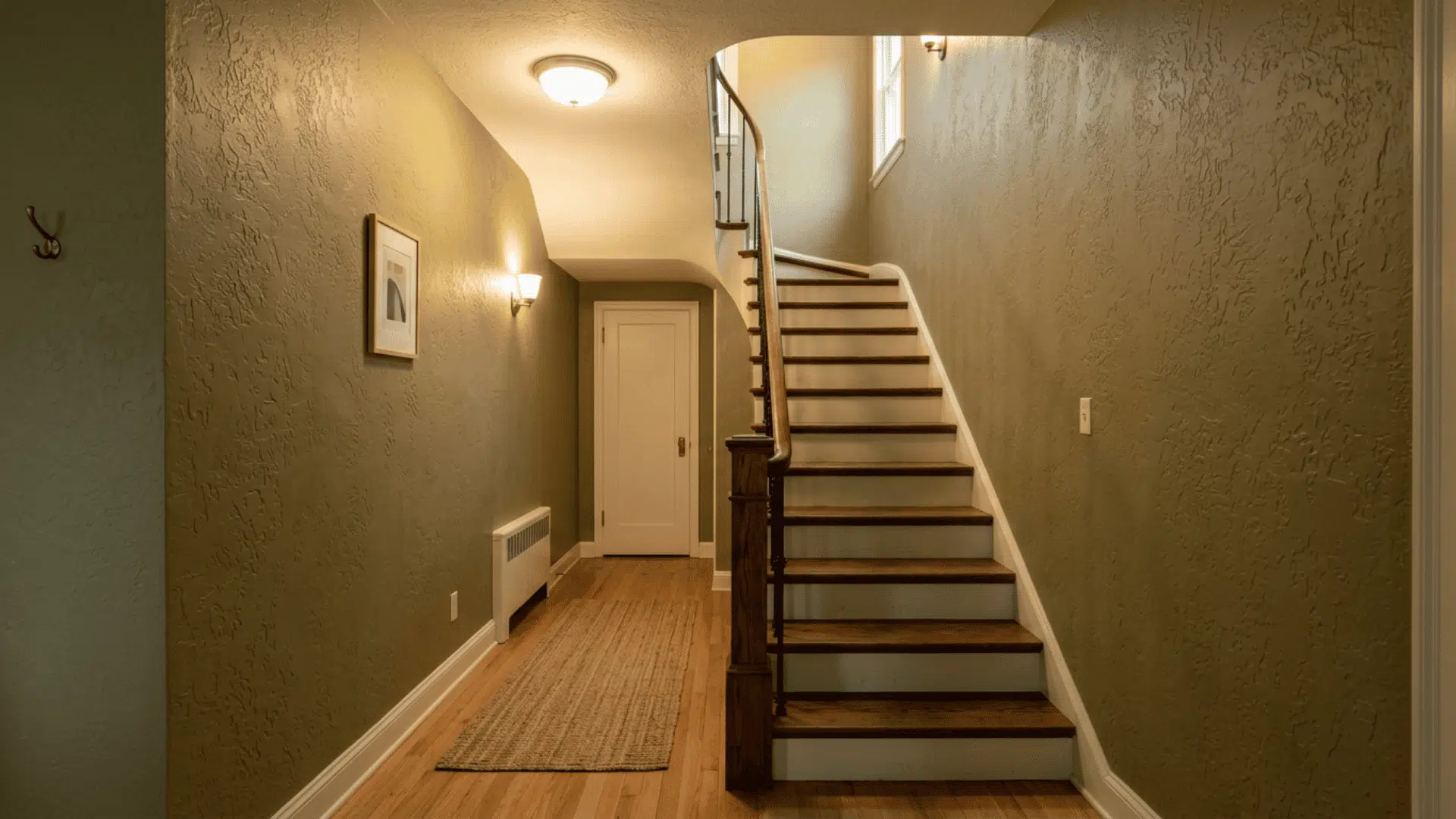
Hallways and stairways often have long, plain wall sections that can benefit from knockdown texture. The irregular pattern breaks up large areas and can reduce the visibility of minor dents or uneven drywall work.
These spaces also receive frequent contact from hands, bags and furniture, so the texture should be painted with a durable interior coating.
Heavy patterns may collect more dust and can be harder to patch neatly after damage occurs.
4. Open-Plan Areas
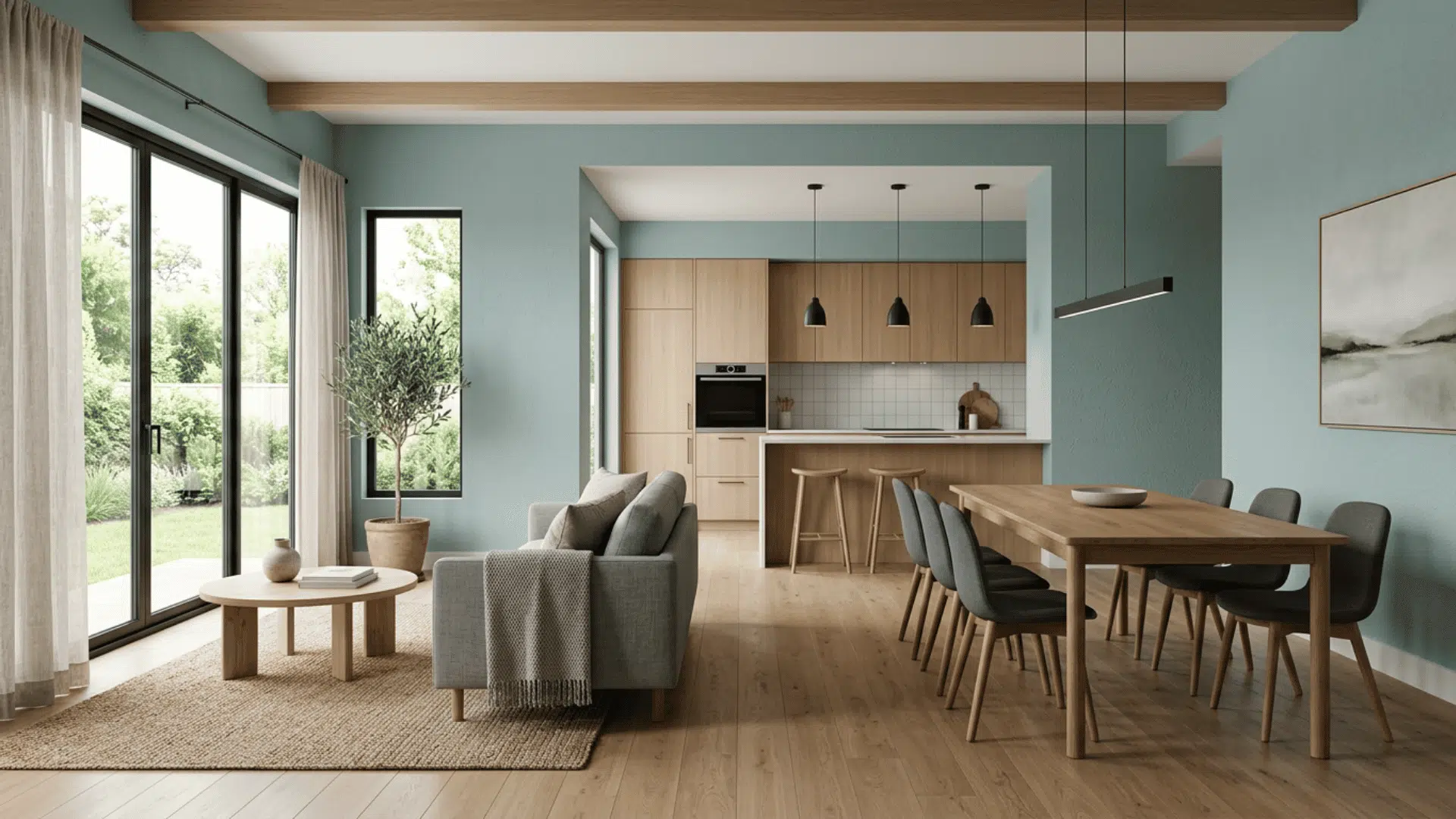
Knockdown texture can be used across open-plan living, dining, and kitchen areas to give connected surfaces a consistent finish.
Keeping the same pattern on nearby walls or ceilings can reduce sharp changes between zones. Medium texture is often noticeable enough for large spaces without appearing overly rough.
In kitchens, the dried surface should be sealed with suitable paint because cooking grease and moisture can make an unpainted surface difficult to clean and maintain.
5. Commercial Interiors
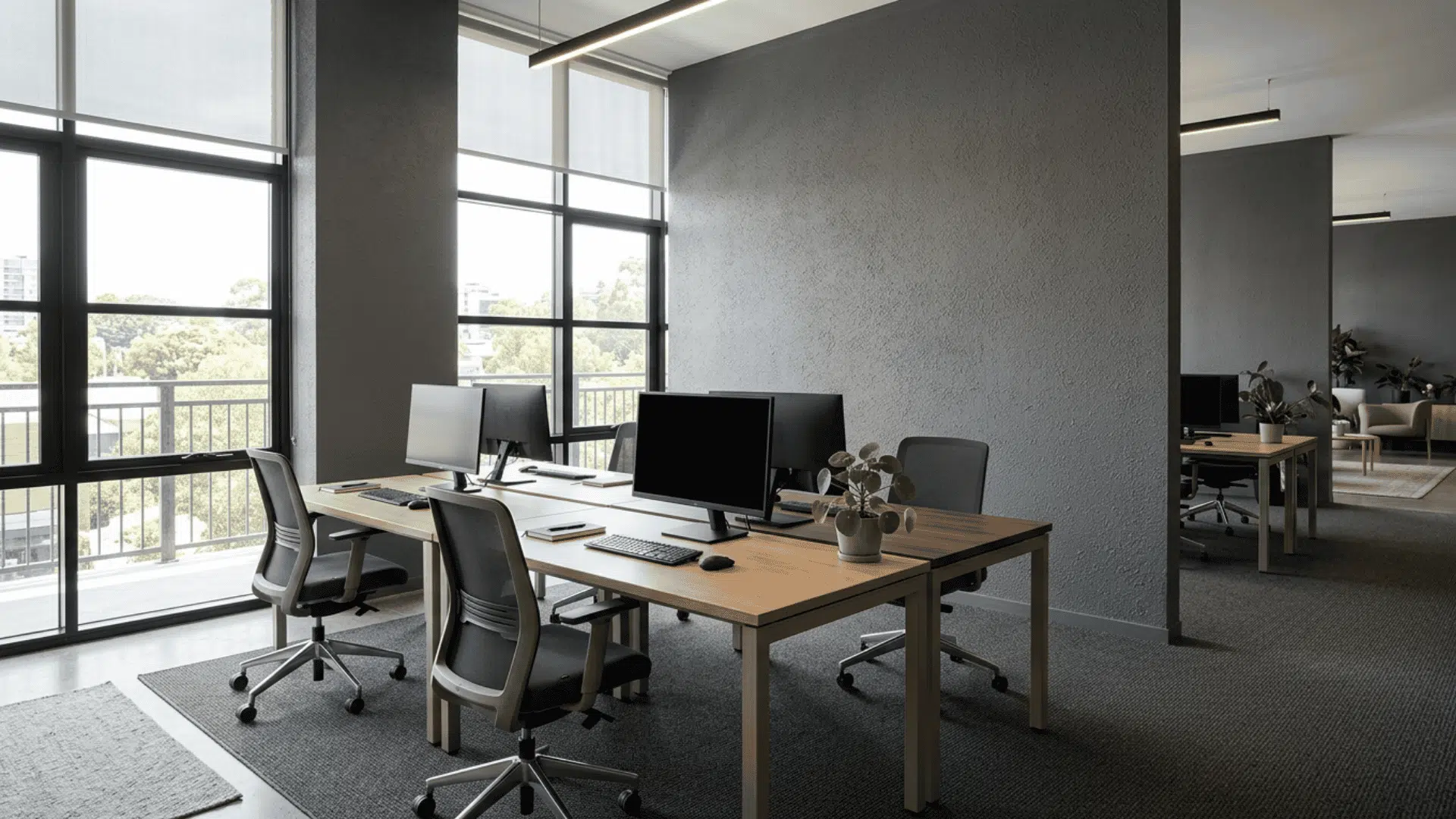
Knockdown texture also appears in offices, corridors, meeting rooms, restaurants, shops, and other indoor commercial spaces.
Manufacturers list spray texture products for many of these settings when applied over properly prepared drywall, plaster, or concrete.
The finish can add relief to wide walls and ceilings while accepting paint after drying. Product selection must match the building conditions, local requirements, expected wear, and cleaning needs of the specific indoor area.
Homeowners who like the softened look of knockdown but want to compare it against a texture with rounded, unflattened bumps often look at orange peel texture side by side, since the two start with a similar spray process before diverging.
Pros and Cons of Knockdown-Texture
Knockdown texture can add surface detail and reduce the visibility of small drywall flaws. However, its uneven pattern also affects cleaning, repairs, and future design changes.
| Pros | Cons |
|---|---|
| Adds depth to plain walls and ceilings without the sharp peaks found in some heavier finishes. | Raised areas can collect dust and may require careful cleaning with a soft brush or vacuum attachment. |
| Can make minor dents, seams, and uneven spots less noticeable after proper surface preparation. | It cannot hide major cracks, water damage, loose drywall, or poor joint finishing. |
| Works over prepared drywall, plaster, and concrete on interior surfaces. | Matching the original droplet size and flattened pattern during repairs can be difficult. |
| Accepts paint after drying, allowing the finish to match the room. | Unpainted spray texture is generally not washable and should be coated after drying. |
| Offers fine, medium, or bold patterns. | Removing it later may require sanding, scraping, or covering the surface. |
Knockdown-Texture vs. Other Wall Textures
Modern drywall textures differ in pattern, height, application method, and how easily they can be cleaned or repaired. Knockdown has flattened raised areas, which gives it a more broken pattern than many other finishes.
Orange Peel
Orange peel has small, rounded bumps that resemble the skin of citrus. Knockdown starts with sprayed droplets, but the peaks are flattened with a wide knife.
Popcorn
Popcorn texture has thick, raised clusters and is mainly used on ceilings. Knockdown is flatter, less bulky, and commonly applied to walls and ceilings.
Skip Trowel
Skip trowel texture is spread by hand with a trowel, creating curved patches. Knockdown is usually sprayed before its raised areas are flattened.
Sand Texture
Sand texture contains fine particles that create an even, grainy surface. Knockdown has larger, irregular shapes with clearer gaps between flattened marks.
Smooth Finish
A smooth finish has no planned surface pattern and requires careful drywall finishing. Knockdown adds visible relief and can make minor flaws less noticeable.
Is Knockdown Texture Easy to Repair?
It can be repaired, but matching the existing pattern takes practice:
- Patch, sand, clean, and prime the damaged drywall.
- Spray or dab texture material over the repair using a droplet size similar to the surrounding finish.
- Let it set briefly, then flatten the raised peaks with a drywall knife.
- Feather the new texture beyond the patch edges to soften the transition.
- Prime and paint once fully dry.
Small repairs often work with a texture spray can, while larger patches may need a hopper gun for even coverage.
Exact matching can still be difficult, since texture thickness, spray pressure, timing and knife pressure all affect the final pattern, so testing on a scrap piece of drywall before touching the actual wall is always worth the extra few minutes.
Conclusion
Knockdown texture adds depth to walls and ceilings while hiding small drywall flaws and fine, medium, or heavy patterns give you room to match the look to your space.
Before committing, compare samples under your room’s actual lighting and think about future cleaning needs.
What’s your preferred knockdown style, fine, medium, or heavy? Tell us in the comments and where you’d use it.
Frequently Asked Questions
Can Knockdown-Texture Be Used in Bathrooms?
It can be used in well-ventilated bathrooms when properly primed and painted. Avoid applying it inside showers or on surfaces exposed to direct water.
How Long Does Knockdown-Texture Take to Dry?
Drying often takes several hours, but temperature, humidity, thickness, and product type affect the time. Follow the manufacturer’s instructions before priming or painting.
Can the Knockdown-Texture Be Removed Later?
Yes, but removal may require wet scraping or sanding. Painted texture is usually harder to remove and may require a skim coat for a smooth finish.