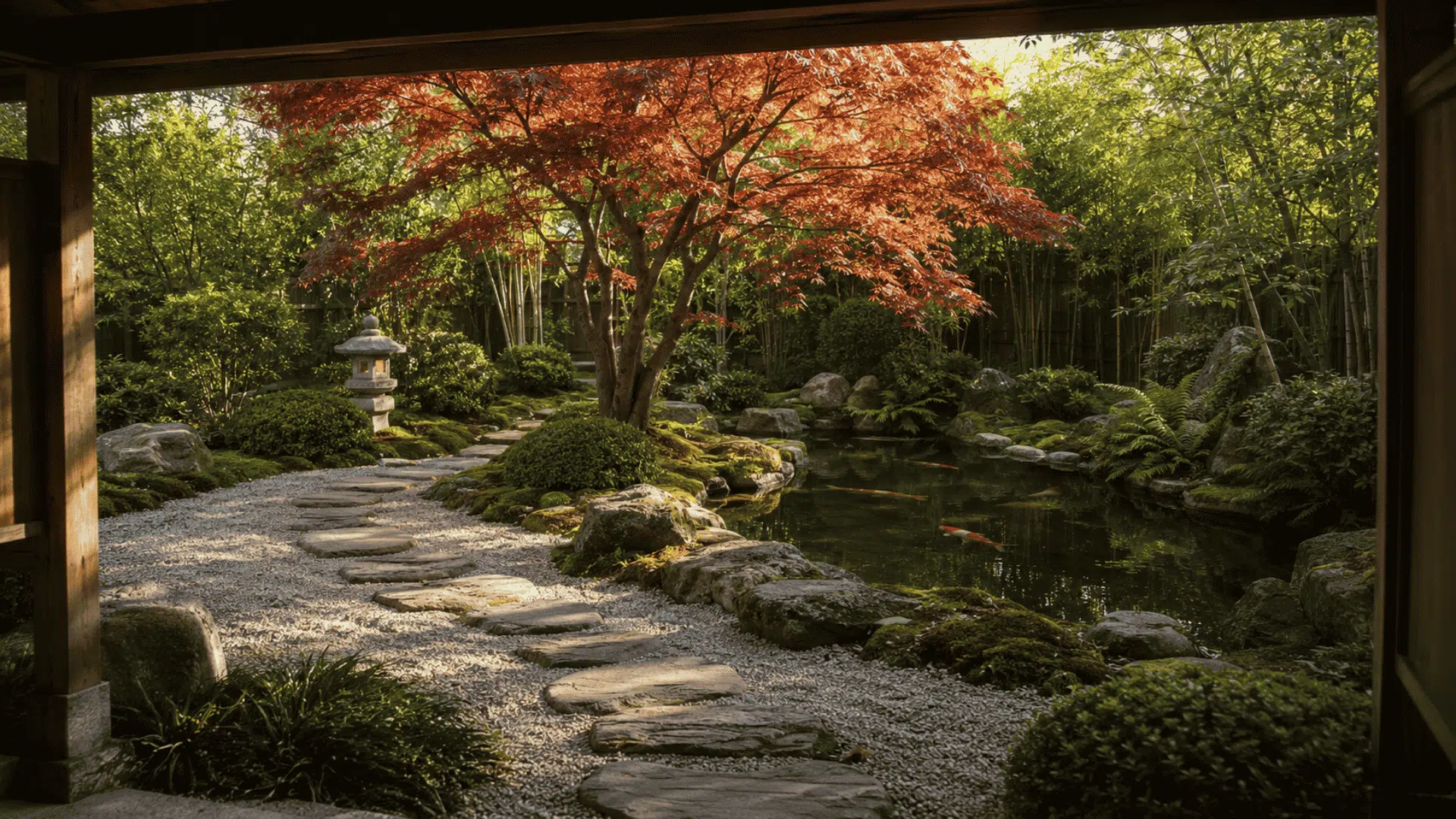
Big garden, big budget? You don’t need either to build yourself a Japanese garden.
A couple of stones, some gravel, and a carefully chosen tree, and your outdoor space will be transformed into an oasis.
Japanese gardens are all about simplicity and minimalism, leaving plenty of room for imagination, which is why they fit perfectly into small spaces.
The following Japanese garden ideas divide everything into styles, sizes, and costs, and you will definitely find something that suits you.
Japanese Garden Design Principles
There are some basic principles that, once understood, will make the process easy for you. For instance, layouts should never be symmetrical; they should be asymmetrical.
Use plants and stones in groups of three or five, and leave open areas to create balance. Paths should never be straight but curved.
Lanterns or a pruned tree in the garden act as focal points and should always be a bit uncentered. If you like this style, you might enjoy learning more about a full Japanese-style house design too.
Japanese Garden Ideas for Different Outdoor Areas
These 11 ideas pair Japanese garden principles with practical choices for yards, courtyards, patios, entrances, and other compact outdoor areas.
1. Dry Rock Garden (Karesansui)
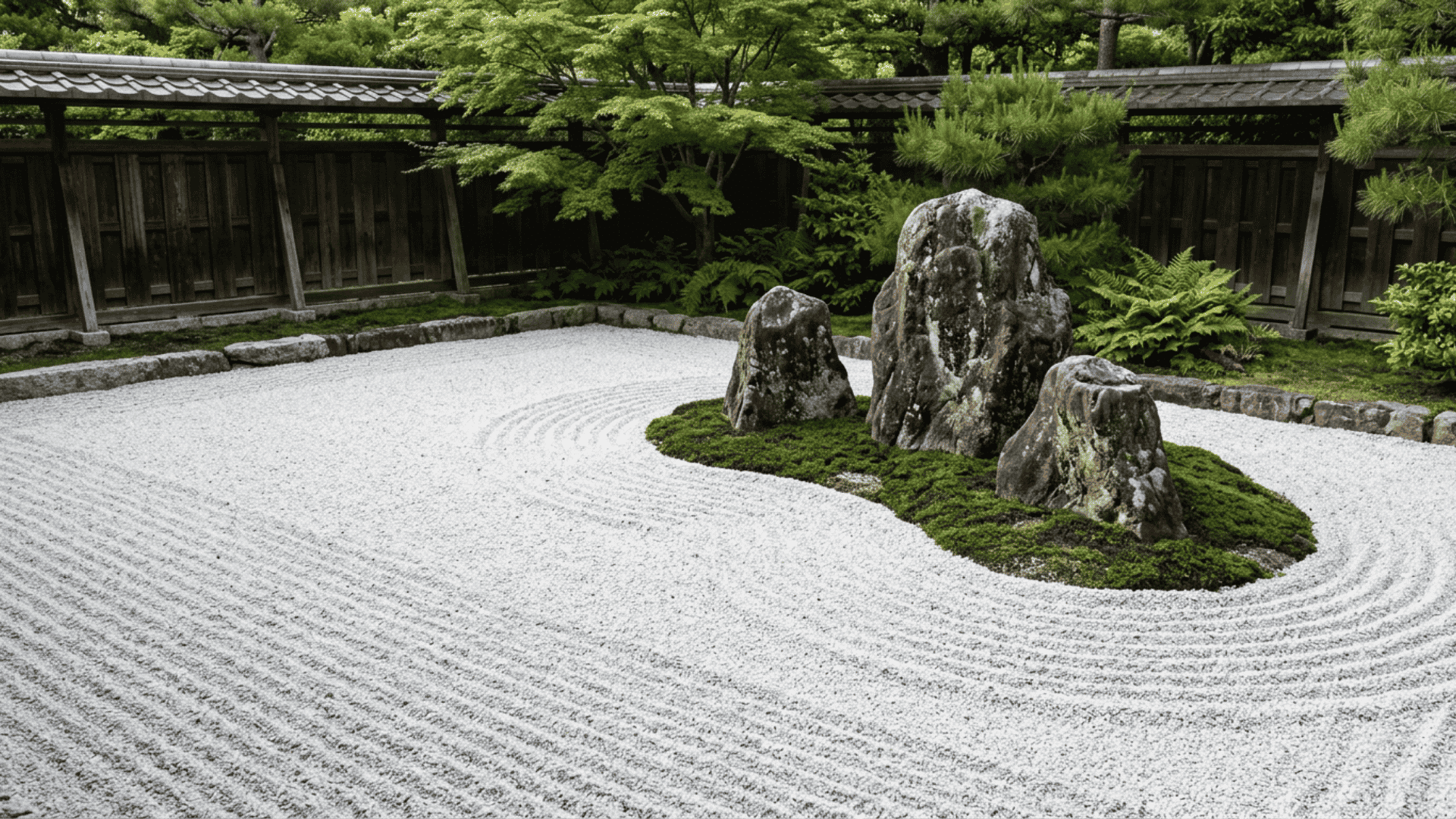
Make patterns of waves using white or light grey colored gravel and place some old stones to create focal points.
Gravel is used to represent water, while the stones are used the represent mountains or islands.
This design does not use any plants or grass at all and is suited for areas where it is very hot, or for those who want an area with no maintenance.
2. Moss and Stepping Stone Path
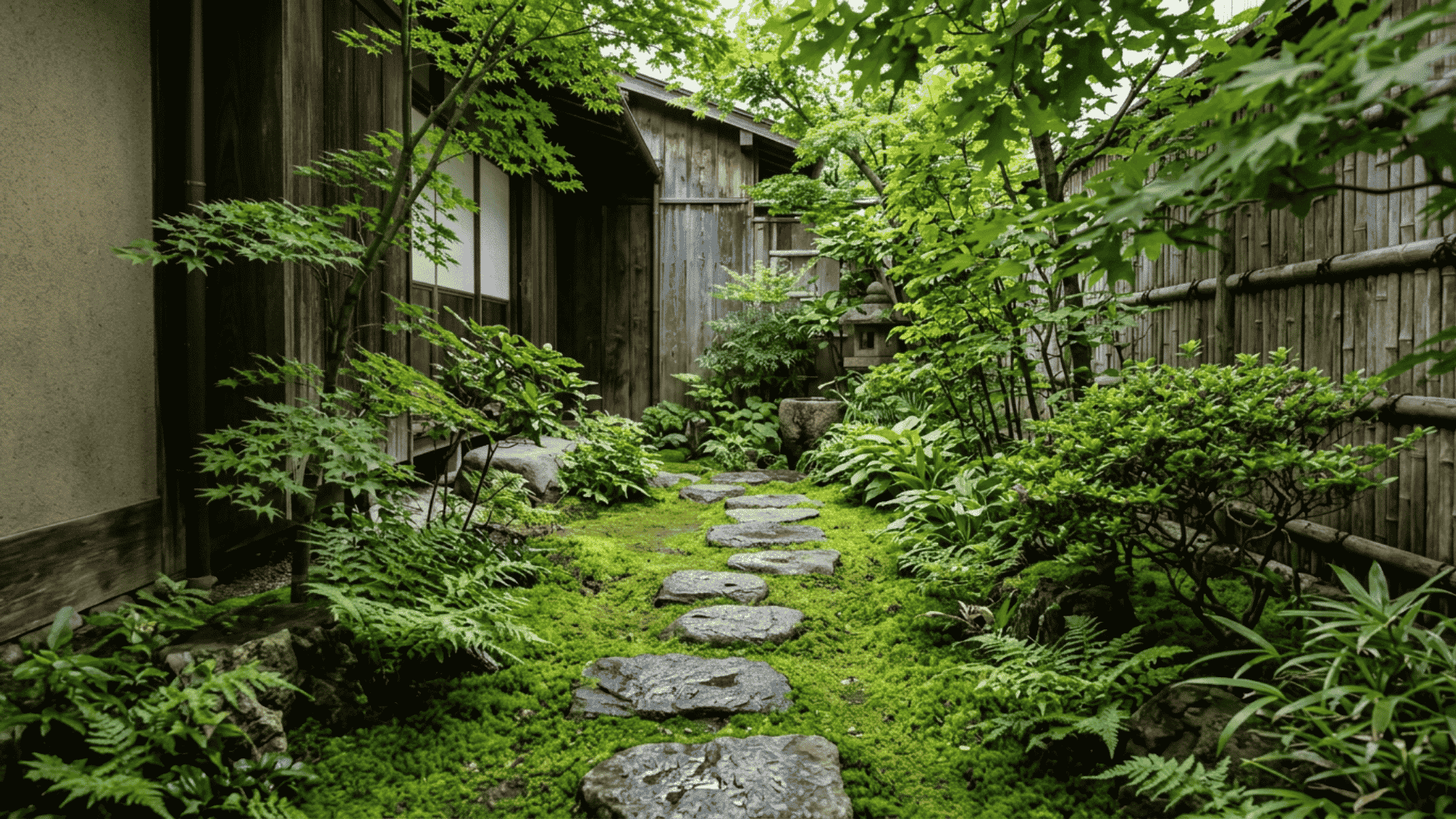
Pull up a strip of lawn and replace it with soft moss, then lay flat stepping stones through the middle. Moss stays green in shade and needs no mowing at all.
The contrast between pale stone and green ground cover gives even a narrow side yard a shaded, quiet feel, with little upkeep beyond regular watering during dry spells in summer.
3. Bamboo Water Fountain (Shishi-Odoshi)
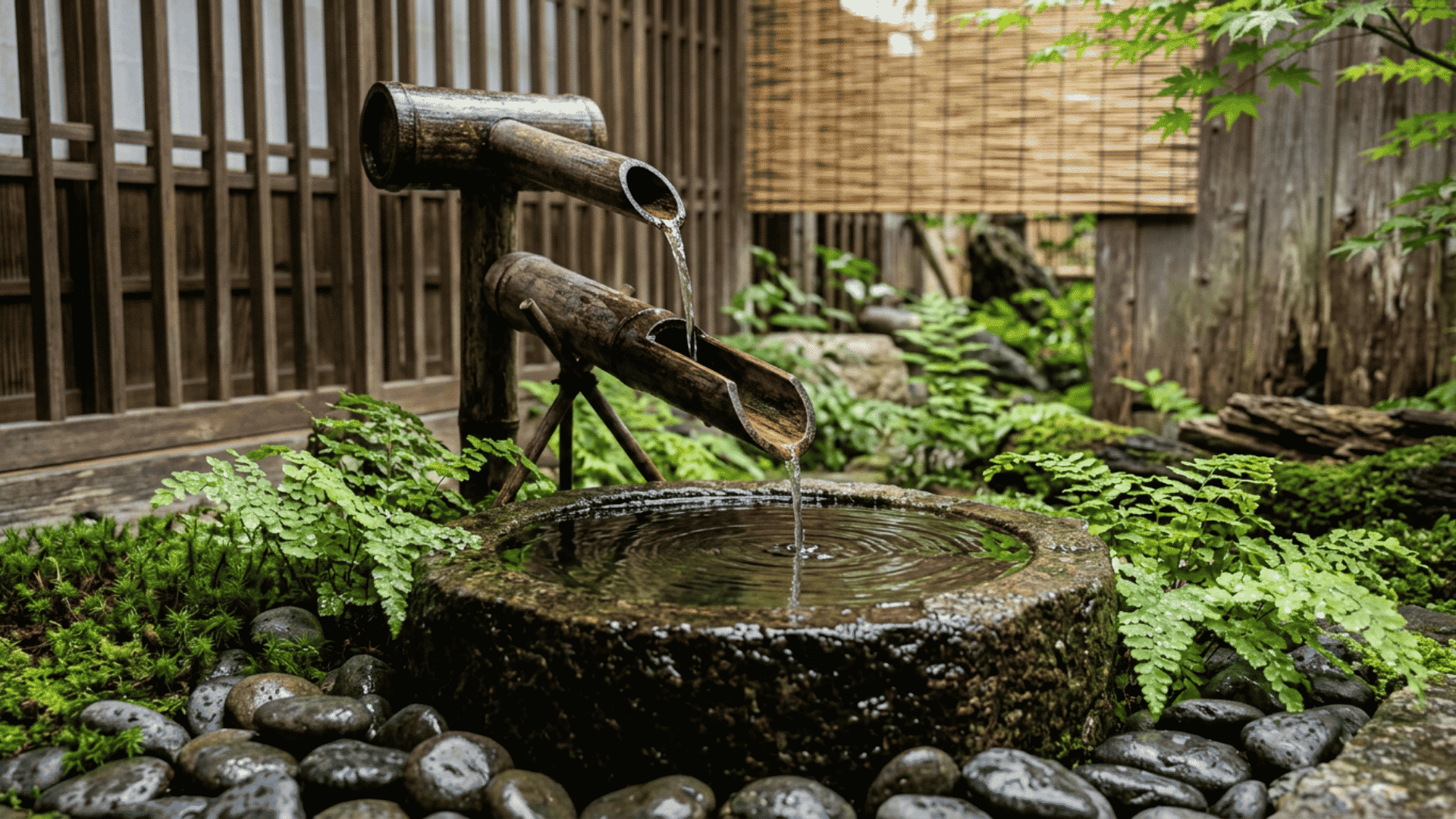
Attach a tiny bamboo spout that will fill up, tilt over, and tap into a stone basin beneath.
The sound of dripping water along with the tap of the bamboo provides a peaceful auditory component for your patio or deck.
This system is powered by a recirculating pump, uses minimal space, and looks great surrounded by some river rocks.
4. Koi Pond with Stone Edging
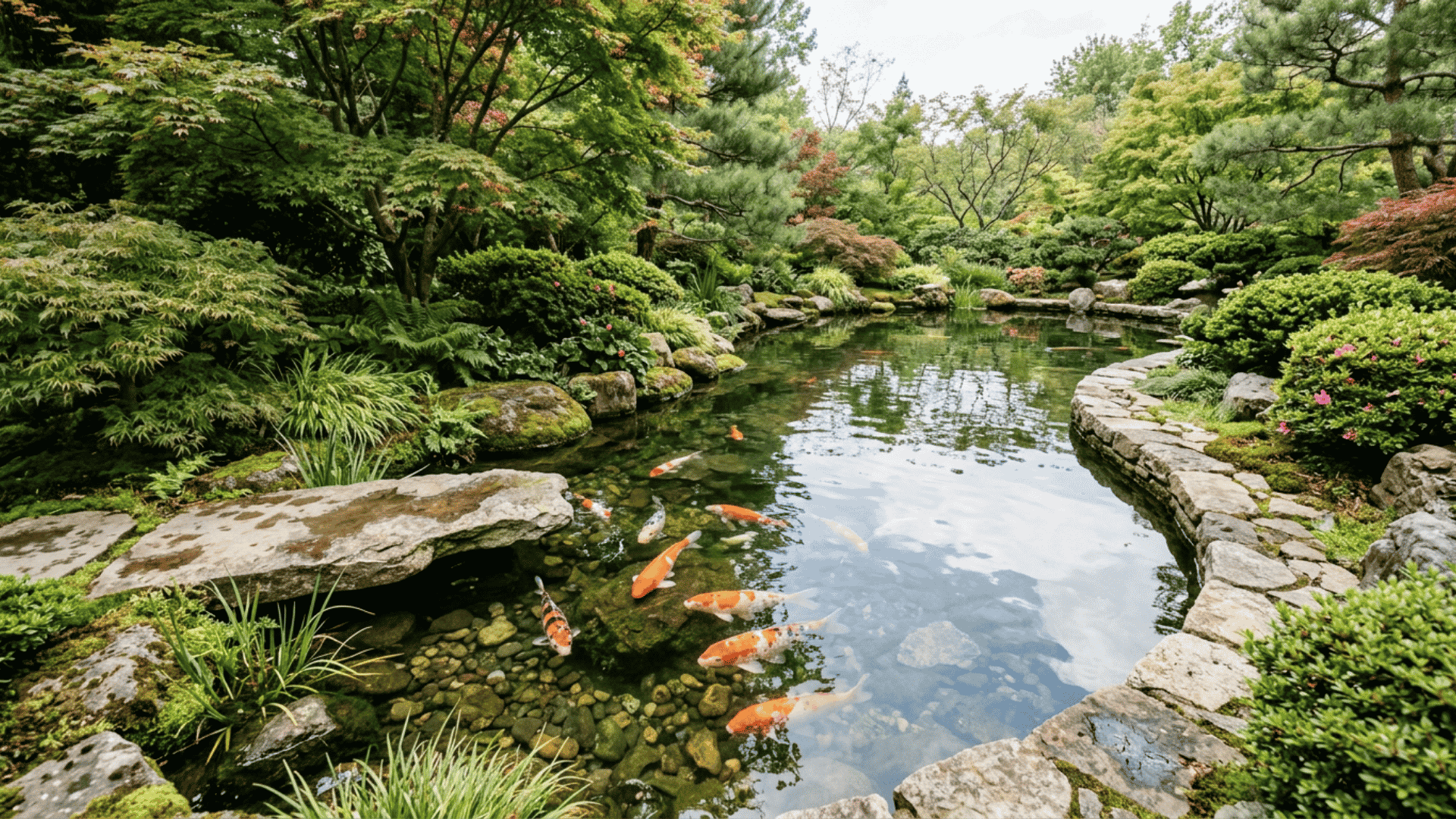
Construct an irregular-shaped pond (3 to 4 feet deep) that has a natural design to it and edge it with natural field stone.
Put in some koi or goldfish to give movement and color. Have one or two flat stones extend over the pond to make the transition from land to water appear natural.
Use a basic bio filter to keep the water clean without any constant maintenance or chemicals.
5. Courtyard Garden (Tsuboniwa)
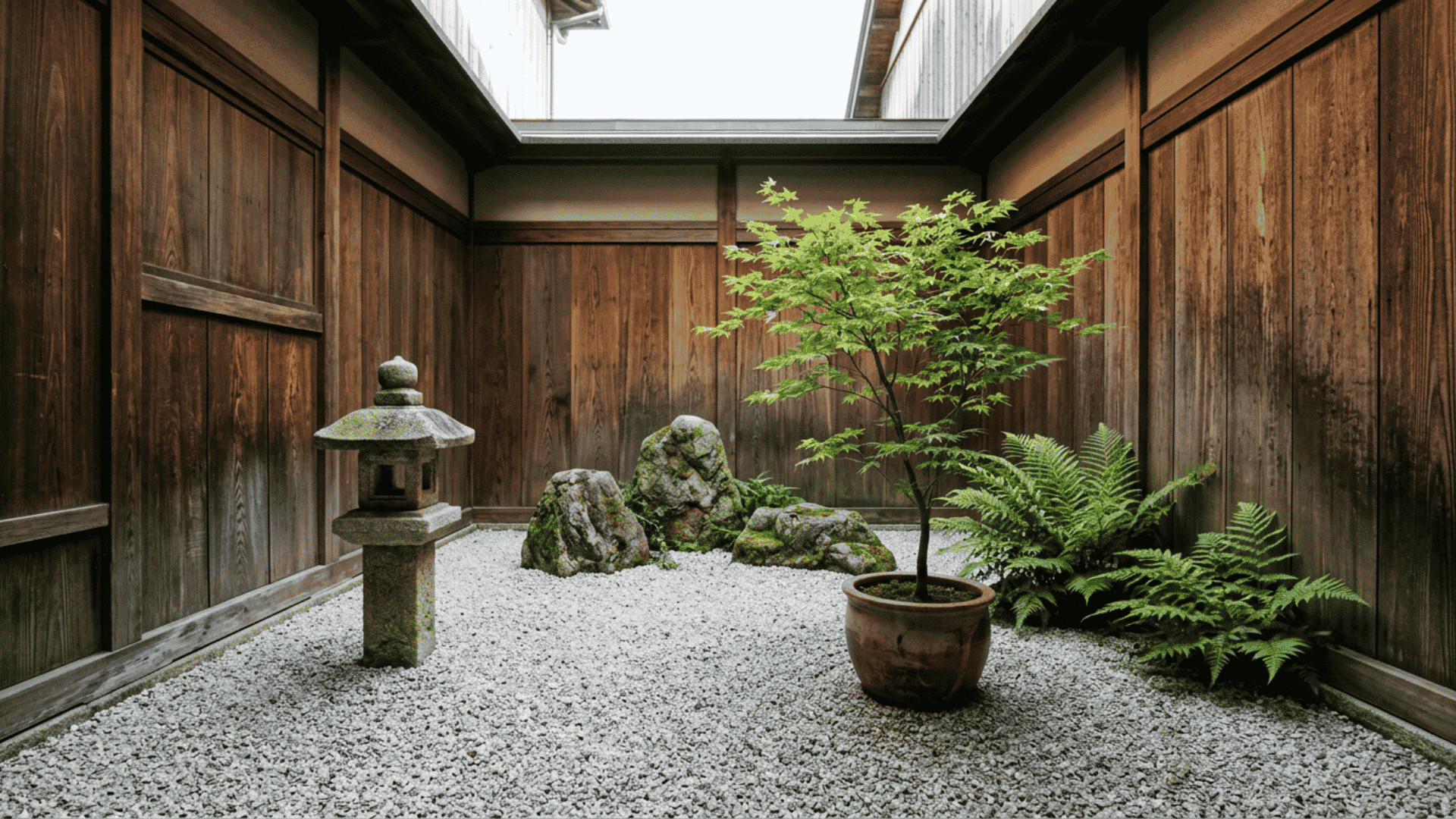
This style of garden design requires an enclosed and confined space such as a small courtyard, side-yard or light well between buildings.
It consists of one potted maple tree, one stone lantern, some gravel, and one or two fern plants. The key here is moderation.
Choose only three to four features and give enough space for them to live on their own. The space around them should speak volumes.
6. Stroll Path with a Bridge
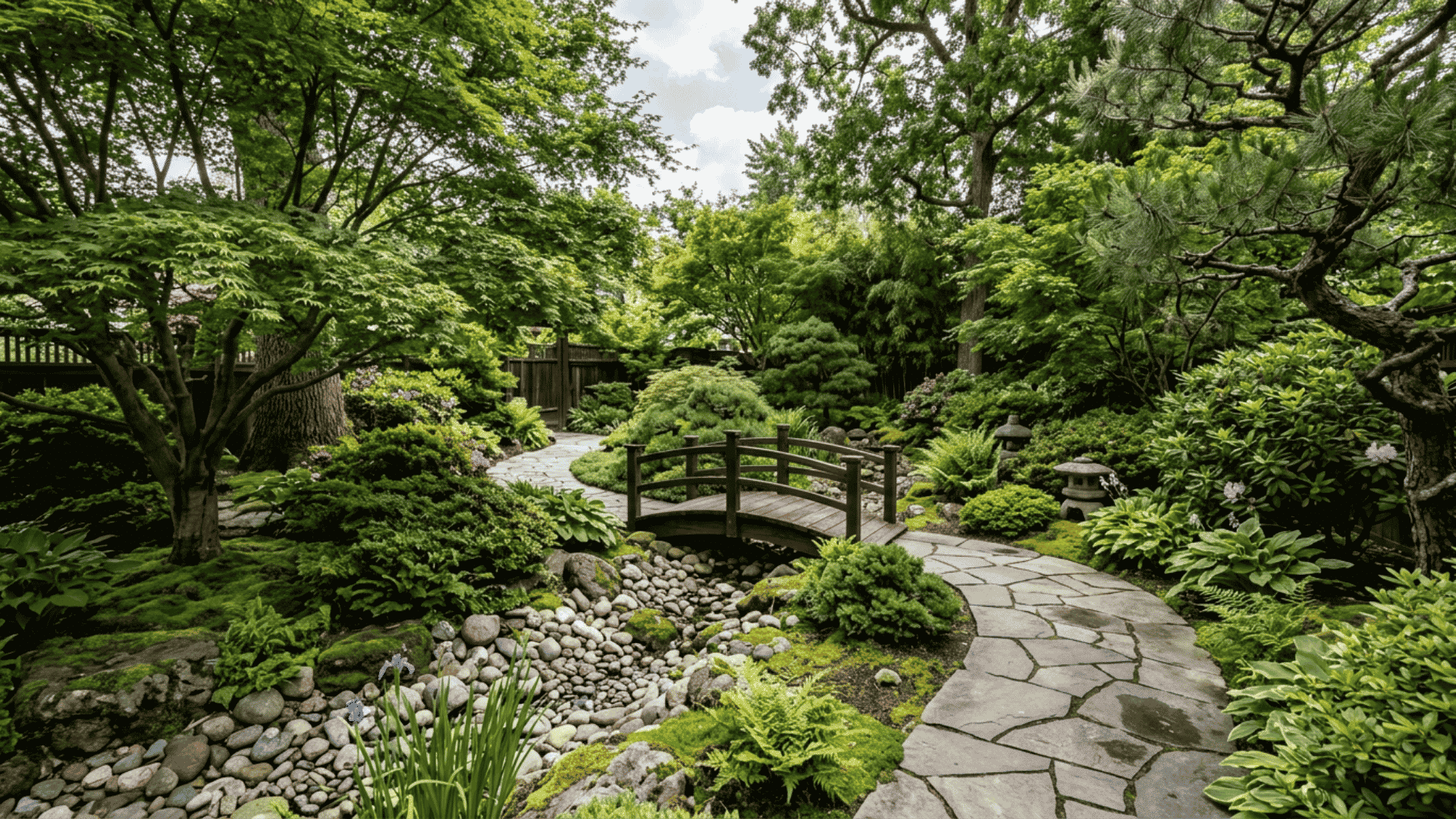
Lay a winding gravel or flagstone path through a larger yard so it curves out of sight at each turn.
Cross a dry stream bed with a small arched wooden bridge to break up the walk.
The idea is that you never see the whole space at once, which makes even a modest backyard feel noticeably bigger and more layered.
7. Front Yard Zen Bed
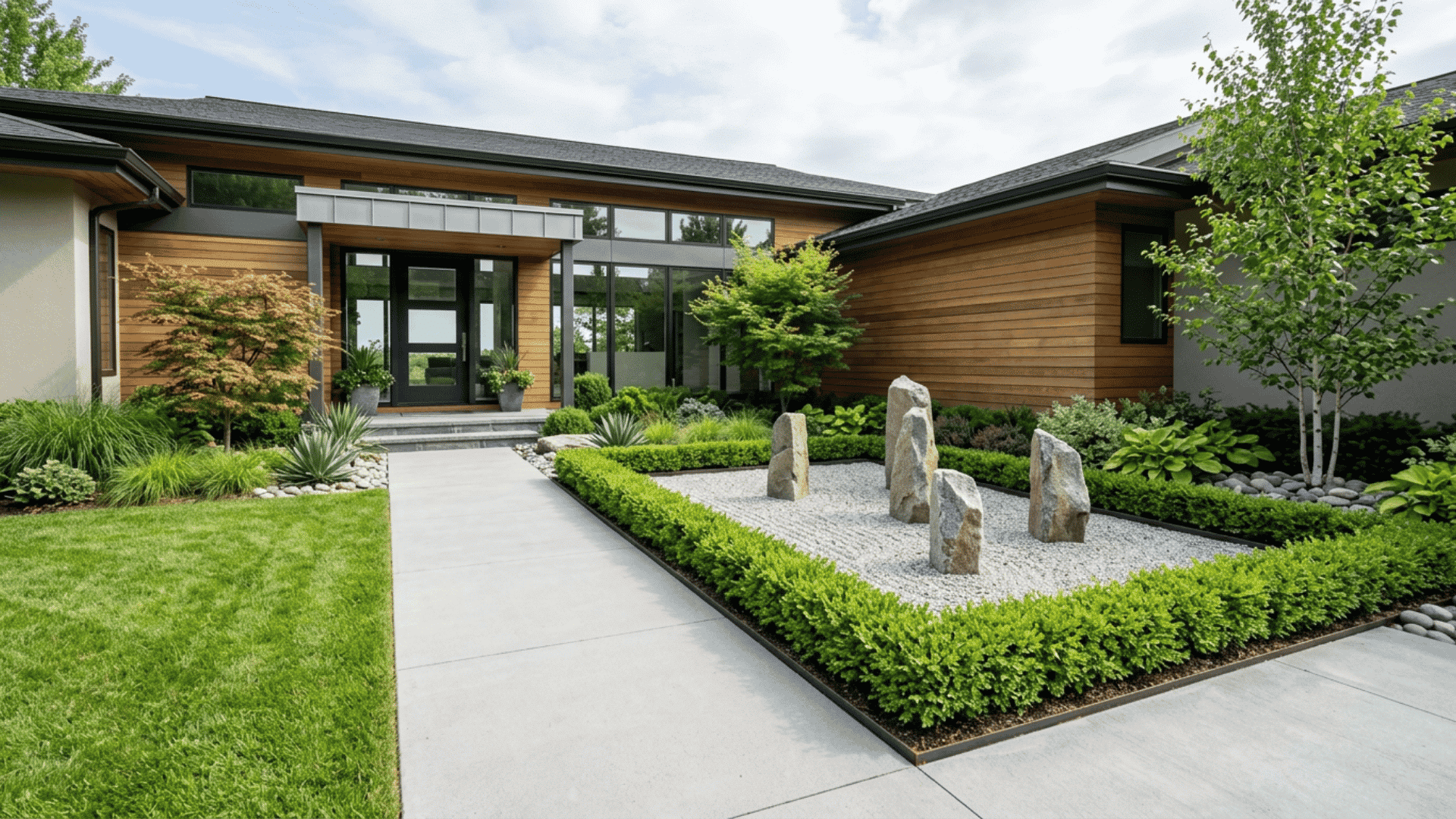
Replace a section of front lawn with a low raked gravel bed, three to five upright stones, and a clean border of clipped azaleas or boxwood.
It cuts mowing time, holds up through every season, and gives strong curb appeal. Neighbors will notice the difference right away.
Keep the gravel depth around two to three inches so it rakes cleanly and drains well.
Tips to Save Money
You do not need to spend a lot to get a good-looking result. A few smart choices keep costs down from the start.
1. Start Small: Focus on one section of the yard instead of redesigning the entire landscape at once. A single well-planned area can create the same peaceful effect while making future additions easier.
2. Choose Affordable Materials: Buy gravel, stones, and timber from local landscape suppliers whenever possible. Natural materials often cost less than decorative garden products and blend more naturally into the design.
3. Plant Young Trees: Select smaller Japanese maples, shrubs, or ornamental grasses rather than mature plants. They are more budget-friendly and gradually develop the character that Japanese gardens are known for.
4. Reuse Existing Features: Incorporate rocks, pavers, or garden edging already available in the yard. Repurposing materials reduces costs while giving the landscape a more natural and established appearance.
5. Build the Garden Gradually: Add new plants, pathways, or decorative features over time instead of completing everything in one project. This approach keeps spending manageable while allowing the garden to evolve naturally.
Wrapping Up
Japanese garden ideas work because they reward simplicity over size. A single afternoon with gravel, a few stones, and one well-chosen plant can change how an outdoor area feels for years.
The cost stays low when you source materials locally and phase the work across a few weekends. There is no wrong starting point.
A corner bed, a stepping stone path, or even a tabletop tray counts.
What matters is that every piece sits with purpose and the space stays uncluttered.
Leave a comment and tell us which idea caught your eye or what your yard looks like right now!
Frequently Asked Questions
How Often Should Decorative Gravel Be Raked?
Rake it whenever footprints, wind, or rain disturb the pattern. Most home settings need light touch-ups every one or two weeks.
How Can Fallen Leaves Be Removed without Shifting Gravel?
Use a leaf blower on its lowest setting or lift debris by hand. A fine garden rake may pull smaller gravel out of place.
Is This Type of Outdoor Area Safe for Pets?
Yes, when ponds are secured, stones remain stable, and every plant is nontoxic. Check the ASPCA plant database before letting pets roam freely.