Not every type of wood can handle sharp knives, children’s toys, and years of heavy foot traffic.
That is why choosing the right wood matters for flooring, butcher blocks, and everyday furniture.
Hard maple is a popular option because it is strong, light in color, and resistant to dents and daily wear. Its smooth, close grain also gives it a clean and even appearance.
However, looks and general strength are not enough when planning a project. Understanding hard maple’s exact properties can help you make a better choice.
Here, you will find clear details about its color, Janka hardness rating, and grain pattern to decide whether it suits your needs.
What is Hard Maple Wood?
Hard maple wood, also called sugar maple, comes from the Acer saccharum tree found across eastern North America.
The same tree is also known for producing maple sap, which is collected to make maple syrup. In the lumber trade, it may also be called rock maple or sugar maple.
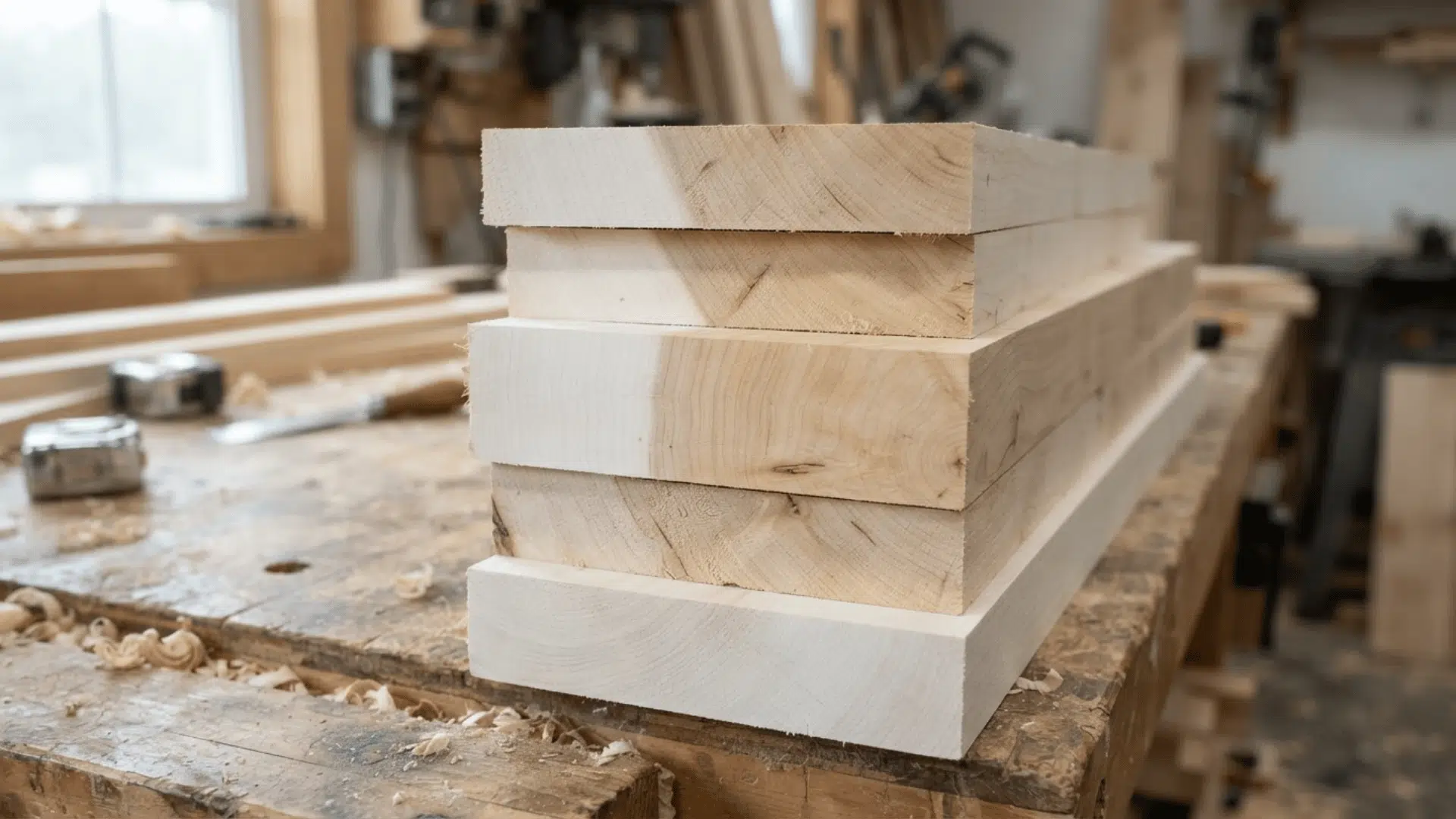
Hard maple is heavier than many domestic hardwoods. Its pale color, fine grain, and durability suit flooring, furniture, butcher blocks, and cutting boards.
Hard maple is different from soft maple. Hard maple generally offers greater hardness and dent resistance, making it suitable for surfaces that receive frequent use.
Properties of Hard Maple Wood
Hard maple’s quality comes down to three key properties: its color, hardness and grain. Each one affects how the wood looks, performs, and suits your project.
Color: What Hard Maple Looks Like
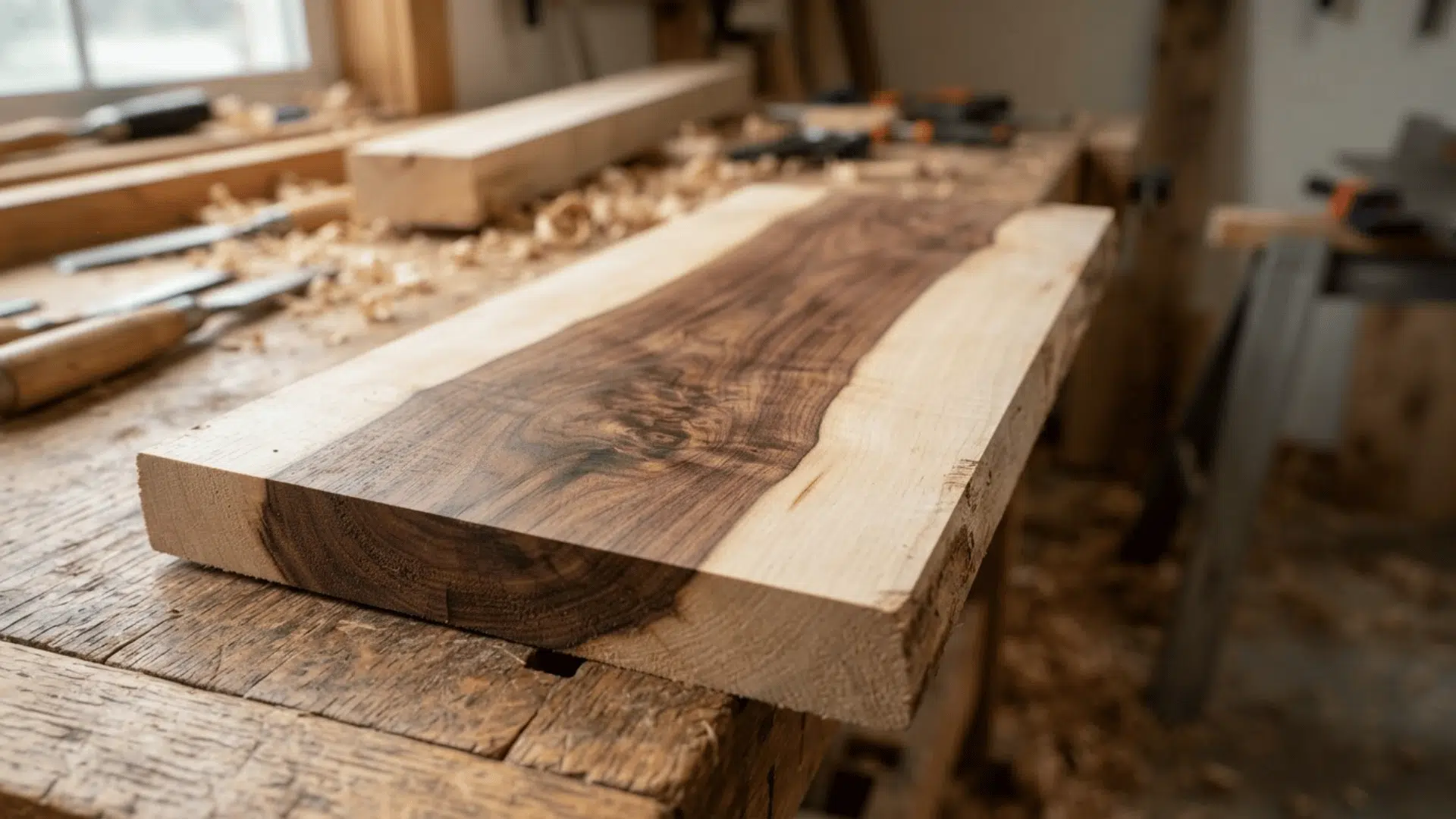
Hard maple sapwood is nearly white or pale cream, sometimes with a slight red tint.
Its heartwood ranges from light to reddish brown. The color is generally consistent and develops a warmer amber tone with age.
Boards cut closer to the tree’s center tend to show more heartwood, while outer boards lean toward the paler sapwood tone.
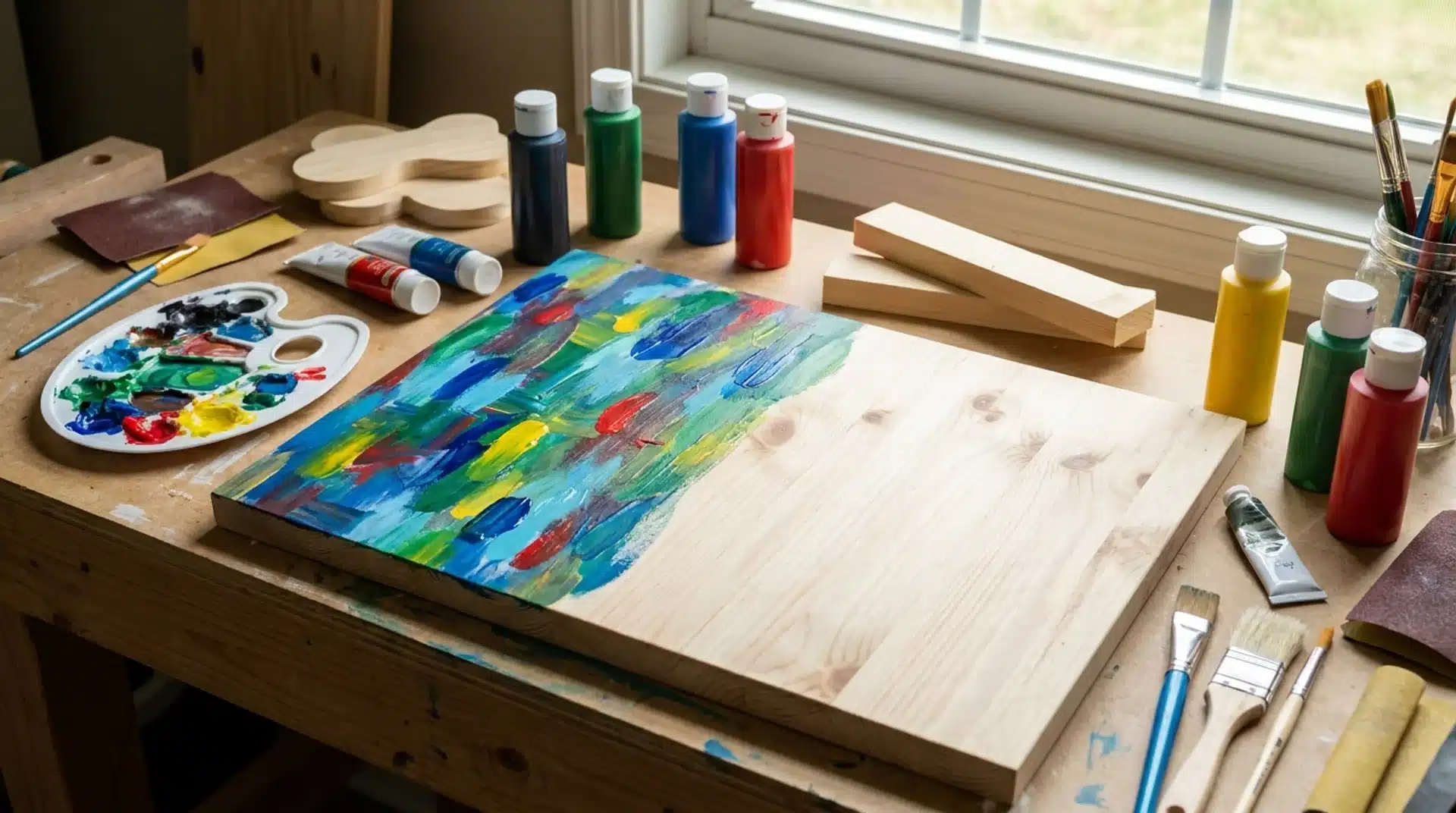
Hard maple can absorb stain unevenly; a pre-stain conditioner may help prevent blotching.
Janka Hardness: How Tough is It
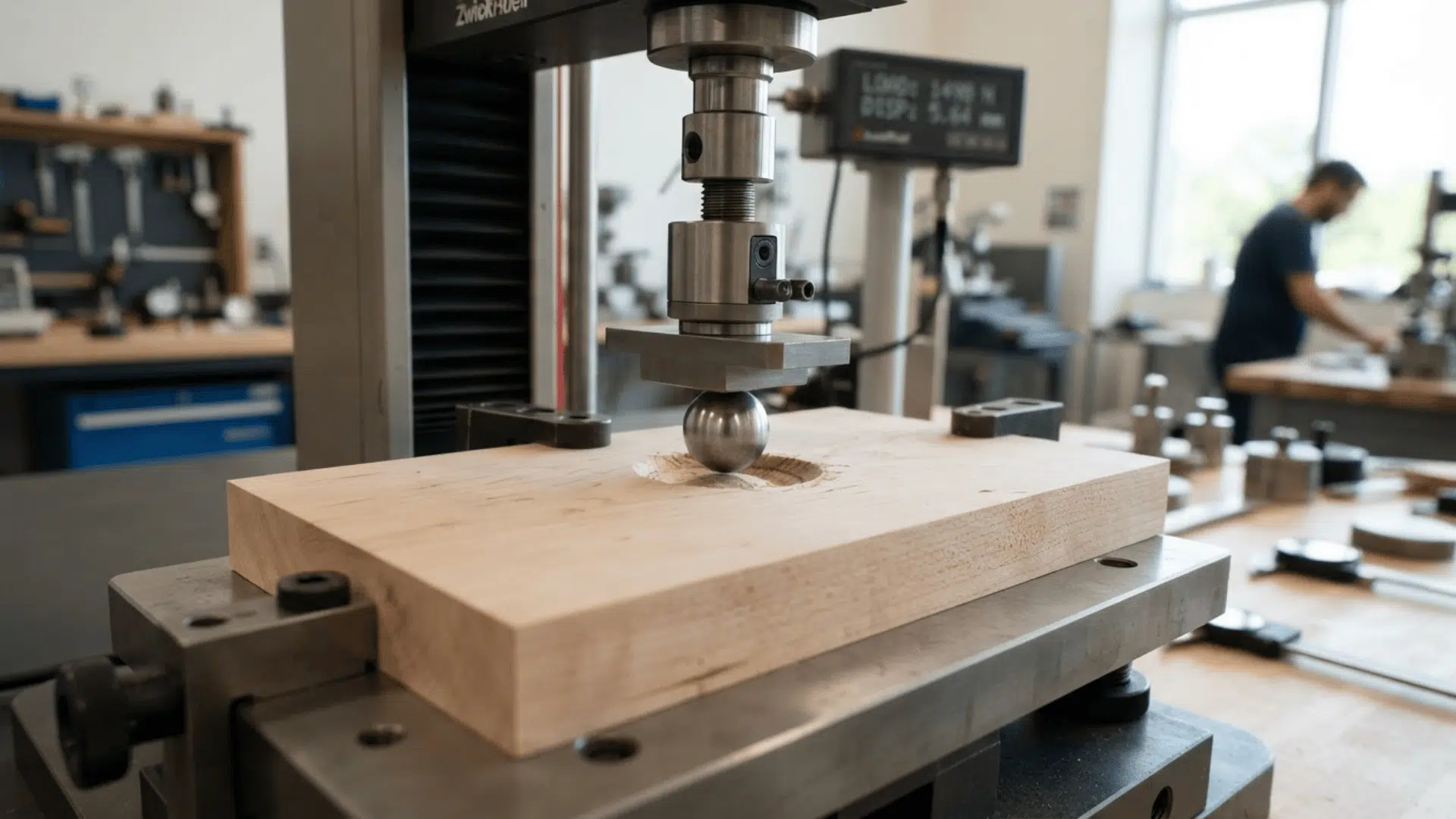
Hard maple scores 1,450 lbf on the Janka hardness scale, which measures how well wood resists dents and wear.
This rating makes it harder than red oak, which scores 1,290 lbf, and black walnut, which scores 1,010 lbf.
This hardness helps hard maple perform well under heavy foot traffic, moving furniture, and regular household use.
However, its dense structure can make cutting and drilling slightly more difficult.
Grain Pattern: Texture and Appearance
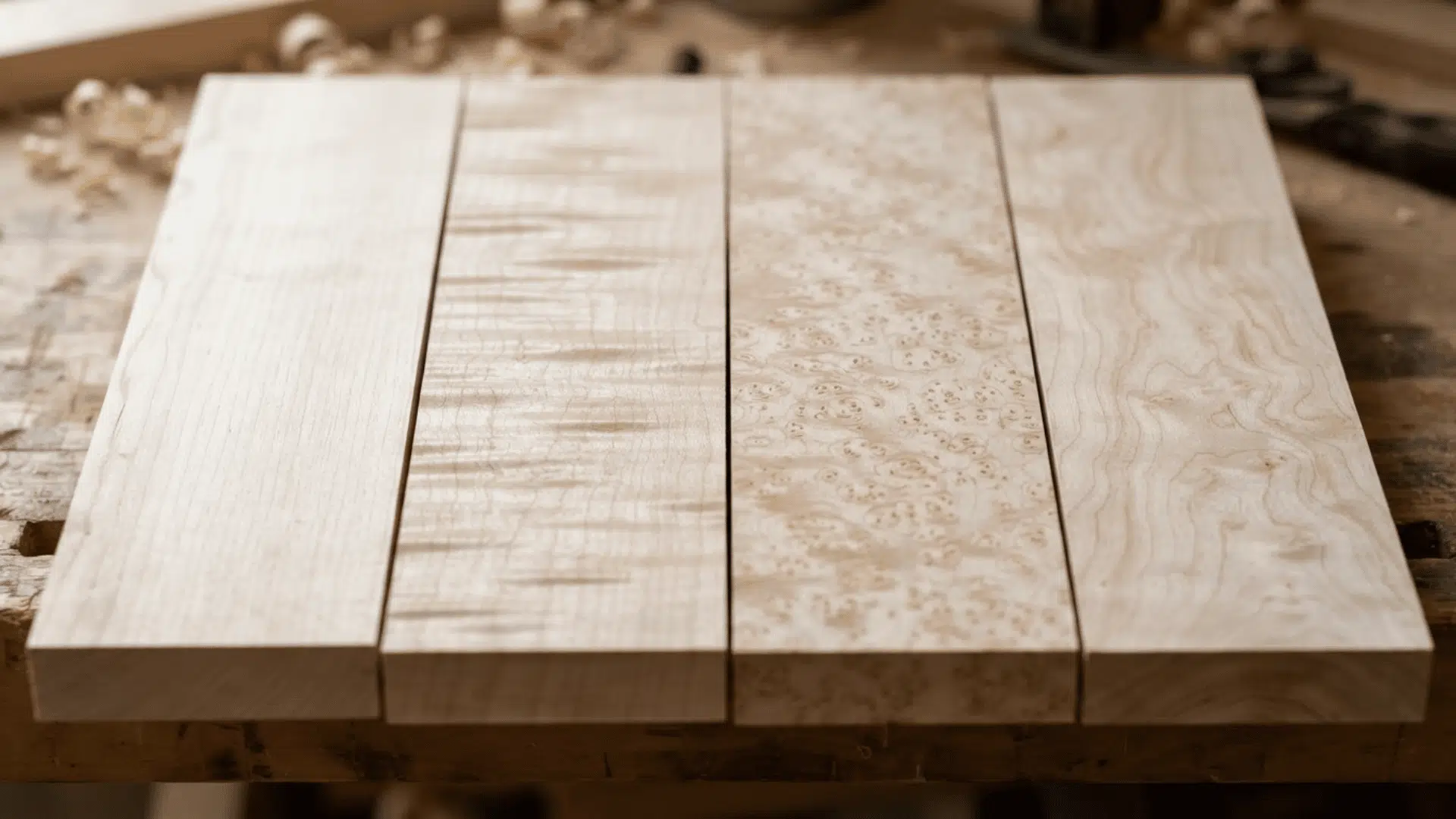
Hard maple usually has a tight, straight grain with a smooth, fine texture.
Some boards feature curly, bird’s-eye, or wavy patterns that add visual interest. Its uniform appearance works well in clean, simple designs.
The small pores also create a smooth surface that is easy to clean when properly sealed.
Hard maple also takes a polished finish well, giving the surface a neat and refined appearance.
Hard Maple for Butcher Blocks
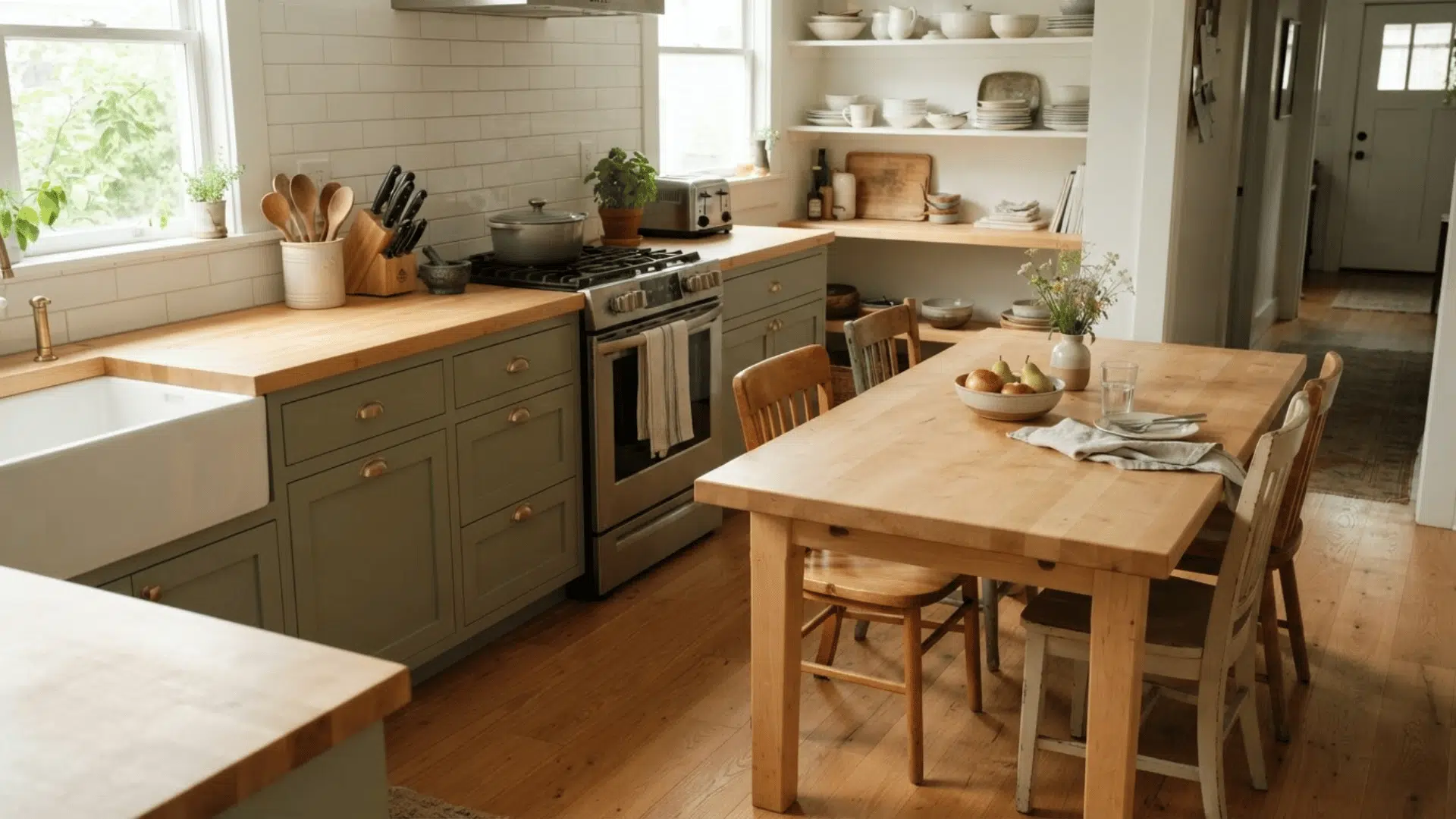
Hard maple is a common choice for butcher blocks because it provides a firm cutting surface without being as harsh on knife edges as some harder woods.
Butcher blocks use edge-grain or end-grain construction. Edge-grain is usually more affordable, while end-grain is gentler on knife edges.
The surface should be finished with food-safe mineral oil or a butcher-block conditioner. Regular treatment helps limit drying, cracking, and water absorption.
Clean the block with mild soap and a damp cloth, then dry it right away. Avoid soaking it, placing it in a dishwasher, or leaving wet food on the surface.
Deep cuts can be sanded out, but frequent maintenance is needed to keep the block smooth and sanitary.
Hard Maple for Flooring: Is It Worth It?
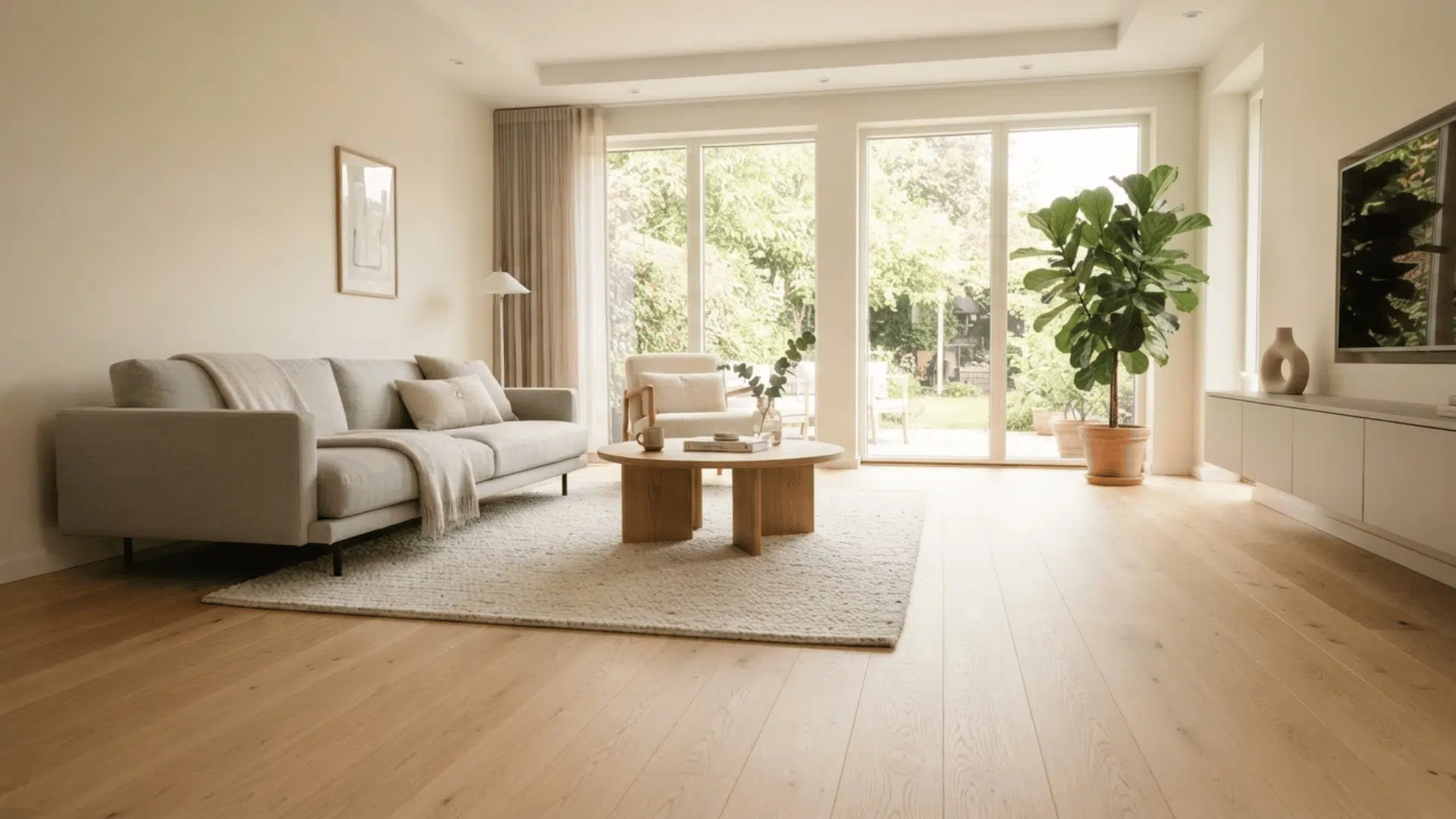
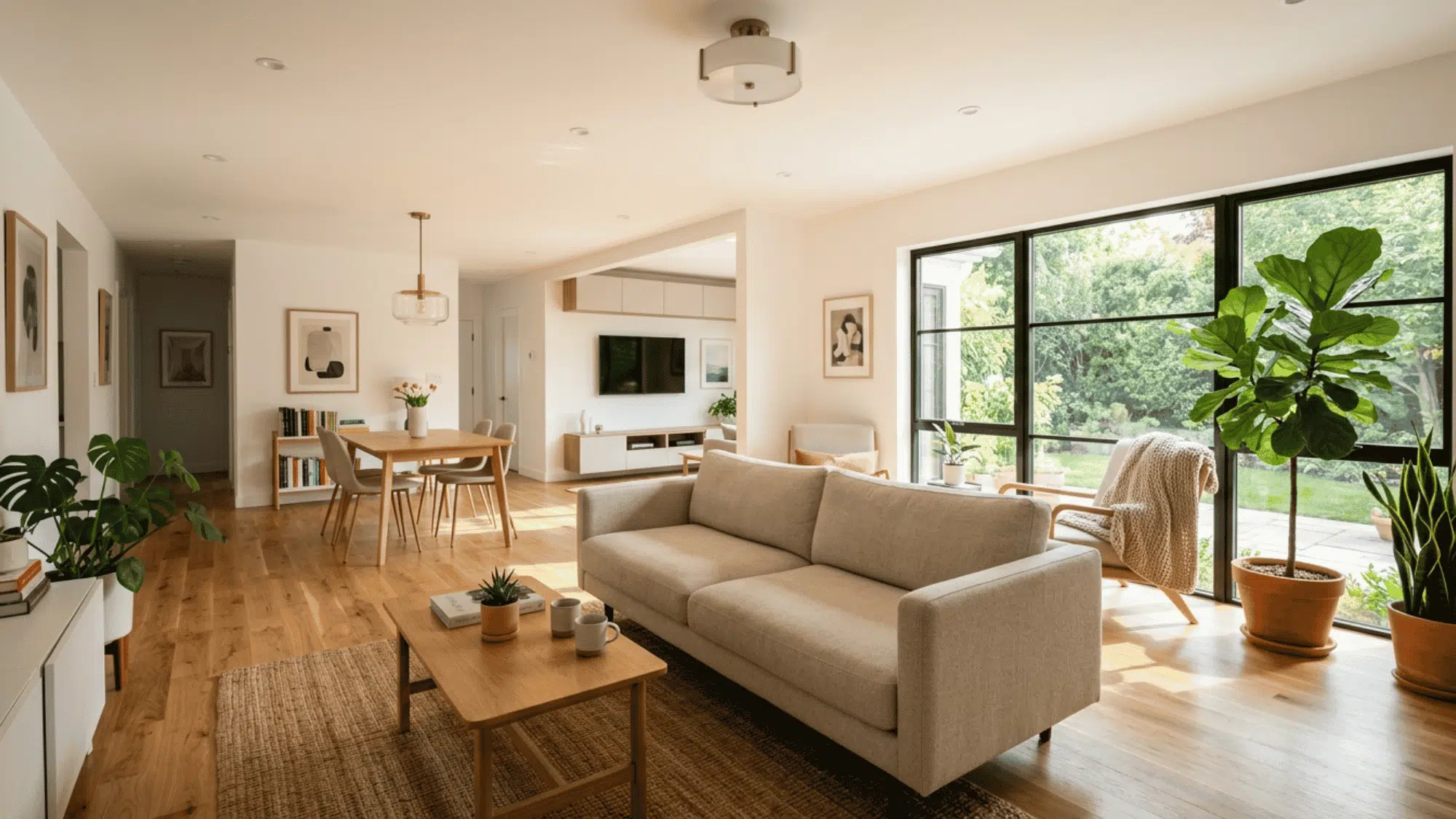
Hard maple is a strong flooring option for busy homes. However, scratches may still appear, especially on darker finishes.
Its pale color and even grain create a clean, consistent look. Since humidity can cause the wood to expand or shrink, proper installation and moisture control are important.
Choosing a professional installer familiar with hardwood flooring can help avoid common moisture-related issues down the line.
Overall, hard maple flooring is worth considering if you want a durable, light-colored floor with a smooth and uniform finish.
Hard Maple Wood for Heavy Furniture
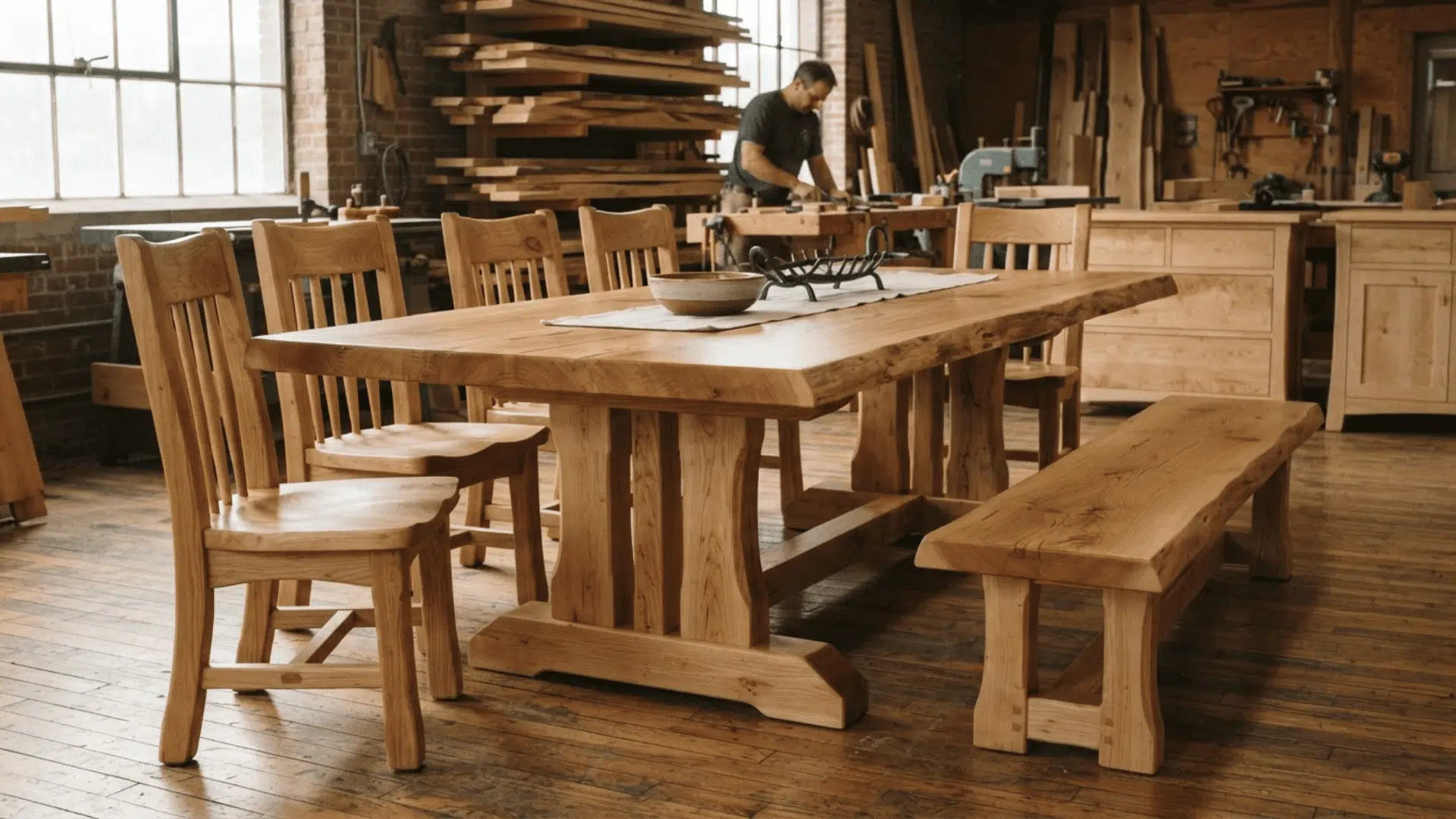
Hard maple wood is a strong choice for furniture that handles daily use, such as dining tables, desks, cabinets, and workbenches. It resists dents, impact, and surface wear.
The wood’s tight grain creates a smooth, clean finish and holds screws, joints, and fasteners securely. Its pale color also works well with modern and traditional furniture styles.
However, hard maple is dense, so it can be difficult to cut and shape. Sharp tools and careful drilling are needed to prevent burning or splitting.
With proper construction and a protective finish, hard maple furniture can remain strong and attractive for many years.
Hard Maple vs. Soft Maple
While hard maple and soft maple share the same family, their differences in hardness and durability make them suited for very different projects.
| Property | Hard Maple | Soft Maple |
|---|---|---|
| Botanical Source | Acer saccharum (sugar maple) | Red maple, silver maple, and related species |
| Janka Hardness | 1,450 lbf | Roughly 700–950 lbf, depending on species |
| Color | Pale cream to reddish-brown, consistent tone | Similar pale tones, but often more color variation |
| Grain | Tight, straight, fine texture | Slightly more open grain, less uniform |
| Dent Resistance | High — suited for heavy foot traffic and daily use | Lower — more prone to dents and surface wear |
| Workability | Denser, harder to cut, drill, and shape | Easier to cut, drill, and shape |
| Best Uses | Flooring, butcher blocks, heavy-use furniture | Furniture with lighter use, moldings, cabinetry |
| Cost | Generally higher | Generally lower |
What to Consider Before Buying?
Before choosing hard maple wood, compare its features with the needs of your project.
- Color: Choose boards from the same batch for a consistent look across floors or furniture.
- Hardness: Its 1,450 lbf rating suits heavy use but makes cutting and shaping more difficult.
- Grain: Straight grain gives a clean finish, while figured grain may cost more.
- Moisture: Use sealed or regularly oiled wood for butcher blocks and humid areas.
- Finish: Test stains first because hard maple wood can develop an uneven color.
- Grade: Check each board for mineral streaks, knots, and unwanted color differences.
Conclusion
Hard maple is a dependable choice for projects where lasting performance matters. Its pale tone and subtle grain fit many design styles without drawing attention away from the surrounding space.
Careful board selection is important because natural color variations, mineral streaks, and figured patterns can affect the final look.
Before buying, consider your tools, finishing method, and room conditions.
If durability and a clean, light finish matter most, hard maple is a strong choice. Share your hard maple questions or project ideas in the comments below.
Frequently Asked Questions
Is Hard Maple Suitable for Outdoor Projects?
Hard maple is not ideal for outdoor projects because it has limited resistance to moisture and decay. Choose white oak, cedar, or teak instead.
Does Hard Maple Darken Over Time?
Hard maple usually develops a warmer cream or amber tone as it ages and receives light. The change is generally more subtle than the darkening seen in cherry wood.
Can Hard Maple Flooring or Furniture be Refinished?
Yes, hard maple can be sanded and refinished several times. However, careful sanding is necessary to avoid scratches and uneven stain absorption.