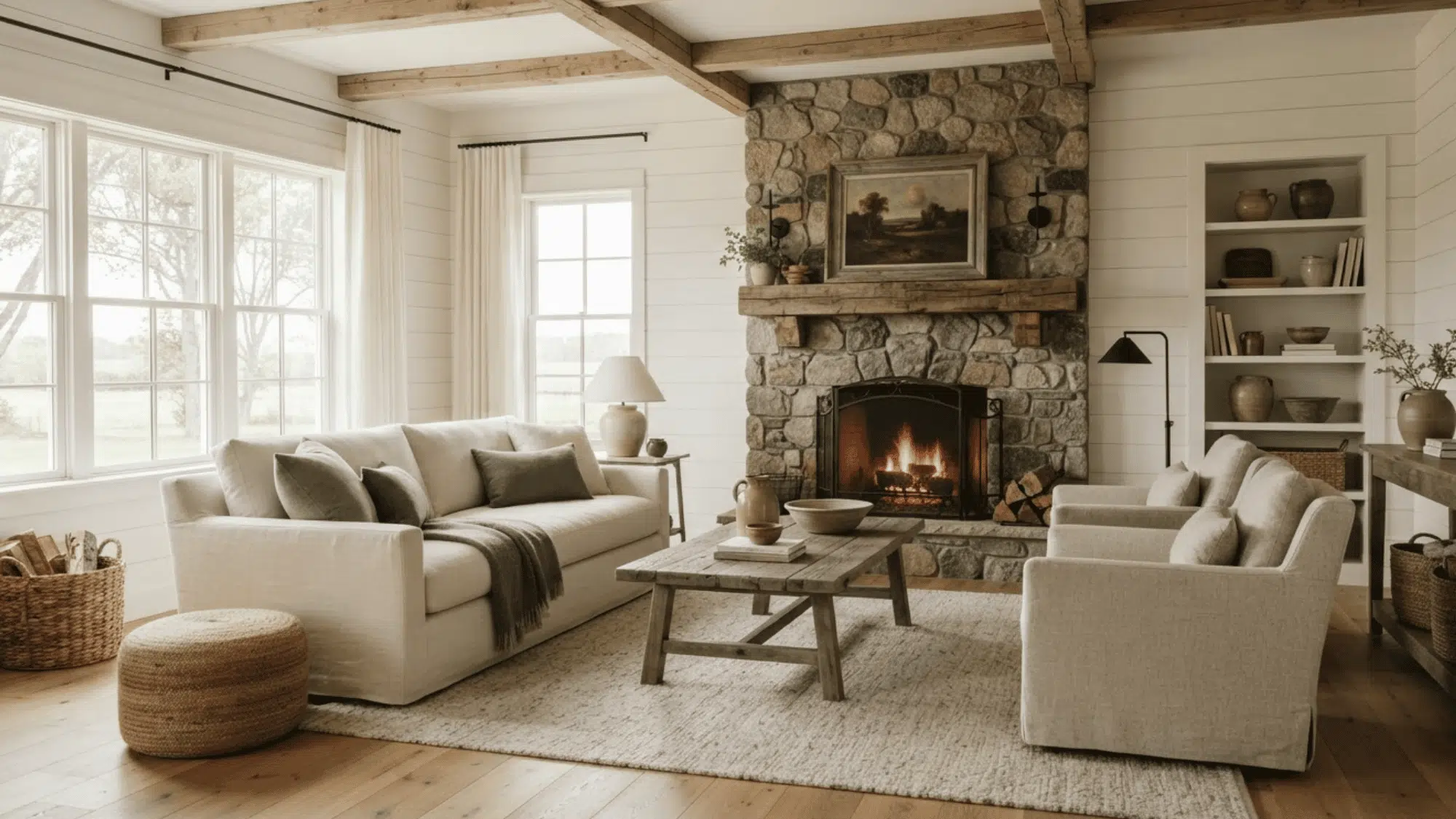
Want a living room that feels warm, useful, and easy to live in?
Farmhouse style stays popular because it blends comfort with natural wood, soft fabrics, simple colors, and furniture made for daily use.
It can suit an older home with classic details or a newer space with cleaner lines. The key is choosing pieces that feel relaxed without making the room look crowded or overly themed.
These farmhouse living room ideas will show you layouts, color schemes, practical furniture choices, and styling examples you can use at home.
Keep reading and choose the ideas that best fit your space.
What Makes a Living Room Look Farmhouse?
A farmhouse living room feels warm, relaxed, and practical. Natural wood and stone often set the base, while comfortable seating makes the room easy to use every day.
Warm whites, beige, brown, muted green, and other earthy shades help create a calm look.
Woven baskets, soft rugs, linen curtains, and textured cushions add depth without making the room feel busy.
Vintage tables, aged cabinets, and well-worn decor bring character. Simple items such as family photos, handmade pottery, old books, or framed art make the space feel personal.
Each piece should have a purpose and fit the room naturally. If you want a broader look at the style room by room, our farmhouse interior design ideas guide covers it beyond just the living room.
Farmhouse Living Room Ideas for Different Homes and Styles
These farmhouse living room ideas show how color, furniture, texture, and layout can help different homes feel warm, useful, and easy to enjoy each day.
1. Build The Room Around a Warm Neutral Color Palette
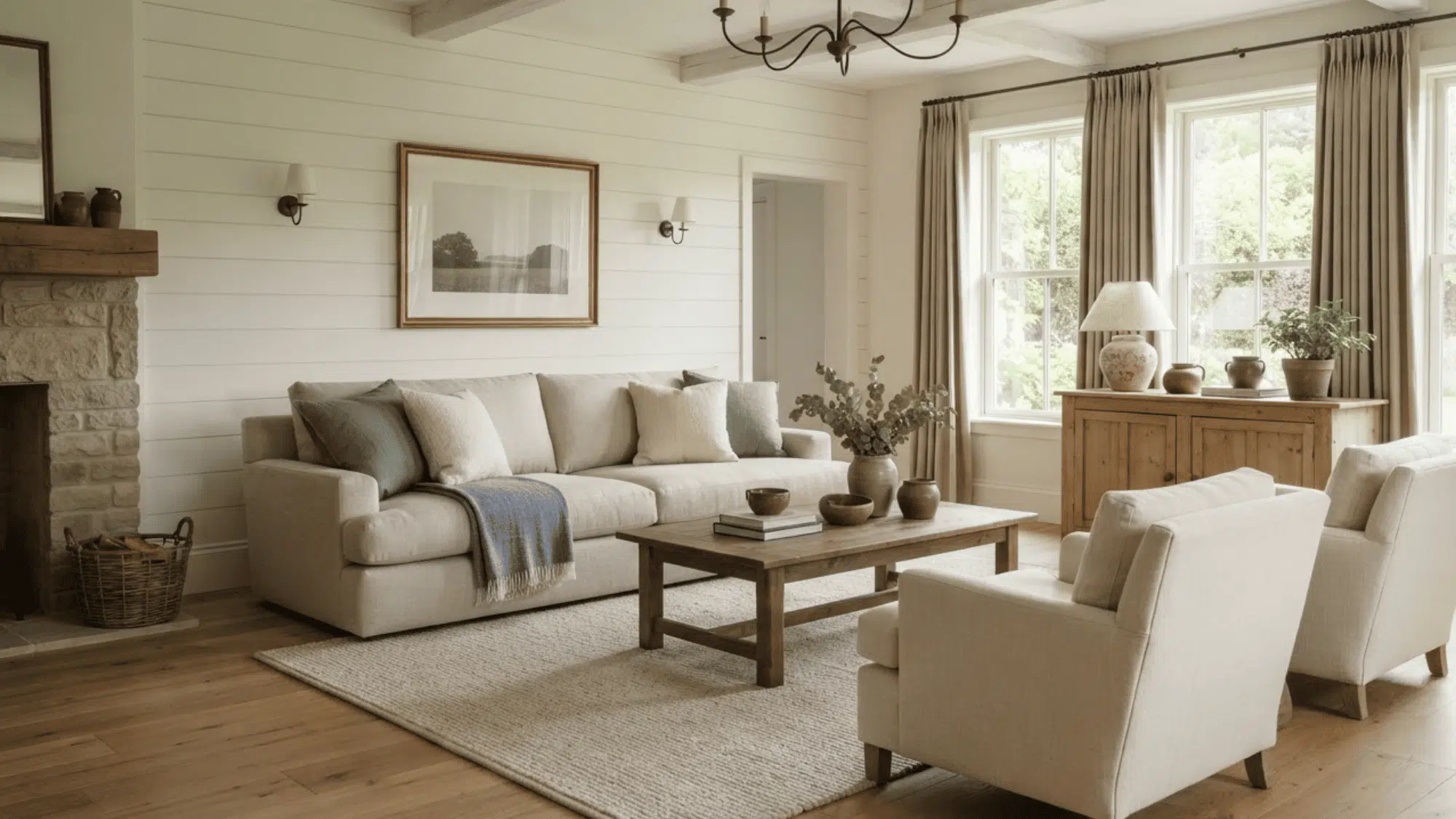
Start with warm white, cream, beige, taupe, or soft brown to create a calm base. Muted green and faded blue can add gentle color without making the room feel busy.
Pale shades work best when they are balanced with natural wood. A wood coffee table, exposed beam, or sideboard adds warmth and keeps the room from looking flat.
Try warm white walls, an oatmeal sofa, a wood coffee table and muted green pillows.
2. Make a Stone or Brick Fireplace The Main Feature
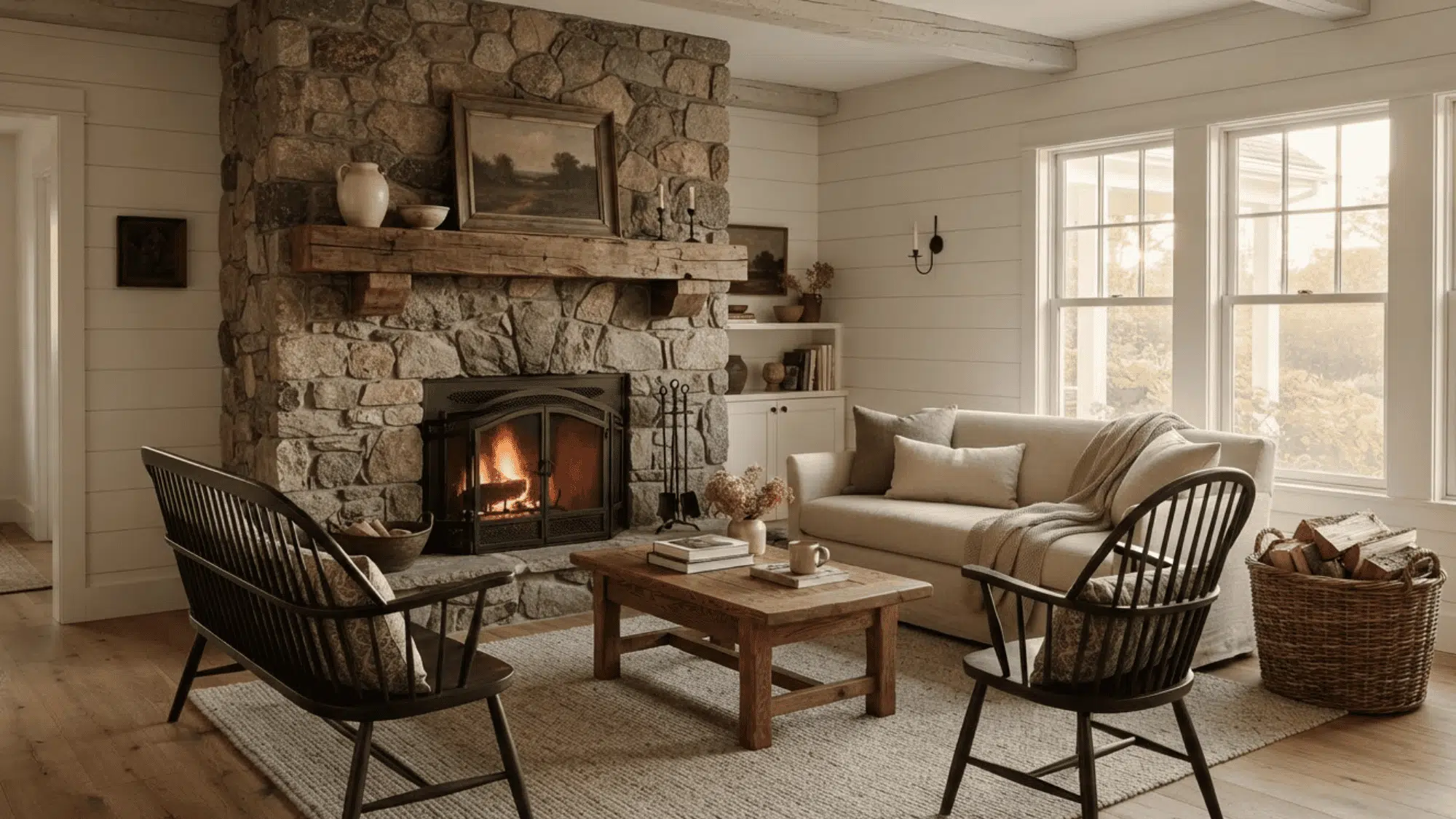
A stone or brick fireplace can give the room a clear center. Arrange the sofa and chairs so they face or angle toward it, making the space feel ready for conversation.
Rough stone adds a rustic feel, while aged brick brings warmth and texture. Painted brick suits lighter rooms and cleaner styles. Finish the look with a simple wood mantel.
A stone fireplace with a reclaimed wood mantel works well as the main feature.
3. Mix Modern Seating with Vintage Farmhouse Furniture
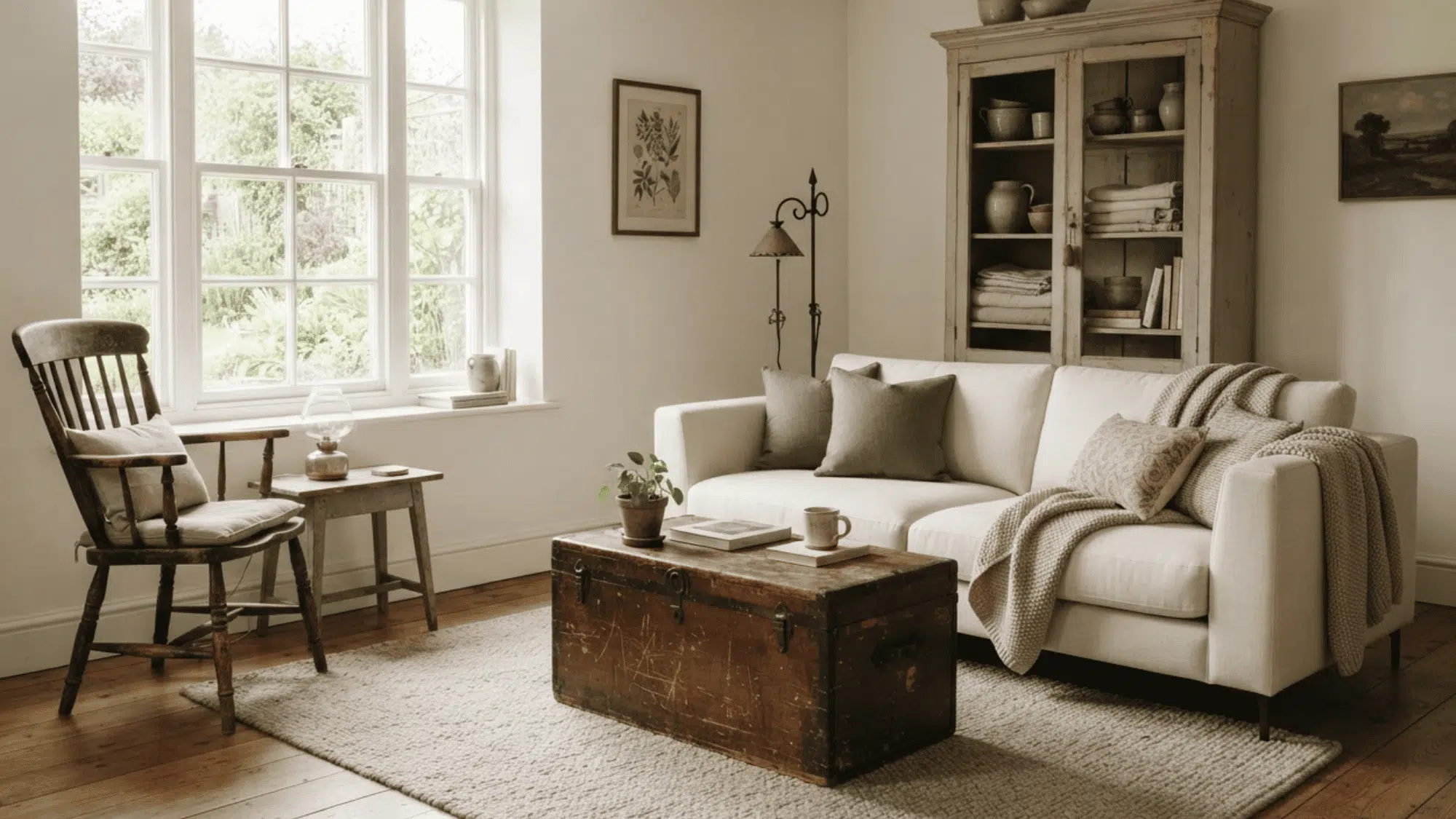
A simple sofa can look more personal when paired with one or two older pieces. Try an antique chest as a coffee table, an old side table, a spindle chair or an aged cabinet.
These pieces add history without making the room feel staged. Too many themed items can make farmhouse decor look forced.
A modern cream sofa beside a vintage trunk creates a balanced mix of comfort, age and everyday use.
4. Add Farmhouse Character with Natural Wood
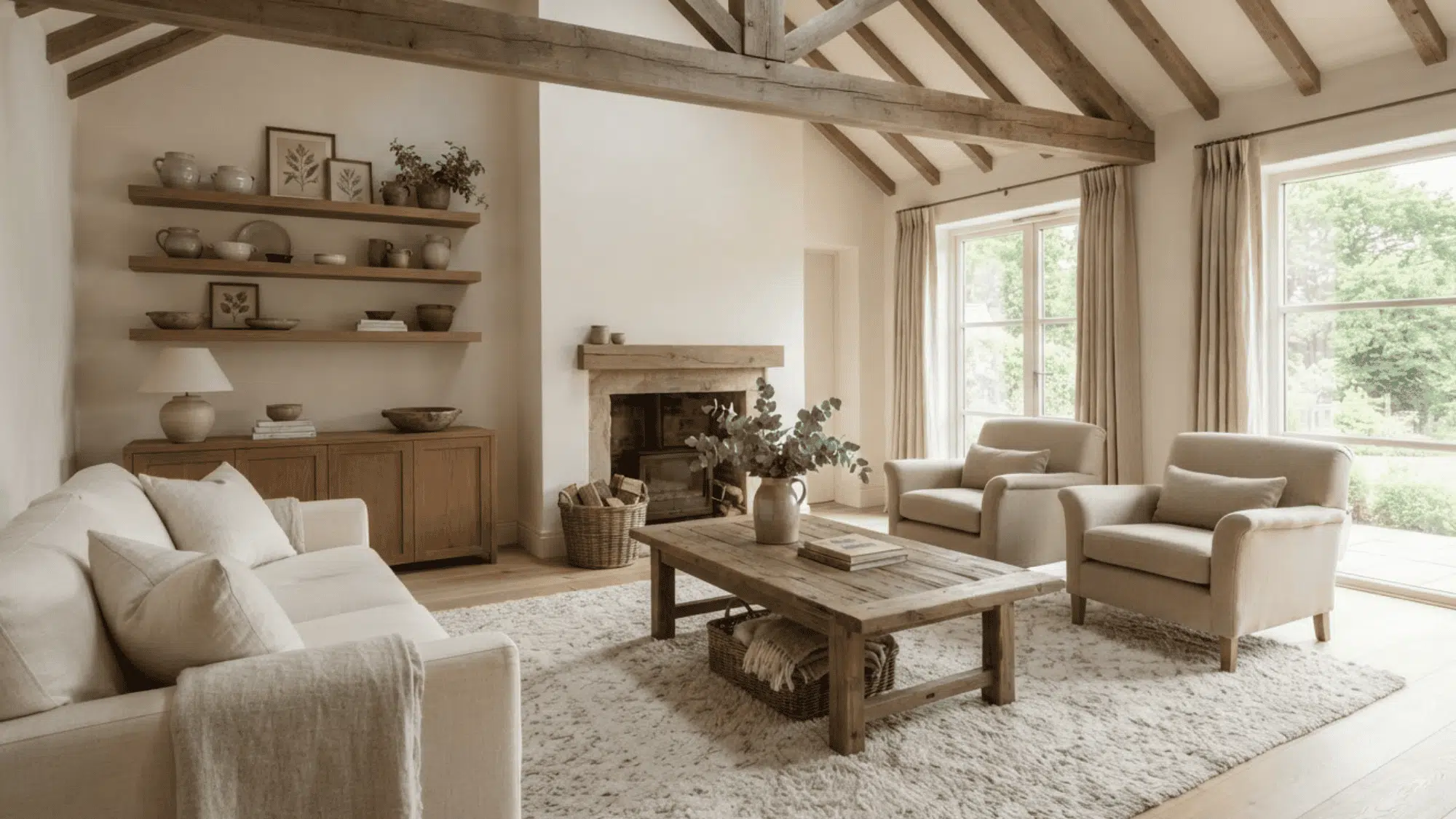
Natural wood helps a farmhouse living room feel warm and grounded. Use it on ceiling beams, flooring, coffee tables, wall shelves, mantels or sideboards.
Avoid matching every wood finish, as this can make the room feel too planned. Instead, mix light, medium and aged tones with care. Keep the undertones similar so the pieces still feel connected.
Pale oak floors, darker beams and a weathered coffee table create an easy layered look.
5. Layer Linen, Cotton, Wool, and Woven Textures
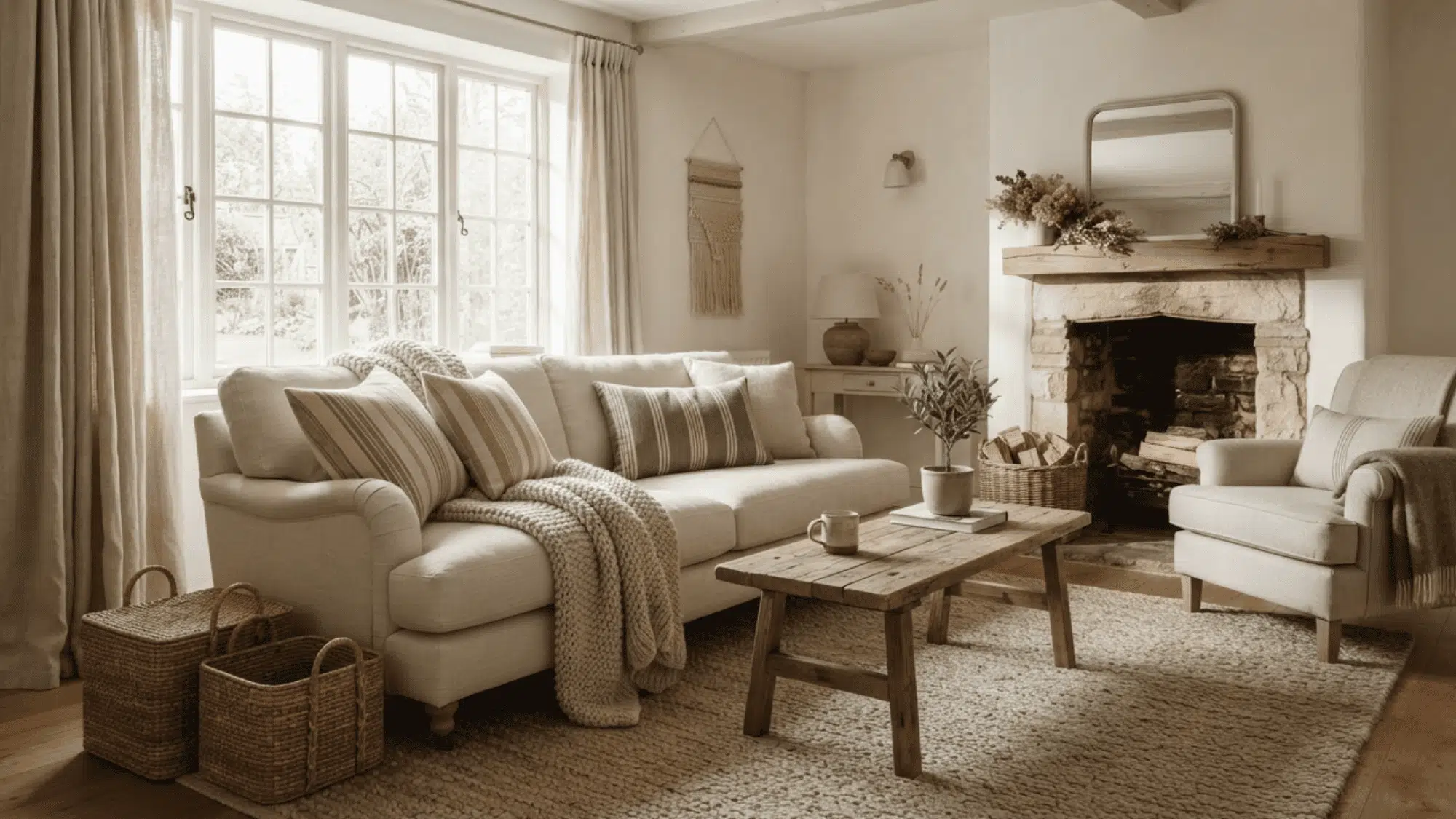
Soft and woven materials help balance the harder look of wood, brick, and stone.
Use linen curtains, cotton pillow covers, wool throws, jute rugs and woven baskets throughout the room.
Mix smooth and rough textures so the space feels layered, but keep the colors related. This prevents the room from looking messy.
A linen sofa, wool throw, jute rug and woven storage baskets can add comfort while keeping the farmhouse look simple.
6. Plan a Farmhouse Layout for Conversation and Comfort
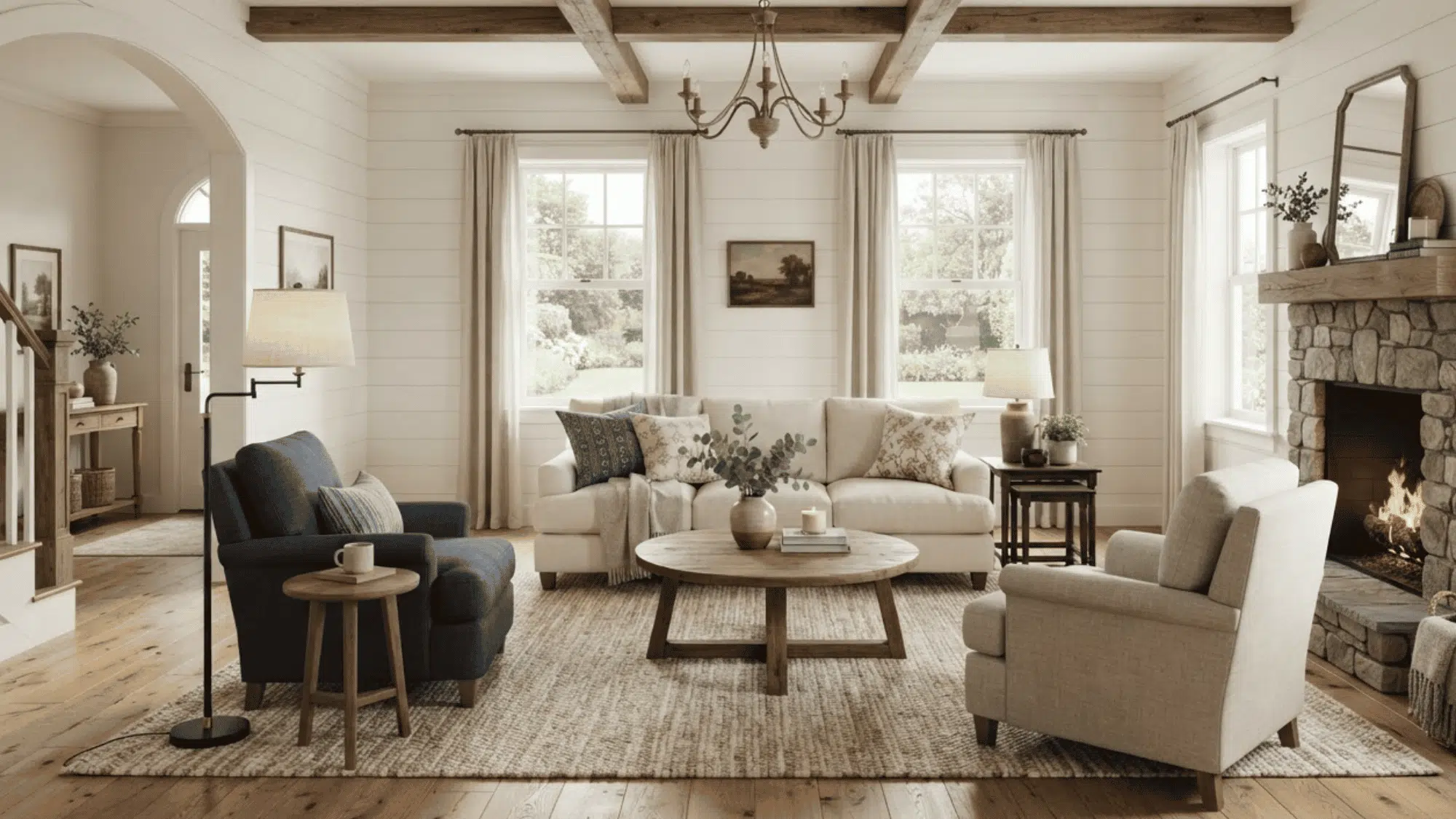
Plan the layout around how people use the room. Place a sofa and chairs close enough for easy conversation, with a coffee table between them.
Leave clear walking space around doors and main paths. Make sure each seat has access to a side table or nearby surface.
In rooms with a fireplace, television, bay window or open layout, angle the seating toward the main focus. A sofa and two chairs around one table work well..
7. Bring Farmhouse Style into a Small Living Room
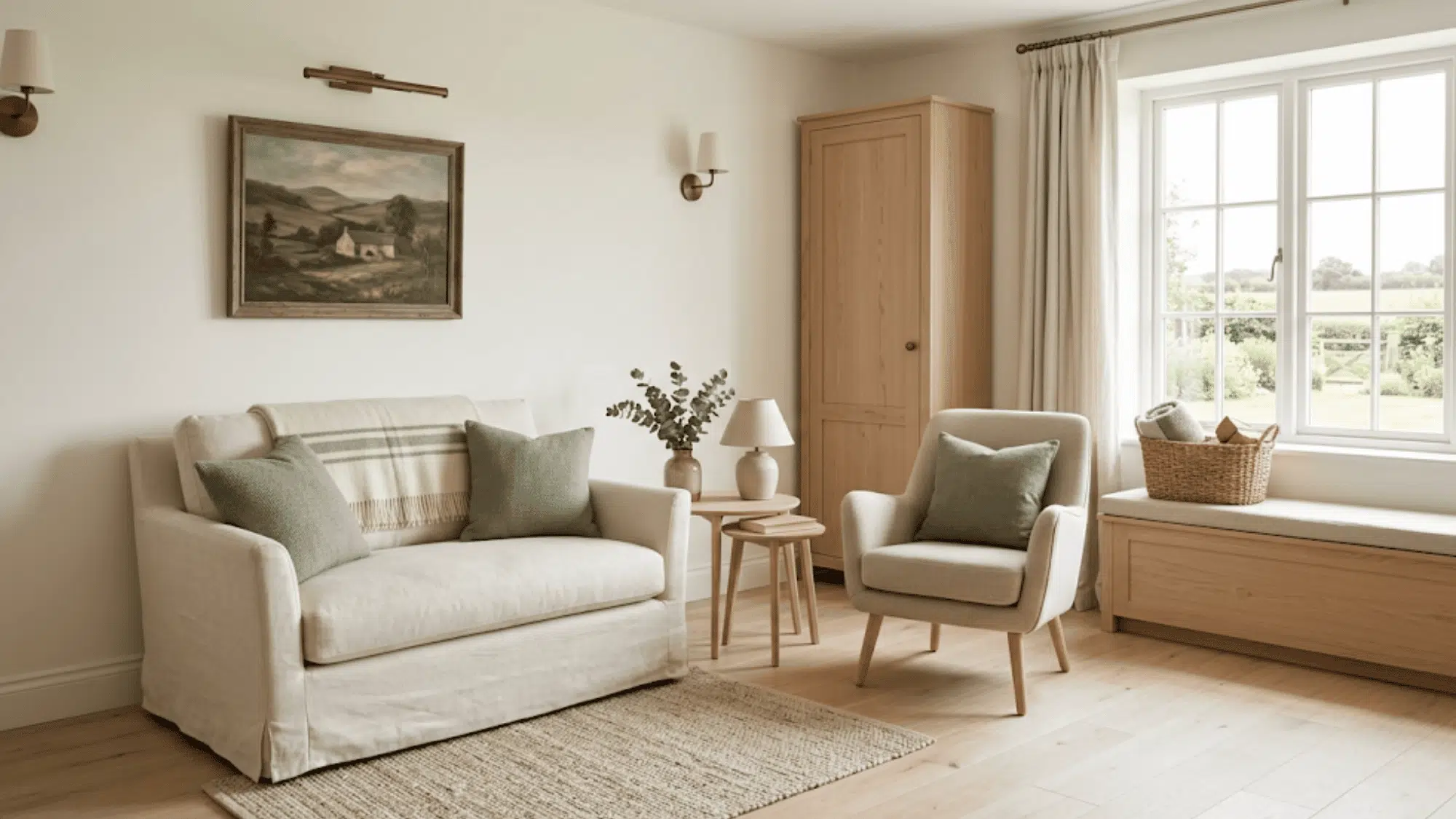
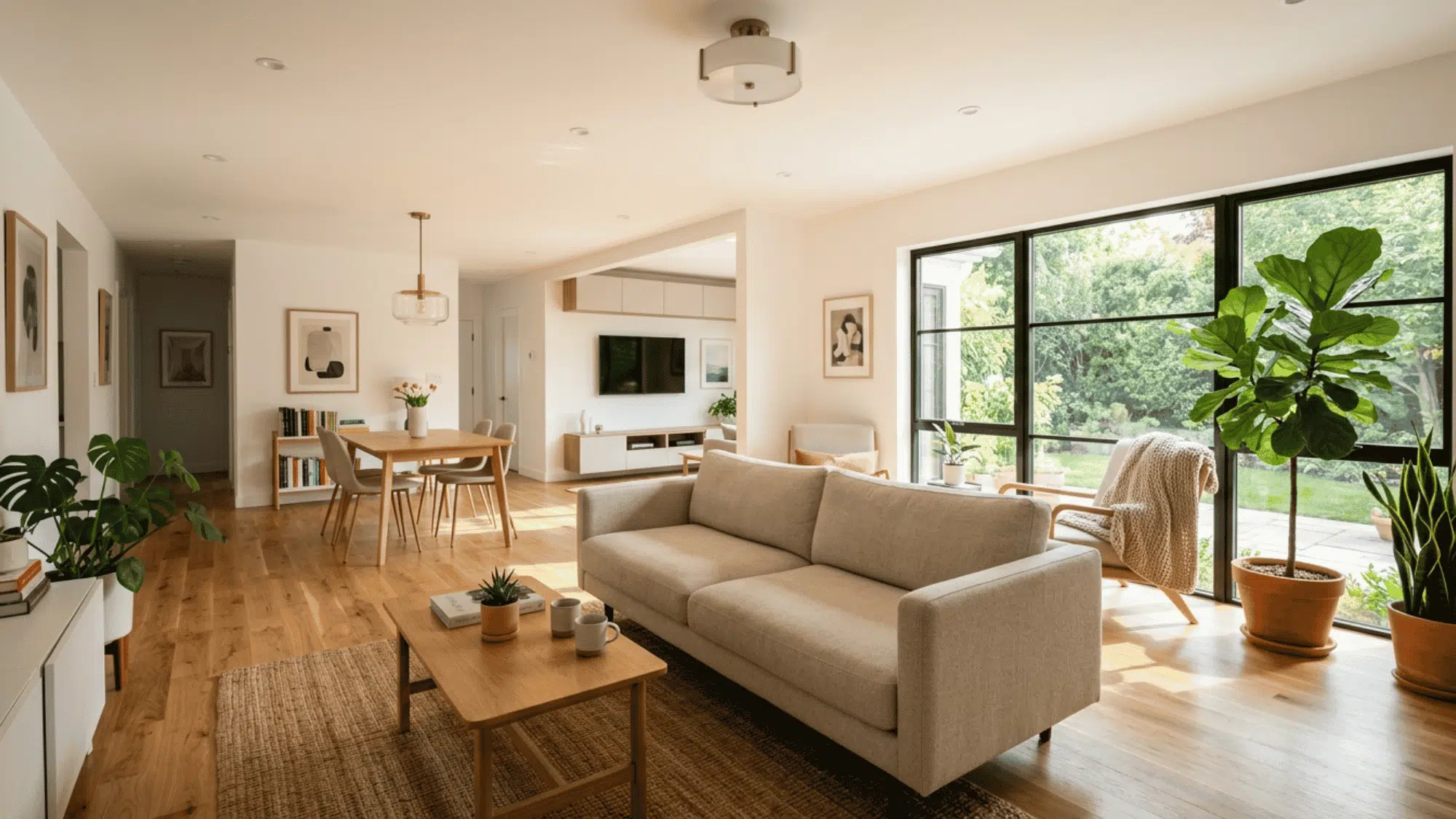
A small living room can still feel warm and farmhouse-inspired with careful choices. Choose a compact sofa or loveseat, raised-leg furniture, and nesting tables that use less floor space.
Wall-mounted lights free up side tables, while benches or cabinets with hidden storage reduce clutter. Use a smaller rug that still extends under the front legs of the furniture.
Limit decor to a few useful pieces. A loveseat, nesting tables and one tall cabinet can fit well.
That same idea, fewer pieces doing more work, is also what makes the must-have features in a minimalist kitchen feel open rather than empty.
Budget-Friendly Farmhouse Living Room Updates
Small changes can give your farmhouse living room a warmer look without replacing every item or spending a large amount on new furniture and decor.
- Change pillow covers and throws to warm neutrals, checks or soft stripes to refresh the room without spending much.
- Look for secondhand wood tables, cabinets, and chairs, then check their joints, surfaces and dimensions before carefully bringing them home.
- Replace one dated light fixture with a simple pendant, wall sconce or table lamp that adds warmth and useful light.
- Add a washable rug with a jute, wool or faded pattern look to soften the room and protect busy floors.
- Restyle shelves with fewer items, then paint one wall a warm cream, beige, or muted green for a low-cost update.
Conclusion
A farmhouse living room works best when comfort, natural materials, useful furniture and personal details come together.
Warm colors, wood tones, soft fabrics, practical seating, and a clear focal point can make the space feel settled and easy to use.
These farmhouse living room ideas can suit both small and large rooms, but the layout should always match how your household relaxes, talks, watches TV, and moves through the space.
Choose the idea that best fits your home, then tell us in the comments which one you plan to try.
Frequently Asked Questions
What are Common Mistakes in Farmhouse Decor?
Common mistakes include too many signs, matching furniture sets, excessive distressed finishes, cold gray tones, undersized rugs, and decor that crowds useful living space.
Is Farmhouse Decor Still in Style in 2026?
Yes. Farmhouse decor remains in style in 2026, but warmer wood, natural fabrics, vintage pieces, and fewer themed accessories now feel more current.
What is The New Modern Farmhouse Style Called?
There is no official name, but designers often call the updated look “new rustic” or “modern rustic,” mixing farmhouse warmth with cleaner, simpler details.