There is a reason Japanese house interior photos keep showing up on mood boards and Pinterest saves.
The mix of natural wood, soft light, and open space hits differently from most Western decorating styles. A few changes in materials, colors, or furniture height can make a room feel twice as calm.
Below is a full room-by-room breakdown of how these spaces are put together, along with simple decorating ideas you can borrow right away.
Why These Rooms Feel So Different from Western Homes
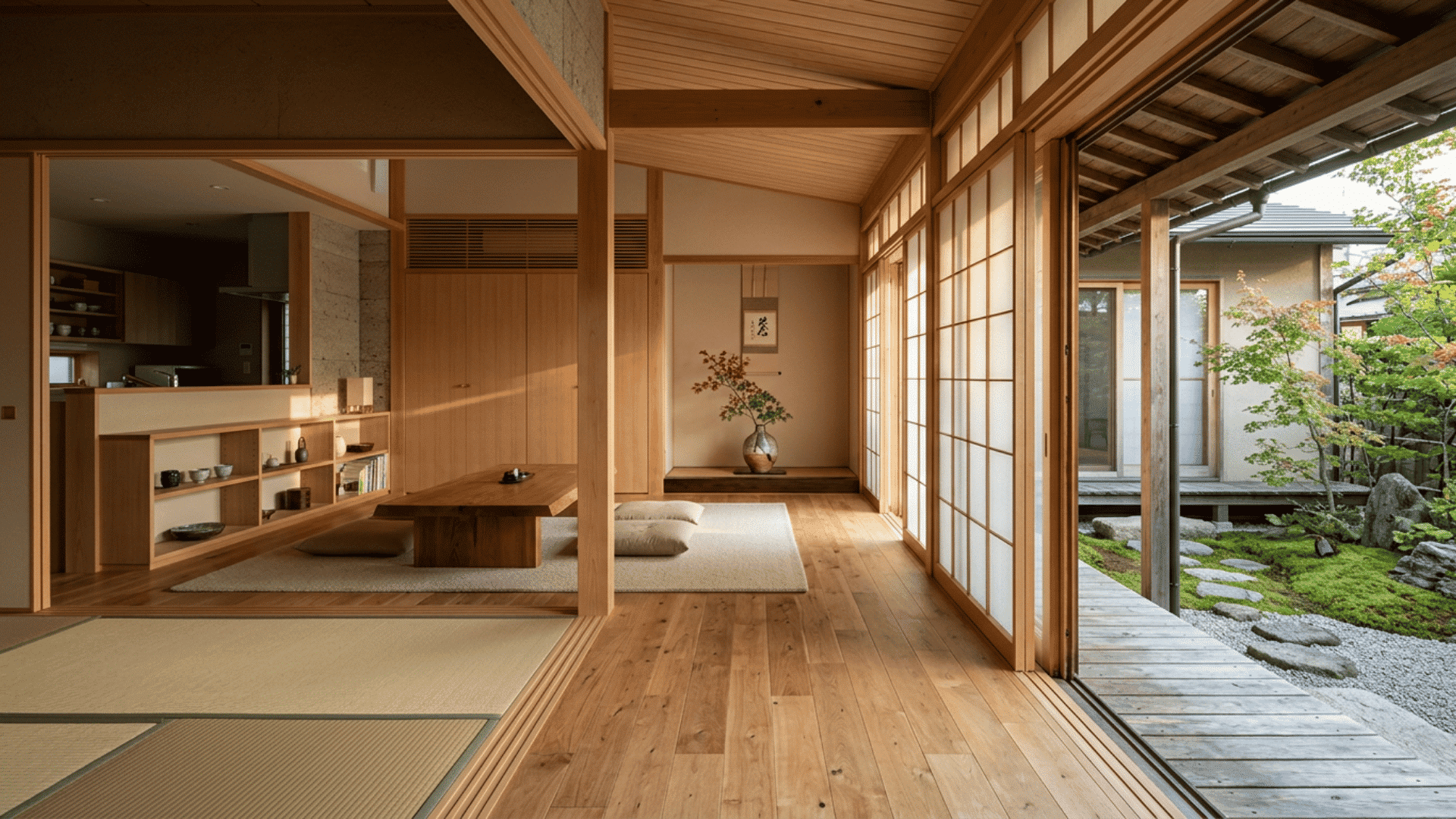
The main distinction between an average living room in America and one in Japan is not the furniture. It is the absence of it. The Japanese interior decoration style incorporates an approach referred to as “ma” or “negative space.”
The rooms are meant to be open, and this emptiness constitutes an integral part of the decoration style. Japanese rooms use shoji screens, which are made of paper attached to wooden frames and soften the sunlight.
In addition to light, the flooring is totally different, because traditional Japanese rooms are carpeted by tatami mats, which are woven rush grass panels.
Learn more about the history, features, and elements behind this style in this Japanese style house guide.
Japanese Interior Design Ideas
This is where Japanese style really comes to life. These are some of the most popular ways to bring that calm, grounded look into your space.
1. Minimalist Living Room
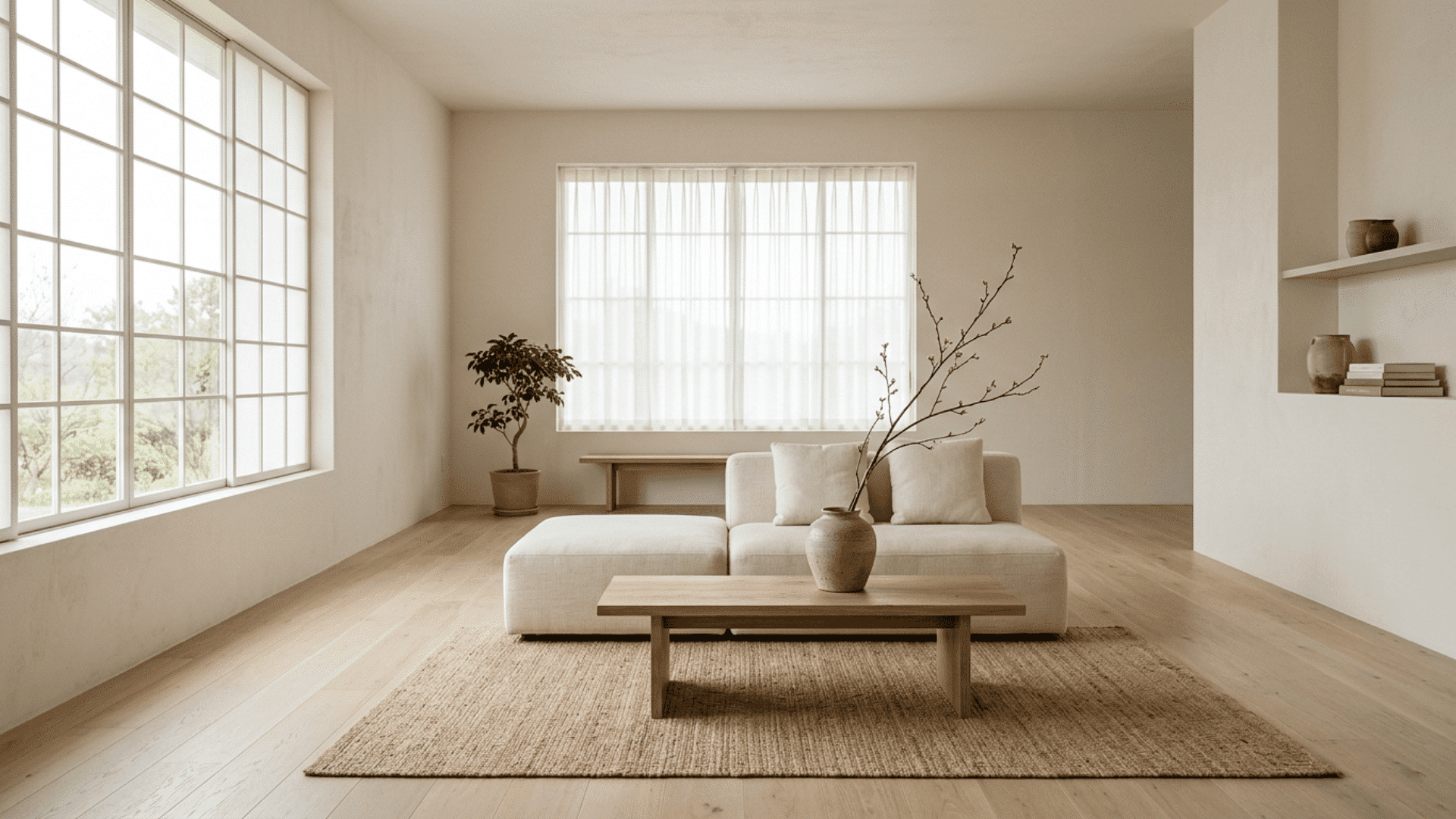
A stripped-back living room with just the basics sets the tone for the whole home.
- Use a low-profile sofa or floor cushions instead of a bulky couch.
- Keep the coffee table short, around 12 to 14 inches high.
- Limit decoration to one statement piece like a ceramic vase or a single branch.
2. Japandi Bedroom
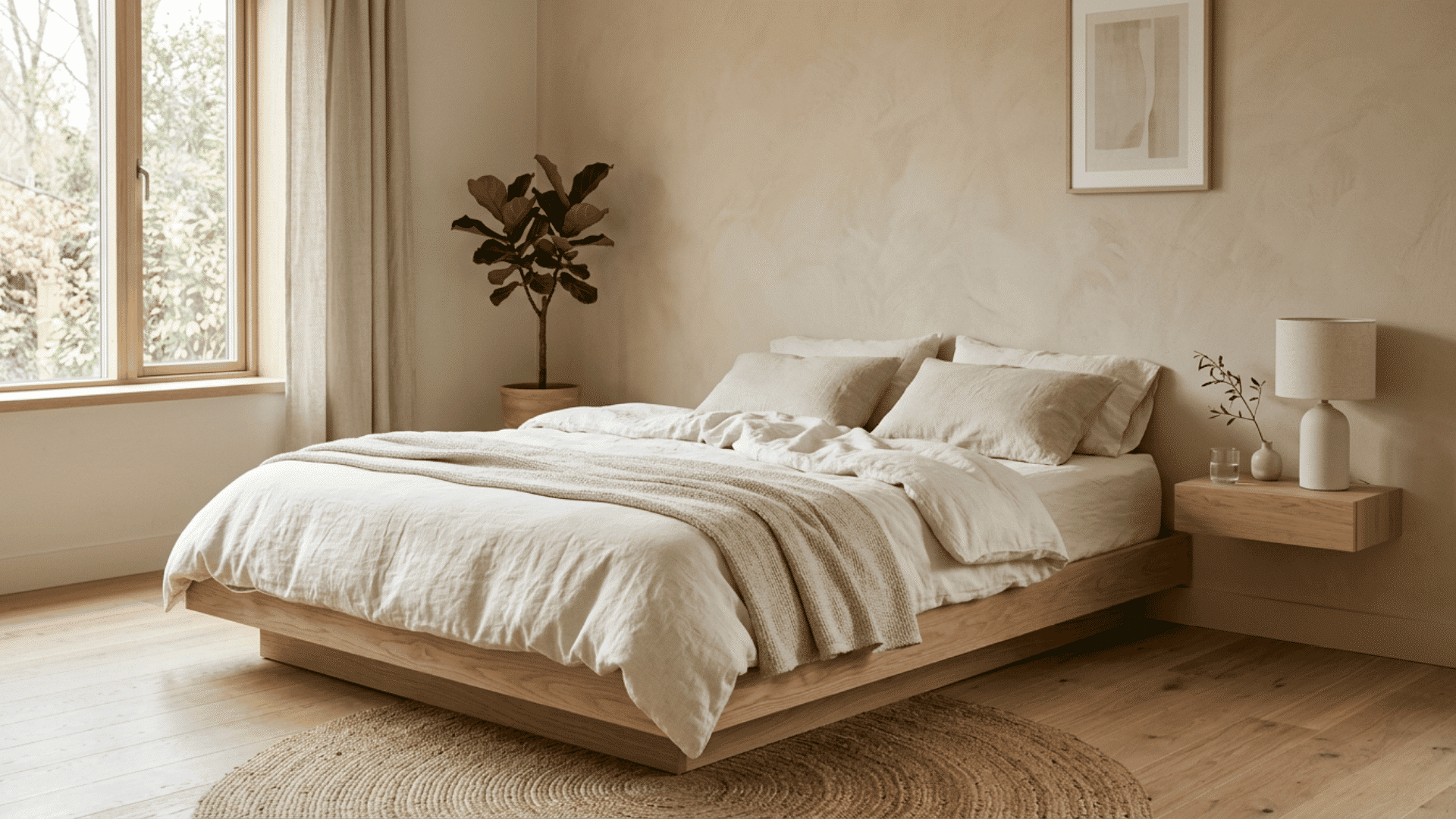
This style mixes Japanese warmth with Scandinavian structure for a bedroom that feels restful and modern.
- Go with a low platform bed frame in light wood, no headboard needed.
- Choose linen bedding in off-white, beige, or pale gray tones.
- Add one bedside shelf instead of bulky nightstands to keep the floor open.
3. Traditional Tatami Room
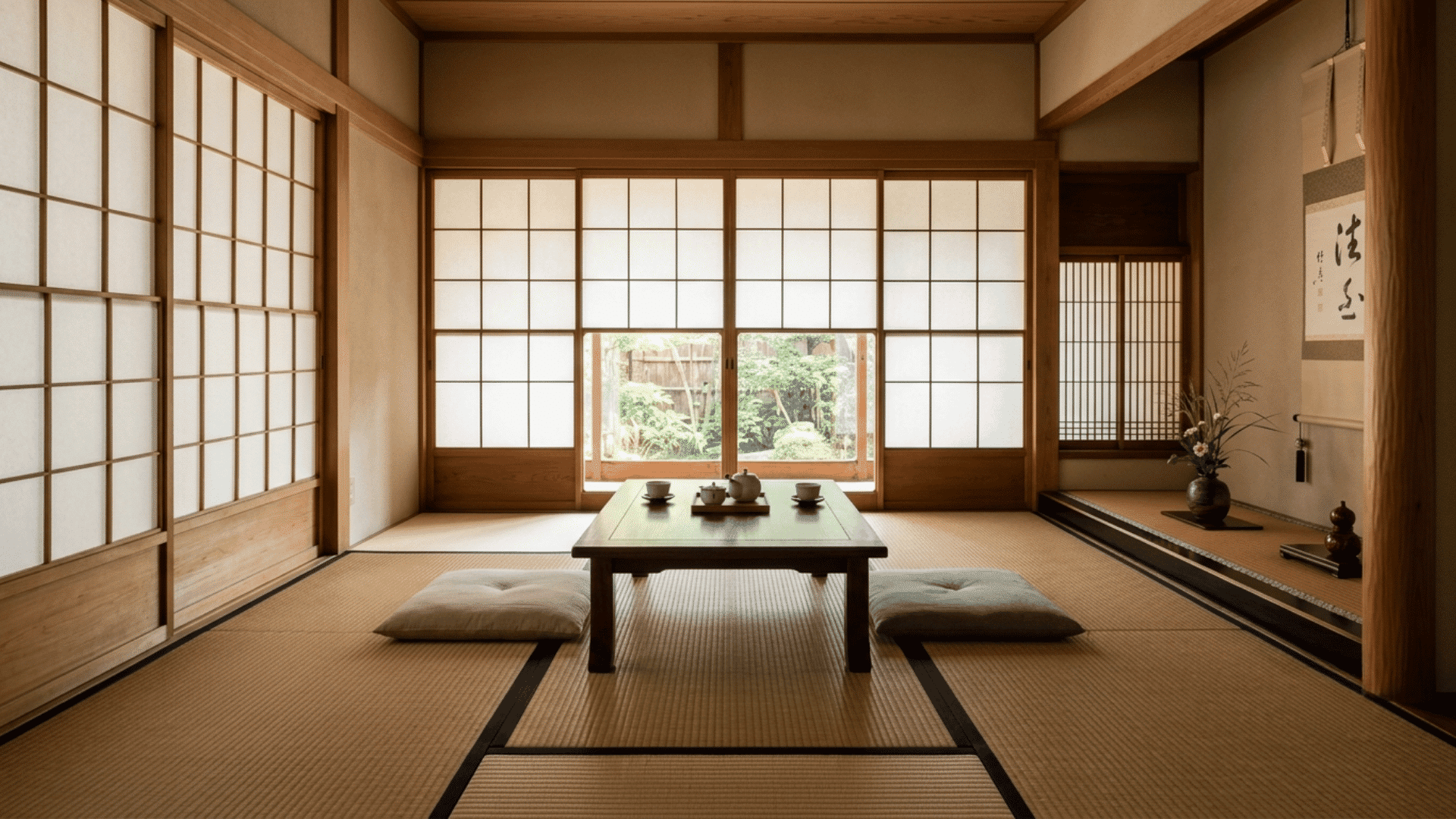
Tatami rooms are the heart of a classic Japanese home, built around woven rush mats and sliding screens.
- Lay tatami mats or tatami-style rugs to set the foundation of the room.
- Use a low table with floor cushions for seating instead of chairs.
- Divide the space with shoji-style screens to keep things flexible and airy.
4. Modern Japanese Kitchen
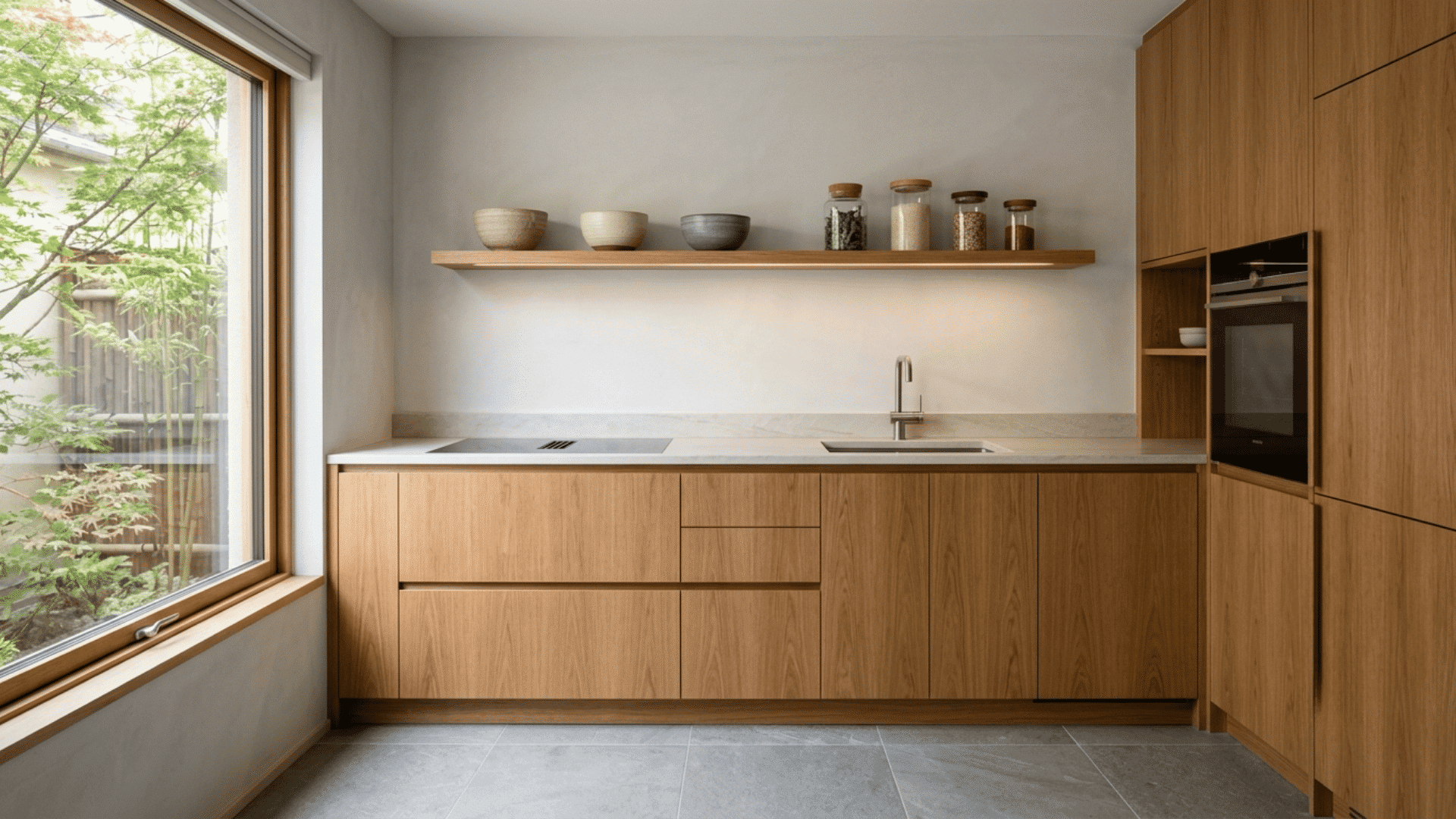
Japanese kitchens are compact, tidy, and built around function over display. These shelf decorating ideas can help create a cleaner display.
- Clear countertops fully and store all appliances inside cabinets out of sight.
- Use warm-toned wood like oak or ash for cabinet fronts and open shelving.
- Keep one floating shelf for a few handpicked items like ceramic bowls or glass jars.
5. Zen Bathroom
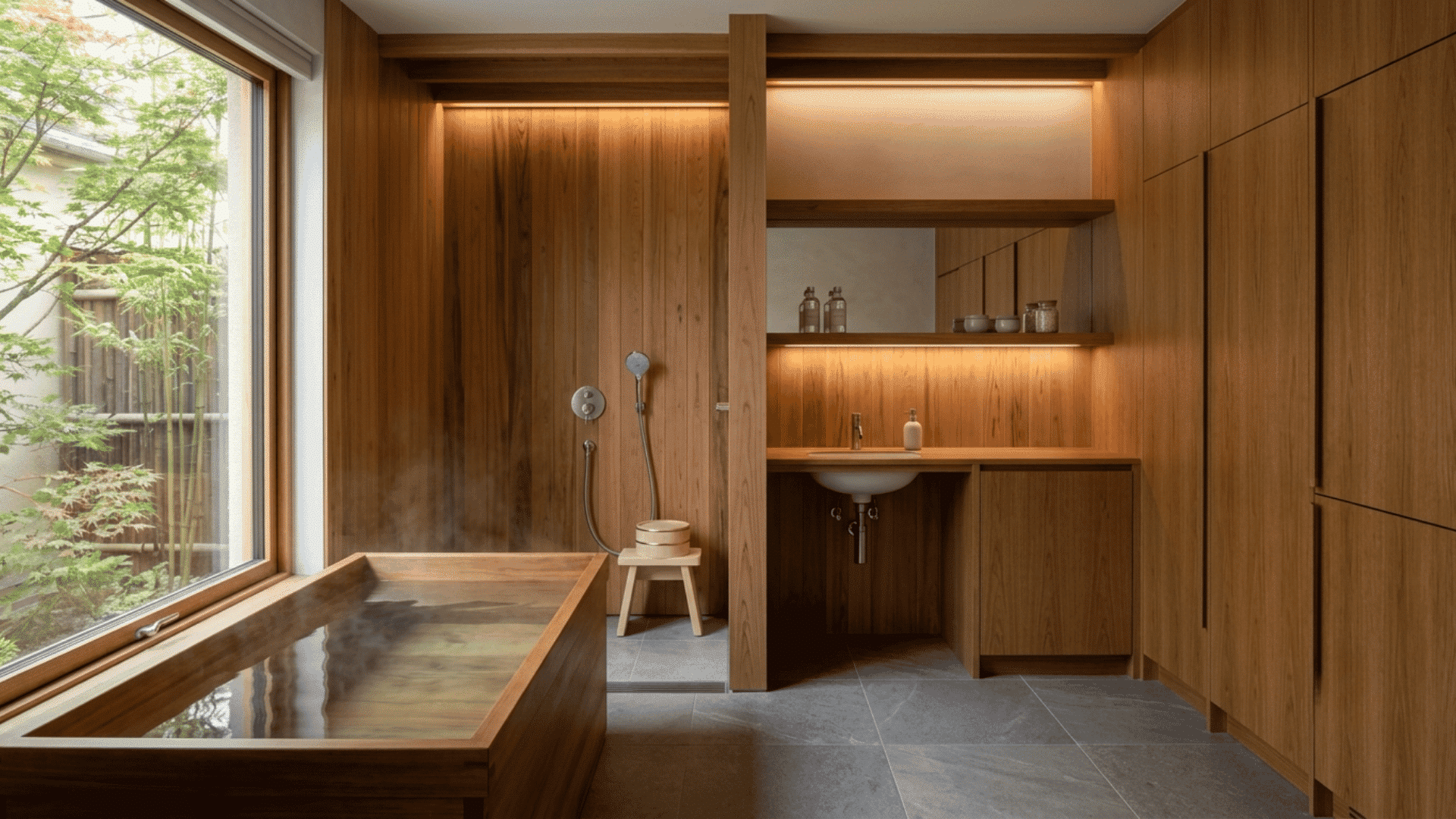
Japanese bathrooms treat bathing as a ritual, not just a daily task.
- Separate the washing zone from the soaking zone, even in a small bathroom.
- Use natural stone, wood-look tile, or treated cedar for walls and flooring.
- Install warm, dimmable lighting and store toiletries only in closed cabinets.
6. Reading Corner
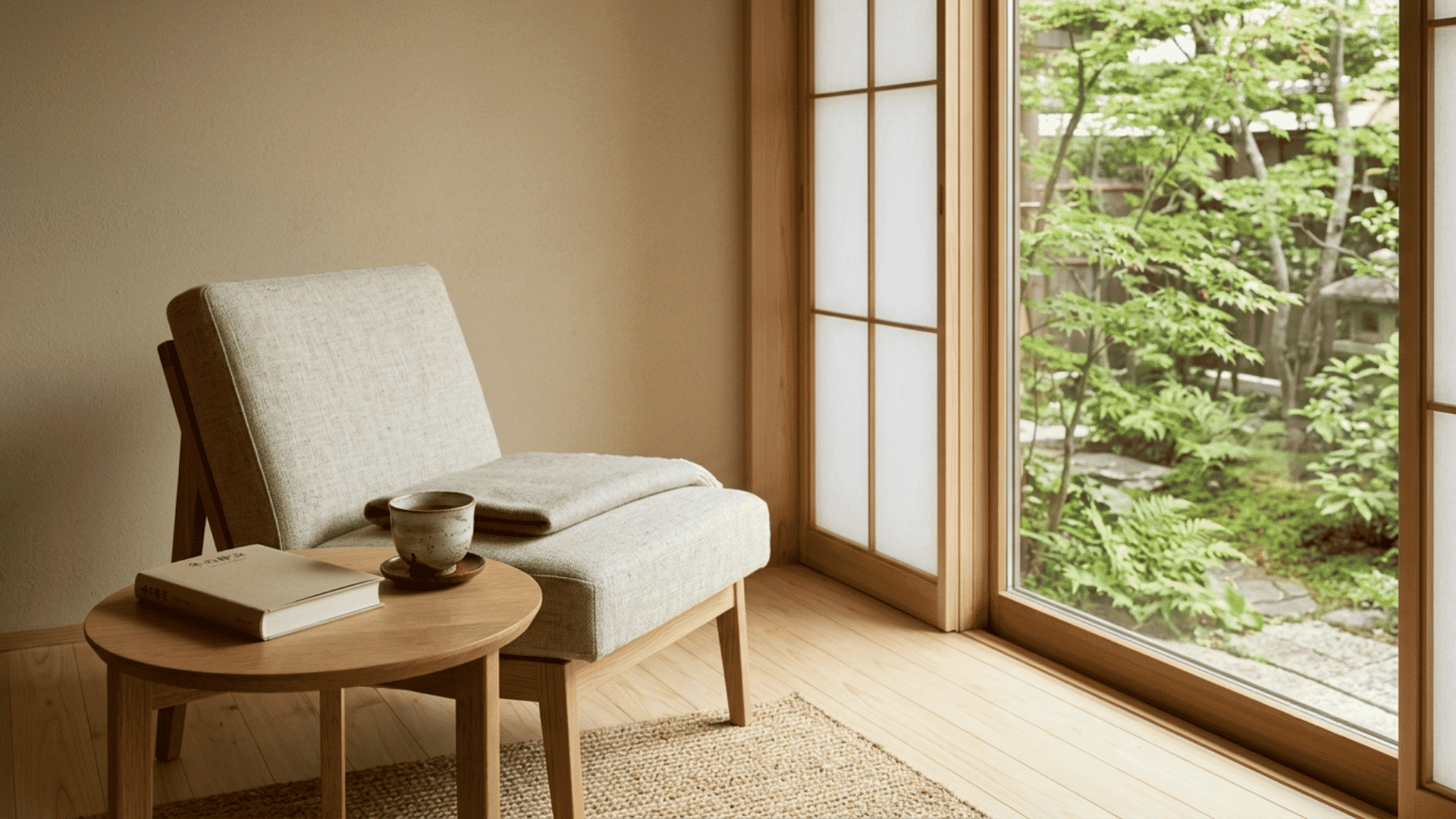
A quiet reading spot works well in any room and fits the Japanese idea of purpose-driven spaces.
- Place a single floor cushion or a low armchair near a window with soft natural light.
- Add a small wooden side table for a book and a cup of tea.
- Keep the area bare otherwise, with no extra decor or shelving around it.
7. Indoor Courtyard
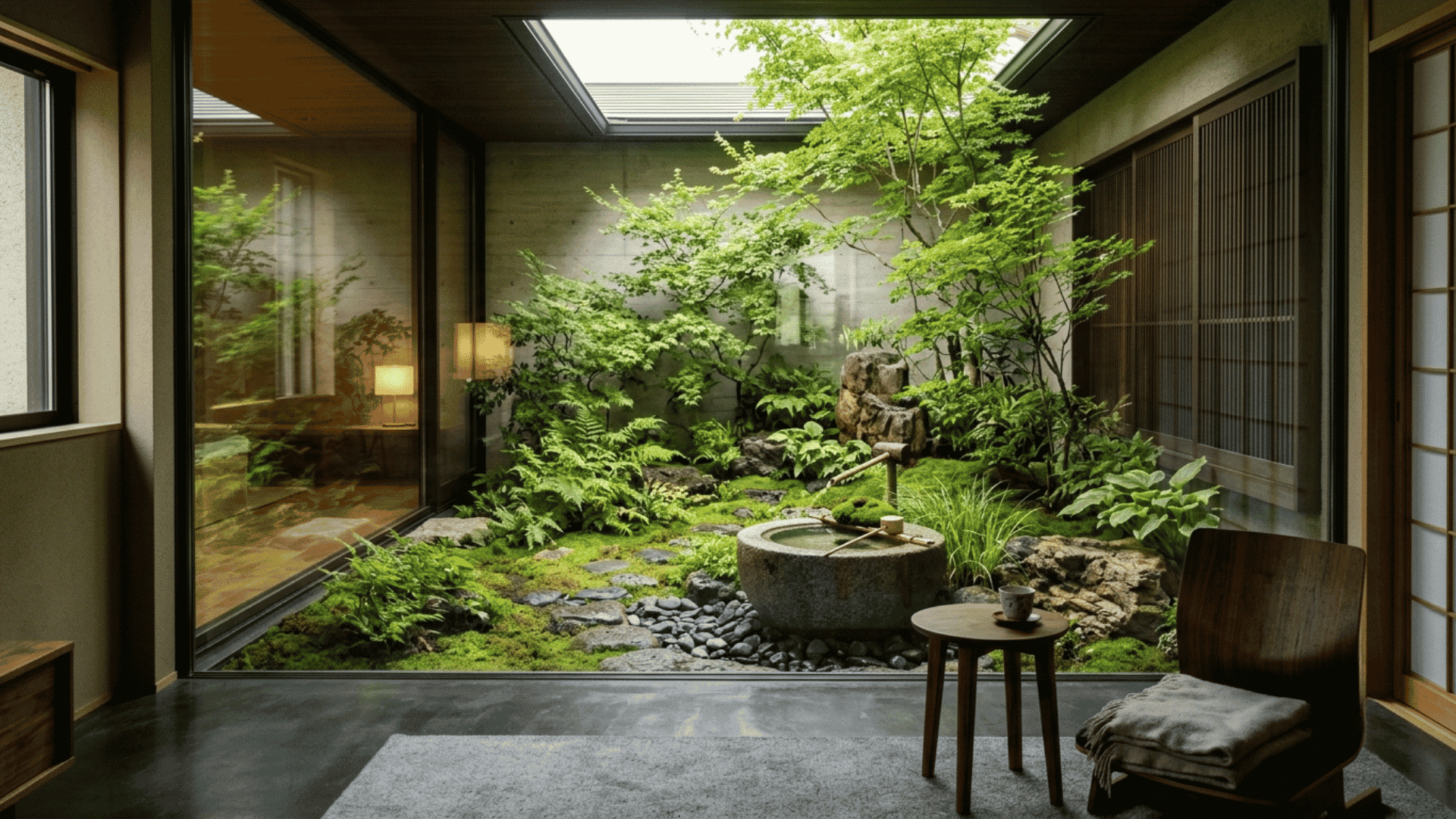
An indoor courtyard, or tsuboniwa, brings nature inside. These elements also connect with traditional outdoor spaces. Explore more ideas in this Japanese garden ideas guide.
- Use potted plants, smooth stones, and a shallow water feature in a small open area.
- Position the courtyard where it is visible from the main living space through glass or a screen.
- Stick with green plants, moss, and natural rock rather than colorful flowers or ornaments.
8. Wooden Entryway
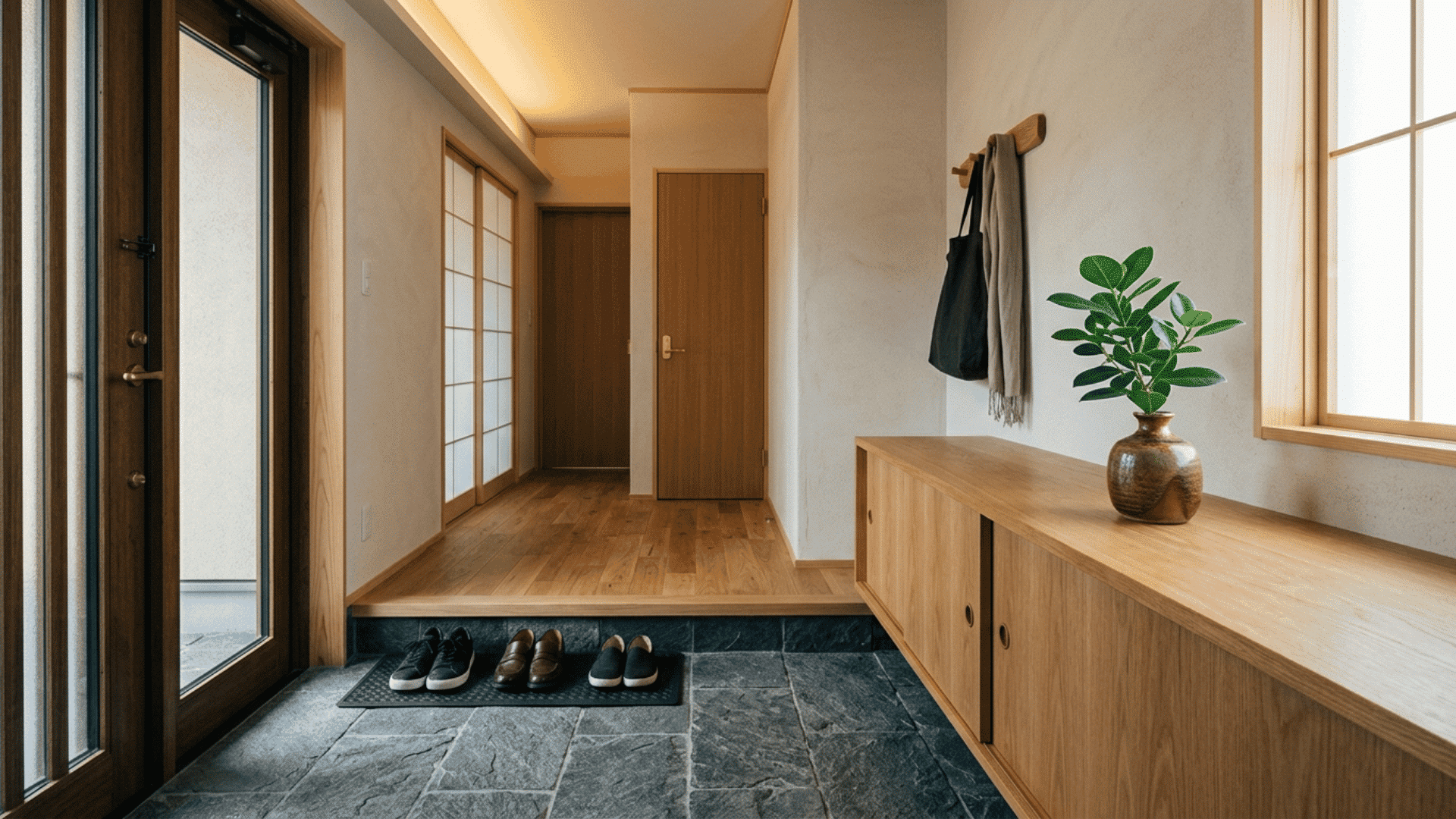
The genkan, or entryway, is the first impression of a Japanese home and sets the mood right away.
- Keep the space simple with a low shoe shelf and one hook or peg for outerwear.
- Use natural wood flooring or stone tiles to separate the entry from the main living area.
- Add a single item like a small plant or pottery piece to give the space warmth.
9. Low Dining Space
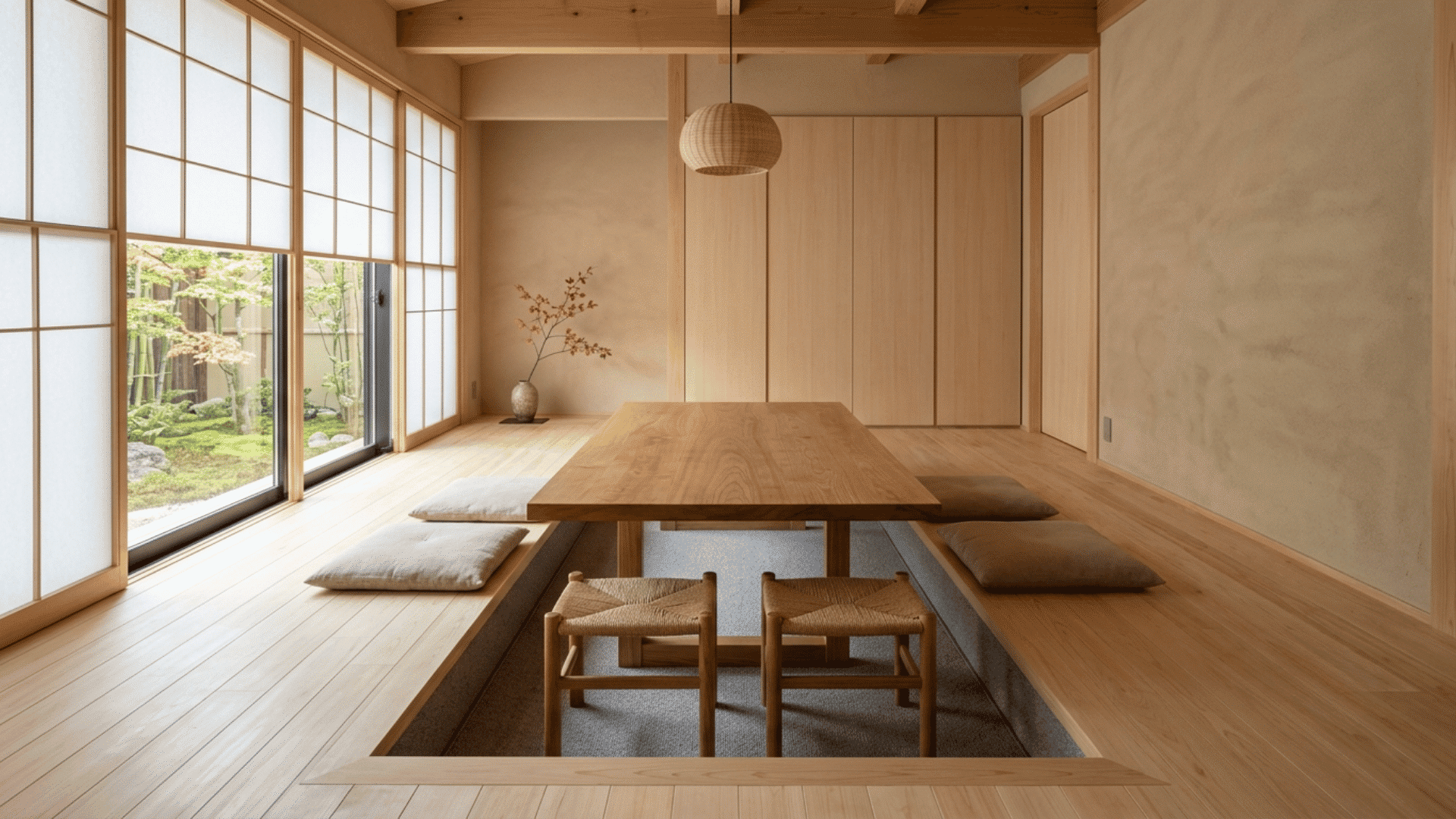
Japanese dining areas sit close to the ground, creating a relaxed, communal feel at mealtimes.
- Use a low wooden table, around 12 to 15 inches tall, as the centerpiece.
- Pair it with zabuton floor cushions or low stools instead of standard dining chairs.
- Keep the table clear between meals and store dishes, napkins, and extras out of sight.
Traditional Character Meets Modern Japanese Interiors
Modern Japanese interiors pair time-tested materials with present-day storage, furniture, and lighting to support comfort without losing their quiet character.
| Traditional Element | Modern Use | Effect on the Space |
|---|---|---|
| Open floor areas | Clear paths and flexible zones | Makes compact interiors appear less crowded |
| Low seating | Platform beds and low-profile sofas | Keeps sightlines open and ceilings visually higher |
| Natural materials | Wood, linen, stone, and ceramic finishes | Adds warmth and texture |
| Soft daylight | Sheer panels and indirect lighting | Reduces glare and creates a restful setting |
| Limited decoration | One selected object or artwork | Gives each piece greater visual attention |
| Hidden storage | Built-in cabinets and closed shelving | Keeps daily items nearby without visible clutter |
How to Get the Look in Your Home Without a Full Renovation
You do not need to gut your house. Small shifts can change the entire feel of a room. For more ways to style a space with intentional colors, furniture, and decor choices, see these aesthetic room decor ideas.
- Color Palette: Stick to earth tones like warm white, sand, clay, soft gray, and muted green. Avoid cool blues that lean more Scandinavian than Japanese.
- Materials and Textures: Use light to medium wood tones like white oak or birch, paired with linen, cotton, unglazed ceramic, and natural stone. Skip anything synthetic.
- Lighting: Layer soft, warm light sources like paper lanterns, recessed fixtures, and low table lamps instead of relying on one harsh overhead light.
- Budget-Friendly Swaps: Swap heavy curtains for sheer linen panels, add a jute rug for tatami texture, and declutter one full room before buying anything new.
Wrapping Up
A Japanese house interior works because it does less, not more. Clear counters, soft lighting, and open floor space do the heavy lifting.
You do not need a big budget or a full remodel to try it. Pick one room, pull out anything that does not belong, and see how the space changes.
A single shelf with one good piece on it can shift the entire mood. The approach is simple, and it scales up whenever you are ready.
Already started making changes or have a favorite Japanese design detail? Drop a comment below and share what worked for you.
Frequently Asked Questions
How Can a Small Apartment Look Japanese?
Keep furniture low and minimal, use sliding panels or curtains as room dividers, and store everything out of sight to open up the floor space.
What Colors Work Best for Japanese Interiors?
Warm neutrals like sand, beige, soft gray, and muted green work best. Earth tones pulled from natural materials set the right mood.
Which Indoor Plants Suit This Type of Decor?
Small potted ferns, moss arrangements, bamboo palms, and carefully pruned branches suit the look when used sparingly near natural light.