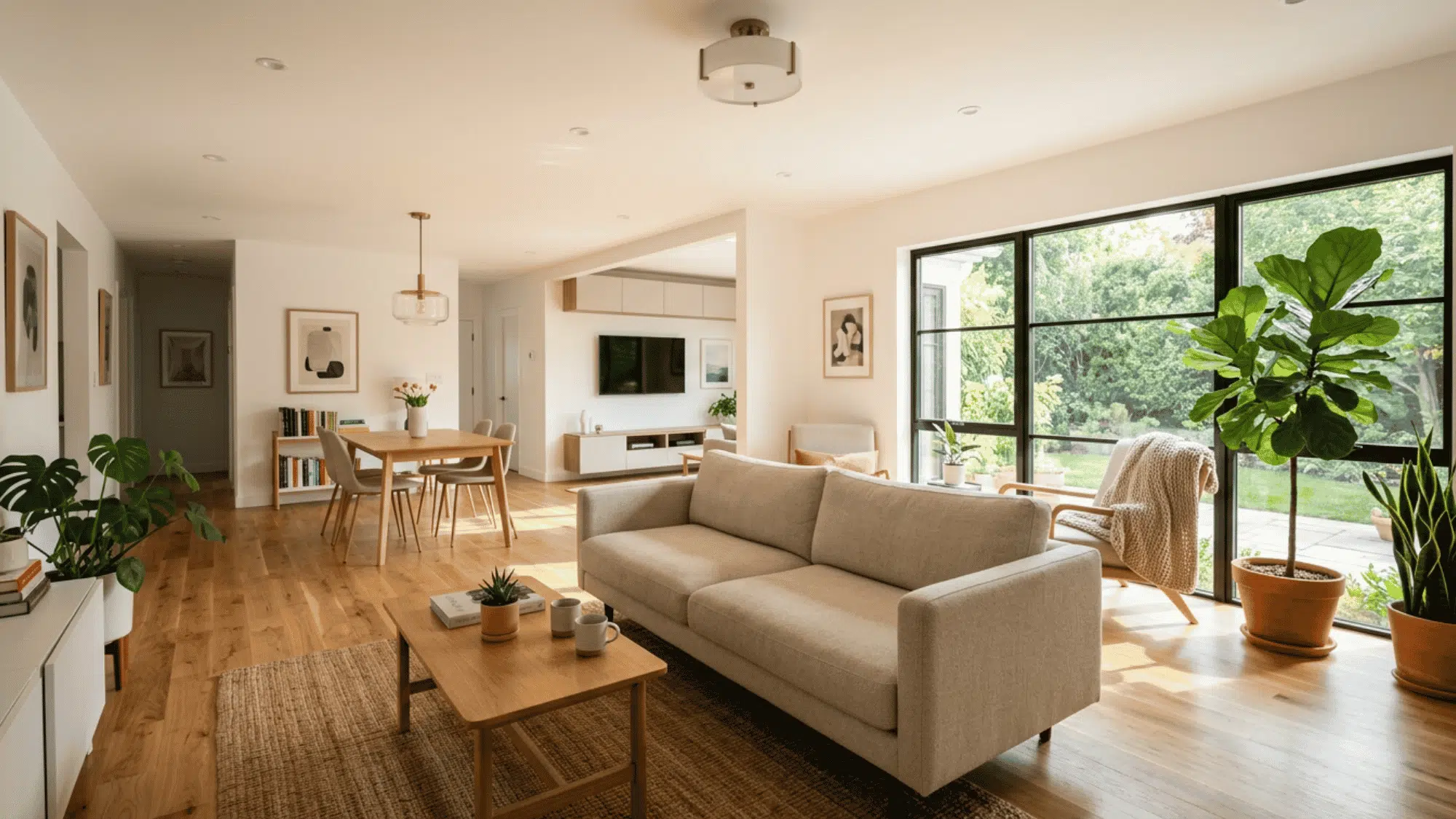
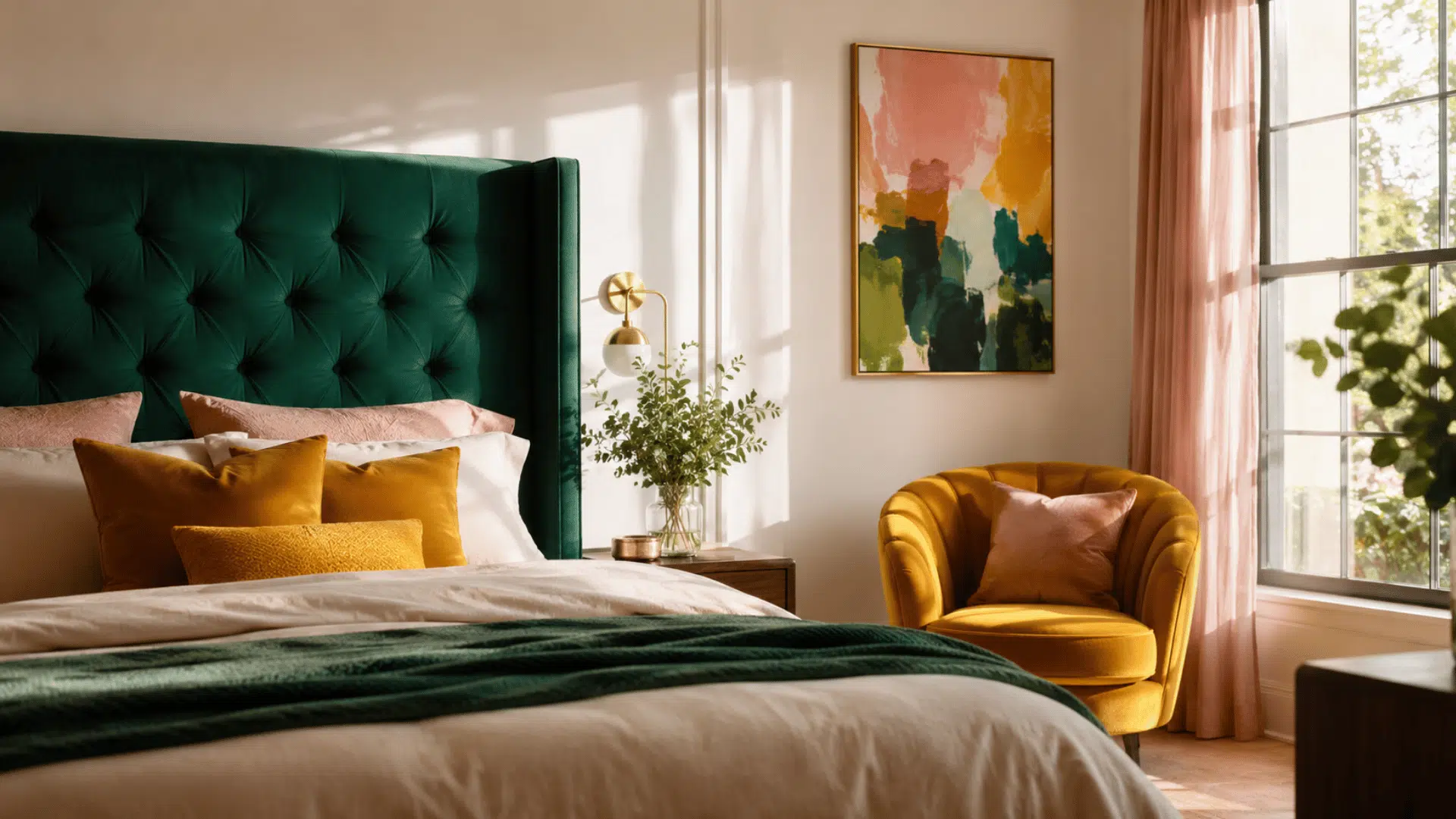
A room can feel attractive yet still lack a clear sense of focus. Without one strong feature to guide the eye, furniture, colors, and decor may compete for attention.
This is where emphasis in interior design becomes useful. It helps shape how a space is viewed and gives the room a more planned and connected look.
If you are arranging a new room or updating an existing one, understanding this principle can make your choices easier.
Keep reading to learn what emphasis means, why it matters, and how you can use it to create a stronger focal point in your home.
What is Emphasis in Interior Design?
Emphasis in interior design is the use of one main feature to attract attention first.
This feature becomes the room’s focal point and helps guide the eye through the space. It may be a fireplace, a large window, artwork, a bold wall, a light fixture, or a piece of furniture.
Designers create emphasis through color, size, shape, texture, lighting, contrast, and placement.
A clear focal point gives the room structure and supports visual hierarchy, which means some elements appear more important than others. Emphasis should not make every item stand out at the same level.
When too many features compete for attention, the room can feel busy or confusing. Used carefully, emphasis helps create a balanced, organized, and easy-to-read room design in daily use.
How Emphasis Creates a Focal Point
Emphasis creates a focal point by drawing attention to one main feature in a room. This may be a fireplace, a bed, artwork, a window, or a statement wall.
Designers use color, size, lighting, texture, shape, contrast, and placement to make that feature stand out. A large headboard can lead the eye toward the bed, while artwork above a fireplace can strengthen its role.
Other furniture and decor should support the focal point rather than compete with it.
Clear emphasis gives the room structure, improves visual balance, and helps the layout feel calm, connected, and easier to understand.
Main Types of Emphasis in Interior Design
Emphasis can be created through color, lighting, materials, placement, and other design choices. These nine common methods help establish a focal point and guide attention through a room.
1. Color
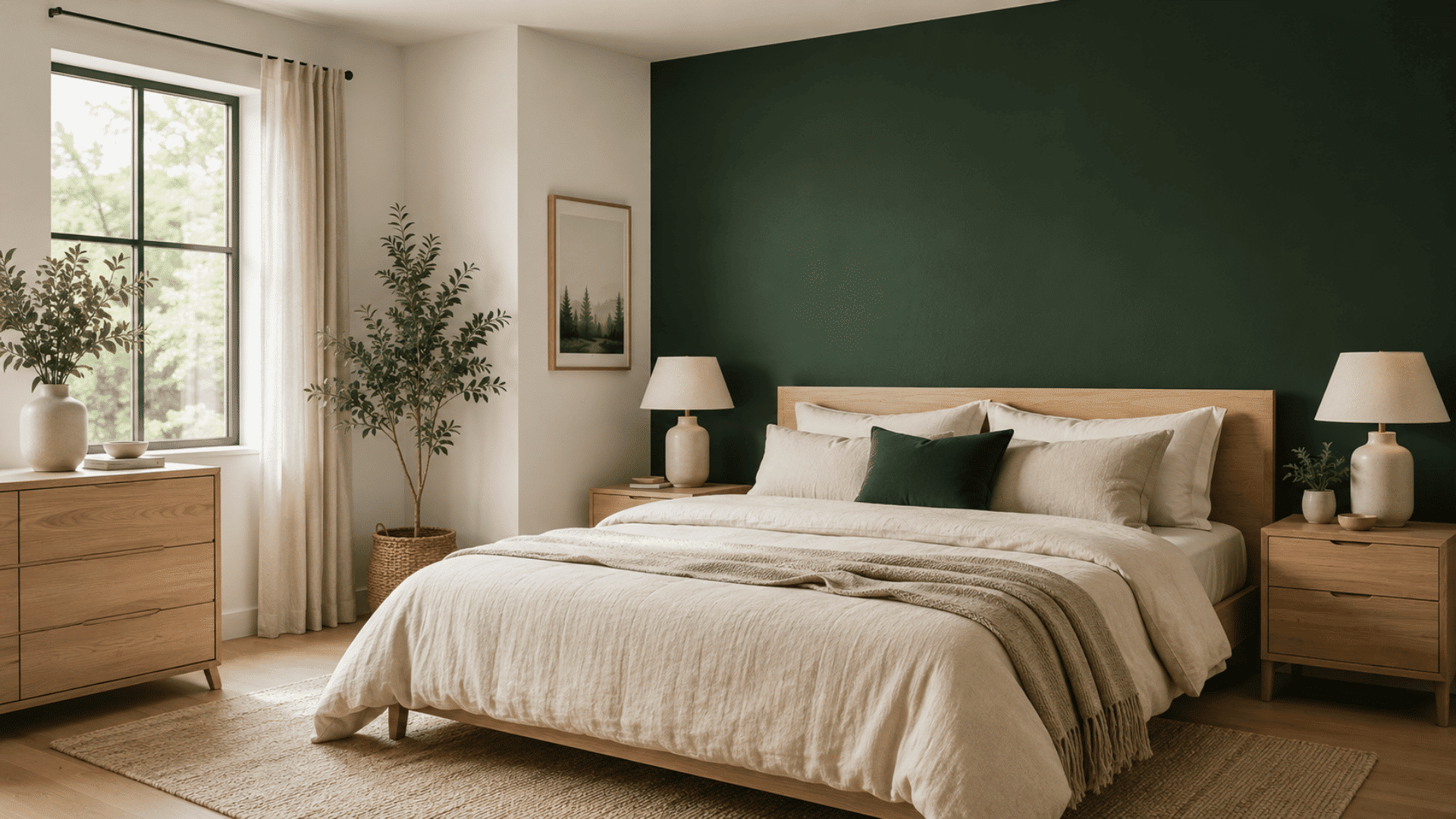
Color can make one part of a room stand out from its surroundings. A bright chair in a neutral room, a dark wall behind a bed, or a vivid artwork can quickly attract attention.
The chosen color should connect with smaller details elsewhere in the space.
This link keeps the focal point from feeling separate. Too many strong colors may compete, so a single main color usually creates clearer emphasis.
2. Contrast
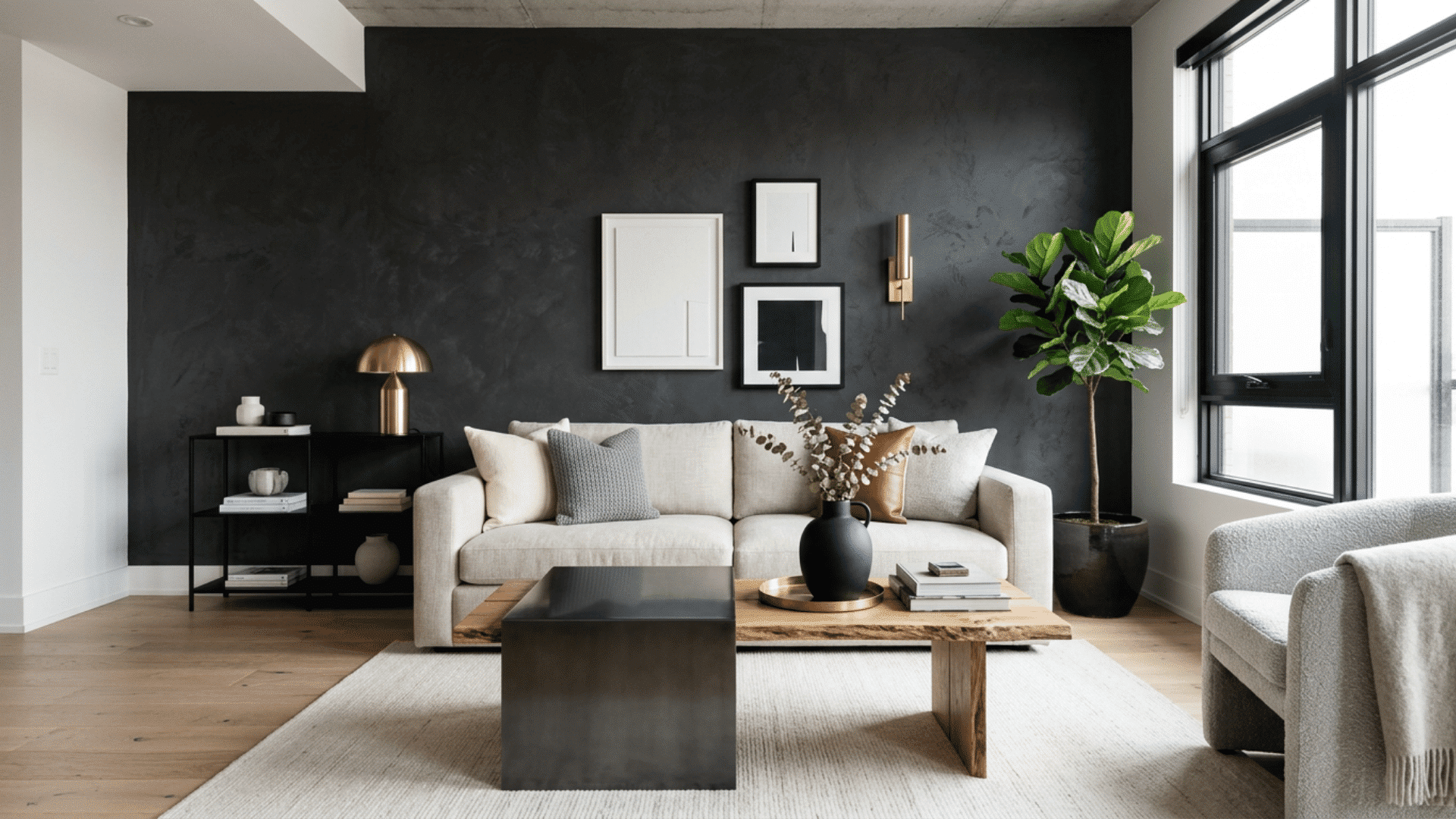
Contrast creates emphasis by placing different visual elements side by side.
Light furniture against a dark wall, smooth metal beside rough wood, or a round table among straight lines can draw the eye. Big differences give one feature more visual weight.
The contrast should support the room’s main focal point rather than appear in many unrelated places. Controlled contrast makes the design easier to read and keeps attention directed.
3. Scale and Size
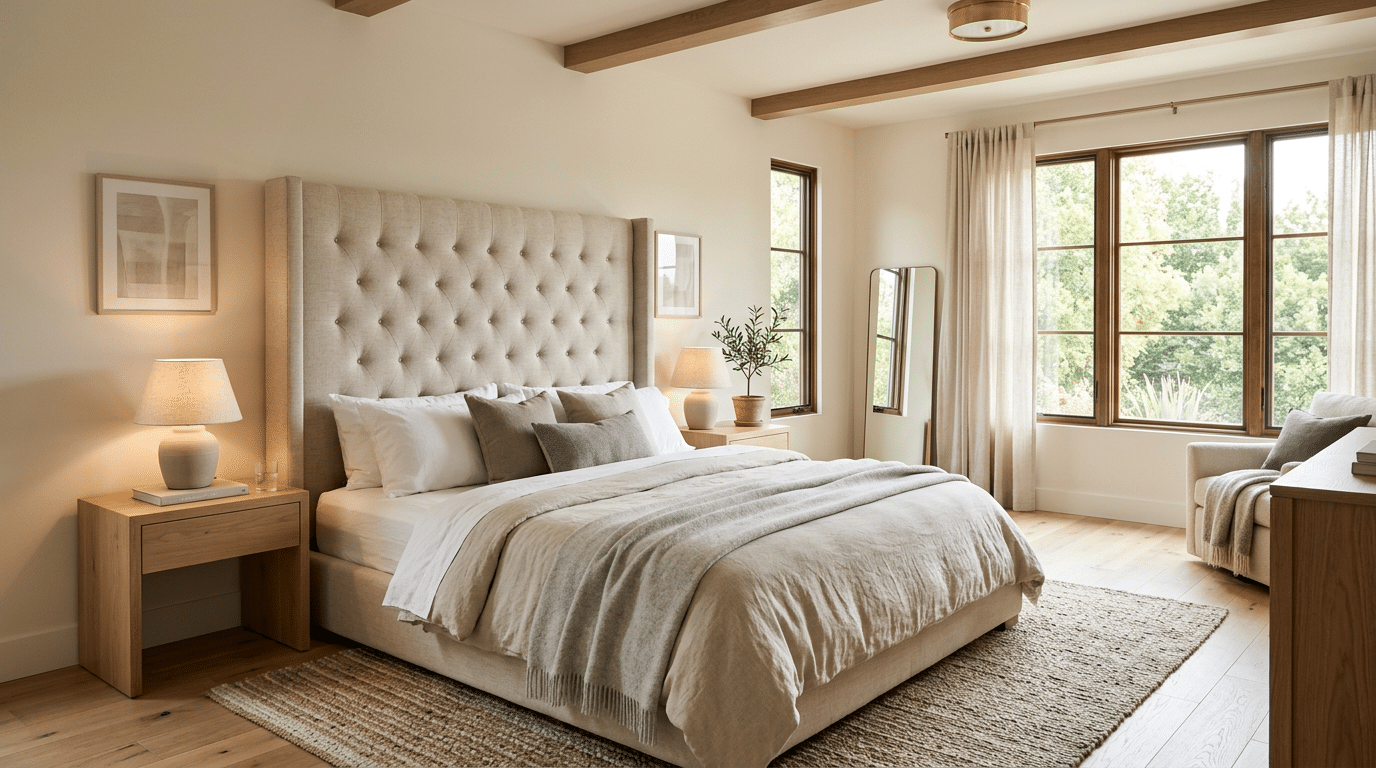
Large objects attract attention before smaller ones, making scale a useful way to create emphasis.
An oversized pendant light, tall headboard, wide artwork, or large sofa can become the main feature in a room. Its size should suit the room and nearby furniture.
An item that is too large may make the space feel crowded. Proper scale gives the focal point presence while keeping the rest of the layout comfortable.
4. Lighting
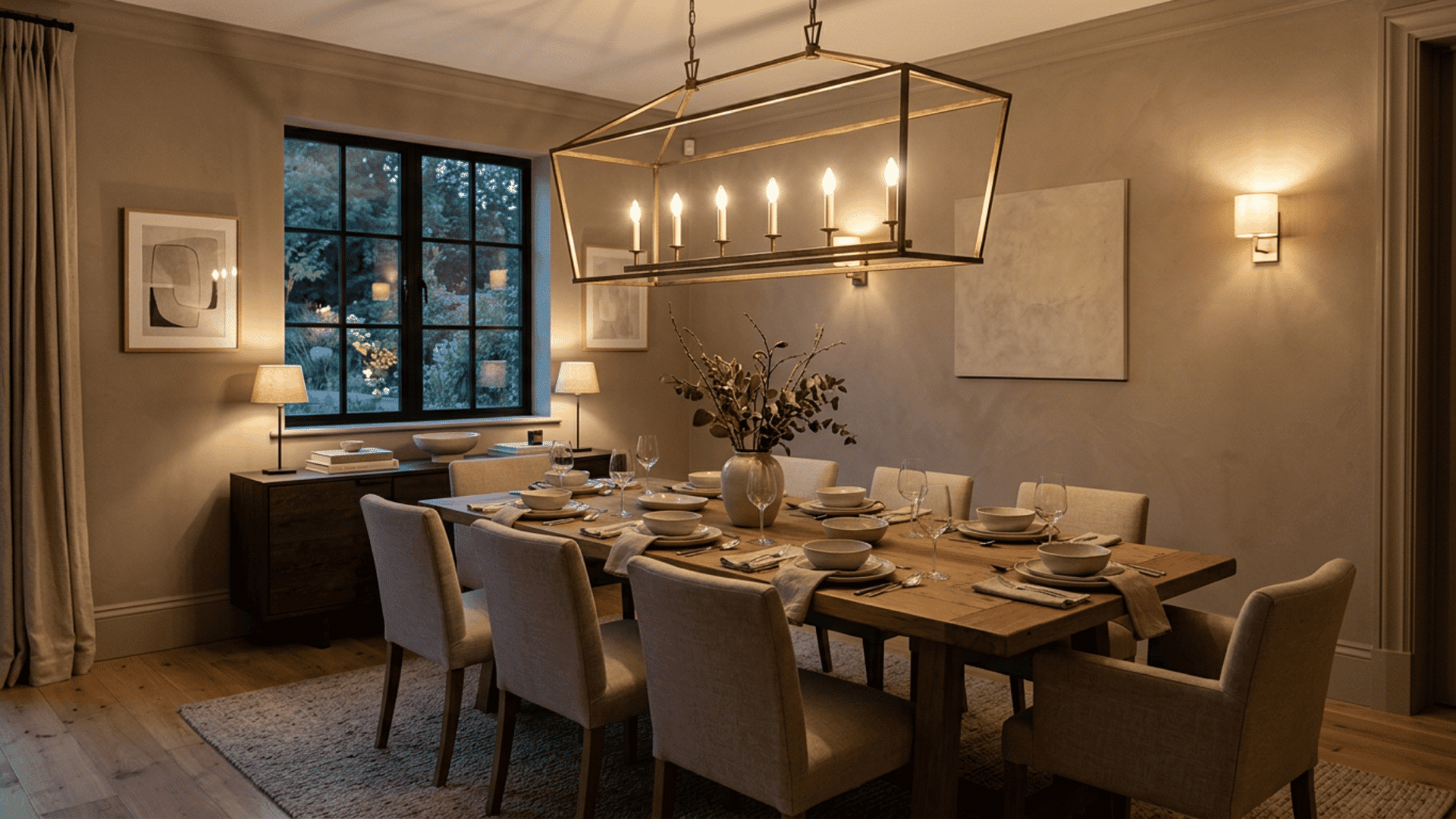
Lighting can direct attention toward a chosen feature and change how strongly it appears.
Spotlights may highlight artwork, pendant lights can define a dining table, and wall lights may frame a fireplace or textured surface. Light intensity, direction, and placement all affect visual focus.
The surrounding area should remain quieter so the highlighted feature stands out. Layered lighting also helps the focal point remain clear during daytime and evening use.
5. Texture
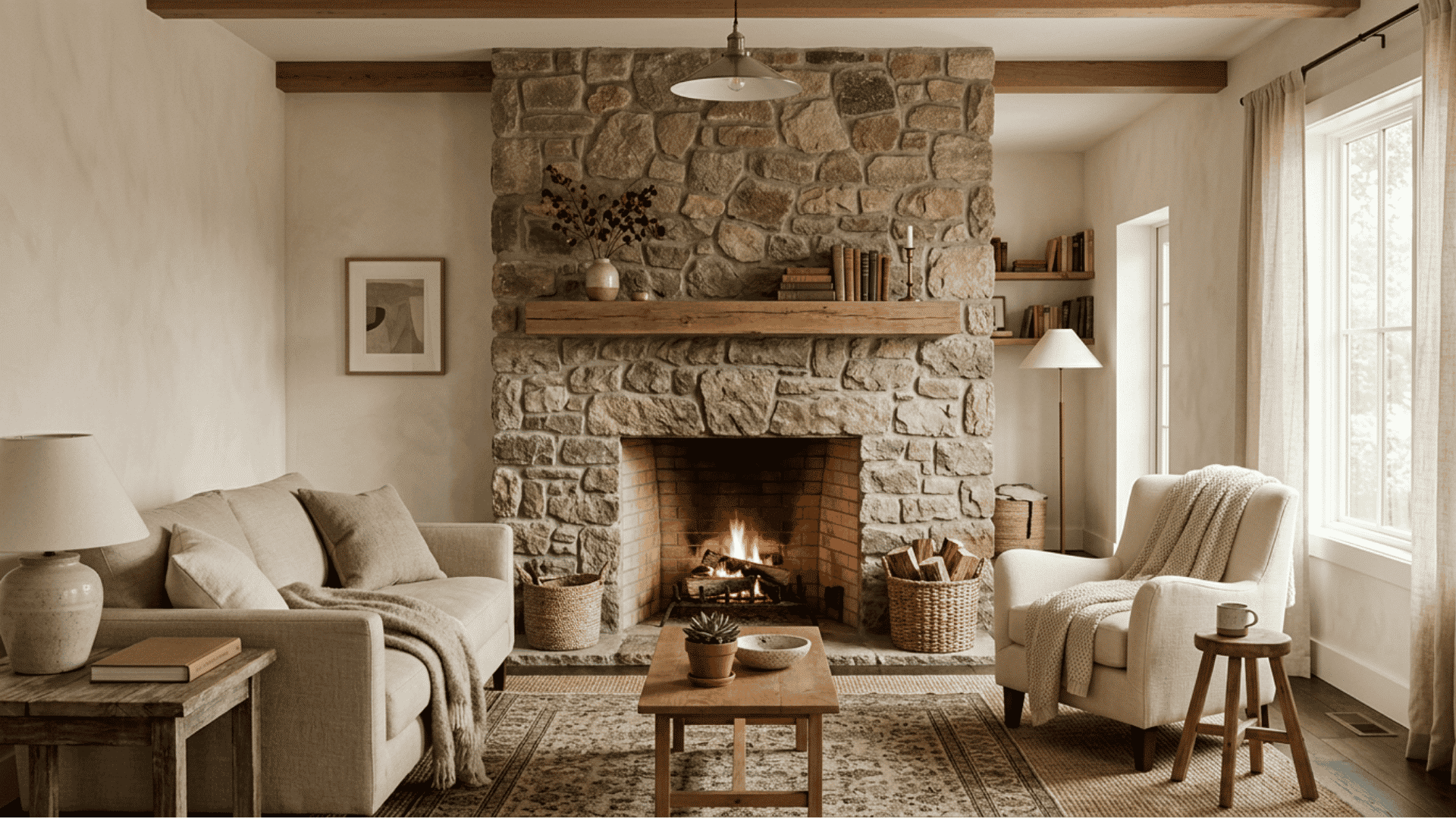
Texture creates emphasis by giving a surface a different look or feel from nearby materials.
A stone fireplace, a woven rug, a velvet chair, a timber wall, or a textured fabric can become a focal point in a simple room.
Light and shadow often make texture more noticeable. The effect works well when surrounding surfaces are calmer. Repeating small touches of the same material can connect the feature with the rest of the room.
6. Pattern
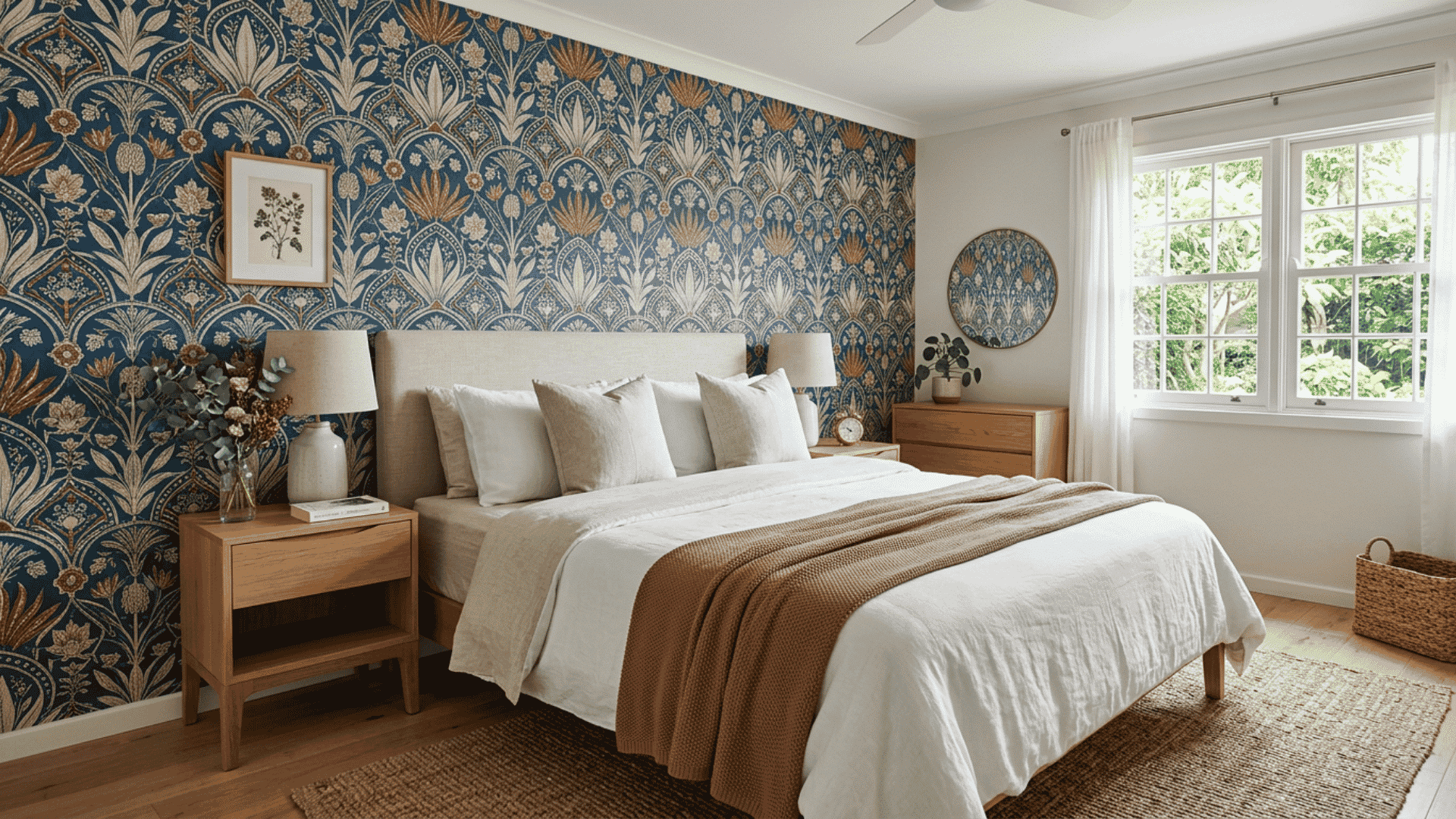
A pattern can draw attention through repeated lines, shapes, or motifs. A patterned rug, wallpapered wall, tiled splashback, or printed chair may become the main feature when other surfaces are simpler.
The size and strength of the pattern affect how much attention it receives. Large or high-contrast patterns usually appear stronger.
Limiting bold patterns to one main area helps prevent visual competition and supports a clear visual order within the room.
7. Shape and Form
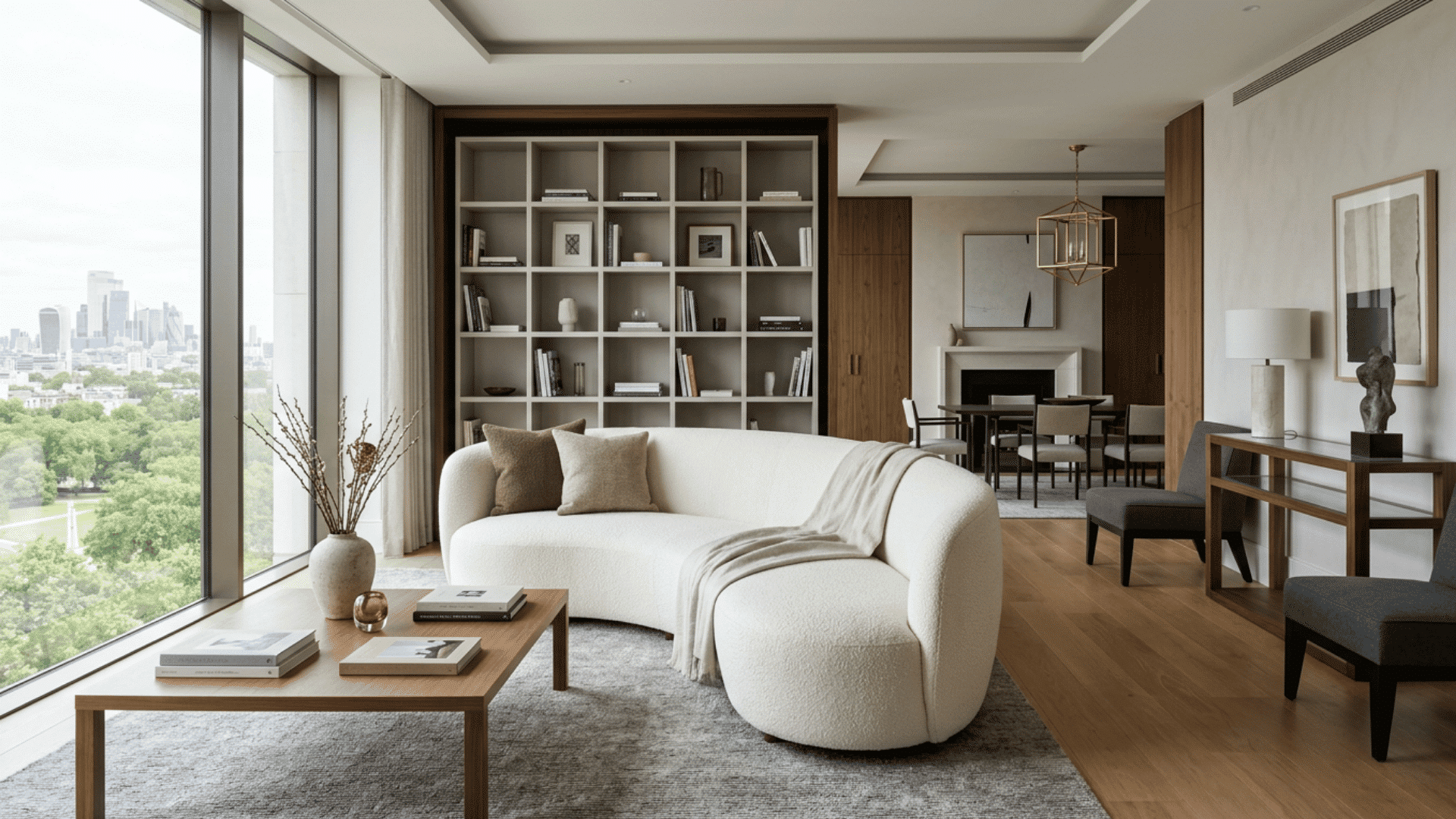
An unusual shape or form can stand out when most objects in a room follow a different style.
A curved sofa among straight furniture, a sculptural light above a plain table, or an arched mirror on a flat wall can attract attention. The feature should still relate to the room’s proportions and purpose.
Repeating its shape in smaller details can create unity without reducing its role as the focal point.
8. Placement
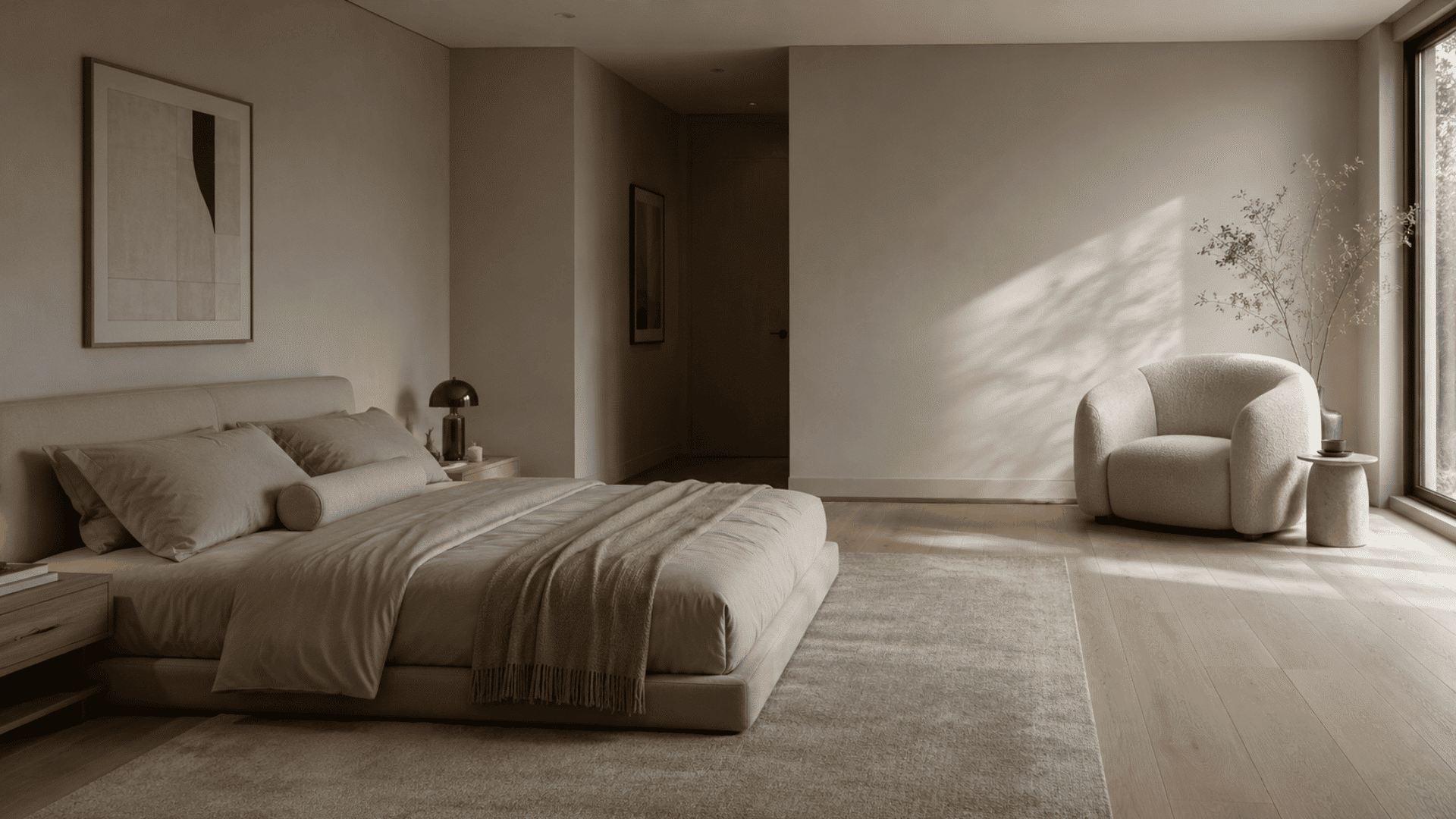
Placement affects which feature people notice first when entering or using a room. A statement chair at the end of a sightline, artwork above a sofa, or a table centered beneath a light can gain importance through position.
Designers often use central locations, views, and surrounding open space to strengthen focus.
Keeping nearby items simple prevents distraction. Thoughtful placement makes the focal point feel natural rather than added for its own sake.
9. Architectural Features
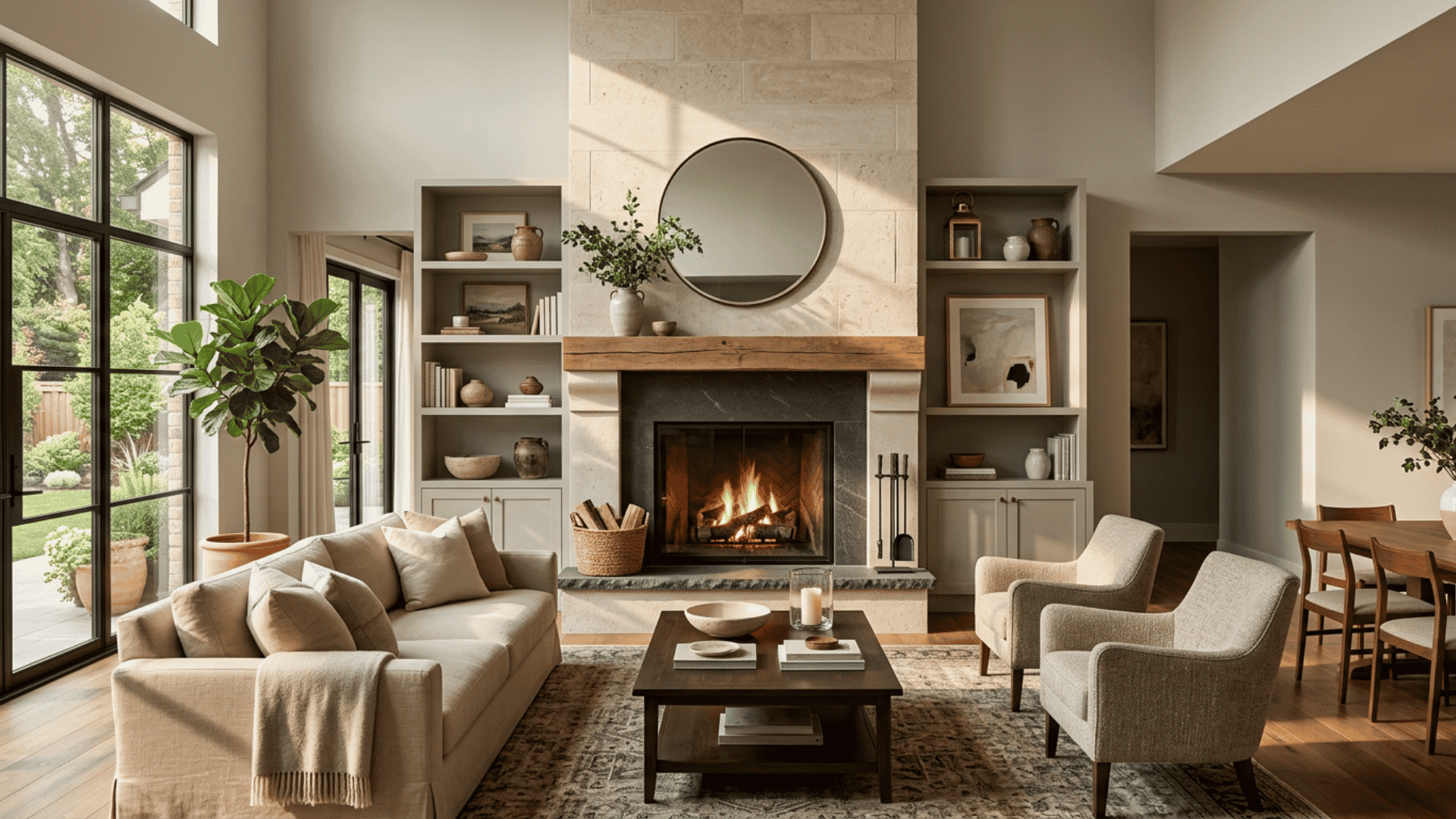
Existing architectural features can provide a natural focal point for emphasis in interior design. Fireplaces, large windows, staircases, ceiling beams, alcoves, and built-in shelves already shape how people view a living room.
Furniture and lighting can be arranged to support these features. Paint, artwork, or simple decor may strengthen them without hiding their structure.
When no strong feature exists, a wall treatment or furniture arrangement can serve as a visual anchor.
Meaning of Visual Hierarchy in Emphasis
Visual hierarchy is the order in which people notice parts of a room. Emphasis helps build this order by giving one element greater visual weight than others.
A large sofa, bold artwork, textured wall, or focused light can first attract attention. Secondary features should be quieter, so the eye moves through the space in a clear sequence.
Differences in size, color, contrast, shape, and placement can show which elements matter most. Repetition can also support the main feature without competing with it. When every item has the same visual strength, the room may feel flat or busy.
Clear emphasis creates direction and helps furniture, lighting, and decor work together. This makes the room easier to read and gives the overall composition a more organized and balanced appearance in daily life.
Different Ways to Create Emphasis With Color
Color is one of the clearest ways to create emphasis in a room. It can direct attention, separate key features, and support a clear focal point.
1. Use a bold accent wall to highlight a fireplace, bed, dining area, or artwork.
2. Place one bright chair, sofa, or cabinet against a quieter background to increase contrast.
3. Choose a shade that is deeper or lighter than nearby surfaces to make one feature more noticeable.
4. Repeat the focal color in small items, such as cushions, rugs, or vases, to tie the room together.
5. Keep surrounding colors calm so the main feature does not compete with several strong tones.
6. Use warm colors to bring an element forward and cool colors to make nearby areas feel less dominant.
7. Test paint and fabric samples under both natural and artificial light, as color appearance changes throughout the day in the finished room.
Common Mistakes When Creating Emphasis
Emphasis works best when one feature clearly attracts attention. Poor planning can create visual clutter or make the room feel unbalanced.
- Using Too Many Focal Points: Several bold features compete for attention, making it hard for the eye to settle on a single focal point.
- Ignoring Room Function: A focal point should support the room’s use, such as highlighting the bed, fireplace, dining table, or workspace.
- Choosing the Wrong Scale: An item that is too small may go unnoticed, while an oversized feature can overpower nearby furniture.
- Overusing Bright Colors: Too many strong colors reduce contrast and weaken the impact of the intended focal point.
- Forgetting Lighting: Poor lighting may hide an important feature or draw attention to the wrong area.
- Leaving the Area Unsupported: Nearby furniture, spacing, and décor should guide attention toward the chosen feature.
Conclusion
Emphasis in interior design gives a room a clear focus and helps each element feel connected.
A well-planned focal point can highlight a fireplace, bed, artwork, feature wall, or another key area without making the space feel crowded.
The chosen feature should suit the room’s purpose and work well with nearby furniture and décor. Look around your space and decide what deserves the most attention.
Which design feature would you highlight in your room? Drop your ideas in the comments and share how you plan to create a stronger focal point.
Frequently Asked Questions
Does Every Room Need a Focal Point?
Most rooms benefit from a clear focal point because it gives the eye a starting place. Small or simple spaces may use subtle emphasis instead of a bold feature.
Can a Functional Item Become the Main Focus?
Yes, practical elements such as a kitchen island, headboard, dining table, or storage unit can attract attention. Their shape, material, size, or placement can create emphasis.
Can the Focal Point Change with The Seasons?
Yes, movable items such as artwork, rugs, cushions, and table décor can shift attention. Seasonal changes should still suit the room’s size, layout, and main purpose.