Adhesive strips, sticky hooks, and tension rods let anyone hang pictures without nails or wall damage.
Renters and cautious homeowners share the same worry, since nobody wants a wall full of holes, especially with a deposit or fresh paint job on the line.
Several damage-free methods now exist, and most carry real weight while removing without a trace.
This blog covers the top methods, how to match one to a specific frame and wall, the exact steps for applying adhesive strips, the mistakes that cause them to fail, and the safest way to take a picture down later on.
Why Skip Nails When Hanging Pictures?
Traditional nails leave permanent holes, cracked plaster, and paint chips that need patching before a wall looks normal again.
Renters risk losing part of a security deposit over marks like these, and homeowners often just want to avoid the extra repair work that follows.
Nail-free methods solve this problem directly, since most hold real weight, remove cleanly, and leave the wall surface untouched.
They also make rearranging art far easier, since a picture can move to a new spot without a fresh hole appearing each time it gets moved.
Best Ways to Hang Pictures Without Nails
Several methods let you hang pictures without nails, from adhesive strips and hooks to rails and tension rods. The right option depends on frame weight, wall type, and how often the display changes.
1. Adhesive Picture Hanging Strips
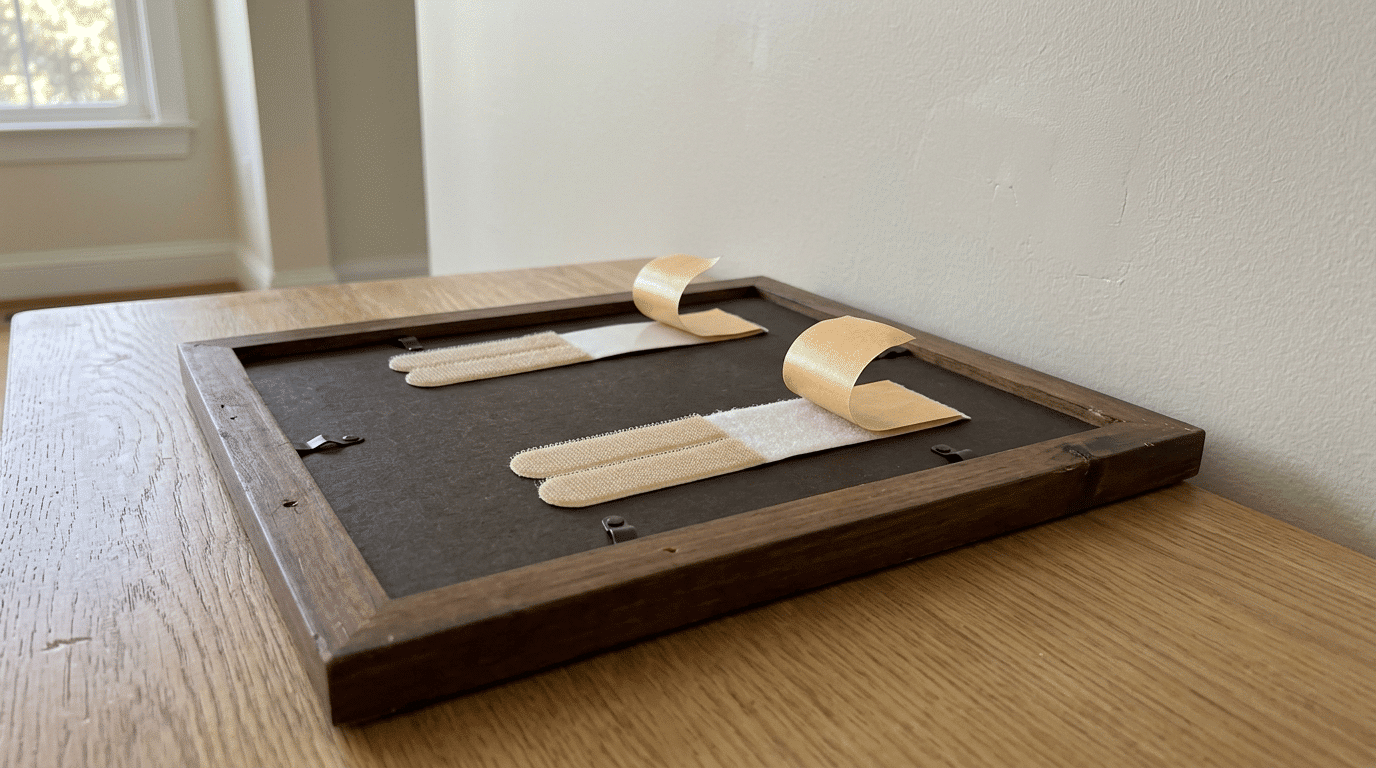
These strips use a Velcro-style bond that holds strongly yet peels away cleanly at removal time.
They work best on smooth painted walls and light to mid-weight frames, generally holding up to a few pounds per strip.
Steps to Hang Pictures With Adhesive Strips
- Clean: wipe the wall and the back of the frame with isopropyl alcohol.
- Press: click the strip pairs together, then press one half onto the frame.
- Align: line up the frame on the wall, then press firmly for 30 seconds.
- Wait: let the strips cure for about an hour before hanging any weight.
2. Adhesive Wall Hooks
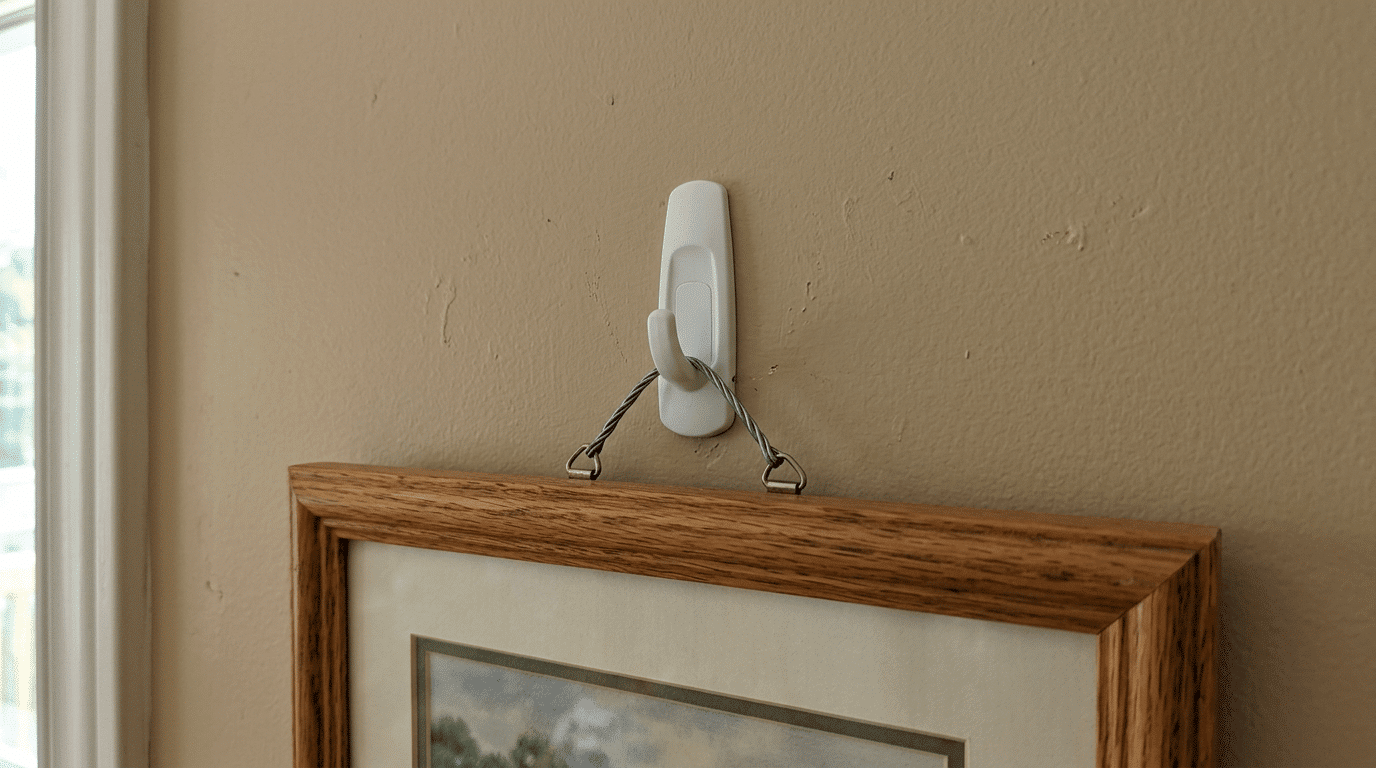
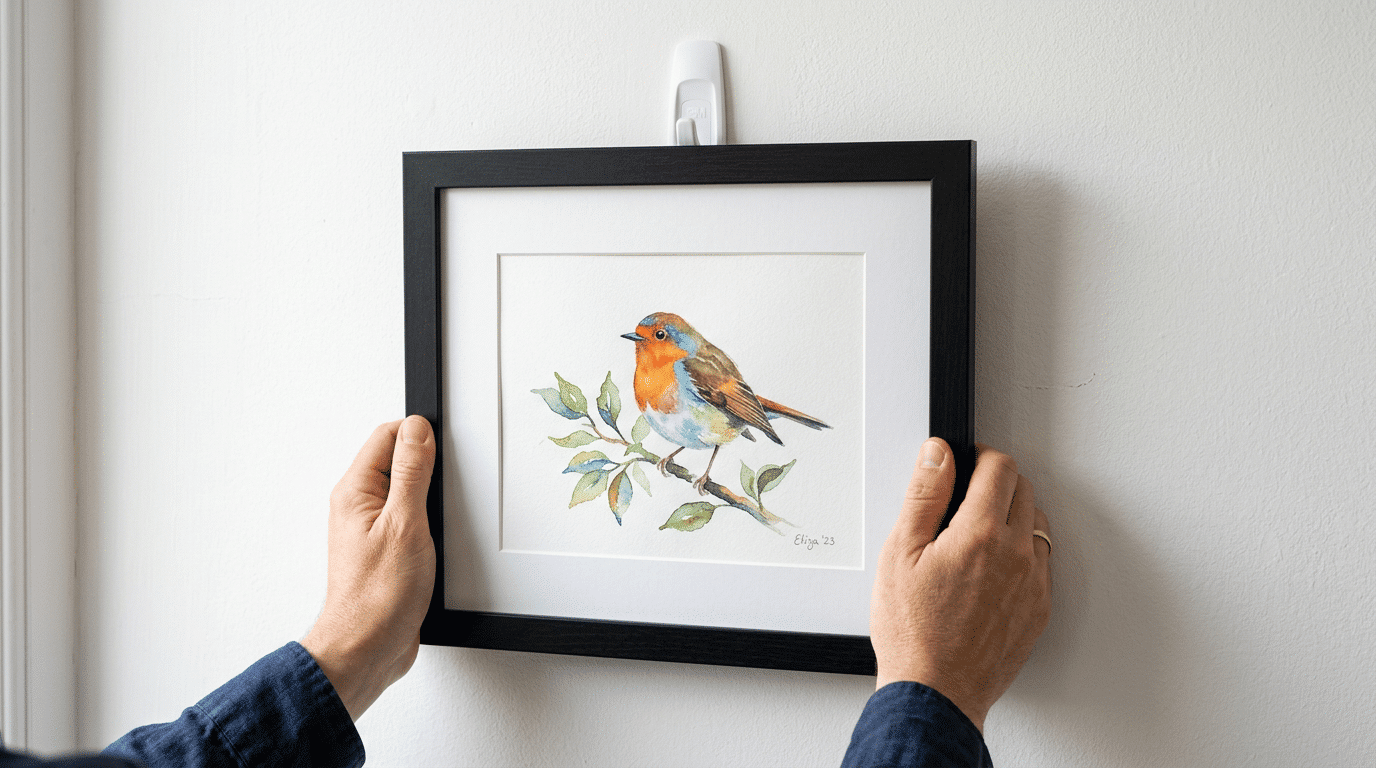
A wall hook works well for any frame that hangs from a wire strung across the back. A wall hook works well for any frame that hangs from a wire strung across the back.
The hook sticks to the wall with a strong adhesive base, then holds the wire the same way a normal nail would.
Steps to Hang Pictures With Adhesive Hooks
- Wipe the wall surface clean with isopropyl alcohol.
- Press the hook firmly against the wall for thirty seconds.
- Wait about an hour before adding any weight to the hook.
- Hook the wire from the back of the frame onto the hook.
3. Picture Rails and Tension Rods
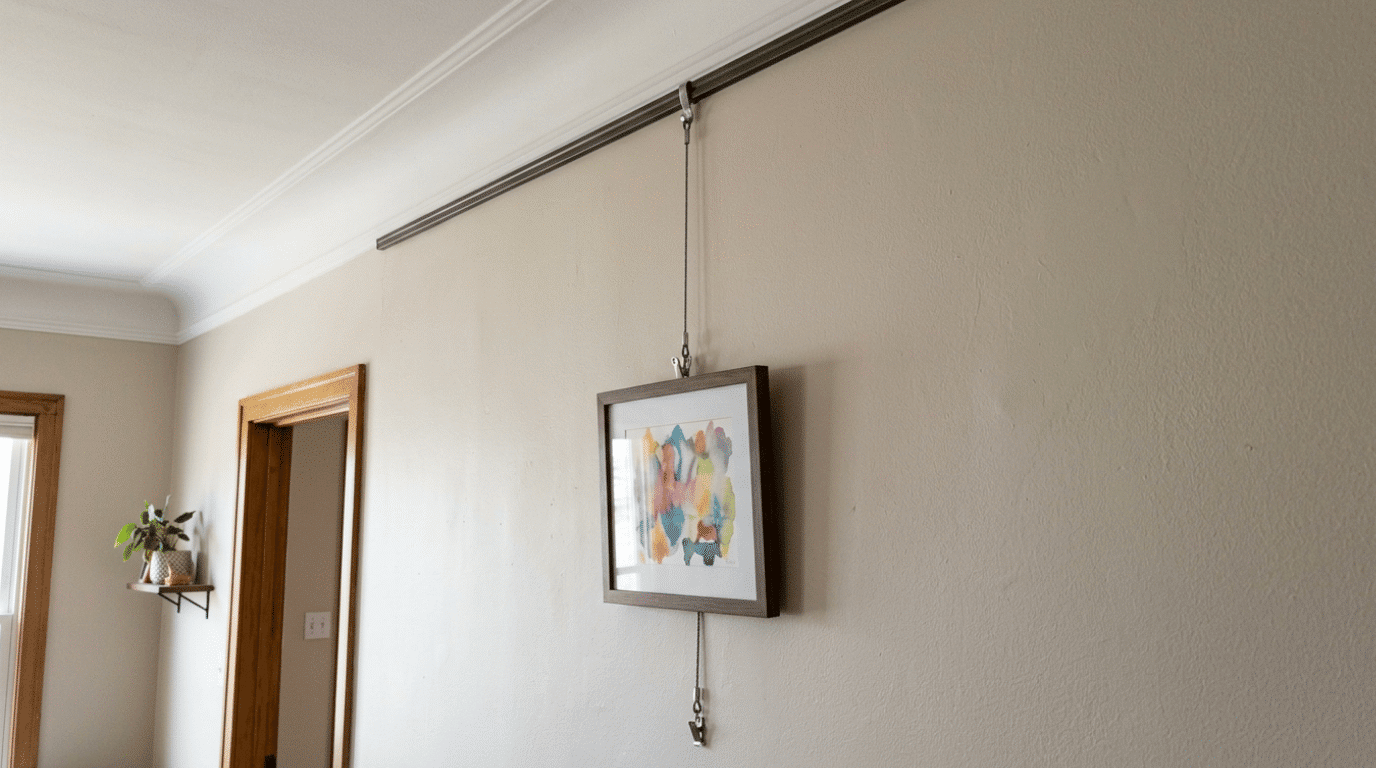
Rails and tension rods allow art to hang without any wall contact, making them ideal for frequent rearrangement or collage-style displays.
They work especially well in rental homes where even light adhesive still feels like too much commitment.
Steps to Hang Pictures With Rails or Tension Rods
- Mount: secure the rail along the top of the wall, or wedge the rod between the floor and ceiling.
- Attach: hang the picture from a cord or clip fitted onto the rail.
- Adjust: slide the cord along the rail to reposition the frame as needed.
How to Pick the Right Method for a Picture?
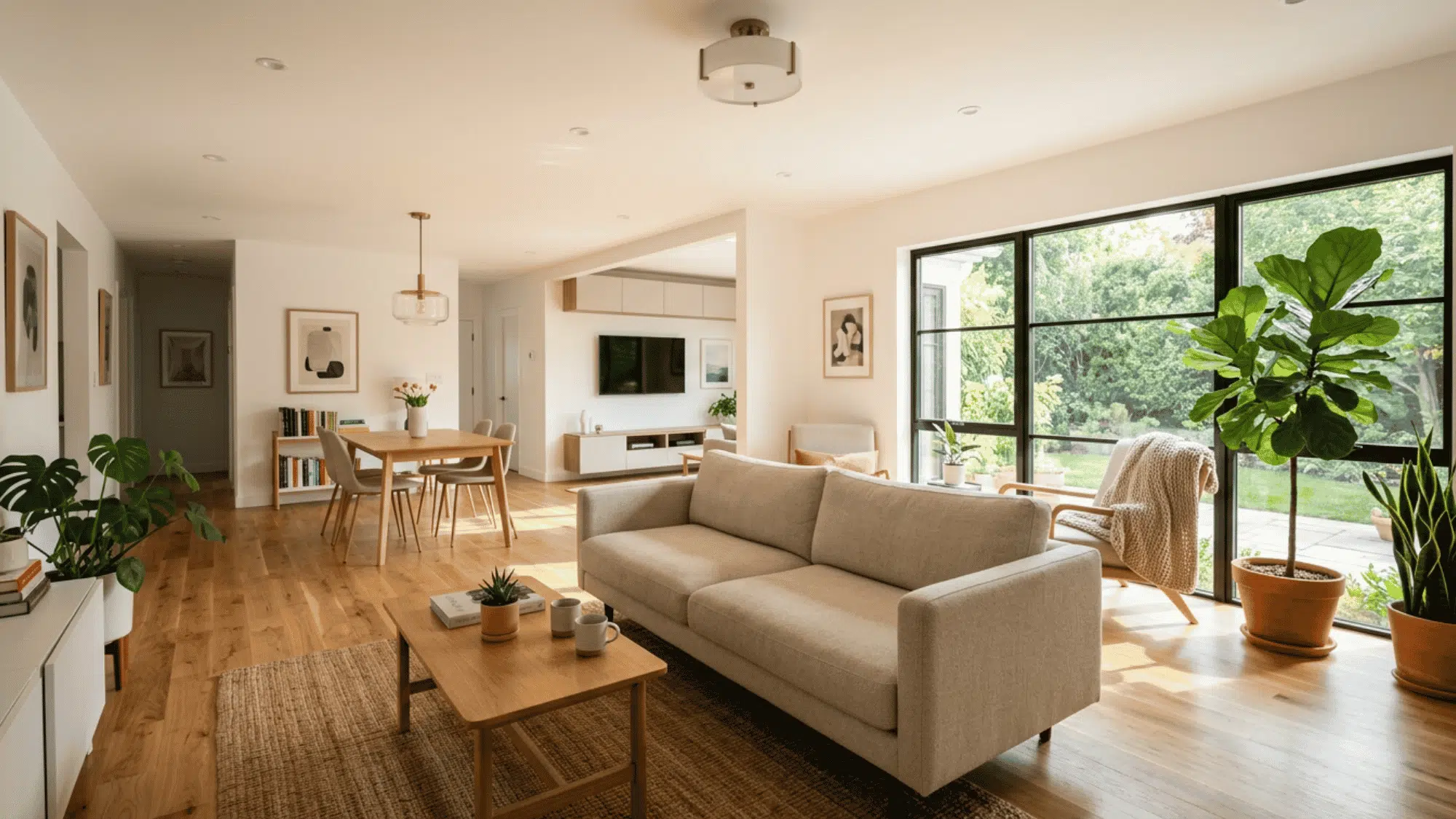
Choosing between strips, hooks, and rods usually comes down to two things: frame weight and wall type. A heavier mirror needs more support than a small paper print or poster. A better layout can improve comfort and flow, especially when using practical living room arrangement ideas.
Matching the Method to Frame Weight
Every adhesive product lists a maximum weight on the packaging, and that number should always be checked before buying anything.
Light frames under a couple of pounds work fine with a single strip. Heavier frames need a heavy-duty strip or several strips used together for added support and lasting overall stability.
Checking the Wall Surface First
Smooth painted drywall is the easiest surface for adhesive to grip firmly. Textured walls, wallpaper, and unfinished wood reduce the surface area adhesive can bond to, weakening the hold.
Tile and glass work well once cleaned properly. Fresh paint needs time to cure before anything gets pressed against it firmly.
How to Take Pictures Down Without Damaging the Wall?
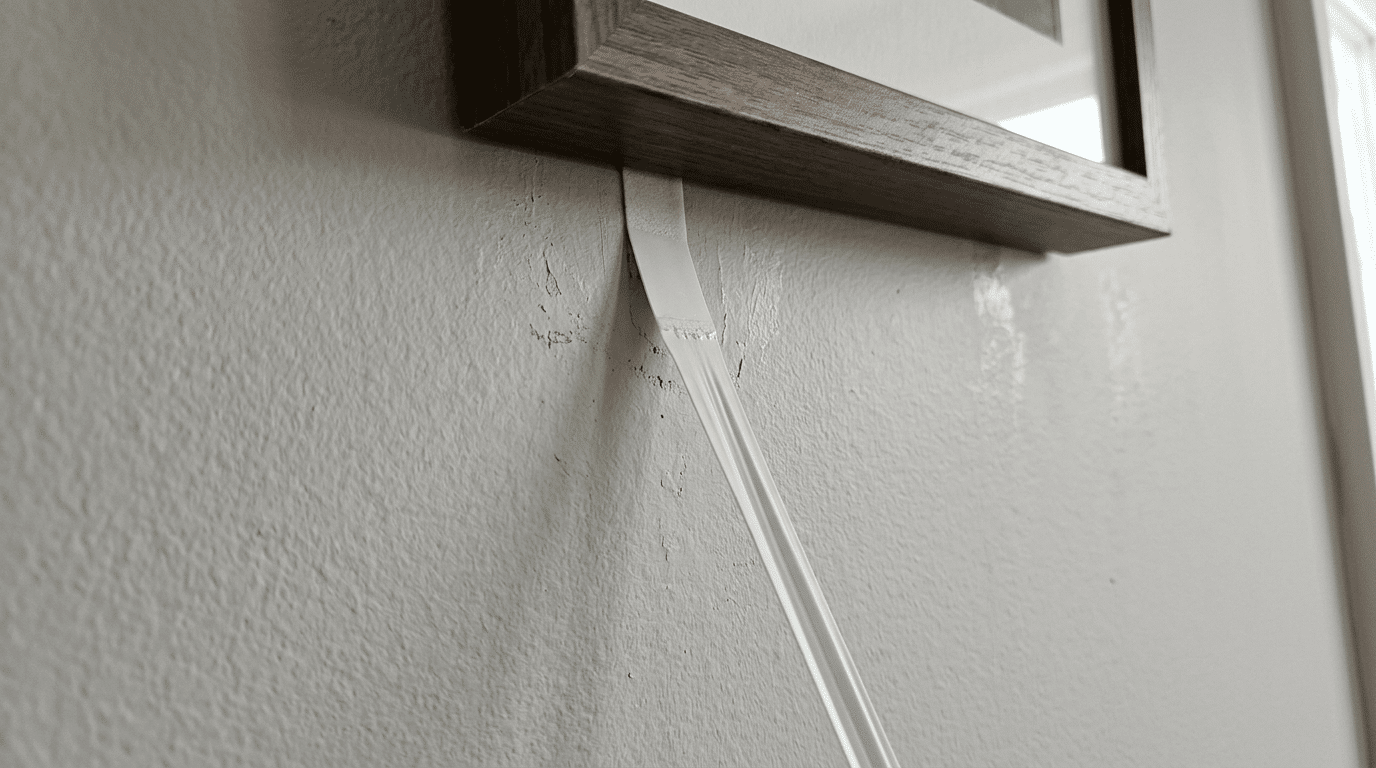
Taking a picture down the wrong way can undo all the benefits of a damage-free hanging method in just a few seconds.
Pulling a strip straight off the wall risks tearing paint or leaving a stubborn patch of adhesive residue behind.
A slower, more deliberate removal technique keeps the wall looking exactly as it did before the picture ever went up.
Once unnecessary items are removed, shelves can be styled more effectively by following simple ideas to decorate shelves in any room.
The Slow Stretch-Release Method
Removing an adhesive strip works best by stretching the bottom corner down and away from the wall at a low angle, rather than pulling straight out.
This releases the grip gradually. Use the same motion on the strip left behind.
Final Takeaway
Hanging a picture without nails doesn’t mean giving up a secure, good-looking display.
Adhesive strips and hooks handle most frames; rails and rods offer a no-commitment option for frequent rearranging; and leaning works when you’d rather skip hardware altogether.
Cleaning both surfaces, waiting out the cure time, and removing pieces slowly make the difference between a picture staying put and one ending up on the floor. A look at the weight rating on the package is usually all it takes.
Have you tried any of these methods in your own home? Let us know in the comments which one worked best for your walls.
Frequently Asked Questions
Can Nail-Free Methods Work on Brick, Concrete, or Paneled Walls?
Adhesive strips and hooks need a smooth surface, so brick and concrete weaken the hold badly. Rails work better here.
Do Adhesive Strips Hold Up in Humid Rooms Like Bathrooms?
High humidity can soften adhesive bonds over time. Strips rated waterproof or bathroom-safe hold up better than standard indoor strips.
Can Adhesive Strips or Hooks Be Reused After Removal?
Most adhesive strips and hooks lose their grip once fully removed. A fresh set works best for a second application.