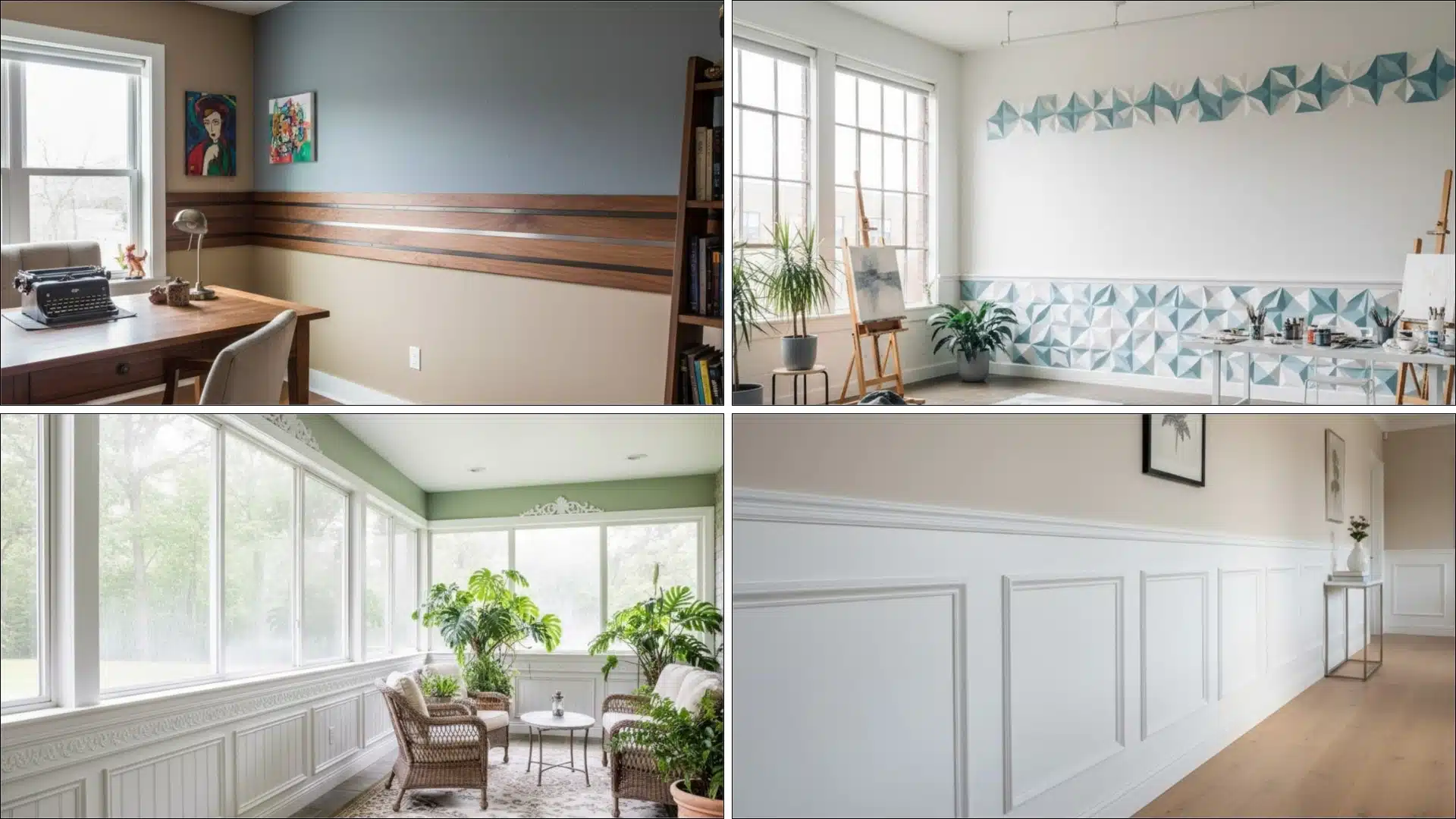
Walls shape every room and guide how we feel when we walk through a space because they hold color, texture, and the overall mood together.
Many people forget that walls do not need to stay plain; small details can make them look richer and more stylish.
Chair rails, which once started as simple strips to protect walls from chairs, are now used to decorate living rooms, staircases, and long pathways in the most natural way.
They add personality without making the room feel heavy, which is why so many homes use them for easy upgrades.
Today, chair rails are popular again because they bring structure, balance, and a custom look that works well with many design styles.
In this blog, I will share fun chair rail ideas, from modern options to traditional ones that work with almost any home style. You’ll see how small details can refresh a room, plus the exact steps to install one yourself.
Benefits of Adding Chair Rails to Your Home
Adding chair rails to your home offers several benefits that go beyond simple decoration. They help protect walls from scuffs, dents, and everyday wear, especially in busy areas like hallways, dining rooms, and staircases.
Chair rails also add structure to a room by breaking up large wall surfaces, making the space feel more balanced and visually appealing.
They give you the chance to use two different paint colors or finishes without the room feeling overwhelming.
If you’re weighing which two colors to pair above and below the rail, our guide to wall and trim color combinations covers pairings that work well with a divided wall.
This small detail can make plain walls look more polished and thoughtfully designed.
Chair rails also blend well with many styles, from modern to traditional, so they’re easy to add without changing your entire decor.
Because they’re affordable and simple to install, chair rails offer a quick upgrade that makes any room feel more finished, welcoming, and well put together.
In my own dining room, adding a chair rail was the one change that finally made a builder-grade wall look intentional.
Inspiring Chair Rail Ideas to Enhance Your Home’s Style
These are some fun and stylish chair rail ideas that can help your home feel fresh, creative, and totally pulled together.
1. Two-Tone Wall with Chair Rail Dividing Colors
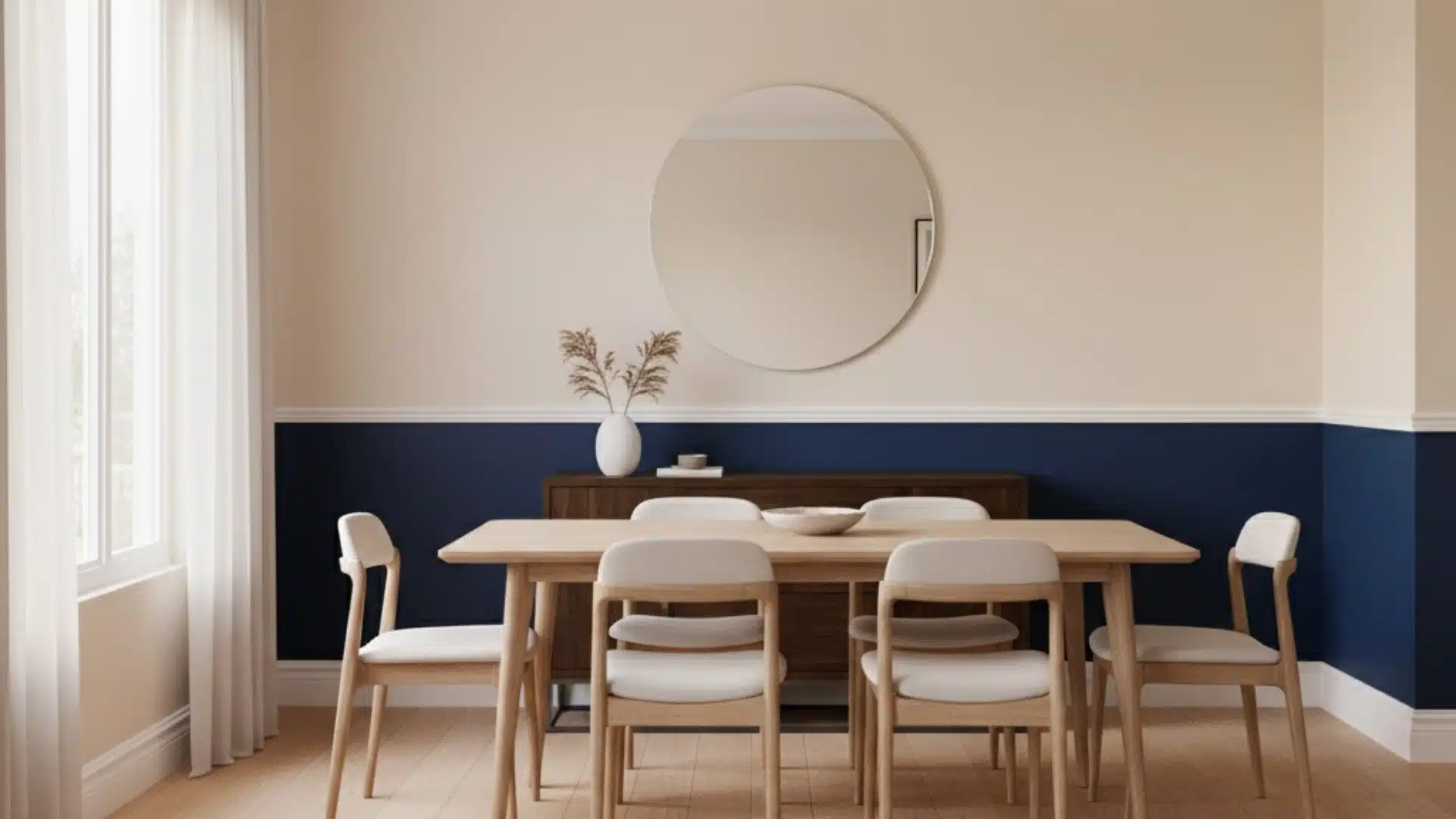
This idea uses a chair rail to split the wall into two painted sections, giving the room instant depth and personality.
The colors you choose can make the space feel taller, wider, or more cozy, allowing you to shape the mood in a simple way.
It works especially well in hallways and dining rooms, where bold color changes guide the eye and create a clean, balanced look that feels intentional without needing major remodeling.
Tips to enhance:
- Add metallic detail on the rail for a soft shimmer
- Use slim LED strips behind the rail for a glowing line
2. Painted Chair Rail Paired with Wainscoting
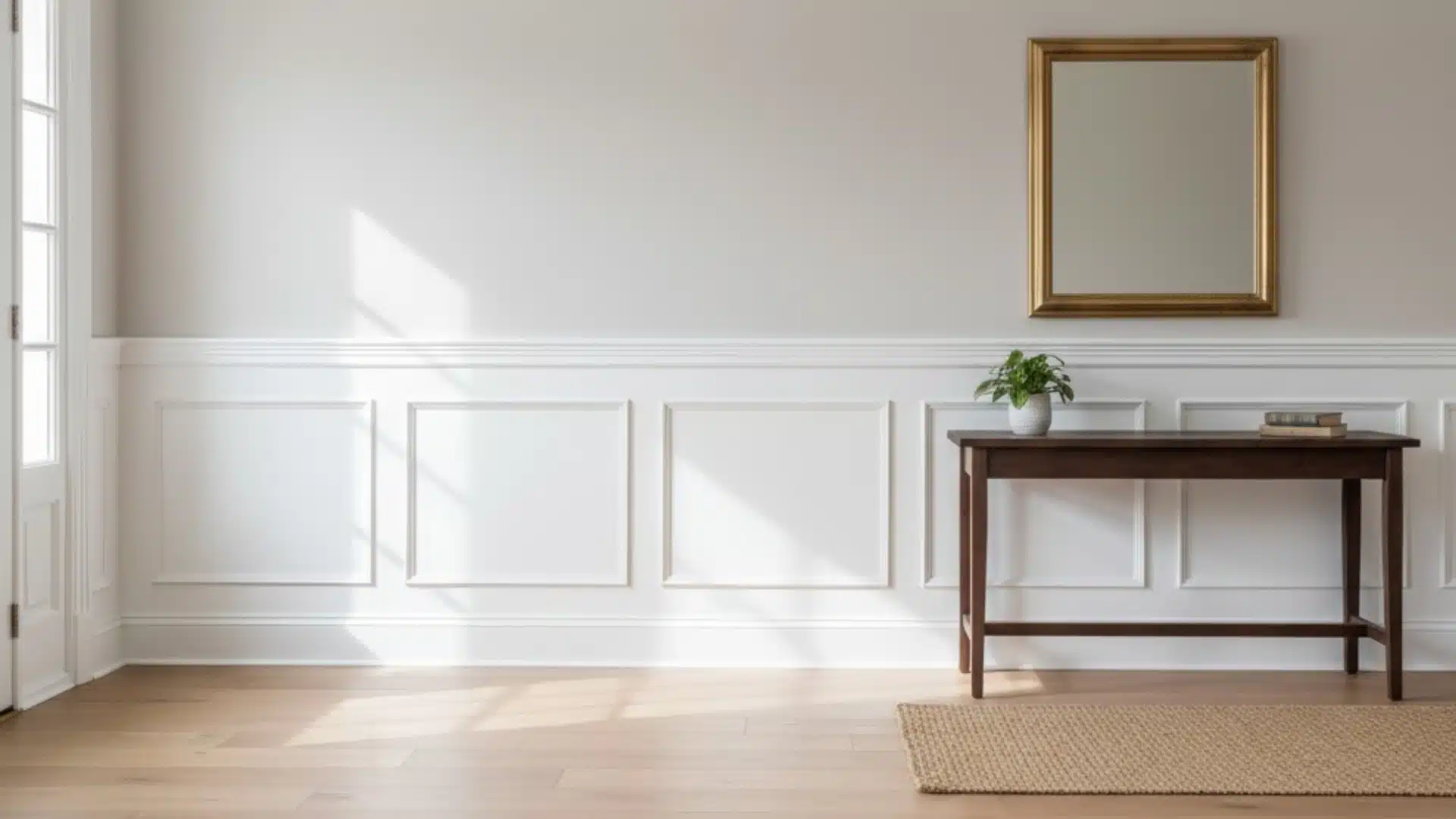
This look pairs a slim painted chair rail with wainscoting panels to bring texture and structure to the wall, creating a classic, grounded feel.
The rail acts as a clean cap for the lower panels, making the entire section look polished and warm.
It works especially well in entryways and living rooms, adding a timeless touch that feels high-end without requiring much effort.
This simple combination can refresh a plain wall fast and make the room feel more inviting.
If you like the paneled look but want something with a bit more width and warmth, our board and batten wall ideas guide is worth a look too.
Tips to enhance:
- Add subtle wallpaper above the panels for a gentle pattern
- Choose a glossy rail finish to bounce more natural light
3. Classic Wooden Chair Rail Painted White
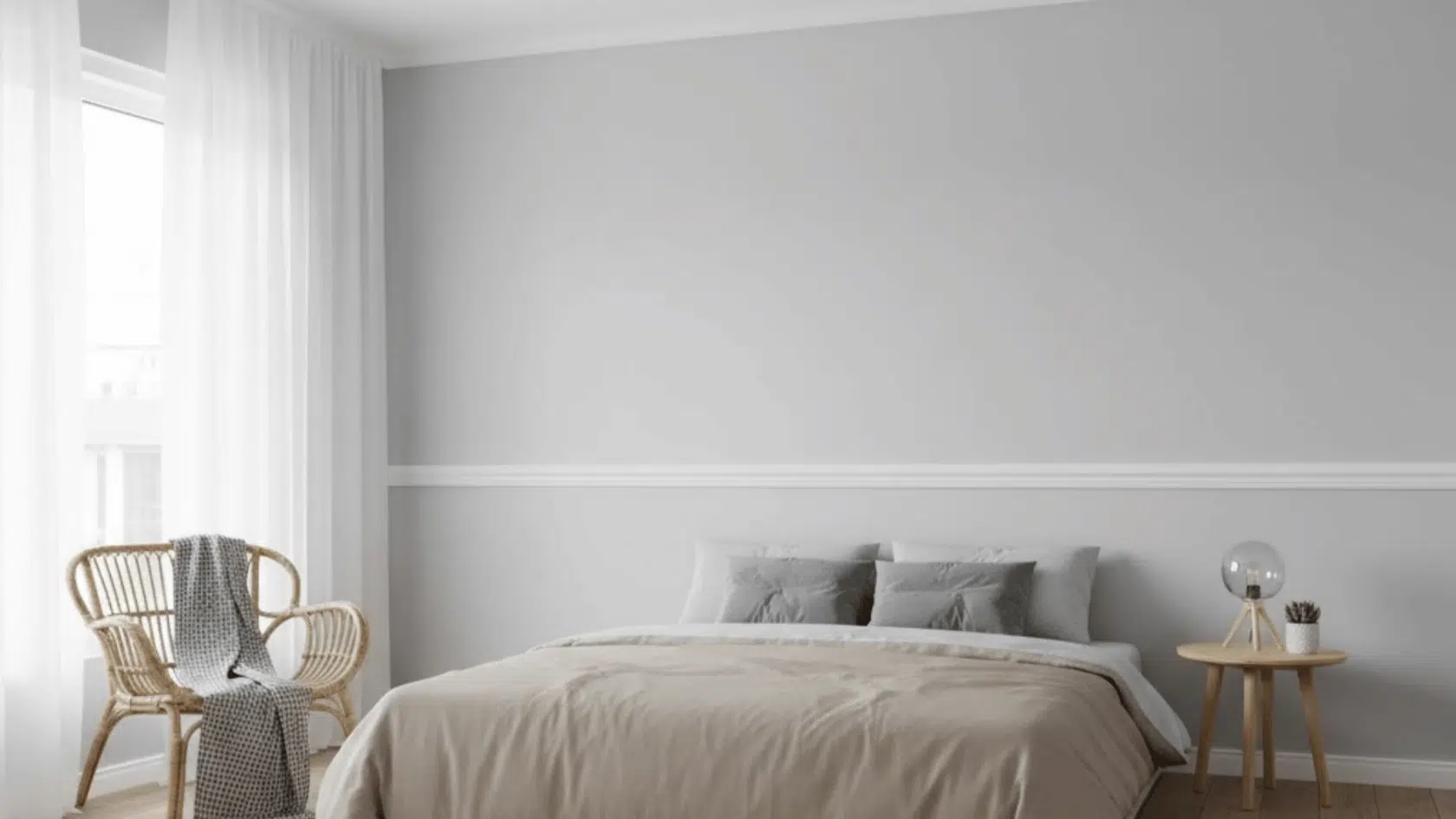
This style uses a clean white wooden rail that blends easily with nearly any wall color, keeping the look simple and fresh.
It adds just enough detail to make the room feel neat and pulled together without drawing too much attention.
This approach works well in kitchens and bedrooms, offering a flexible design that adapts as your decor changes.
Its subtle finish makes the space feel organized, calm, and easy to update over time. Our floating shelf guide walks through mounting them at the right height above a rail.
Tips to enhance:
- Lightly distress the edges for a soft vintage touch
- Add floating shelves above to create a fun display zone
4. Minimalist Flat Chair Rail and Monochrome Finish
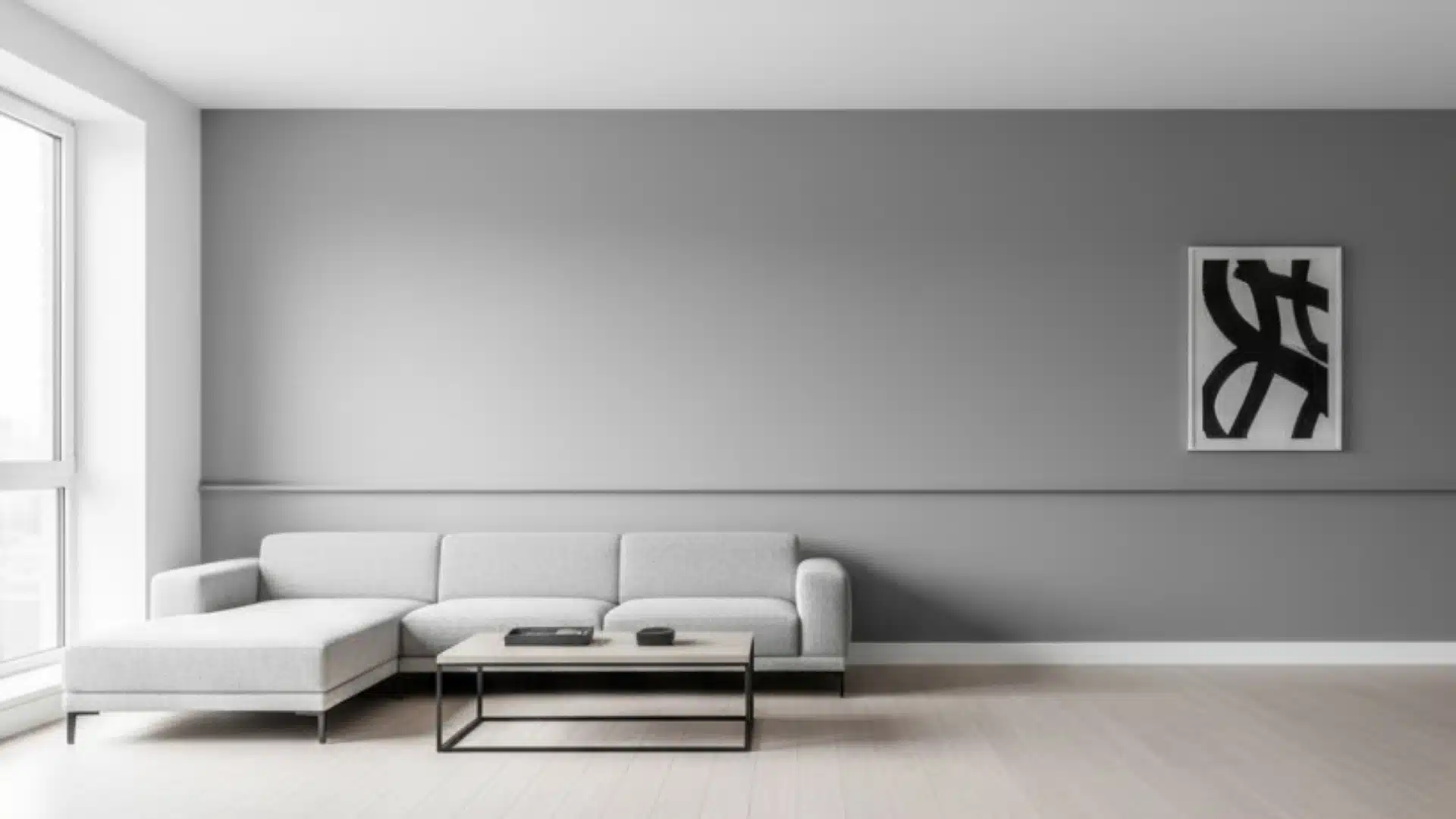
This idea uses a simple flat rail painted in one solid color to create a clean, modern look that feels calm and balanced.
It works well when you want the rail to guide the eye without becoming the main feature.
This style fits open living areas or work zones where you want smooth flow, simple lines, and a space that feels organized without too much visual noise.
Tips to enhance:
- Add thin brass inlays for a soft metallic contrast
- Align the rail with tall drapes to stretch the room visually
5. Chair Rail with Picture Frame Paneling Below
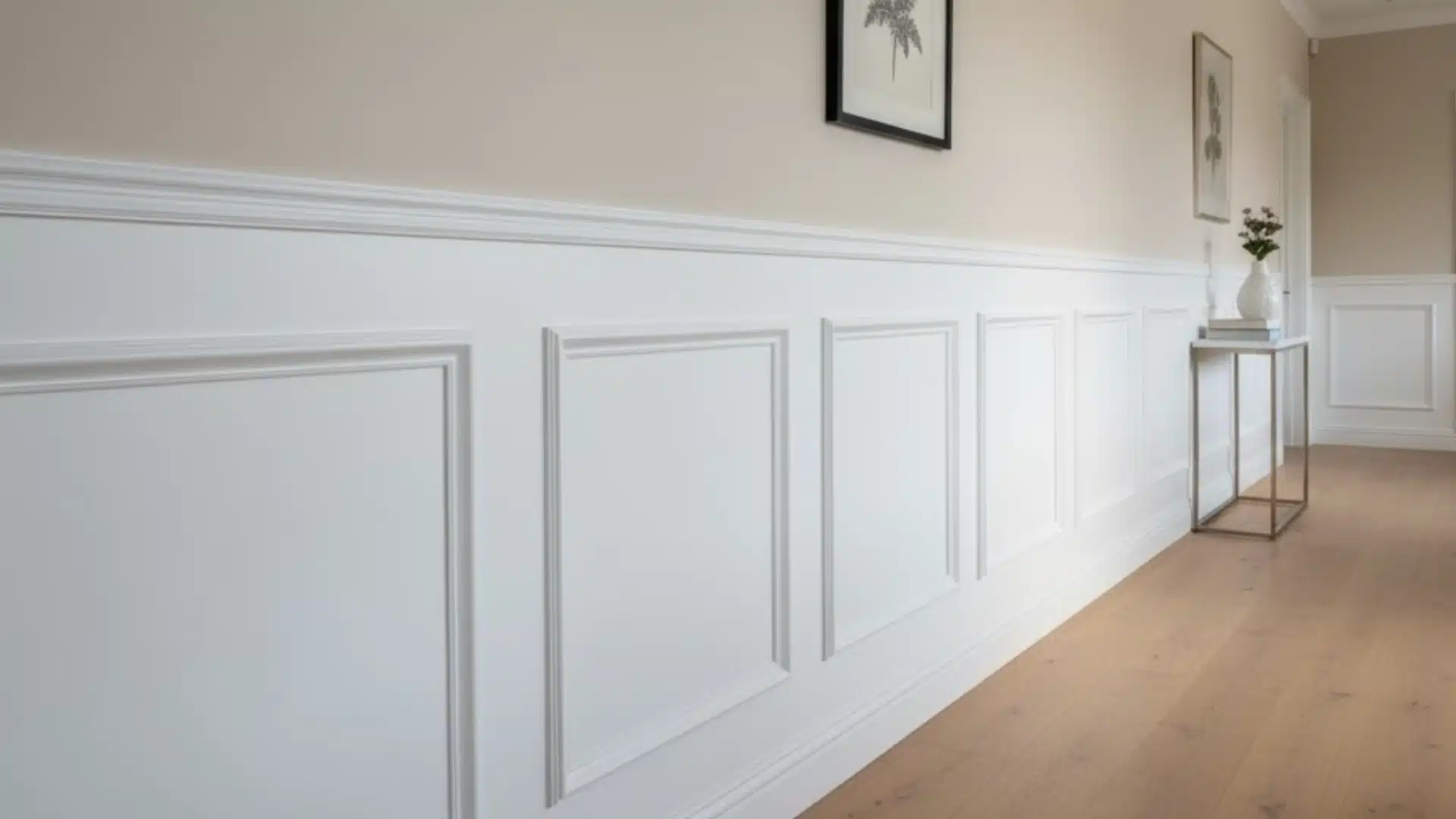
This look turns the lower wall into picture frame-style panels that add depth and structure beneath the chair rail.
The panels help the wall feel polished and intentional without being overly formal.
This setup works well in hallways, offices, or powder rooms where you want a gallery-inspired layout that feels pretty, neat, and thoughtfully arranged without taking over the rest of the decor.
Tips to enhance:
- Use different panel depths to create gentle shadows
- Add metallic liners inside the frames for a warm shine
6. Beach Farmhouse Style Whitewashed Wood Rail
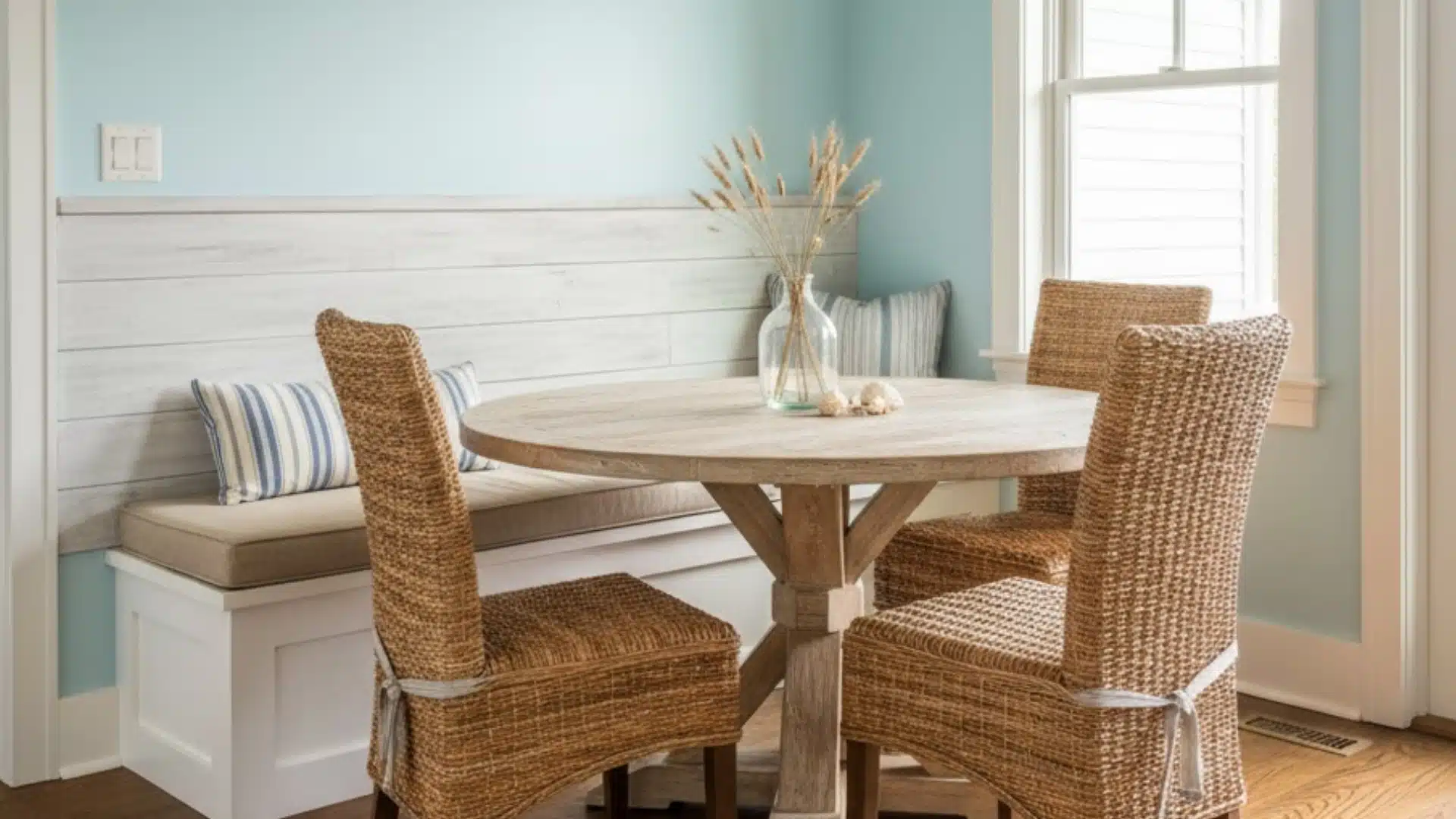
This idea uses softly whitewashed wood to bring a breezy coastal feeling into the room.
The gentle texture pairs well with linen fabrics and natural light, creating a calm and airy mood.
It works nicely in breakfast areas, guest rooms, or bright corners where you want an easy-going style that feels relaxed and vacation-inspired without heavy decoration or bold color choices.
Tips to enhance:
- Add small rope accents for coastal charm
- Use sheer linen curtains to soften incoming light
7. Reclaimed Wood Chair Rail for Rustic Charm
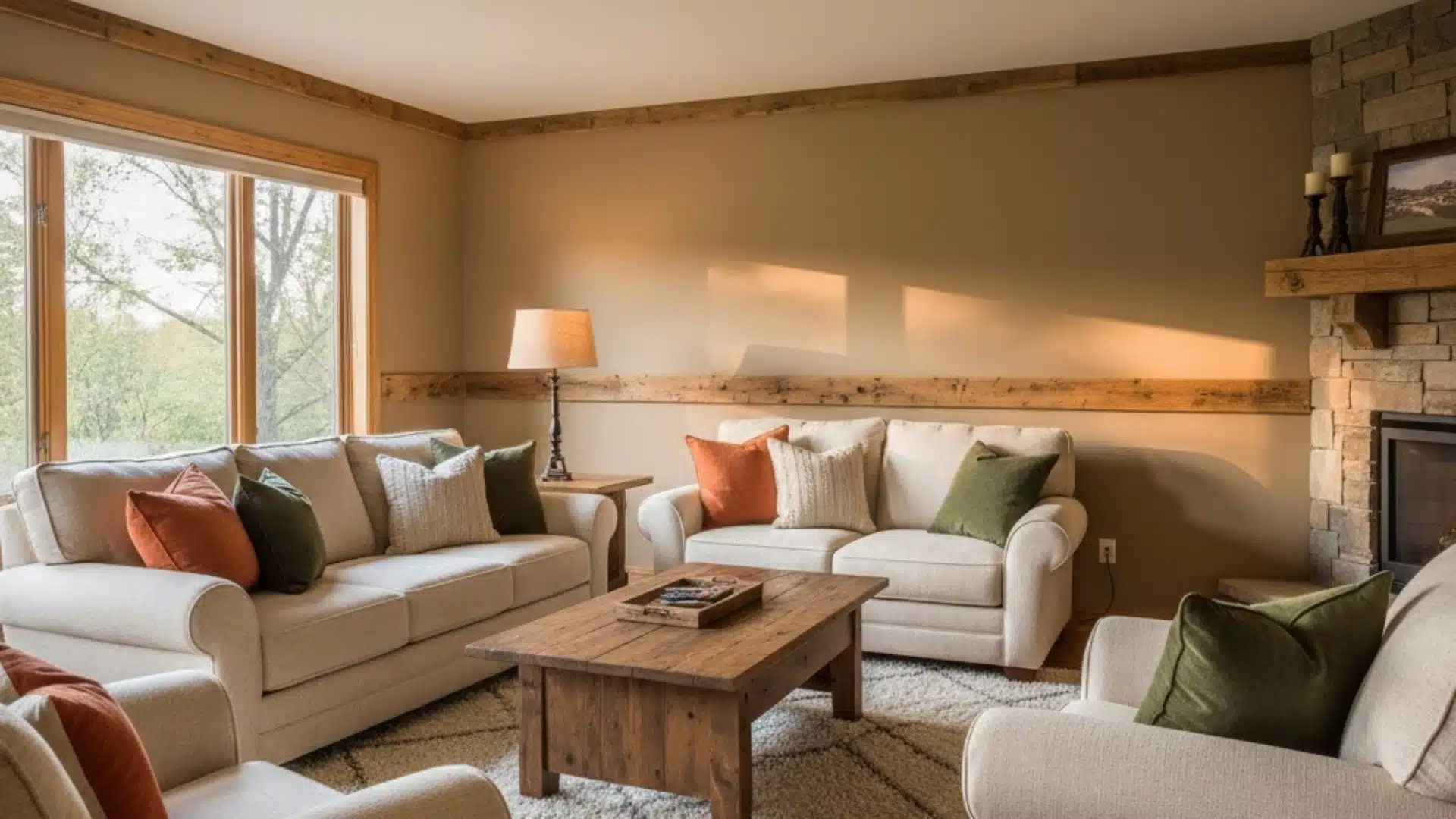
This design uses aged reclaimed wood with natural knots and marks, bringing a warm, rustic touch to the walls.
The imperfect grain adds a character that feels lived-in and personal without being messy.
It suits family rooms, mudrooms, or casual spaces that call for a down-to-earth feel, blending modern pieces with natural textures for a comfortable, inviting balance.
Tips to enhance:
- Seal with matte varnish to protect the wood grain
- Add small planters above for a warm, earthy detail
8. Traditional Colonial with Stepped Profiles
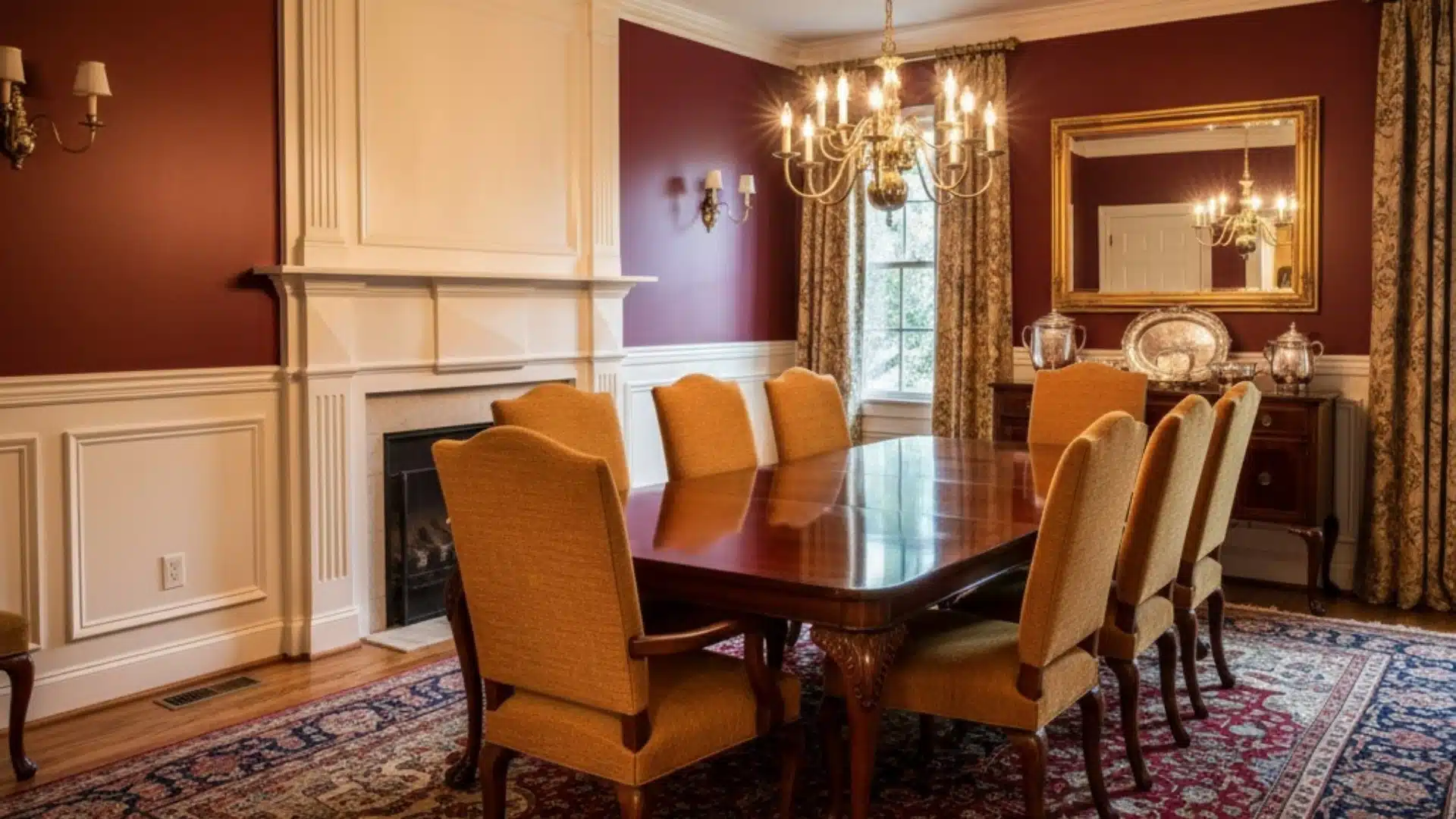
This look uses layered stepped edges that echo early American architecture and bring classic rhythm to the room.
The structured profile pairs well with other trim pieces and keeps the space feeling balanced and calm.
It works beautifully in dining rooms or libraries where traditional elements look natural, and the rail helps create a timeless layout that feels steady and grounded.
Tips to enhance:
- Stain different steps in close shades for depth
- Use brass decor nearby to support the colonial vibe
9. Victorian Ornate Chair Rails with Floral Motifs

This idea brings a romantic Victorian style through carved shapes, such as leaves and floral patterns, that add texture and drama.
It works well in formal spaces, stairwells, or stylish sitting areas where detailed decor feels right at home.
The raised design catches soft light and adds a sculpted effect, making the wall feel special without taking over the entire room.
Tips to enhance:
- Highlight small areas with gold leaf for shine
- Pair with fabric wall hangings to add layered richness
10. Stained Mahogany Chair Rail for Warm Interiors
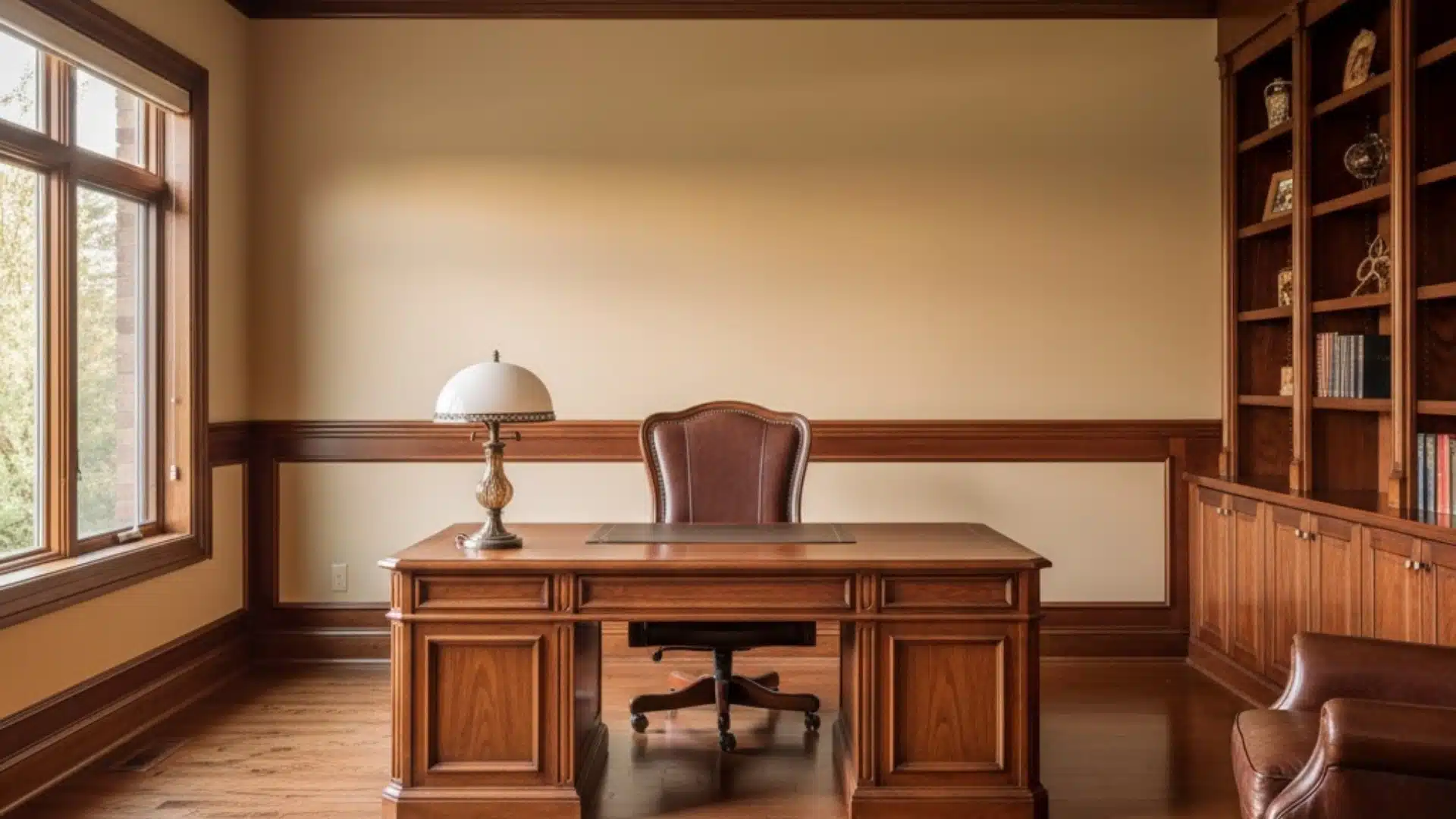
This look uses dark-stained mahogany to add rich color and gentle warmth to the room.
The deep tone makes the space feel cozy and polished without looking too heavy.
It works well in offices, lounges, or wine rooms, where warm wooden finishes create a calm, comfortable mood that still feels stylish.
Tips to enhance:
- Buff to a soft satin finish for a gentle glow
- Add small crystal accents for a luxury touch
11. Chair Rail with Integrated LED Lighting
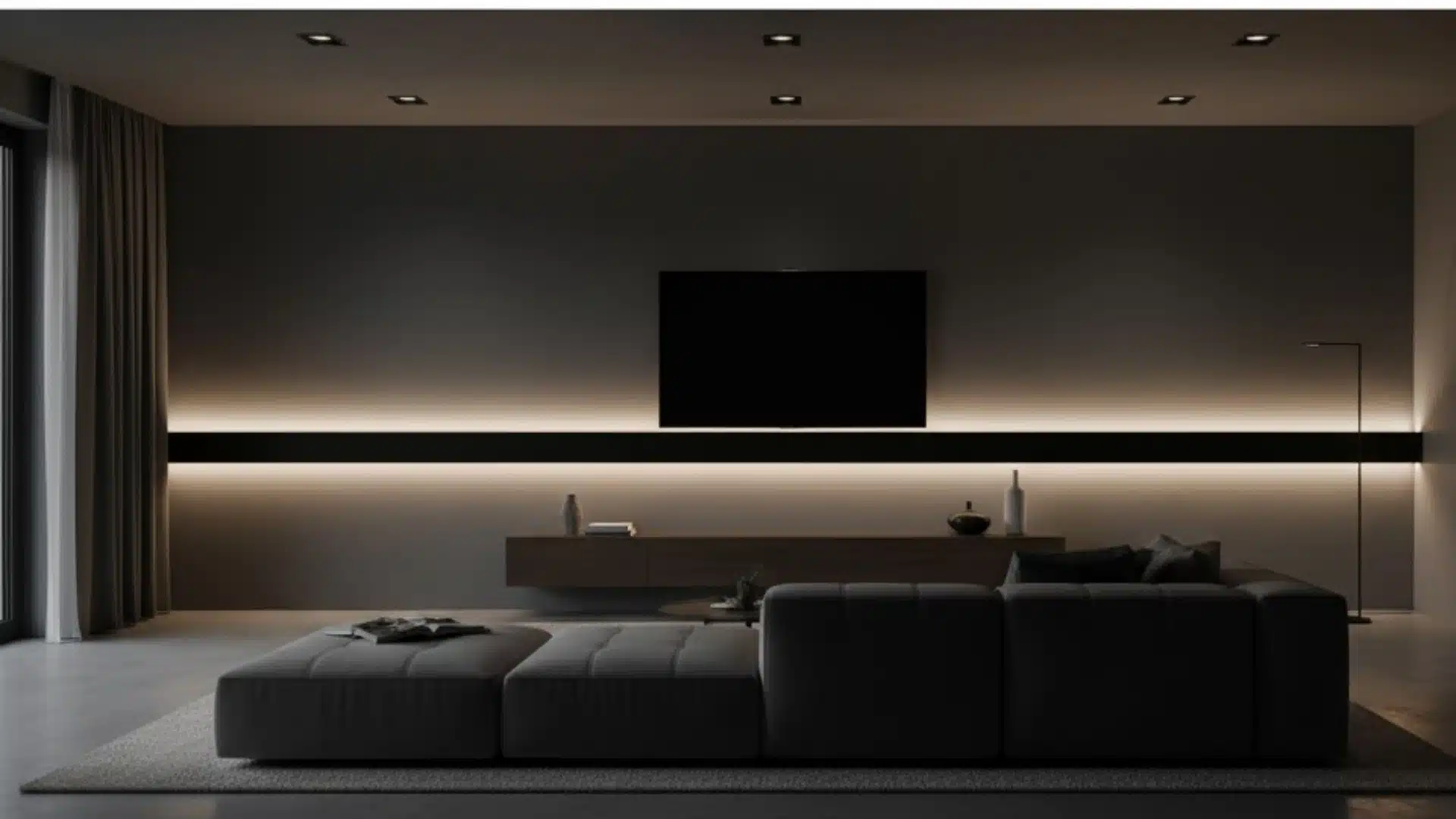
This idea uses a rail that hides slim LED lights to add a soft glow across the wall.
The lighting creates a warm modern vibe that works well in media rooms, kitchens, or hallways where adjustable mood lighting is helpful.
It adds depth at night and keeps the space feeling fresh and stylish without needing extra lamps or bulky fixtures.
Tips to enhance:
- Connect LEDs to smart controls for easy color changes
- Add frosted diffusers to soften the lighting
12. Metal Chair Rail for Modern Industrial Look
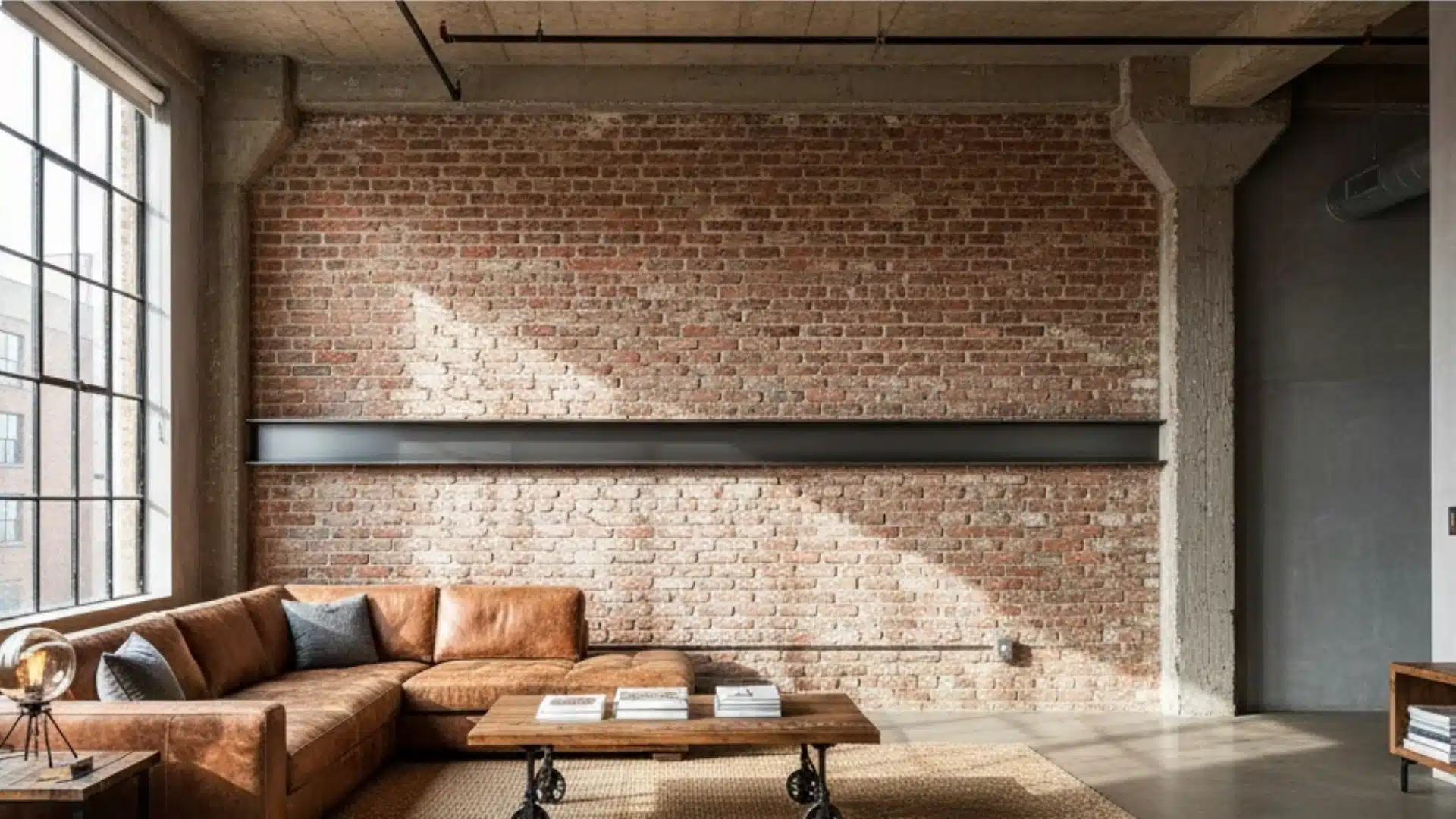
This design uses metal rails, such as steel or aluminum, to create an industrial style that feels bold and clean.
The cool surface adds sharp contrast against brick, wood, or concrete, which works well in lofts and modern bars.
It gives the wall a structured line that blends with raw materials and large, open layouts, creating a strong urban-inspired vibe.
Tips to enhance:
- Add hammered texture for extra character
- Install small hooks for keys or tiny decor pieces
13. Geometric Patterned Chair Rail Molding
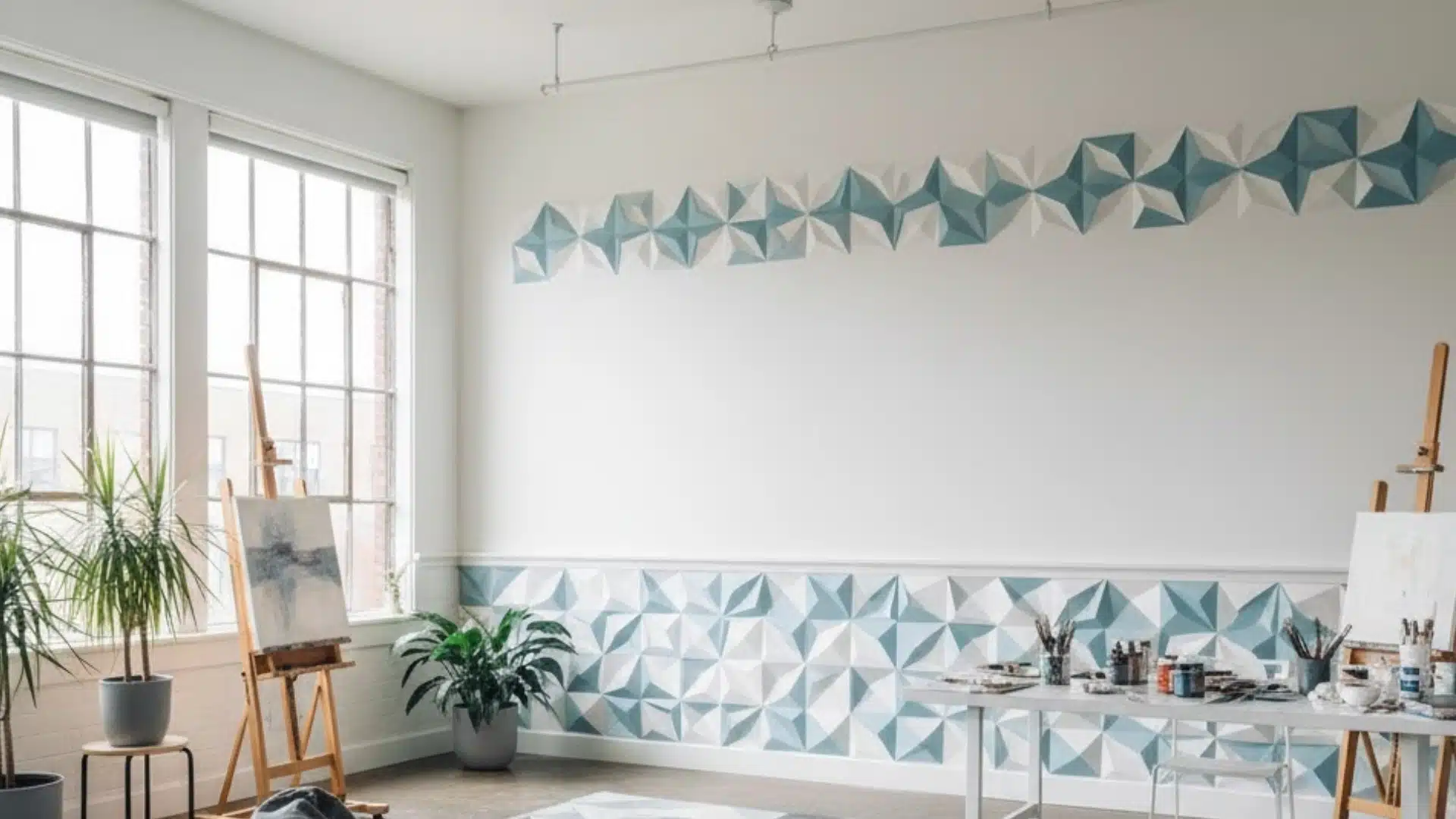
This style uses angles, facets, and geometric shapes to bring playful movement to the wall.
It adds a modern artistic feel that works well in creative spaces like studios, playrooms, or teen areas.
The sharp patterns create visual energy that lifts the room without overwhelming it, making the space feel fun, expressive, and full of personality.
Tips to enhance:
- Laser cut custom shapes for a personal pattern
- Add neon backlighting for a bright, futuristic pop
14. Layered Chair Rail with Dental Molding Detail
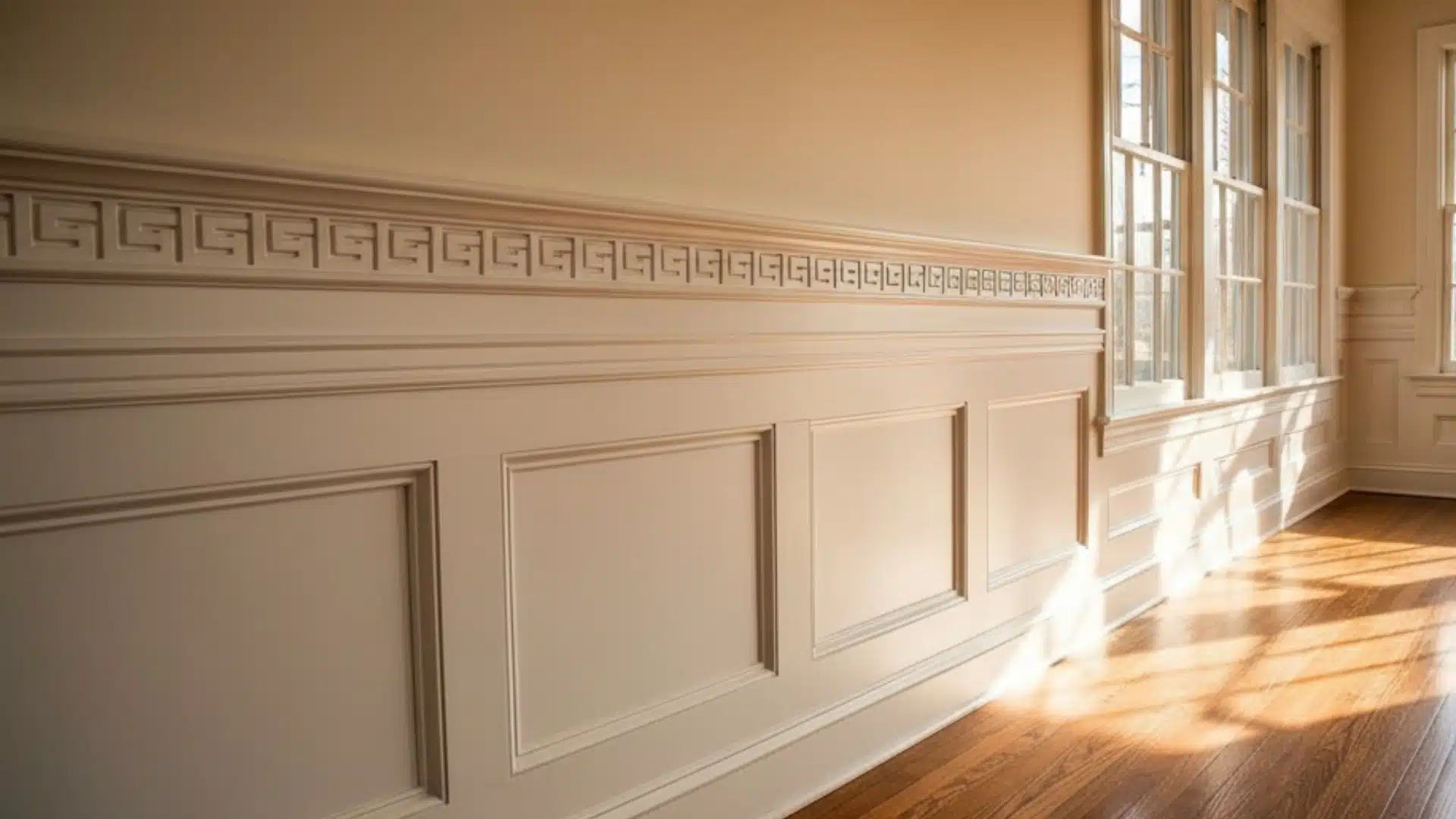
This idea uses stacked molding pieces topped with small, repeating dental blocks to create a detailed, classic look.
The layered structure adds rhythm without feeling too heavy and works nicely in hallways, sunrooms, or traditional sitting spaces.
The design pairs well with bright natural light and other classic trim pieces, making the room feel polished, calm, and thoughtfully put together.
Tips to enhance:
- Use different block heights for soft visual movement
- Add tiny fiber optic lights for gentle sparkle
15. Contemporary Sharp-Edged Chair Rail Profiles
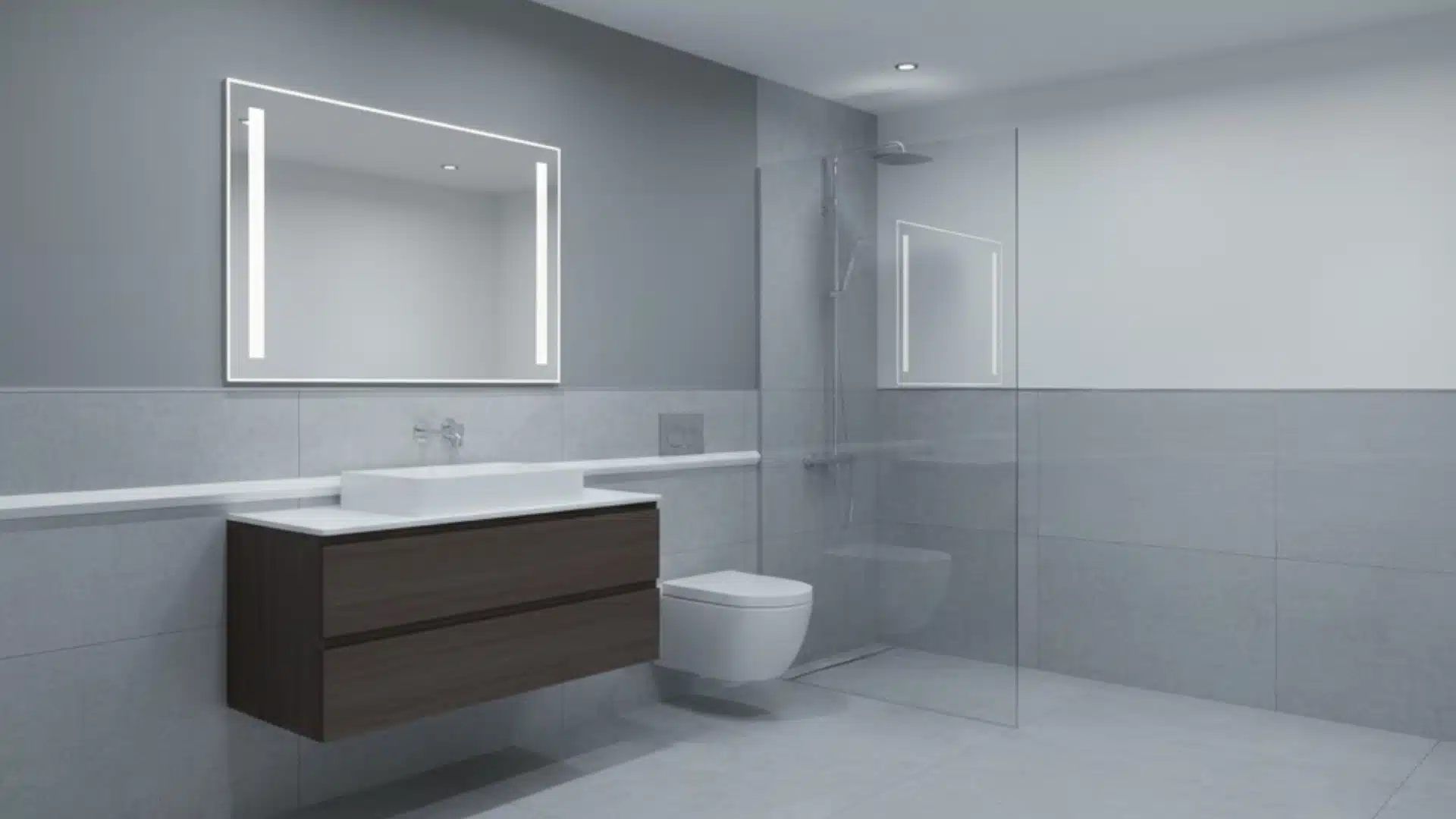
This style uses crisp, sharp edges that create a strong modern line across the wall. The clean bevels add bold geometry that works well in bathrooms, studios, or modern living spaces.
It pairs nicely with smooth surfaces and simple furniture, giving the room a focused look that feels organized and fresh.
The sharp profile makes the wall feel sculpted without adding clutter.
Tips to enhance:
- Choose iridescent finishes for shifting color
- Align with recessed wall niches for a sleek layout
16. Simple Flat MDF Chair Rail Easy DIY
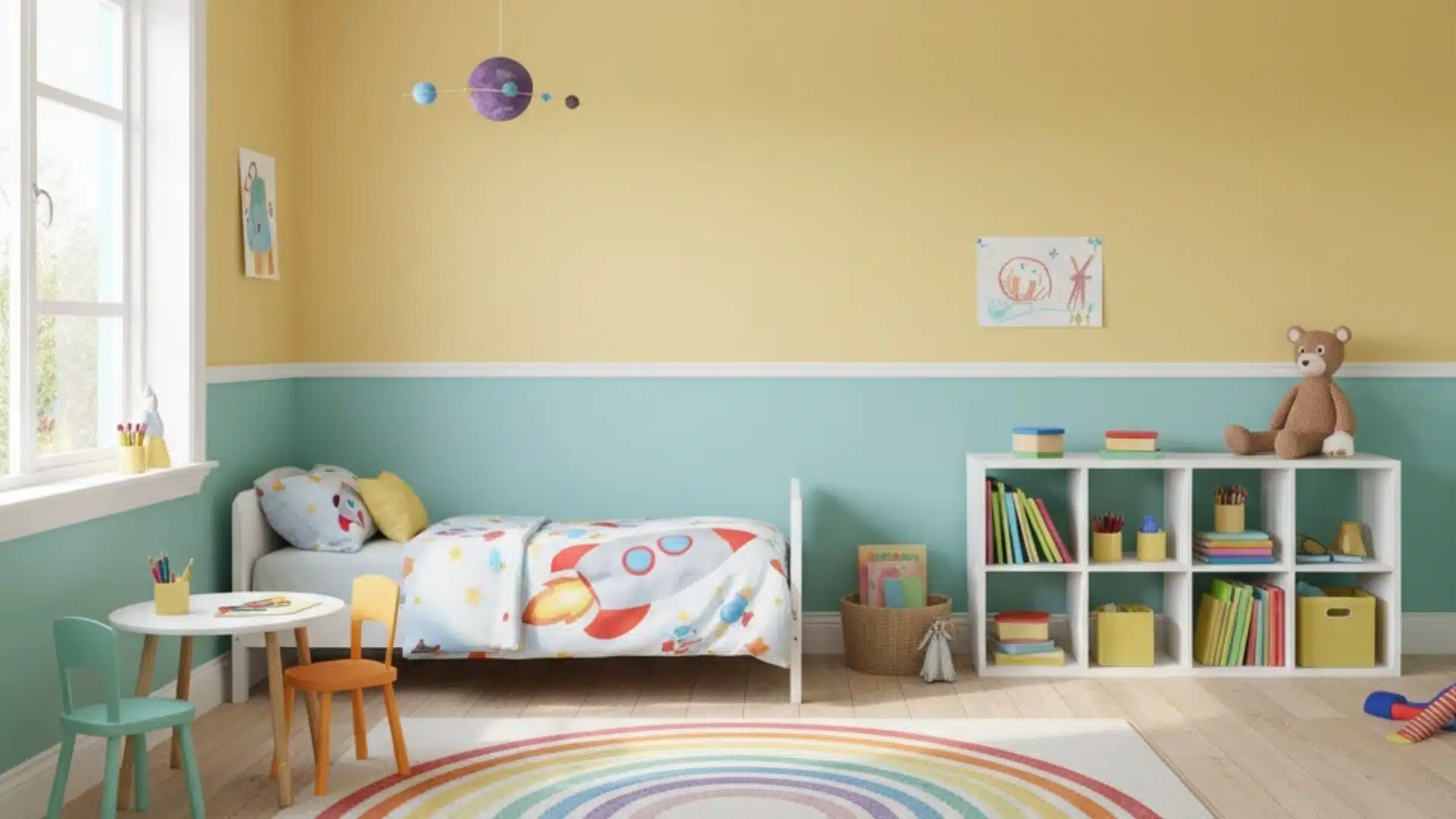
This idea uses a plain, flat MDF strip that is budget-friendly and simple enough for quick DIY projects.
It creates a neat dividing line that works well in kids’ rooms, apartments, and other spaces that change often.
The simplicity makes it easy to paint or customize, while still giving the room a clean, neat, low-stress finish.
Tips to enhance:
- Add stenciled shapes for a playful touch
- Use metallic caulk on edges for a faux inlaid effect
17. Smooth Rounded Bullnose Chair Rail
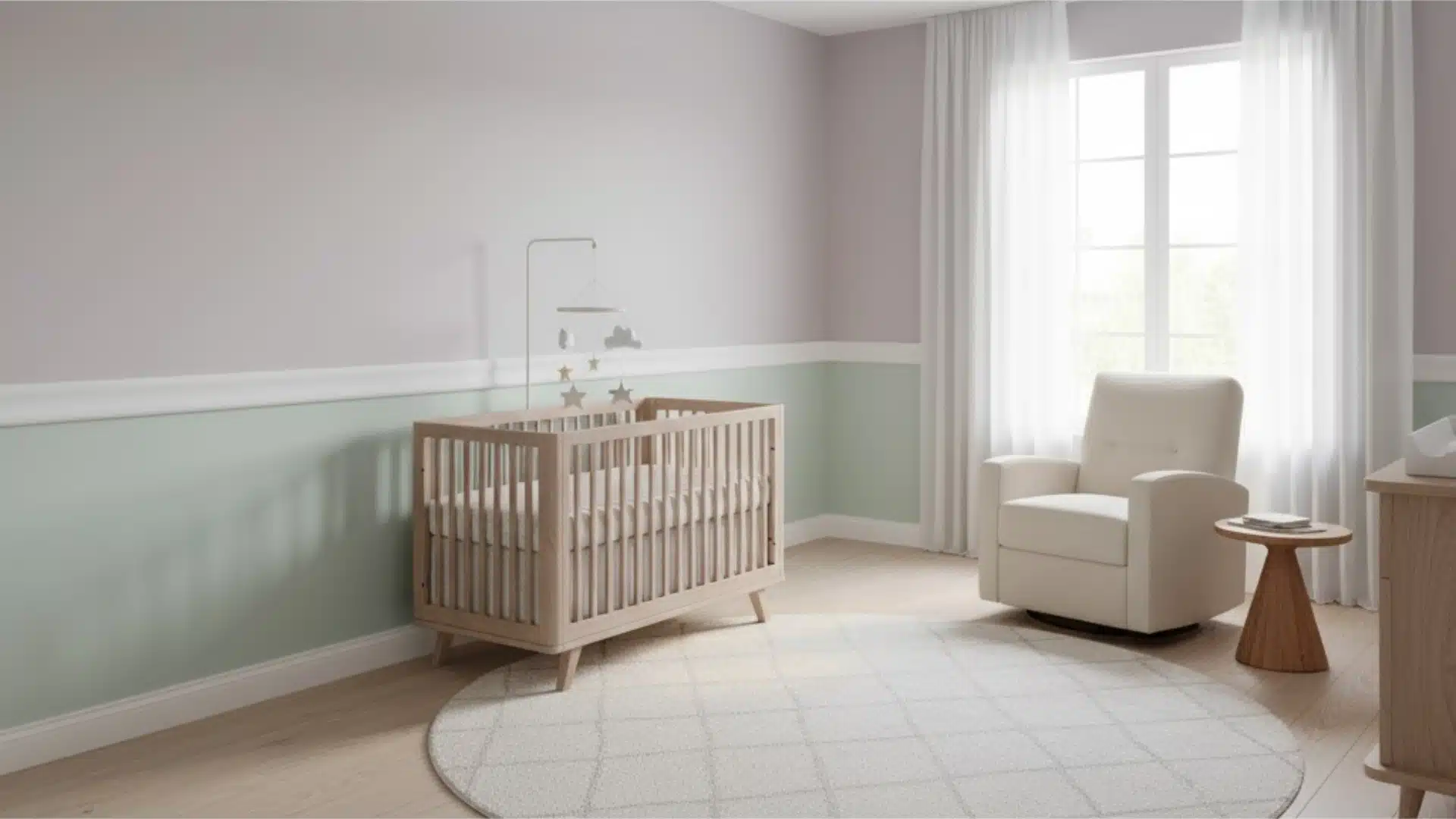
This design features a soft, rounded edge that feels gentle and safe, making it great for nurseries, gyms, or busy spaces.
The curved shape smooths the line between wall sections and adds a subtle, flowing look.
It works well in rooms with rounded furniture or soft textures because everything blends smoothly and feels comfortable, with no abrupt transitions.
Tips to enhance:
- Wrap the rail in fabric tape for a soft texture
- Add gradient paint on the curve for a warm glow
18. Floating Chair Rail Effect with Shadow Gap
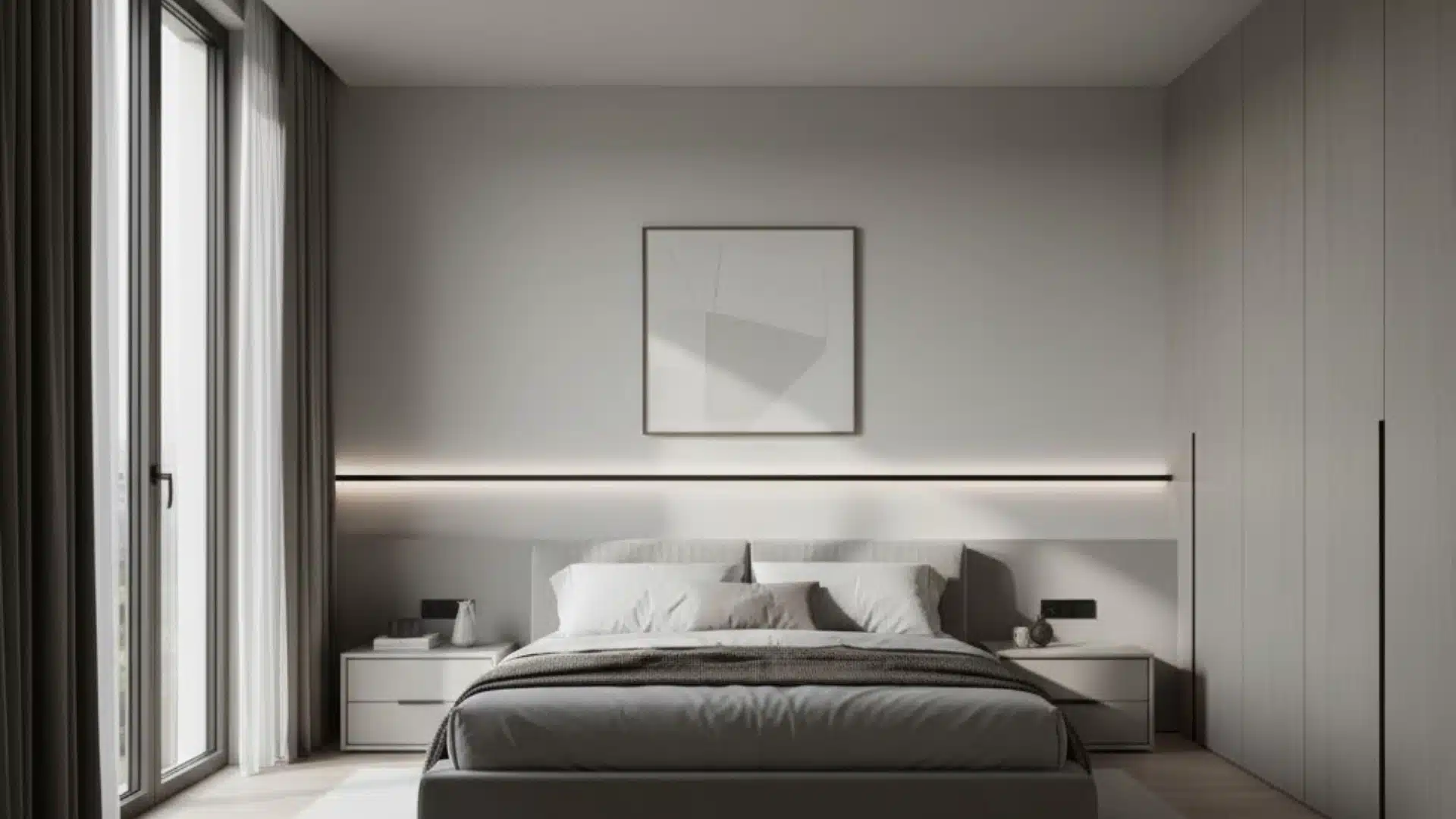
This idea mounts the rail slightly away from the wall, creating a shadow line that makes the rail appear to float.
The lifted effect adds depth and airiness that works well in small bedrooms, lofts, or reading corners.
The shadow line shifts with light, bringing a fresh artistic feel that keeps the room visually interesting without adding heavy detail.
Tips to enhance:
- Adjust gap size for unique shadow patterns
- Hide tiny speakers behind the gap for soft audio
19. Mixed Material Rails Combining Wood and Metal
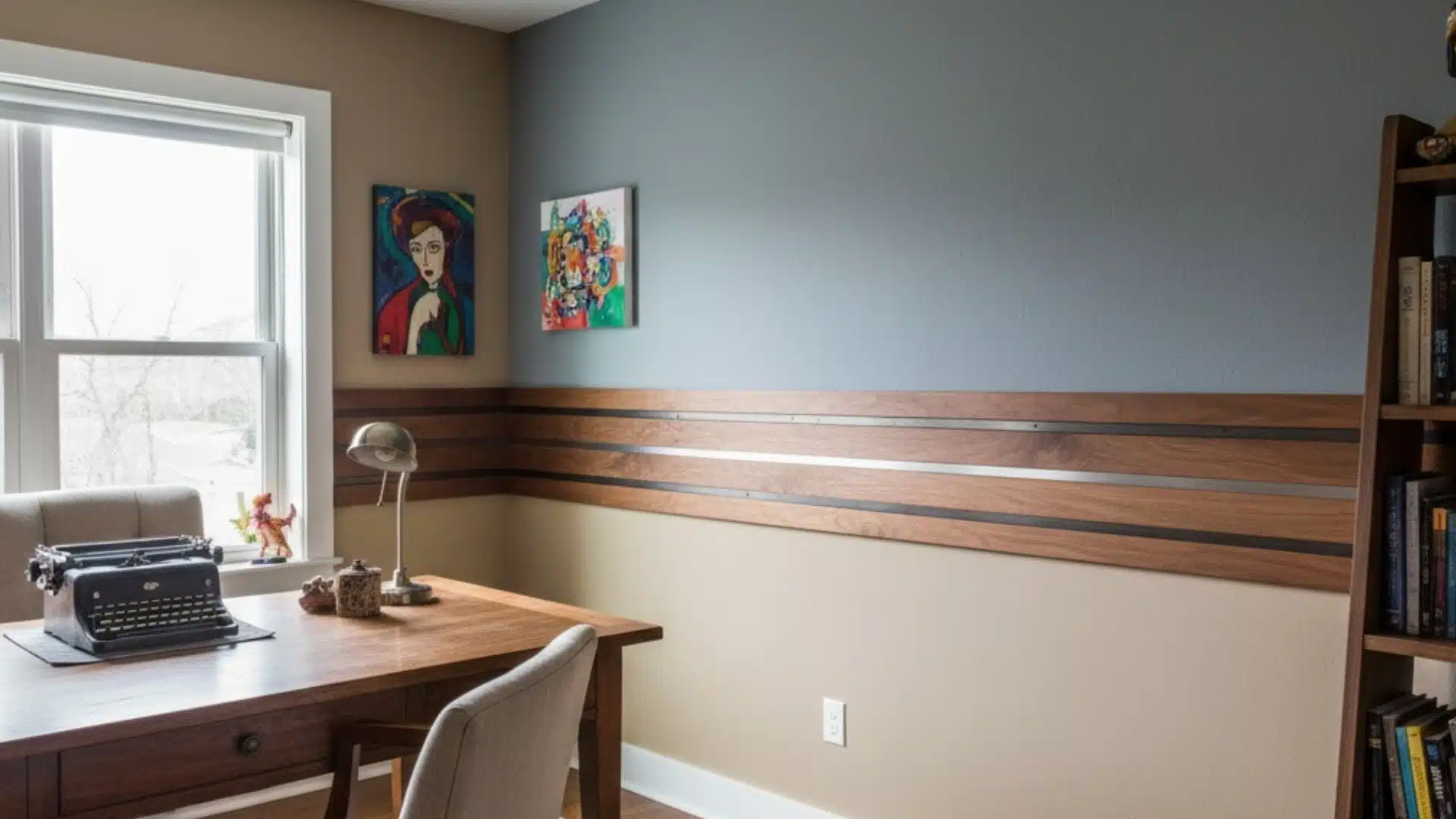
This style combines warm wood with cool metal accents to create a balanced mix of textures.
The combination works well in creative spaces, cafes, and home offices where you want something bold but still warm.
The mix lets you tie together different decor pieces and gives the wall a fun, modern energy without making the room feel crowded or mismatched.
Tips to enhance:
- Add riveted joints for a handmade look
- Use temperature-changing pigments for color shifts
20. Dark Walnut Stained Rails for Dramatic Contrast
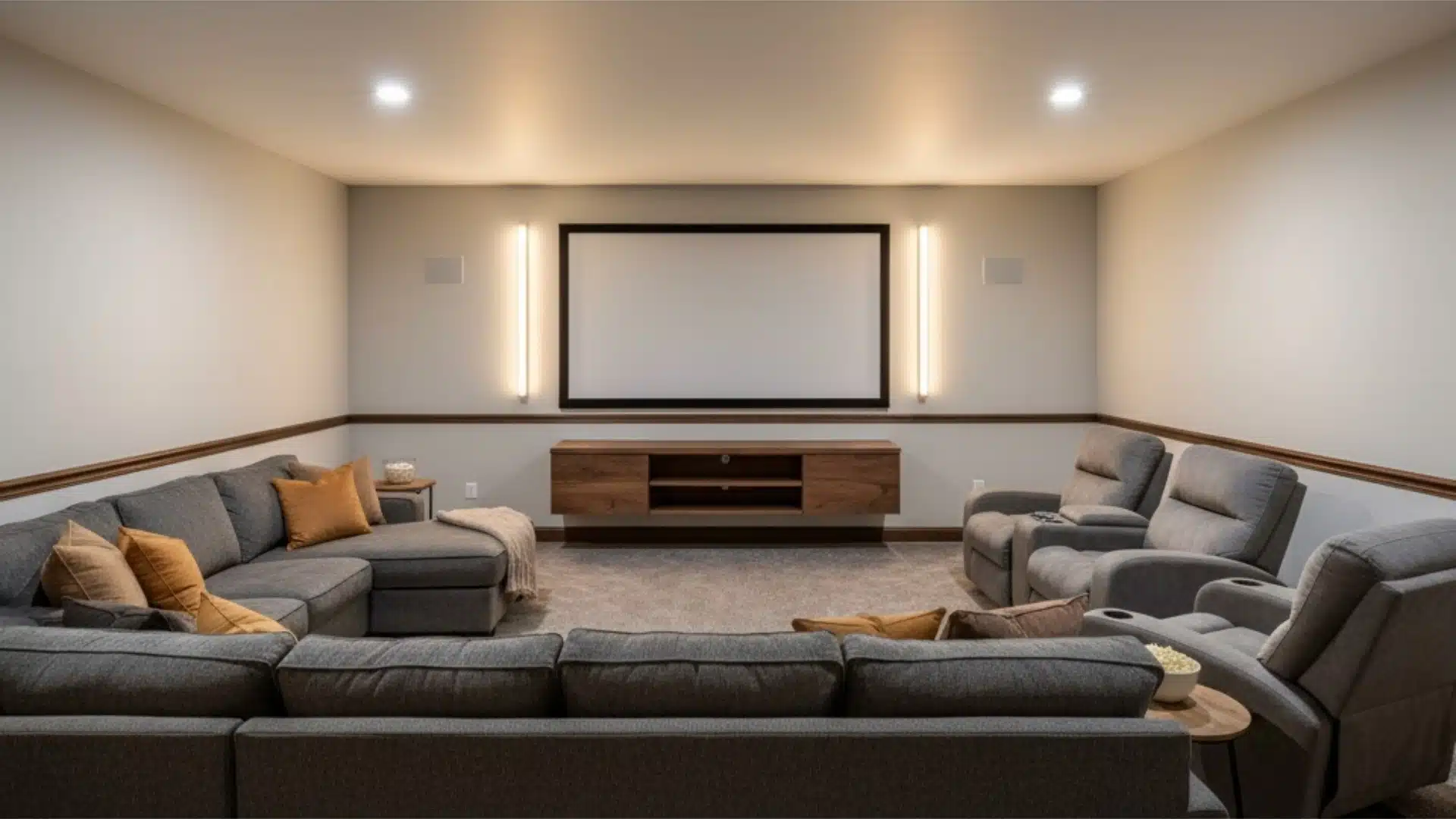
This idea uses a dark walnut stain to create a strong contrast against lighter walls, giving the room a deep, dramatic look.
The rich tone adds warmth and works especially well in home theaters, studies, or spaces meant for evening relaxation. It highlights the natural wood grain, adding a grounded and organic touch to the room.
This style suits best in areas that benefit from cozy lighting and warm finishes, creating a comfortable atmosphere with minimal effort.
Tips to enhance:
- Carve small details to expose lighter wood
- Pair with velvet panels below for rich texture
21. Composite Moldings with Intricate Profiles
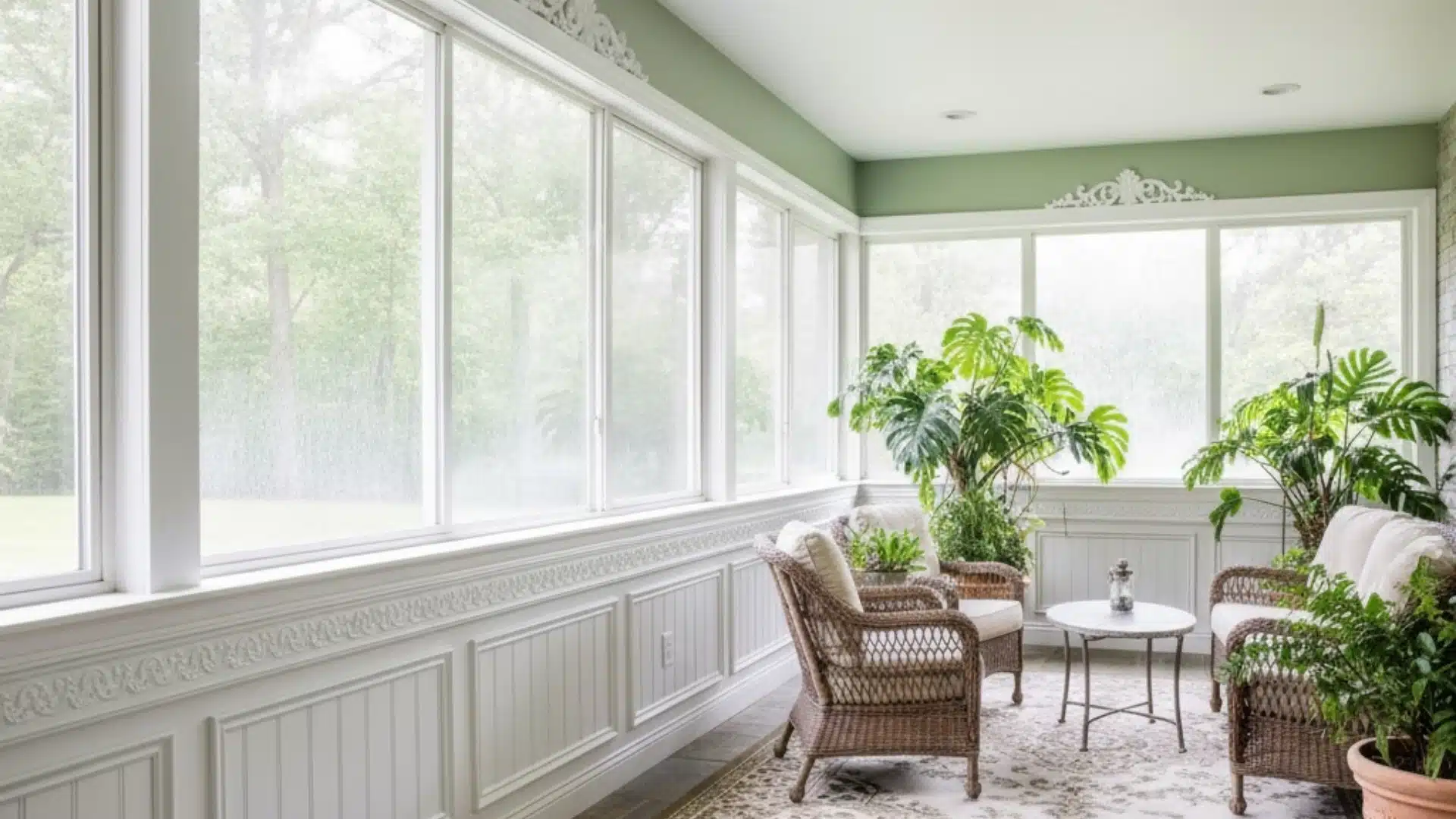
This design uses engineered composite materials shaped into detailed profiles, such as curves and scrolls.
It offers the look of carved wood without the upkeep, making it perfect for humid areas or high-traffic spots. The details bring charm and style while staying durable and easy to clean.
This style works well in sunrooms, patios, or any space that needs decorative detail with less maintenance.
Tips to enhance:
- Add 3D-printed accents for custom shapes
- Use UV pigments for soft sunlight highlights
How to Choose the Best Chair Rail for Your Space?
Choosing the right chair rail is pretty simple when you break it down, and it helps your space look stylish without feeling overdone.
- Pick a style that fits your home’s look, whether it is classic, modern, or rustic.
- Choose a material such as wood, MDF, PVC, or metal, depending on your budget and the room.
- Match the rail size to your wall height so the room feels balanced.
- Decide if you want the rail to protect the wall or only add style.
- Pick a color that blends with the wall or stands out for contrast.
- Keep your budget in mind since fancy wood costs more than simple MDF.
In short, you just need to match the rail with your room design and think about what you want the rail to do for you.
In my experience, rail height should scale with ceiling height, not just wall height. A rail set at 36 inches can look off-center in a room with 9 or 10-foot ceilings, so measure your actual wall before cutting anything.
A note on cost: material and labor prices vary a lot by region and material choice, so check with a local supplier or contractor for current pricing before you budget your project.
Essential Tools and Materials for Installing Chair Rails
Before you begin installing your chair rail, this is a complete list of tools and materials you will need for the project.
| Tools | Materials |
|---|---|
| Level | Chair Rail Molding |
| Pencil or Marker | Liquid Nails Construction Adhesive |
| Stud Finder | Caulk |
| Miter Saw | Paint |
| Finish Nailer | Finishing Nails |
| Measuring Tape | Sandpaper or Sanding Sponge |
| Caulk Gun | Painter Tape |
| Cloth for cleaning purposes | Paint Brush or Roller |
If possible, get a second person too, as this project can be difficult to handle on your own.
Step-By-Step DIY Guide to Installing Chair Rails
Now that you and your tools are ready, below is a step-by-step DIY guide to install chair rails on your own:
Safety tip: wear eye protection when using a finish nailer or miter saw, and keep the nailer’s safety tip engaged until it’s pressed against the wood.
Step 1: Measure and Mark the Chair Rail Height
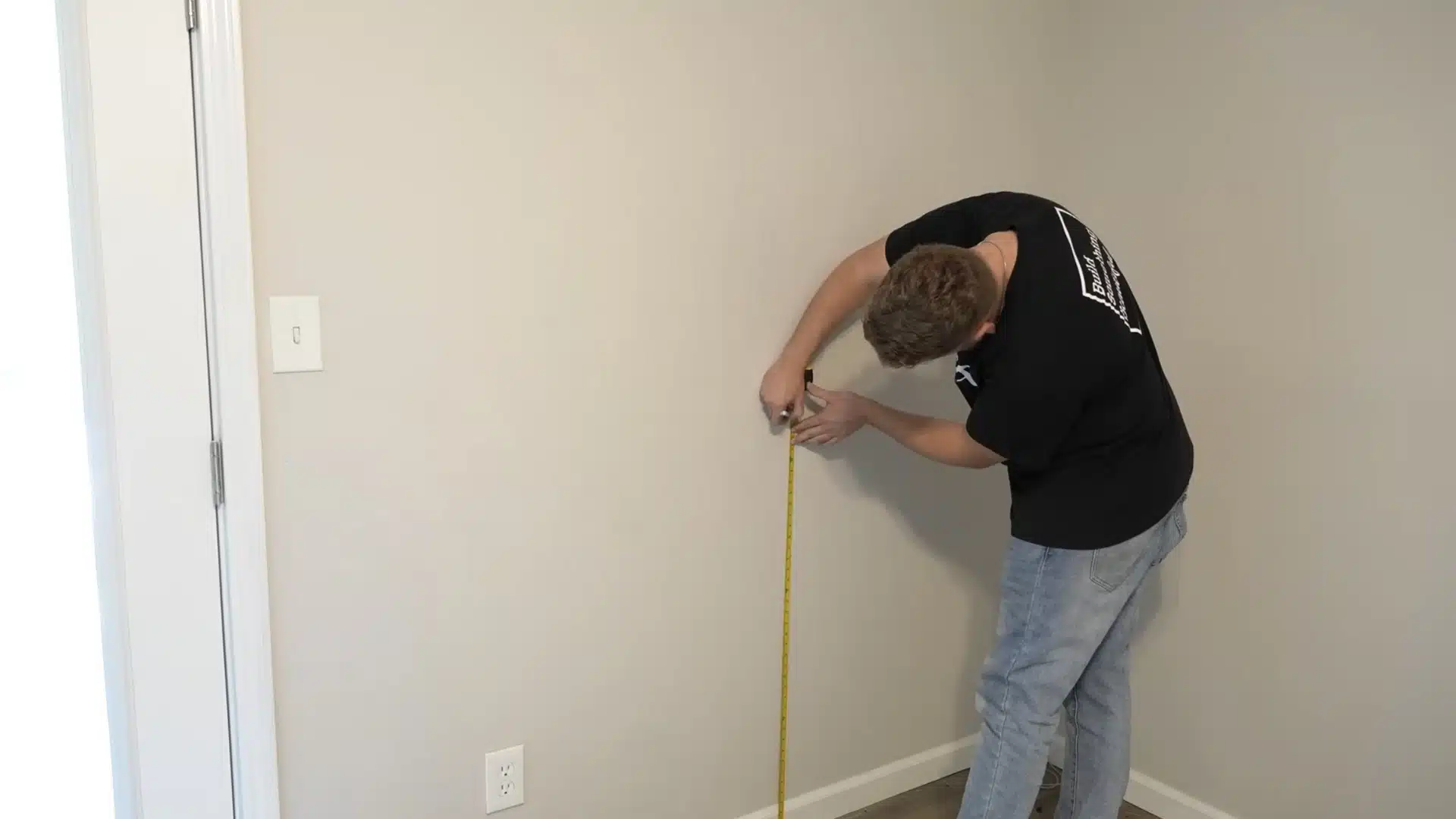
Start by choosing the height where you want the chair rail to sit and mark that spot in several locations around the room.
Many people place the top of the rail around 36 to 40 inches from the floor, depending on the molding size. Use a level to connect your marks and adjust them until the line is straight.
This first step sets the foundation for a clean installation.
Step 2: Locate and Mark Your Wall Studs
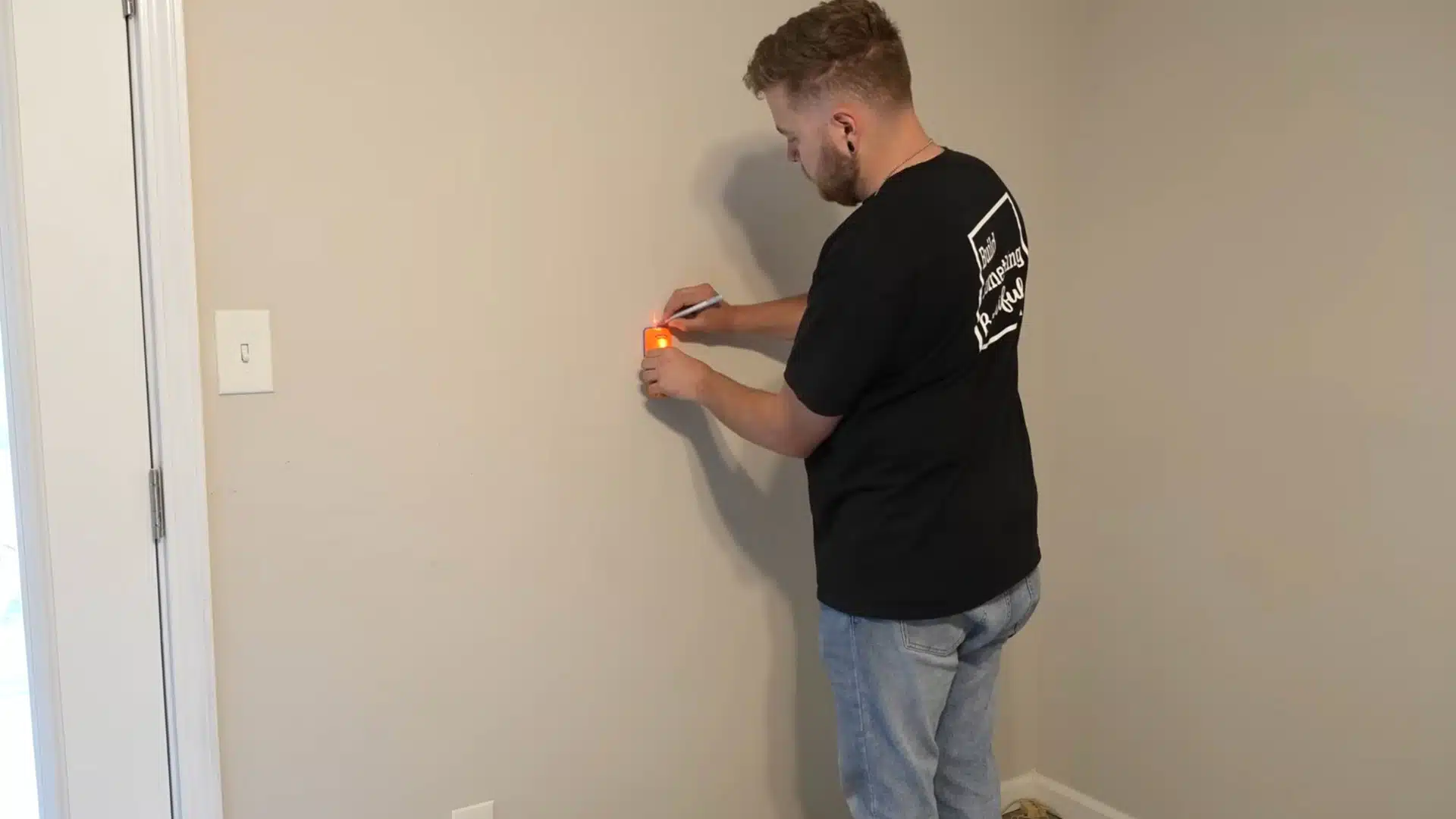
Use a stud finder to locate studs along the wall, as these spots provide strong support for your nails.
Mark each stud clearly so you do not lose the location while working on the next steps. Repeat this around the room to prepare all walls that will receive the chair rail.
Having these marks ready helps the molding stay secure once it is installed.
Step 3: Measure and Cut the Chair Rail Molding
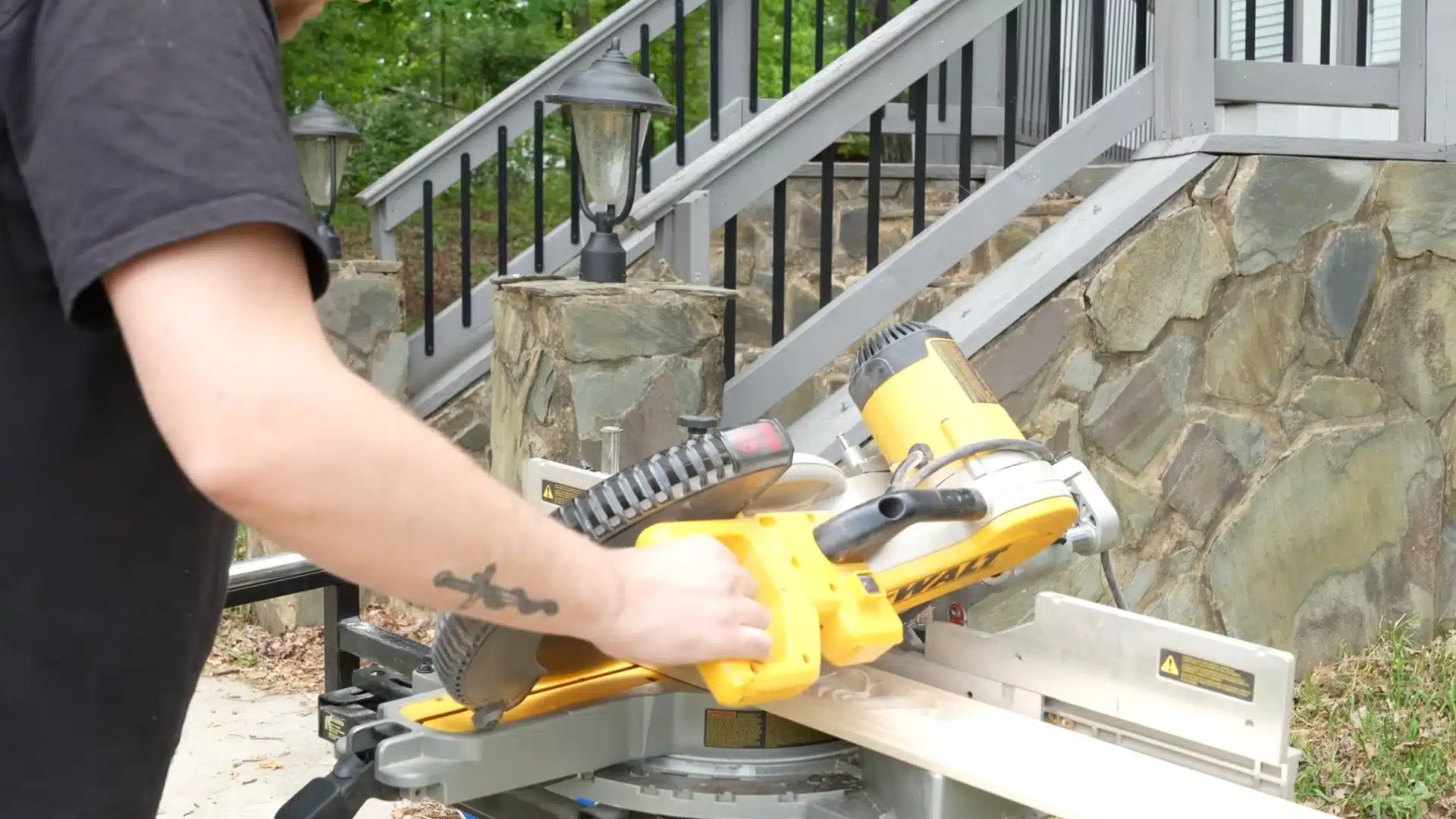
Measure the length of the wall section you plan to cover and transfer the measurement to your molding.
Use a miter saw to make a 45-degree cut for inside or outside corners so the pieces fit together neatly. After cutting, bring the molding inside for a quick test fit to confirm the angle sits correctly.
Adjust your cut if something feels slightly off.
Step 4: Apply Adhesive and Prepare to Mount
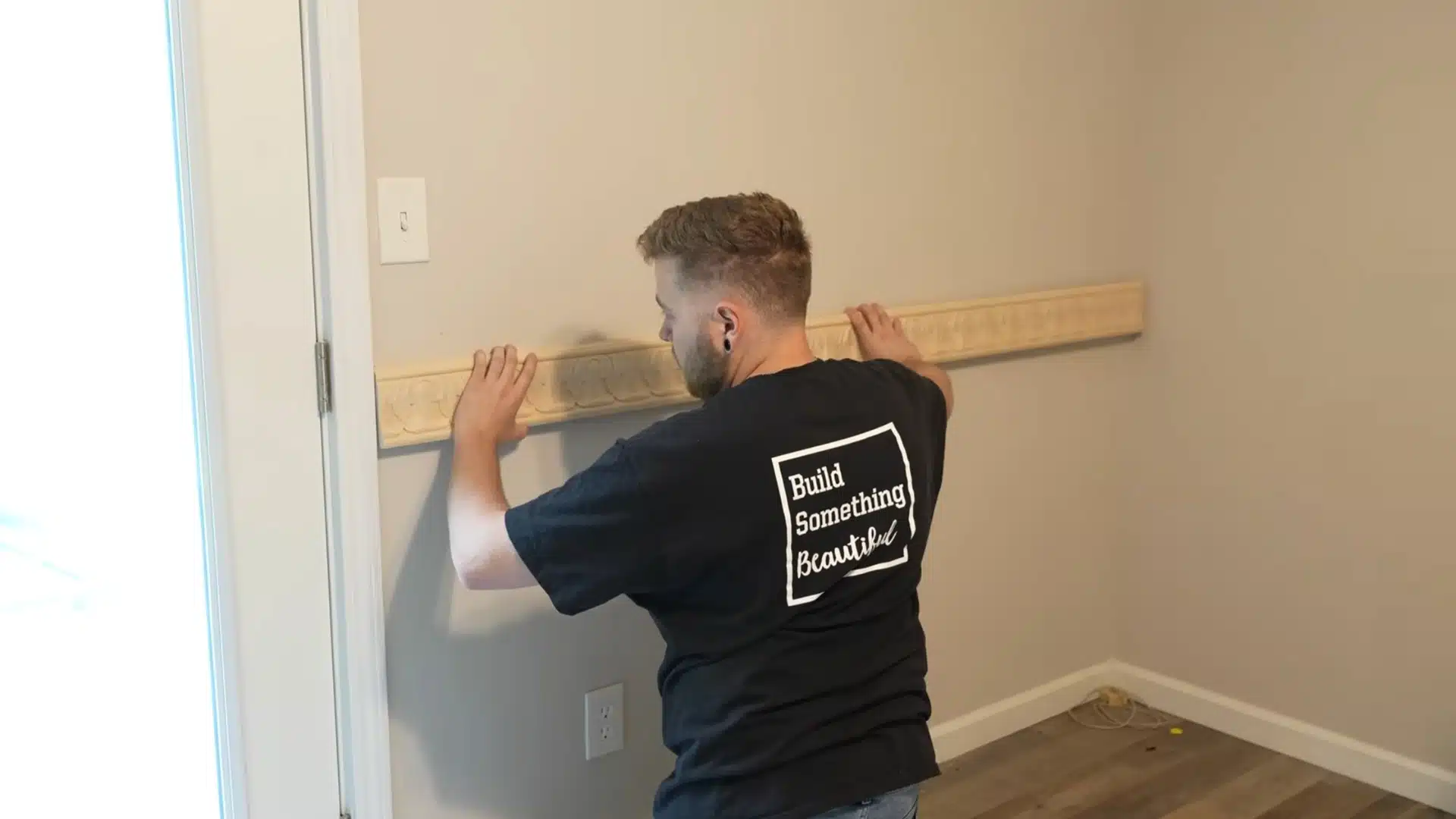
Flip the molding over and add a line of construction adhesive along the back to help it stay in place on the wall.
Hold it gently, without pressing too hard, to avoid smearing the adhesive before it is properly positioned. Make sure it sits along your height line so everything looks neat.
This layer simply gives extra support before you nail the molding down.
Step 5: Secure the Chair Rail with Finish Nails
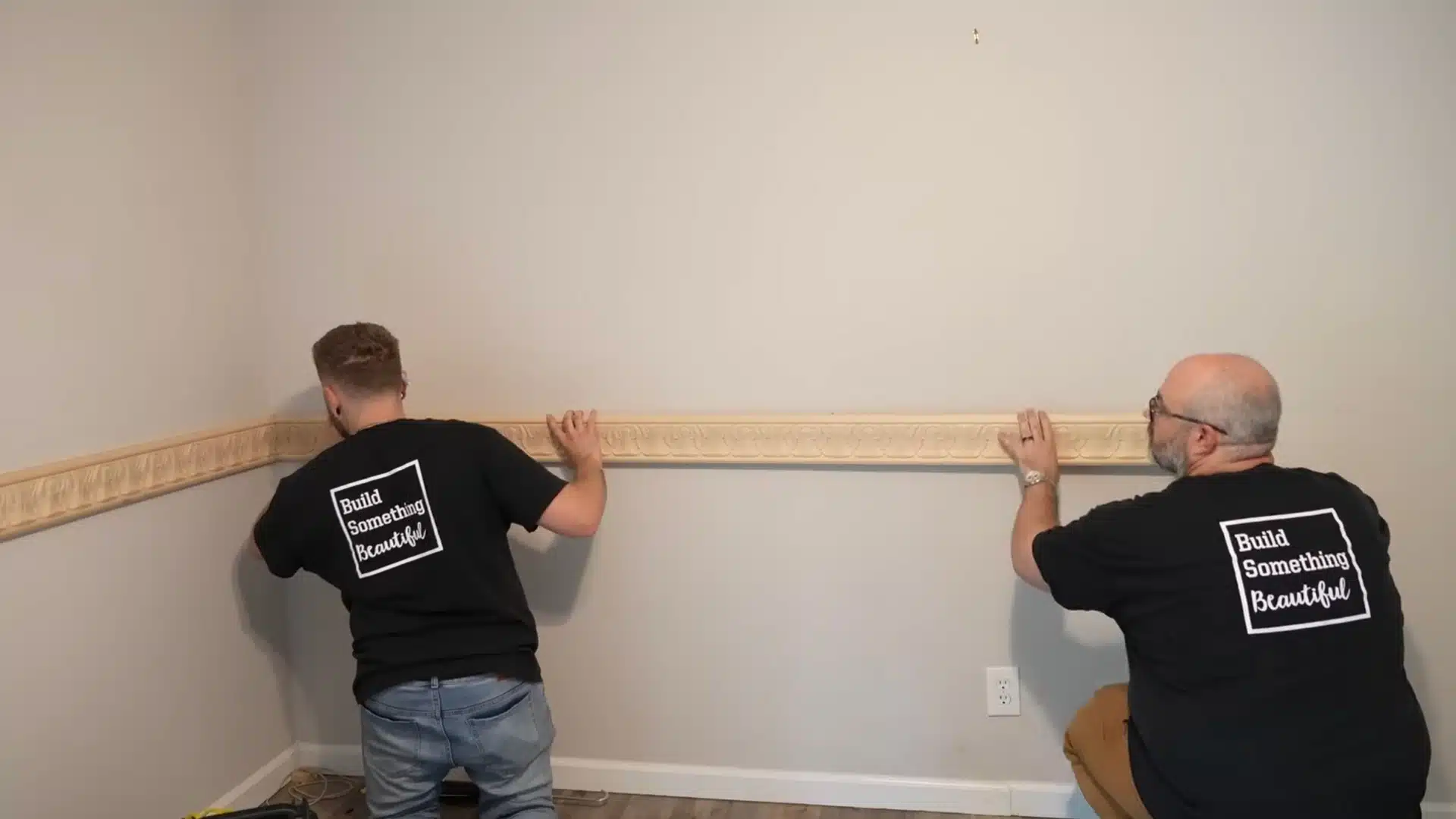
Press the molding against the wall and secure it by driving finish nails into the stud marks you made earlier.
Work slowly to keep the rail level and adjust as needed if something shifts slightly. Having a second person can help hold the molding steady while you nail.
Continue this process around the room until all pieces are firmly attached and aligned.
Step 6: Match Patterns or Details if Needed
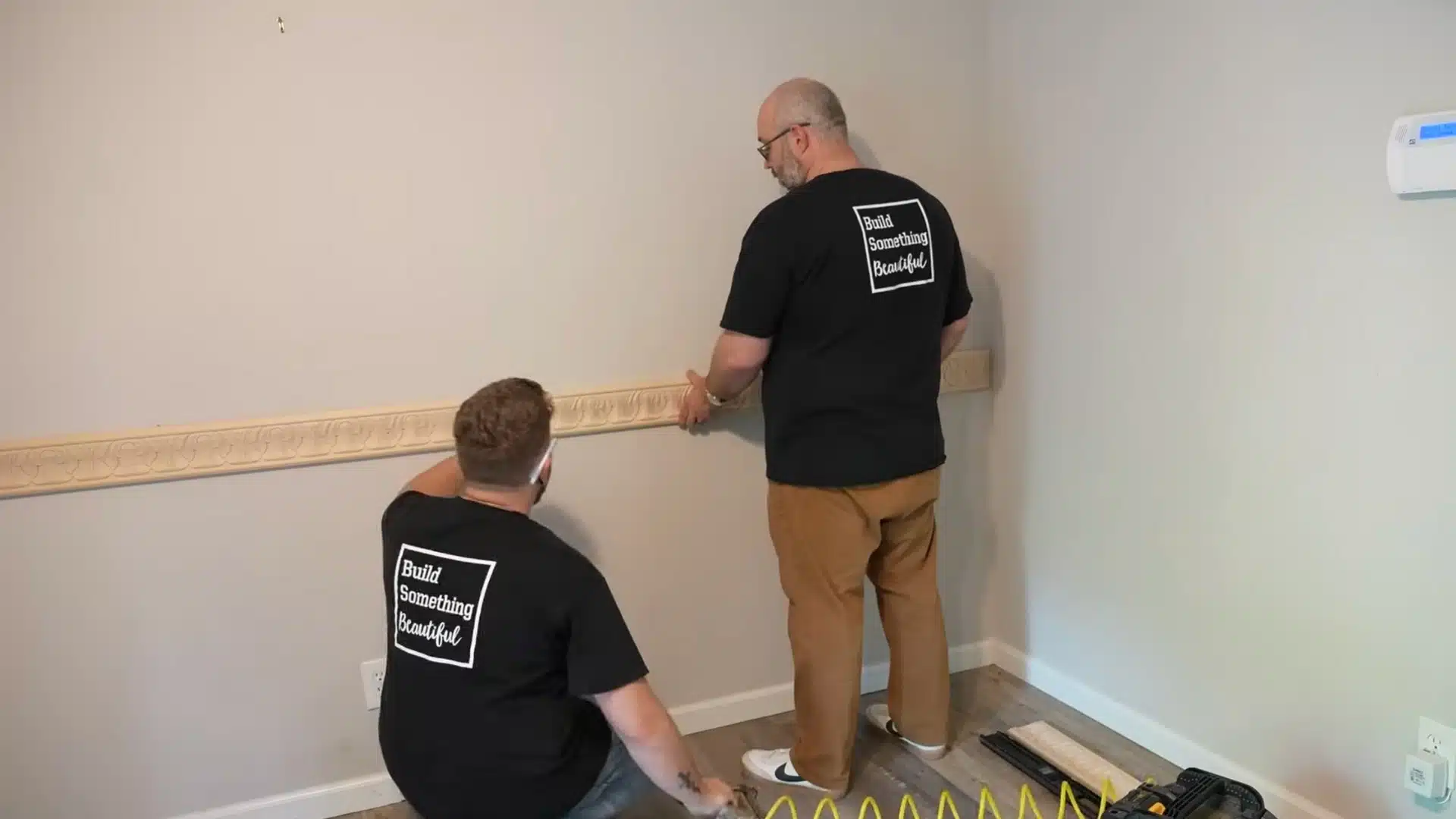
If your molding has carved patterns or repeating designs, line up the details where two pieces meet the create a smooth transition.
Lightly mark the end of one pattern on the next piece to help guide placement. This makes the final look feel more natural and avoids any gaps that interrupt the design.
Careful matching keeps the wall looking polished and balanced.
Step 7: Caulk the Edges and Fill Nail Holes
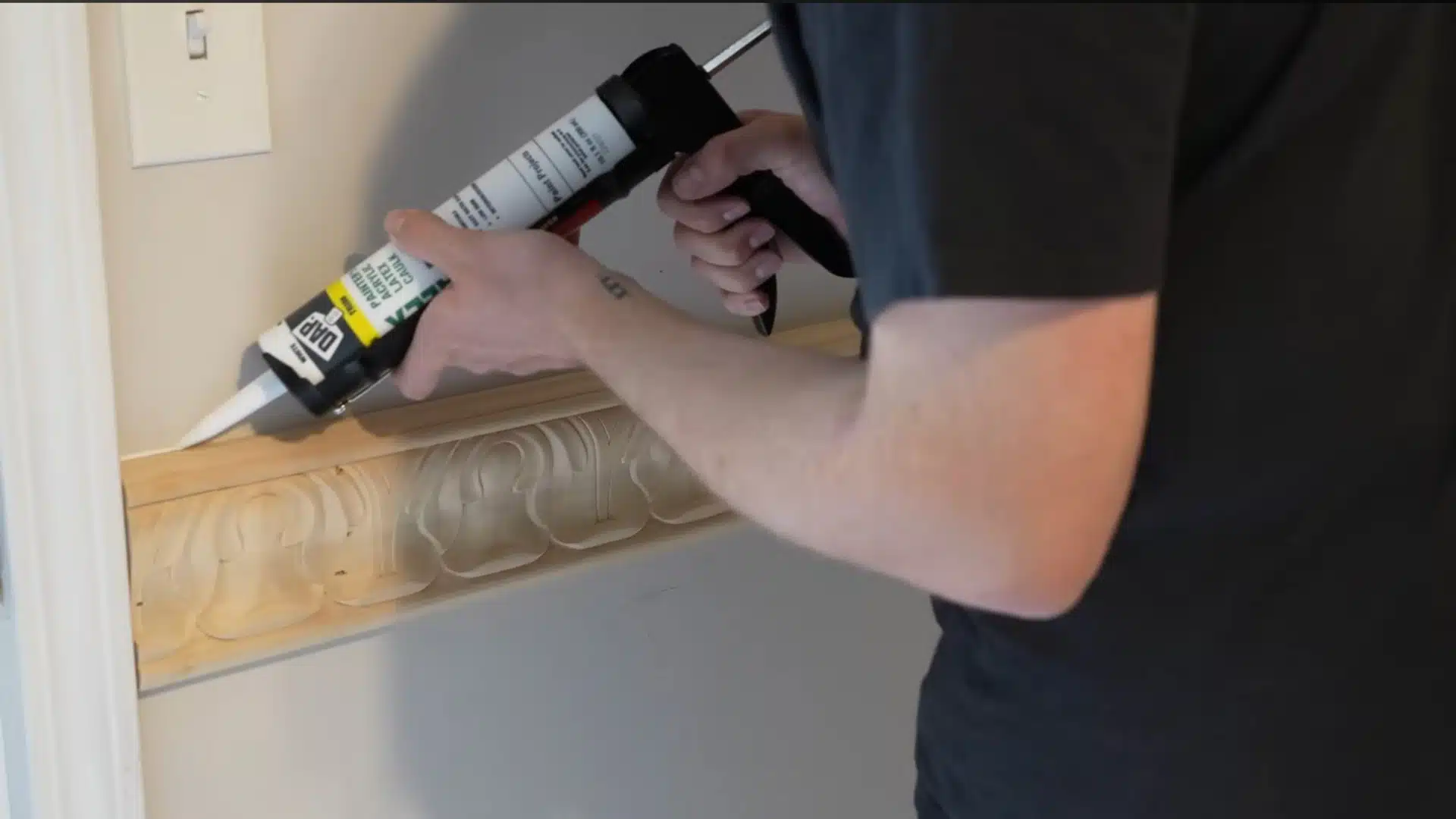
Run a bead of caulk along the top edge of the molding and smooth it with your finger to hide any uneven gaps against the wall.
Add caulk to the corners and nail holes as well to create a clean seam. This step makes the molding look like a built-in part of the space.
Allow everything to dry before painting to avoid smudges and fingerprints.
Step 8: Prepare the Chair Rail for Painting
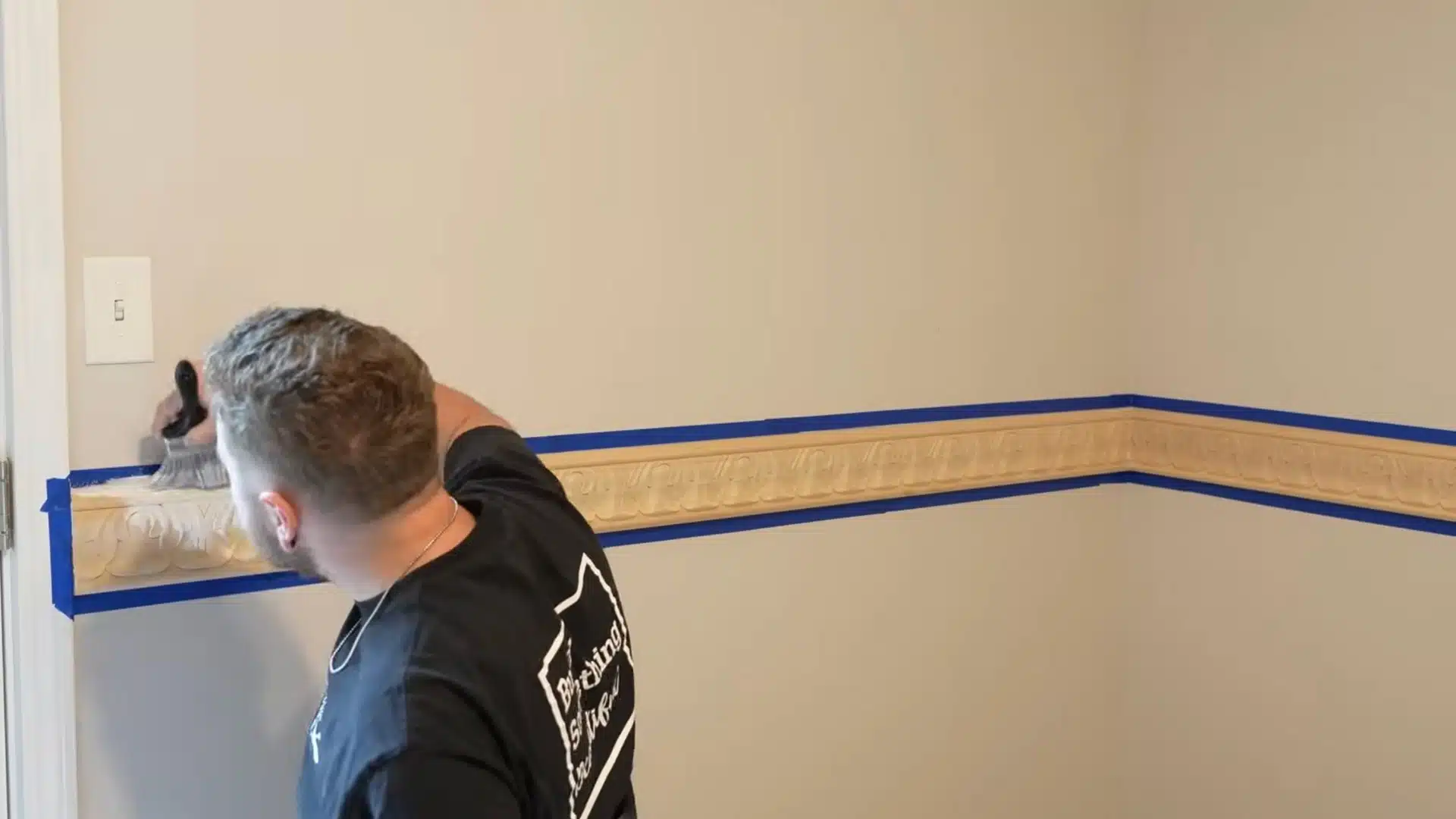
Before you start painting, use painter’s tape to protect the wall and floor so the paint does not spread where you do not want it.
Press the tape firmly to prevent leaks and ensure every edge of the molding is covered. Lightly sand any rough spots and wipe away dust with a clean cloth.
This small prep step helps your paint go on smoothly and creates a sharp finished look.
Step 9: Paint and Enjoy Your Finished Look
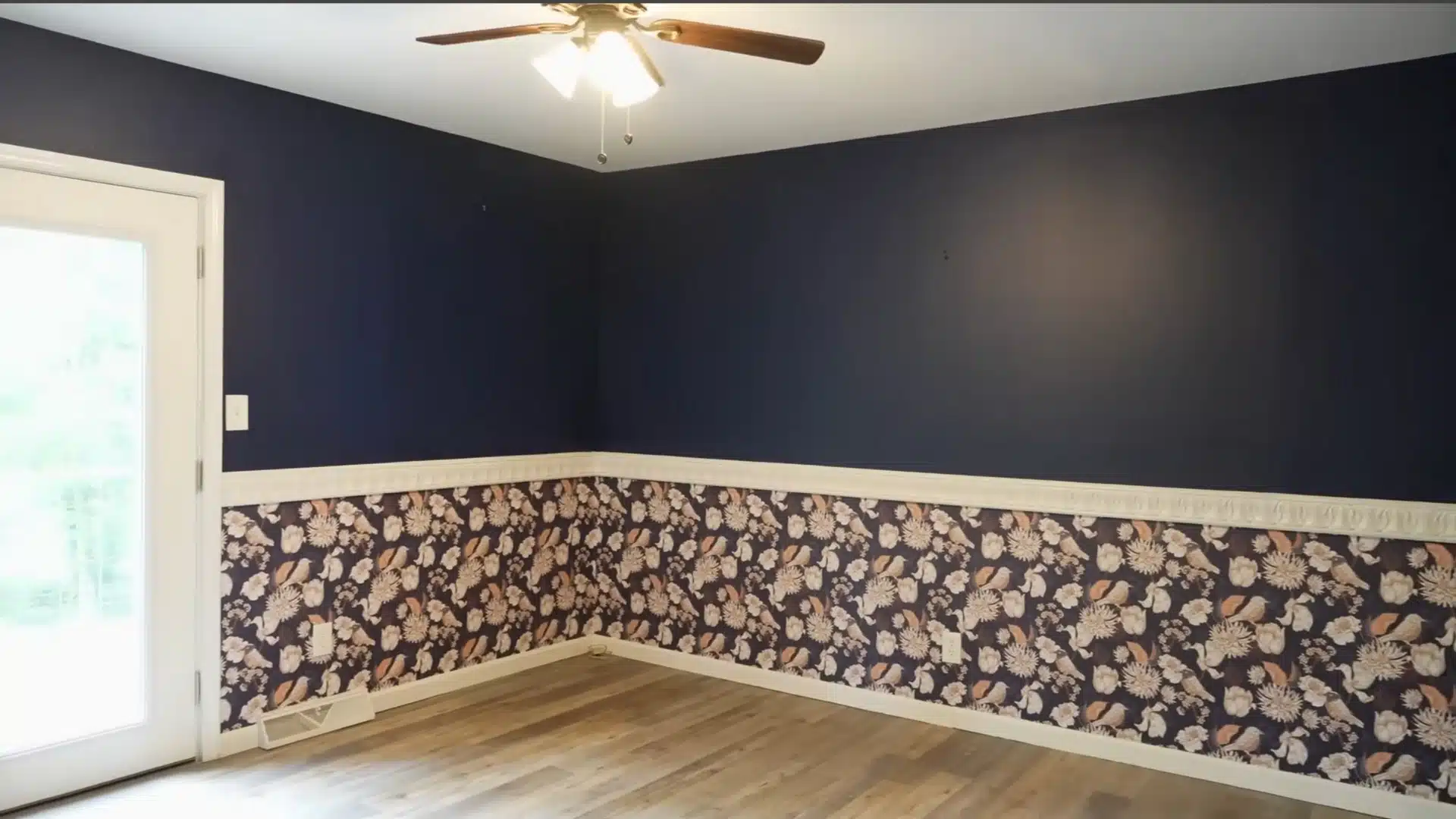
After all the caulk is dry and the surface is taped and cleaned, you can begin painting the chair rail with slow, steady strokes.
Start with the edges and then move across the long sections so the finish looks smooth and even. Allow the paint to dry without touching it to keep the surface clean.
Once everything is dry, enjoy the new chair rail’s fresh style in the room.
This tutorial is based on a helpful video by Osborne Wood Products. For a more visual guide, you can check out the video on their YouTube channel or watch it below.
Chair Rail Maintenance Tips for Long-Lasting Beauty
Keeping chair rails in good condition is simple, and a little occasional care helps them stay looking great for years. Fixing small issues as soon as they appear keeps the rails neat and well-maintained over time.
- Dust them often using a soft cloth to stop dirt from building up
- Wipe painted rails with mild soap and water, and avoid harsh cleaners
- Polish wood rails sometimes to keep them shiny and protected
- Clean spills quickly so the wood or MDF does not soak up moisture
- Watch for loose nails or small dents and fix them right away
- Repaint or refinish the rails every few years to refresh the look
Conclusion
A chair rail is one of the simplest ways to update a room and give your walls a more complete, structured look without a complicated project.
Once you see how much impact a small strip of trim can make, it becomes easier to spot other areas in your home that could benefit from the same upgrade.
Chair rails aren’t old-fashioned; the right style can make a room feel modern, traditional, or comfortably warm.
They work well in living rooms, hallways, dining rooms, and bedrooms because they add definition without overwhelming the space.
If you enjoy DIY projects, installing a chair rail is a quick, beginner-friendly task that brings noticeable results. Which idea suits your home best? Share your thoughts in the comments below.
Frequently Asked Questions
Can You Install a Chair Rail Without Removing The Baseboard?
Yes. Chair rail is installed higher on the wall and does not require any changes to the existing baseboard. The two moldings work independently of each other.
What is The Difference Between a Chair Rail and Wainscoting?
A chair rail is a single strip of molding. Wainscoting is full paneling that covers the lower wall, and it’s often capped with a chair rail at the top. You can install a chair rail on its own without adding wainscoting.
Do I Need a Professional to Install a Chair Rail?
Most homeowners can install a straight run of chair rail themselves with basic tools. Rooms with tricky corners, curved walls, or detailed carved profiles are where hiring a finish carpenter tends to pay off.