You’re halfway through your bathroom remodel when you realize the door barely clears the new vanity. It makes the space feel cramped and less practical.
Most homeowners don’t think twice about door width until something goes wrong. But this single measurement affects accessibility, resale value, and how comfortably your bathroom functions.
Over time, these tight clearances make the bathroom less comfortable and can even lower the home’s resale appeal when buyers walk through.
Getting it wrong costs time and money to fix later, but the good news is that fixing the issue is straightforward once you know the numbers.
In this blog, I’ll list out the standard bathroom door width used in American homes today, compare it with other doors in your house, and explain the current building codes and ADA rules.
I will also give you clear steps to measure and choose the right door for your space.
Why Bathroom Door Width Matters in Home Design?
Bathroom door width affects far more than you might expect. A door that is even two inches too narrow can make it hard to move around when you are carrying towels or stepping out of the shower.
A 28-inch door might work now, but it limits future options if someone needs a walker or wheelchair. It’s the kind of thing you don’t notice until it becomes a problem.
Getting the size right improves daily comfort, keeps the room feeling open, and makes the whole house easier to sell later.
The right width also changes how spacious your bathroom feels. A properly sized door creates better flow and doesn’t fight with your layout.
Beyond convenience, door width impacts your home’s value. Buyers and appraisers look for bathrooms that meet current accessibility standards.
When you’re investing in a bathroom remodel, getting the door right the first time saves you from expensive do-overs down the road.
What is the Standard Bathroom Door Width?
According to Up.Codes, Most bathrooms in modern homes use doors between 30 and 34 inches wide, but the actual walkable space is narrower once you account for the frame and hinges.
Nominal vs. Actual Dimensions
The door labels you see at the store don’t tell the whole story.
The actual slab size and clear opening shrink once frames and hardware are installed, which can affect layout planning, furniture movement, and accessibility requirements.
| Room Type | Nominal Width | Actual Slab Width | Typical Clear Opening | Best For |
|---|---|---|---|---|
| Bathroom (standard) | 30″–34″ | 29¾″–33¾″ | 28″–32″ | Most new homes |
| Bedroom | 30″–36″ | 29¾″–35⅞″ | 28″–34″ | Furniture movement |
| Closet | 24″–36″ | 23⅞″–35⅞″ | 22″–34″ | Space-saving |
| ADA-Accessible Bath | 36″ | 35⅞″ | 32″+ | Wheelchair compliance |
Height Standards
Bathroom door height stays consistent at 80 inches (6 feet 8 inches) across virtually all residential construction in the USA.
This universal standard works with typical ceiling heights and framing dimensions.
You can special-order 84-inch or 96-inch doors for homes with dramatic ceilings or contemporary design preferences, but expect to pay 30-50% more and handle custom framing requirements.
Unless you’re building something architecturally unique, the standard 80-inch height pairs with any width you choose and keeps your project budget-friendly.
Bathroom Door Width vs. Other Interior Doors
Room function and available space determine how wide each interior door needs to be, and bathroom doors follow different rules from those in other areas of the house.
1. Bedroom Door vs Bathroom Doors
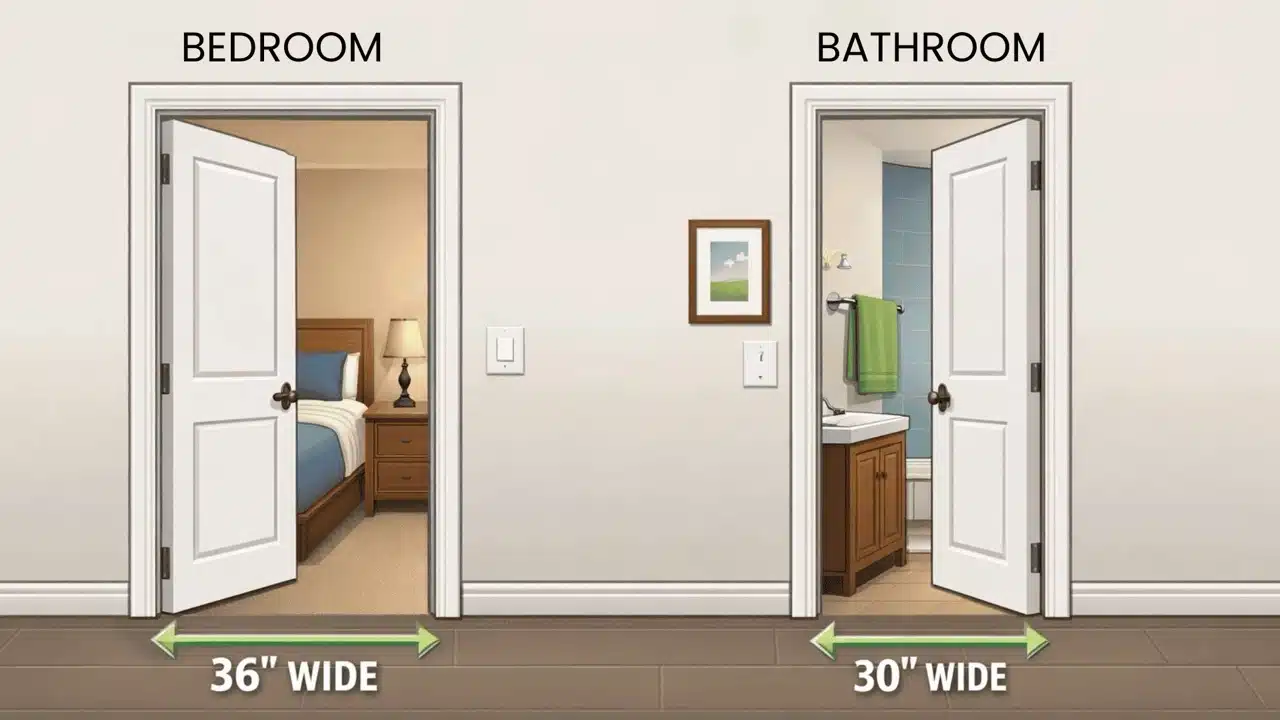
Bedrooms need wider doors, usually 32 to 36 inches, because you’re moving dressers, bed frames, and nightstands through them.
Bathrooms don’t have that problem. The biggest things going in and out are people, towels, and maybe a small cabinet.
This size difference also helps with tight hallway layouts. A 30-inch bathroom door leaves more wall space for light switches, towel bars, or artwork compared to a 36-inch bedroom door.
Builders use this while designing floor plans where every inch matters, since bathrooms feel more private with narrow doors, while bedrooms need wider openings that match standard interior door width and height for better flow across the house.
2. Closet Door vs Bathroom Doors
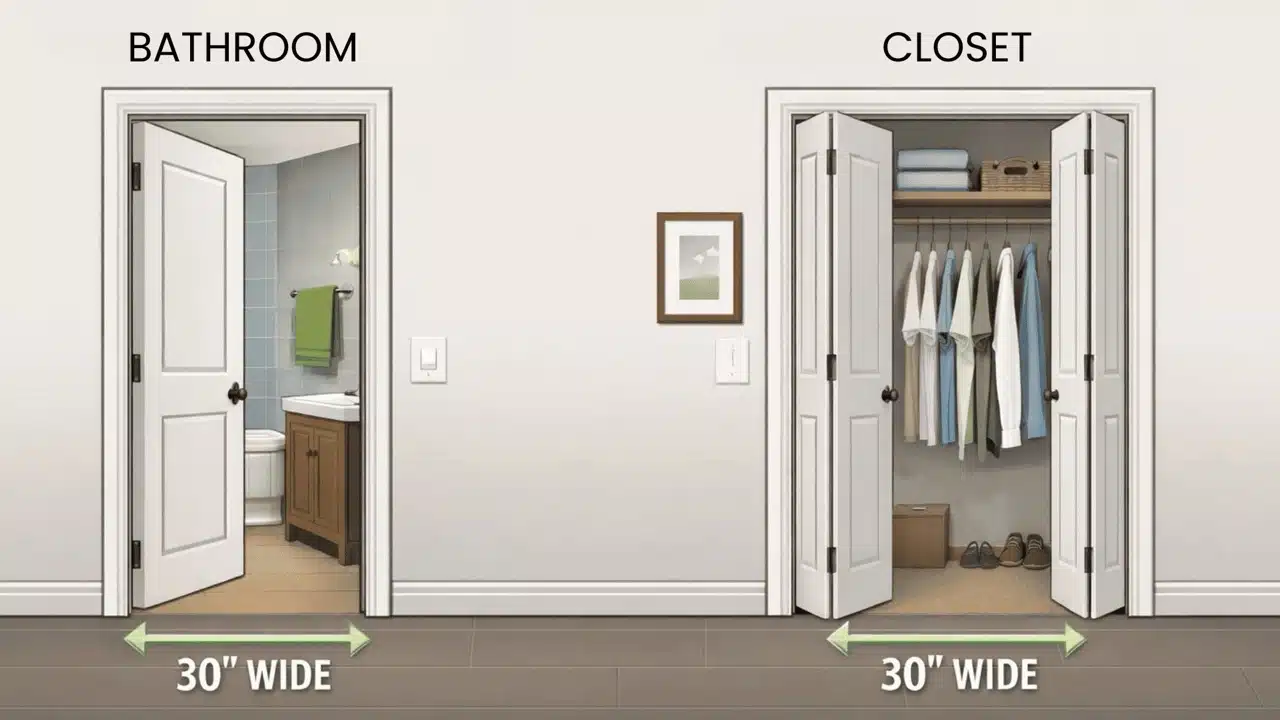
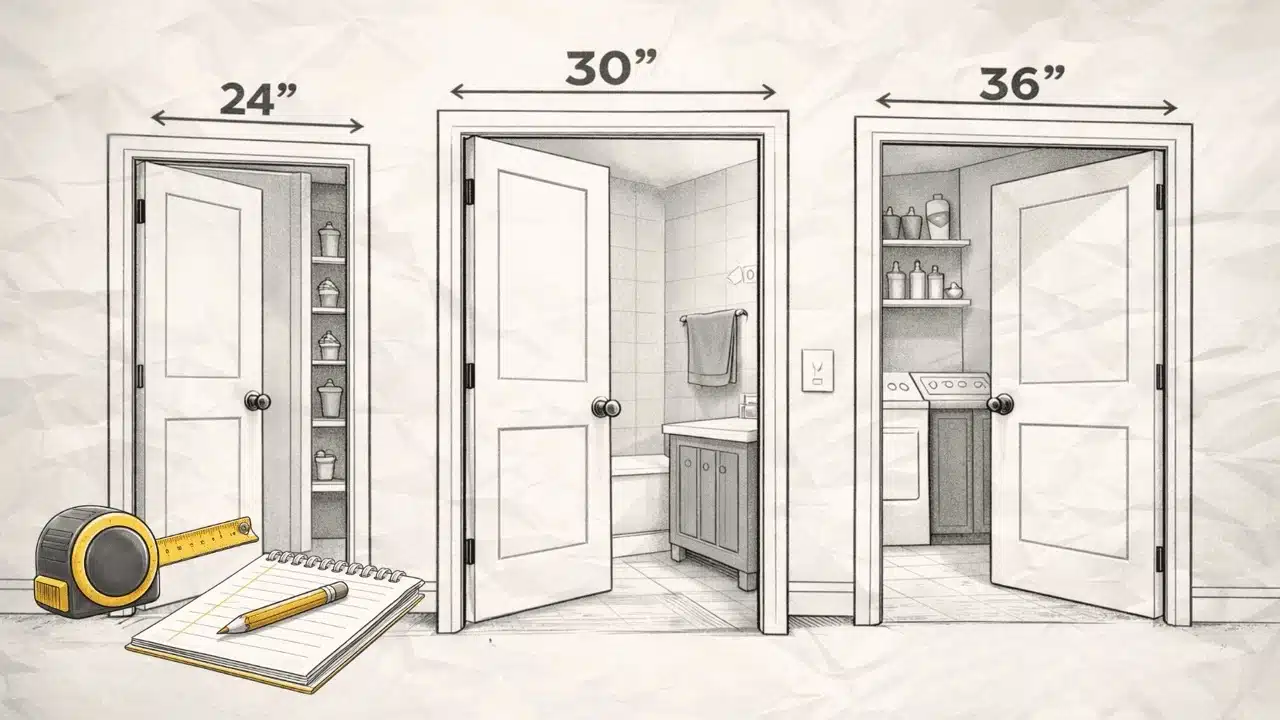
Closet doors often measure 24 to 36 inches, and many are bifold or sliding to save floor space.
A typical bathroom door width falls right in the middle of that range, but closets can go narrower because nothing large ever passes through them.
Using the same 30-inch door for both a small closet and the bathroom creates a clean, matched look throughout the house.
The main difference is that bathroom doors usually swing out or into the hallway, while closet doors fold or slide inside the opening.
3. Utility and Laundry Room Door vs Bathroom Doors
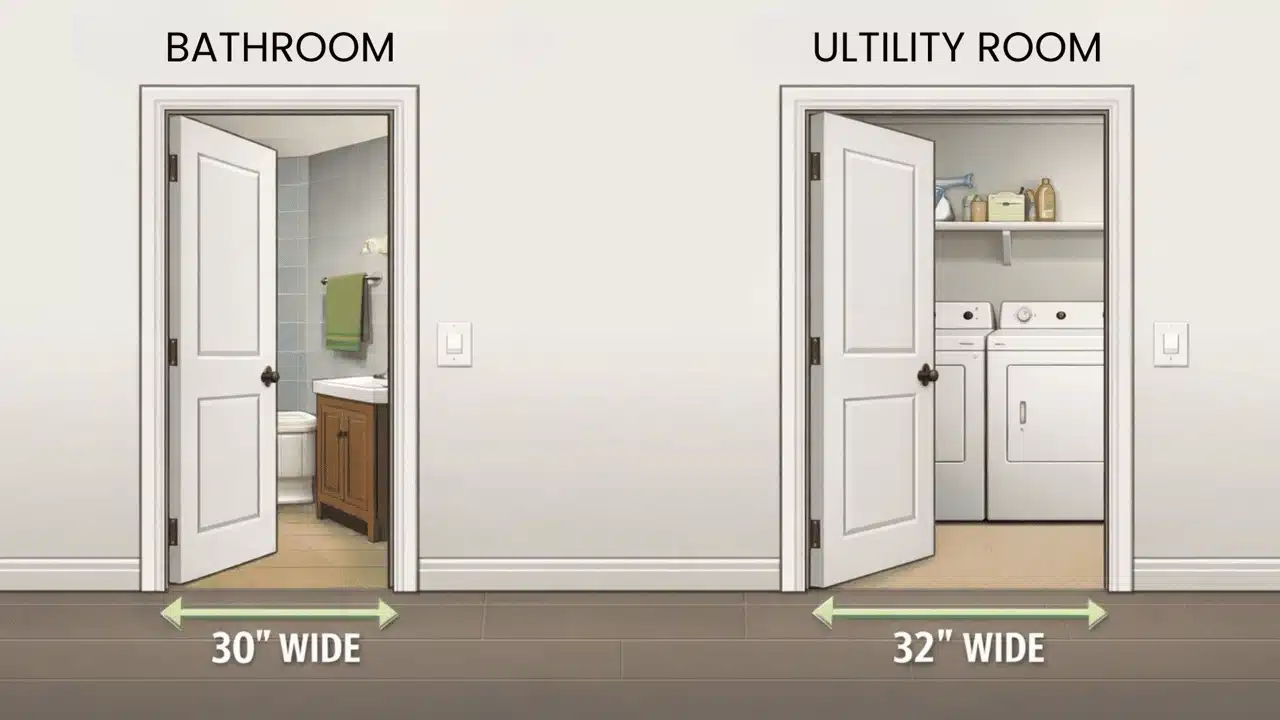
Utility rooms commonly use 30 to 32 inches doors so washers, dryers, and cleaning supplies can pass through, slightly wider than the most common bathroom door width of 30 inches.
Both rooms share the same need for efficient space use, but utility doors sometimes open wider to move appliances.
Keeping the bathroom door width close to the utility door size makes the whole hallway look uniform and simplifies trim and hardware choices during a remodel.
4. Pantry Door vs Bathroom Doors
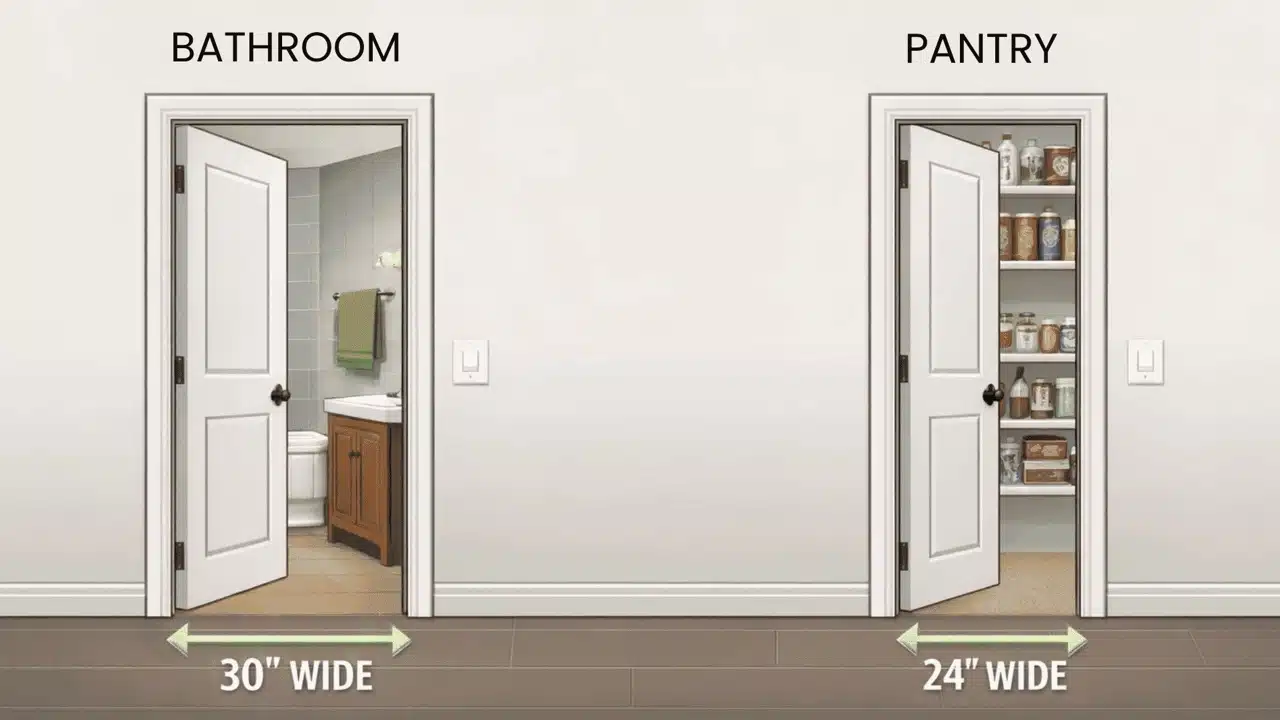
Pantry doors are frequently 24 to 30 inches wide because the space is used only for storage.
This is the narrowest common interior door size, sometimes even narrower than a compact bathroom door. It works well because no one needs to stand inside for long periods.
Matching the bathroom door width to the pantry door can be a smart choice in small homes where every inch of wall matters.
But the notable thing is that most designers recommend at least 28 inches for the bathroom to keep daily movement comfortable.
Building Codes and Accessibility Standards for Bathroom Door Width
Building codes don’t mandate a specific bathroom door width for private homes, but the IRC provides general guidance, while the ADA sets clear requirements for accessible bathrooms.
International Residential Code (IRC) Requirements
The IRC doesn’t set a hard minimum width for bathroom doors, like the emergency egress doors in bedrooms, giving builders flexibility based on space constraints and homeowner preferences.
However, local building departments often have their own interpretations and amendments to the code.
Most inspectors in new construction expect at least a 28 to 32-inch clear opening for bathrooms, even though it’s not explicitly written in the base code.
The International Code Council’s IRC guidelines leave room for regional adaptation, so always check with your local building department before finalizing door sizes.
ADA Compliance for Accessible Bathrooms
The Americans with Disabilities Act requires a minimum 32-inch clear opening when the door swings open to 90 degrees for wheelchair-accessible bathrooms.
This typically means installing a 36-inch nominal door to account for the frame, hinges, and doorstop, which reduce the opening size.
Private homes aren’t legally required to meet ADA standards unless they receive federal funding or are built as rental properties in certain situations.
Still, many homeowners choose ADA-compliant widths for aging-in-place planning or resale value.
Factors That Affect Your Door Size Choice
Door size decisions impact comfort, layout flow, accessibility, and long-term value, so measuring clearances and planning ahead helps avoid daily frustration and costly changes later.
- Fixture Clearance: Distance between door swing and toilet, vanity, or shower prevents daily collisions.
- Door Swing Direction: Inward-swing doors require clearance; outward-swing doors affect hallway traffic and safety.
- Plumbing and Wall Constraints: Existing pipes, studs, and electrical limit where you can widen openings.
- Visual Consistency: Matching other interior doors creates a unified hallway appearance throughout your home.
- Resale Value Considerations: Wider, accessible doors attract more buyers and significantly increase a home’s marketability.
- Future Mobility Needs: Planning for walkers, wheelchairs, or aging parents avoids costly renovations later.
Fixture clearance and door swing direction are especially important in tight bathrooms, which is why many homeowners explore creative bathroom layouts to maximize comfort and movement.
Conclusion
Choosing the right bathroom door width can make your bathroom easier to use, safer, and more comfortable every day.
A narrow door may seem fine now, but it can feel limiting during cleaning, moving items, or future home changes. I always think it is better to plan a little ahead than to fix the same problem later.
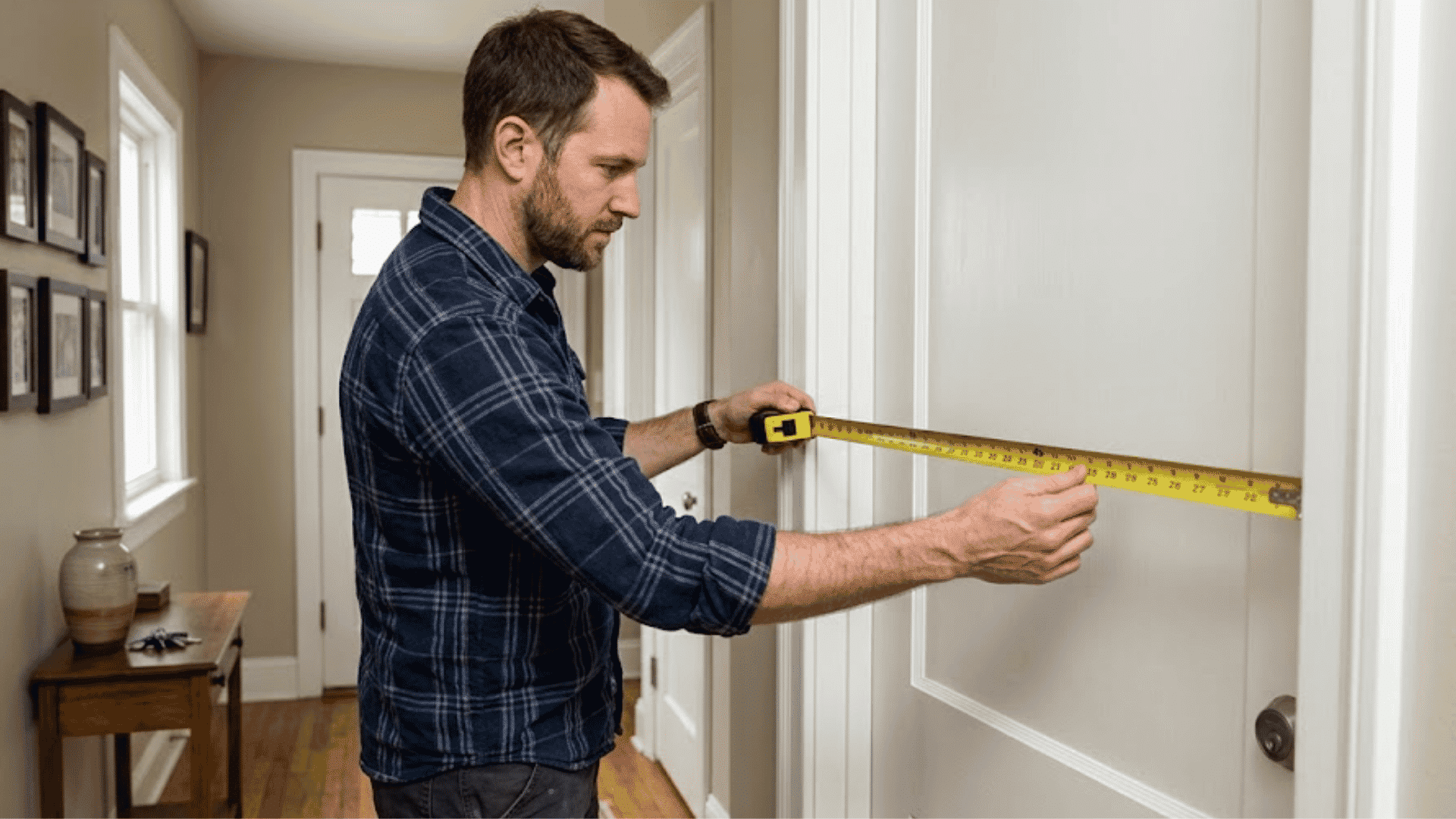
You should measure the doorway, check the frame, and think about who will use the bathroom most often.
A wider bathroom door can also help if someone needs extra space for a walker, wheelchair, or support. Small size choices can make a big difference in how your bathroom feels and works over time.
What bathroom door width are you planning for your space? Tell us, share with us in the comments below.
Frequently Asked Questions
How Much Does It Cost to Replace a Bathroom Door with a Wider One?
Expect $300–$800 for materials and labor, but widening the opening adds $500–$1,500 for framing and drywall work.
Can I Install a Wider Bathroom Door Myself, or Should I Hire a Professional?
DIY works for same-size replacements, but widening openings requires structural knowledge, cutting studs, and ensuring proper support.
What’s the Minimum Door Width I Can Use for a Small Powder Room?
Code allows 24 inches in tight spaces, but 28 inches feels much more comfortable for daily use.