A kitchen island is meant to be the heart of the home, but it often becomes a frustrating traffic jam.
Nobody wants to bump into corners while carrying a hot pot or squeeze past guests just to reach the sink. The problem is almost never the island itself. It’s the space around it.
When the layout is off, that beautiful centerpiece becomes a daily headache, making your kitchen feel crowded and stressful.
When it’s just right, it becomes the heart of the home where everyone wants to gather. But you don’t need to use guesswork to get it right.
Understanding the proper kitchen island spacing requirements ensures your space remains open, safe, and stylish.
Read below as I break down the essential rules and creative ideas to help you plan an island that fits your room perfectly and makes life much easier.
What is the Minimum Kitchen Size for a Kitchen Island?
Before going into clearance measurements, you need to confirm your kitchen can actually accommodate an island.
As a general rule, a kitchen should be at least 13 feet wide to allow for a standard 4-foot island with 42 inches of clearance.
Here is a practical sizing guide:
- Under 10 feet wide: Skip the fixed island. A movable butcher block cart gives you prep space without a permanent commitment and can be stored when not in use.
- 10 to 12 feet wide: A narrow island (24 inches deep or less) is possible if clearances on both sides meet the 42-inch minimum. Avoid adding seating.
- 12 to 14 feet wide: A standard island (36 to 48 inches wide) with one seating side fits comfortably at this range.
- 14 feet or wider: You have room for a full island with seating on multiple sides, additional storage, or built-in appliances.
If you are also exploring kitchen island ideas for an open-plan or barn-style build, the same clearance rules apply regardless of the overall design aesthetic, so it pays to nail the numbers first.
Barndominium kitchen island ideas are a great reference if you are working with a large open floor plan and want to see how spacing plays out at scale.
Standard Kitchen Island Dimensions
Most kitchen islands start at 24 inches long and 24 inches deep, but 48 to 60 inches long works better for daily use.
Standard height is 36 inches, while bar-height islands are 42 inches. Before building, tape the size on the floor to test the walking space and comfort.
Standard Kitchen Island Spacing Requirements
The official clearances that separate cramped kitchens from ones that actually feel good to use every single day.
1. Clearance Around All Four Sides of Island
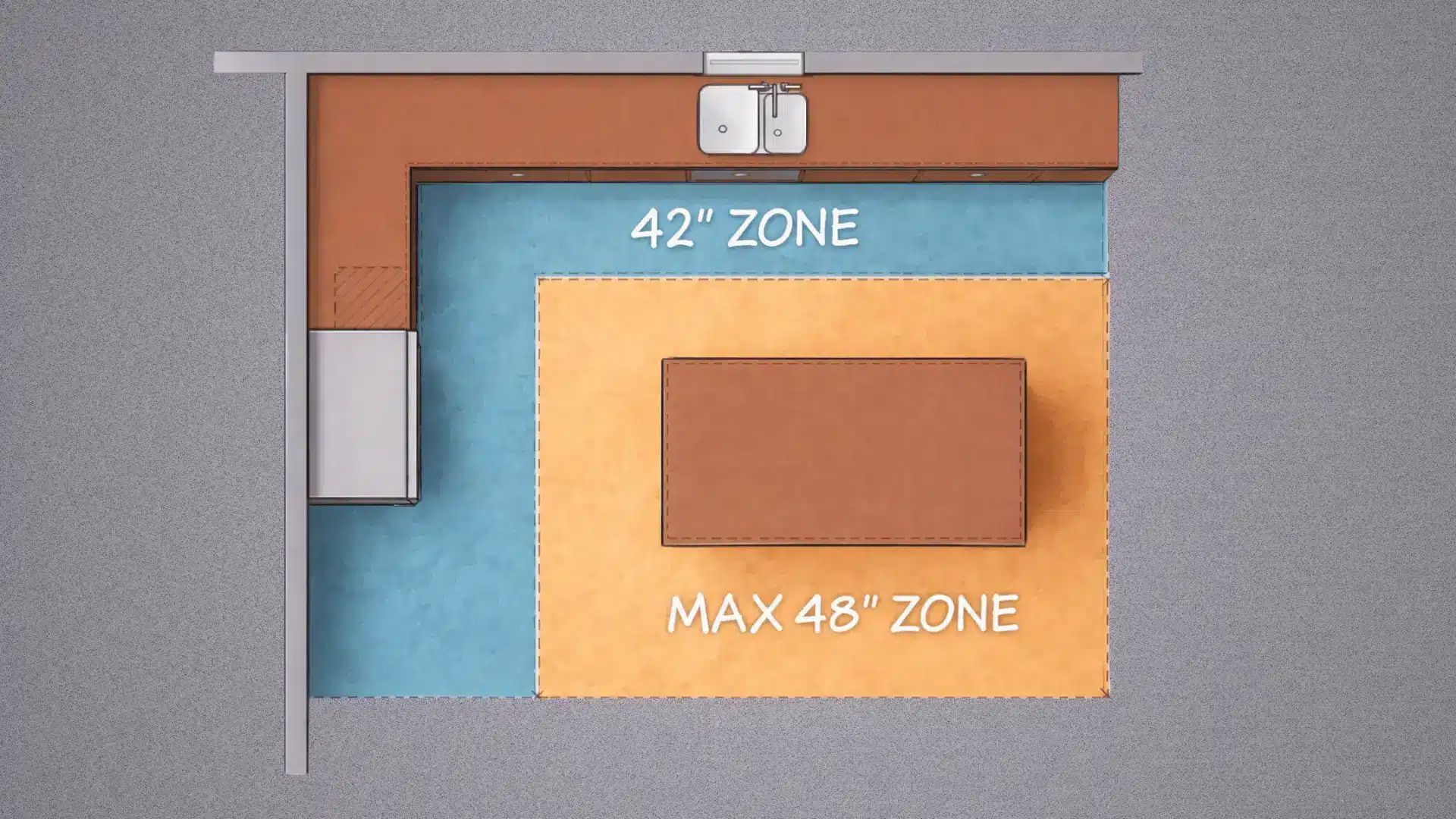
The National Kitchen & Bath Association (NKBA) requires a minimum of 42 inches on all sides for single-cook kitchens and 48 inches when two or more people share the space.
This distance is measured from the island edge to the opposite cabinet, appliance, or wall. Anything under 36 inches is considered unsafe under building codes.
These rules are published in the official NKBA Kitchen & Bath Planning Guidelines and are the standard that every certified designer nationwide follows.
2. Walkway & Aisle Width Requirements
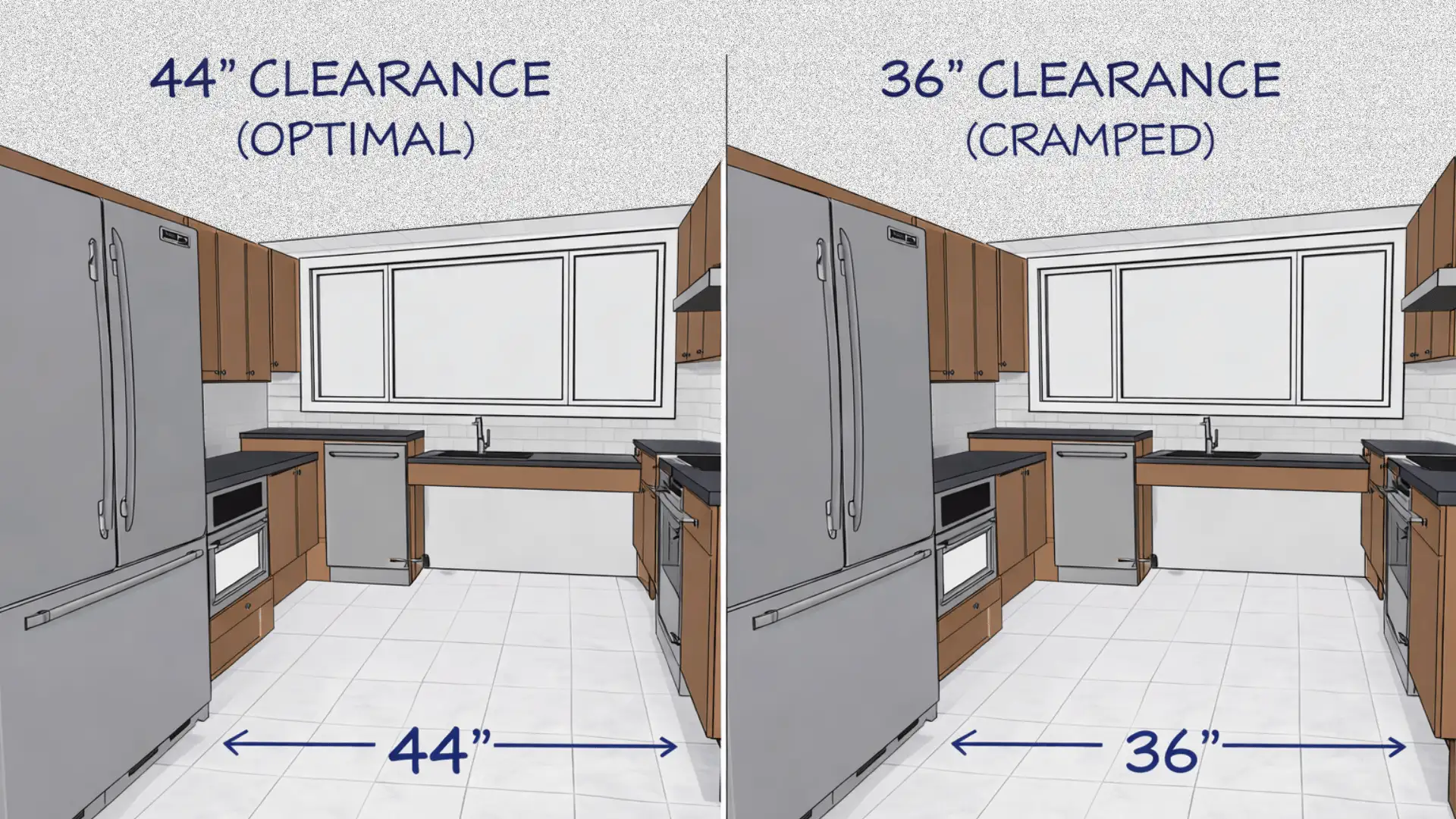
Main walkways behind a seated island or between the island and appliances must stay at least 36 inches wide, but 44-60 inches is the current recommendation for real-life traffic.
To be precise, primary walkways (especially behind seated islands) must stay at least 44 inches wide, and 60 inches is now the gold standard in luxury remodels.
The NKBA and the National Association of Home Builders both list 42 inches as the absolute minimum for safe passage when carrying hot dishes.
For households with a wheelchair user or anyone using a mobility aid, the Americans with Disabilities Act (ADA) recommends a clear floor space of at least 36 inches for passage and 60 inches for a full turn.
Designing to 48 inches as a baseline future-proofs the kitchen for aging in place.
3. Seating Overhang and Knee Space Rules
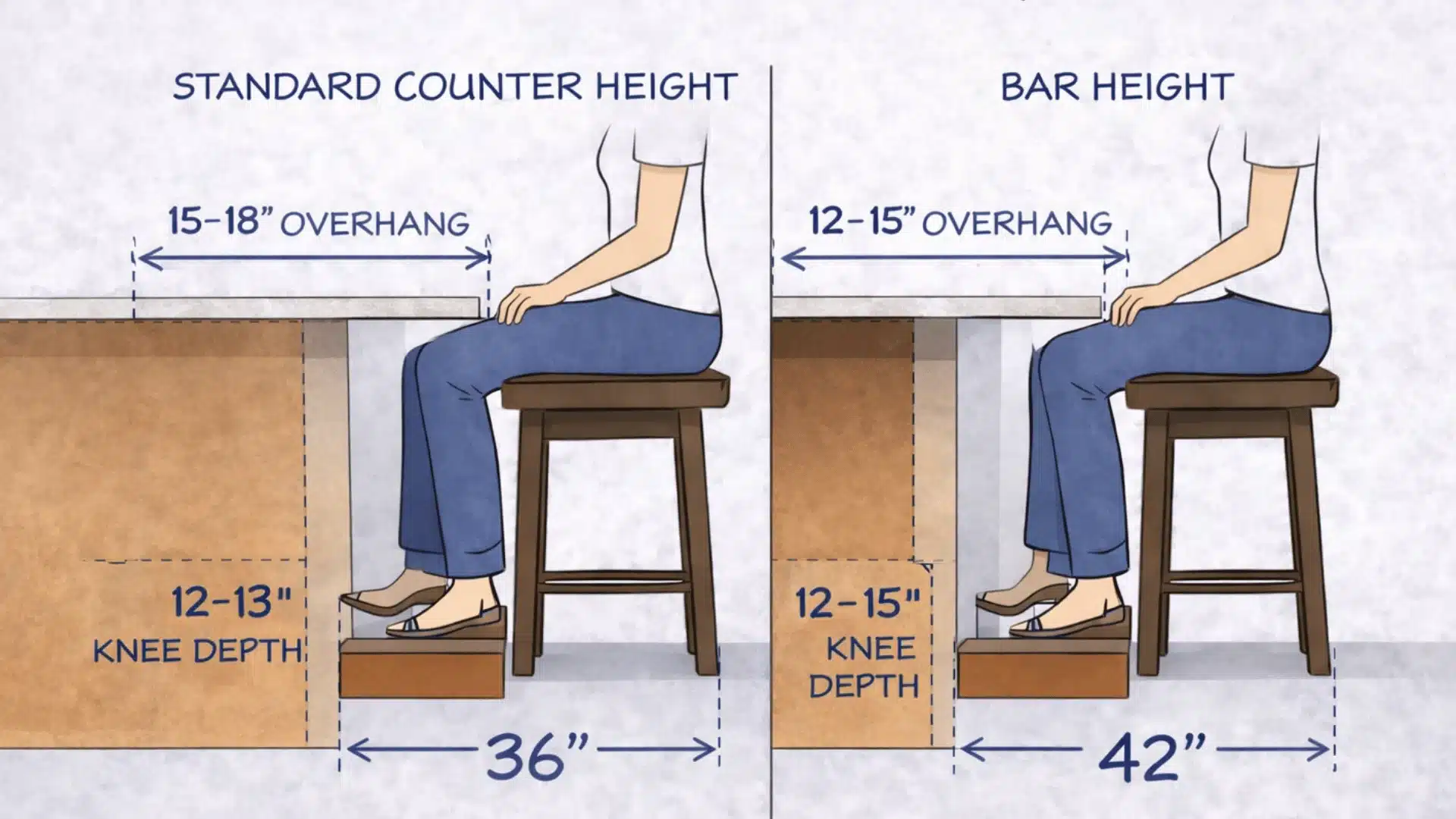
Standard counter-height seating requires 15 to 18 inches of overhang and at least 12 inches of knee space.
A bar height of 42 inches requires 12 to 15 inches of overhang and only 9 to 10 inches of knee depth. Anything less and guests sit uncomfortably or hit their knees.
These measurements are recommended by the National Kitchen & Bath Association to support comfortable seating without posts or brackets.
4. Appliance Clearance Near a Kitchen Island
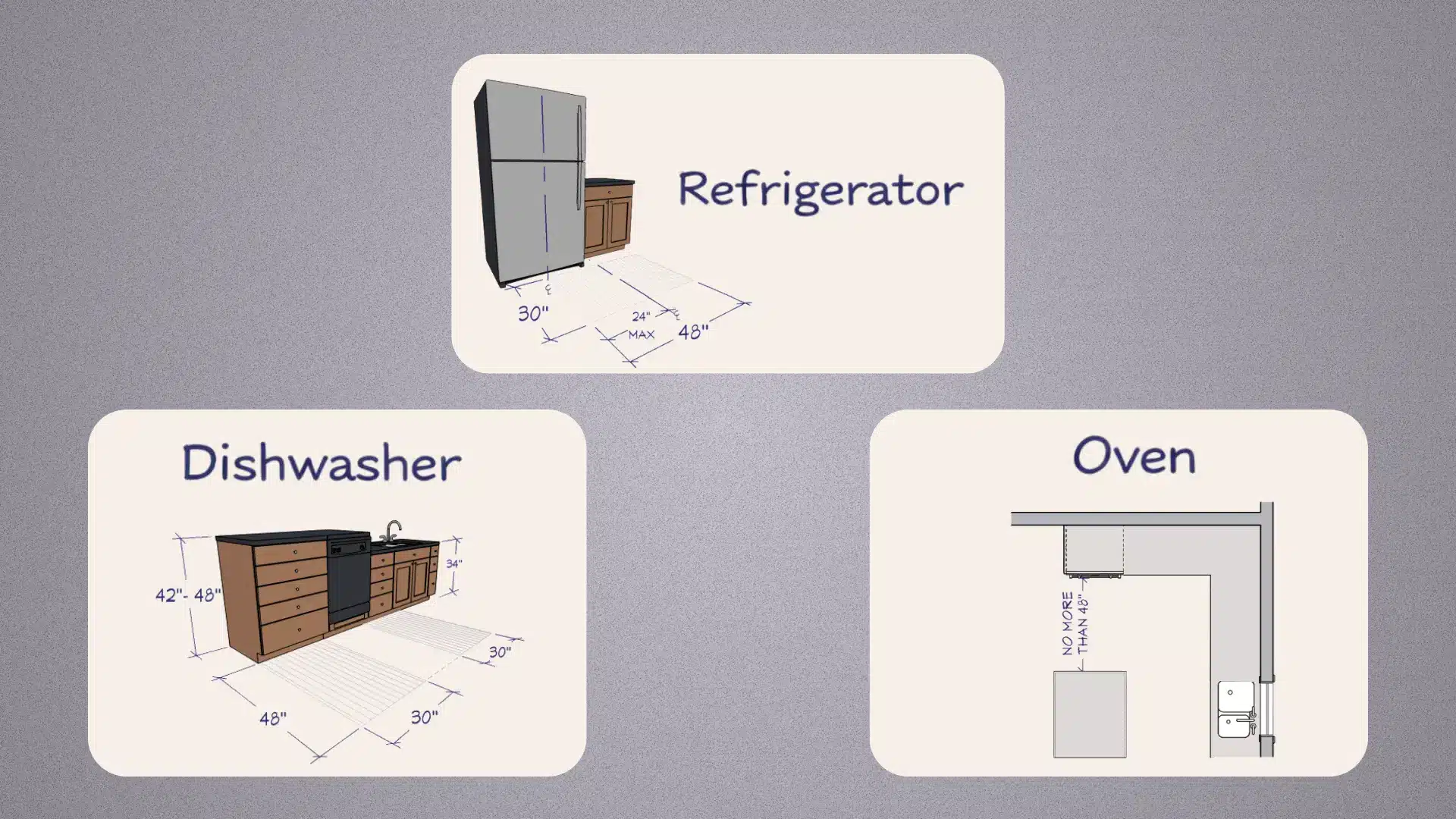
Proper spacing around refrigerators, ovens, and dishwashers keeps your kitchen island from interfering with daily use and ensures your layout stays functional and code-compliant.
- Refrigerator Door Swing: Minimum 36 inches in front, 42 to 48 inches recommended.
- Dishwasher Door Fully Open: 48-54 inches directly in front of it.
- Oven Door Dropped Down: 48 inches minimum, 54 inches if you bake often.
5. Landing Space Requirements for Kitchen Island
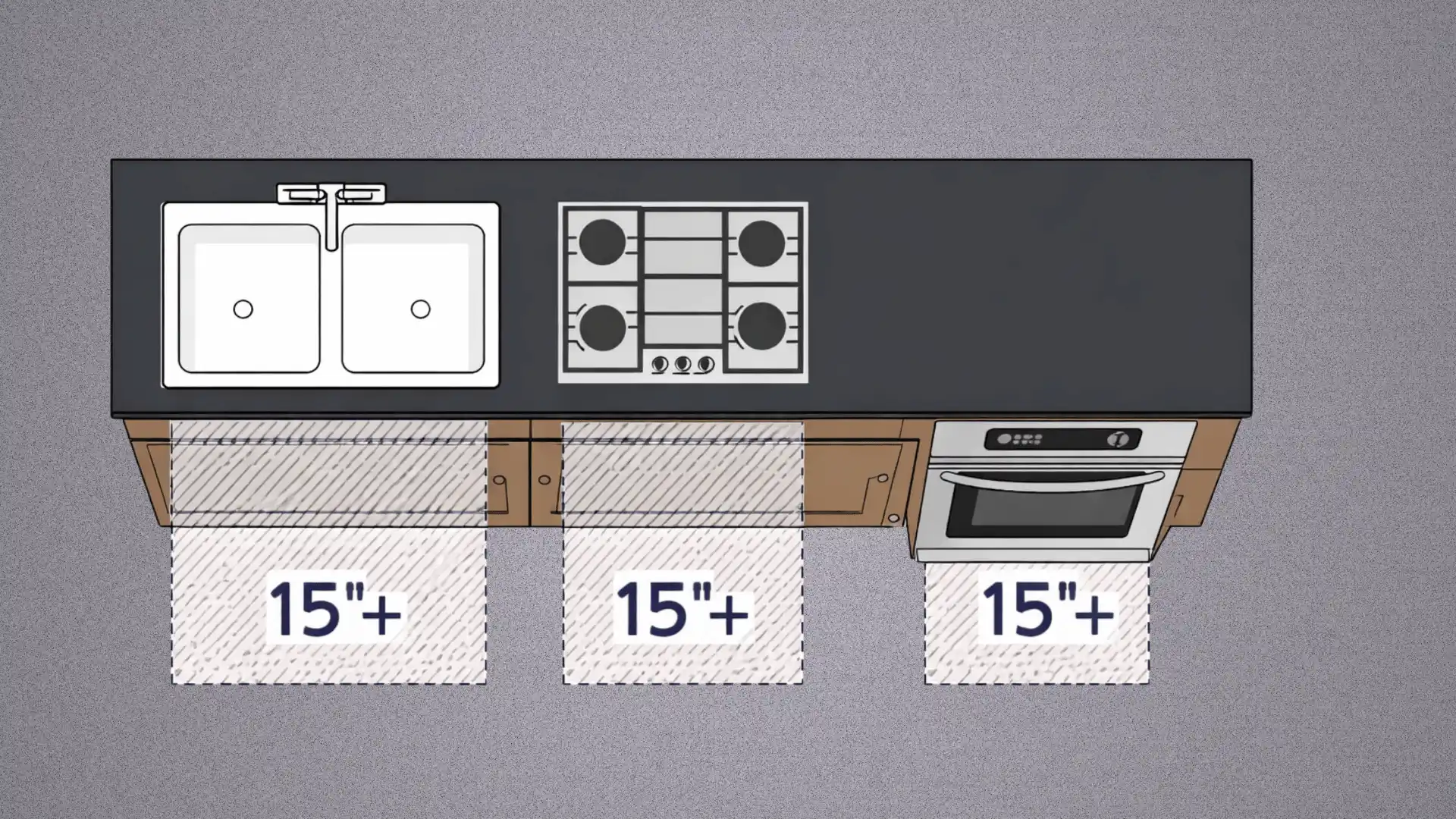
Safe kitchen design is not just about looks; it is also about function.
According to NKBA guidelines, your island should provide at least 15 inches of clear countertop space next to or directly across from a cooktop, sink, microwave, or oven.
This landing space provides a safe spot to place hot pans, heavy dishes, or small appliances without balancing them on their edges or seams.
Without enough room, spills and burns become more likely. Many local building codes follow this guideline, so planning proper landing space keeps your kitchen both practical and compliant.
6. Electrical Outlet Requirements on a Kitchen Island
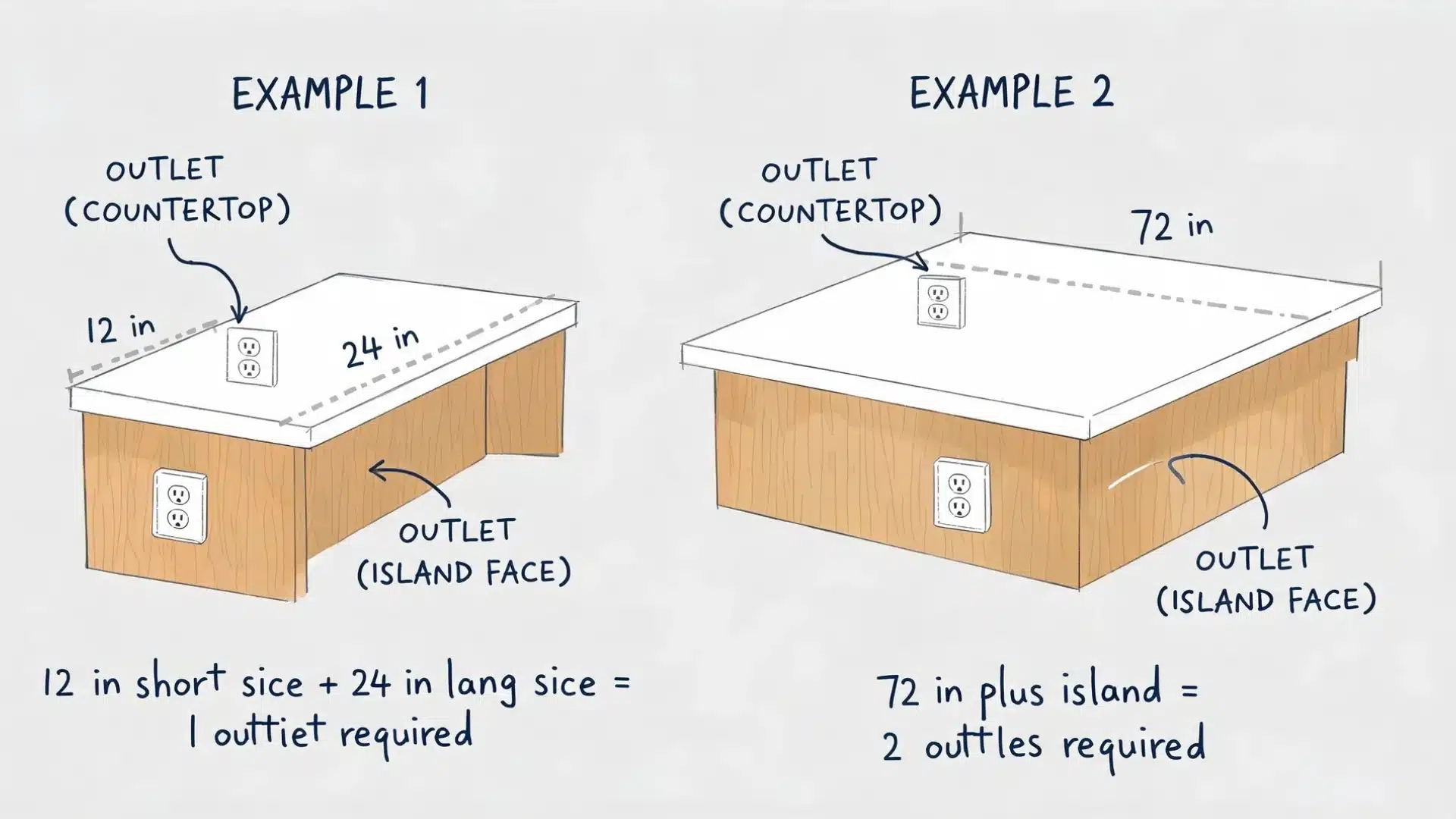
The NKBA specifies that any island or peninsula countertop with a short dimension of 12 inchesor more and a long dimension of 24 inches or more must have at least one dedicated electrical outlet.
Islands longer than 6 feet (72 inches) require at least 2 outlets.
These outlets should be placed within the countertop surface or on the vertical island face for both safety and convenience.
Skipping this requirement limits how you can use small appliances on the island and may require costly post-installation electrical work.
Kitchen Island Spacing Requirements at a Glance
Proper kitchen island spacing requirements keep your kitchen safe, functional, and comfortable by ensuring enough room for cooking, seating, appliance use, and smooth movement.
| Scenario | Minimum Clearance | NKBA Standard |
|---|---|---|
| One cook, no seating | 36 inches | 42 inches |
| Multiple cooks | 42 inches | 48 inches |
| Island-facing appliances | 42 inches | 48 inches |
| Walkway behind the seated island | 36 inches | 44 to 60 inches |
| Seating overhang (no brackets) | 12 to 15 inches | 15 inches |
| Landing area next to the cooktop or sink | 15 inches | 15 inches minimum |
| Wheelchair/ADA passage | 36 inches | 48 inches recommended |
| Minimum kitchen width for an island | 13 feet (room total) | 13 feet or wider |
Factors That Influence Kitchen Island Spacing
The right island size depends on several key factors, including your kitchen’s dimensions, your daily cooking routines, and your movement patterns.
- Kitchen Size: A spacious kitchen can handle a large island, while tighter and narrower layouts work better with slimmer or movable options.
- Cooking Habits: If you cook frequently with family, extra counter space makes it less crowded.
- Traffic Flow: Leave at least 36 to 48 inches of clearance for smooth movement.
- Appliance Placement: Ovens, dishwashers, and refrigerators affect the amount of space.
- Personal Needs: Think about seating, storage, and built-in features before deciding on the final size.
- Layout Type: Galley and L-shaped kitchens have natural bottlenecks that shrink usable aisle width. In a galley kitchen, adding an island is rarely practical unless the total width exceeds 14 feet.
Spacing decisions also ripple into your overall kitchen renovation costs.
Reviewing your overall kitchen renovation budget before finalizing your island dimensions is a practical step that many homeowners skip until it is too late.
Common Mistakes to Avoid
Common kitchen island spacing mistakes usually happen when the island looks good on paper but feels wrong in real life.
- Too large an island: A big island can block movement and make the kitchen feel tight instead of useful.
- Poor walkway space: Ignoring clearance rules makes daily cooking, cleaning, and moving around the kitchen frustrating.
- Appliance door issues: Fridge, oven, and dishwasher doors need enough space to open fully without hitting the island.
- Weak lighting: Dim prep areas can make chopping, cooking, and serving harder than they should be.
- Missing outlets: Without proper outlets, using mixers, blenders, chargers, and small appliances becomes annoying.
- Bad workflow: The island should support how people cook, clean, and move, not interrupt the whole routine.
- No floor test: Mark the island size with painter’s tape, then walk, cook, and open doors around it for a few days.
- Ignoring a peninsula: If space is too tight, a peninsula can give prep space and seating while needing clearance on only three sides.
If you are leaning toward an open, streamlined kitchen design, exploring minimalist kitchen features can help you identify which built-in storage and surface elements integrate naturally with your island without overwhelming the space.
Conclusion
A well-planned kitchen island doesn’t just look good; it changes how your kitchen feels and works every single day.
When spacing is right, you move without thinking, cooking feels natural, and family and friends naturally gather around instead of getting in the way. When it’s off, every task feels like a hassle.
The key is treating measurements as your friend, not an afterthought. A few minutes with a tape measure and clear spacing rules can save years of frustration.
If you’re planning a remodel or new build, use these requirements as your checklist to ensure proper kitchen island spacing requirements and adjust the layout before anything is installed.
Getting the spacing right costs nothing at the planning stage. Getting it wrong after construction can cost thousands.
Have questions about your specific kitchen layout? Drop them in the comments below. I’d love to help you out!
Frequently Asked Questions
Can a Kitchen Island Be off-Center in the Room?
Yes, as long as clearances stay consistent. Function and flow matter more than perfect visual centering.
How Much Space Is Needed Between the Island and Dining Table?
Minimum 48 inches, 60 inches recommended so chairs push back without hitting the island.
Can a Small Kitchen Work with a Two-Level Island?
Yes, if clearances are respected. A raised level can define seating without enlarging the footprint.