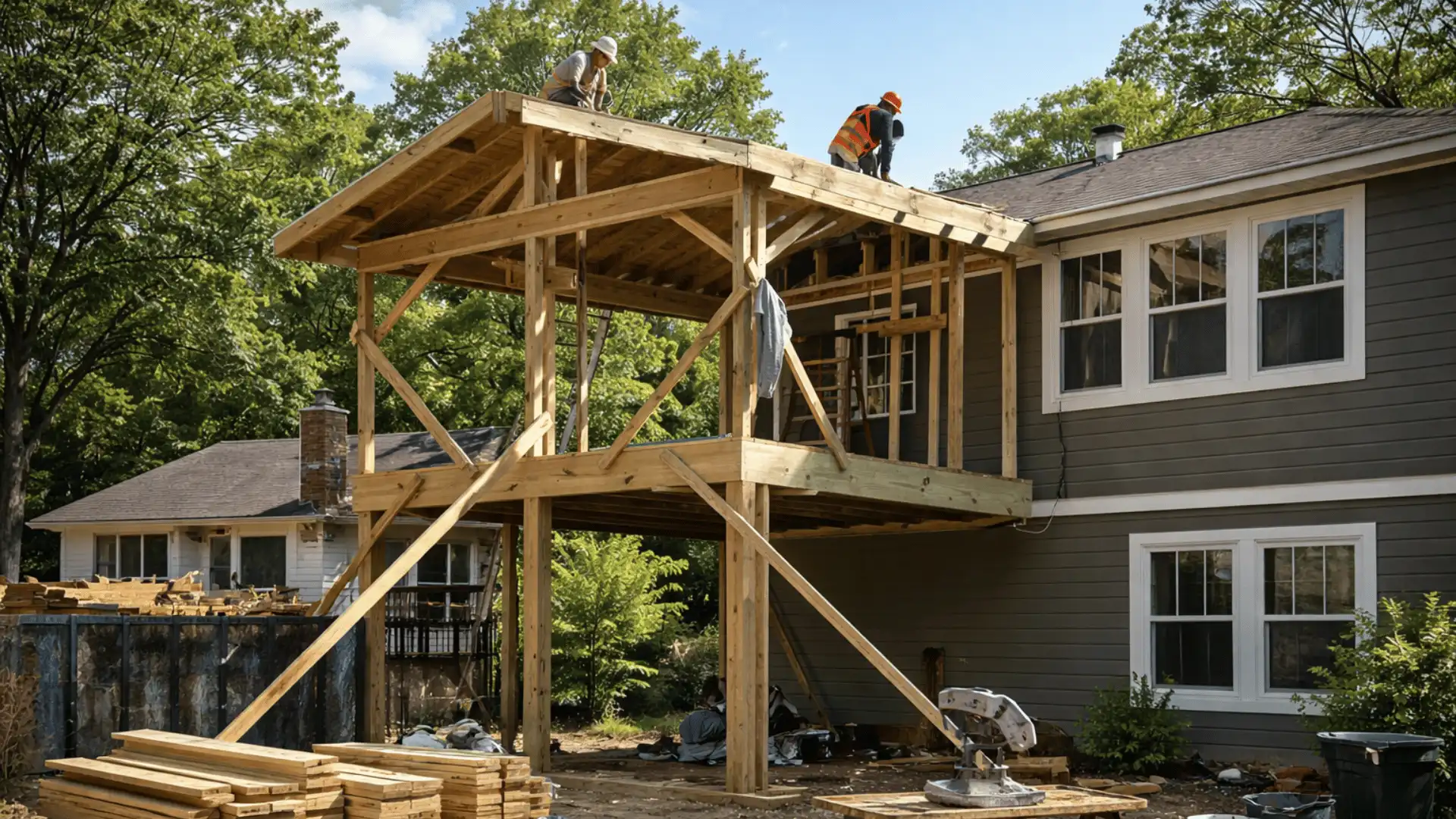

A roof does far more than simply sit on top of your home, because it protects your family, your belongings, and the structure that holds everything together through every season.
Yet many homeowners hesitate when faced with one important question: what size plywood for roof construction is actually strong enough to provide lasting support?
Plywood roof sheathing forms the base layer that supports shingles, metal panels, or tiles, so selecting the thickness directly impacts strength and durability.
If the panels are too thin, the roof can sag over time. If they are too thick, you may overspend without added benefit.
Understanding common thickness options, joist spacing requirements, and span limits will help you make an informed decision that meets safety standards and ensures long-term performance.
What is Roof Sheathing?
Roof sheathing is the flat layer of boards or panels that is installed over the roof framing, usually on top of the rafters or trusses. It forms the base surface of the entire roofing system.
This layer acts as a structural deck that holds everything together and provides a solid foundation for roofing materials like shingles, metal panels, or tiles.
Without proper sheathing, roofing materials would not have stable support and could sag or fail.
Roof sheathing also helps distribute weight evenly across the roof structure, including the load from rain, snow, and wind.
Plywood is commonly used because it is strong, durable, widely available, and able to handle structural stress while maintaining stability in changing weather conditions.
Types of Plywood Used for Roofing

Different plywood products are designed for different performance needs and safety requirements. Some focus on moisture resistance, while others are built for added fire protection.
1. CDX Plywood
CDX plywood is one of the most common materials used for roof sheathing in residential construction. The letters refer to the face grades, with one side being smoother than the other.
The X stands for exterior glue, which means it can handle moisture exposure during construction.
CDX plywood is strong, affordable, and widely available. It performs well under asphalt shingles and works for most standard roofing projects when installed properly.
2. ZIP Wood
ZIP Wood is a modern roof sheathing option that combines structural plywood with a built-in weather-resistant barrier.
This eliminates the need for traditional felt underlayment in many cases. The panels are strong and designed to resist moisture when seams are taped correctly.
Contractors often choose ZIP Wood for faster installation and improved energy efficiency. It offers solid structural support while helping protect the roof deck from water damage.
3. FRT Plywood
FRT plywood stands for fire-retardant-treated plywood, which is designed to slow the spread of flames. This type of plywood is chemically treated during manufacturing.
It is often required in certain building codes, especially in multi-family housing or commercial buildings. FRT plywood still provides structural strength similar to standard plywood.
However, it adds an extra layer of protection in areas where fire safety standards are strict.
4. OSB Plywood
OSB, or oriented strand board, is a popular alternative to traditional plywood for roof sheathing. It is made from compressed wood strands bonded together with strong adhesives.
OSB panels are durable, cost-effective, and commonly used in modern construction. They provide reliable structural support when properly installed.
While some people prefer plywood, OSB performs well in most roofing applications and meets building code requirements in many areas.
What Size Plywood for Roof?

The thickness one selects affects how much weight the roof can handle and how well it resists sagging. The right choice depends on joist spacing, roof load, and the type of roofing material.
1. 1/2 Inch Plywood
Half-inch plywood is often used in roofing when rafters or trusses are spaced. It provides decent structural support for light to moderate roof loads.
This thickness works well under asphalt shingles in mild climates. However, it can sag over time if used with wider joist spacing or heavy roofing materials.
It is not ideal for areas with heavy snow loads; therefore, proper fastening and support are very important when using this thickness.
Best used for: Standard residential roofs with 16-inch joist spacing and lightweight shingles.
2. 5/8 Inch Plywood
Five-eighth-inch plywood is the most common and widely recommended thickness for roof sheathing today. It offers better strength and stiffness compared to half-inch panels.
This thickness reduces the risk of sagging, especially when joists are spaced 24 inches apart.
Many building codes prefer or require this size for added durability. Contractors often choose it because it provides a strong balance between cost and performance.
Best used for: Residential roofs with 16 or 24 inch joist spacing and moderate weather conditions.
3. 3/4 Inch Plywood
Three-quarter-inch plywood is a heavy-duty option used when extra strength is required. It is much thicker and more rigid than standard roof sheathing panels.
This makes it suitable for long joist spans or roofs that must carry heavy loads, such as tile roofing or areas with heavy snowfall.
While it offers superior durability, it also costs more and adds extra weight to the structure.
Best used for: Roofs with wide joist spacing, heavy roofing materials, or high snow load regions.
4. 3/8 Inch Plywood
Three-eighth-inch plywood is the thinnest option sometimes considered for roofing projects. It provides minimal structural support compared to thicker panels.
This thickness may have been used in older homes, but it is rarely recommended for new construction today.
Most modern building codes do not approve this thickness for standard roof sheathing.
Best used for: Small sheds or light structures with very close joist spacing and minimal roof load.
How Roof Span and Joist Spacing Influence Plywood Thickness?
Roof span is the distance between structural supports, such as rafters or trusses, that support the roof. The longer the span, the more weight the plywood must carry without bending or sagging.
Joist spacing is the distance between each rafter or truss, and it is commonly set at 16 inches or 24 inches on center in most residential homes.
When joists are spaced closer together, thinner plywood, like half-inch panels, may be strong.
However, when spacing increases to 24 inches on center, thicker plywood such as five-eighths inch is usually recommended for better support.
For wider spans or heavier roofing materials, three-quarter-inch plywood may be needed to prevent sagging and maintain long-term structural strength.
Cost Considerations for Plywood Roof Sheathing
The cost of plywood roof sheathing depends mainly on thickness, material type, local supply conditions, and seasonal market demand fluctuations.
On average, most standard roof sheathing panels cost between $10 and $65 per sheet across common thickness options.
Prices can vary significantly based on grade, treatment type, and regional demand, but this range covers most typical residential purchases.
While thinner plywood may seem more budget-friendly at first, thicker panels often deliver better long-term performance and reduce the chances of sagging or structural issues.
Spending slightly more upfront can help avoid repair costs later
To estimate how much plywood you need, calculate the total roof square footage and divide by 32, since a standard sheet covers 32 square feet. Always add extra sheets for waste and cutting.
Building Code and Structural Requirements for Roof
Following local building codes is essential when choosing plywood for roof sheathing.
Building codes are designed to ensure safety, structural strength, and long-term durability. Most residential codes specify minimum plywood thickness based on joist spacing and roof loads.
For example, half-inch plywood may be allowed for 16-inch on-center spacing, while five-eighths inch is often required for 24-inch spacing.
Areas with heavy snow or high wind may require thicker panels. Joist spacing directly affects the load the plywood must support, which is why thickness rules are tied to spacing.
Span charts are helpful tools that clearly show the maximum distance plywood can safely cover between supports.
One can read them by matching the panel thickness to the joist spacing to confirm compliance.
Plywood Roof Sheathing Installation Tips
Proper installation is just as important as choosing the right plywood thickness. Even high-quality roof sheathing can fail if it is not installed correctly, which can lead to sagging problems.
- Proper sheet spacing: Leave a small gap of about one-eighth inch between plywood sheets to allow for natural expansion and contraction.
- Correct fastener type: Use galvanized nails or approved screws that resist rust and provide strong holding power.
- Proper fastener spacing: Place fasteners every six inches along panel edges and every twelve inches in the field to ensure secure attachment.
- Edge alignment on joists: Always position plywood edges directly over rafters or trusses so each panel has full structural support underneath.
- Staggered seams: Install panels in a staggered pattern so seams do not line up in one row.
Conclusion
Selecting the correct plywood thickness is one of the most important structural decisions in any residential or commercial roofing project.
Knowing what size plywood for roof installation depends on joist spacing, roof load, and local code requirements.
Plywood roof sheathing must be strong enough to prevent sagging and durable enough to handle heavy wind, rain, and snow loads over time.
In most homes, 5/8 inch plywood is a reliable standard, while 1/2 inch works for tighter spacing and 3/4 inch suits heavier loads.
Always confirm your choice using span charts and local building guidelines. Investing in the proper thickness improves safety, performance, and long-term durability.
Have a specific roofing setup or spacing experience? Share your project details in the comments.