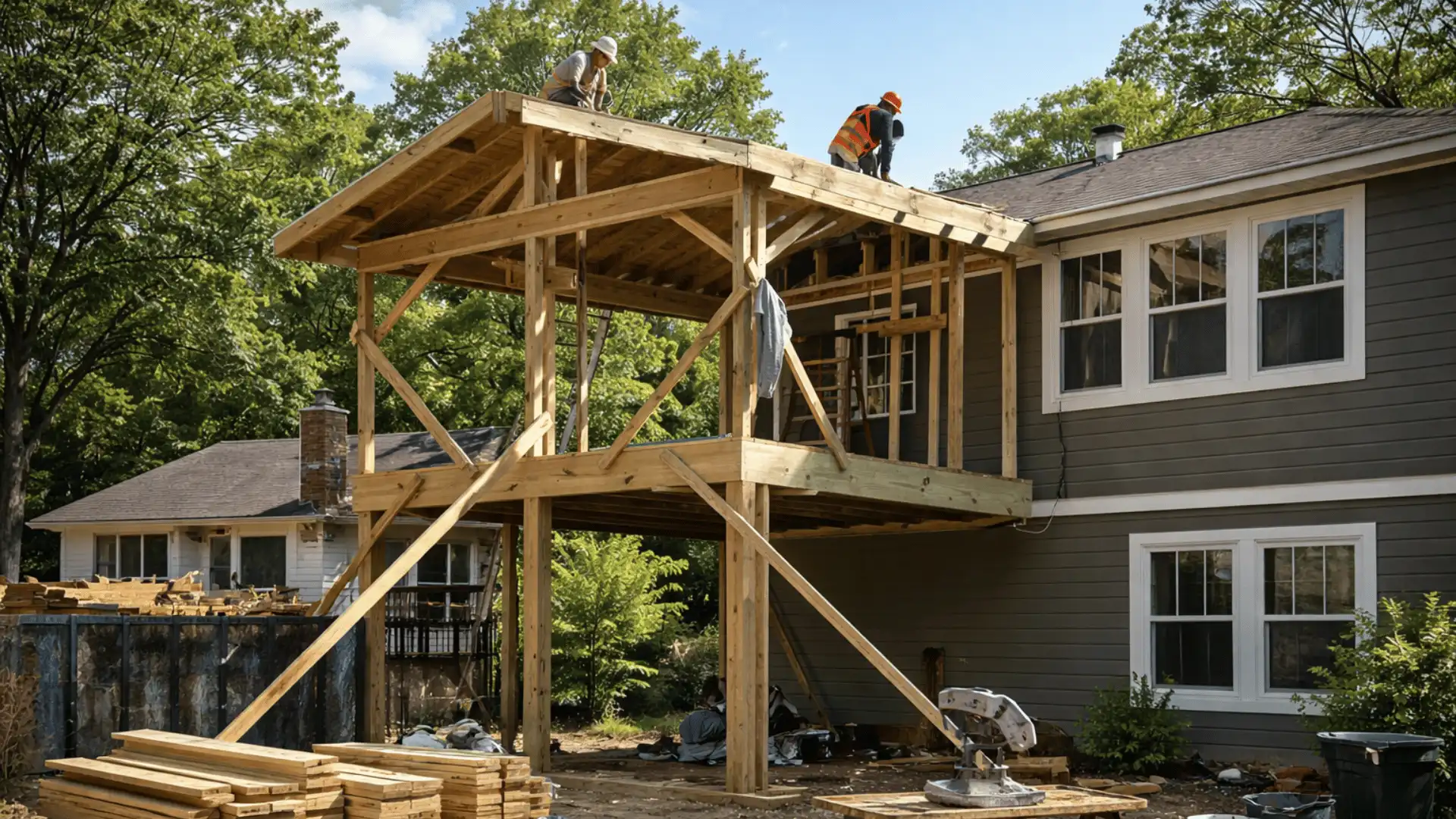
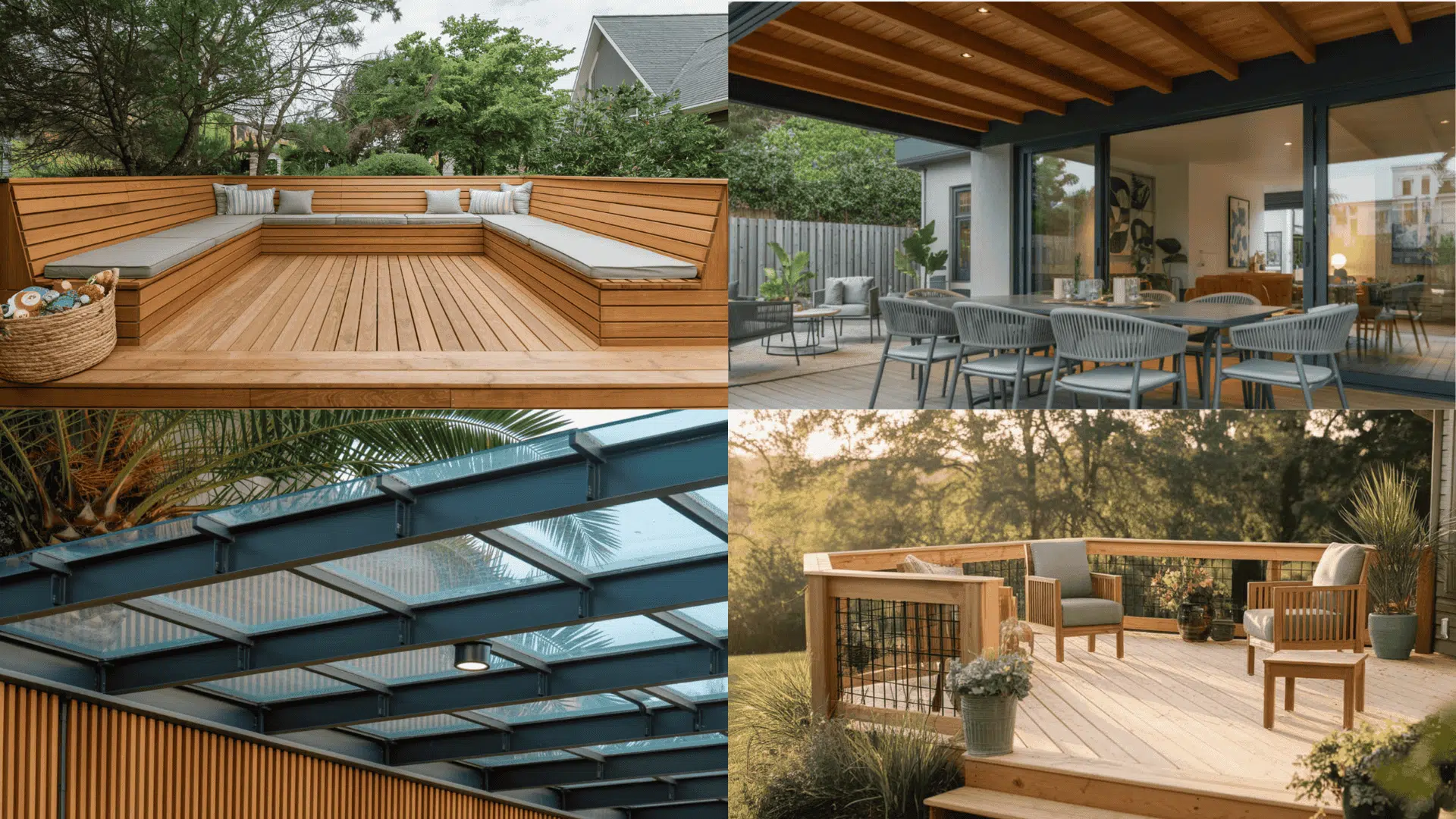
Outdoor deck ideas can give you new ways to use your yard, and I want to help you figure out what might work best for your home.
When I look at outdoor spaces, I think about how they’re used day to day, and I know you might be trying to do the same. That’s why I gathered outdoor deck ideas that focus on simple layouts, smart materials, and practical use.
In this guide, you’ll find ideas for small spaces, larger decks, raised platforms, and low-maintenance setups.
I explained everything in simple terms so you can picture each option and decide what fits your yard and your routine.
By the end, you’ll have a clearer direction and feel ready to choose a deck idea that supports the way you live and relax outside.
What Defines a Good Outdoor Deck Design?
A good outdoor deck design balances function, durability, and visual appeal. Your deck should fit the way you live while holding up to your local weather.
It comes down to choosing durable materials, a simple layout, and a setup that feels good for everyday activities.
Before looking at specific ideas, think about how you’ll use the deck, who will use it, and how much maintenance you can manage.
A simple plan will help you avoid designs that don’t match your routine or climate.
When you get these basics right, your deck becomes a space you can enjoy for years. It will work well for relaxing, cooking, or gathering, without needing major changes later.
Outdoor Deck Ideas for Small Areas
Small doesn’t mean settling for less. The following deck ideas turn space limitations into smart and beautiful solutions.
1. Built-In Corner Benches
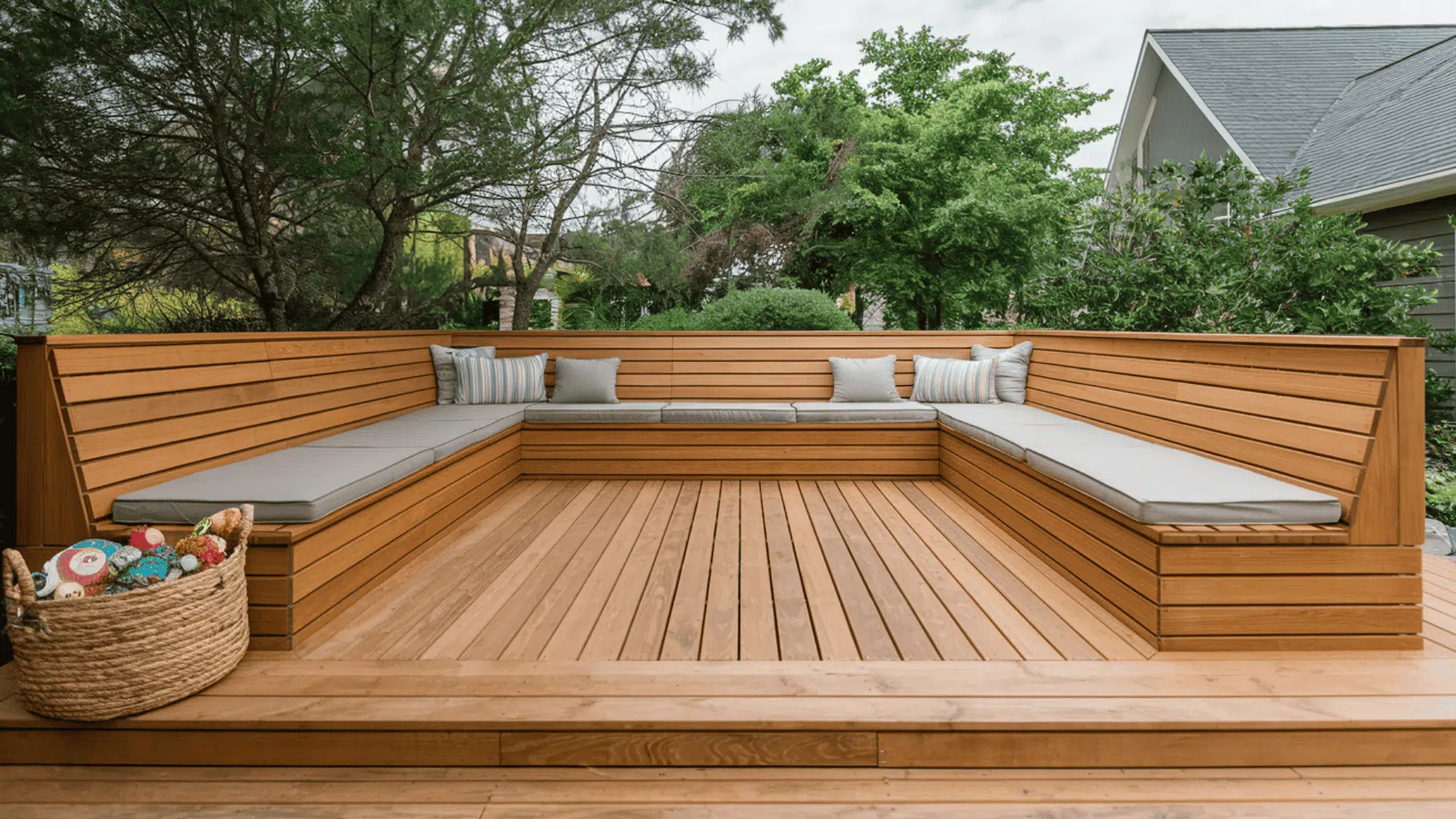
Corner benches solve the seating problem without sacrificing valuable floor space.
By attaching seating directly to your deck’s perimeter, you create functional furniture that doesn’t crowd the center area.
This approach works particularly well for L-shaped decks or corners that might otherwise go unused.
The space beneath can hold cushions, gardening tools, or outdoor games, and consider adding lift-up seats or pull-out drawers for easy access.
2. Slim Folding Furniture
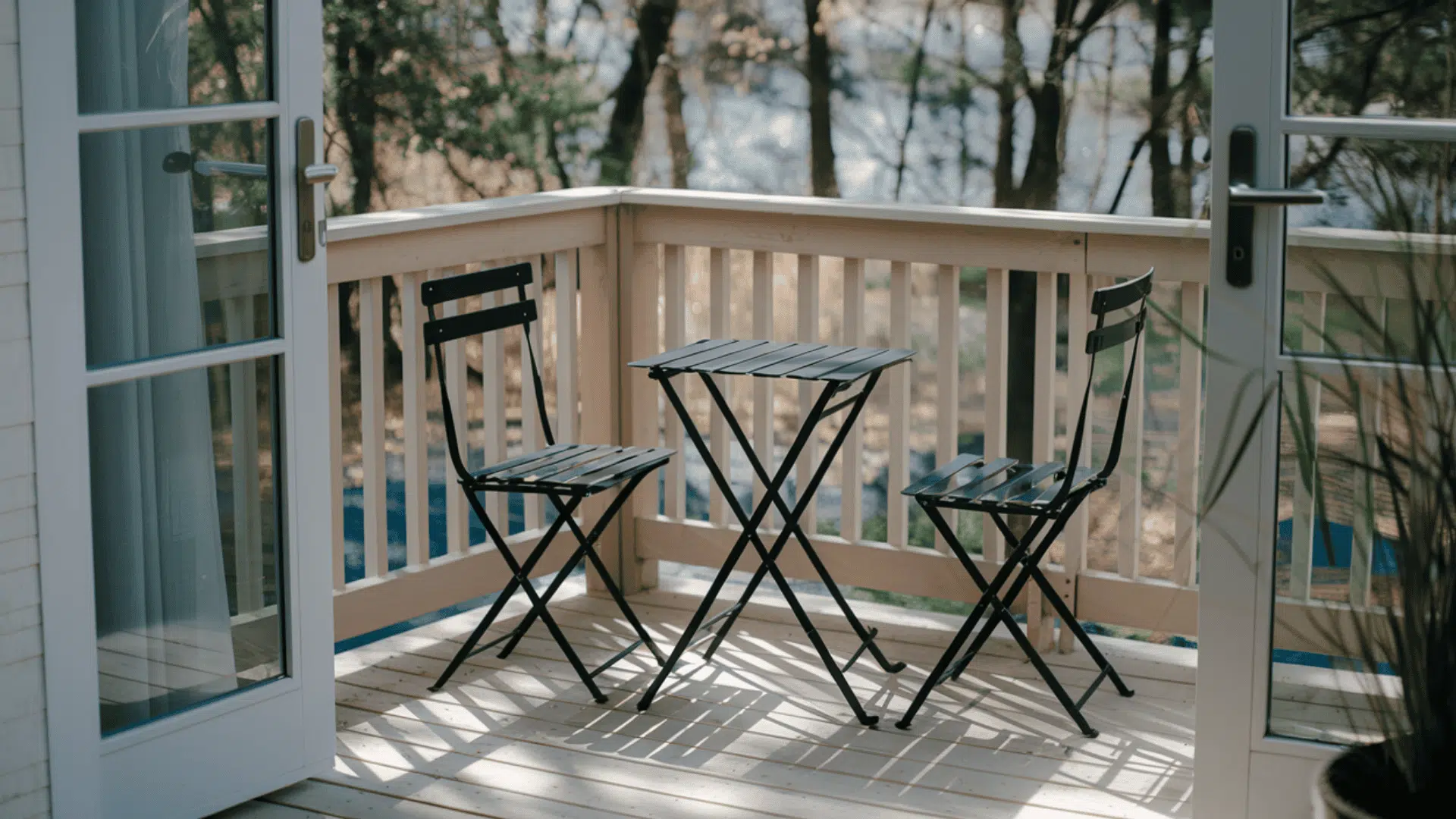
Folding furniture gives you flexibility when space is tight.
Bistro sets, folding chairs, and collapsible tables let you adjust your deck layout based on how you’re using it.
When you need more room for activities or foot traffic, simply fold everything away. Look for weather-resistant materials like treated wood, powder-coated metal, or all-weather wicker.
Quality folding furniture can last for years while maintaining its compact storage advantage.
3. Vertical Planter Wall
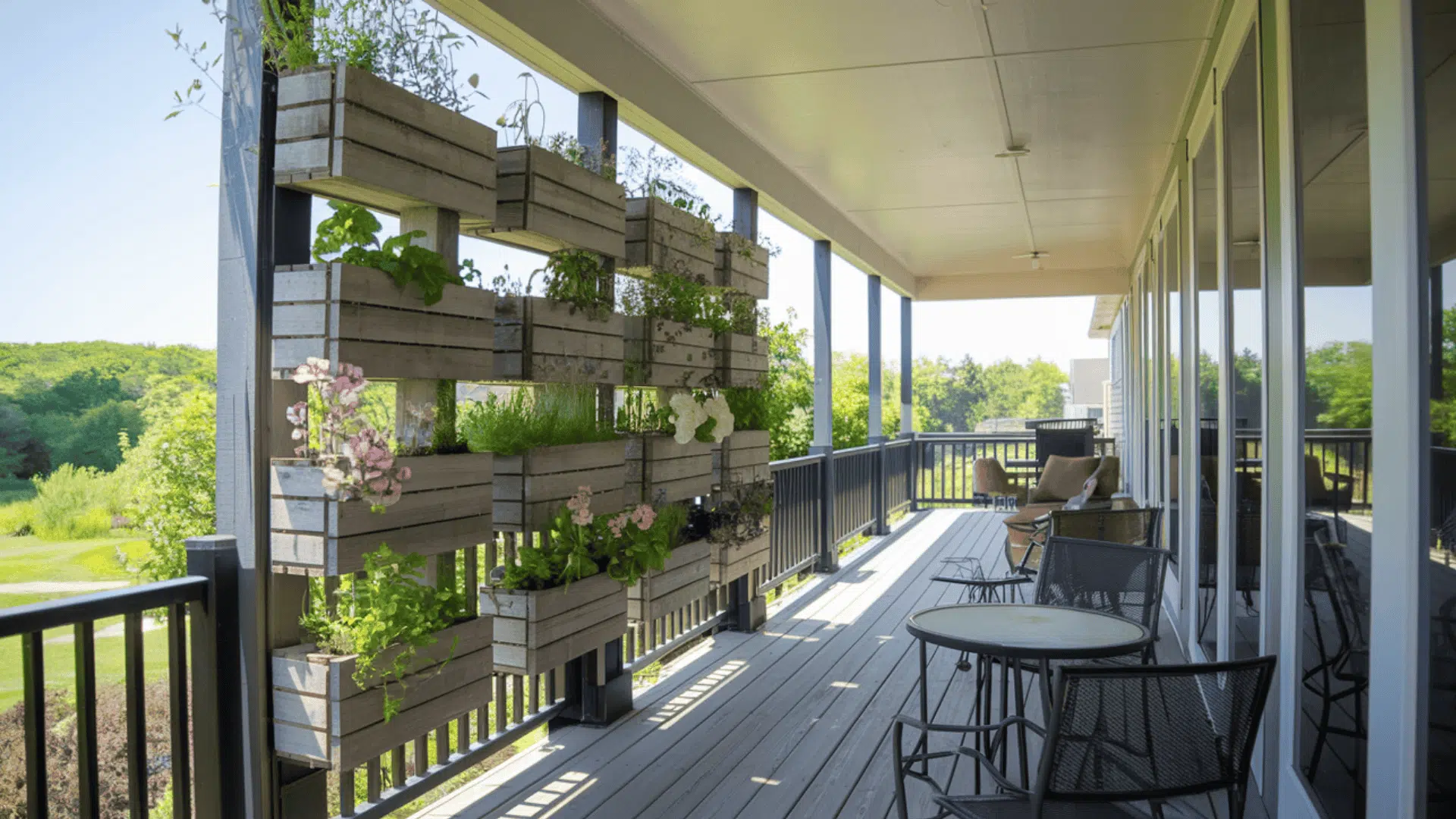
Running out of floor space doesn’t mean you have to give up on greenery and privacy.
Mount planters on railings, attach wall-mounted systems, or install freestanding vertical garden frames.
This design choice serves multiple purposes: it softens the deck’s appearance, creates a natural barrier from neighbors, and lets you grow herbs, flowers, or small vegetables.
Choose plants suited to your sun exposure and climate zone for best results.
4. Narrow Platform Layout
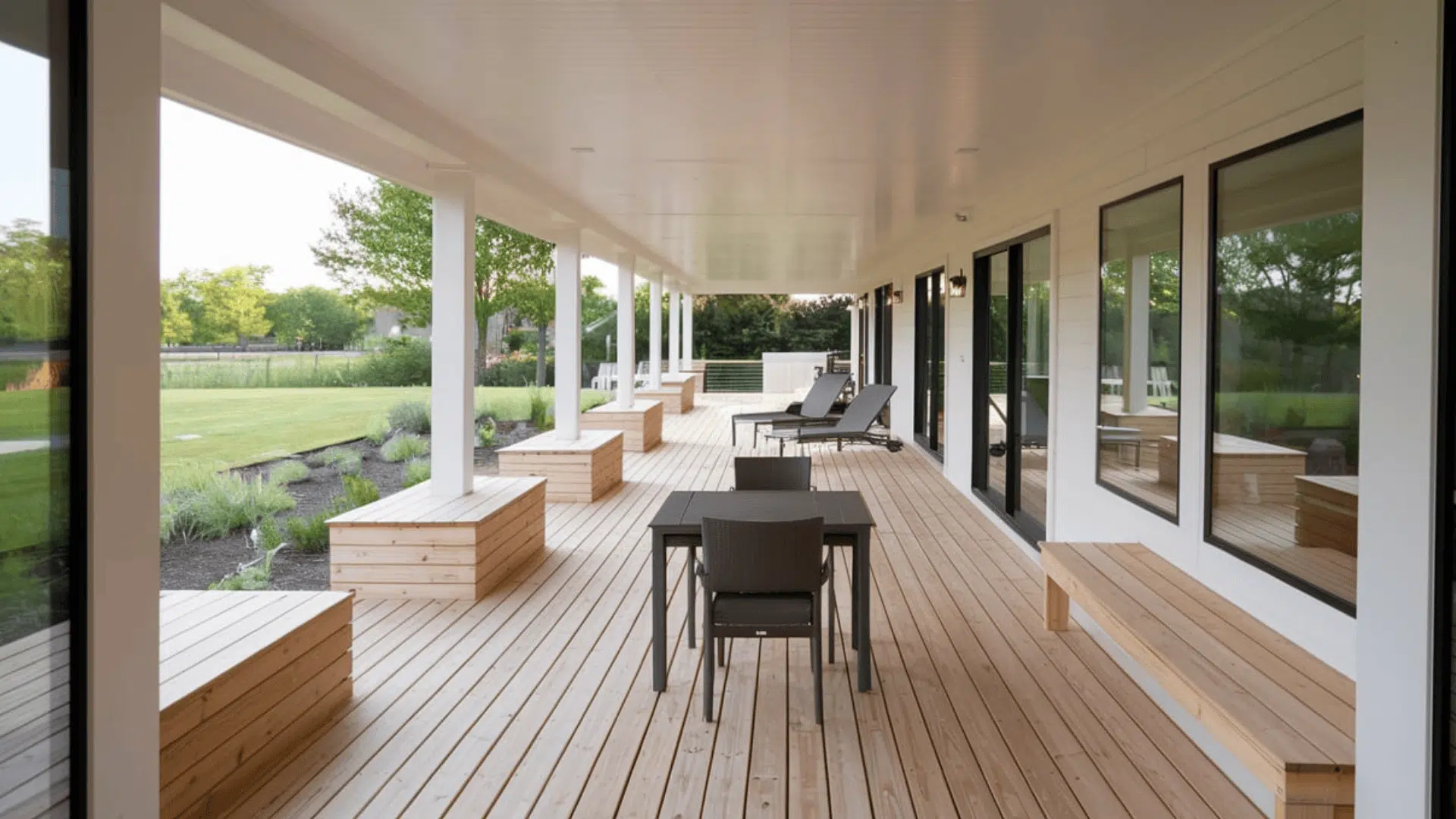
A narrow platform layout works well in side yards or tight backyards because it creates outdoor space without overwhelming the area.
A slim deck along the exterior wall offers easy access and keeps the yard open for other uses. This type of layout usually costs less to build because it needs fewer materials, and it is easier to maintain over time.
You can also add built-in planters or benches along the edges to make the most of the available space.
5. Raised Deck Over Storage Space
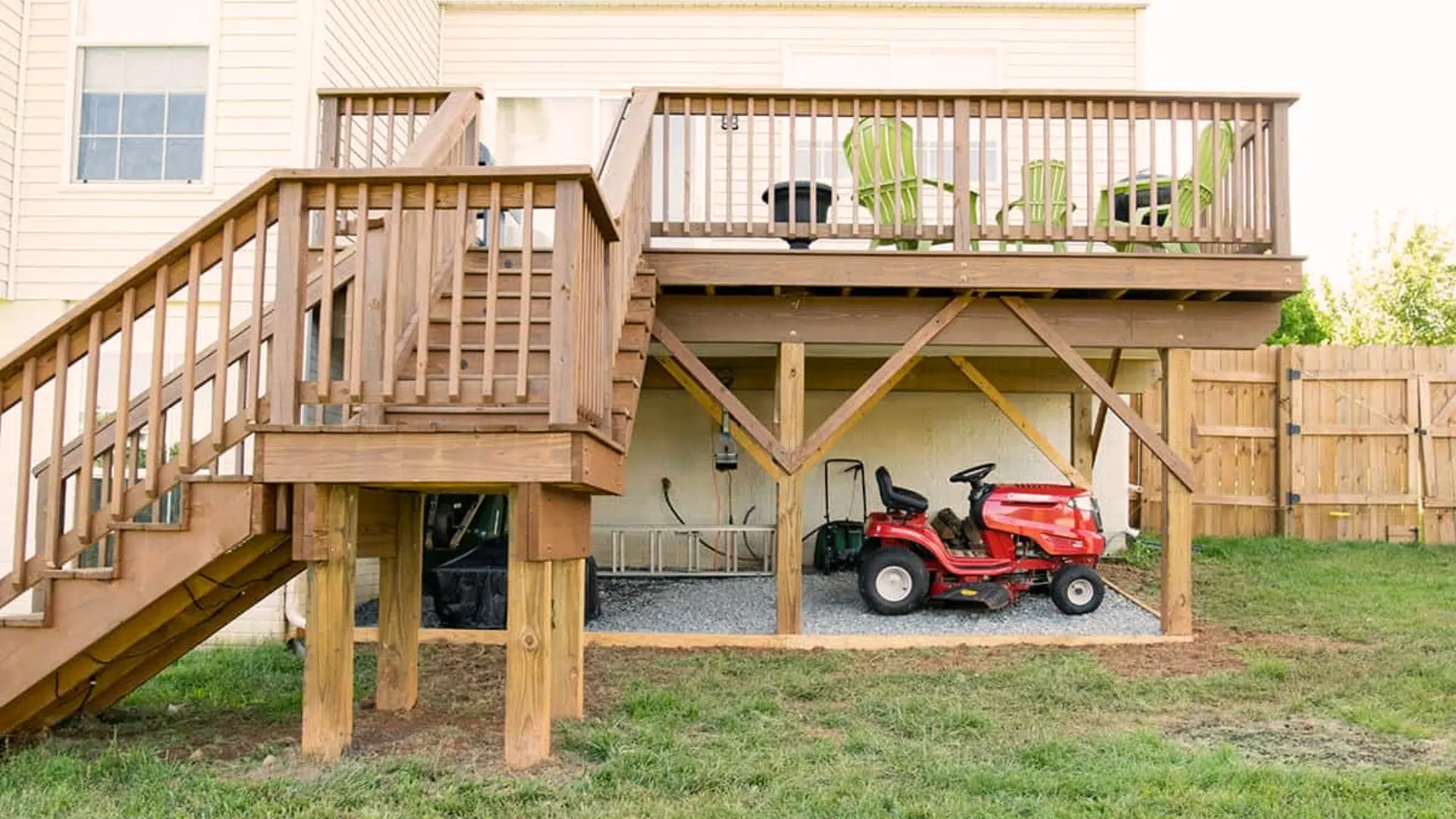
Raising your deck by 18-24 inches creates valuable storage underneath.
This elevation provides room for lawn equipment, pool supplies, or seasonal decorations.
This helps prevent moisture buildup and extends your deck’s lifespan. You can also add steps with built-in storage for even more organizational options.
The raised design also improves drainage and ventilation beneath the deck surface.
Simple Outdoor Deck Ideas
These ideas use basic layouts and simple materials to keep the process easy. Each one delivers a practical result without adding unnecessary steps.
6. Straight-Line Layout
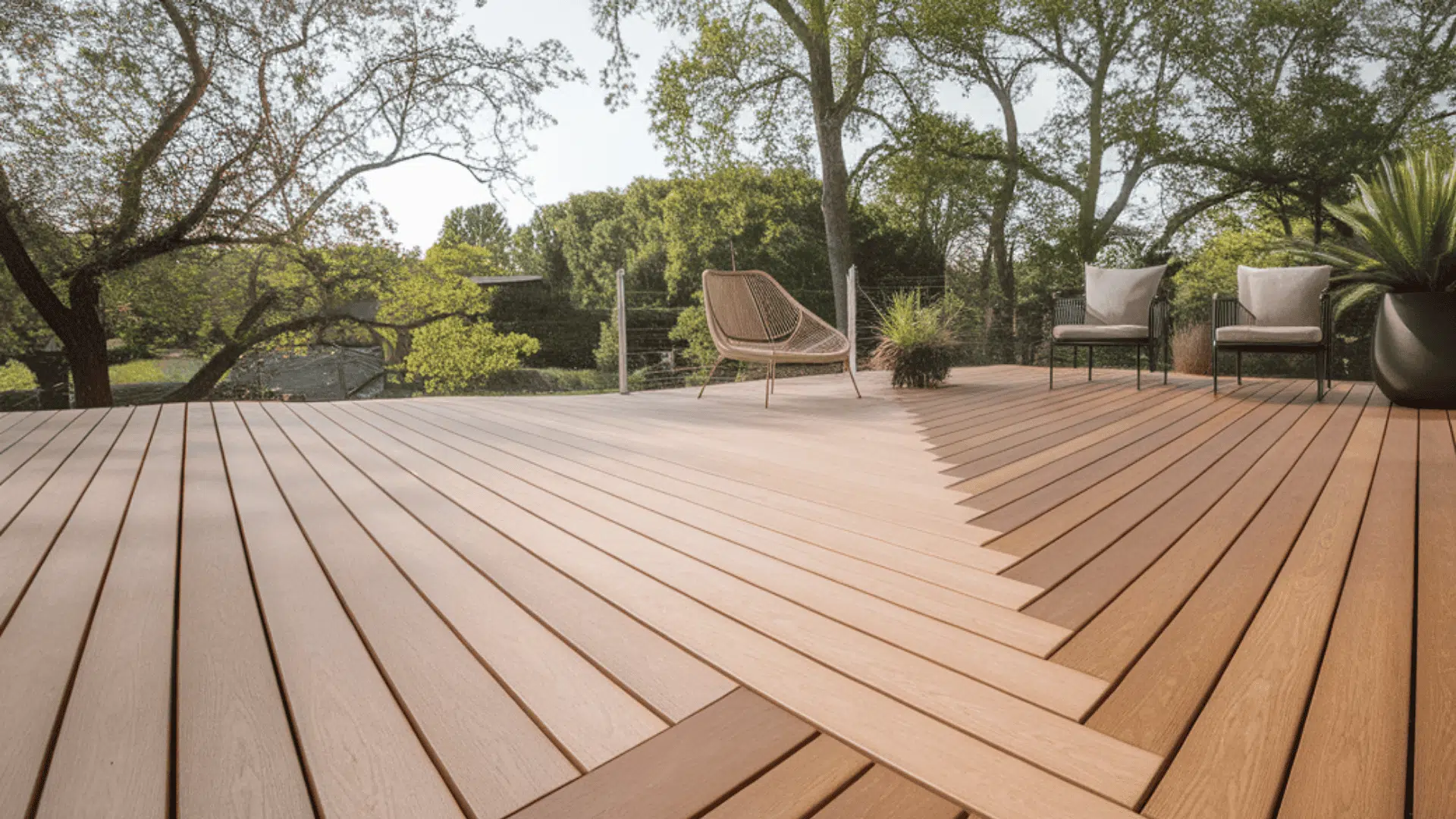
A basic straight-line deck layout uses simple board alignment and requires fewer cuts.
Parallel decking boards running the length of your platform create clean sight lines and straightforward construction.
This pattern works well for DIY builders and speeds up installation time, and this kind of simplicity also means less room for error.
Fewer angles and complex joints reduce the chance of mistakes during construction.
7. Natural Wood Finish
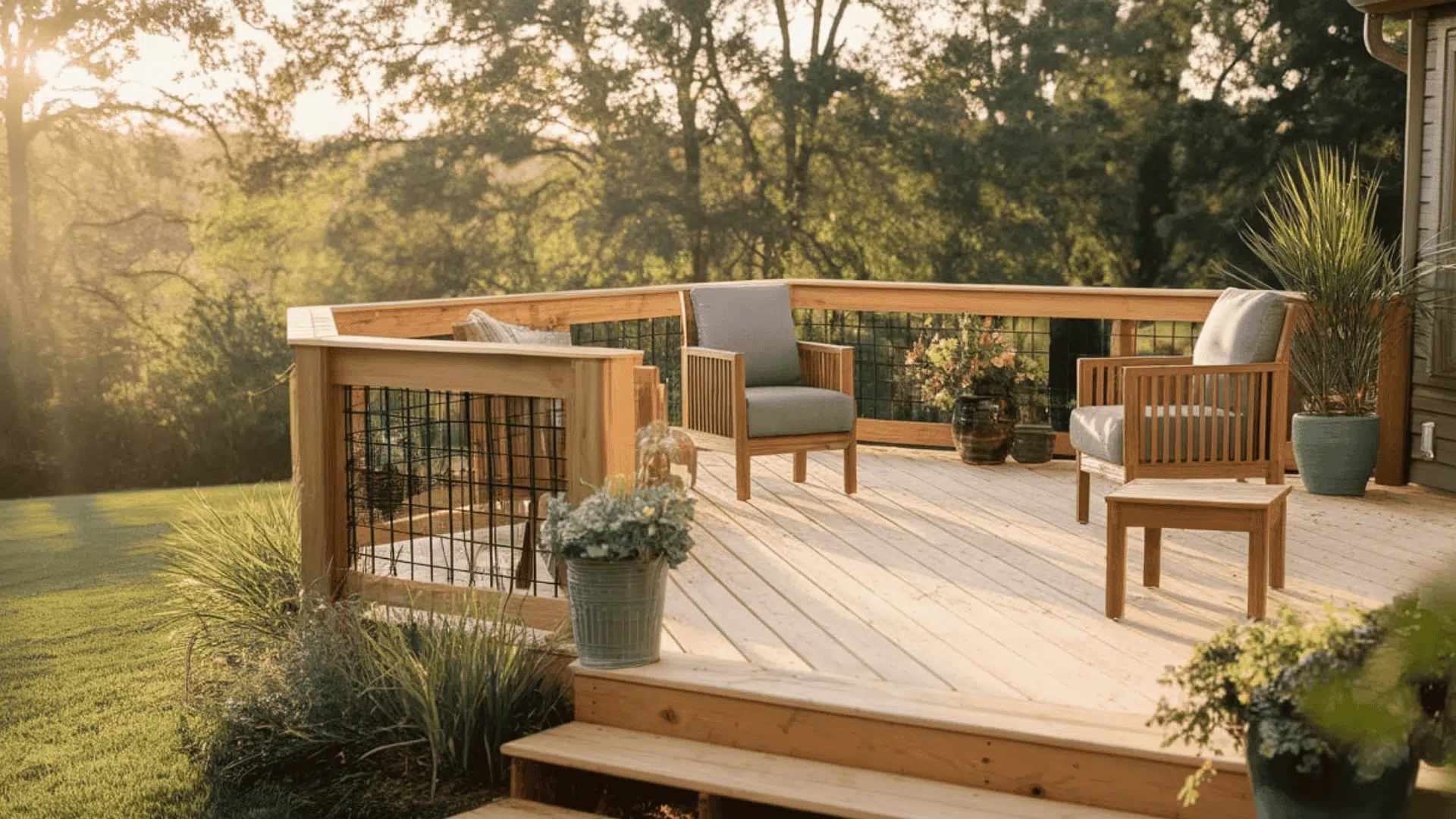
Sometimes the best deck designs are the ones that highlight the wood’s natural look. Natural finishes show the grain and create a warm, relaxed feel.
Using a clear sealant protects the wood while keeping its original color and texture.
Reapply the sealant every 2–3 years to prevent water damage and fading from the sun.
This maintenance is easier than repainting and avoids peeling or chipping, making it a practical choice for long-term deck care.
8. Low-Maintenance Composite Boards
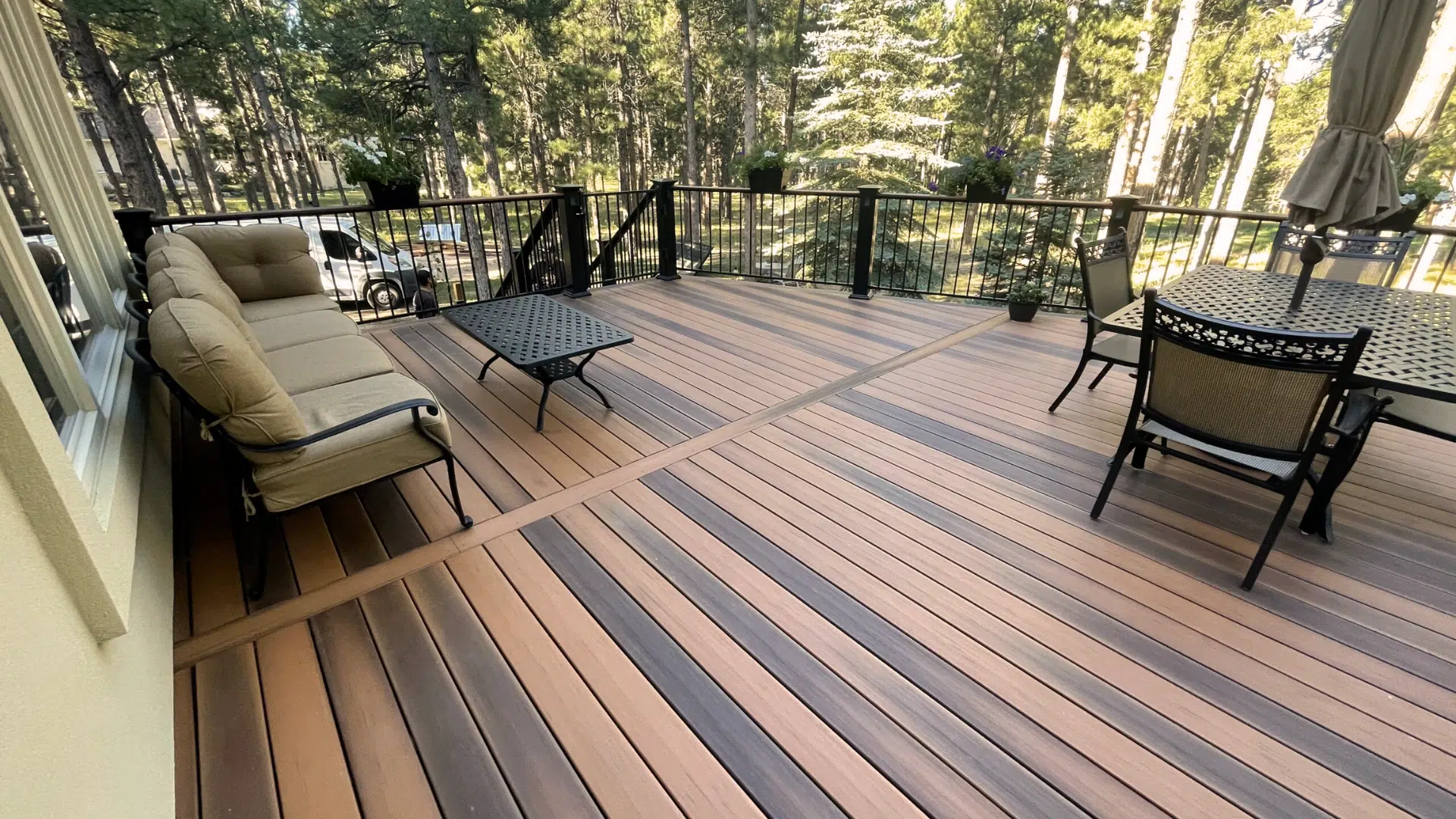
Composite decking removes the need for regular staining and sealing.
These boards handle fading, staining, and scratching better than real wood.
They won’t splinter, warp, or rot, making them perfect for busy homeowners who want less work and more time to actually use their deck.
The upfront cost is more than wood, but lower care expenses even things out over time.
9. Minimal Rail Design
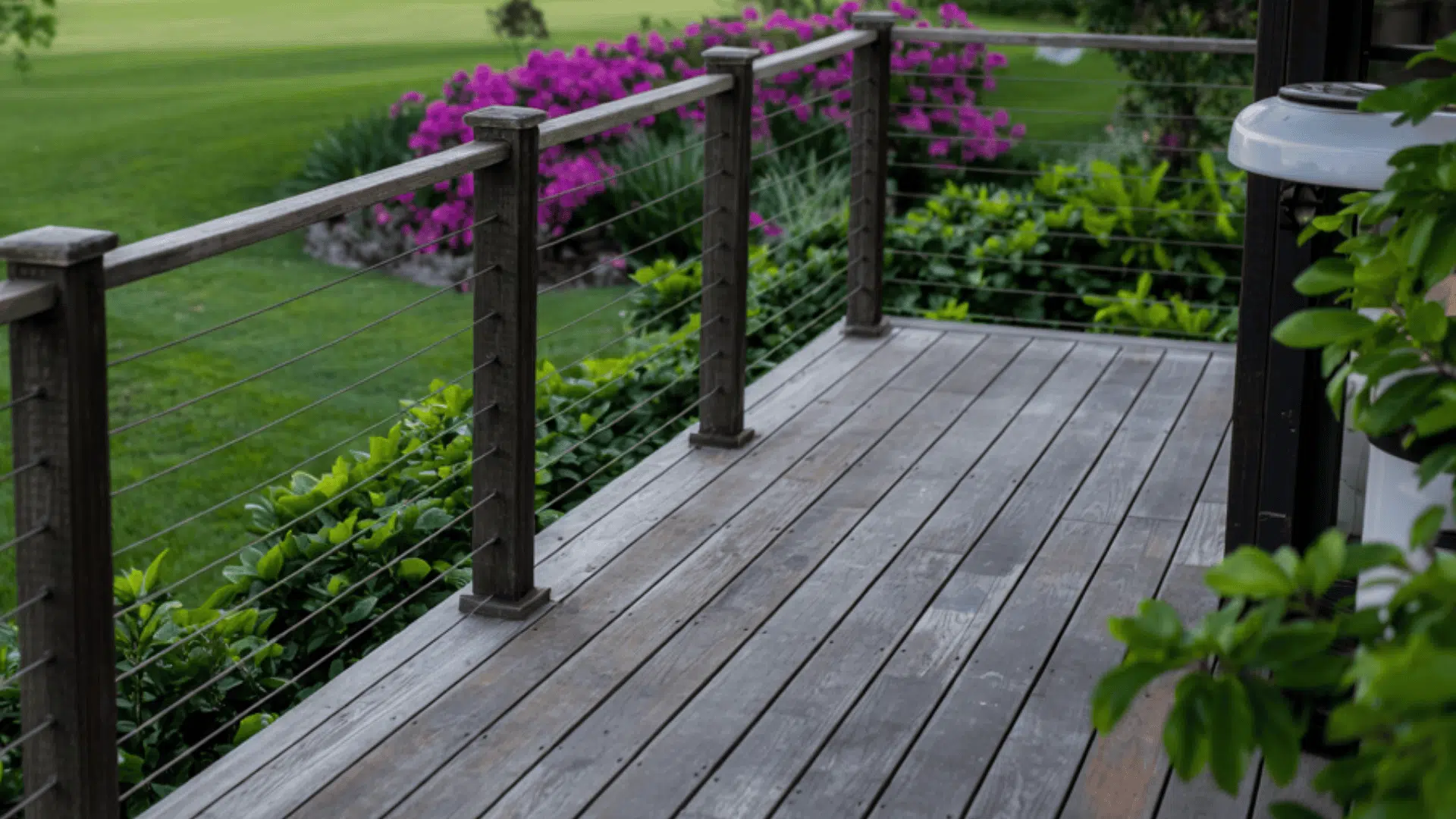
Railings are important for safety, but they don’t have to take over your deck’s look.
Horizontal cables or slim vertical bars keep the view open while still providing support. Metal railings add clean lines and need very little upkeep, making them a long-lasting option.
Choose a finish that matches your home’s exterior so the deck feels connected to the rest of your space.
This keeps everything looking neat, balanced, and easy to maintain over time.
10. Basic Square or Rectangle Platform
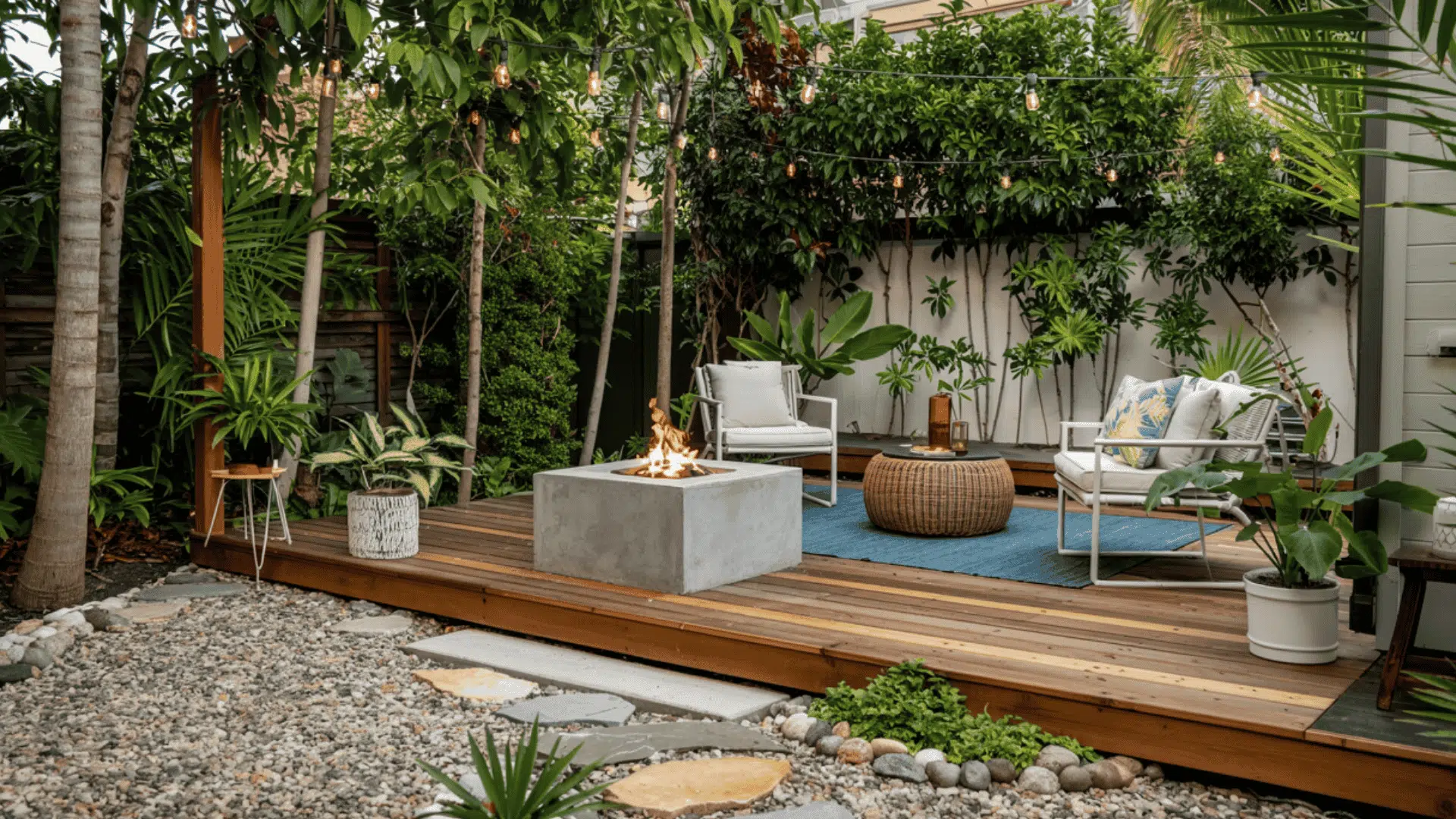
Square and rectangular platforms remain popular because they’re practical.
These shapes fit most properties, utilize materials efficiently, and simplify construction planning while keeping your budget in check.
Standard lumber lengths match these dimensions, reducing waste and cutting costs.
This classic shape also makes furniture arrangement easier. Most outdoor furniture collections are designed with rectangular spaces in mind.
Outdoor Deck Ideas with Roof
Adding overhead coverage changes how you use your deck. Protection from the sun and rain extends your outdoor season and creates a comfortable living space.
11. Solid Wood Roof Extension
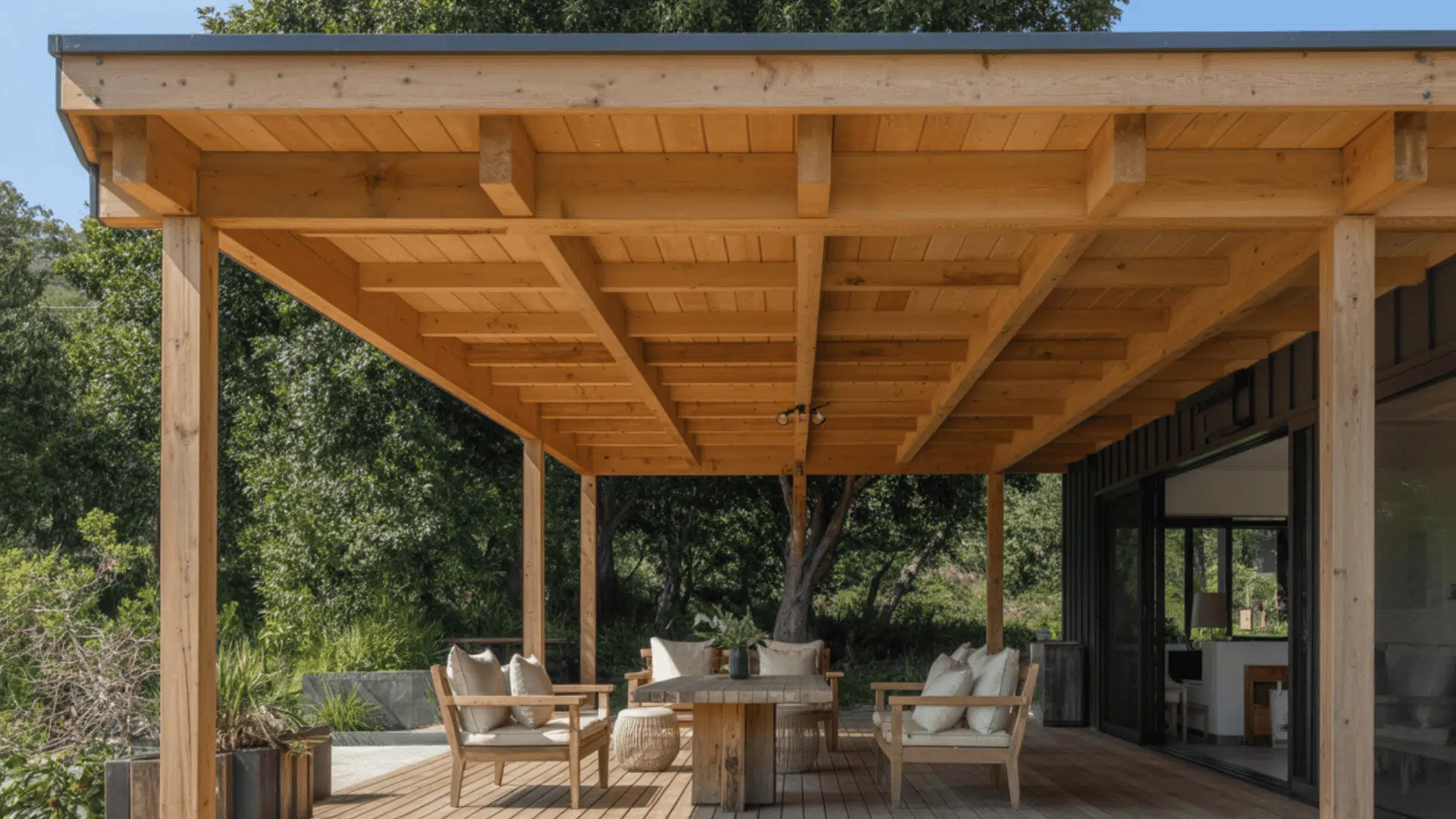
A solid wood roof attached to your home gives your deck full protection from rain and sun.
It turns the space into an outdoor room you can use in more weather conditions. The roof angle helps water drain properly and prevents pooling.
Match the material to your home’s existing roof so everything looks consistent.
Adding gutters will manage water and keep the area clean, giving you a covered deck that feels sturdy, useful, and easy to maintain.
12. Transparent Polycarbonate Roof
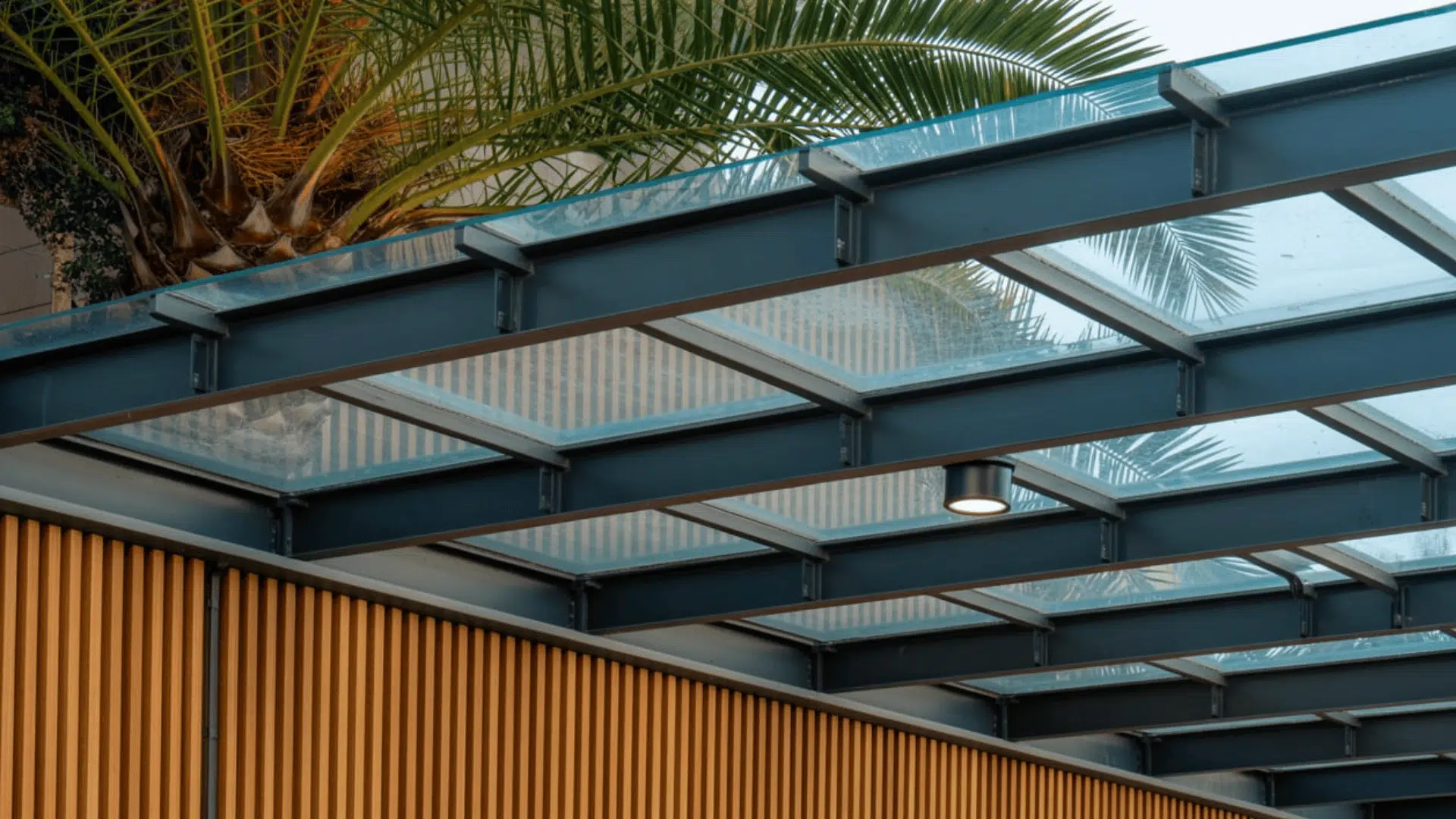
Polycarbonate panels stop rain while letting natural light come through. Panels like these can take a hit, block harmful UV rays, and weigh much less than glass.
Keeping things see-through maintains your deck’s brightness without trapping heat like a solid roof would.
Panels are available in different tint levels, from clear all the way to bronze, thus pick one based on how much sun hits your deck and how much heat blocking you’re after.
13. Metal Roof Panel Style
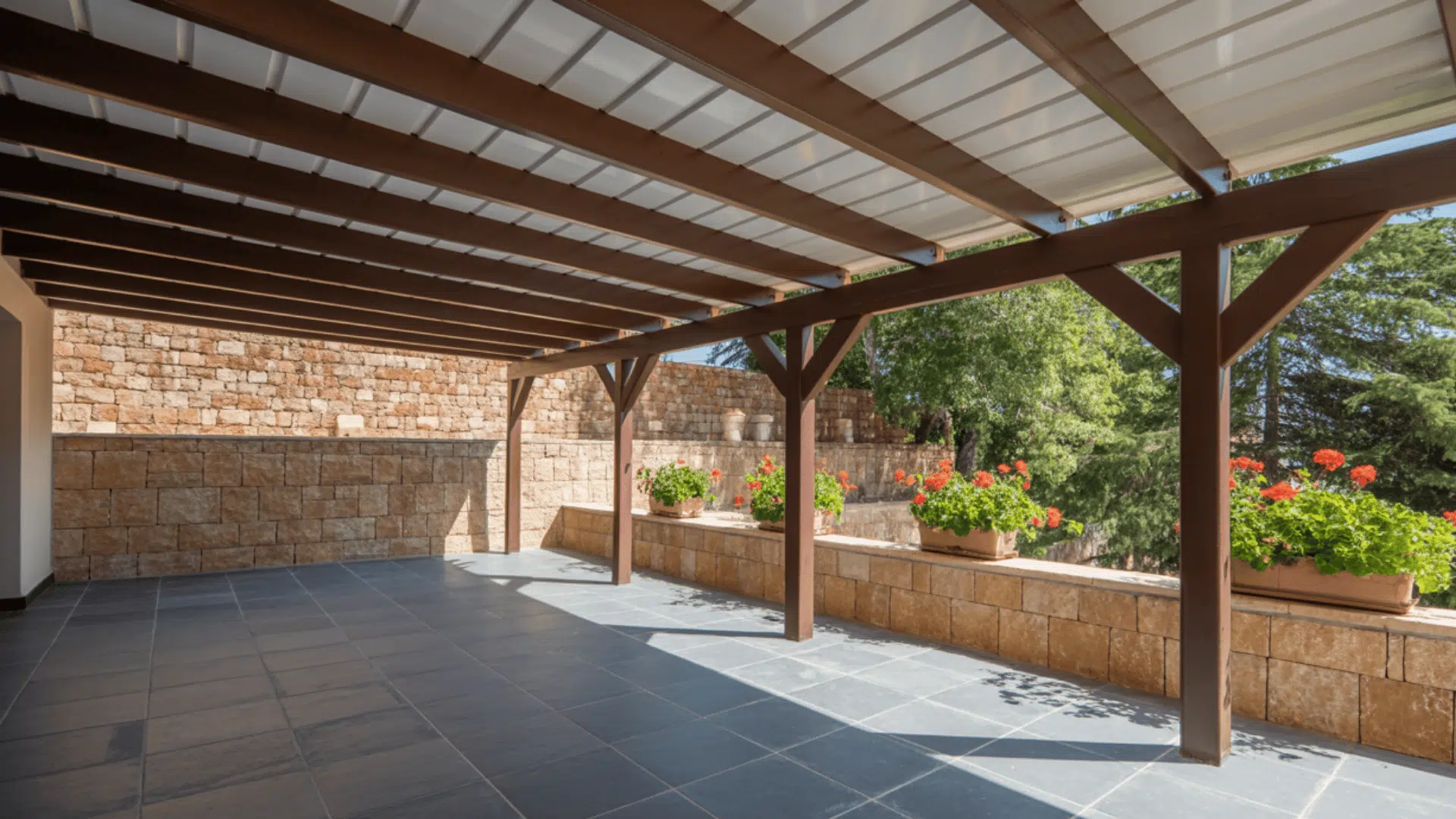
Corrugated metal or standing seam panels give you outstanding durability that lasts.
Metal bounces heat away effectively, which helps keep the area underneath cooler than what you’d get with solid wood options.
Metal roofs can hold up for 40-50 years without needing much attention.
Modern metal roofing is available in plenty of colors and surface treatments, and you won’t have to worry about fire damage, pest problems, or decay with metal panels.
14. Sloped Roof Attachment
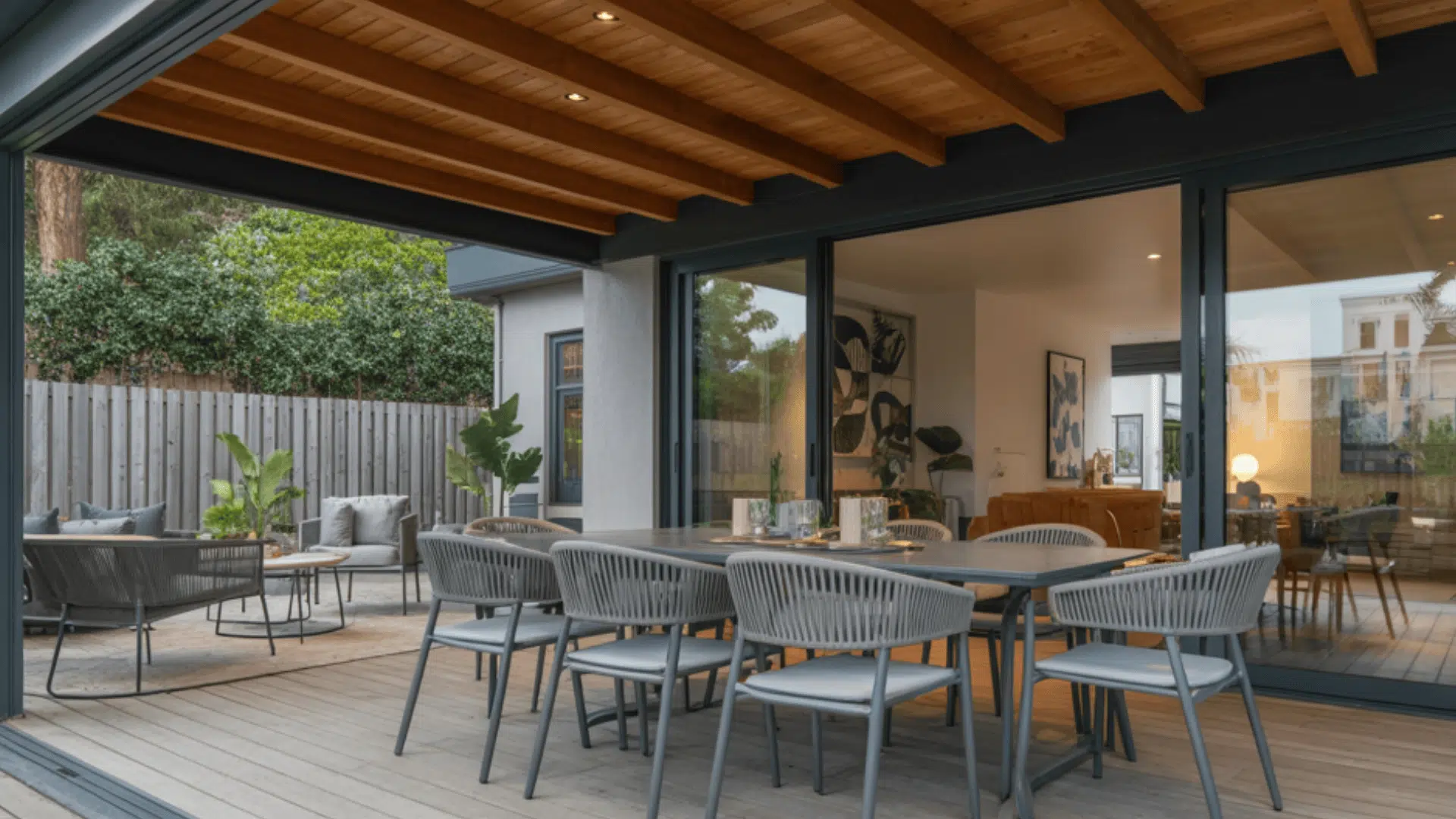
A sloped roof directs water away from the house and deck, helping prevent standing water and improving drainage.
With a pitched surface, water moves off the roof more efficiently, which helps prevent standing water and reduces long-term wear.
Building codes often specify a minimum slope to ensure proper runoff.
When designed with the home’s structure in mind, a sloped roof creates a smooth visual transition, reliable shade, and supports comfortable outdoor use.
15. Roof with Built-In Lighting
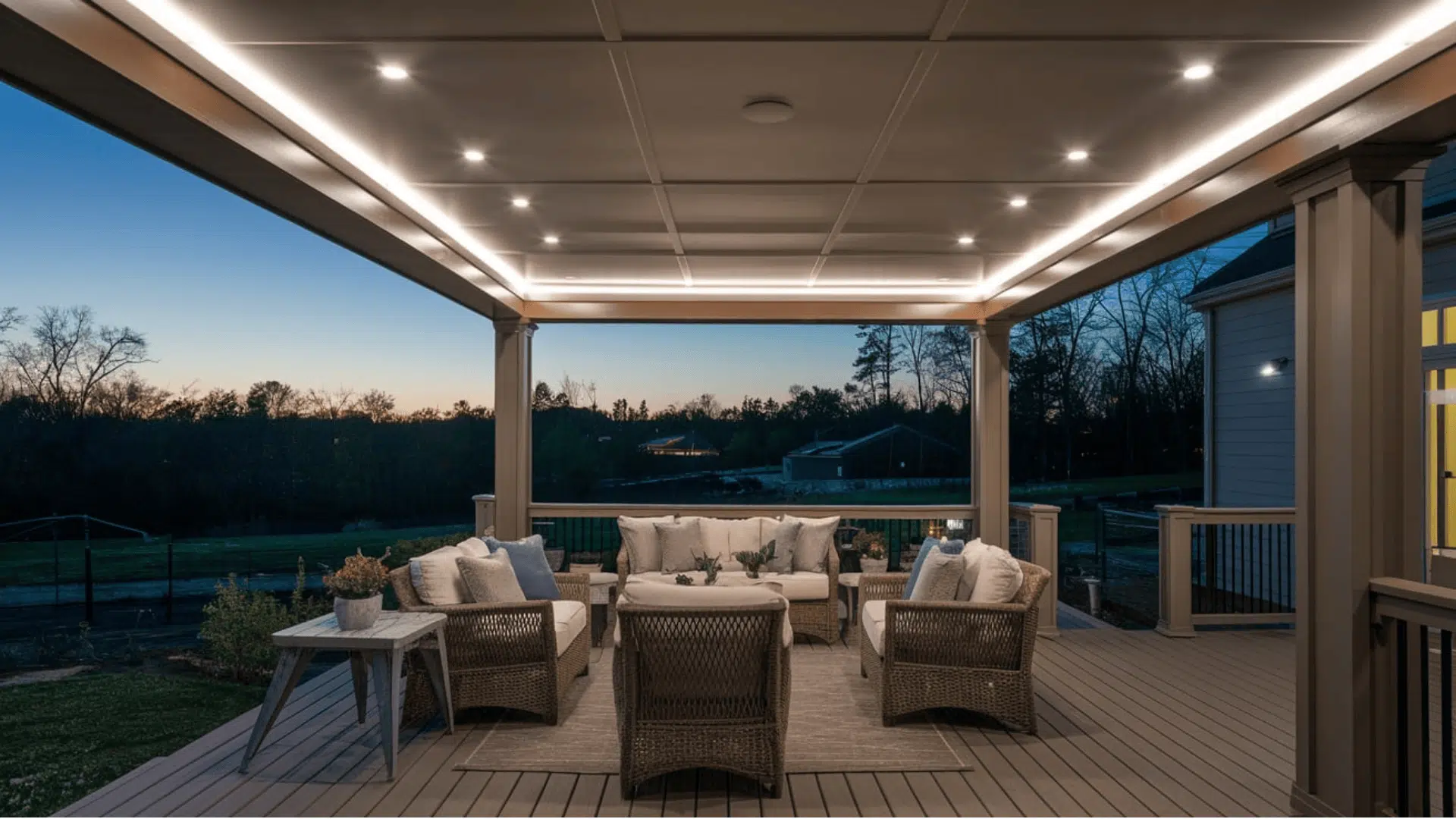
Integrated lighting helps you use your deck comfortably during evening hours. Recessed lights in the roof structure provide soft illumination without taking up space or causing glare.
It is best to plan the lighting layout while the roof is being built so everything looks clean and well-fitted.
You can also create separate lighting zones if your deck has different seating or activity areas, giving you better control over how each section is lit.
Outdoor Deck Ideas with Pergola
Pergolas add architectural interest while providing partial shade. These open-top structures balance sun exposure with coverage, creating comfortable outdoor spaces.
16. Open-Slat Pergola
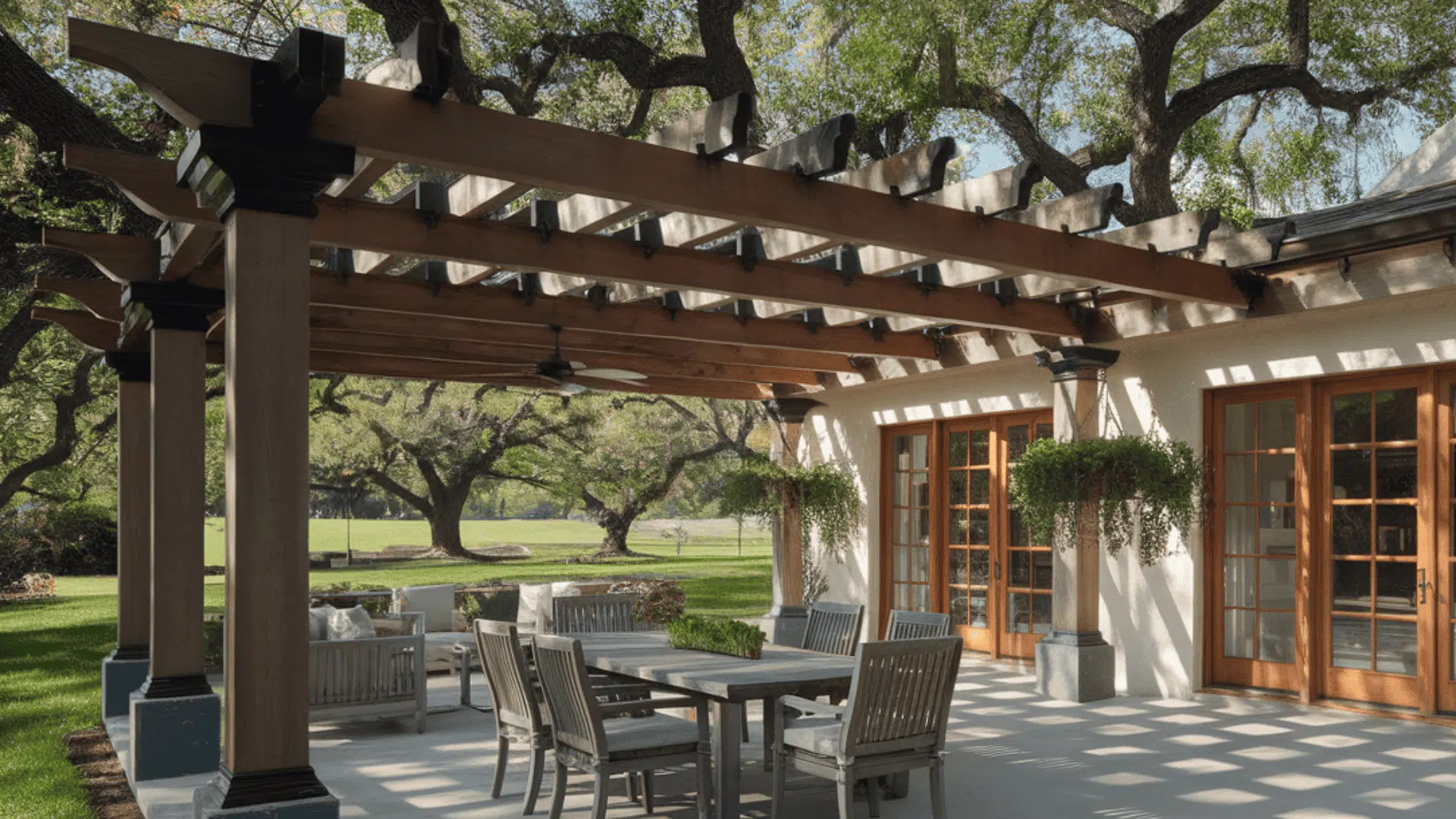
Traditional open-slat pergolas use evenly spaced horizontal beams across the top. This beautiful traditional style allows light to pass through while still creating gentle shade throughout the day.
The open layout also supports good airflow and helps reduce wind pressure on the structure.
The beams can be positioned parallel or perpendicular to the house, depending on the direction of the sun and the look you prefer.
17. Pergola with Climbing Plants
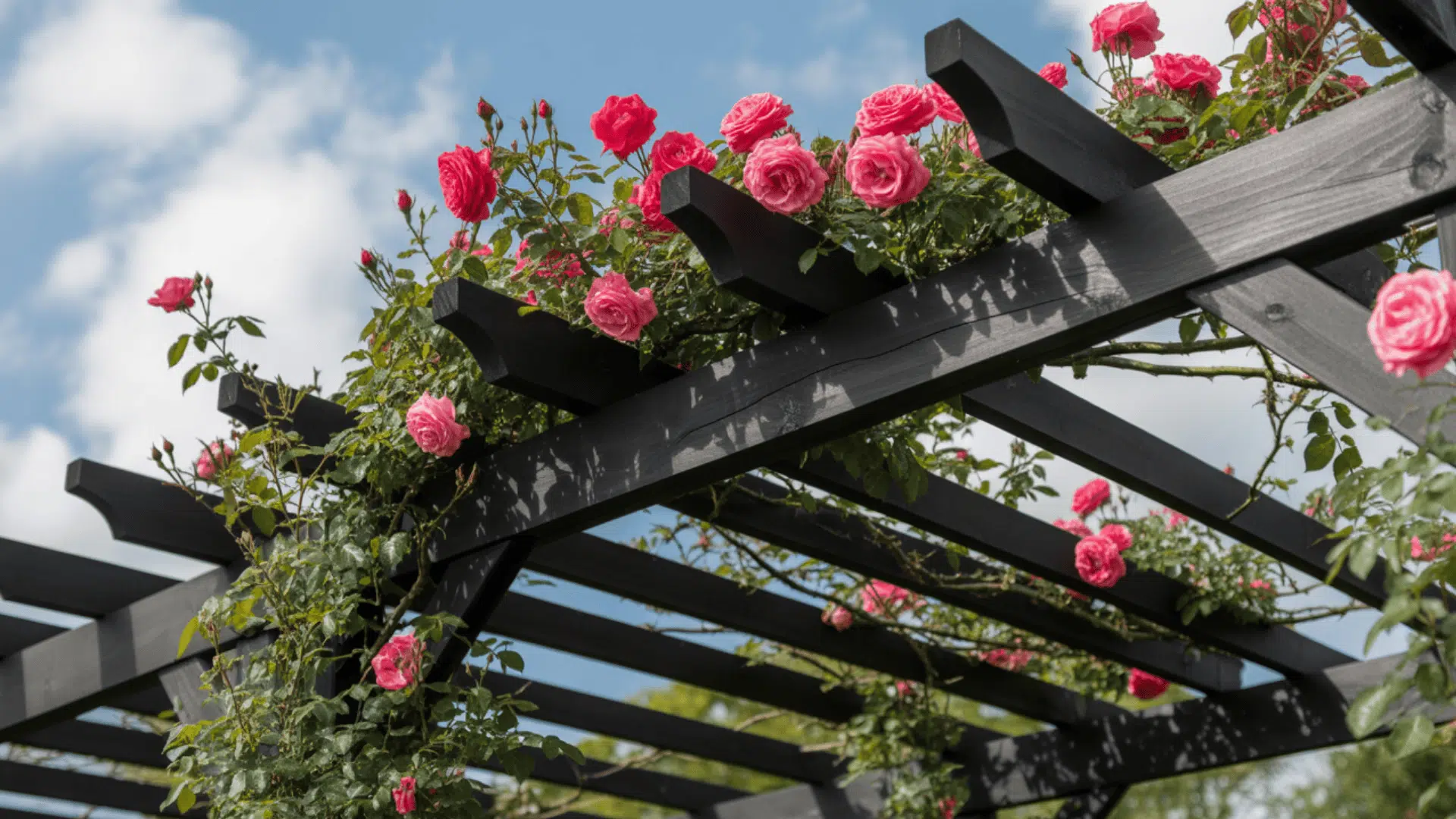
Living coverage adds natural beauty to a pergola and creates a softer, more organic outdoor space.
Vines like wisteria, clematis, or grapes can grow across the top and provide shade as they fill in. Some vines need regular trimming to stay controlled, while others grow with little care.
Adding support wires or trellises helps guide the plants and keeps the growth even.
This creates a shaded, comfortable area that feels connected to the outdoors without needing major upkeep.
18. Adjustable Louver Pergola
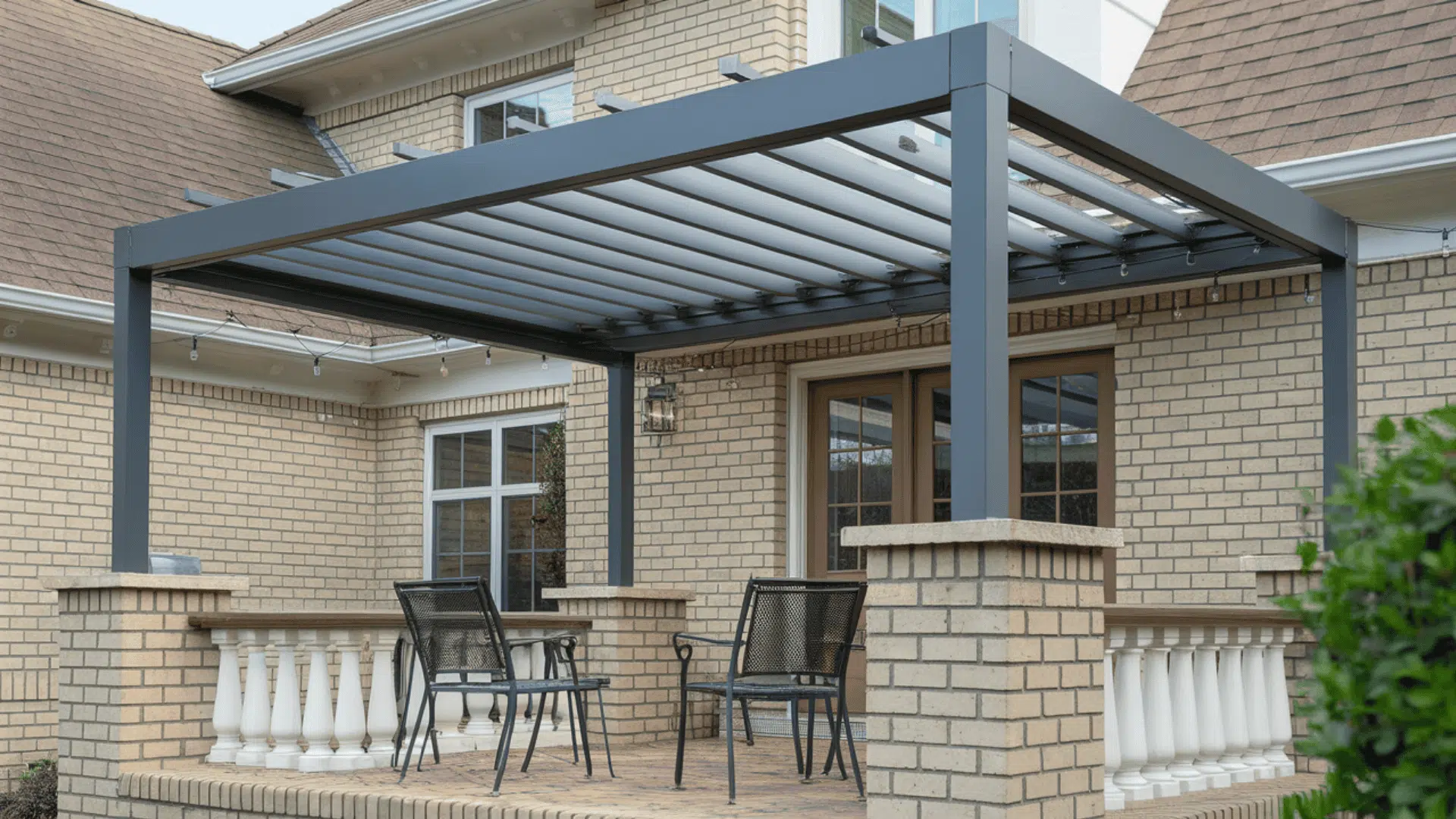
Motorized louver systems allow you to adjust sun exposure as needed. The slats can open for full sunlight, close for shade, or tilt to block light from certain angles.
Many systems come with remote controls or phone apps, making it easy to change the settings at any time.
These systems cost more than fixed options, but many homeowners find the added control and convenience worth the higher price.
19. Pergola with Hanging Lights
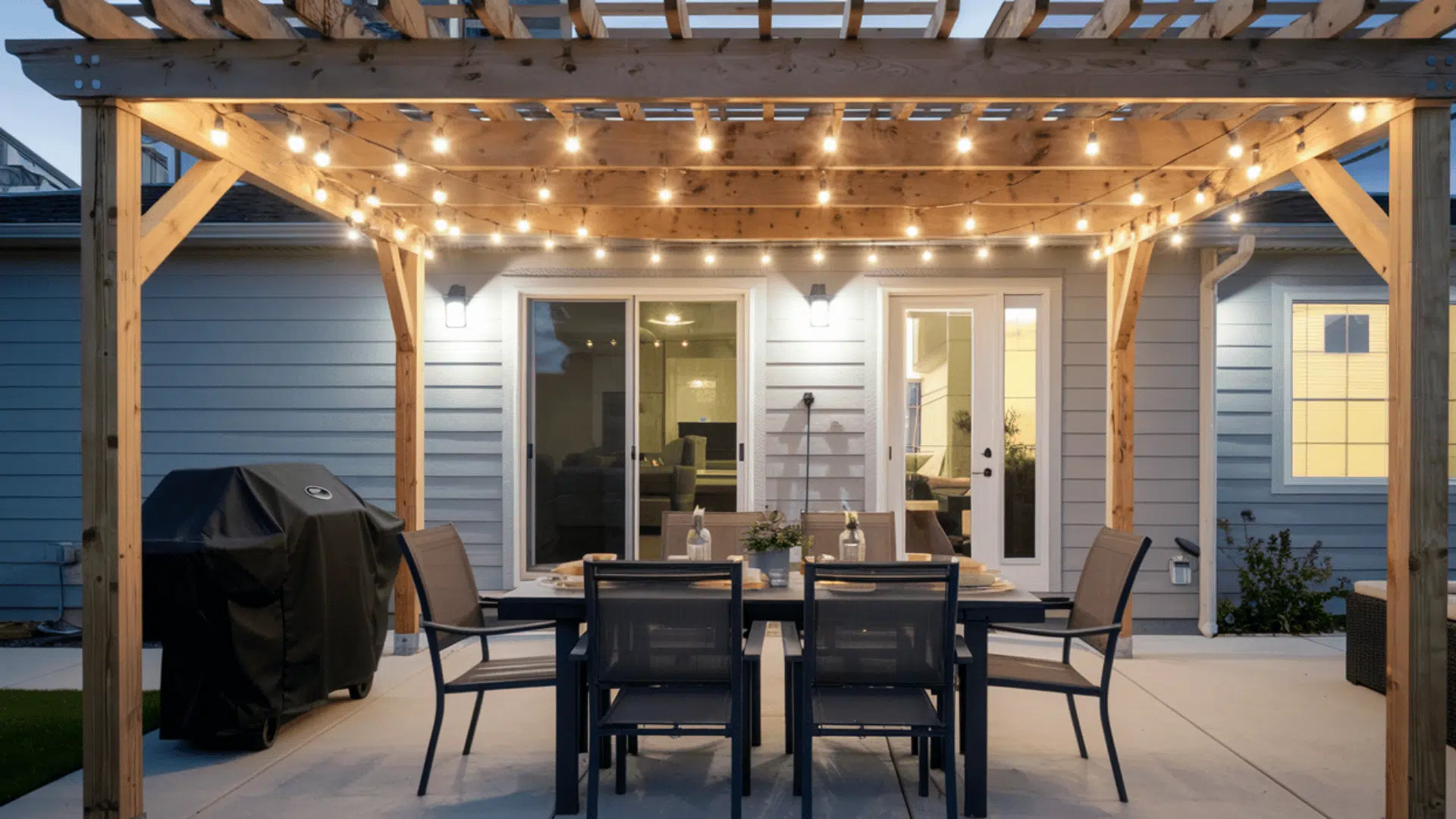
String lights or pendant fixtures can turn a pergola into a comfortable space for evening use. You can wrap string lights around the beams or hang them in straight lines across the top.
Lighting like this creates ambiance without requiring extensive electrical work, making it an easy weekend upgrade.
You can also install more than one set of lights and place them on separate switches to control brightness and placement easily.
Tips for Choosing the Right Deck Design for Your Home
With countless backyard deck and patio ideas available, picking the right deck comes down to matching design with your specific needs. Start by looking at these key factors:
- Space availability: Measure your yard first and choose vertical solutions for tight areas.
- Budget constraints: Set a clear budget and pick materials that fit your spending limits.
- Climate conditions: Match your roof or shade structure to local weather patterns.
- Maintenance commitment: Be honest about the time you can spend on upkeep and cleaning.
- Usage plans: Think about who will use the deck and for what activities.
Conclusion
Designing an outdoor deck becomes easier when you focus on what fits your space, climate, and daily routine.
The outdoor deck ideas shared above give you practical ways to add comfort, shade, and structure without making the project harder than it needs to be.
Each idea can fit different yard sizes and styles, and many can be combined to create a steady, functional layout.
A good deck should connect naturally to your home and support how you spend time outside, whether you relax, cook, or gather with others.
Think about what you want the space to do and which ideas match your needs.
Which direction feels right for your yard? Share your thoughts in the comments and let me know what you hope your deck will achieve.
Frequently Asked Questions
What Is the Cheapest Way to Build a Deck Right Now?
Using a ground-level platform with basic lumber, simple framing, and minimal features is the most affordable way to build a deck.
Is It Cheaper to Pour a Patio or Build a Deck?
A concrete patio is usually cheaper than a deck because it requires fewer materials and less structural support, especially for ground-level installations.
What Ruins Composite Decking?
Composite decking can be damaged by mold growth, standing water, harsh cleaners, heavy impacts, and improper installation that traps moisture or restricts ventilation.