Shelves are one of the easiest places to refresh, and I’ve learned that you can update a whole room just by changing what you place on them.
You don’t need special skills or tools to start, just a few simple ideas and the willingness to try.
In this blog, I’ll show you how to decorate shelves on your own in any room using clear steps you can follow right away.
You’ll see how to choose the right items, mix books, plants, and small decor, avoid common styling mistakes, and create a look that feels neat without being crowded.
I’ll show you simple shelf styling ideas that work with pieces you already have.
By the end, you’ll feel ready to style your shelves with easy, creative methods that work in any space.
How Shelf Styling Can Change Your Space?
When I style shelves, I notice how much they change the mood of a room, and you can see the same effect in your home.
Shelves draw the eye, so even small updates can make the whole space feel cleaner and more put-together.
A simple shift, like moving a stack of books, adding a plant, or clearing extra items, can make the room feel lighter right away. Shelf styling works in any room because it doesn’t depend on the size of the space.
A small shelf can add warmth, and a large one can make the room look more steady and organized.
When you choose a few pieces that fit well together, you create a calm, easy look that supports the rest of your room without adding clutter.
How to Decorate Shelves Like an Interior Designer?
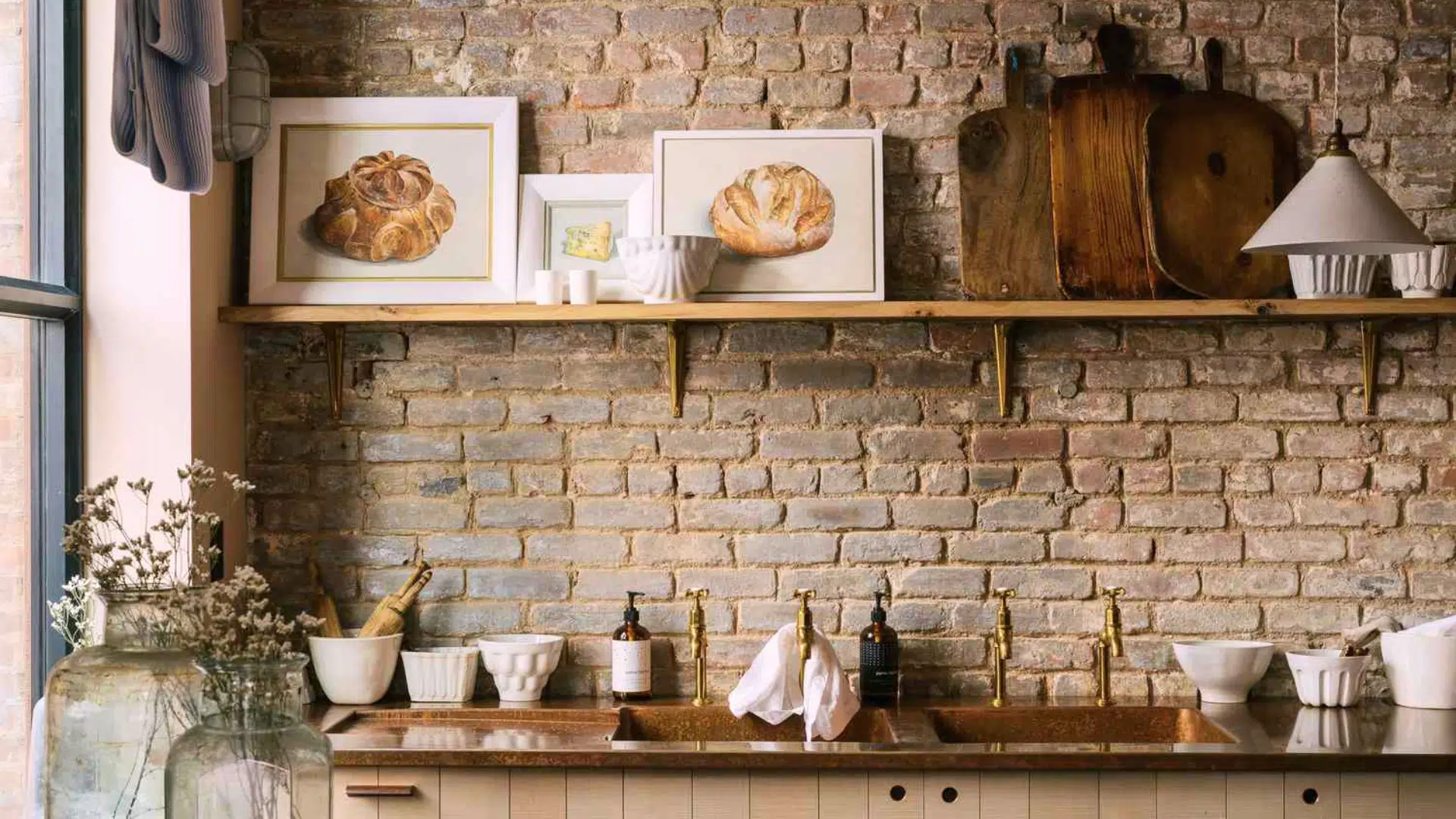
You don’t need special training to make your shelves look well-styled. A few simple methods can help you create a clean, balanced look in any room.
1. Start with a Clean and Empty Shelf
I always start by clearing the shelf completely because it gives you a fresh, open view of the space.
When nothing is in the way, you can see the full height, depth, and width, which helps you understand what actually fits.
This also makes it easier to choose items with purpose instead of putting everything back by habit. I like placing all my decor on a nearby table so I can look at each piece one at a time.
Starting with a blank shelf helps you stay organized and avoid clutter before you even begin styling.
2. Build Your Shelf in Simple Layers
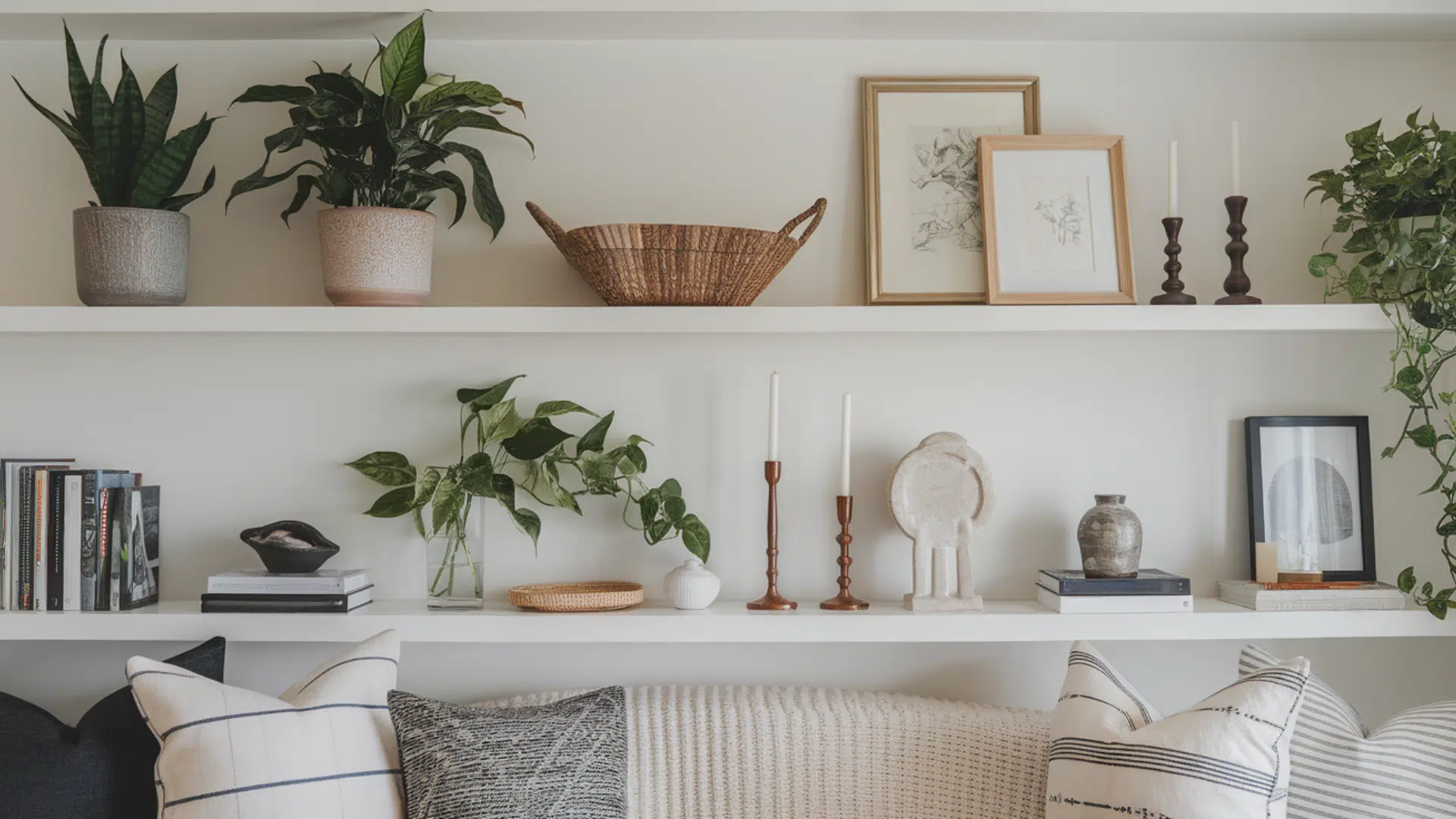
Layering is one of the simplest ways to make shelves feel balanced, and it’s something you can do without special training. Start with the biggest items to anchor the look, like tall vases or framed art.
Then bring in medium pieces such as bowls, plants, or stacked books.
Finally, fill small gaps with lighter decor that adds detail without crowding. Layering makes your shelves look thoughtful and steady because each piece supports the next.
I like this method because it keeps things flexible; you can move pieces around until the shelf feels right to you.
3. Use Height and Shape for Better Balance
When I want a shelf to look more styled, I mix different heights and shapes.
You can place a tall plant next to a small candle or pair a round bowl with a square frame. This simple contrast keeps the shelf from feeling flat or too uniform.
I also like spreading height changes across the shelf so the eye moves smoothly from one area to the next.
Try to avoid lining everything up at the same height, which makes the shelf feel stiff. A mix of shapes and sizes creates a calmer, more natural flow that always looks better.
4. Repeat Colors and Textures for a Steady Look
Repeating colors and textures is one of the easiest ways to make shelves look pulled together. You can pick two or three colors already in your room and spread them across your shelves for consistency.
The same idea works with textures; mixing smooth ceramics, natural wood, and woven pieces adds interest without making things look busy.
Repeating these small details ties everything together and makes the whole shelf feel organized.
You don’t need a lot of pieces to do this. Even repeating the same shade or material a few times can make a big difference.
5. Add One Strong Anchor Piece
Using one strong anchor piece gives the shelf an instant sense of direction.
A tall vase, framed print, or bold decorative object can act as the main element that guides everything else. Once the anchor is set, arranging the supporting pieces becomes easier.
Smaller items can sit beside it to create balance without overwhelming the space.
This approach also prevents shelves from looking scattered because everything relates back to the main focal point. An anchor piece sets the style and helps the whole setup feel steady and intentional.
6. Group Items in Twos or Threes
Grouping items in twos or threes keeps shelves organized and easy to style. These small clusters also give the layout clear structure.
A set might include a candle with a framed photo, or a stack of books paired with a small plant.
These simple groupings create pockets of interest without adding clutter. They also help the eye move through the shelf naturally because each group stands on its own.
Using small clusters makes the entire shelf look thoughtful, steady, and easier to maintain over time.
7. Mix Books with Decor
Books are great for adding height and texture, but they work even better when mixed with decor objects.
Stacked books can act as a base for a candle or small sculpture, while upright books can sit next to a plant or photo frame to break up the lines.
This mix keeps the shelf from feeling too flat or too “book-heavy.” Even a small book collection can add warmth and structure when combined with simple decor pieces.
Combining the two helps create a balanced layout that feels both functional and visually appealing without requiring a lot of items.
8. Play with Open Space
Leaving open space is one of the easiest ways to make shelves feel tidy and intentional. Instead of filling every inch, small empty areas help each group of items stand out.
This gives the shelf breathing room and keeps the layout from feeling crowded.
Pulling pieces back instead of placing them at the edge creates a softer look. Open space also helps the eye rest and makes the shelf easier to view.
Keeping a few clear areas can make the whole design feel more natural and put together.
9. Add a Touch of Greenery
Greenery brings life to shelves and helps soften harder materials like glass, frames, or ceramics.
Even a single plant can warm up an entire shelf and make the space feel more inviting. Small pots, trailing vines, or faux stems in a simple vase all work well.
Plants also help break up heavy areas and fill awkward gaps without adding visual weight.
Real or faux, greenery adds a natural touch that balances the shelf. Even a little can instantly freshen the whole layout.
10. Mix Personal Items with Decorative Pieces
Shelves feel more meaningful when personal items are mixed in with everyday decor.
Small keepsakes, framed photos, travel souvenirs, or special objects add warmth and make the space feel unique to the home.
These pieces blend well with simple decor like books, candles, or small bowls. Mixing personal items with stylish accents also keeps the shelf from feeling too staged or generic.
Keep things light and avoid crowding. Just a few personal pieces can make the whole shelf feel warm and meaningful.
11. Adjust and Edit until It Feels Right
Styling shelves often works best when done slowly, with small changes along the way.
After arranging items, stepping back helps reveal areas that feel crowded or uneven. Removing one piece or shifting an item just a few inches can make the entire shelf look better.
Editing is a simple part of the process, not a sign that something went wrong.
Shelves look most natural when they’re refined over time.
Making small adjustments helps the layout feel calm, balanced, and easy to look at, giving the shelf a finished but not forced appearance.
How to Choose the Right Items for Your Shelves?
Choosing the right items for your shelves starts with understanding what works best for your room and the style you want to create.
Look at the colors, textures, and shapes already in the space, and choose pieces that match or support that look.
Mixing old, new, and personal items is one of the easiest ways to add interest without making the shelf feel busy.
A vintage frame, a modern vase, a small plant, or a meaningful keepsake can work well together when they’re balanced. Think about size by using a mix of tall, medium, and small pieces so the shelf doesn’t look flat.
Shapes matter, too, because combining round, square, and curved pieces adds variety.
Repeating a few colors across the shelf helps everything feel steady and organized instead of random. This simple mix keeps the shelf clean, warm, and visually easy to follow.
Common Shelf Styling Mistakes to Avoid
It’s easy for shelves to feel messy or unbalanced without noticing. These simple points will help you spot problems fast and fix them just as quickly.
- Overcrowding the shelf with too many pieces makes the whole space feel heavy and hard to look at. Try removing a few items until the layout feels lighter and more open.
- Using items that all share the same height creates a flat, uneven look. Mix tall, medium, and short pieces to add natural balance.
- Ignoring open space can make shelves feel cramped. Leaving small gaps gives each grouping room to breathe and keeps the design calm.
- Placing everything at the front edge of the shelf makes the layout look stiff. Pull pieces back slightly to soften the look.
- Random colors or mismatched tones create visual clutter. Repeat two or three colors across the shelf for a cleaner, steadier layout.
- Using only small items makes the shelf look busy. Mix in a few larger pieces to ground the space and add structure.
- Skipping regular editing leads to clutter over time. Remove or move a few pieces every so often to keep the shelf fresh and organized.
Conclusion
Shelf styling can be simple. A few easy methods help you create a look that fits your home and stays easy to maintain.
Starting with a clean shelf and choosing the right mix of items, while watching height, shape, and color, makes a big difference.
Grouping pieces, using open space, and keeping things balanced help your shelves look thoughtful without being crowded. The best part is that shelf styling isn’t a one-time project.
You can make small changes whenever you need by shifting pieces, switching items, or updating the layout.
Small updates can keep your shelves looking fresh, calm, and natural. With these simple steps, your shelves can always feel easy to style and enjoyable to look at.