
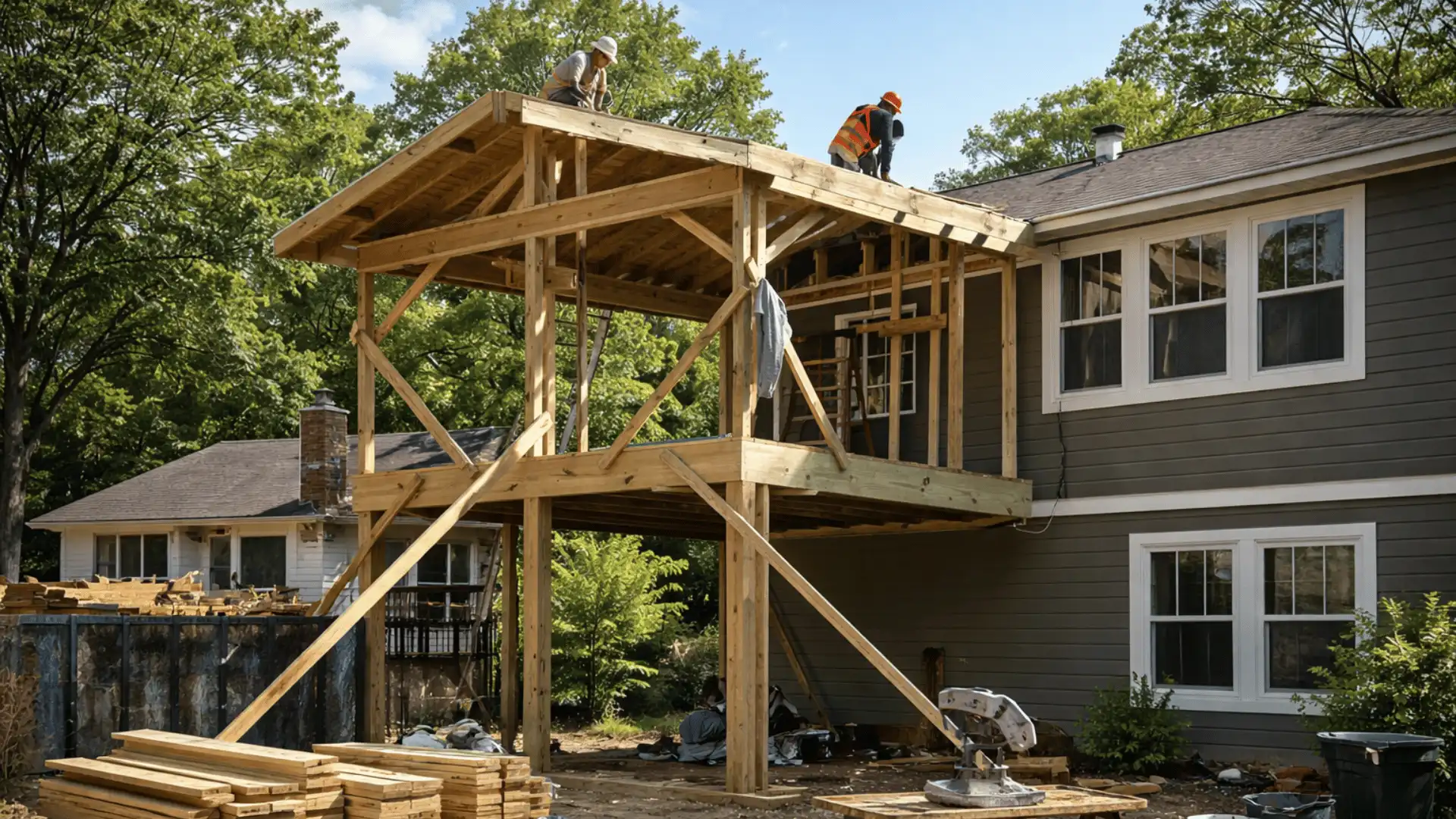
You’ve been staring at that cramped living room for too long, thinking about adding extra space to make your home feel right again.
A cozy bedroom for guests or a bright family area for gatherings? Sounds exciting, but the big hurdle hits fast.
Figuring out the cost of the room addition without getting overwhelmed by surprises.
Homeowners everywhere first wrestle with this question, as prices vary widely based on size and location.
You’ve come to the right place if you’re considering a major addition to your home. In this blog, I’ll break down average costs for different room types along with the factors that affect them.
I’ll also share honest stories from folks who’ve done additions themselves and mention common mistakes to avoid.
Understanding Room Addition Cost
Planning a room addition involves much more than adding a few walls. It is essentially a small home built as an addition to your existing house, which explains the higher price tag.
The process usually starts with the foundation. Contractors dig, level the ground, and pour concrete to support the new space. Difficult soil conditions can increase costs.
Then comes framing, where wood or steel forms the structure, followed by roofing that blends with your current home and protects it from the weather.
Electrical wiring, outlets, and lighting are installed, along with plumbing if the space includes a bathroom or kitchen.
HVAC adjustments keep the new area comfortable year-round, while insulation improves energy efficiency.
On top of all this, you need permits and inspections to ensure everything meets local building codes and safety standards. Understanding each step helps you plan your budget accordingly.
How Much Do Different Room Additions Cost?
Room addition costs vary widely depending on the type of space being built. They vary in price, complexity, and construction requirements.
1. Bedroom Addition

Adding a bedroom is one of the most popular room additions, especially for growing families.
The average cost typically ranges from $20,000 to $100,000, depending on size, location, and finishes.
A basic 200 sq ft bedroom on the ground floor sits on the lower end, while a master suite with an en-suite bathroom and walk-in closet pushes toward the top.
Labor usually makes up 40–50% of the total cost. Expect to also budget for electrical wiring, insulation, drywall, flooring, and permits.
2. Bathroom Addition

A bathroom addition is one of the more complex projects due to the plumbing. Costs typically range from $18,000 to $75,000.
A basic half bath (toilet and sink only) stays closer to the lower end, while a full bathroom with a shower, tub, and tile work climbs significantly.
The biggest cost driver is the distance between the new bathroom and the existing plumbing lines. The farther it is, the more pipework is needed.
Always factor in ventilation and waterproofing, which are non-negotiable for any bathroom build.
3. Sunroom Addition

A sunroom is one of the most affordable ways to add livable square footage. Costs generally range from $8,000 to $50,000.
A prefab three-season sunroom sits at the budget end, while a fully insulated, climate-controlled four-season sunroom with custom windows costs considerably more.
Since sunrooms typically don’t require as much structural work as other additions, labor costs are lower.
However, if you want heating, cooling, and electrical outlets built in, which most homeowners eventually do, plan for those costs upfront rather than retrofitting later.
4. Home Office Addition

With remote work becoming a long-term reality for many, dedicated home office additions have surged in popularity.
Costs typically range from $10,000 to $35,000 for a standard build. The space itself doesn’t require plumbing, which keeps costs down, but good electrical planning is important.
Think about multiple outlets, proper lighting, and internet wiring. Soundproofing is another expense many homeowners add for focus and privacy, which can lead to an additional $5,000.
The size of the added room also plays a crucial role. A 100 sq ft office costs far less than a 250 sq ft dedicated workspace with built-in shelving.
5. Kitchen Extension
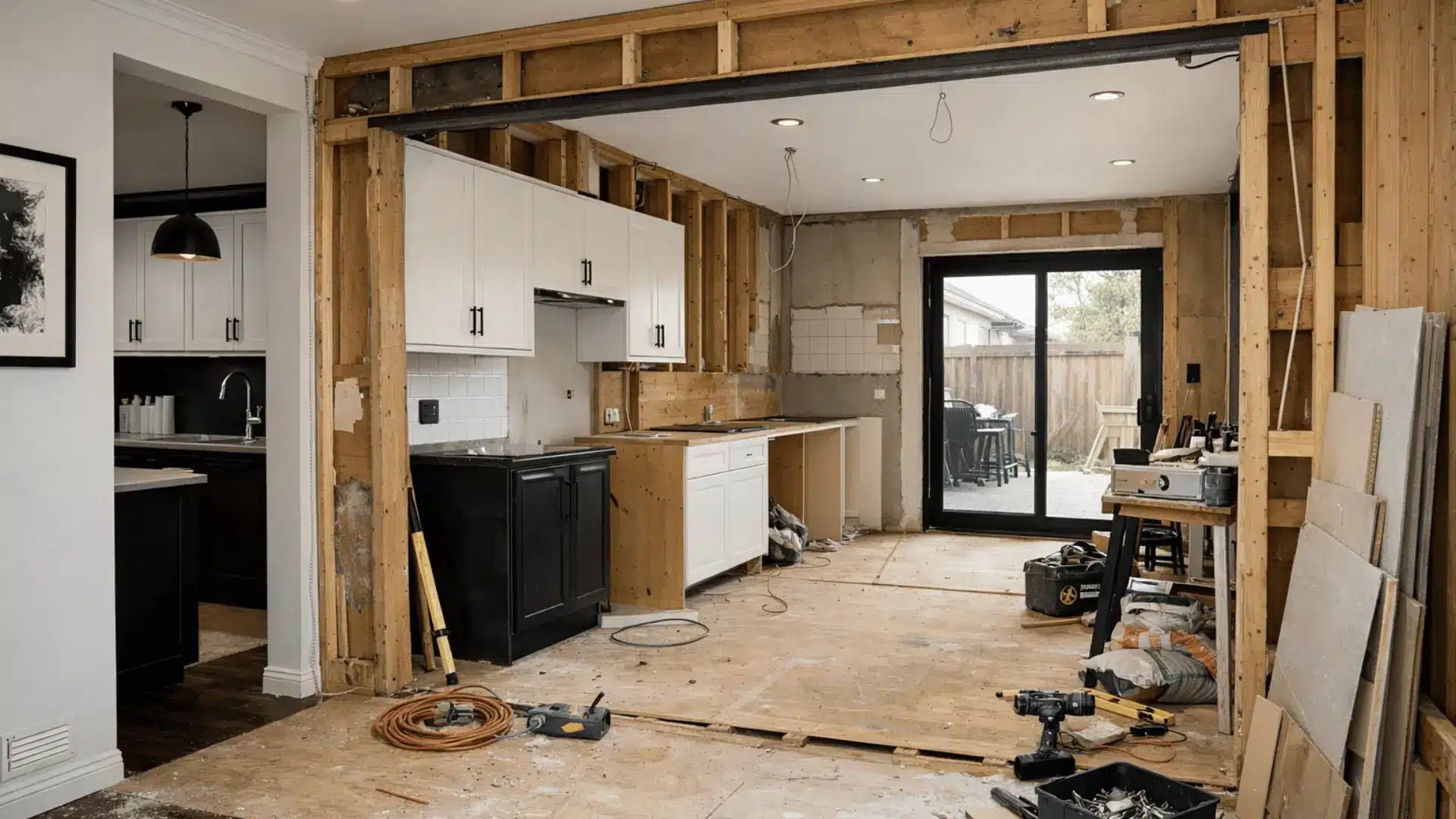
Expanding a kitchen is the most high-impact and high-cost project because of the wide number of elements that meet the safety standards.
Most homeowners spend between $25,000 and $90,000, and costs can go higher depending on cabinetry, countertops, and appliance upgrades included in the build.
Since a kitchen extension often involves moving or extending plumbing, gas lines, and electrical panels, the structural complexity can add up quickly.
The good news is that kitchen expansions make up a strong return on investment. An updated, spacious kitchen significantly boosts resale value.
Getting a detailed scope of work from your contractor before signing anything is especially important with this type of addition.
6. Garage Conversion
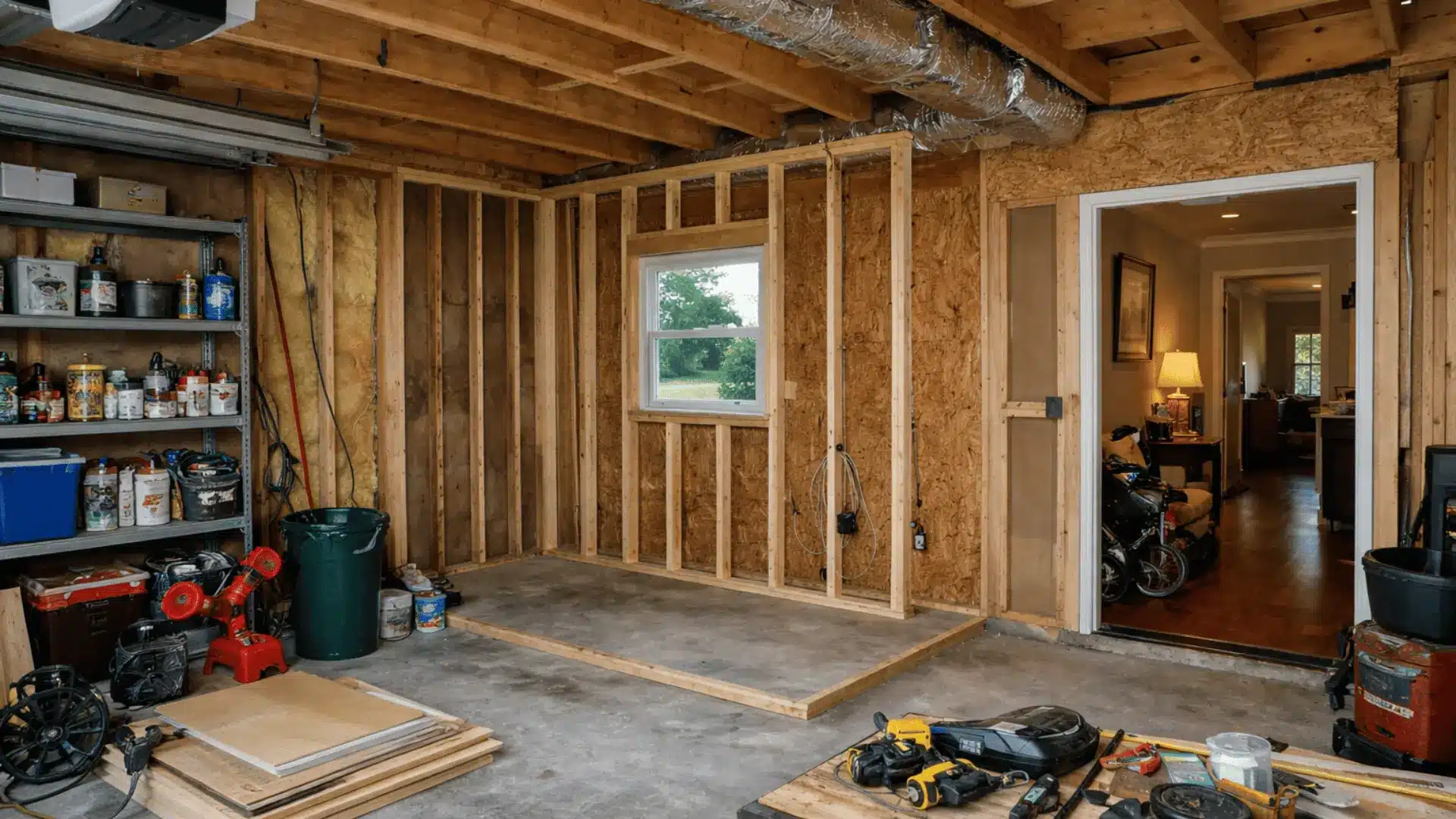
Converting an existing garage into a livable space is often the most budget-friendly option for adding a room, with costs ranging from $6,000 to $30,000.
Since the structure already exists, you’re primarily paying for insulation, drywall, flooring, HVAC extension, and electrical work.
The final cost depends heavily on what the space is being converted into. A simple storage room costs far less than a fully finished guest suite or rental unit.
Make sure to check the local zoning laws and HOA rules before starting the project. This is a non-negotiable because some areas restrict or regulate garage conversions.
7. Second Story Addition

Adding a second story is the most expensive type of room addition, with costs ranging from $100,000 to $300,000 or more.
It essentially involves lifting or rebuilding the roof and reinforcing the existing foundation and walls to support the added weight.
The payoff is significant square footage without using any yard space, making it ideal for smaller lots. It also comes with stricter permitting requirements and almost always requires an expert.
In terms of the time taken, expect 4 to 6 months minimum, and plan for temporary relocation during the most intensive phases of construction.
Room Addition Cost at a Glance
Room additions come in various styles, each with unique features that affect the overall cost based on size, materials, and complexity.
Costs vary widely depending on the addition’s purpose and build requirements, ranging from basic expansions to specialized spaces.
| Room Addition Type | Average Cost Range |
|---|---|
| Bedroom addition | $20,000–$100,000 |
| Bathroom addition | $18,000–$75,000 |
| Sunroom/enclosed porch | $8,000 – $50,000 |
| Home office | $10,000–$35,000 |
| Kitchen extension | $25,000–$90,000 |
| Garage conversion | $6,000 – $30,000 |
Factors Influencing Your Room Addition Cost
Room addition costs vary widely depending on many factors, making early budgeting and contractor planning essential to stay within a realistic financial range.
- Size and Scope: Larger rooms cost more overall; a 12×12 space can range from $18,000 to $75,000, averaging $125 to $520 per square foot depending on complexity.
- Materials: Standard drywall and basic finishes keep costs lower, while custom cabinetry and premium tile can raise expenses by 20 to 30 percent.
- Labor and Permits: Skilled labor typically runs $50 to $100 per hour, with permits and inspections adding $1,000 to $5,000 or more.
- Type of Addition: Ground-level additions average $100 to $300 per square foot, while second-story builds range from $150 to $450 or more due to structural reinforcement.
- Contractor Selection: Experienced contractors may charge 10 to 20 percent more, but often reduce costly mistakes and rework.
Hidden Costs to Consider for Room Addition
Most room addition budgets get derailed by expenses that aren’t mentioned upfront and quietly pile up before the walls are even finished.
Many homeowners go into a room addition with a solid budget, get a quote from their contractor, feel good about the numbers, and then watch that budget stretch far beyond what they planned.
- Permit Fees: Authority approvals cost $500-$2,000+, depending on your location and project.
- Architectural & Design Fees: An architect typically adds $2,000–$15,000 to the total budget.
- Temporary Housing or Storage: Short-term relocation or pod rentals during construction are some unavoidable costs that add up fast.
- Landscaping Restoration: Construction damages grass and pathways, and restoring the yard costs $500–$3,000.
- Furniture & Finishing Costs: Paint, lighting, flooring, and furniture for the new space aren’t included in the contractor’s quotes.
The contractor quote covers construction, but that rarely covers everything else.
The smartest thing you can do before breaking ground is build a contingency buffer of at least 10 to 20% on top of your total estimated cost.
Real Owners’ Experience on Room Addition Cost

Reading owner experiences from community platforms like Reddit can help you set more realistic expectations for your room addition costs.
One homeowner shared a quote they received of $500–$750 per square foot for a two-story addition in Southern New England.
This is actually much higher than basic new-construction estimates because of tie-ins with the existing structure and foundation work.
Contractors even suggested that building new was often cheaper than adding on.
Another commenter broke down costs around $190k–$320k for a 450 sq ft addition, including a bathroom, framing, roofing, and permits.
Another owner reported about $350 per square foot with mid-range finishes in Pennsylvania.
These experiences highlight how location, complexity, bathrooms, and finish choices can dramatically affect your total price, giving you insight beyond national averages.
Common Mistakes to Avoid With Room Additions
Room additions can quickly become stressful and expensive when key planning steps are overlooked or rushed.
- Skipping permits to save money can lead to fines or even the forced removal of the addition
- Choosing the cheapest contractor without checking reviews, references, or past projects
- Ignoring how the new space connects with the existing layout results in an awkward flow
- Underestimating timelines, as most projects take 3 to 6 months and may face weather or supply delays
- Overlooking HOA rules or failing to secure a detailed written contract before work begins
Avoiding these missteps helps control room addition costs, protect the investment, and keep the project on schedule.
Tips to Save Money on Room Addition
Saving on room addition costs requires early planning, smart design and material choices, and tapping into rebates or DIY efforts to minimize expenses without compromising quality.
- Budget with Caution: Set aside an extra 15 to 20 percent for unexpected material increases or hidden structural issues.
- Prioritize Needs over Wants: Focus on functional essentials before adding luxury upgrades.
- Keep the Design Simple: Straightforward layouts reduce labor time and construction complexity.
- Handle Safe Diy Tasks: Take on painting or minor demolition, but leave plumbing and electrical work to licensed professionals.
- Compare Multiple Quotes: Request three to five contractor bids to secure fair and competitive pricing.
- Schedule During Slower Seasons: Booking work in winter or off-season months can sometimes lower labor costs.
Conclusion
A room addition cost is a serious financial commitment, and for most homeowners, it is one of the largest upgrades they will ever take on.
The price can feel overwhelming at first, especially when estimates vary so widely depending on size, layout, location, and finishes.
However, when the planning is thoughtful, the budget is realistic, and the contractor is carefully chosen, the outcome is usually worth it.
A well-designed addition does more than add square footage; it improves how a home functions every single day and can also increase long-term property value.
Going into the project informed makes a big difference. Focus on what the household genuinely needs, make practical spending decisions, and move forward with confidence.
Thinking about adding a room to your home?
Share your project idea below and keep the discussion going!