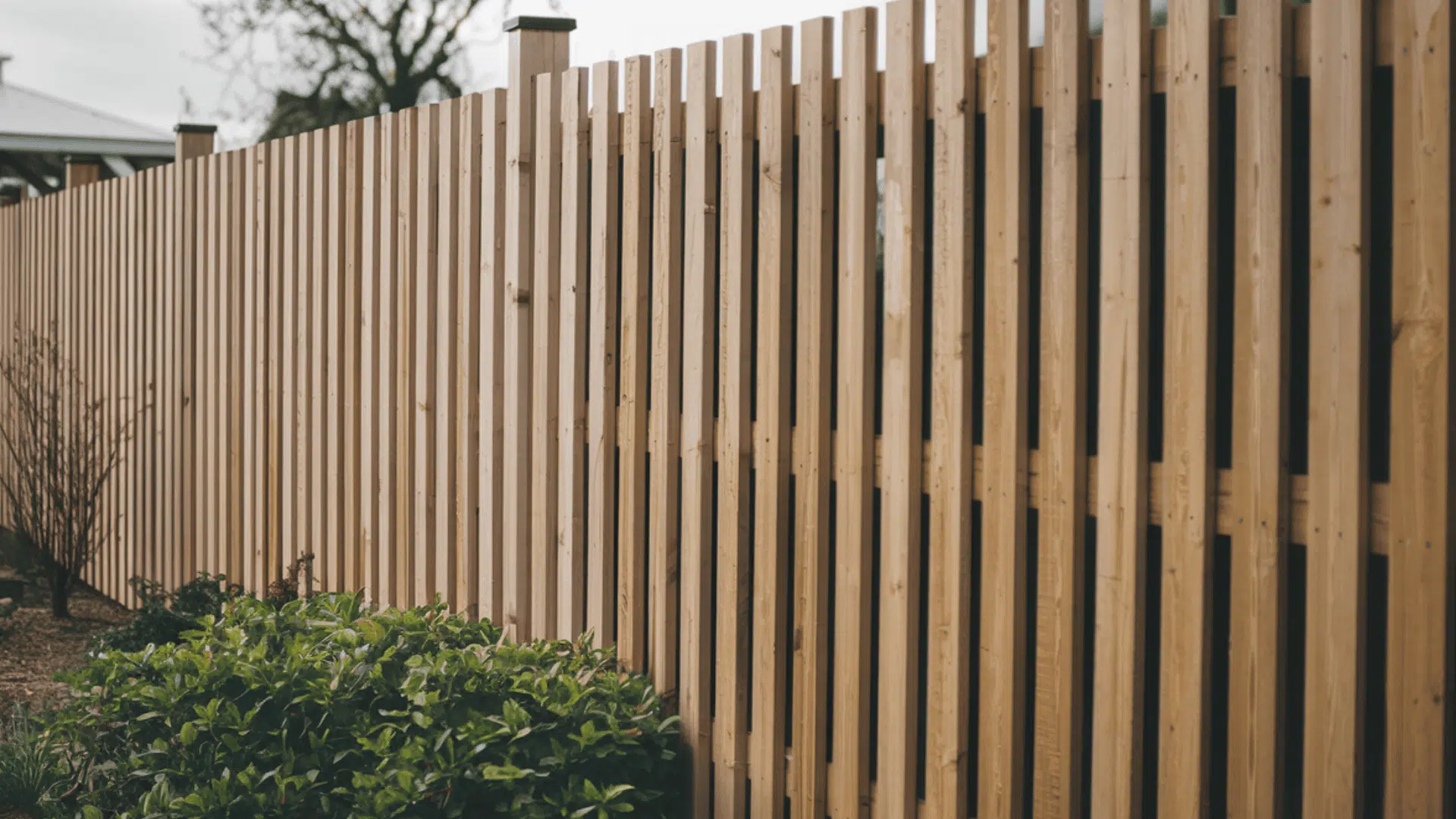
Standing in your yard trying to describe “that fence style” to your contractor can be frustrating.
Without knowing the proper wood fence styles’ names, you might struggle to communicate your vision or compare options effectively.
Such confusion often leads to mismatched expectations, wasted time, and disappointing results that don’t match what you had in mind. Learning the correct terminology changes everything.
You can tell your contractor exactly what you want, and they’ll know how to build it.
This blog will help you identify different fence designs, understand what makes each one unique, and pick the right option for your home.
Traditional Fence Styles
Classic fence designs have been around for decades, and there’s a good reason for their continued popularity. Let’s take a look at some of the best traditional types of wood fence styles:
1. Picket Fence
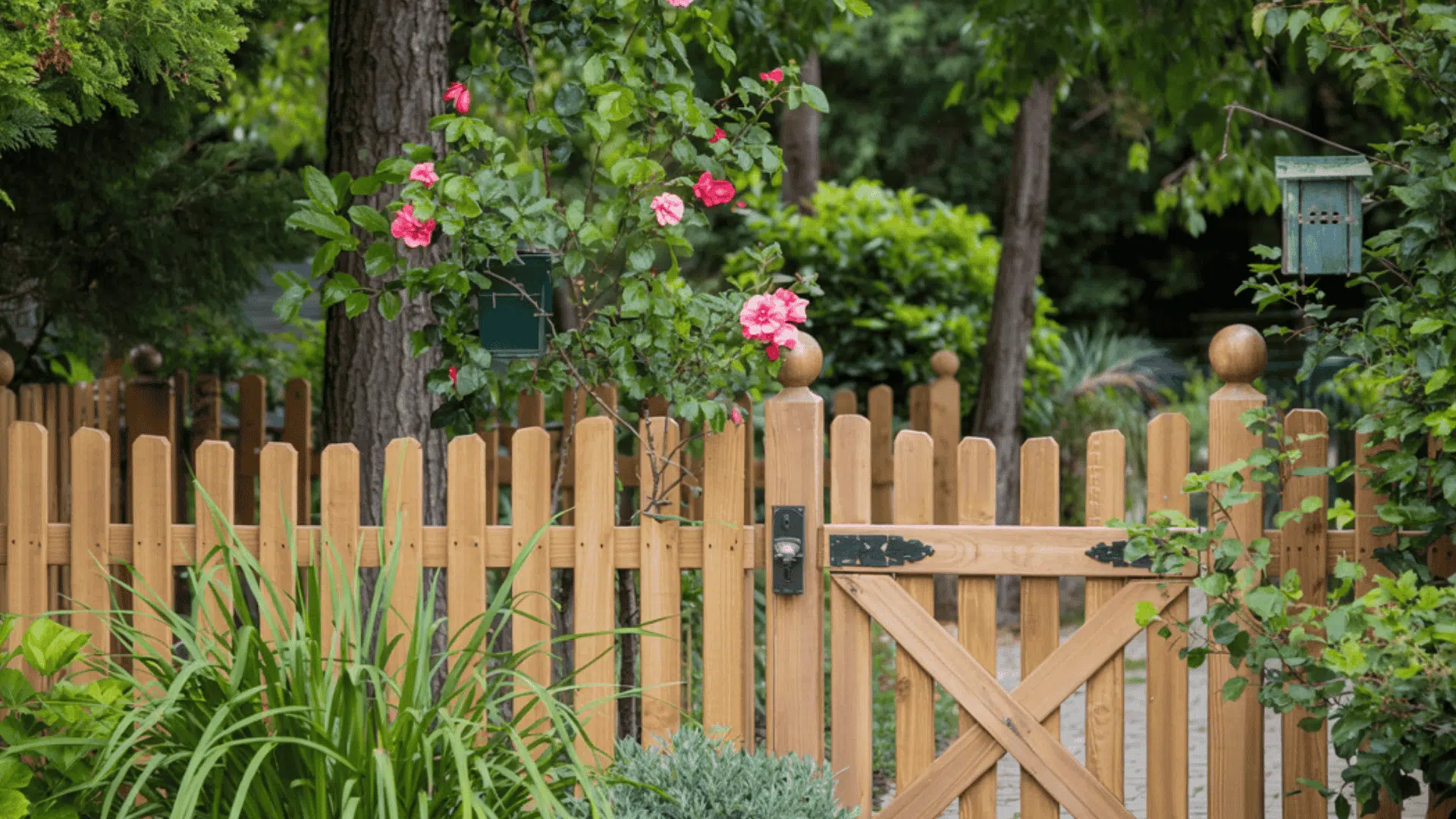
The picket fence is one of the most recognizable wood fence styles and works well when you want a friendly, open look.
It uses vertical boards attached to horizontal rails, with small gaps between each picket to keep the design light. Most picket fences are 3 to 4 feet tall and made from cedar or pine for durability.
You can choose pointed, flat, or rounded picket tops depending on the style you want.
This fence is great for front yards, gardens, and decorative borders.
- Height: 3-4 feet
- Best For: Front yards, decorative boundaries
2. Split Rail Fence
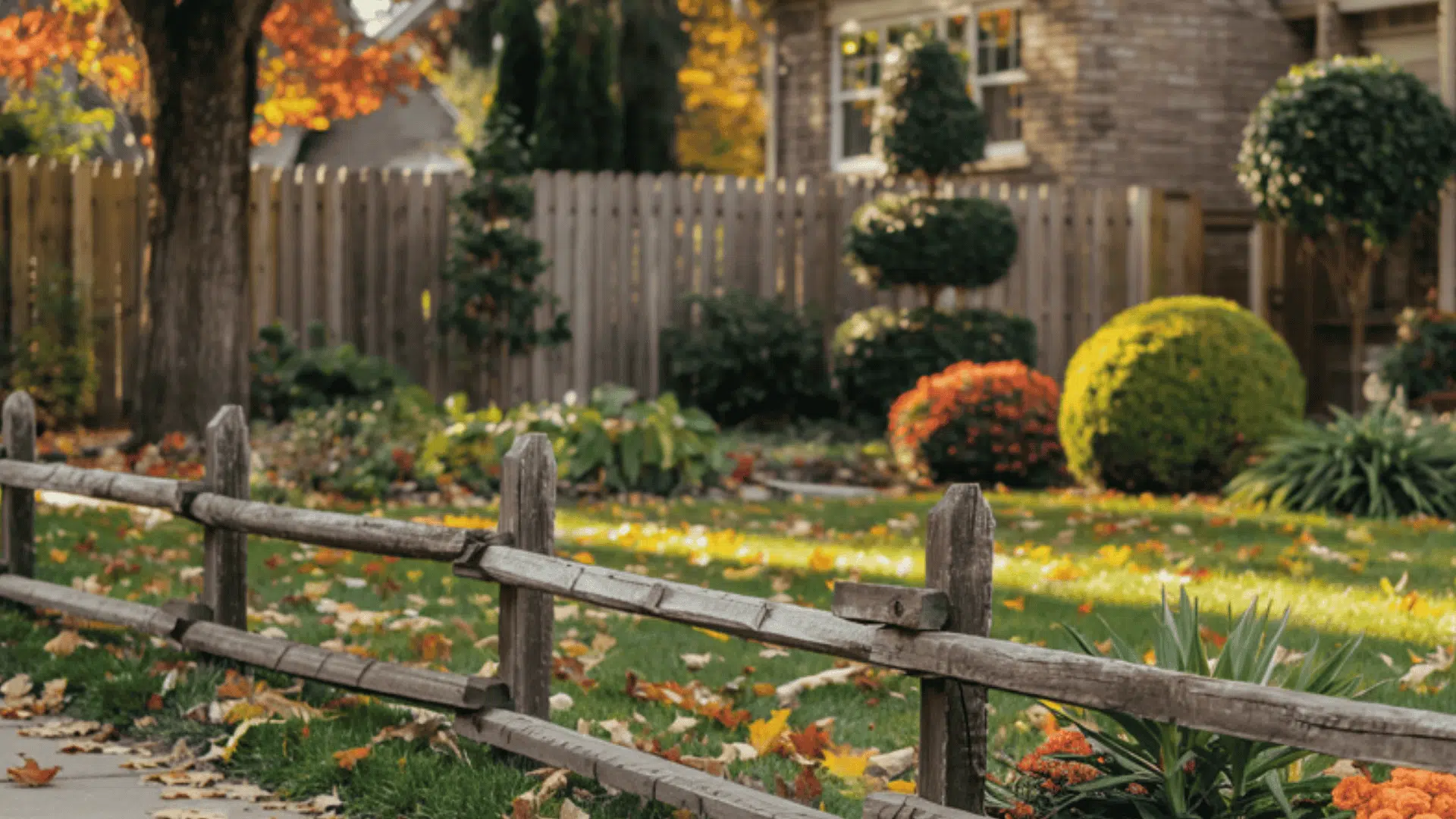
A split rail fence uses horizontal logs or timbers set between vertical posts to create a natural, open design.
It’s commonly seen on farms, ranches, and large properties where marking the boundary is more important than blocking views.
This fence works well in wide spaces because it blends into the landscape and requires minimal materials. Split rail fences are usually 3 to 4 feet tall and offer a rustic look without feeling bulky.
They’re easy to install and maintain, making them a practical option for rural areas.
- Height: 3-4 feet
- Best For: Farms, ranches, large acreage
3. Stockade Fence
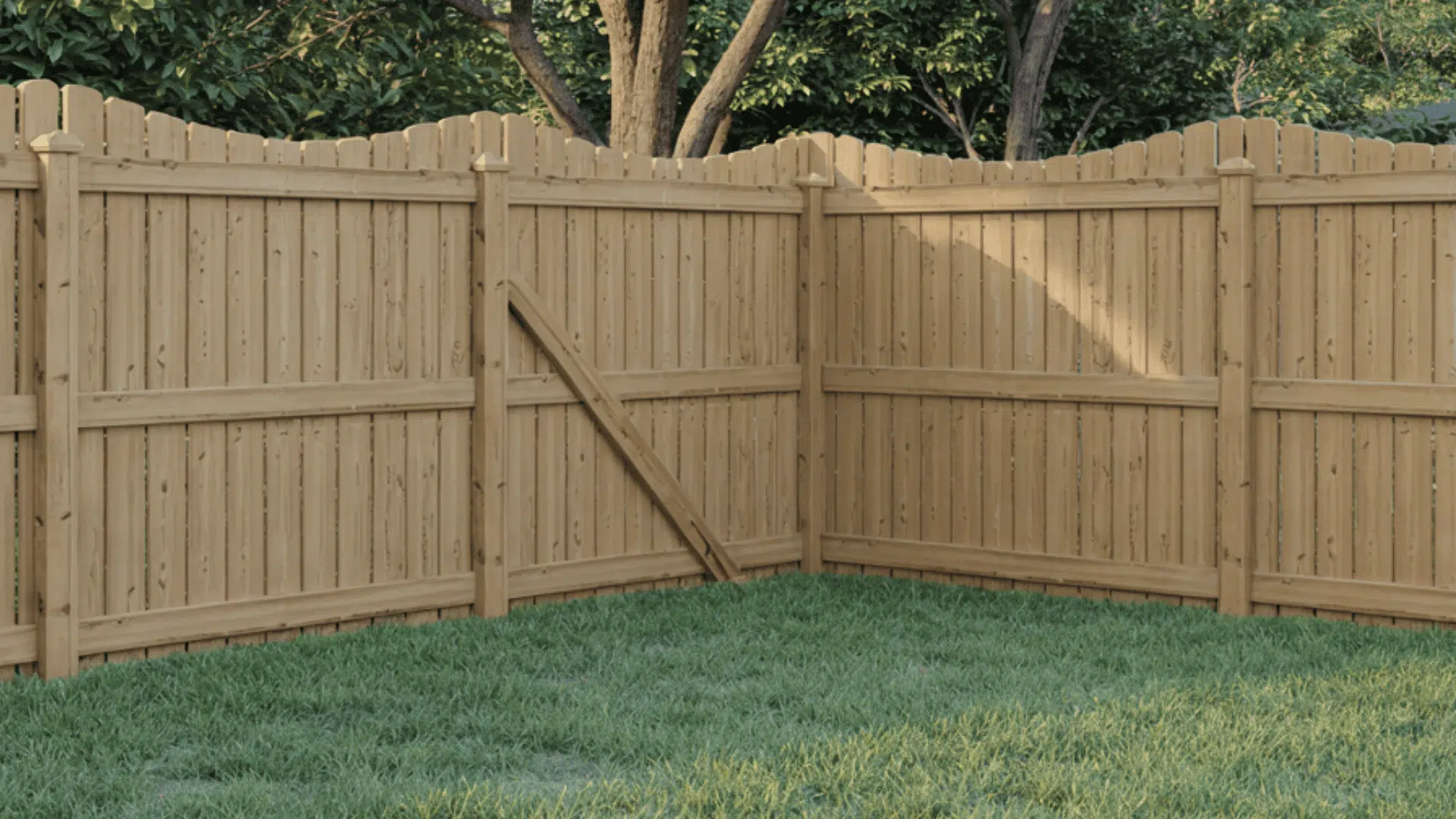
A stockade fence is built with vertical boards placed tightly together to form a solid wall. Standing 6 to 8 feet tall, this style gives strong privacy and blocks both sight and sound.
It was originally used for protection, but today it’s popular in neighborhoods where homeowners want full backyard privacy.
The pointed tops add a finished look while making the fence harder to climb.
Stockade fencing is a good choice if you want a simple, secure barrier that keeps your outdoor space hidden.
- Height: 6-8 feet
- Best For: Privacy-focused backyards, security
4. Post and Rail Fence
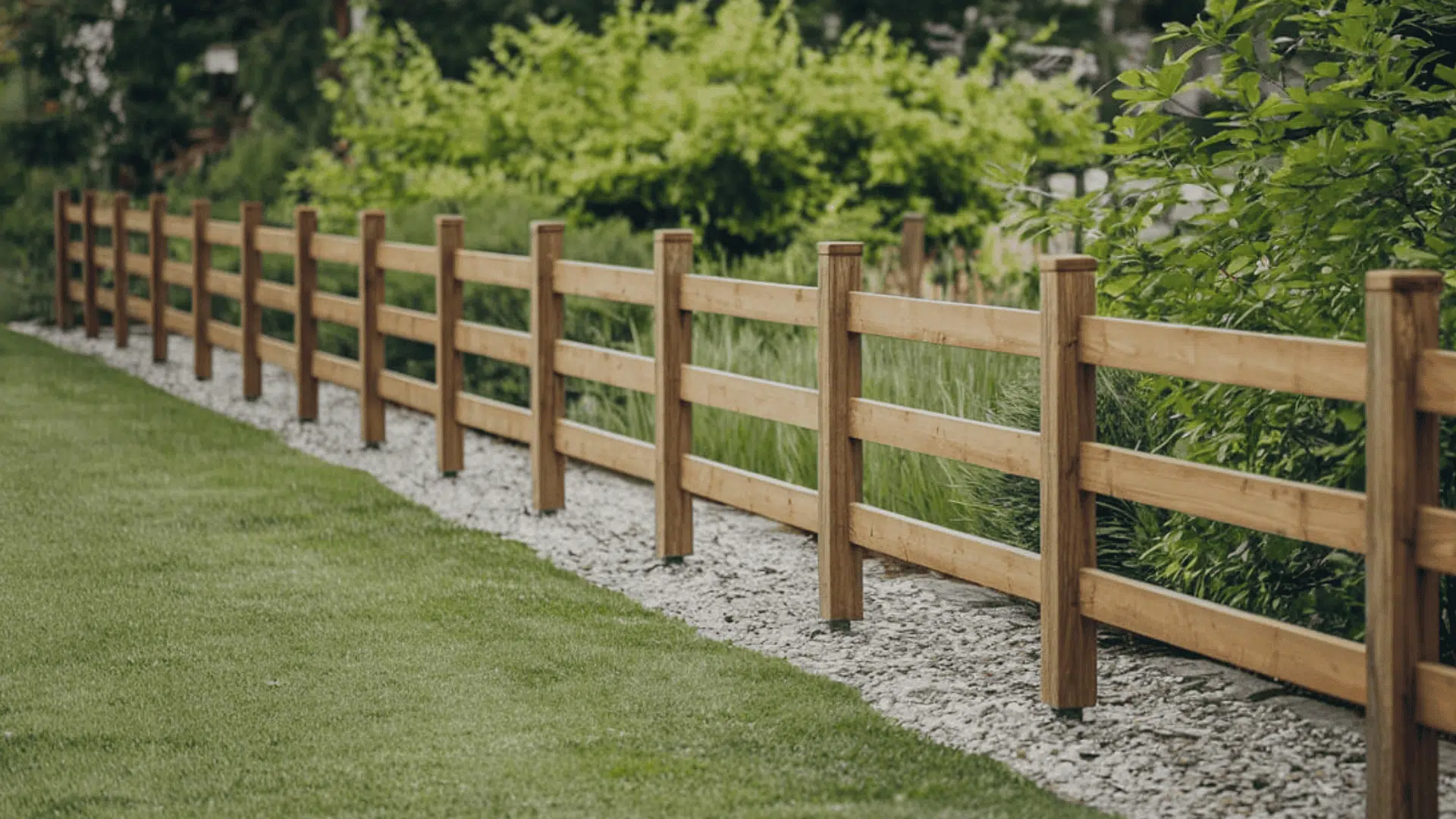
A post and rail fence looks similar to a split rail style but uses smooth, milled lumber for a cleaner finish.
Horizontal rails fit through holes in the posts, creating an open, neat look that works well for marking large areas without blocking views.
This fence style is common on equestrian properties and rural homes because it safely contains livestock while staying visually open.
With heights around 4 to 5 feet, post and rail fencing offers structure without feeling heavy or closed in.
- Height: 4-5 feet
- Best For: Equestrian properties, open boundaries
5. Lattice-Top Fence
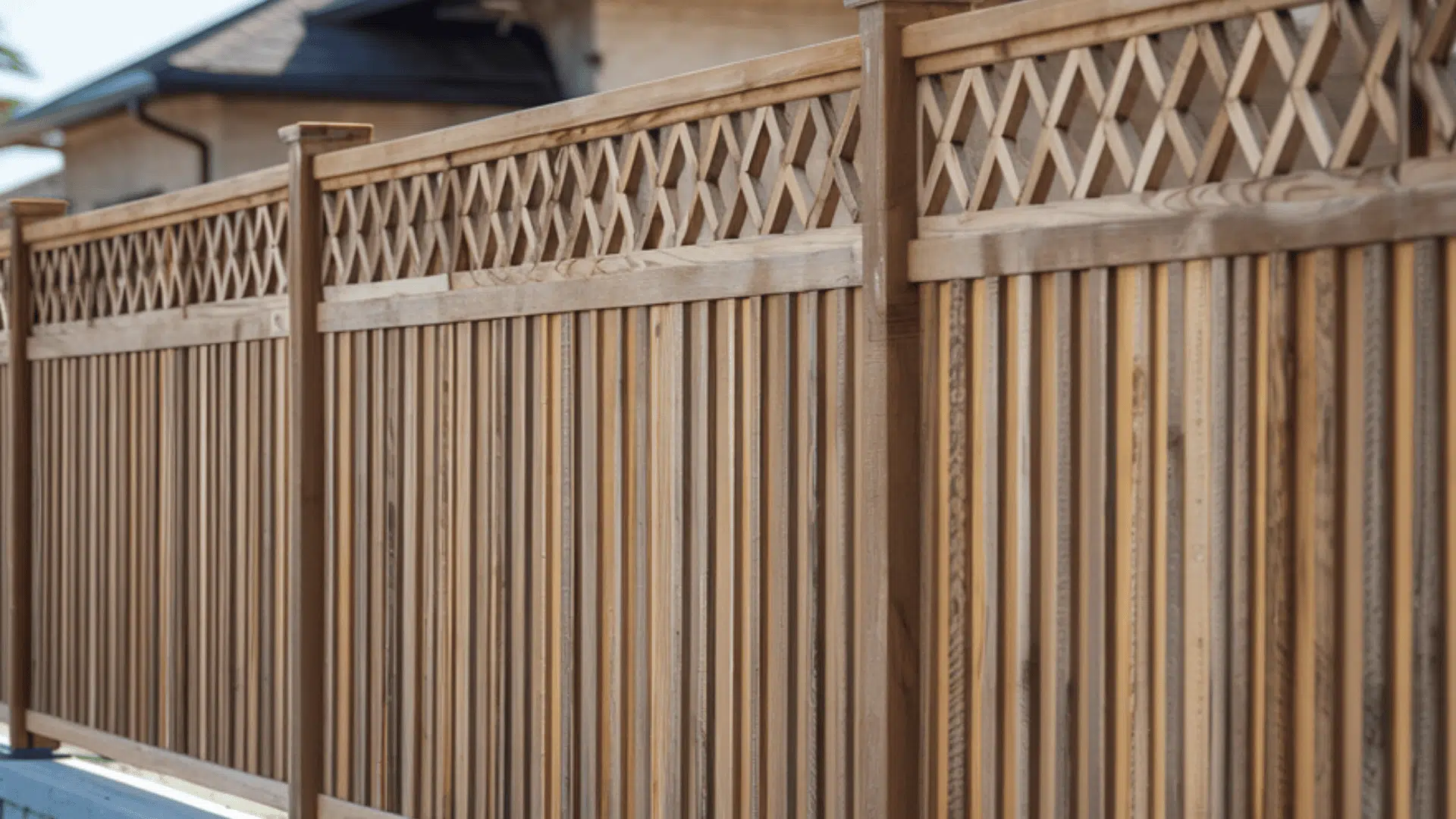
A lattice-top fence combines a solid lower panel with a criss-cross lattice section at the top.
The solid bottom provides privacy at eye level, while the lattice lets in light and airflow, helping the fence feel less closed off.
This design works well in gardens, patios, and outdoor seating areas where you want privacy without feeling boxed in.
The lattice also offers support for climbing plants, adding a nice decorative touch over time. Heights usually reach 6 to 8 feet in total.
- Height: 6-8 feet total
- Best For: Gardens, patios with plant support
6. Board-on-Board Fence
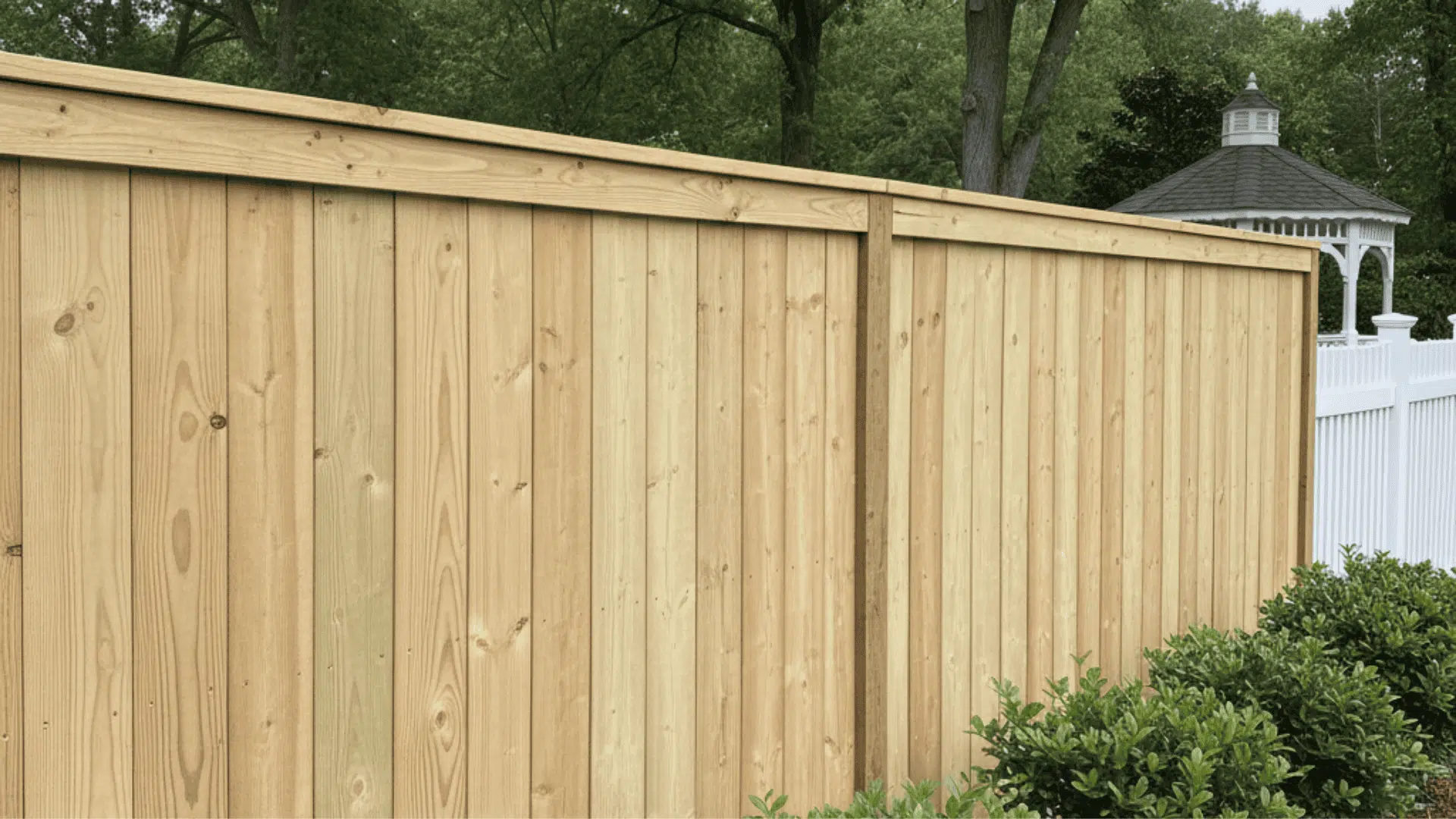
A board-on-board fence uses vertical boards placed on alternating sides of the rails so they overlap slightly.
This design blocks direct views and offers full privacy from both sides, making it a neighbor-friendly option.
Because air can move between the overlapping boards, the fence handles windy weather better than a solid panel.
Homeowners like this style for its balanced look and strong build. It works well for backyards where you want privacy without creating a heavy, solid wall.
- Height: 6-8 feet
- Best For: Windy areas, double-sided appearance
7. Dog-Ear Fence
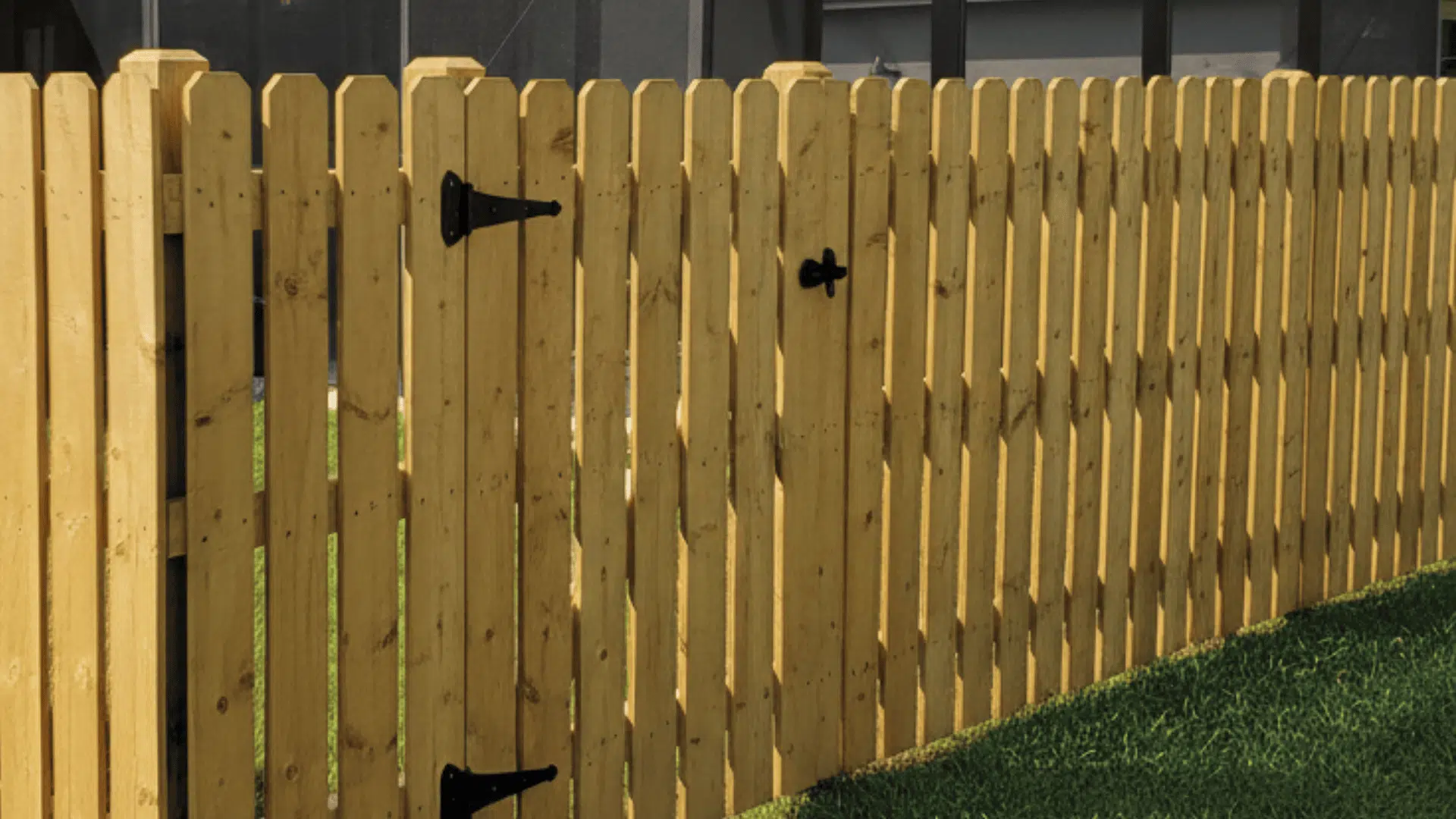
Dog-ear fences feature boards with small angled cuts at the top, giving each panel a simple but finished look.
Most are around 6 feet tall and installed with boards placed close together for full privacy.
This fence style is also one of the most budget-friendly options, which is why many homeowners choose it for large backyards.
The dog-ear cut keeps the design from looking plain while staying easy to build and maintain.
- Height: 6 feet
- Best For: Cost-effective backyard privacy
8. Shadowbox Fence
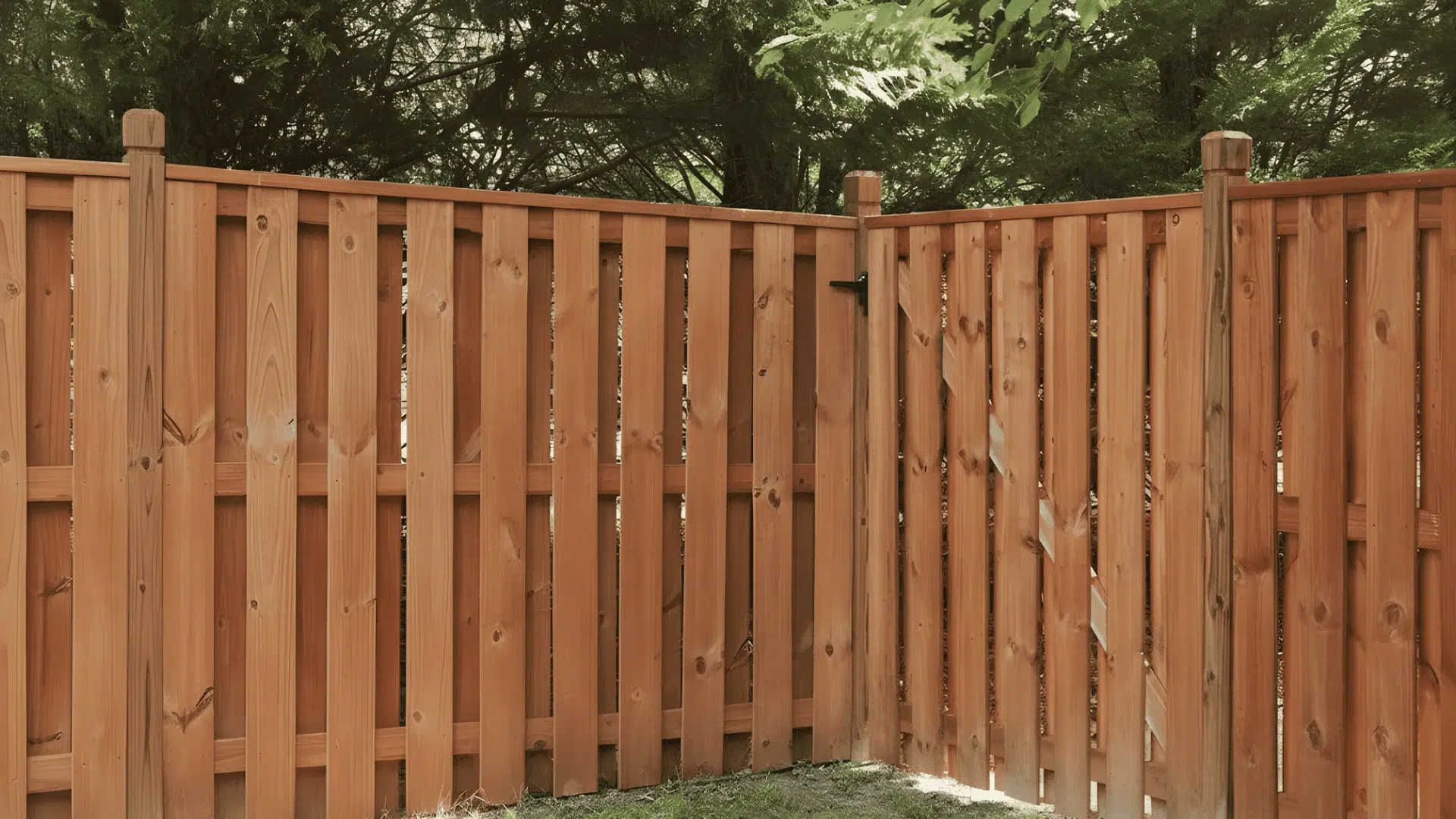
A shadowbox fence places boards on alternating sides of the rails with small gaps in between.
From straight on, the fence looks almost solid, but from an angle, you can see through the gaps. This creates a sense of privacy while still allowing airflow and some light.
Many homeowners like this design because it looks good on both sides of the fence, making it a fair option for shared property lines.
It also handles wind better than solid fences.
- Height: 6-8 feet
- Best For: Neighbor-friendly privacy
9. Gothic-Top Fence
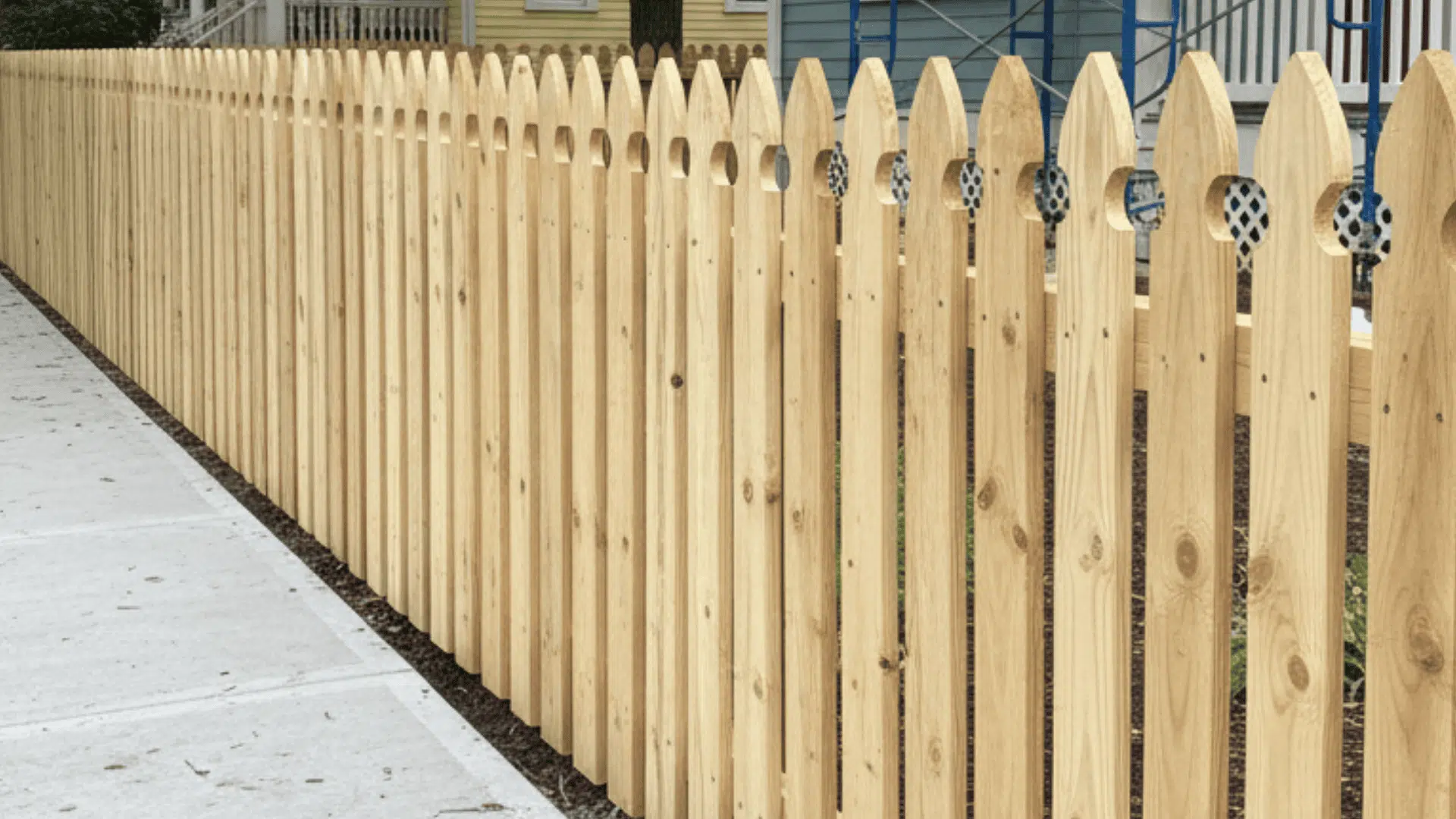
A gothic-top fence uses vertical boards with pointed, arch-shaped tops for added detail.
These decorative tops help the fence stand out and give it a more finished look.
Most gothic-top fences range from 6 to 8 feet tall and offer strong privacy when built with tight boards. The pointed tops also make the fence harder to climb, adding a layer of security.
This style works well for older homes or properties where you want a simple upgrade that adds visual interest.
- Height: 6-8 feet
- Best For: Historic homes, architectural curb appeal
Modern Wood Fence Styles
If you want something different from traditional styles, the following modern options blend functionality with current architectural trends:
10. Horizontal Slat Fence
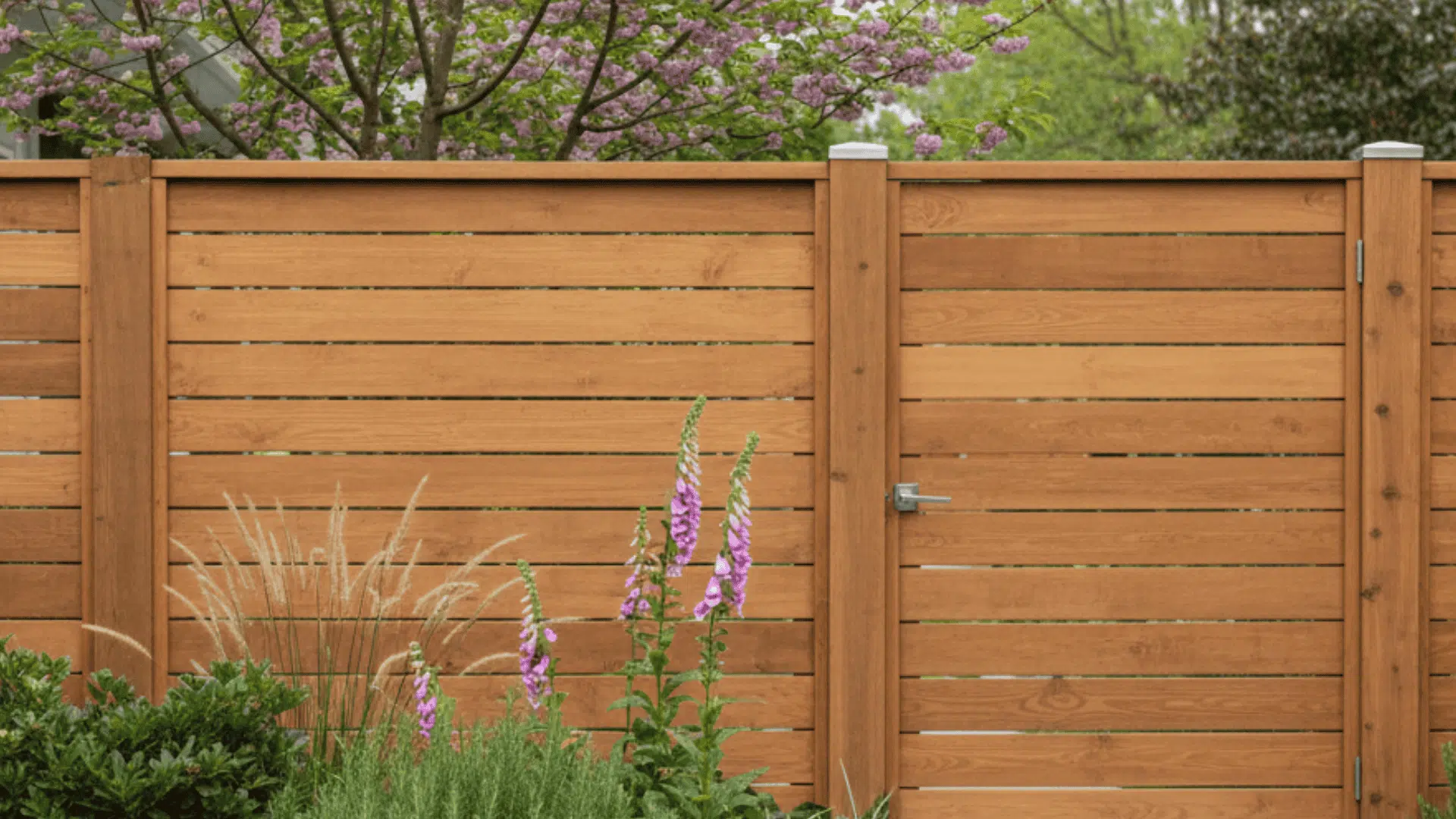
A horizontal slat fence uses long boards placed parallel to the ground rather than vertically. This creates a wide, modern look that pairs well with mid-century or contemporary homes.
The spacing between the slats can be adjusted for full or partial privacy.
Horizontal lines make single-story homes appear wider and more defined.
This style is easy to customize with different board widths and wood types, giving homeowners flexibility to match their outdoor design.
- Height: 4-8 feet (adjustable)
- Best For: Mid-century modern, contemporary homes
11. Modern Privacy Fence
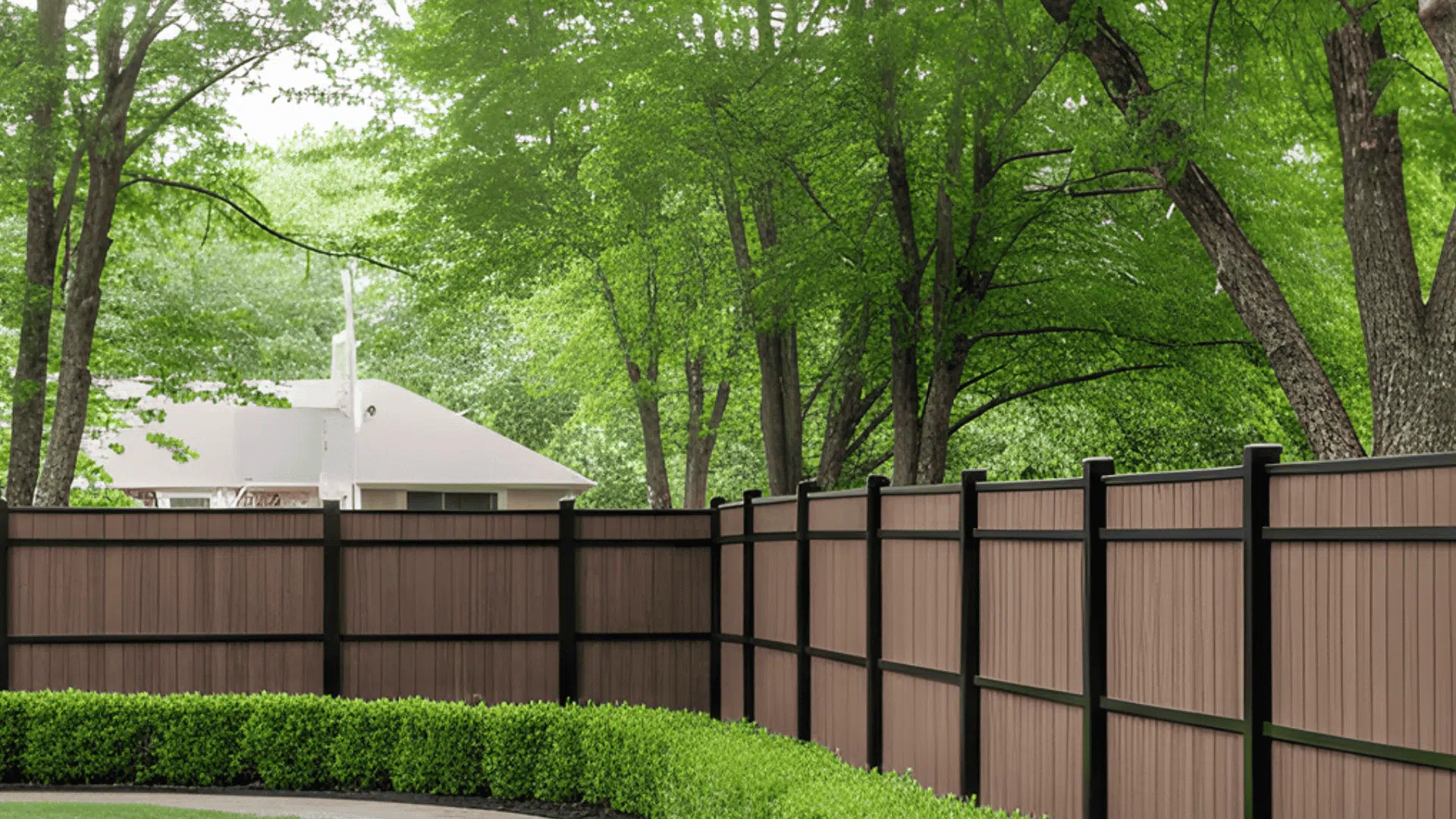
A modern privacy fence uses clean, straight lines and wide boards to create a simple, solid barrier. The boards are usually installed tightly together with flat tops, giving the fence a neat and uniform look.
Many homeowners choose natural wood tones or soft gray stains to keep the style minimal and easy to match with modern homes.
This fence works well for backyards where you want full privacy without decorative elements.
It’s a solid choice for anyone wanting a clean, updated exterior.
- Height: 6-8 feet
- Best For: Clean-lined modern properties
12. Louvered Fence
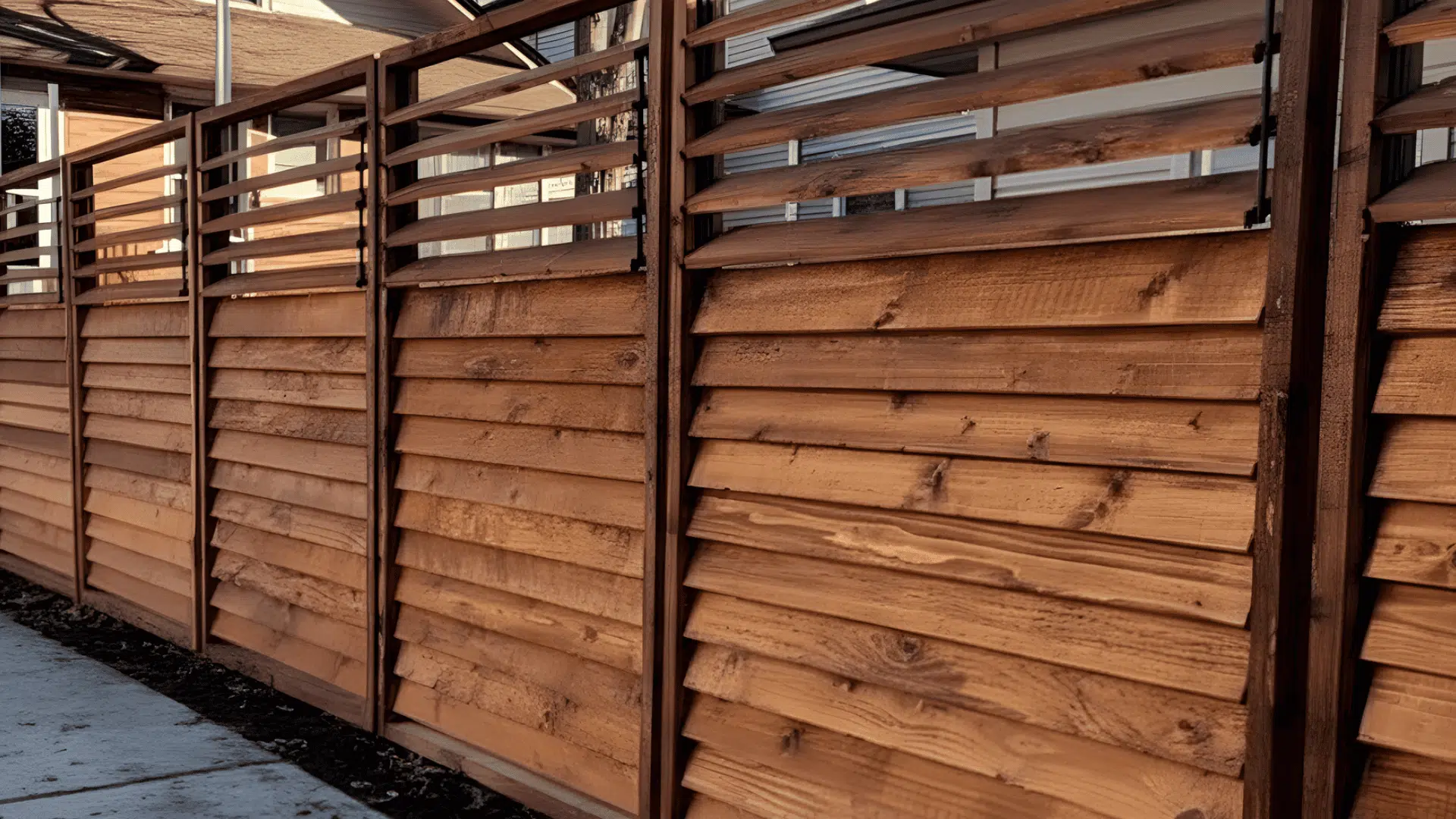
A louvered fence uses angled boards, similar to window shutters, to block direct views while still allowing airflow.
The slanted design helps reduce wind pressure and keeps the fence stable during storms. It also helps water drain quickly, which is useful in humid or rainy areas.
Homeowners often choose this style when they want privacy without feeling closed in.
It works well around patios, decks, and pool areas, and provides good ventilation while maintaining a sleek look.
- Height: 5-7 feet
- Best For: High-humidity climates, ventilation needs
13. Reclaimed Wood Fence
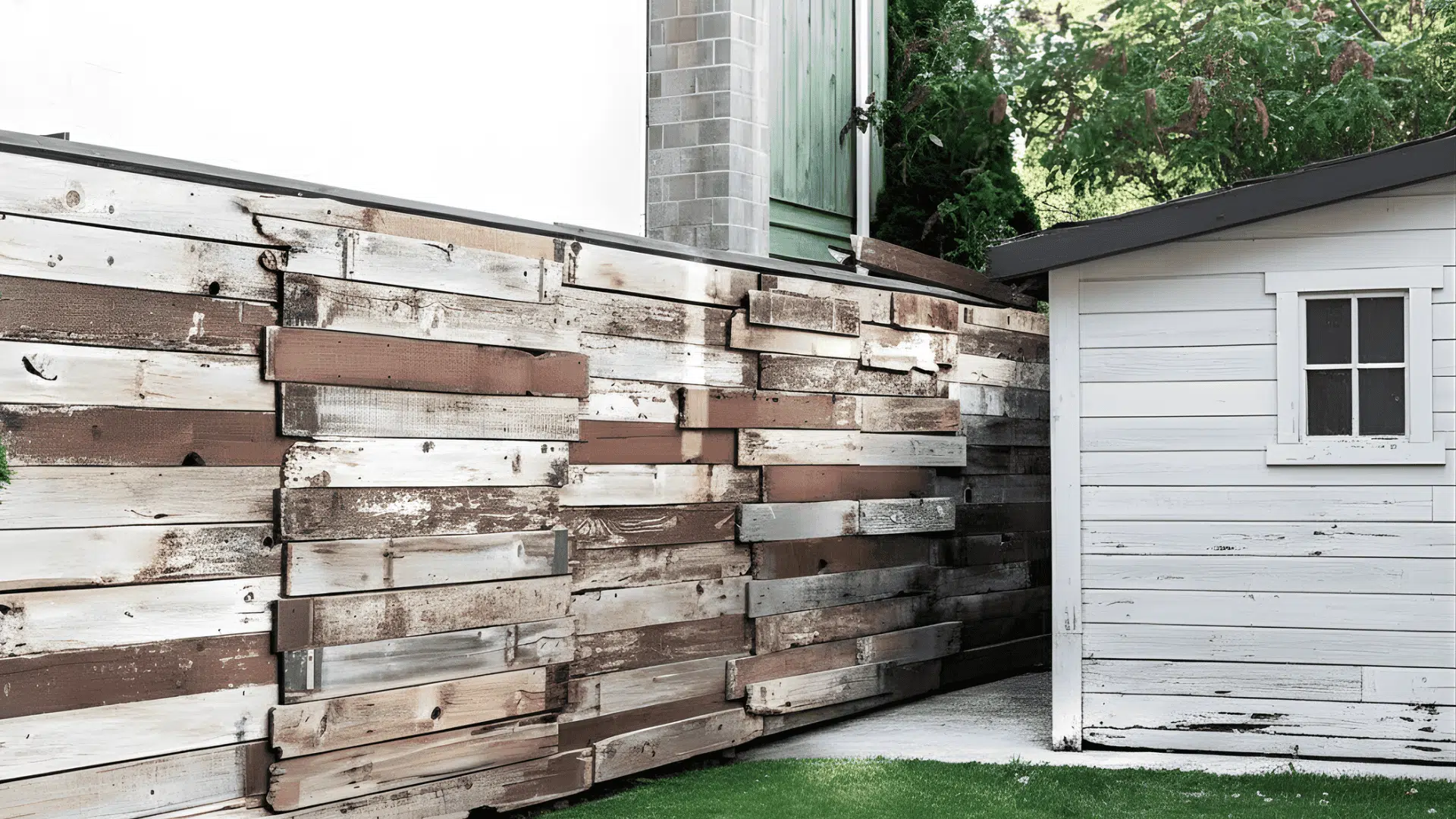
A reclaimed wood fence is made from old barns, warehouses, or salvaged lumber, giving it a natural and aged appearance.
The wood often includes weathered textures, nail holes, and color variations that you can’t get with new boards.
This type of fence is great for homeowners who want an eco-friendly option or a rustic look that feels authentic.
Because the boards vary in shape and color, each fence has its own character and tells a story of where the wood came from.
- Height: Variable (4-7 feet typical)
- Best For: Sustainable projects, rustic character
14. Geometric Pattern Fence
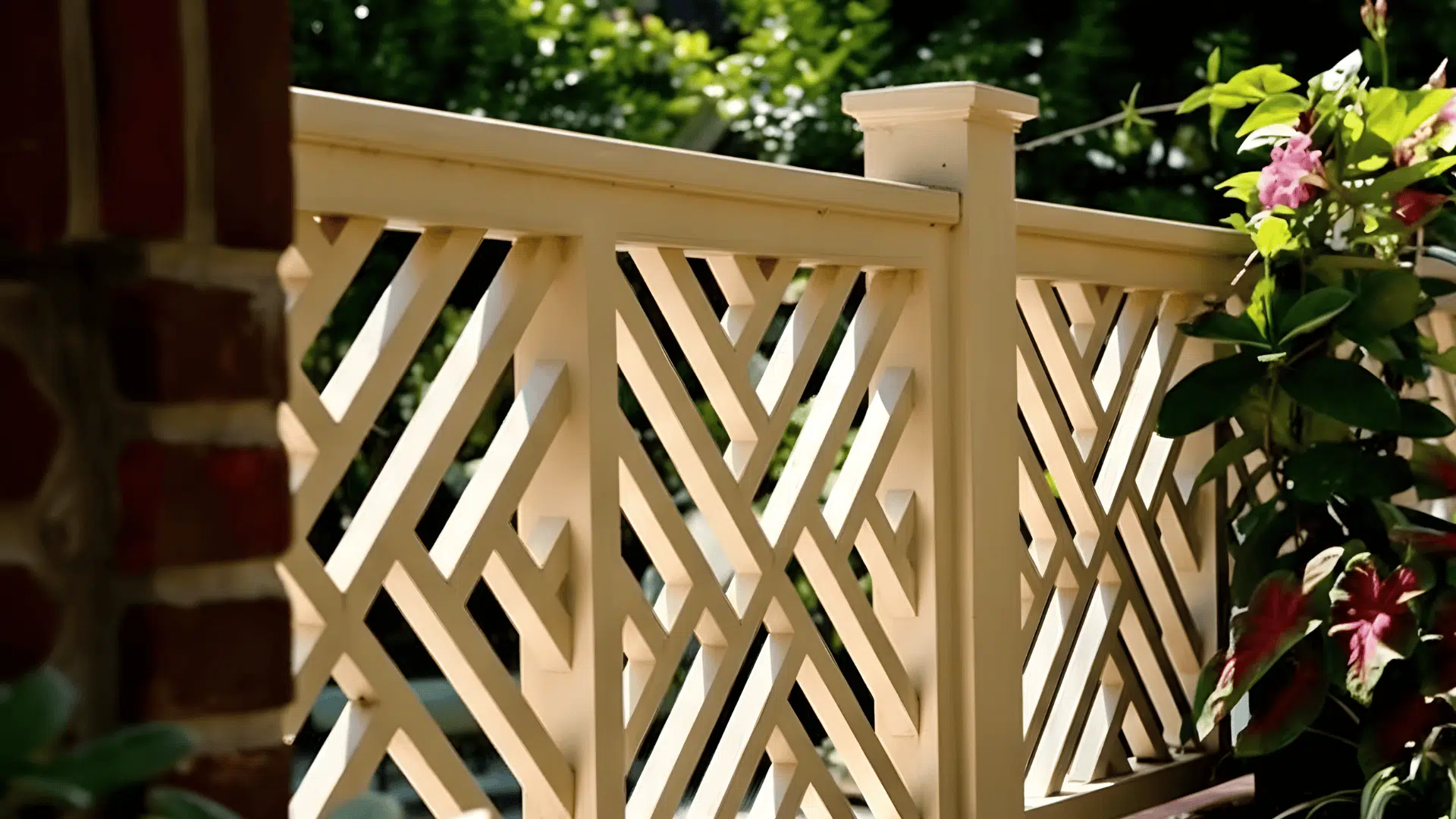
A geometric pattern fence uses repeating shapes, such as chevron, diagonal lines, or cut-out designs, to turn a simple fence into a standout feature.
These patterns add interest without needing expensive materials. Homeowners often choose this style for front yards or patios where they want something visually unique.
It works well with modern or artistic homes and can be customized to match your personal style.
This fence provides partial privacy while acting as a decorative element in the yard.
- Height: 4-8 feet
- Best For: Unique design statements, artistic homes
15. Slatted Semi-Private Fence
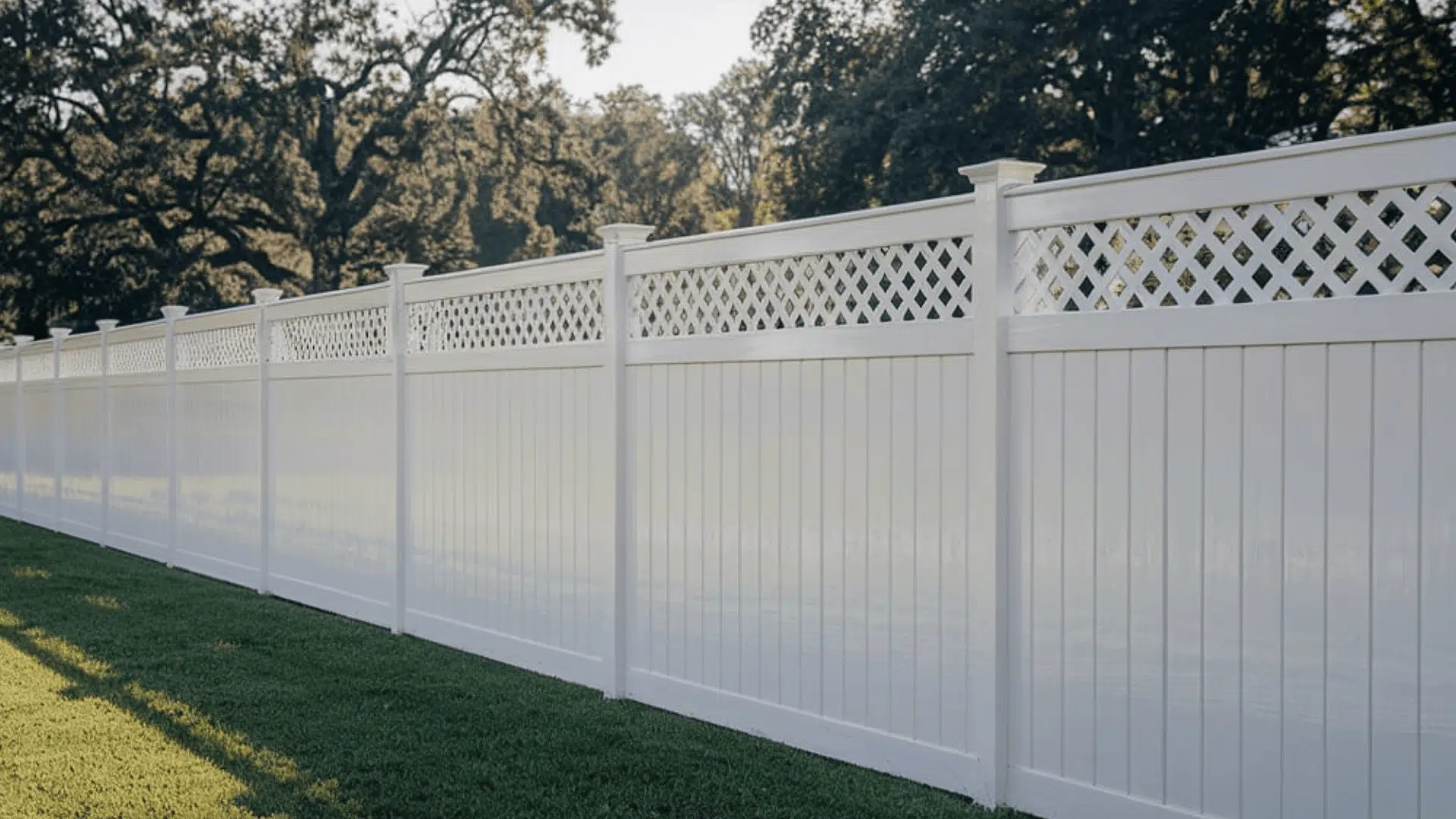
A slatted semi-private fence spaces the boards apart just enough to let in light and air while still blocking direct views.
It’s a great option for outdoor areas where full privacy isn’t needed, such as around pools, patios, or front yards. The gaps also help reduce wind pressure, making the fence more stable in harsh weather.
Many homeowners like this style because it feels open but still provides a clear boundary.
The simple design works well with most home types.
- Height: 4-6 feet
- Best For: Pool safety, partial screening
16. Mixed-Material Wood Fence (Wood + Metal)
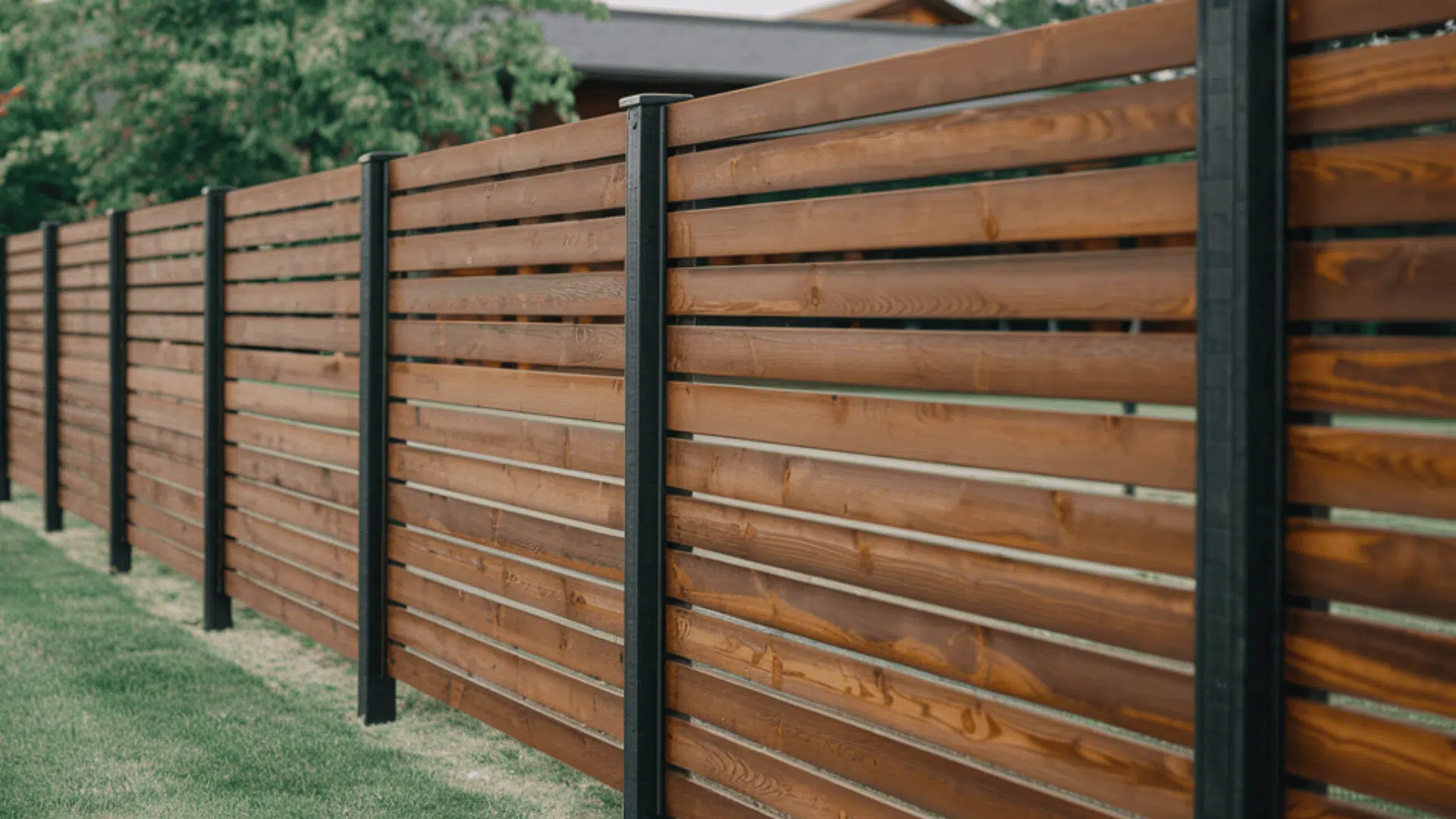
A mixed-material fence combines wood panels with metal posts, frames, or accents.
The metal parts give the fence strong support and reduce long-term maintenance, while the wood adds warmth and a natural look.
Many homeowners choose this style for modern yards because it balances durability with simple design. Metal posts also help prevent sagging and hold up better in harsh weather.
This fence works well when you want a sturdy structure that still feels friendly and easy to blend with landscaping.
- Height: 5-8 feet
- Best For: Low-maintenance modern aesthetics
17. Basketweave Fence
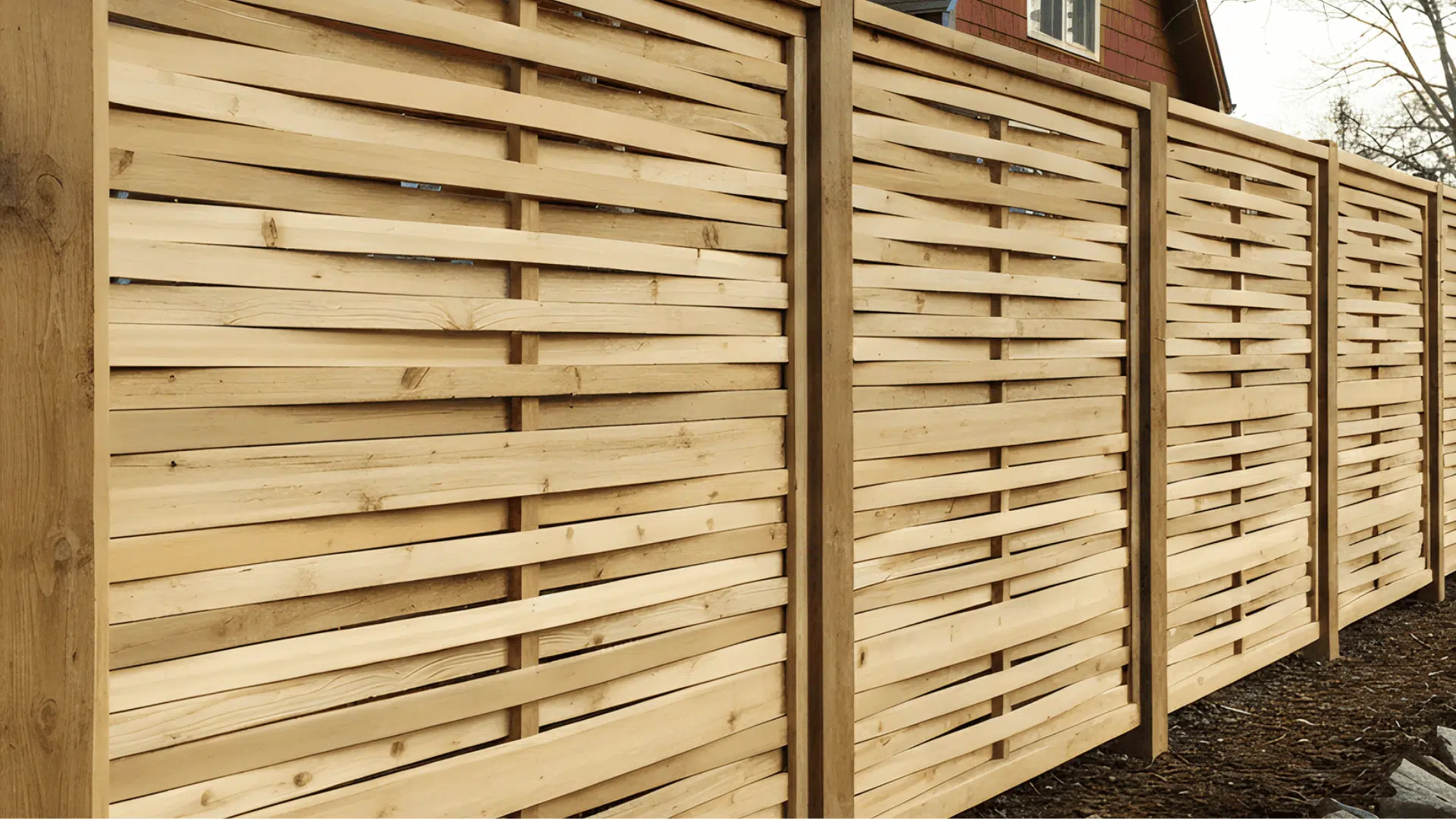
A basketweave fence uses horizontal boards woven in and out of the posts to create a unique, textured design.
This pattern allows small gaps for airflow, which helps the fence stay stable in windy areas.
The woven look adds interest without needing extra decoration, and it works well with cottage, rustic, or traditional homes.
Homeowners like this style because it provides privacy while still feeling open. The flexible pattern also makes the fence stronger and more resistant to warping.
- Height: 4-6 feet
- Best For: Cottage gardens, rustic settings
Tips on Choosing the Right Fence Style
Picking the right fence goes beyond just liking how it looks. Consider these practical factors while choosing the right fence for your property:
- Privacy Needs: Solid fences give more privacy; open styles work for visible or airy spaces.
- Climate Conditions: Wet areas need drainage; windy and hot regions suit open designs.
- Maintenance Level: Solid fences need more care; open styles dry faster.
- Budget Planning: Simple styles cost less but still need upkeep.
- Style Matching: Choose a fence that fits your home’s layout and overall design.
Conclusion
Knowing the names of different wood fence styles makes planning much easier and takes away a lot of the guesswork.
When you understand what each style looks like and how it works, you can explain your ideas clearly to a contractor instead of trying to describe shapes or patterns they may not recognize.
It also helps you compare prices, privacy levels, and long-term maintenance so you can make a confident choice.
A fence is more than a boundary; it affects how your home looks and how comfortable your yard feels every day.
Take your time, think about your goals, and choose the style that fits your needs and budget. Which fence style are you leaning toward? Share your thoughts or questions below.